The story of contemporary AAA development includes too many chapters that end the same way: massive project, hundreds of developers, years of work, then sudden cancellation that leaves entire teams without jobs. Hijinks High, the just-announced debut from Baltimore’s Sackbird Studios, represents what happens when that ending becomes a beginning instead — when laid-off developers decide that they’d rather invest in themselves than wait for the industry to call them back. And their first game is gloriously, defiantly, not the kind of project the industry would have asked them to make.
The setup at AAA was a massive MMO. The setup at Sackbird is a school full of kids armed with dodgeballs, jetpacks, and bodily functions, attempting to cause maximum chaos before the final bell rings. The contrast is the point — and it’s exactly the kind of indie origin story that makes the gaming industry occasionally worth watching even when its broader patterns are discouraging.
The AAA Origin Story Behind the Indie Studio
Understanding Hijinks High requires understanding Sackbird Studios’ formation. The founding team comes substantially from The Elder Scrolls Online — one of MMORPGs’ most successful long-running titles. Many of these developers were subsequently working on what Bloomberg reported as “Project Blackbird,” a major Microsoft-backed MMO project. When that project was cancelled in 2025, approximately 30 developers from the team made the decision that defines Sackbird Studios’ identity.
Instead of dispersing into the next AAA opportunities or waiting for the industry to recover from its broader contraction, they decided to invest in themselves. Sackbird Studios was founded in September 2025 as a fully employee-owned, self-funded company with no external publisher relationships dictating creative direction. The organizational structure isn’t decorative — it’s a substantive statement about how the team wants to operate.
CEO Adam Hafez captured the philosophy in an announcement: “Hijinks High is a project that could only have been made by people working from pure passion. This is just the beginning, and we want to grow as a studio over the long term.”
This kind of studio founding has specific industry significance in 2026. The gaming industry has experienced significant contraction with major project cancellations and substantial layoffs across multiple major publishers. Workers responding by forming employee-owned indie studios represents one of the more interesting structural developments in current industry dynamics. Each studio that successfully launches and sustains itself proves the viability of alternatives to traditional publisher-developer relationships.
The AAA-veterans-to-indie-debut model also brings specific capability advantages. Studios founded by experienced developers don’t need to learn fundamentals on their first project — the years of MMO development that the Sackbird team brings to Hijinks High should translate into technical execution and design discipline that less experienced teams might struggle with.
The Creative Inversion
What’s most striking about Hijinks High is the deliberate contrast with what its developers were previously building. The Elder Scrolls Online and Project Blackbird represented gaming at its largest scale — vast worlds, deep lore, complex systems, years of player engagement, the entire commercial machinery of MMO operations. Hijinks High is the complete inverse: short multiplayer sessions, pure comedy, six players causing chaos in a contained school setting until a final bell rings.
This contrast isn’t accidental. The decision to follow MMO development with party game development reflects exactly the kind of creative shift that often happens when developers gain freedom from corporate constraints. Major studios push toward proven commercial formulas; freed developers often gravitate toward projects that prioritize creative expression and personal satisfaction over commercial calculation.
The “school chaos” premise is also genuinely refreshing in current gaming. Most multiplayer experiences emphasize either competitive intensity or cooperative achievement. Hijinks High prioritizes neither — it’s about the pure pleasure of comedic mayhem with friends, the kind of unstructured play that’s increasingly rare in commercial game design.
That this kind of project comes from developers who spent years building epic fantasy worlds suggests something important about what experienced developers actually want to make when they have the freedom to choose. The kids running through hallways throwing dodgeballs, aren’t a comment on epic fantasy — they’re what experienced game developers wanted to make when no one was telling them they couldn’t.
The Physics-Based Comedy Foundation
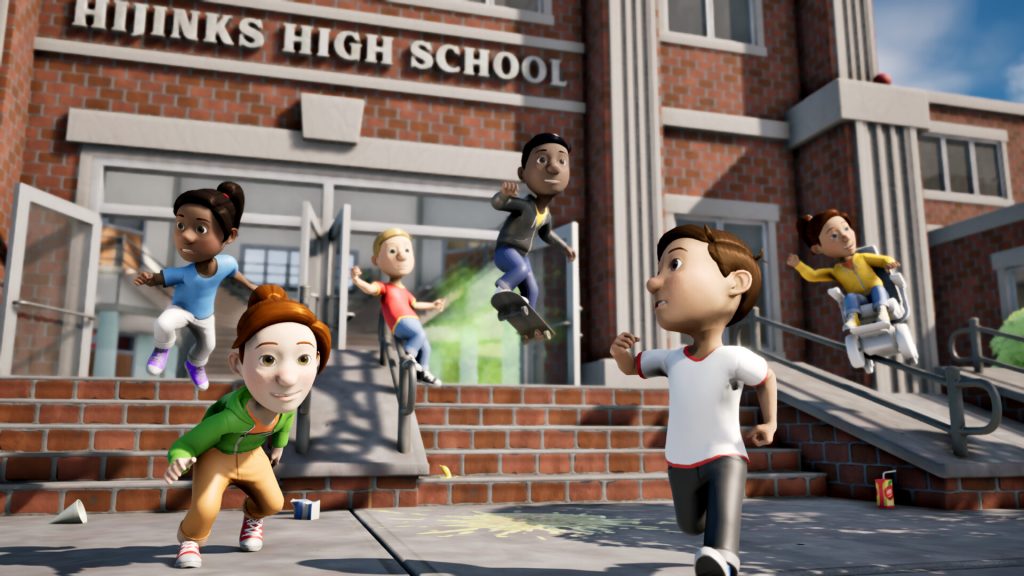
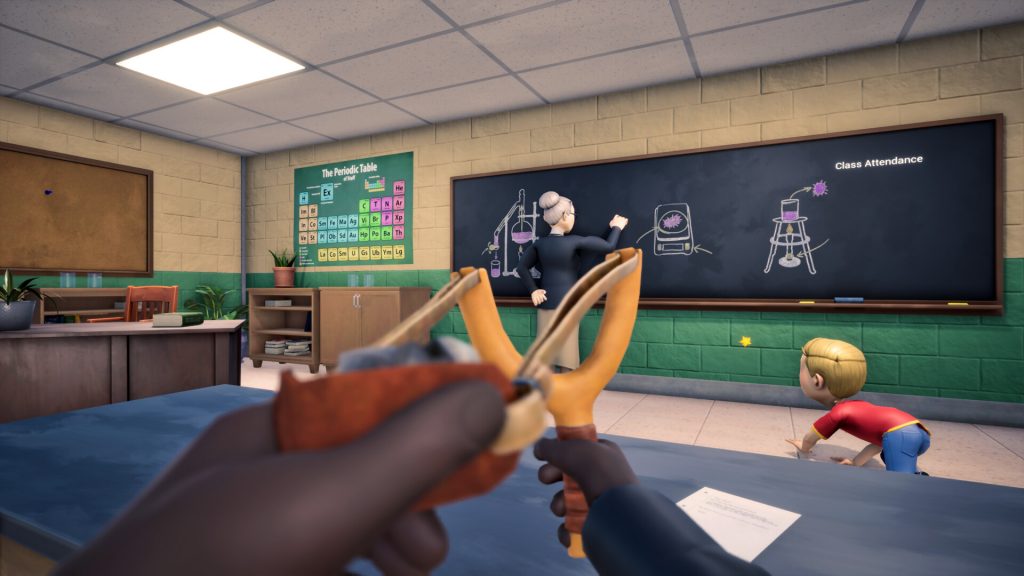
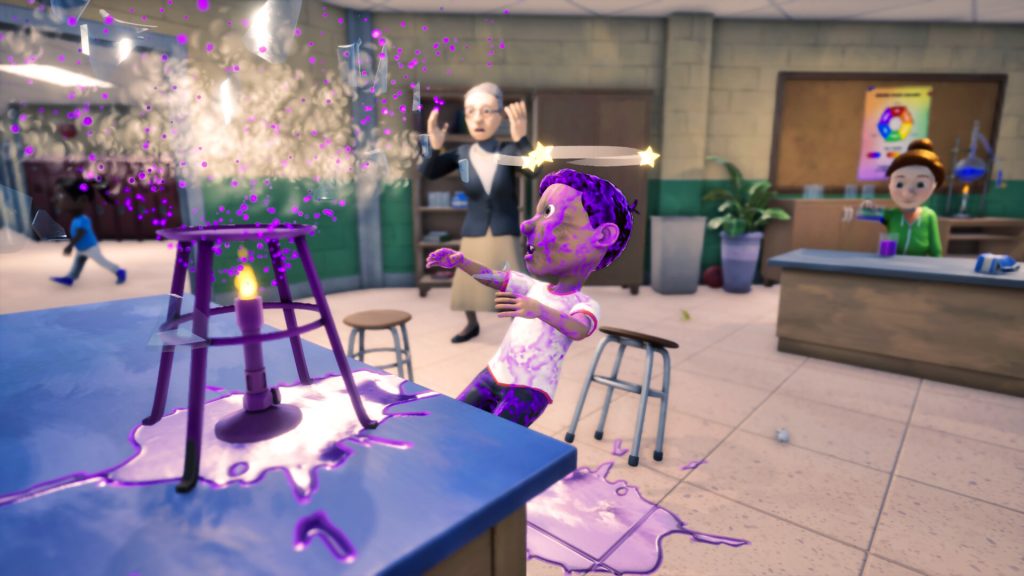
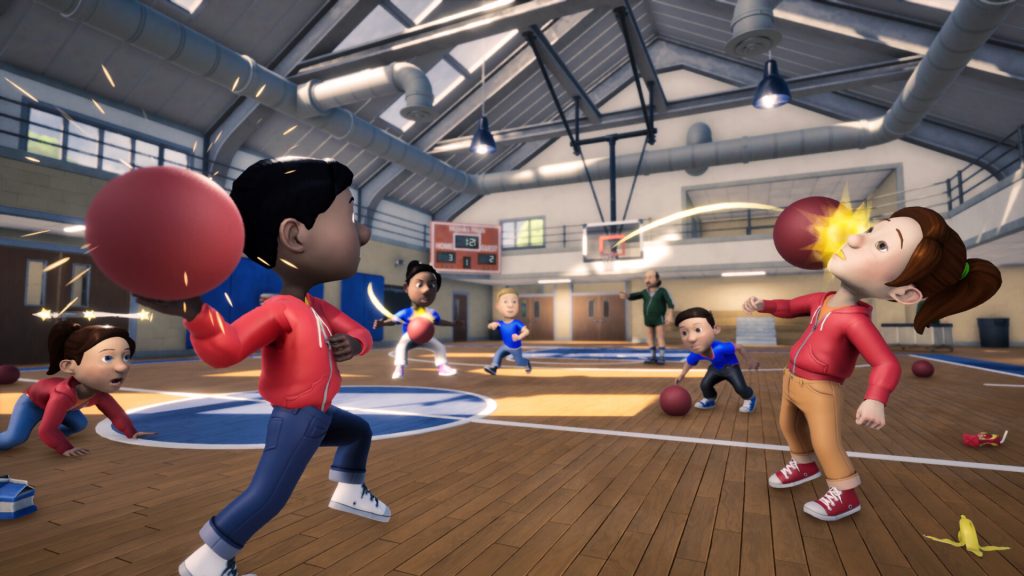
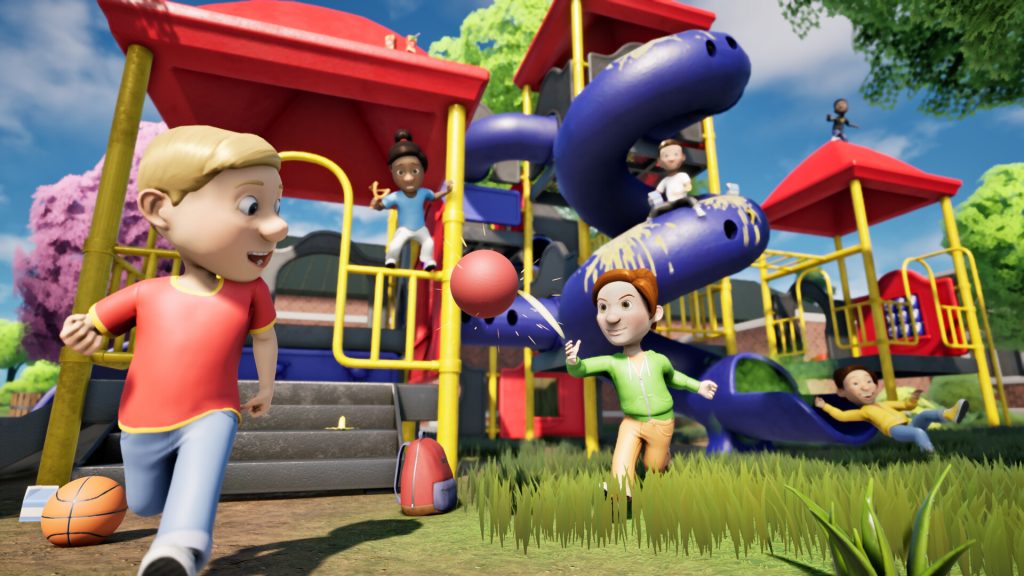
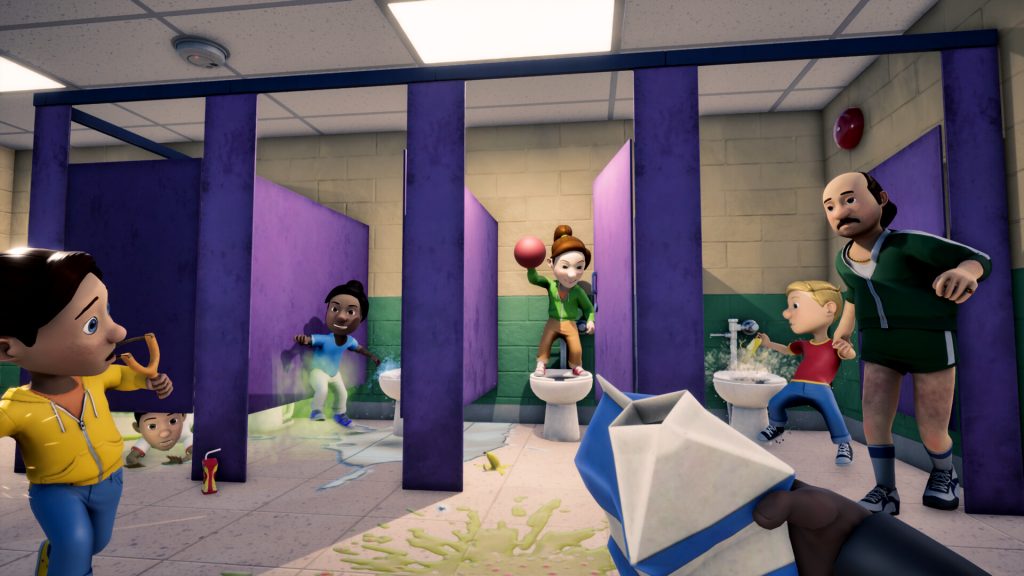
The gameplay foundation centers on physics-based interaction with the school environment. Players inhabit students attempting to cause maximum chaos before the final bell rings. The school setting includes classrooms, hallways, cafeterias, playgrounds, and bathrooms — all rendered in cartoon-style 3D graphics that emphasize comedy over realism.
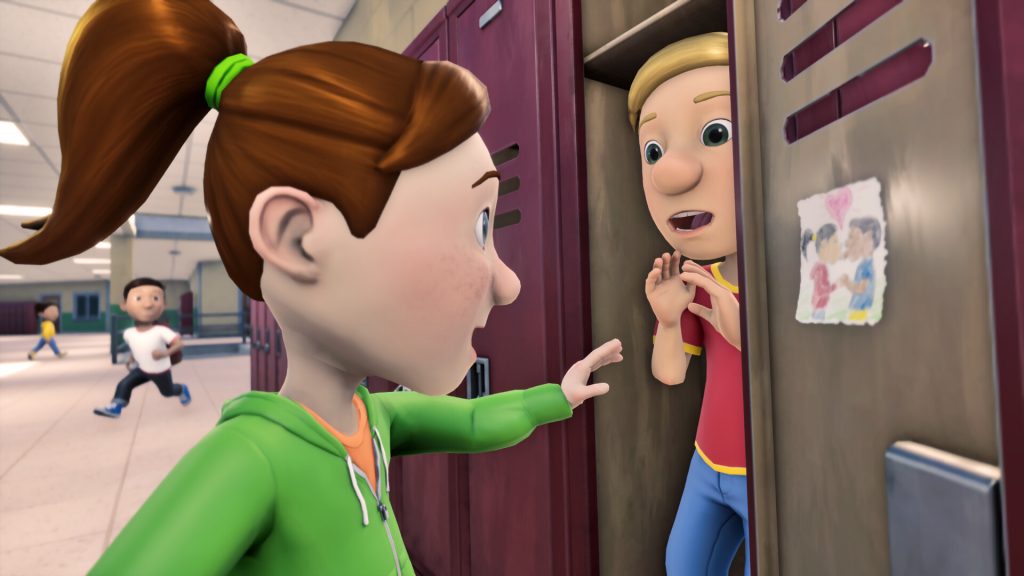
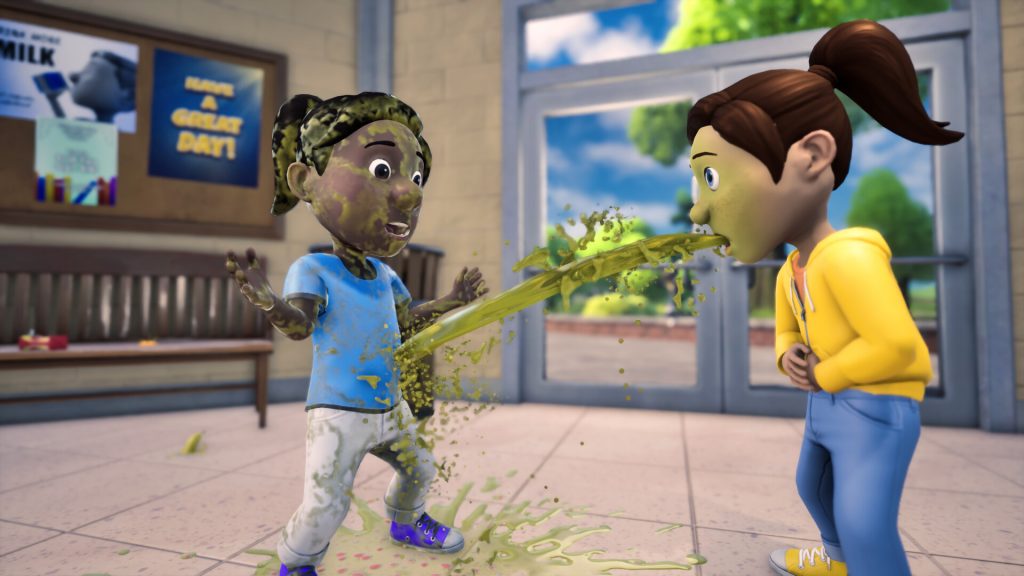
The developers’ framing of the interaction system is direct: “If it’s not bolted to the floor, you can probably use it.” Lockers can be picked up and thrown. Dodgeballs become projectiles. Jetpacks enable absurd movement. And in moments of particular desperation, bodily functions become deployable weapons. This last detail isn’t just comedy filler — it captures the project’s commitment to escalating absurdity that physics simulation enables.
The school staff exists as antagonists pursuing students, attempting to maintain order. By the time the final bell approaches, the entire school can become engaged in chaotic pursuit, with the simple goal of reaching the school bus alive, providing focused motivation amid the general mayhem.
This kind of physics-driven emergent comedy has produced some of gaming’s most memorable multiplayer experiences. Goat Simulator, Untitled Goose Game, and various others have demonstrated how physics systems can generate humor that designer-authored content can’t match. The fundamental insight: when systems interact with player creativity, the results surprise even the developers, producing the kind of organic comedy that streamers and viral content thrive on.
Hijinks High‘s approach amplifies this dynamic through multiplayer. Single-player physics comedy depends on individual player creativity; six-player physics comedy multiplies the chaos potential through player combinations and unexpected interactions. The same scenarios that produce isolated moments in solo physics games can produce extended escalating sequences in multiplayer ones.
The Survival Layer
Beyond pure chaos, Hijinks High includes survival-style management systems that add strategic depth. Players consume pizza, soda, milk, and other foods to maintain energy and gain various buffs. But overeating produces consequences — players need to manage stomach state, bladder capacity, energy levels, and overall body condition.
Excessive eating can produce nausea. Liquid intake can push bladder capacity to crisis points. These body management mechanics transform the simple “cause maximum chaos” objective into something requiring strategic timing decisions. When to eat. When to move. When to run for the bathroom. Each decision balances immediate capability against longer-term consequences.
This survival layer is doing meaningful design work. Pure chaos games can fail through lack of structure — players need objectives and consequences to anchor their engagement. The body management system provides exactly this structure without imposing serious narrative weight that would conflict with the comedic tone.
The mechanic is also genuinely funny in its own right. The detail that players might need to interrupt their school mayhem for desperate bathroom dashes captures the project’s commitment to absurd-but-relatable comedy. School kids actually do face exactly these crises during chaotic days; the game’s mechanical recognition of this reality elevates the humor through truthfulness.
The Cooperation-Betrayal Dynamic
The most interesting design element may be the cooperation-betrayal balance. While all players are technically on the same team trying to escape on the school bus, individual moments can require betrayal-style decisions. One player can deliberately draw staff attention to give others time to escape — a sacrificial cooperation that emerges naturally from the game’s structure.
This creates the kind of social dynamic that distinguishes great multiplayer experiences from good ones. Pure cooperation can become predictable; pure competition can become hostile. The mixed mode of “we’re all working toward escape, but sometimes someone has to be the distraction” produces social situations where friends make decisions about each other in real-time.
These situations generate stories. Players remember the moment when one friend deliberately led the principal away while others escaped. They remember the friend who promised to be the distraction but secretly slipped onto the bus first. The cooperation-betrayal dynamic creates the kind of social memory that makes multiplayer games worth returning to with the same group of friends.
This design philosophy aligns with successful contemporary multiplayer trends. Among Us, Lethal Company, and various others have demonstrated how mixed cooperation-betrayal mechanics produce stronger social engagement than pure cooperative or pure competitive modes. Hijinks High applies this insight within a comedic context that lowers the stakes — the betrayals are funny rather than serious, which fits the overall tonal register.
How Press Has Responded
Since the announcement, Hijinks High has gained rapid press attention. Outlets including Gematsu and Massively Overpowered have prominently covered the project, emphasizing the Project Blackbird veteran origin story as significant context. Steam wishlist growth has reportedly been steep following the announcement.
The press framing has been notable for emphasizing what the project represents beyond its individual qualities. AAA-veteran-formed indie studios are themselves news in the current industry context, and Hijinks High as their debut carries broader significance about employee-owned development viability. Coverage that recognizes both the game and its industry context positions the project effectively for its potential audience.
Social media response has emphasized two specific framings: “rare pure comedy multiplayer game in current gaming” and “next-generation party game for friend groups.” Both descriptions identify what makes Hijinks High distinctive within current multiplayer offerings. The contemporary multiplayer landscape includes substantial competitive content and various cooperative experiences, but pure comedy multiplayer has been comparatively underserved.
Who This Is For
Strong fit for: friend groups looking for chaotic party game experiences; Goat Simulator, Untitled Goose Game, and physics comedy enthusiasts; Chained Together fans seeking similar cooperative chaos; players who enjoyed Gang Beasts or other physics-based multiplayer; streamers and content creators seeking new viral-friendly content; AAA-developer-formed indie studio supporters; anyone interested in the industry’s employee-owned studio experiments.
Cautious fit for: players who specifically prefer competitive multiplayer over cooperative chaos; anyone uncomfortable with juvenile humor (including the bodily function elements).
Less ideal for: players seeking serious narrative experiences; anyone uninterested in multiplayer; players who prefer pure cooperative gameplay over the cooperation-betrayal dynamics.
What to Watch For
A few questions will shape Hijinks High‘s development trajectory toward its TBA release.
The first is whether the physics-based chaos sustains engagement across the full game scope. Physics comedy games can be initially fascinating but require careful design to maintain variety across extended play. How well Sackbird Studios builds content variety beyond the core “cause chaos in school” loop will determine long-term appeal.
The second is the multiplayer infrastructure execution. Multiplayer party games depend heavily on netcode quality, matchmaking effectiveness, and friend group features. The Elder Scrolls Online experience suggests Sackbird has substantial multiplayer technical background, but party game multiplayer has specific requirements different from MMO infrastructure.
The third is the comedic tone calibration. Comedy is genuinely difficult to execute consistently across an entire game. Whether Hijinks High maintains its tonal register without becoming repetitive or overly reliant on shock humor will affect critical reception.
The fourth is the studio’s continued viability. Employee-owned indie studios face genuine business challenges that traditional publisher-supported studios don’t. Sackbird Studios’ success or struggles will affect not just this specific project but the broader feasibility of similar studio founding models.
The Industry Context
It’s worth situating Hijinks High within current AAA industry dynamics. Major project cancellations and significant layoffs have characterized 2023-2025, with Microsoft’s various studio decisions among the more visible disruptions. Bloomberg’s reporting on Project Blackbird’s cancellation specifically brought public attention to the kind of project terminations that increasingly characterize major publisher decision-making.
When experienced developers lose their major projects, they face several options: try to find positions at other major studios (increasingly competitive given industry-wide reduction), join smaller existing studios (limited capacity), accept positions outside gaming, or attempt to form new studios. The fourth option has historically been the riskiest, but the 2024-2026 industry environment has produced an unusual number of employee-formed studios.
Sackbird Studios joins a growing cohort of these projects. Each successful launch contributes to demonstrating that employee-owned development models can produce competitive games. Each struggle contributes data about the genuine challenges these models face. The broader industry conversation about labor practices, employee rights, and alternative development structures benefits from each case study.
Hijinks High specifically has the potential to be one of the more visible success stories from this cohort. The team’s MMO background brings technical and operational sophistication that smaller debut studios lack. The project scope (multiplayer party game) is achievable for indie development, unlike the AAA scopes the team previously worked on. And the comedic register positions the project for streamer-driven viral discovery that has produced major successes for similar indie projects.
The Takeaway
Hijinks High is one of the more genuinely interesting indie announcements of 2026, combining experienced AAA-veteran development capability, distinctive creative vision (party game multiplayer comedy rather than serious narrative work), and meaningful industry context (employee-owned studio formation after major project cancellation).
For multiplayer party game fans, the project offers exactly the kind of physics-based comedy chaos that the genre’s best examples have provided. The six-player scope, school setting, and cooperation-betrayal dynamic should produce the kind of social gaming experiences that build lasting friend group memories.
For AAA industry observers, Sackbird Studios’ formation and debut provide an important case study in the viability of employee-owned studios. The success or struggles of the studio across the coming years will inform broader conversations about how laid-off AAA developers can sustain creative careers outside traditional publisher relationships.
For a broader gaming culture, Hijinks High represents the kind of project that justifies indie development. A major publisher would never have funded this — too small in scope, too specific in audience, too dependent on humor and chaos for traditional market analysis to support. That such projects continue emerging from employee-owned indie studios demonstrates the value of development structures that prioritize creative vision over commercial calculation.
A school full of chaotic students. Dodgeballs and jetpacks and lockers thrown through hallways. School staff are in desperate pursuit. Bathroom emergencies are disrupting carefully planned mayhem. Friends choose whether to sacrifice themselves for the group escape or secretly betray everyone for personal advantage. The final bell rings as escape becomes increasingly desperate. And somewhere in Baltimore, 30 developers who used to build epic fantasy worlds are working on exactly this project because they finally can.
As industry origin stories go, Hijinks High‘s might be the most quietly hopeful of 2026 — proof that when major projects collapse and major studios disappoint, the people who actually make games can sometimes find their way to building something that wouldn’t have existed under previous arrangements.
The bus is waiting. The bell is approaching. The chaos is coming. And one of the more interesting indie debuts of the year is preparing to demonstrate what 30 AAA veterans can build when they answer only to themselves.
Information related to ‘Hijinks High’
| item | detail |
|---|---|
| Developer / Publisher | Sackbird Studios (Baltimore, MD / Established September 2025 / Employee-owned) |
| Genre | First-person multiplayer party game / Physics-based sandbox / Comedy |
| Release platform | PC (Steam / Epic Games Store) / Console (Undisclosed) |
| Scheduled for release | Undetermined (TBA) |
| Play Mode | Online multiplayer up to 6 players |
| Developer Background | The Elder Scrolls Online core development team / Established after the cancellation of Project Blackbird (reported by Bloomberg) |
| Release date | June 4, 2026 |
| Main systems | Physics-based object interaction / Food buffs & physical condition management / Team cooperation & betrayal mechanics |
| Main Keywords | School, Party Game, Physics, Prank, Multiplayer, Comedy, AAA Indie |
| Official Channel | Instagram·Facebook·X·Discord |
| Steam Page | Go to Wishlist |