Seven months after release, the solo-developed gothic psychological visual novel Luce Spenta has received its largest visual update since launch — a comprehensive remake that significantly reduces AI-tool dependence and replaces most of the game’s visual content with hand-drawn artwork by developer Fabrizio Franco (MrFaabry). For a solo developer’s post-launch update, this is an unusually ambitious commitment, and it reflects both the project’s reception and the developer’s evolving craft.
The original Luce Spenta launched in October 2025 to a positive reception from both press and players. Its combination of meticulous gothic artwork, melancholy atmosphere, and 25+ multiple endings exploring sin, forgiveness, and judgment established it as one of Steam’s more distinctive recent visual novels. The June 2026 remake update represents a substantial reinvestment in the project, demonstrating ongoing developer commitment to refining the experience.
A Visual Novel That Positions the Player as Judge
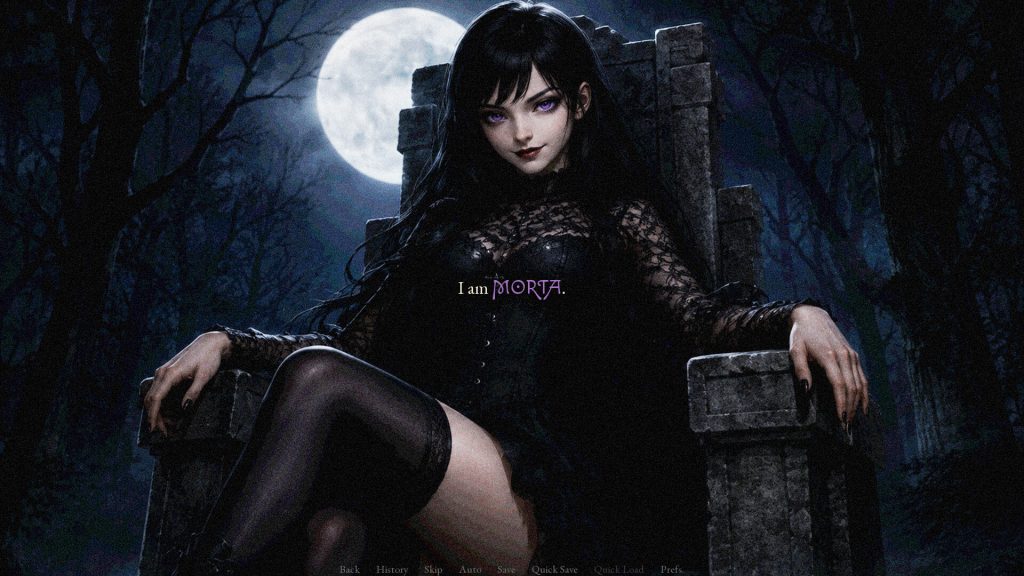
The structural premise of Luce Spenta is what distinguishes it from typical visual novel structures. Most visual novels place the player as a participant in unfolding events — a character within the story making choices about their own circumstances. Luce Spenta places the player as an outside arbiter: a being without a name, awakened in a dark underground cemetery on the boundary between life and death, charged by the mysterious guide Morta with judging five suffering souls.
This positioning fundamentally transforms how players engage with the narrative. Rather than empathizing with characters whose stories the player shares, players become evaluative observers of separate lives, each carrying their own burdens of guilt and circumstance. The cognitive position is different — closer to a religious tribunal or moral philosopher’s thought experiment than to character-driven storytelling.
Each of the five souls presents their case. Players hear their stories, consider their circumstances, weigh their guilt against context, and ultimately render final judgment. Depending on choices, the souls find redemption, suffer punishment, or vanish into complete oblivion. This isn’t dialogue-tree exploration — it’s literal moral evaluation as gameplay.
The 25+ endings reflect both the choices made across the five souls and the cumulative pattern of judgment those choices represent. Players who systematically choose mercy produce different outcomes than players who systematically choose punishment, with all the gradient combinations in between generating distinct narrative resolutions.
The Twist: The Judge Is Being Judged
The structural sophistication of Luce Spenta becomes apparent after all five judgments are rendered. Morta leads the player to a final place of judgment, and the revelation arrives: every choice the player made was a mirror reflecting on themselves. The player wasn’t just judging the souls; they were revealing their own moral priorities, their own approach to guilt and punishment, their own relationship with forgiveness and condemnation.
This twist works because it isn’t surprise-for-surprise’s sake. The five souls’ cases are constructed to expose the player’s moral assumptions: when do mitigating circumstances matter, when does outcome supersede intent, when does someone deserve mercy versus when has the line been crossed. The player’s pattern of judgments across the five cases produces a moral portrait of the player themselves, and the game’s final movement shows that portrait back to its creator.
This is genuinely sophisticated narrative design. Many games claim to make moral choices matter; few actually structure their systems to reveal something true about the player’s moral framework. Luce Spenta‘s ability to use the player’s choices as material for self-examination places it in conversation with games like Spec Ops: The Line or certain Black Mirror episodes — works that succeed by turning their audiences into the subject of their own examination.
The five thematic anchors — memory, guilt, forgiveness, choice, judgment — give the work a conceptual structure beyond pure narrative entertainment. Each soul’s case engages with one or more of these themes, and the player’s pattern of responses traces their own relationship with these moral dimensions.


The Visual Remake: Reducing AI Dependence
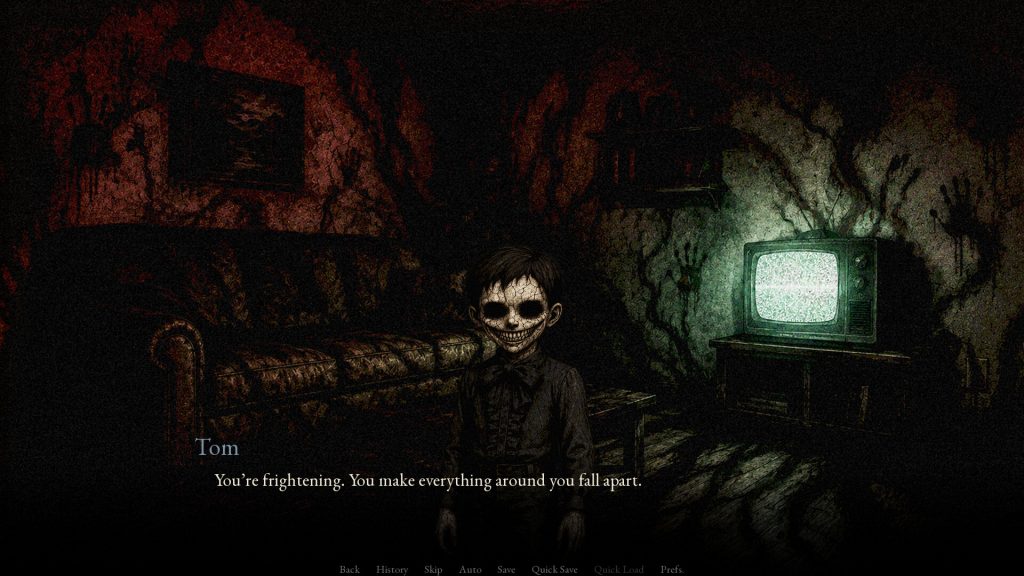
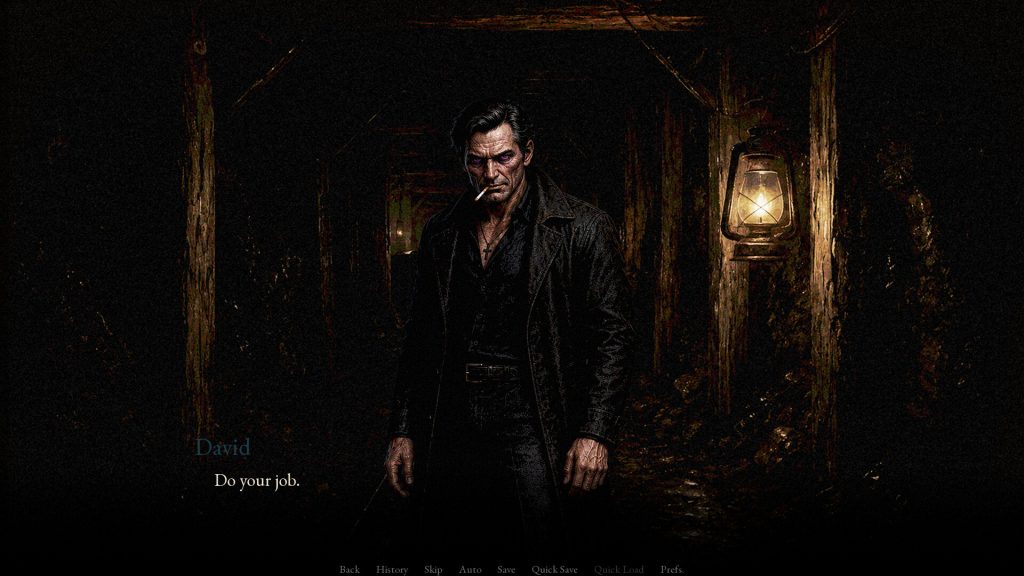
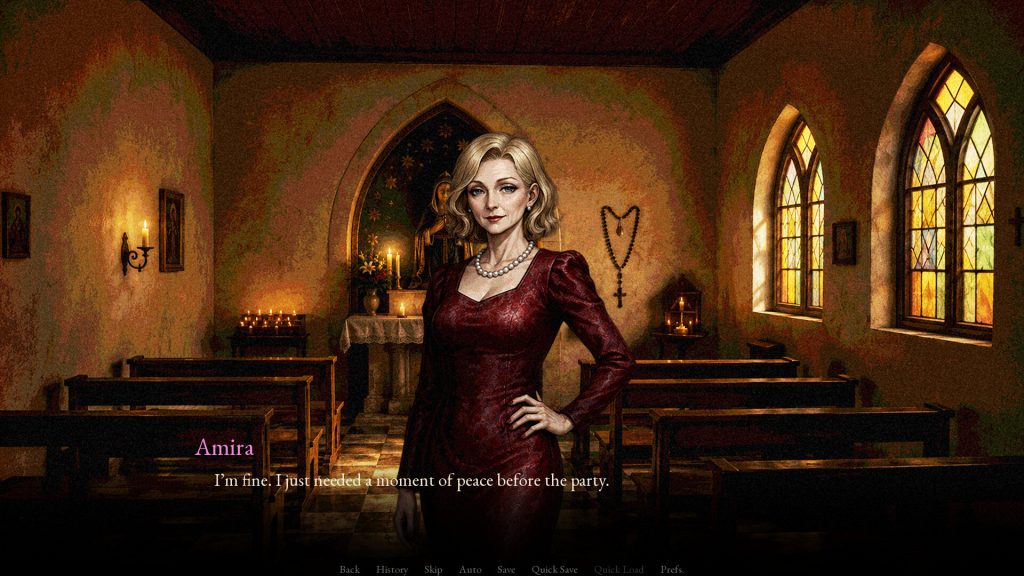
The June 2026 update represents the most substantial post-launch revision of Luce Spenta. Developer MrFaabry’s framing is direct: “In the previous version, I used AI tools quite extensively, but in this remake, I’ve minimized them. You’ll see clear differences in detail, proportions, expressiveness, and overall consistency.”
This is an unusually candid acknowledgment of the AI-tool question, and the response is significant. The original game’s visual presentation was reportedly part of why it found its audience — and yet the developer’s own evaluation was that those visuals could be substantially improved through manual craft. The decision to invest months of post-launch work into manually replacing AI-assisted content with hand-drawn alternatives reflects both creative dedication and a particular perspective on what makes art feel coherent and authentic.
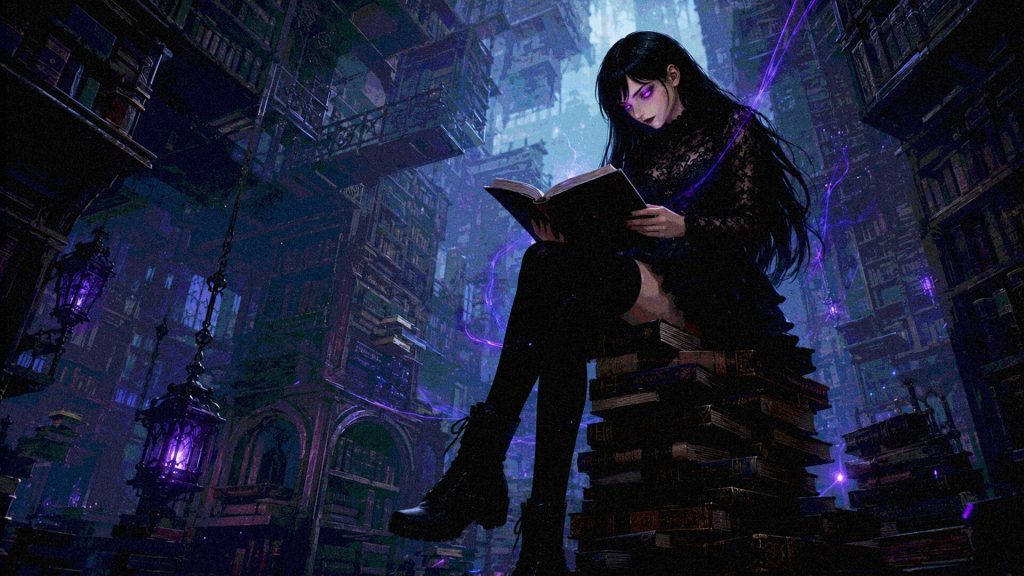
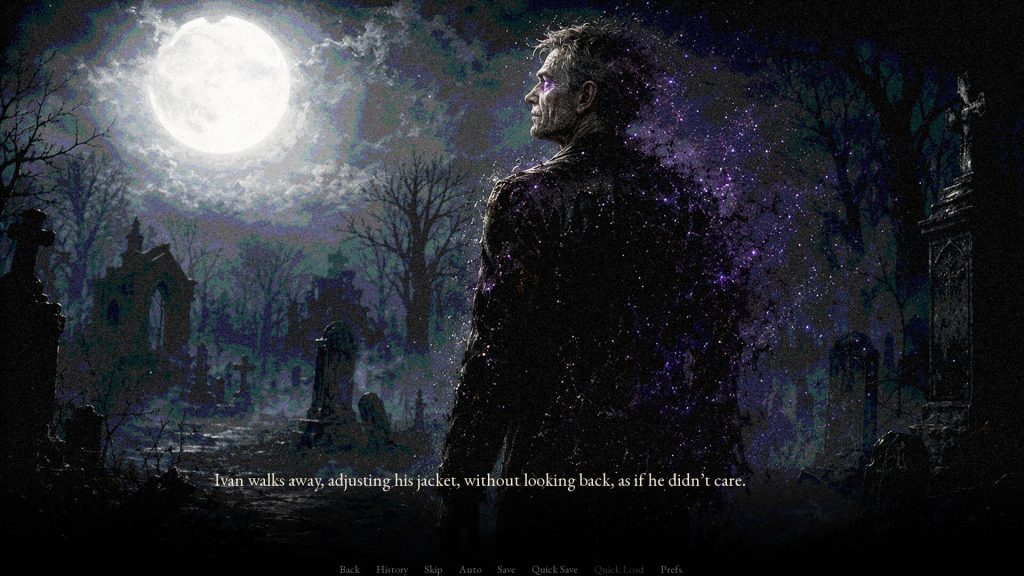
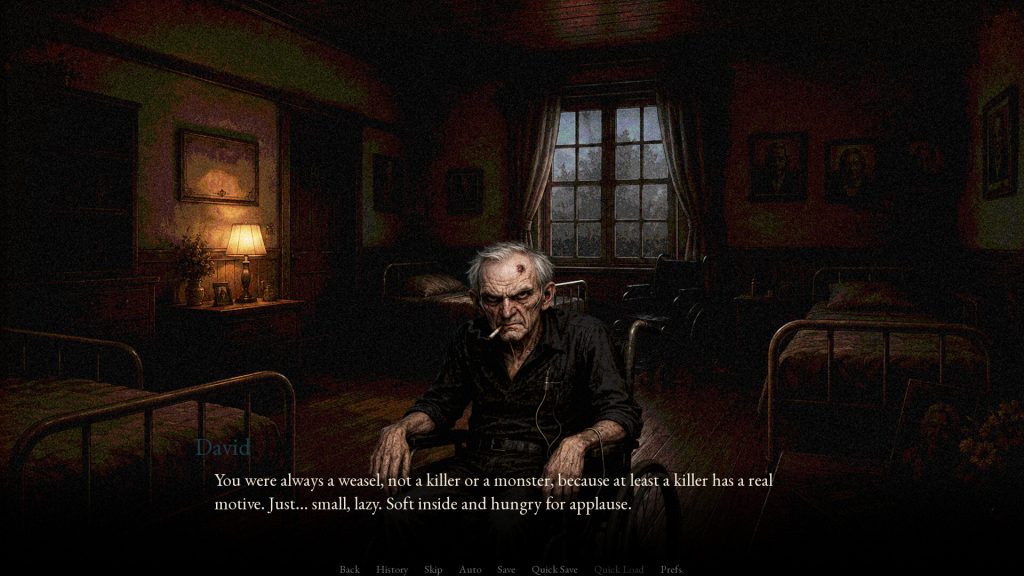
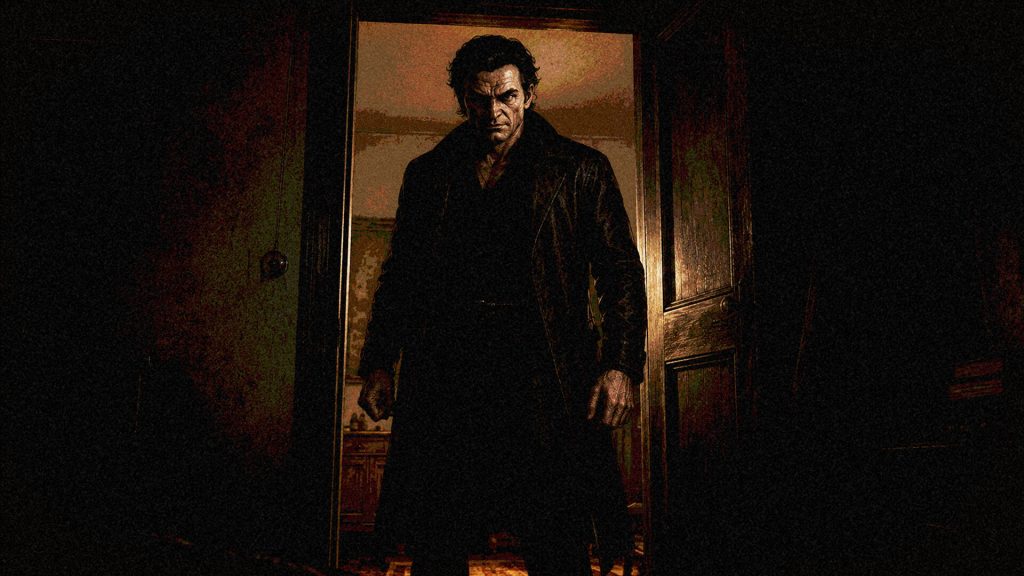
The update covers comprehensive visual elements: background art, character illustrations, CG scenes, event images, UI, and presentation elements. Most visual material has been newly created with the explicit goal of expressing the gothic and psychological atmosphere more deeply.
The technical execution emphasizes detail, proportion, expressiveness, and consistency. These are the dimensions where AI-generated visuals typically reveal their limitations: tiny detail decisions, anatomical or environmental proportions, character expression subtlety, and the unified visual language that emerges when a single artist makes consistent decisions across hundreds of images.
The developer’s note that “all visual elements were directly curated and edited by the developer before final application” emphasizes the personal authorship dimension. This isn’t just AI output run through human approval — it’s hand-drawn artwork by a developer who has decided that this medium deserves manual craft commitment.
The Atmospheric Foundation
Beyond the visual update, Luce Spenta maintains its strong atmospheric foundation. Dark cemeteries, deep shadows, intricately rendered character portrayal — the visual register communicates the gothic psychological territory the work occupies. The new hand-drawn content presumably extends this register more consistently than the AI-assisted original version achieved.
Sound design is one of the project’s other key strengths. Background music and sound effects creating melancholy and unsettling atmosphere pervade the experience. The absence of voice acting becomes a feature rather than a limitation — the player’s own internal voice fills the silences, creating the kind of intimate first-person engagement that voice acting can sometimes interrupt. For psychological horror specifically, this design choice is appropriate.
The total package — gothic visuals, atmospheric audio, philosophical narrative structure, and moral self-examination payoff — produces a coherent experience that respects player intelligence. Luce Spenta trusts players to engage with serious moral material without softening or simplifying.
Critical and Player Reception
The original release earned positive press from multiple outlets. NeverMoreNiche awarded 4.5/5, praising how “the story made me engaged until the end and made me want to know more.” The Drastik Measure gave 8.4/10, describing it as “a gloomy yet beautiful visual novel” while highlighting the strong atmosphere and emotional narrative.
Steam user response has been similarly positive. Players have described the combination of story, soundtrack, and difficult choices as exceptional, with one user noting they would “recommend this work even to those who don’t usually enjoy visual novels.” Another user characterized the project as “introspective, gothic, emotionally deep journey,” appropriately suited for players seeking serious narrative and reflective experience rather than light entertainment.
The reception pattern indicates that Luce Spenta successfully reaches its target audience. Players seeking light entertainment or pure mechanical satisfaction will find it unsuited to their preferences — but players seeking serious narrative engagement with moral material find it deeply resonant. This kind of audience-specific success is exactly what serious narrative games can achieve when they commit fully to their material rather than diluting it for broader appeal.
The Next Project: “This Time You Are the Story”
MrFaabry has shared preliminary information about an upcoming project through community channels. The framing is provocative: if Luce Spenta placed players as external judges observing stories, the next project will provide a fundamentally different experience. “This time, you will be in the story. You will be the story itself. You will have flesh and blood.”
This is a significant narrative shift. The external-judge positioning of Luce Spenta gave players cognitive distance from the moral material; the next project apparently eliminates that distance by placing players directly within the narrative. Players will reportedly have actual character embodiment rather than the disembodied judge position, which transforms the relationship between player and story entirely.
The developer has also indicated that character sprites and visual presentation will be further enhanced in the next project, with even lower AI tool dependence. This trajectory — increasingly manual visual craft as the developer’s capabilities grow — suggests MrFaabry is committed to the hand-drawn approach as a long-term creative direction rather than treating the Luce Spenta remake as a one-time investment.
Community requests for additional language localization (particularly French) have been noted. The project already supports an unusually broad language coverage (English, Italian, Spanish, German, Portuguese, and 13 additional languages), suggesting MrFaabry takes international accessibility seriously as a design value.
The Solo Development Context
Luce Spenta exists within a specific tradition of solo-developer visual novels that prioritize craft and meaning over commercial scope. Italian indie developer Fabrizio Franco has built the project alone, including the visual remake that most studios would distribute across multiple artists. This kind of complete authorship produces specific creative qualities: consistent vision, personal investment visible throughout, and freedom to take risks that committee-developed projects typically avoid.
The $8.99 price point also reflects the solo development reality. Visual novels can support sustainable solo development at a modest scale if priced accessibly enough to encourage broader audience adoption. Luce Spenta‘s pricing positions it as approachable entry-level content for visual novel-curious players while delivering substantial narrative depth for committed engagement.
The post-launch dedication demonstrated through the major visual remake is particularly notable for solo development. Many solo developers ship projects and move directly to the next work without significant post-launch investment. MrFaabry’s commitment to substantially improving Luce Spenta seven months after launch reflects both pride in the work and ongoing creative engagement with the project’s themes.
Who This Is For
Strong fit for: visual novel enthusiasts seeking philosophically serious content; gothic horror fans drawn to atmospheric psychological work; players interested in moral choice systems that genuinely reveal something about player values; fans of Spec Ops: The Line or Black Mirror-style audience-implicating narratives; anyone who appreciates solo developer authorship and personal artistic vision; players willing to engage with reflective rather than escapist game experiences.
Cautious fit for: players who prefer action-focused content over text-driven narrative; anyone uncomfortable with material involving guilt, judgment, and moral examination.
Less ideal for: players seeking light entertainment or pure escapist gameplay; anyone allergic to gothic horror atmosphere or psychological darkness; players who specifically prefer voiced narratives over text-only presentation.
What the Remake Means
The June 2026 visual remake update has multiple meanings within the broader gaming context.
For Luce Spenta specifically, it represents the project completing its evolution from initial release toward what the developer apparently envisioned all along. Players who experienced the original now have access to a more refined version of the same fundamental work. Players engaging for the first time get the full intended visual experience without compromise.
For solo developer philosophy more broadly, MrFaabry’s choice to reduce AI tool dependence in favor of hand-drawn manual work represents a specific creative stance in an ongoing industry conversation. Many solo developers find that AI tools enable scope they couldn’t otherwise achieve; Luce Spenta‘s remake represents an alternative direction: using accumulated capability and time to replace AI-assisted content with manual craft. Neither approach is universally correct, but the visibility of MrFaabry’s choice contributes meaningfully to how solo developers think about these tools.
For the visual novel as a medium, Luce Spenta‘s success demonstrates that the format continues to support serious philosophical and atmospheric work. The genre has historically been dominated by romance and slice-of-life content with smaller serious-narrative segments; releases like Luce Spenta extend the medium’s reach into more challenging emotional territory.
The Takeaway
Luce Spenta, in its remade form, represents one of the more genuinely thoughtful solo-developer visual novels currently on Steam. The original release earned its positive reception through serious narrative engagement and atmospheric commitment; the June 2026 remake update significantly strengthens the visual foundation while maintaining the qualities that earned the original its audience.
For visual novel fans who haven’t yet engaged with Luce Spenta, the remake update provides the ideal entry point — the project at its current best, with the developer’s evolved craft applied to material that already demonstrated narrative quality. For existing players who experienced the original version, the remake offers compelling reasons to return.
The $8.99 price point makes this exceptionally accessible. For the cost of a typical lunch, players gain access to 25+ endings of a philosophically serious gothic visual novel with hand-drawn art by a committed solo developer. The value proposition is straightforward.
Beyond Luce Spenta itself, the project signals MrFaabry as a solo developer to follow closely. The next project’s promise — placing players within the story rather than as external judges — represents the kind of structural ambition that suggests this developer’s work will continue evolving in interesting directions. Indie scene observers should be wishlisting MrFaabry’s future work based on what Luce Spenta demonstrates.
Five graves. Five souls. Five judgments that ultimately reveal the judge. As gothic visual novels go, Luce Spenta operates in territory most projects don’t attempt — and the June 2026 remake update brings the visual presentation in line with the conceptual ambition. For players seeking serious narrative engagement with moral material, this is one of the more rewarding small indie experiences currently available.
The dark cemetery is waiting. The souls have their stories ready. And somewhere in your responses to their cases, your own moral framework will quietly reveal itself. Whether that revelation feels like discovery or confirmation depends on what you bring to the encounter — but either way, you’ll have engaged with something genuine.
Welcome to Luce Spenta. The judgment, ultimately, is yours.
Information regarding ‘Luce Spenta’
| item | detail |
|---|---|
| Developer / Publisher | MrFaabry (Fabrizio Franco, Solo Developer, Italy) |
| Genre | Gothic Psychological Visual Novel / Interactive Fiction / Horror |
| Release platform | PC (Steam) / Windows·macOS·Linux |
| Release date | October 24, 2025 |
| price | $8.99 USD |
| Number of endings | 25 or more |
| Key Evaluation | NeverMoreNiche 4.5/5 · The Drastik Measure 8.4/10 |
| Supported languages | English, Italian, Spanish (Latin America), German, Portuguese (Brazil), and 13 other languages |
| Main Keywords | Gothic, Psychological Horror, Multi-ending, Moral Choice, Judgment, Memory, Guilt, Forgiveness |
| Steam Page | Shortcut |