Renting VHS tapes, rewinding before returning, paying late fees for the tape you forgot about — that whole texture of cultural life that vanished with streaming is back, in game form. Retro Rewind: Video Store Simulator, the unexpected hit from two-person Quebec indie studio Blood Pact Studios, has become one of 2026’s most distinctive indie success stories. Launched March 17, the game hit Steam’s top sales charts immediately, crossed 100,000 sales in just four days, and currently sits at approximately 150K-200K total sales with a 95% Overwhelmingly Positive rating across 5,800+ reviews.
For a small Quebec studio with no major IP, no marketing budget for traditional advertising, and only two people on the development team, this is the kind of breakthrough that justifies why indie development matters.
A Cultural Space That Doesn’t Exist Anymore
The most fundamental insight behind Retro Rewind‘s success is choosing to recreate a cultural space that’s now genuinely gone. Video rental stores — Blockbuster, Hollywood Video, and the thousands of independent neighborhood video stores that defined American and Canadian retail culture from the 1980s through the early 2000s — have essentially disappeared. The few that remain function more as nostalgia museums than as practical businesses. An entire mode of cultural consumption (browsing physical shelves, taking recommendations from staff, negotiating physical limits on selection, dealing with late fees, and rewind requirements) is now historical rather than current.
That cultural absence is the game’s emotional engine. For players who lived through the video rental era, Retro Rewind offers genuine nostalgia for a specific cultural experience that can’t be recreated in physical space anymore. For younger players who never knew video rental, the game functions as a kind of cultural time machine — an interactive education in how home entertainment culture used to work.
This is a different value proposition than typical management sims provide. PowerWash Simulator lets you clean things; Rim World lets you build a colony. Retro Rewind lets you operate a piece of vanished cultural infrastructure. The simulation is also a memorial, and that combination creates emotional weight that pure mechanics-focused sims rarely achieve.
The Texture of the 1990s
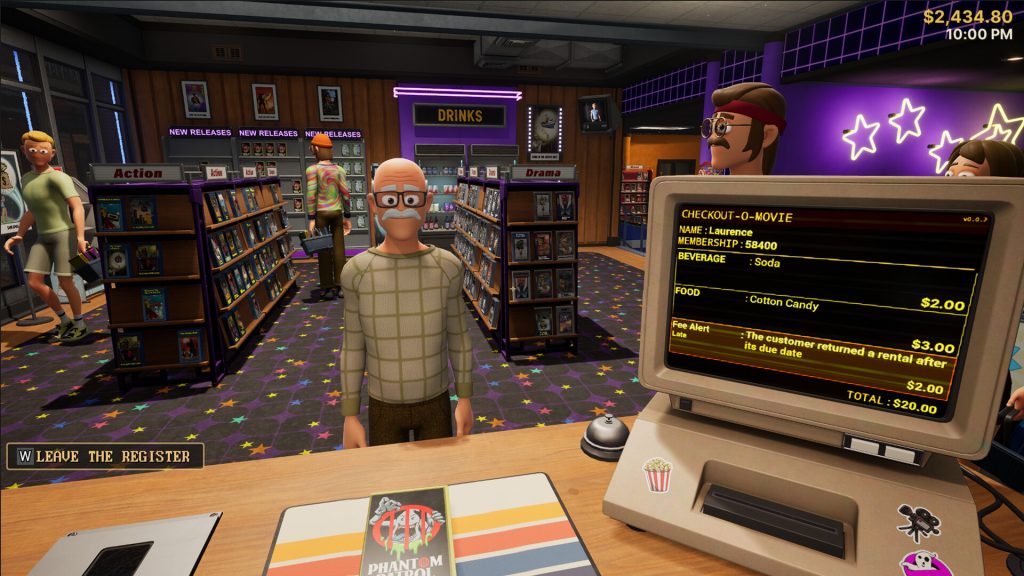
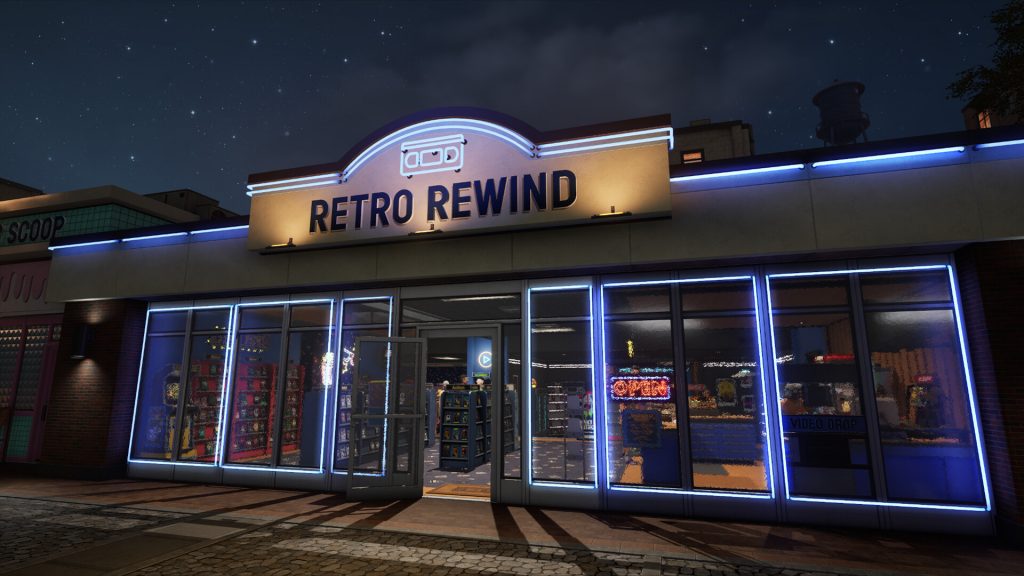
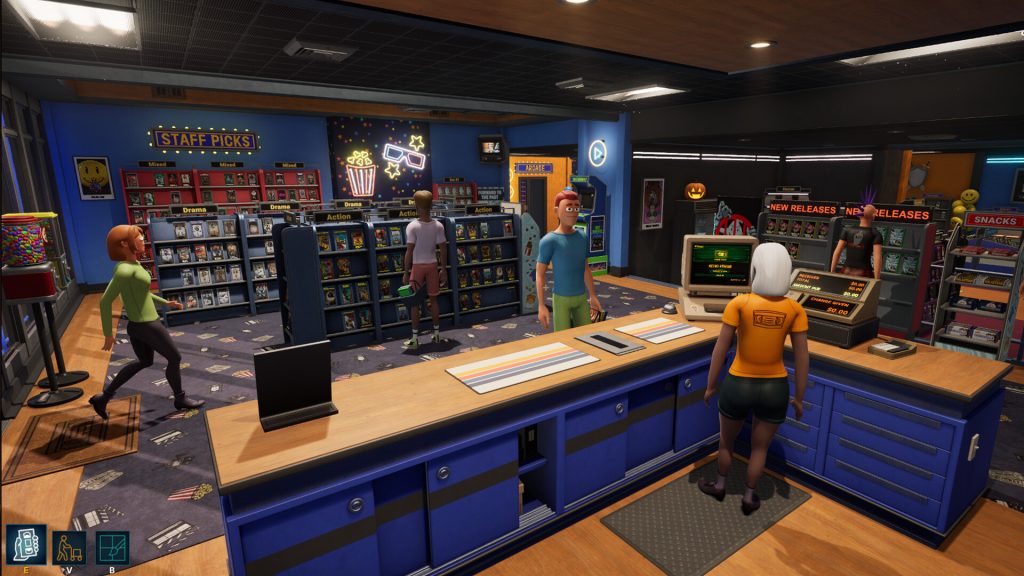
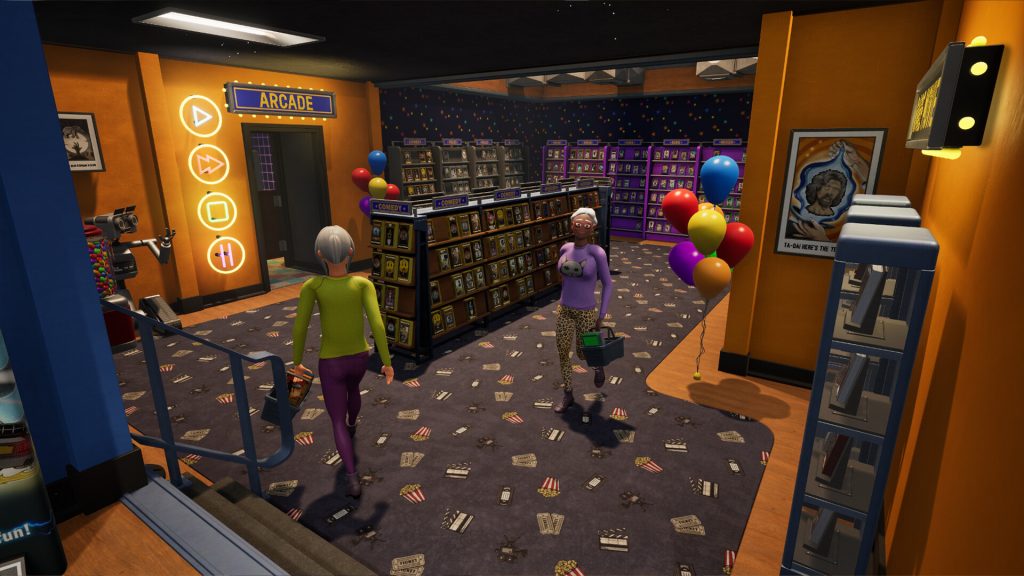
The detail commitment is where Retro Rewind separates itself from generic retro management games. The fluorescent-lit, organized VHS shelves. The faded movie posters. The counter that you can imagine smells like popcorn. The regular customer sheepishly opened the door, carrying an overdue tape. Every element of the 1990s video store atmosphere is rendered with the kind of specific attention that signals genuine cultural memory rather than reference research.
The sound design is equally committed. The mechanical sound of VHS tapes rewinding. The click of tapes passing through scanners. The dull thud of a video case being set down on the counter. These small audio details build a tactile atmosphere that visual presentation alone couldn’t achieve. Sound is one of the strongest nostalgia triggers available — specific mechanical sounds connect immediately to embodied memory in ways that visuals don’t always reach.
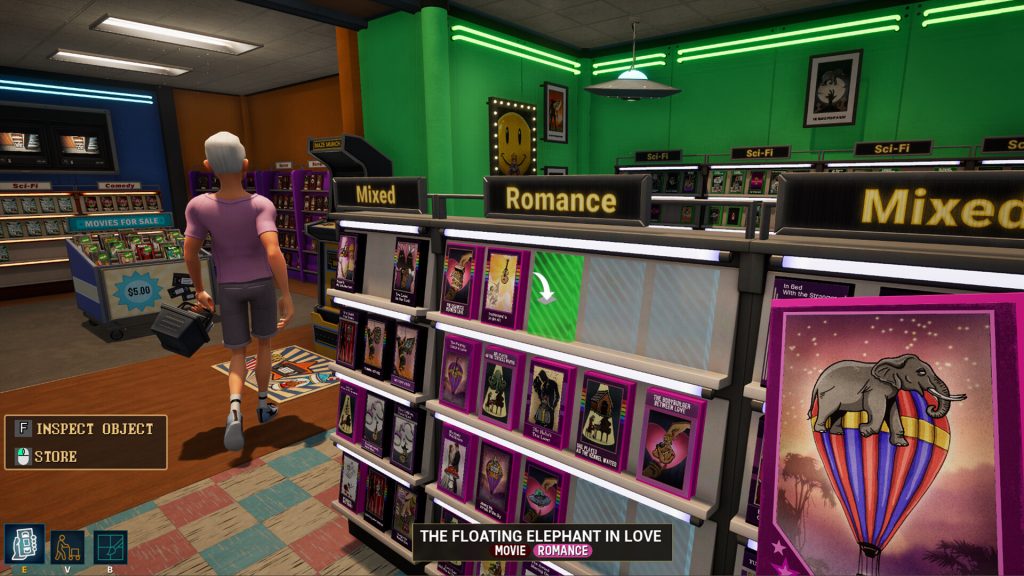
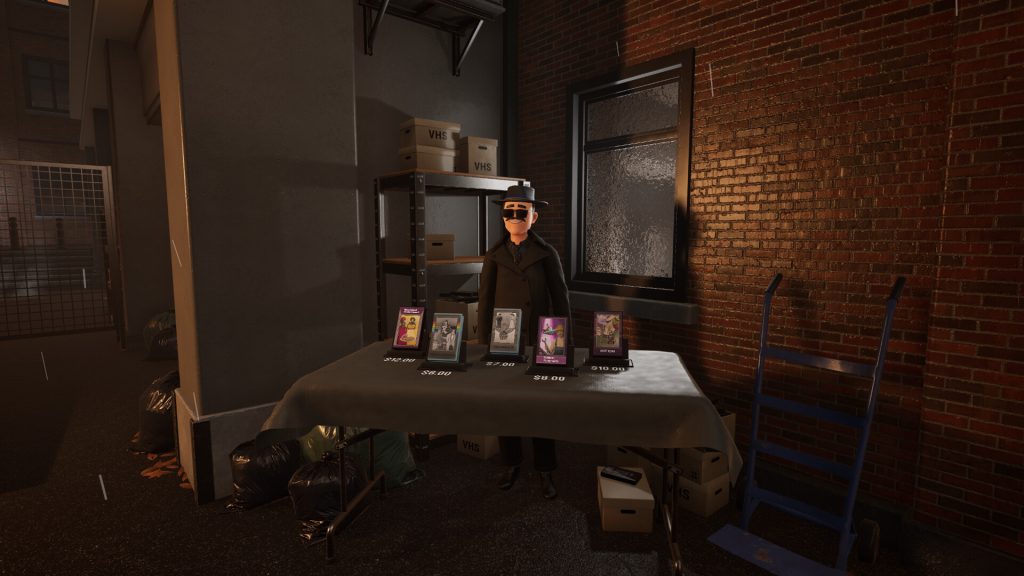
The in-game movie collection deserves specific attention. The game features parody titles reminiscent of actual famous films, with extensive hand-drawn VHS cover art capturing the specific aesthetic of the era. The B-movie and cult film atmosphere that filled video store shelves naturally evokes itself. Anyone who spent time browsing video stores in the 90s will recognize the visual register — the over-the-top airbrushed cover art, the strange genre combinations, the always-promising-more-than-they-delivered taglines.
The hand-drawn approach to the VHS covers is particularly clever. Mass-produced video covers from the era had a specific aesthetic that was distinctly “of its time” — the airbrush techniques, the bombastic typography, the action-movie-coded design language, even for non-action films. Recreating this through hand-drawn original art rather than using actual film references both respects copyright concerns and authentically captures the visual texture of the period.
The Full Video Store Experience
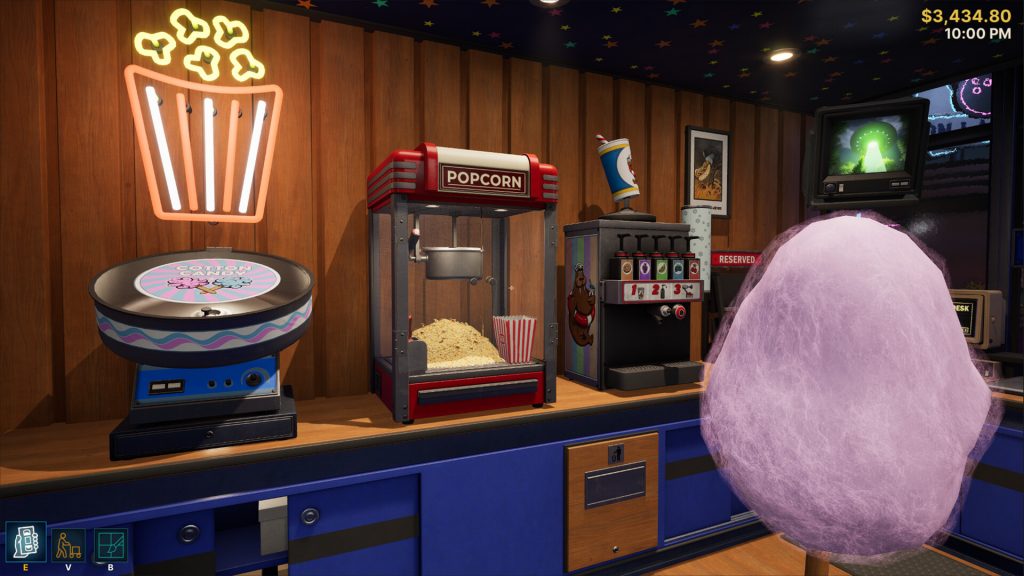
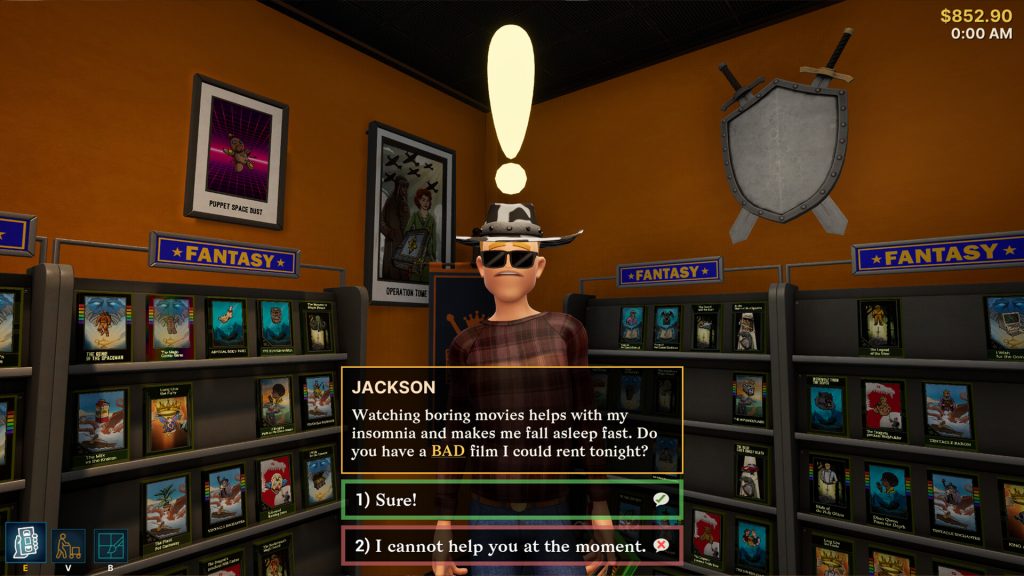
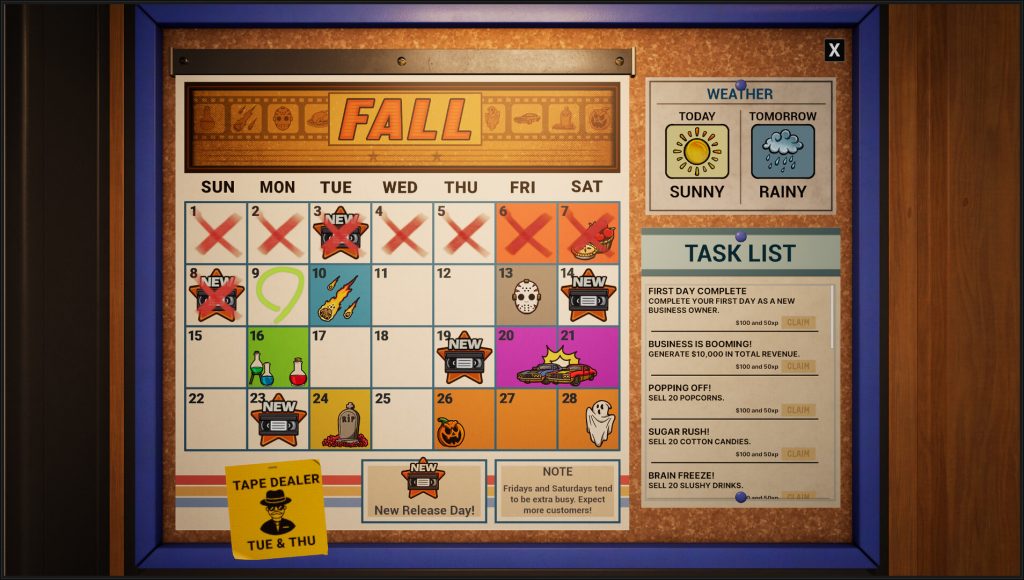
The gameplay covers genuine breadth across video store operations. VHS rental and sales. Stock management. Reservation systems. Late fees. Movie recommendations to customers. Snack sales. Each daily task moves with surprising velocity once the store starts getting busy.
Beyond customer-facing operations, the management depth expands further. Employee hiring and team management. Store expansion. Wall and floor customization. Poster and memorabilia decoration. Players can build their own personal version of a video store, expressing taste through curation and decoration in ways that genuinely matter to the experience.
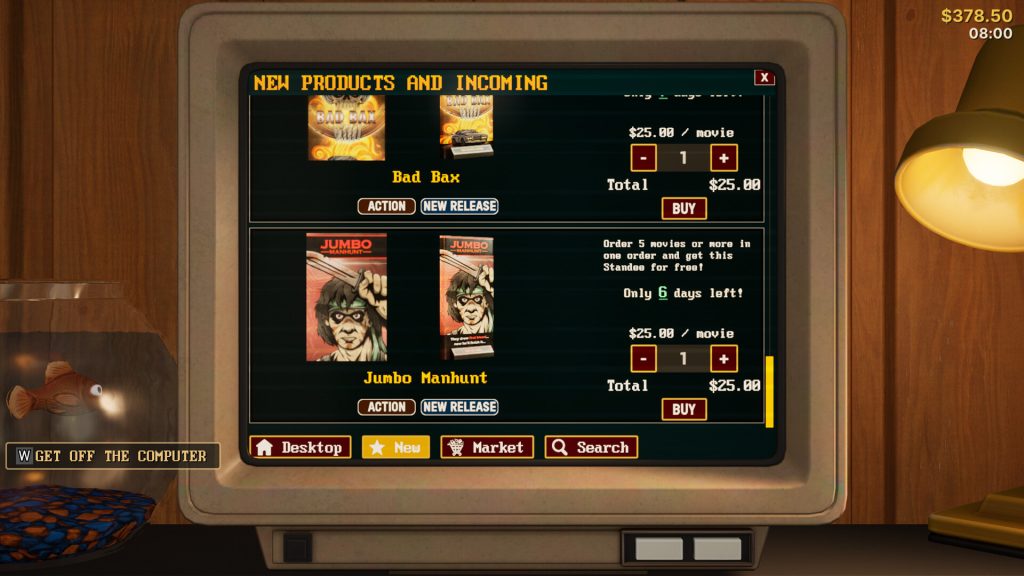
The VHS title catalog is substantial — thousands of titles across the shelves, each with distinct titles, genres, and the hand-drawn cover designs mentioned above. As players level up their stores, new systems and mini-games unlock, expanding the management possibilities. This progression structure gives the game shape across the campaign rather than letting it remain a single repeating loop.
The level of detail in the operational simulation captures something important about why video stores were memorable: they weren’t just retail spaces, they were curated cultural environments. Good video stores had distinct personalities through their selection emphasis, staff knowledge, and atmospheric choices. Retro Rewind gives players the tools to build that kind of personality-driven store.
The Endgame Critique and Roadmap Response
Despite the strong initial reception, some users have raised concerns about endgame content shortages and long-term play motivation. This is a legitimate critique — management sims live or die on how their late-game experiences feel, and Retro Rewind‘s early-game charm needs to translate into sustained engagement for the game to maintain its current momentum.
Blood Pact Studios has responded with an updated roadmap including additional storage spaces, video game sales functionality, and new content enhancements. The console game sales addition is particularly thematically appropriate — many real-world video stores expanded into video game rentals and sales as the medium grew during the 90s, so adding this functionality both increases the gameplay scope and deepens the cultural authenticity.
The community feedback loop driving update planning represents the right developer-community dynamic. Small studios that listen to player feedback and respond with concrete improvements typically maintain their audiences much longer than studios that ship and disappear. Blood Pact’s responsiveness so far signals they understand this.
The feedback pattern is also producing positive secondary effects. Some players have left comments specifically praising the development care: “one of the most carefully made simulation games recently,” “properly revived the Blockbuster-era atmosphere.” That kind of community celebration of a small team’s work creates word-of-mouth marketing that paid advertising can’t match.
The Commercial Story
It’s worth examining the commercial trajectory in detail. Retro Rewind was released on March 17, 2026. By March 21 — just four days later — it had crossed 100,000 sales. Within two weeks, sales were approaching 200,000. These are remarkable numbers for any indie release, but they’re particularly remarkable for a two-person studio with no significant prior commercial track record.
The trajectory reflects multiple factors working in alignment. The cultural concept is immediately legible — anyone can understand what “1990s video store simulator” means and decide if they’re interested. The aesthetic execution is of high enough quality that screenshots and short videos perform well in social media discovery. The Steam algorithm rewarded the strong early sales by surfacing the game to more potential players, creating a momentum cycle. And the price point ($19.90) is accessible enough that the nostalgia-driven impulse-purchase dynamic operates favorably.
The Hollywood Reporter coverage is particularly notable. Mainstream entertainment industry press doesn’t typically cover indie game launches — the publication’s attention to a two-person studio’s video rental simulator reflects how unusual the success story is. Coverage of indie commercial success in non-gaming press helps games reach audiences who wouldn’t encounter them through traditional gaming media.
How Press Has Read It
International gaming and indie game press have covered Retro Rewind positively across multiple dimensions. mxdwn Games emphasized the careful recreation of the 1990s video rental atmosphere and culture. AltChar highlighted period details like VHS rewinding sounds and cash payment systems as key strengths. Games.GG observed that Retro Rewind has “built its own unique territory within the casual management simulation genre,” praising the deep immersion created by the combination of nostalgia and management elements.
The consistent thread in coverage is recognition that Retro Rewind succeeds because it commits fully to its specific cultural moment rather than approaching the era as a decorative reference. Many games can include 90s aesthetic elements; few genuinely understand the texture of how 90s cultural spaces functioned. Retro Rewind‘s critical reception validates the design discipline that distinguishes it from less successful nostalgia projects.
The Broader Cultural Moment
Retro Rewind arrives during a broader cultural moment of nostalgia for pre-streaming media consumption. The vinyl record revival has matured into an established part of contemporary music culture. Physical book sales have stabilized after the e-book scare of the 2010s. Cassette tapes have seen a modest revival. Even Blockbuster Video itself — long since defunct as a corporation — has experienced cultural revival through documentary attention, the surviving Bend, Oregon location’s social media presence, and broader generational reconsideration of physical media culture.
The game taps into something that’s not just individual nostalgia but a broader cultural reconsideration of what we lost in the transition to digital streaming. The browsing experience, the staff recommendation culture, the physical limits that forced curatorial decisions, the social experience of going somewhere to obtain entertainment — these were features of the older system, not bugs to be eliminated. Retro Rewind lets players experience that older mode of cultural consumption interactively, which provides something that pure documentary or written nostalgia can’t.
For Quebec specifically, the development context adds another dimension. Quebec has a distinct video rental cultural history — the province’s French-language video rental ecosystem operated parallel to but separately from the English-language Blockbuster expansion. While the game appears to render a more universal video store experience rather than specifically Quebec culture, the fact that the studio is in Quebec connects the project to a region where video rental culture remained vibrant somewhat longer than in many American markets.
Who This Is For
Strong fit for: 90s nostalgia enthusiasts who lived through the video rental era; younger players curious about the pre-streaming entertainment culture their parents and grandparents experienced; management sim fans seeking culturally distinctive variations on the genre; movie enthusiasts who appreciate the era’s specific aesthetic register; players who enjoyed PowerWash Simulator, Supermarket Simulator, Trash Hotel Simulator, or similar shopkeeper management hits.
Cautious fit for: players who prefer fast-paced or action-focused experiences; anyone who dislikes management sim genres generally; players currently frustrated by the endgame content gaps the developer is addressing through patches.
Less ideal for: players seeking traditional gameplay challenge; anyone uninterested in nostalgia-driven experiences; players who prefer fantasy or sci-fi settings over real-world recreation.
What to Watch For
A few questions will shape Retro Rewind‘s longer trajectory.
The first is whether the roadmap updates address the endgame critique successfully. The promised console game sales feature is particularly important — both for expanding gameplay variety and for extending the cultural recreation to the broader 90s entertainment ecosystem.
The second is whether Blood Pact Studios maintains development momentum at a sustainable pace. Two-person teams that achieve breakthrough successes sometimes struggle with the scale demands of sustained post-launch support. How Blood Pact handles this transition will affect the game’s long-term reception.
The third is whether the commercial success translates to broader Blood Pact Studios development opportunities. A two-person team that’s now sold 200K copies has significantly more development resources for future projects, and where they go next will be one of the interesting indie stories of 2026-2027.
The fourth is the international localization performance. With 8 language localizations at launch, Retro Rewind is positioned for global reach, and whether non-English-speaking markets respond similarly to the nostalgia-driven appeal will affect the total sales trajectory.
The Takeaway
Retro Rewind: Video Store Simulator is one of the more genuine success stories of 2026’s indie scene — a two-person Quebec studio committing to a specific cultural moment with sufficient care and detail to create something that resonates with multiple generations of players simultaneously. The 200K+ sales figure represents real commercial achievement; the 95% Overwhelmingly Positive rating across 5,800+ reviews represents real player satisfaction; the cultural conversation generated by the game has reached mainstream entertainment press in ways that indie game launches rarely achieve.
The success demonstrates something important about indie development in the current era: distinctive cultural concepts executed with discipline can break through without massive marketing budgets, established IP, or huge teams. Two people with a clear vision about recreating the 1990s video rental culture turned out to be all that was needed.
For players, this is a recommendation that depends on whether the cultural concept resonates with you. If you have any nostalgia for video rental stores, or if you’re curious about that era, Retro Rewind is one of the more carefully crafted nostalgia experiences in current indie gaming. The endgame gaps are real but actively being addressed, and the price point ($19.90) is reasonable for the substance the game provides.
For the indie scene broadly, Retro Rewind serves as an inspirational case study. A two-person Quebec team without significant industry connections built one of 2026’s breakthrough indie hits through pure design discipline and cultural specificity. That story matters for every other small team currently working on their own distinctive cultural projects — proof that the path from small studio to commercial success remains viable when the work is good enough.
A fluorescent-lit video store. Shelves packed with VHS tapes. A counter where late fees get debated, and movie recommendations get exchanged. The mechanical sounds of an entire mode of cultural life that vanished with streaming. As 90s nostalgia projects go, Retro Rewind is among the most thoughtfully constructed — and based on the sustained sales and review momentum, it’s reaching far beyond just the audience that lived through the era.
The video store is open. The shelves are stocked. The customers are coming in. Welcome back to the 90s.
Information regarding ‘Retro Rewind (Retro Rewind – Video Store Simulator)’
| item | detail |
|---|---|
| Developer / Publisher | Blood Pact Studios (2-person team) |
| Genre | Shopkeeper Management Simulation / Casual / Immersive Sim |
| Release platform | PC (Steam) / Steam Deck (Playable) |
| Release date | March 17, 2026 |
| price | €19.90 / $19.90 |
| Steam Review | Overwhelmingly positive 95% (5,803+) |
| Sales volume | 100,000 copies sold in 4 days / Approaching 200,000 copies sold in 2 weeks |
| background | Video rental store in the early 1990s |
| Language support | 8 languages, including English, French, German, Spanish, and Italian |
| Main Content | Thousands of VHS tapes / Hand-drawn cover art / Staff hiring / Interior customization |
| Main Keywords | 90s, video rental store, VHS, nostalgia, management simulation, cozy, retro, blockbuster |
| Official Channel | Discord |
| Steam Page | Shortcut |