Every Korean knows Kimbap Heaven. It’s the casual neighborhood restaurant chain you eat at after late-night work, before exams, when you don’t want to think about what to order — open until late, packed with menu items, cheap and reliable. It’s not Korean fine dining. It’s something more important than that: the everyday food culture that actually defines how Koreans live and eat. Kimbap Heaven Simulator, the in-development cooking and management sim from Seoul-based Joyful Jo Inc., is turning that ubiquitous casual restaurant experience into a game — and based on the demo reception, the cross-cultural appeal is working better than even the developers might have expected.
After 27 patches since the February demo release and significant streaming visibility across Korean platforms SOOP and CHZZK, plus international YouTube coverage, Kimbap Heaven Simulator is heading into its final development push toward Q2 2026 release.
A Genre Gap That Was Hiding in Plain Sight
The most interesting thing about Kimbap Heaven Simulator‘s premise is how obvious it is in retrospect — and how surprisingly underserved the space actually was. Joyful Jo CEO Jo Sang-hee captured this in a development context: “I’ve enjoyed cooking games and restaurant simulations, but it was hard to find games centered on Korean food. That’s when Kimbap Heaven naturally came to mind. It’s something every Korean knows, and a space that can symbolically encompass the wide variety of Korean cuisine.”
That observation identifies a real cultural gap. Cooking sims have proliferated — Cooking Simulator, PlateUp!, Overcooked, countless others — but they’ve predominantly operated through Western culinary frameworks (Italian, French, American casual dining) or generic restaurant abstractions. Asian cuisines, when they appear, are typically rendered through Japanese (sushi, ramen) framings rather than Korean. Korean food culture, despite its massive global popularity through K-food trends, has been largely absent from the simulation genre.
Setting the game in Kimbap Heaven specifically is a clever design choice. The chain isn’t fine dining — it’s the everyday food culture where Koreans actually eat. By making the game about a casual neighborhood restaurant rather than a high-end Korean BBQ place or a traditional hanjeongsik experience, Kimbap Heaven Simulator captures the authentic texture of Korean food life. International players experiencing the game aren’t tourists eating at a curated cultural showcase — they’re getting the equivalent of Koreans eating real Korean food in real Korean spaces.
The “Heaven” in the name also captures something specifically Korean about the chain. The naming convention treats casual dining as a kind of secular sacred space — the everyday refuge where you go to be fed reliably and without pretension. That cultural meaning is part of what the game is preserving in its translation to interactive media.
The Real Cooking System
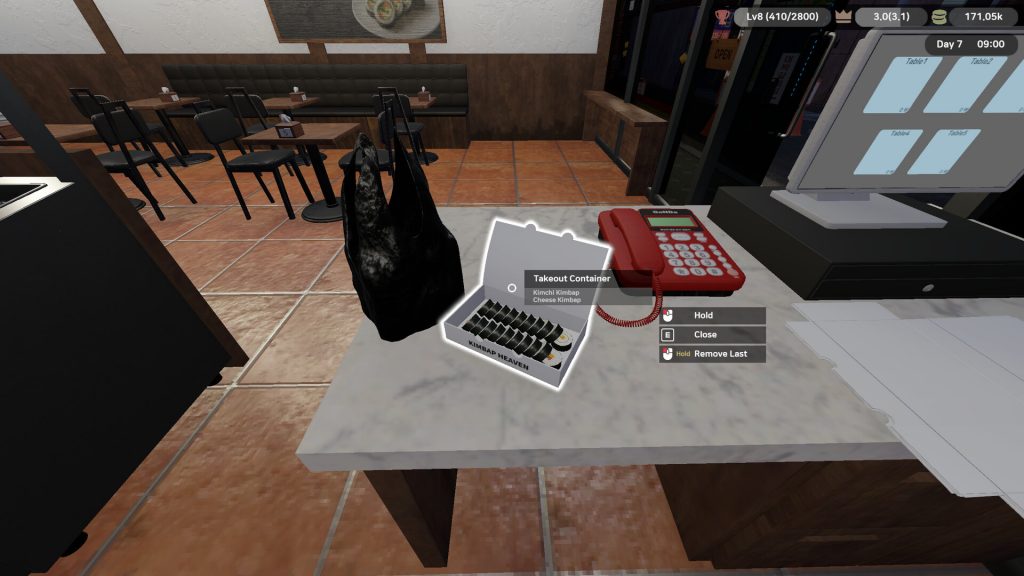
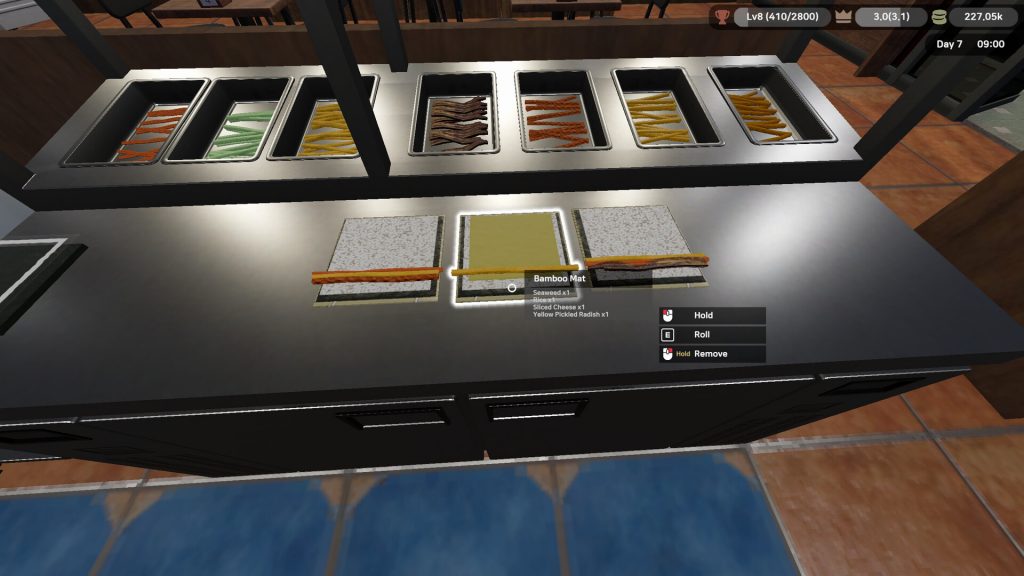
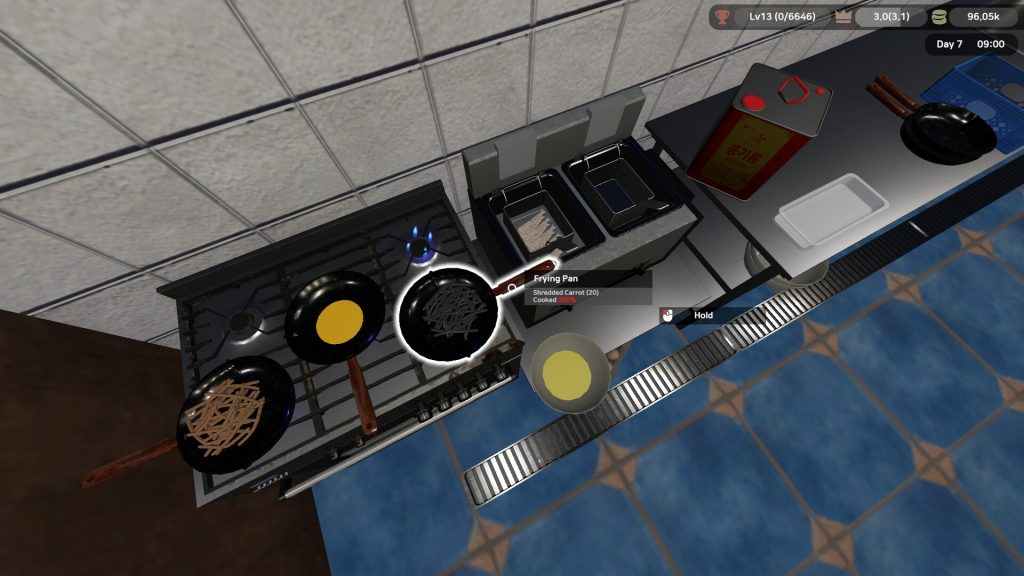
The core gameplay commitment is what elevates Kimbap Heaven Simulator above similar titles. The game doesn’t reduce cooking to button presses or simplified mini-games. You actually have to wash rice, cook it, blanch spinach, stir-fry carrots, fry eggs, lay ingredients on dried seaweed, roll the kimbap, and cut it into pieces. The full procedural process of making kimbap is implemented as gameplay.
This commitment matters for several reasons. First, kimbap-making is a culturally specific skill — most non-Korean players have never thought about how it’s actually made. The procedural cooking system functions as cultural education embedded in gameplay. By the time a player has completed several kimbap preparations, they actually understand how the food gets made, not just that it gets made.
Second, the procedural depth gives the game a genuine satisfaction architecture. Burning ingredients or being slow with orders affects customer satisfaction and operational efficiency. This isn’t just for difficulty — it’s how the game ensures that the cooking remains engaging rather than becoming automatic. Players have to genuinely attend to what they’re doing, which transforms repetitive activity into meaningful practice.
Third, the developer’s stated intent to include practical Korean kimbap recipes and cooking tips signals an ambition beyond pure entertainment. Kimbap Heaven Simulator isn’t just simulating kimbap-making — it’s teaching enough about kimbap that players could plausibly make some themselves afterward. That’s an unusual ambition for a cooking game, and one that gives the project a value proposition beyond the typical genre.
The Expansion and Management Loop
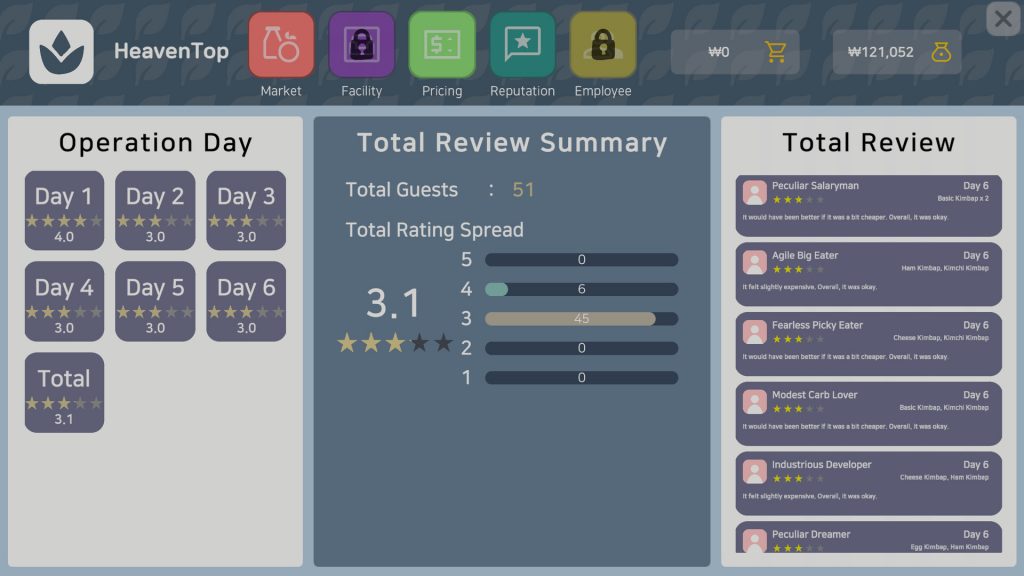
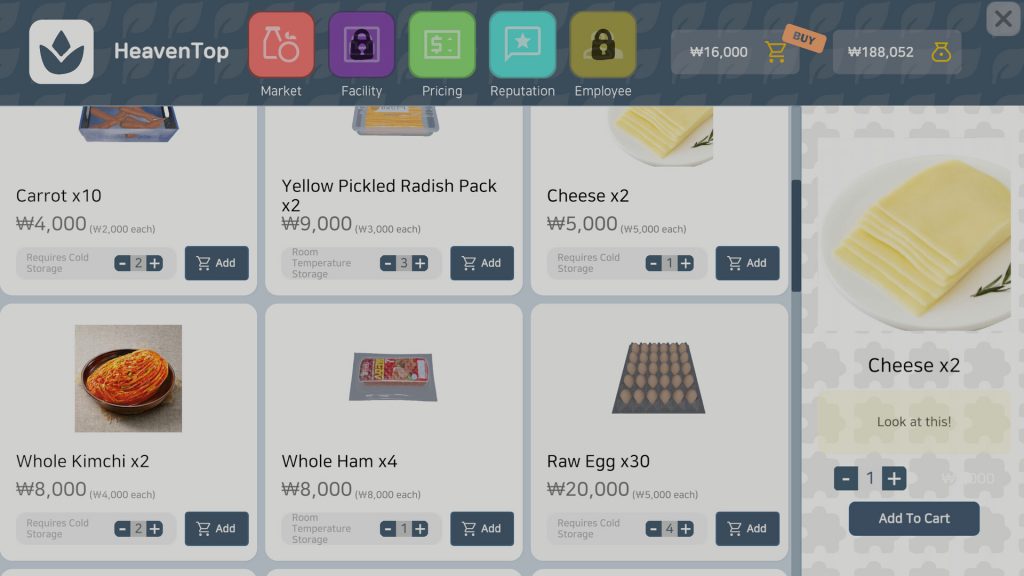
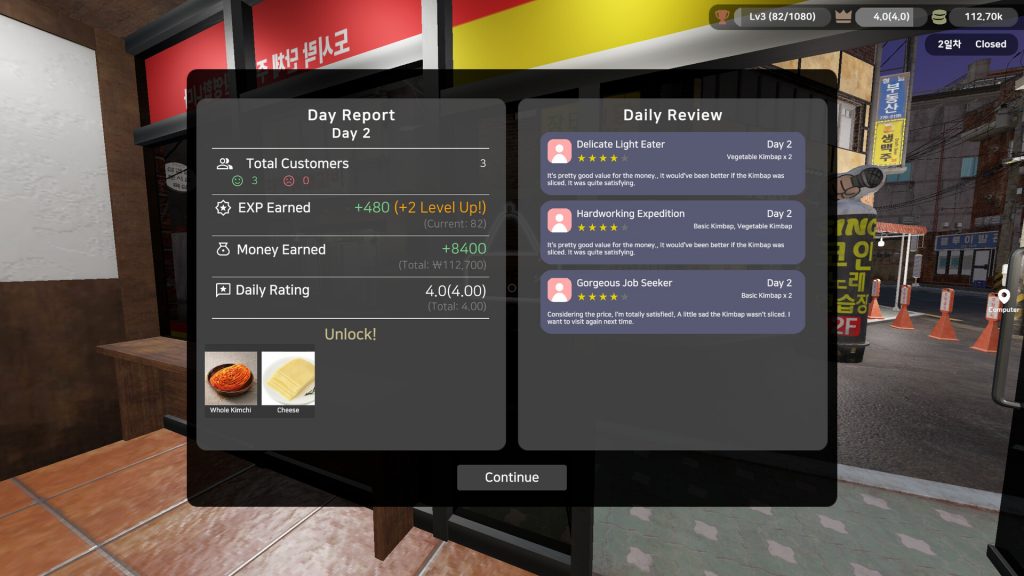
The game’s progression is structured around growing the restaurant from a small operation into a “true Kimbap Heaven.” Players start with basic kimbap and expand the menu to include tuna kimbap, cheese kimbap, beef kimbap, and other variations as the business grows. New cooking equipment and facilities can be introduced, increasing both the restaurant’s scale and operational efficiency.
This structure follows familiar restaurant sim conventions, but it specifically captures something true about how Kimbap Heaven chains actually work. Real Kimbap Heaven restaurants vary enormously in their offerings — some have minimal menus focused on the basics, while others expand into elaborate selections including bibimbap, ramyeon, donkkaseu, jjigae, and dozens of other items. The growth from a small operation to an expansive menu mirrors the real-world variation in the chain.
The progression also gives international players a guided tour through Korean food beyond just kimbap. Each menu expansion introduces new dishes, new ingredients, and new preparation techniques — turning the game into an extended introduction to Korean casual dining cuisine. That’s a substantial educational value embedded in the gameplay loop.
The Co-op Element: Overcooked Meets Korean Casual Dining
The cooperative play structure is one of the more exciting aspects of Kimbap Heaven Simulator. Multiple players can divide kitchen roles to improve efficiency, with the resulting teamwork dynamic reminiscent of the Overcooked series. The fundamental kitchen orchestration challenge — multiple people coordinating across stations, communicating to handle orders efficiently, recovering from chaos when things go wrong — translates beautifully to the Korean restaurant context.
The specific cultural setting adds dimensions to the cooperative experience. Korean restaurant kitchens have their own organizational logic that differs from Western kitchen structures. Working a Korean kitchen with friends in a game form lets international players experience aspects of Korean food culture that they otherwise wouldn’t encounter — the spatial logic of Korean kitchens, the rhythm of Korean restaurant service, and the specific ways that Korean dishes need to be plated and presented.
Korean players will recognize this immediately. International players will be discovering it. Both experiences are valuable, and both contribute to the game’s cross-cultural appeal.
The Aesthetic Authenticity
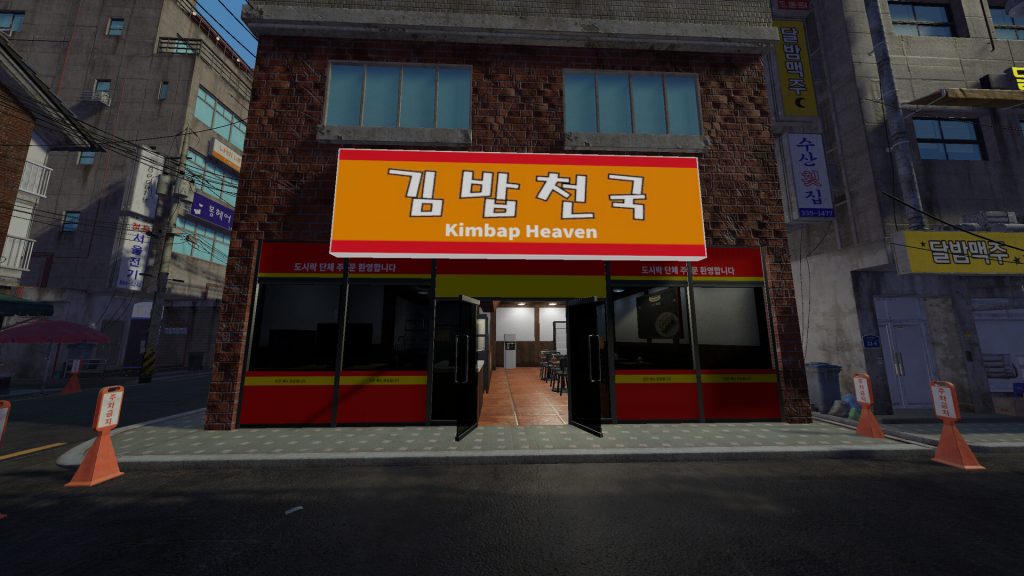
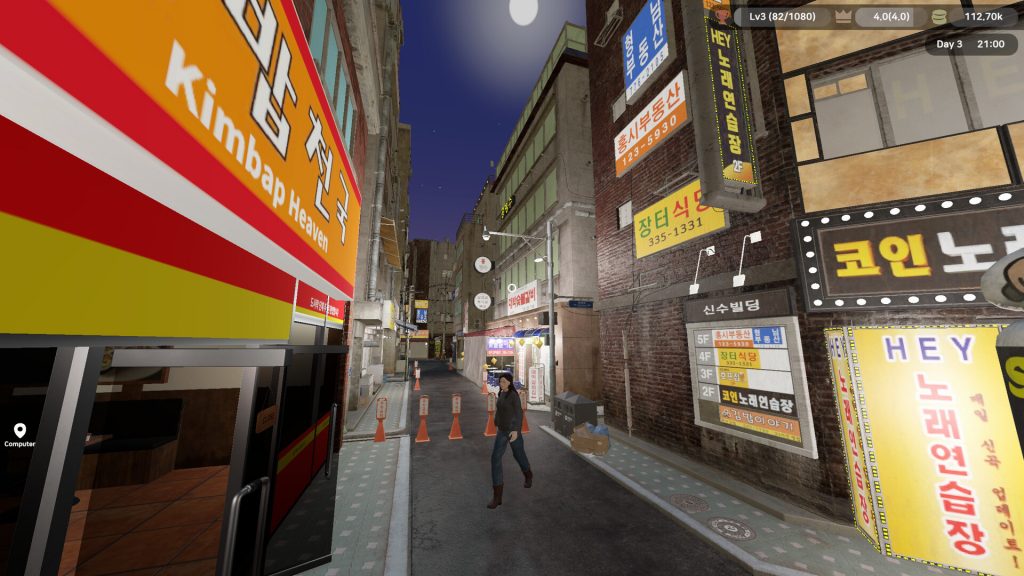
CEO Jo Sang-hee emphasized “Korean living atmosphere” as a core direction for the project. He explained: “I wanted to recreate actual Korean streets and Korean restaurants as closely as possible, so Korean users feel familiarity and international users feel as if they’re visiting Korea directly. This direction has been actively reflected throughout the art design.”
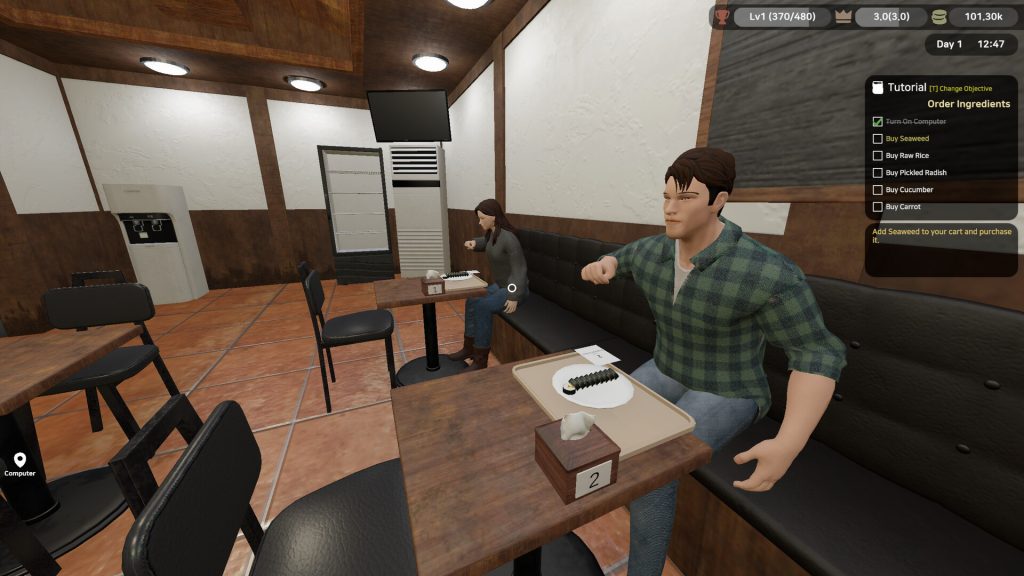
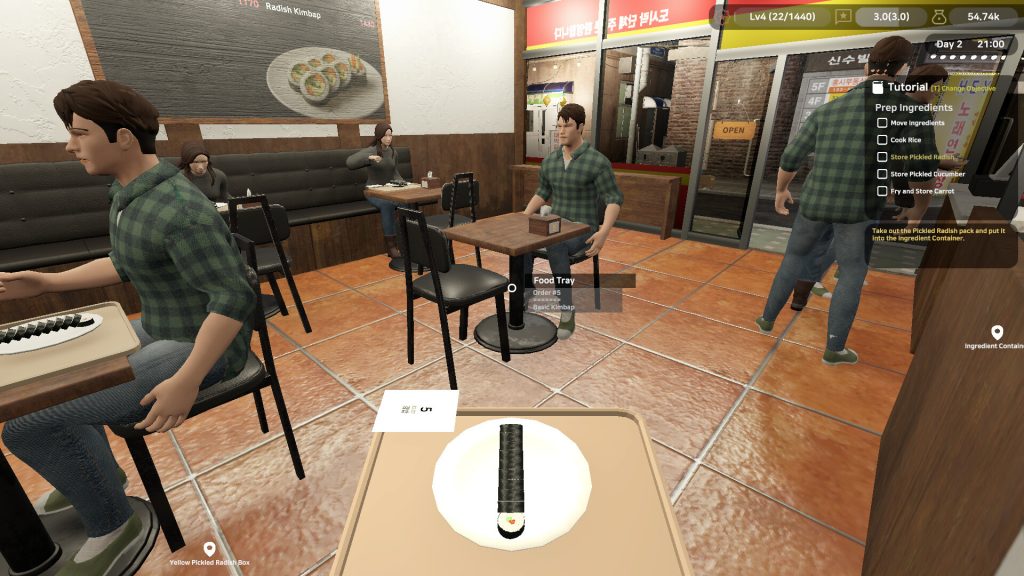
The visual execution combines realistic 3D environments with a specifically Korean locality. Fluorescent-lit restaurant interiors. Menu boards densely packed with items. The cramped but busy first-person kitchen view. Street scenes evoking Korean neighborhood commercial areas. These aren’t generic Asian restaurant aesthetics — they’re specifically Korean visual textures that anyone who’s spent time in Korea will recognize instantly.
The fluorescent lighting is a particularly clever detail. Korean casual dining establishments typically use harsh fluorescent overhead lighting that produces a specific visual quality — efficient, unromantic, deliberately practical. It’s the opposite of Western restaurant ambiance, which trends toward warm intimate lighting. The fluorescent commitment is the kind of aesthetic detail that signals genuine cultural attention rather than surface-level Korean styling.
The menu board density is another authentic touch. Kimbap Heaven menus are famously expansive — sometimes featuring 50+ items spanning kimbap variations, Korean stews, noodle dishes, rice dishes, sides, and beverages. The cramped menu board overflowing with options is part of what makes Kimbap Heaven feel like Kimbap Heaven, and rendering this faithfully in the game captures something culturally specific that more selective restaurant designs would lose.
The Streaming-Driven Discovery
Kimbap Heaven Simulator has been generating significant streaming momentum since the February demo release. Domestic Korean platforms SOOP and CHZZK have seen multiple content creators play the game, with substantial YouTube coverage extending the reach internationally. This kind of organic streaming attention is increasingly how indie cooking games find their audiences, and Kimbap Heaven Simulator‘s combination of cultural specificity and approachable gameplay makes it particularly suited to the format.
Korean user reactions have emphasized the cultural authenticity. Comments along the lines of “I can feel the kimbap heaven atmosphere from after-work visits” and “It would be much more fun with multiplayer role distribution” demonstrate that the project is connecting with its primary cultural audience.
International user response has been notably curious. Korean food and Korean local restaurant management as unique subject matter has generated genuine cross-cultural interest among players who would otherwise have no exposure to Kimbap Heaven specifically or this kind of Korean casual dining generally.
This cross-cultural appeal aligns with the broader Korean food’s global moment. K-food has been one of the most successful cultural exports in recent years, with Korean BBQ, kimchi, ramyeon, Korean fried chicken, and now broader Korean cuisine reaching international audiences who weren’t familiar with Korean food a decade ago. Kimbap Heaven Simulator arrives at exactly the right cultural moment for international players who’ve been intrigued by Korean food culture but haven’t had a way to engage with it interactively.
The 27-Patch Development Discipline
The development update pattern deserves recognition. Between the February 24 demo release and the announcement of the final demo update, Joyful Jo has delivered 27 patches addressing community feedback. This kind of intensive iteration is the right approach for a small indie studio approaching launch — using the demo period not just for marketing but for genuine quality refinement.
This pattern signals what to expect from the full release. Studios that iterate this rigorously through demo periods typically deliver more polished 1.0 releases than studios that ship demos and move on. The “all-out sprint toward official release” framing the developer used suggests the team understands they’re approaching the critical phase where final polish determines launch reception.
Who This Is For
Strong fit for: cooking sim fans (Overcooked, PlateUp!, Cooking Simulator) looking for Korean cultural variation; Korean food enthusiasts who want to engage with the cuisine interactively; players interested in Korean culture broadly; co-op gaming groups seeking new restaurant management experiences; anyone who’s wondered what Korean neighborhood restaurants are actually like.
Cautious fit for: players who prefer simplified arcade-style cooking games over procedural cooking systems; anyone uninterested in cooperative multiplayer (though single-player remains supported).
Less ideal for: players who specifically dislike management or simulation genres; anyone seeking action-focused gameplay; players who prefer Western cuisines over Asian food culture content.
What to Watch For
A few questions will shape Kimbap Heaven Simulator‘s reception at the Q2 2026 release.
The first is whether the procedural cooking system maintains engagement across the full campaign. Detailed cooking systems can become repetitive once players have mastered the basic techniques. How the game introduces new menu items, new techniques, and new challenges across its progression will determine whether the procedural depth becomes a feature or a fatigue point.
The second is the co-op execution quality. Cooperative cooking games depend heavily on smooth multiplayer infrastructure and good role-differentiation design. Whether Kimbap Heaven Simulator‘s online co-op delivers genuine cooperative satisfaction or settles for parallel single-player will significantly affect its long-term appeal.
The third is the cultural translation. The game’s primary value proposition for international players is an authentic Korean restaurant experience. How well that translation works — whether Korean cultural elements feel naturally integrated or whether they require explanation — will determine how broadly the game reaches beyond Korean audiences.
The fourth is the menu scope at launch. Kimbap Heaven menus are famously expansive, and player expectations may be calibrated to that reality. Whether the full game delivers the menu variety that the real-world chain offers, or whether it ships with a more limited initial scope, will affect launch reception.
The Takeaway
Kimbap Heaven Simulator is one of the more genuinely promising Korean indie projects on the immediate horizon, combining cultural authenticity, procedural cooking depth, cooperative play, and educational value into a single coherent experience. The setting choice is brilliantly specific to Korean culture while remaining accessible to international audiences. The development discipline (27 patches across the demo period) signals a serious commitment to polish. The streaming-driven discovery has built genuine pre-release momentum across multiple platforms.
For Korean players, this is a rare game that engages directly with their everyday food culture rather than abstracting or exoticizing it. For international players, this is one of the more accessible entry points to actually understanding Korean food and restaurant culture beyond just consuming the cuisine. Both audiences get something genuinely valuable.
The Q2 2026 release window is closing, the demo is free on Steam right now (with 27 patches of refinement already completed), and the project is positioned as one of the more distinctive cultural-simulation games of the year. For cooking sim fans, Korean culture enthusiasts, or anyone seeking restaurant management experiences with genuine cultural depth, this is one to wishlist immediately and try in demo form.
A neighborhood kimbap restaurant. Fluorescent lights overhead. A menu board packed with Korean comfort food. The procedural process of actually making the food. The chaos of busy lunch service. The satisfaction of growing your humble operation into a true Kimbap Heaven. As Korean indie pitches go, Kimbap Heaven Simulator‘s is one of the most culturally rooted and most universally appealing — and based on the demo and the team’s clearly disciplined development, it’s likely to deliver on its promise.
Kimbap Heaven is waiting. The rice is ready to wash. The ingredients are ready to prepare. And the customers — both Korean and international — are increasingly hungry for exactly this kind of game.
Kimbap Heaven Simulator
| item | detail |
|---|---|
| Developer / Publisher | Joyful Jo (Joyful Jo Inc., Seoul) |
| Genre | First-person Cooking & Management Simulation / Restaurant Management / Co-op |
| Release platform | PC (Steam) / macOS |
| Scheduled for official release | Q2 2026 |
| Demo revealed | February 24, 2026 (Free on Steam, 27th update completed) |
| Supported languages | Korean, English (Full voiceover planned) |
| Main Content | First-person Gimbap cooking / Ingredient management / Shop upgrades / Menu expansion (Tuna, Cheese, Beef Gimbap, etc.) |
| Player count | Single Player + Online Co-op Multiplayer |
| Main Keywords | Korean food, Gimbap, Snack bar, Cooking simulation, Management, K-food, Cooperation, Cozy |
| Official Channel | Steam Community |
| Steam Page | Shortcut (Free Demo Play) |