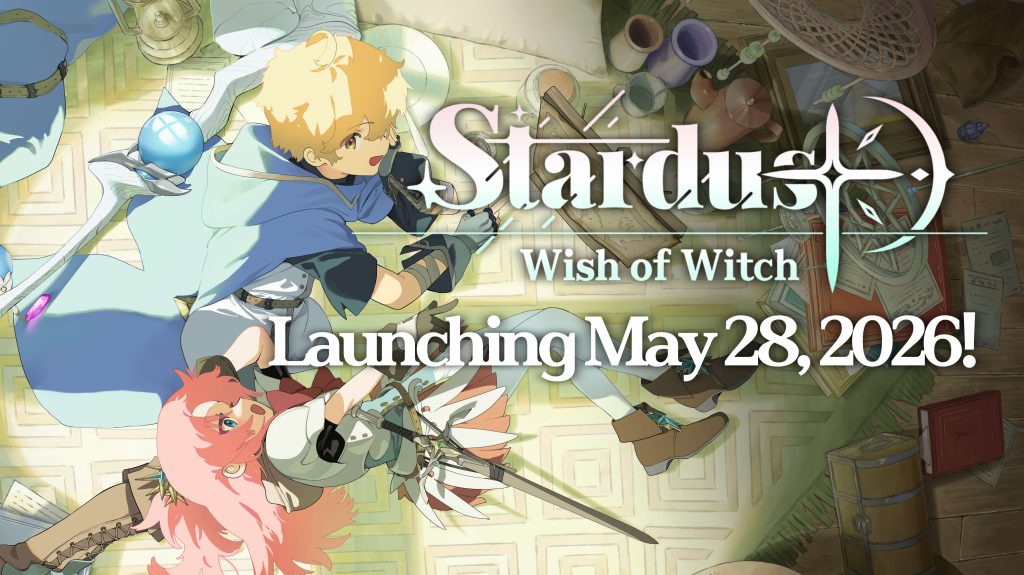
The classic SRPG is one of gaming’s most loyally beloved genres and one of its hardest to revive. Fire Emblem, Final Fantasy Tactics, and Tactics Ogre set a generation’s expectations decades ago, and the path between honoring that legacy and feeling derivative is narrow. STARDUST: Wish of Witch, the debut release from Korean indie studio Knive Studio, walks that path with confidence — combining classical tactical structure with a card-based strategic layer, wrapped in pixel art with frame-by-frame animation that respects the genre’s craft traditions.
Released May 29 on Steam and STOVE, STARDUST is the kind of debut that immediately positions a studio as one to watch. Not because it reinvents the genre — it doesn’t try to — but because it executes its specific vision with the discipline that separates serious genre entries from casual ones.
[Related Article: A Promise That Began at Nonsan Training Center, The Challenge of Knive Studio Dreaming of Becoming a SRPG Masterpiece]
[Related Article: Modern Reinterpretation of Classic SRPG, ‘Stardust: The Witch’ Steam Demo Released]
A Studio Built on a Specific Promise
Knive Studio’s origin story is worth establishing: the studio formed around the goal of becoming a serious SRPG developer, with the team aspiring to be a “premier SRPG studio” in the Korean indie scene. STARDUST: Wish of Witch is their first project, and it carries the weight of that founding ambition.
This focused-genre approach is significant. Many indie studios start with whatever they can build first and find their identity later. Knive Studio started with an identity (SRPG specialists) and built their first project to embody it. That clarity of purpose shows in the final product — STARDUST is recognizably the work of developers who deeply love the genre they’re working in, not developers experimenting with an unfamiliar format.
The Korean indie scene has been quietly producing strong tactical and strategy work in recent years (Dungeon Settlers from earlier this month being another notable example), and STARDUST adds to that trajectory. The combination of serious genre fluency, modern design sensibility, and pixel-art commitment that distinguishes Knive Studio’s debut is part of a broader pattern of Korean studios applying rigorous craft to established Western/Japanese genres.
The Premise and Character Foundation
The story centers on a world where stars are losing their light, and the journey of two childhood friends with different wishes, setting out into a world of twisted fate. Star is the energetic swordswoman protagonist; Yuu is her longtime friend, the mage. Each carries different hearts and convictions as they step into a journey toward the truth of the world.
This is recognizably classical JRPG/SRPG narrative territory — childhood friendship tested by divergent paths, world-truth quests, characters whose internal conflicts mirror external ones. STARDUST doesn’t try to subvert these conventions; it honors them while attending carefully to the relational and emotional flow between characters. The familiar growth narrative isn’t a limitation here — it’s the structural foundation that lets the writing focus on relationship dynamics rather than worldbuilding spectacle.
The dual-protagonist approach is particularly well-suited to the SRPG format. Tactical games benefit from having multiple characters with distinct combat identities and personal stakes, and STARDUST‘s structure of Star and Yuu provides natural mechanical and narrative duality. The swordswoman and mage combination is genre-classical for good reason — it covers the fundamental melee/ranged tactical dynamic while allowing rich character contrast.
The Combat: Classical Foundation, Modern Layer
The combat system represents the project’s most interesting design decision. The traditional SRPG framework remains intact — grid-based battlefields, movement and positioning calculations, turn order management, and the spatial-thinking core that defines the genre. On top of this familiar foundation, STARDUST layers a card-based strategic system where each character’s skills are managed through hand composition and play.
This is the right way to modernize an SRPG. The grid-based tactical layer is what genre veterans love about SRPGs — the satisfaction of reading a battlefield, predicting enemy movements, and executing a multi-turn plan based on spatial reasoning. Eliminating or simplifying this would betray the genre’s identity. STARDUST keeps it intact while adding a card-deck layer that creates new tactical questions: which skills do I have available this turn, how do I sequence them, when do I commit to a powerful play versus holding cards for later.
The interaction between hand composition, skill chaining, and battlefield positioning means each turn requires multiple simultaneous calculations. You’re not just deciding where to move and who to attack — you’re deciding which cards to play given your current hand, which cards to save for predicted future situations, and how positioning will affect both immediate combat and the card economy across the larger battle.
That layered decision-making is exactly what the genre’s strategic depth requires. Pure grid tactics can become repetitive if every battle reduces to the same optimal pattern. The card layer ensures that battles develop differently each time — even with similar terrain and enemy composition, your available hand changes the optimal approach. It’s a genuinely smart design choice that extends the genre’s traditional depth without violating its identity.
The Pixel Art Commitment
The visual identity is built around detailed pixel art and frame-by-frame character animation. This is craft-intensive work, and it shows. Battle scenes, dialogue sequences, and cutscenes all benefit from the animation quality — small but careful changes in expressions and movements quietly communicate character emotion, letting players naturally feel the warmth differences between characters and the world.
Pixel art with frame-by-frame animation has become something of a Korean indie signature in recent years, and STARDUST‘s execution sits in the upper tier of that tradition. The animation isn’t just sufficient — it’s expressive. Character portraits respond to dialogue context. Combat animations have weight and personality. The visual presentation feels considered rather than functional.
This level of animation commitment serves the SRPG genre specifically. SRPGs spend significant player time in dialogue scenes, character interactions, and slowly-paced combat sequences. Visual presentation that maintains player engagement across these scenarios is essential to the genre experience, and Knive Studio has invested in exactly the visual qualities that the format requires.
The pixel-art-as-craft commitment also signals Knive Studio’s design priorities. Teams that invest in frame-by-frame pixel animation are teams that care about presentation quality at the detail level — and that detail-orientation typically extends to other aspects of the project. The animation quality serves as a kind of guarantee about the broader development care.
Early Reception
Steam user response since launch has emphasized the strategic depth, presentation quality, and classical JRPG sensibility. In a market saturated with fast-tempo immediate-gratification experiences, STARDUST: Wish of Witch takes the opposite approach — slowly building turns, carefully accumulating choices, embracing the strategic RPG genre’s foundational pleasures directly.
This counter-positioning matters. The broader gaming market has trended toward faster pace, shorter sessions, and more immediate reward structures. SRPGs are deliberately the opposite — long battles, careful planning, gradual mastery, slow accumulation of strategic understanding. STARDUST doesn’t try to compromise this for broader market appeal; it commits to the genre’s traditional pace and trusts that players who want that experience will find it.
That commitment serves a specific audience well. Hardcore SRPG fans tired of genre entries that water down the format will find STARDUST‘s discipline refreshing. Players seeking faster-paced strategic experiences will find different games more suited to their preferences. The project’s clarity about what it’s trying to be is part of its strength.
What Makes the Card Layer Work
It’s worth examining specifically why card systems can elevate SRPGs without betraying them. Traditional SRPGs have a “perfect information” problem at greater difficulty — once players understand the systems deeply, optimal play patterns emerge, and battles can become exercises in executing known-good strategies rather than discovering new ones.
Card systems introduce variance without arbitrariness. Your skill loadout this turn isn’t random in a punishing way — it’s drawn from a deck you’ve assembled, representing strategic choices you made before the battle. But the specific cards available right now require you to adapt your tactical thinking to current circumstances rather than executing a pre-planned optimal pattern.
This is exactly what extends genre longevity. Pure SRPGs can become predictable for veterans. SRPGs with card layers stay fresh because each battle presents slightly different strategic constraints. STARDUST‘s implementation of this combination represents thoughtful design — the cards aren’t replacing the spatial reasoning that defines SRPGs, they’re adding a complementary decision layer that interacts with positioning rather than competing with it.
The Korean SRPG Question
STARDUST‘s arrival raises an interesting question about Korean indie’s relationship to the SRPG genre. Japan has dominated the SRPG space for decades — Fire Emblem, Final Fantasy Tactics, Tactics Ogre, Disgaea, and Triangle Strategy all come from Japanese studios. Western SRPGs exist but tend toward different design philosophies (XCOM, Wasteland 3, Battle Brothers operate in adjacent but distinct territory).
Korean studios entering this space with serious genre fluency represent something genuinely new. Knive Studio’s debut isn’t trying to make a Japanese-style SRPG with Korean flavor — it’s making an SRPG that draws on the global genre tradition while bringing Korean indie’s specific strengths in pixel art craft and modern design sensibility. That positioning could create meaningful space in the genre if Knive Studio sustains its planned trajectory as an SRPG specialist.
The success of STARDUST: Wish of Witch will affect whether more Korean studios pursue similar genre commitments. A debut that demonstrates Korean indie can compete in established SRPG territory makes the path easier for studios that follow.
Who This Is For
Strong fit for: classical SRPG fans (Fire Emblem, Final Fantasy Tactics, Tactics Ogre); players who appreciate card-based strategic layers integrated with traditional tactics; pixel art enthusiasts who value frame-by-frame animation quality; fans of character-driven JRPG/SRPG narratives with relationship-focused writing; Korean indie scene followers; players seeking slower-paced strategic experiences in a fast-paced market.
Cautious fit for: SRPG fans who specifically dislike card-based mechanics; players who prefer realistic or grimdark aesthetics over warm fantasy registers.
Less ideal for: players who want fast-paced or action-focused gameplay; anyone allergic to pixel art aesthetics; players who find dual-protagonist narratives less engaging than ensemble casts.
What to Watch For
A few questions will shape STARDUST: Wish of Witch‘s longer reception.
The first is whether the card system maintains depth across the full campaign. Card mechanics in SRPGs can either develop genuine strategic depth or settle into dominant deck-building patterns. How STARDUST‘s card layer scales across higher difficulties and longer encounter chains is the central design question for the game’s mid-to-late portions.
The second is narrative payoff. The classical “stars losing light” premise sets up specific expectations about world-truth reveals and character arc resolutions. Whether the writing delivers satisfying conclusions or settles for genre-standard endings will affect how players remember the experience.
The third is balance refinement. SRPGs require careful balance work — character classes, enemy difficulty curves, and card power levels all need to interact correctly. As player communities engage with the game over time, balance discussions will reveal whether STARDUST‘s systems hold up to scrutiny.
The fourth is Knive Studio’s long-term trajectory. The studio has positioned itself as an SRPG specialist. STARDUST is their first project. What they choose to do next — and how they respond to player feedback on this debut — will determine whether they fulfill their founding ambition of becoming a premier SRPG developer.
The Verdict
STARDUST: Wish of Witch is one of the more confident Korean indie debuts of the year, executing its specific genre vision with discipline and craft. The classical SRPG foundation is intact, the card-based strategic layer adds genuine depth without compromising genre identity, the pixel art with frame-by-frame animation respects the format’s visual traditions, and the character-driven narrative honors the relational focus that elevates the best SRPGs above pure tactical exercises.
For SRPG fans specifically, this is a clear recommendation. The genre receives too few serious new entries, and STARDUST‘s combination of classical respect and modern modernization is exactly what veterans have been asking for. For broader strategy game fans, the project is worth investigating based on whether the slower-paced, depth-over-breadth design philosophy matches your preferences.
Beyond the individual game, STARDUST: Wish of Witch represents something important about where Korean indie is going. A studio founded specifically to make serious SRPGs, delivering a debut that demonstrates the genre fluency required to compete with established traditions, is the kind of development that meaningfully expands the global indie scene.
Verdict: Strongly recommend for SRPG fans. A confident, craft-intensive debut that honors the classical SRPG tradition while modernizing it through thoughtful card-based strategic layers. One of the more genuinely competent Korean indie genre debuts of recent memory, and a promising start for a studio that’s positioned itself as SRPG specialists.
A world where stars are losing their light. A swordswoman and her mage friend. A journey toward the truth. As classical SRPG pitches go, it’s familiar — but the execution honors the familiarity rather than fighting against it. Knive Studio’s first project. The first move in what they hope will be a long career, building strategic depth into a genre that’s been waiting for serious new voices.
STARDUST: Wish of Witch is available now on Steam and STOVE.
[Go to Steam Store Page]
[Go to Stove Store Page]