Most city builders ask the same question in slightly different ways: how much can you extract before the system breaks? LIFE BELOW, the upcoming underwater builder from Oslo-based studio Megapop, flips the script. Here, the system is already broken. The corals are dying, the ecosystem is collapsing, and your job — as a guardian named Thalassa — isn’t to grow an economy. It’s to help a sea start breathing again.
Launching May 26 on Steam, it’s one of the more thoughtfully constructed builders in recent memory: scientifically grounded, narratively credentialed, and unusually clear about what it wants to be.
A Builder Built Around the Ocean, Not on Top of It
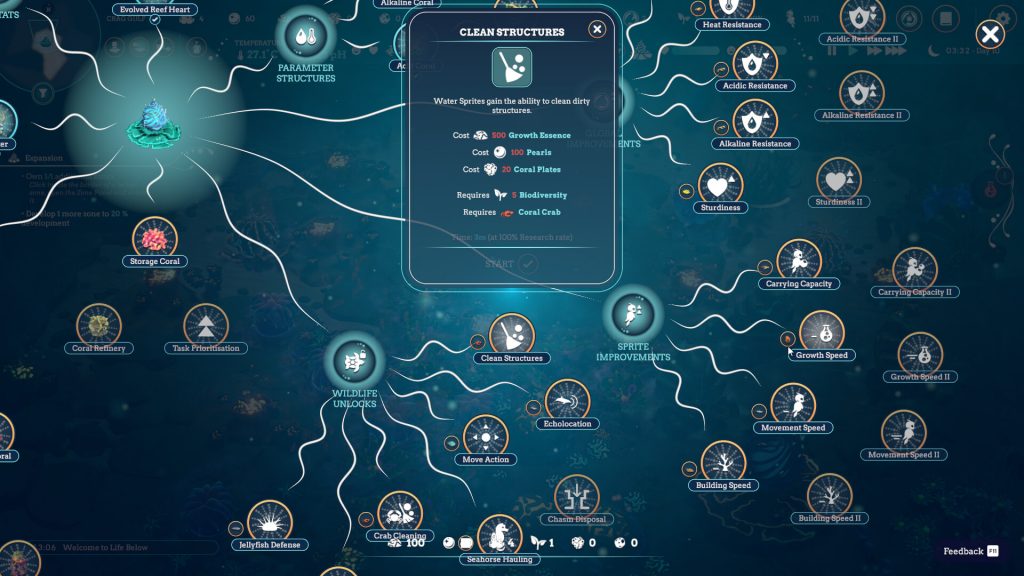
The cleverest design decision in LIFE BELOW is that the genre’s standard verbs have been quietly inverted. You don’t expand outward; you restore inward. You don’t manage citizens; you attract wildlife. You don’t optimize extraction; you balance an ecosystem that punishes optimization. The familiar city-builder muscle memory — place tile, generate resource, scale up — still works mechanically, but the framing changes everything about how those actions feel.
The marine biology consultation behind the game is more than a marketing line. Real ecological principles are baked into the systems: schooling and predator-avoidance behaviors, coral growth requirements, and the way certain corals need specific rock formations to flourish. That last detail becomes an actual strategic tile-placement constraint in the game, not a piece of trivia in a loading screen. Marine ecologist Karin Raamat has described the core design philosophy as the principle that small changes in an ecosystem can cascade into total collapse — and that principle is what the gameplay is actually built around.
That’s the foundation that distinguishes LIFE BELOW from the broader wave of “cozy builder” releases. The coziness is real, but the systems underneath have teeth.
40+ Species, Climate Pressure, and an Invasive Lionfish Problem
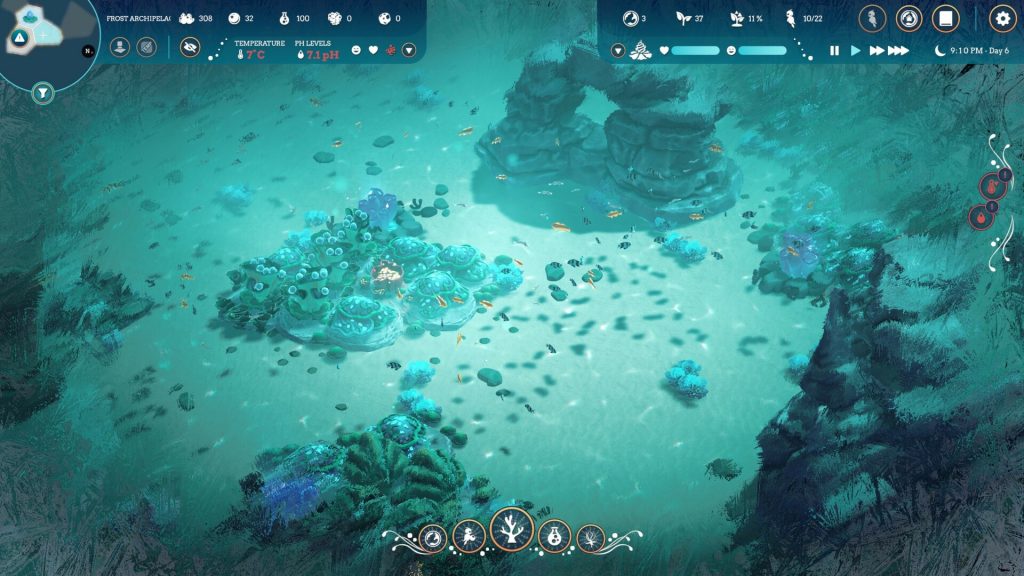
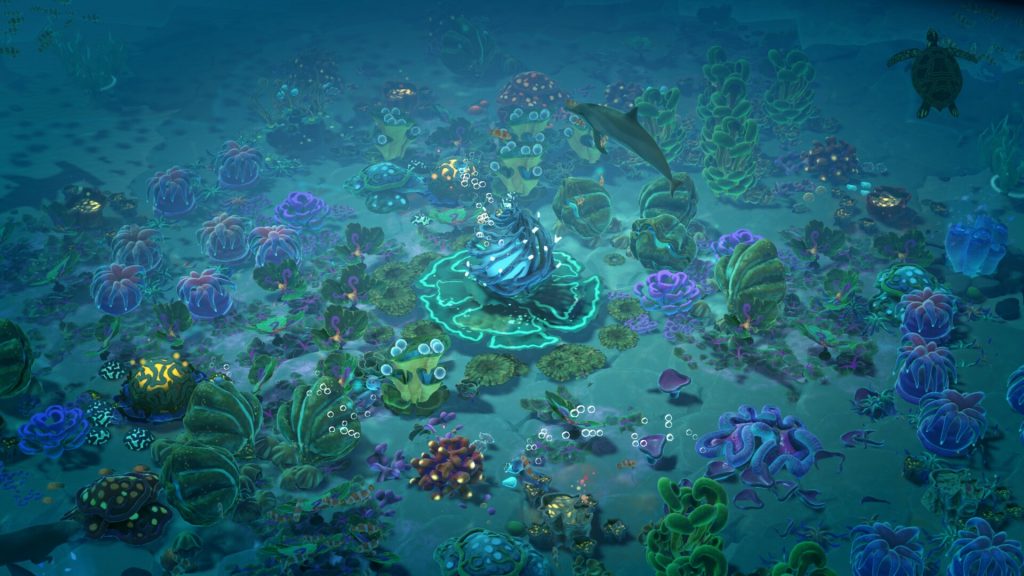
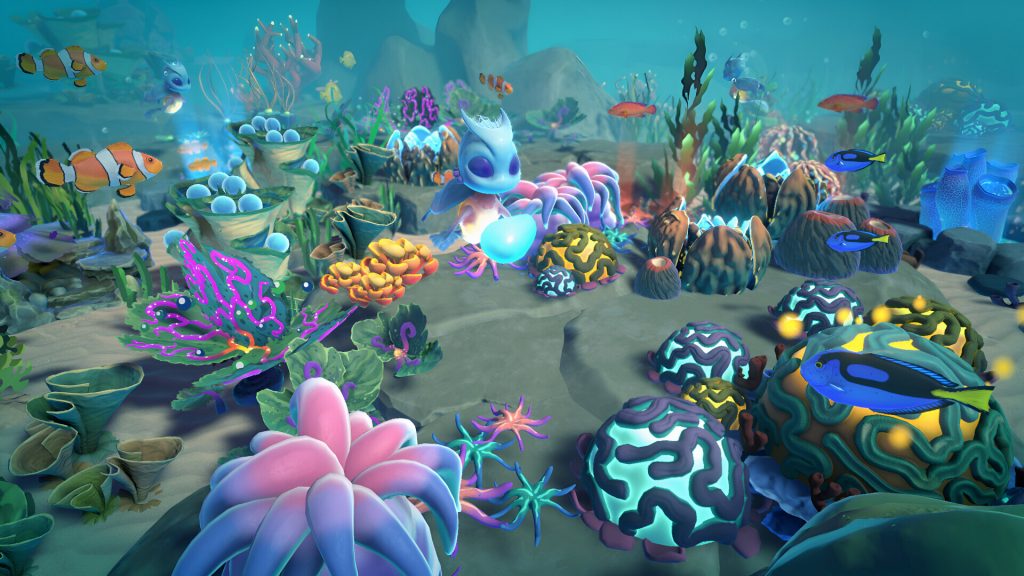
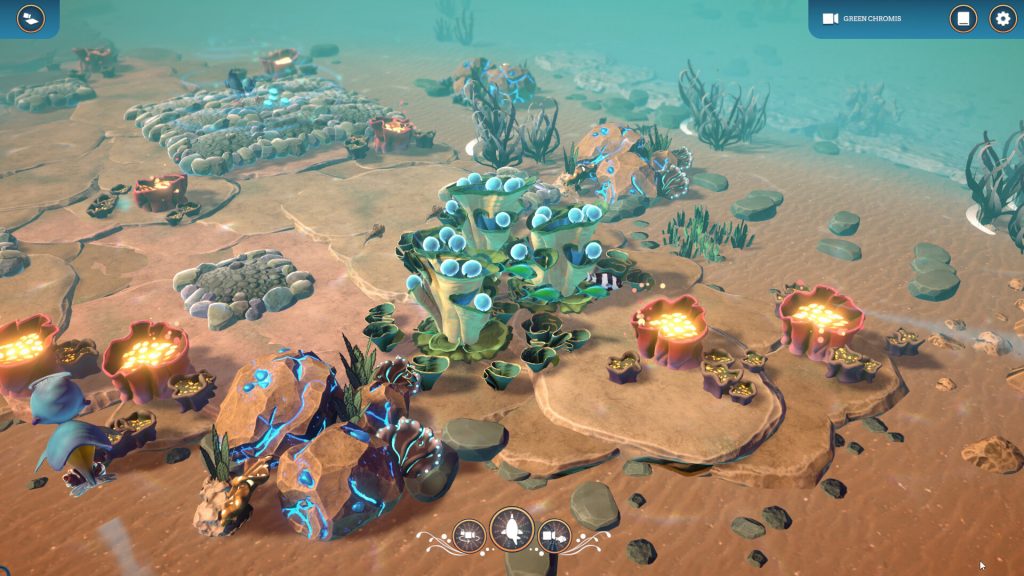
The wildlife roster runs past 40 species — coral crabs, anglerfish, hammerheads, and more — each attracted by specific habitat conditions you have to engineer. Different coral types produce different effects (some generate energy, some support food chains), and clamshell structures handle resource production. Combining them strategically is the core puzzle.
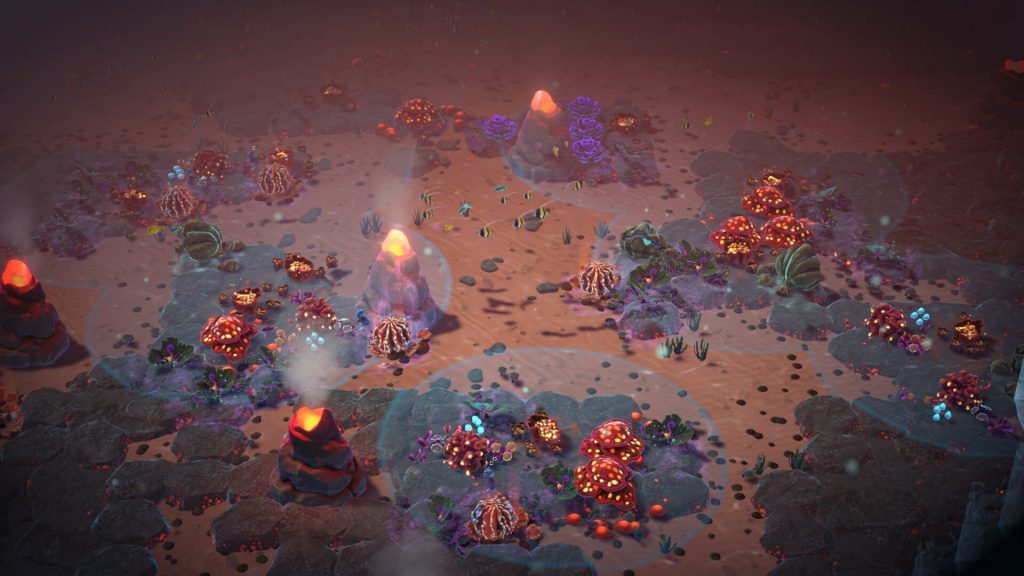
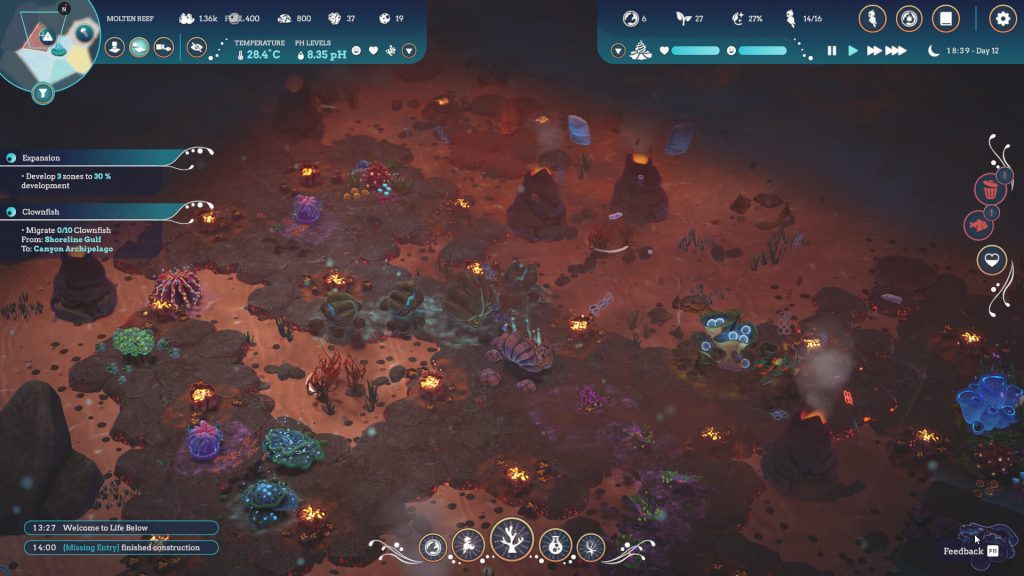
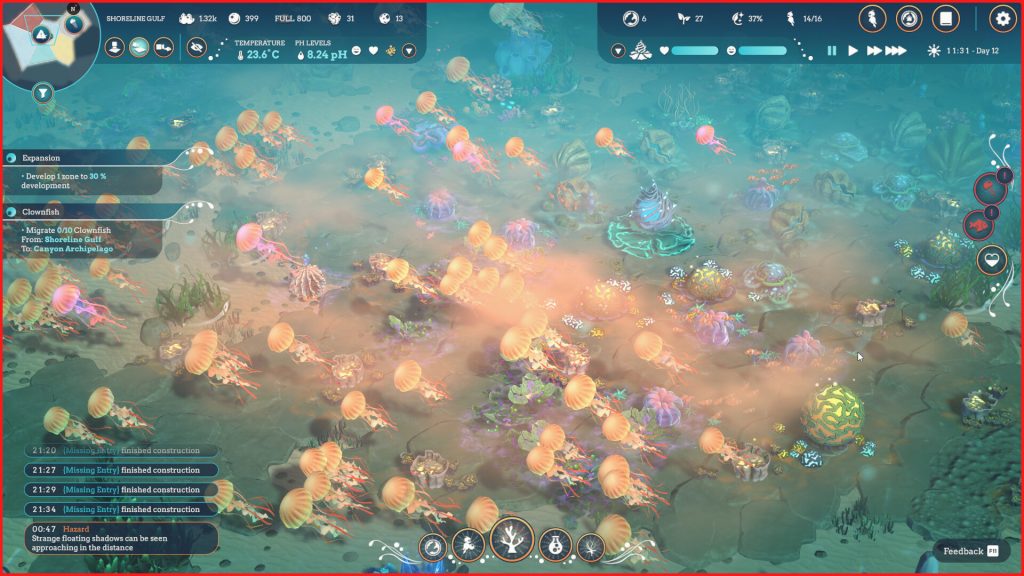
What keeps the puzzle from settling into a pleasant routine is the pressure layer. Invasive lionfish threaten native species. Rising water temperatures and acidification damage coral health directly. Procedural events — storm surges, sudden temperature swings, invasive outbreaks — keep arriving and keep forcing recalculations. The game opens calmly, but the late-game balance work is where the strategic identity really emerges.
It’s the kind of design that should appeal to two audiences who don’t usually overlap: cozy builder players who want a peaceful aesthetic, and systems-strategy players who want their decisions to matter. Whether LIFE BELOW successfully serves both is one of the things to watch when the full game lands.
Rhianna Pratchett Wrote It, and It Shows
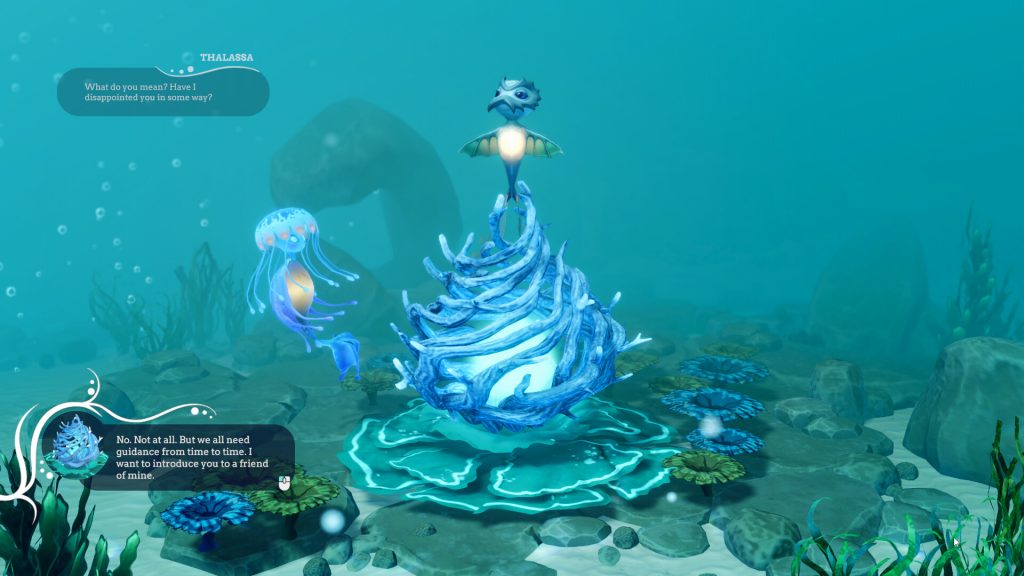
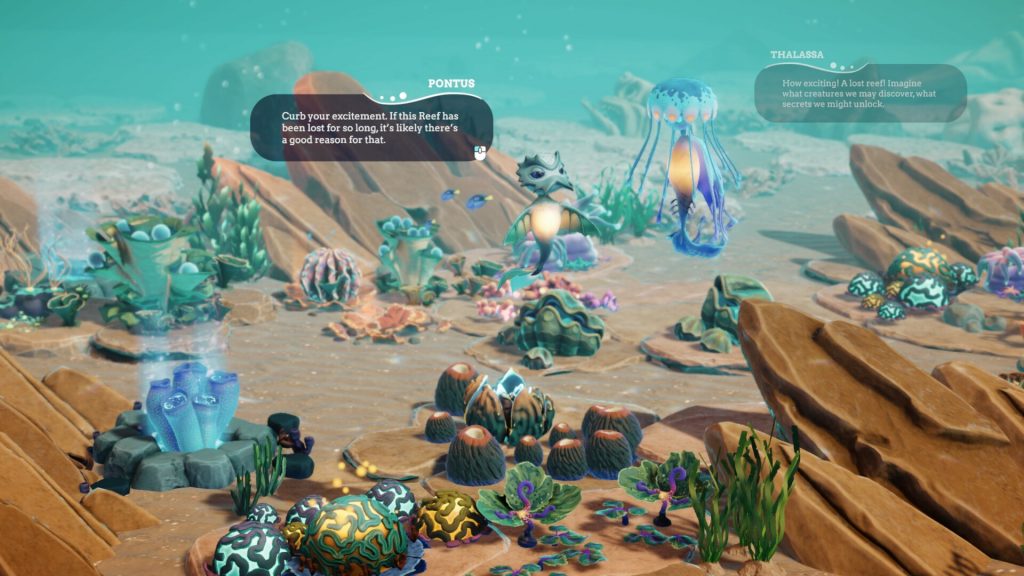
The narrative credit is a real one. Rhianna Pratchett — daughter of fantasy author Terry Pratchett, and a game writer with WGA and WGGB awards, D.I.C.E. and SXSW recognition, and a BAFTA nomination on her own resume — handles the writing here. Her presence isn’t a vanity hire; it’s reflected in how the tutorial threads into the story, in the wit that runs through Thalassa’s framing, and in the way the game gives players a reason to care beyond the spreadsheet.
A builder with this kind of writing pedigree is unusual. Most games in the genre treat narrative as scaffolding; LIFE BELOW seems to treat it as a load-bearing element.
A Studio With a Thesis
Megapop is a 15-person Oslo studio with prior experience in strategy games, and game director Lise Lie has been notably articulate about what LIFE BELOW is trying to do. Her framing — that traditional city-builder grammar of endless expansion and resource consumption looks different when you view it through nature’s lens, and that the alternative is a system organized around flourishing and coexistence rather than decline — isn’t just marketing language. It’s a genuine design thesis, and it’s visible throughout the game.
Lie has also spoken about what she sees as the emotional payoff: the moment a dolphin appears in a reef the player has spent hours nurturing, and the surprisingly strong feeling that creates. It’s a small claim, but it points at something the genre rarely manages — emotional attachment to the world you’re building, rather than just satisfaction with the numbers it produces.
The Conservation Partnership Is Real, Not Decorative
Plenty of games attach themselves to causes. Fewer commit. LIFE BELOW has an official partnership with Whale and Dolphin Conservation (WDC), structured around an optional $4.99 Supporter Pack whose net proceeds are donated entirely to marine conservation.
The pack adds bottlenose dolphins, Atlantic spotted dolphins, and harbor porpoises as visiting species in-game, along with an in-game guidebook containing real biological information about each. It’s a clean implementation: opt-in, additive content rather than gated essentials, with the donation structure transparent and the educational layer woven into actual gameplay. WDC has called the collaboration meaningful in its own right, and the model is one that other studios with cause-aligned projects could reasonably learn from.
Visual and Sonic Identity
The underwater visual problem is harder than it looks. Too much color saturation and the world becomes a screensaver; too much realism and it becomes murky and unreadable. LIFE BELOW lands the balance well in the demo, with vivid coral and kelp, schools of fish that genuinely add motion to the frame, and light shafts from the surface that double as visual aids for reading the play space.
Audio is similarly considered. The soundscape leans on currents, distant whale calls, and restrained music rather than a constant score — the kind of sound design that disappears into the experience rather than performing on top of it. The team has cited collaboration with marine biologists on the acoustic side as well as the ecological side, and the result is convincing.
Early Reception
The Steam demo is currently sitting at 91% positive across 86 reviews (“Very Positive”), and the press response has been similarly warm. PC Gamer offered the kind of line publishers print on box art: that the game produces more emotional attachment to coral than SimCity produces to its human citizens. PCGamesN described it as a fresh underwater spin on the city-building genre.
Community reactions from the demo cluster around two impressions: that watching a reef grow is intrinsically satisfying, and that the balance between peaceful atmosphere and real strategic depth is more carefully calibrated than expected. Both are good signs, with the usual caveat that demos are short and full releases are long.
What to Watch For
A few things will determine whether LIFE BELOW delivers in the long form. First, whether the late-game ecological pressures stay genuinely tense rather than collapsing into a handful of optimal responses. Second, whether the 40-species roster generates enough variety in reef composition that builds feel meaningfully different across runs. Third, whether the narrative layer sustains across the full campaign or front-loads its best moments into the early hours.
None of these are red flags. They’re just the standard questions for a systems-driven game with a strong demo.
The Takeaway
LIFE BELOW is the rare genre release where every layer points in the same direction. The science is real. The writing is credentialed. The conservation partnership is structurally honest rather than decorative. The visual identity is distinctive. The design thesis — that building games can be about flourishing instead of extraction — is articulated clearly and executed with care.
It’s also, importantly, not trying to be a lecture. The demo’s reception suggests the game is genuinely fun to play, and the cozy-strategy crossover audience is likely to find a lot to love here. For players who’ve been quietly tired of city builders that reward bigger and faster above all else, this is a notably different proposition.
May 26 on Steam. The demo is free, the Supporter Pack is opt-in, and the whole project is one of the more thoughtful releases of the season.
.
LIFE BELOW Related Information
| item | detail |
|---|---|
| Developer | Megapop (Oslo, Norway / 15-member team) |
| Publisher | Kasedo Games (Leicester, UK / Under Kalypso Media Group) |
| Genre | Underwater City Builder / Ecosystem Simulation / Strategic Management |
| Release platform | PC (Steam) |
| Release date | May 26, 2026 |
| Supporter Pack | $4.99 / 100% of Net Profit Donated to WDC Marine Conservation |
| Steam Demo Review | Very positive 91% (86 items) |
| narrative | Written by Rhianna Pratchett |
| Advisory | actual marine biologist |
| Wildlife that can be lured | 40+ species (coral crab, anglerfish, hammerhead shark, dolphin, etc.) |
| Special Edition | Special Edition (Includes 170-page art book + original soundtrack) |
| Main Keywords | Coral reef, ecosystem, underwater, city builder, conservation, marine, cozy strategy |
| Steam Page | Shortcut |