By IndieGame.com Desk | June 6, 2022 (Updated: January 2, 2026)
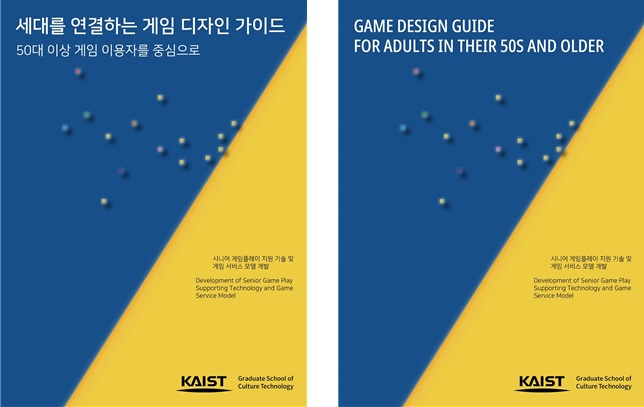
Researchers at KAIST (Korea Advanced Institute of Science and Technology), in collaboration with Yonsei University and industry partners, have published a groundbreaking online guide titled “Game Design Guide for Adults in Their 50s and Older.” This multidisciplinary project aims to bridge the generational gap in the gaming industry, providing developers with the tools to create accessible and engaging experiences for the rapidly growing senior demographic.
Why a Senior-Specific Guide is Necessary
While the gaming industry traditionally targets younger audiences, data from the Korea Creative Content Agency (KOCCA) shows a significant shift:
- 57.1% of people in their 50s are active gamers.
- 37.15% of people aged 60 to 65 engage in gaming.
- Senior gamers demonstrate a willingness to purchase in-game items/currency comparable to younger generations.
Despite this, most modern games present significant barriers to entry for seniors, including hyper-fast reaction requirements, tiny text/objects, and overly complex interfaces. Furthermore, many seniors feel alienated by game narratives that do not resonate with their life experiences or contain ageist stereotypes.
Key Features of the Design Guide
The guide is the result of a three-year study (2019–2021) involving “Intergenerational Game Living Labs,” where researchers played games alongside seniors to identify pain points and success factors.
| Chapter | Focus Area | Key Insights Provided |
| 1 | Design Grammar | Difficulty levels tailored for ages 20–80; advice on UI/UX, rules, and monetization. |
| 2 | Research Process | Methodology of the Living Lab, including EEG and motor-coordination experiments. |
| 3 | User Profiles | Analysis of senior cognitive, motor, and socio-emotional characteristics. |
| 4 | Service Models | Proposed business models and cases of intergenerational “co-play” games. |
| 5 | Future Directions | Guidelines for ongoing research and use of the manual. |
Insights for Developers: Lowering the “Barrier of Entry”
The guide translates complex psychological and physiological data into practical “design grammar.”
“By improving the accessibility of game interfaces—which can often be cognitively burdensome due to aging—we can lower the initial entry barrier,” said Professor Young Yim Do of the KAIST Graduate School of Culture Technology. “We hope this guide leads to the creation of more senior-friendly games, ultimately expanding the overall scale of the gaming market.”
Practical Design Considerations:
- Visual/Motor Coordination: Adjusting the “timing window” for action games to account for slower reflex speeds.
- Visibility: Ensuring critical objects and fonts are scalable and high-contrast.
- Social Elements: Designing mechanics that encourage connection rather than high-stress competition.
Access the Guide
The guide is available for free in both Korean and English on the WikiDocs platform, supported by the Ministry of Culture, Sports and Tourism and KOCCA.
- Korean Version: 세대를 연결하는 게임 디자인 가이드
- English Version: Game Design Guide for Adults in Their 50s and Older
💡 The Indie Opportunity in 2026
In 2026, as the “Silver Economy” continues to boom, indie developers have a unique opportunity to lead the way in “inclusive gaming.” Large AAA studios often overlook the niche needs of seniors, but indie studios can pivot quickly to create “meaningful play” experiences that foster intergenerational connection.