Most bullet hell games are about avoidance — threading through impossibly dense projectile patterns, surviving by inches. Soulers asks a different question: what if you could break through the bullets and strike back? The story-driven bullet hell action game from Drabit Studio, a four-person K-indie team based at Pangyo Startup Campus, has begun its Steam Playtest after approximately four years of development — and its core design inverts the genre’s fundamental assumption by making time manipulation a tool for aggression rather than just survival.
This playtest version applies large-scale improvements including updated graphics, refined UI, new visual effects, and additional units and crew. As the first presentation of four years of development effort, this playtest represents a crucial stage for confirming player reactions before full release. Drabit Studio plans to use the collected feedback to further polish the game toward higher completion.
The Attack-Don’t-Avoid Philosophy
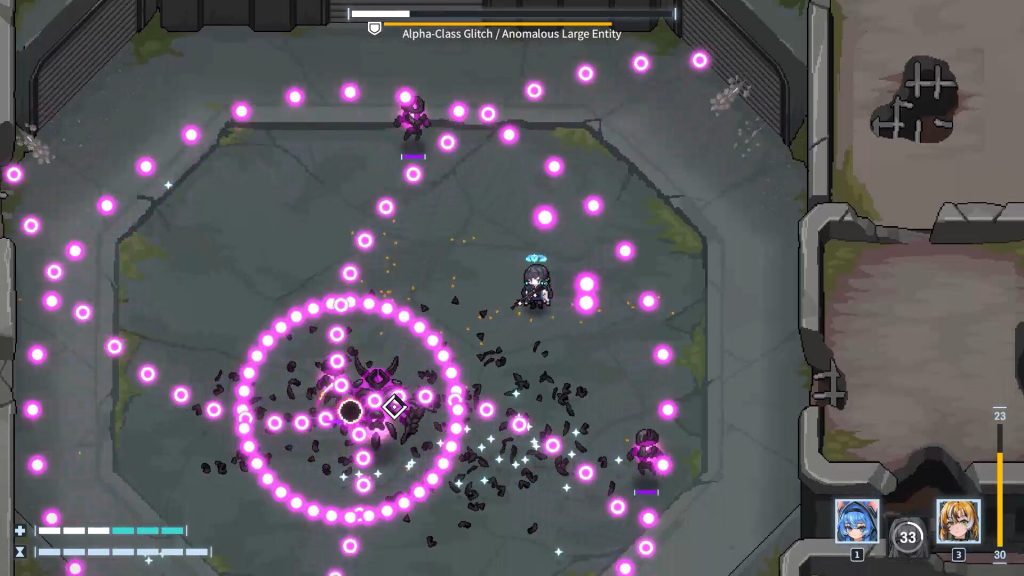
The most significant design distinction of Soulers is its aggressive combat system. While most bullet hell games focus on evading enemy attacks, Soulers emphasizes the satisfaction of breaking through the bullets and counterattacking.
This represents genuine design innovation within a genre that has operated on the same fundamental principle for decades. Bullet hell games — from the Touhou series to Ikaruga to countless others — define themselves through avoidance. The pleasure comes from surviving impossible-seeming patterns through precise movement, finding the narrow safe paths through walls of projectiles. Soulers preserves the visual spectacle of dense bullet patterns while inverting the player’s relationship to them — instead of purely surviving, players break through and strike back.
The core “Time Warp” system enables this inversion. Time Warp slows time to overcome moments of crisis and execute powerful counterattacks. But crucially, time manipulation isn’t just an avoidance tool. When activated, the hitbox temporarily shrinks, allowing players to break through dense bullet patterns, and specific projectiles can be reflected directly back at enemies as counterattack opportunities.
This multi-functional time system transforms the genre’s core gameplay loop. In conventional bullet hell, slowing time (when available) typically just makes avoidance easier. In Soulers, time manipulation serves offense — the shrinking hitbox enables aggressive positioning, the projectile reflection turns enemy attacks into player weapons. The genre’s defensive tool becomes an offensive system.
The projectile reflection mechanic specifically deserves attention. Reflecting enemy bullets back as counterattacks creates a risk-reward dynamic absent from pure avoidance gameplay. Players can choose to engage with incoming projectiles aggressively — timing reflections for counterattacks — rather than simply avoiding them. This adds tactical decision-making that pure dodge-focused bullet hell lacks.
The Build Variety Systems
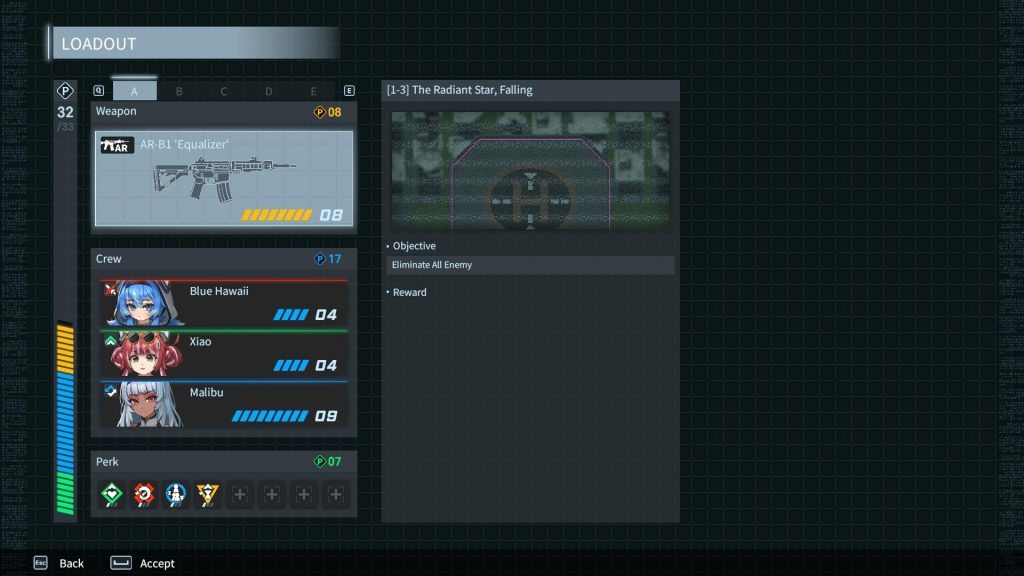
Beyond the core time mechanics, Soulers implements build variety through weapon and companion character combinations. Different weapons and crew members enable various build configurations, simultaneously realizing bullet hell action and strategic play.
This build system adds the kind of strategic depth that distinguishes Soulers from pure arcade bullet hell. Players don’t just control a single fixed character — they assemble configurations of weapons and companions that suit their preferred playstyles. The combination possibilities create the kind of theorycrafting engagement that extends replayability beyond pure skill progression.
The companion character system (crew) also connects to the game’s narrative structure. As players defeat powerful enemies and recruit them as allies, the roster expands both mechanically (new build options) and narratively (new characters in the story). This integration of mechanical progression with narrative progression gives the build system story relevance that pure mechanical systems lack.
The strategic layer matters for the genre positioning. Pure bullet hell tests reflexes and pattern memorization; Soulers adds the strategic dimension of build optimization. This combination broadens the potential audience — players who enjoy strategic depth alongside action challenge find more to engage with than pure twitch-skill bullet hell offers.
The Story-Driven Structure
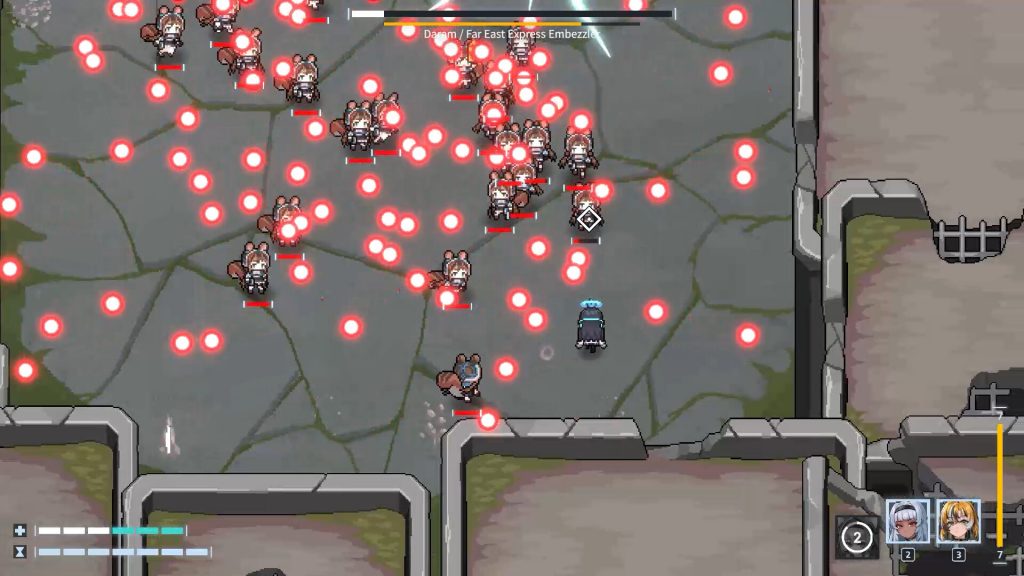
Unlike most bullet hell games, which typically feature minimal narrative framing around their gameplay, Soulers commits to story-driven structure. The game is set in a future world where a massive wall blocks the sky. Humanity barely survives within a ruined civilization, and mysterious beings called “Glitches” threaten the remaining world.
Players become Makina, captain of the alliance, defeating powerful enemies and recruiting them as allies while continuing the adventure. At the center of the story is Lethe, a Souler who has lost her memory. Lethe searches for the truth about her past and the world’s hidden secrets amid conflict entangled with witches.
The “Souler” concept provides both narrative and thematic foundation. Soulers are special beings who use power derived from souls, depicted as the only hope capable of confronting the Glitches. This framework gives the bullet hell action narrative justification — the player characters are special beings with soul-derived powers, which explains their ability to engage the overwhelming enemy forces that bullet hell gameplay represents.
The memory-loss narrative centered on Lethe provides classic story structure that works well for gradual revelation. As Lethe recovers her past and uncovers the world’s secrets, the narrative unfolds through gameplay progression. This memory-recovery framework — a well-established narrative device — provides natural motivation for exploration and progression while creating mystery that sustains engagement.
The 10+ hour story mode planned for full release represents substantial narrative ambition for a bullet hell game. Most genre entries offer minimal story; Soulers aims for the kind of narrative depth typically associated with action RPGs rather than arcade shooters. This story focus distinguishes the project significantly within its genre.
The Visual Tonal Contrast
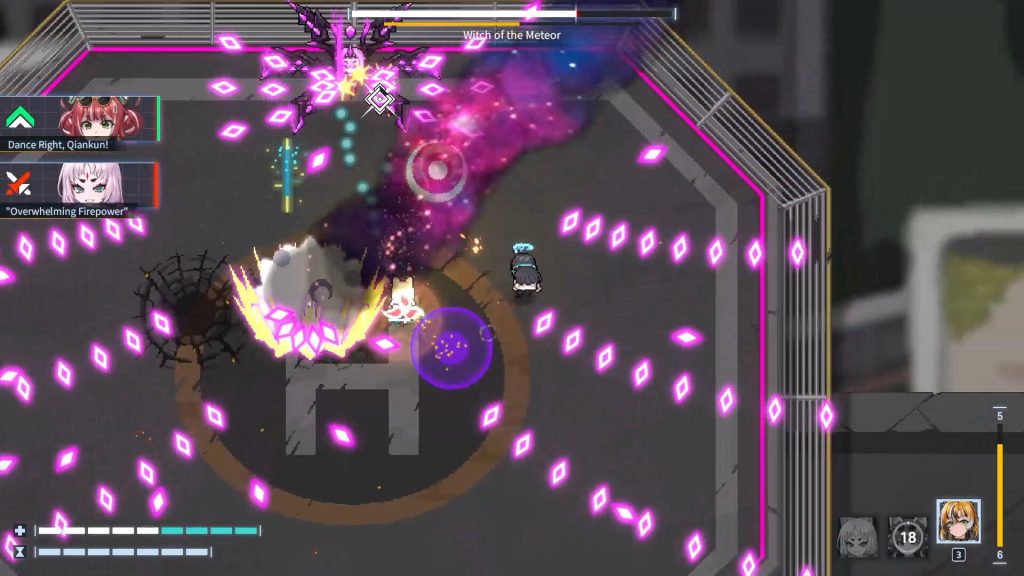
Soulers presents an interesting visual tension. Based on 2D top-down pixel art, the game conveys a bright and cheerful impression through cute and distinctive character design, spectacular bullet effects, and colorful palettes.
But beneath this bright world lies a heavy science fiction setting — a world where human civilization has collapsed, a massive wall blocking the sky, and the mysterious monster Glitches. This coexistence of adorable graphics and serious narrative creates the distinctive atmosphere that defines the project’s personality.
This tonal contrast is a deliberate design choice that distinguishes Soulers from both pure cute games and pure serious SF. The combination — cute pixel art presenting a post-apocalyptic narrative — creates the kind of tonal complexity that single-register games can’t achieve. Players experience visual charm while engaging with genuinely heavy thematic content.
International players have praised the combination, with evaluations emphasizing that “the cute and colorful graphics combined with solid shooting feel are impressive.” This reception suggests the tonal contrast lands as intended — the visual charm draws players in while the solid mechanical foundation and narrative depth provide substance beneath the surface appeal.
The K-Indie Support Journey
Soulers has steadily improved through various institutional support and event participation throughout its development — a journey that illustrates the institutional infrastructure supporting Korean indie development.
In 2022, the project was selected as one of the top 3 works at Gyeonggi Content Agency’s Game Academy, receiving follow-up support. In 2023, it was included in the Korea Creative Content Agency (KOCCA) game planning and development support program. In 2024, it was selected as a winner at the WASD Indie Game Contest, receiving recognition for its quality, and was introduced to domestic and international gamers through the G-Star 2024 KOCCA booth.
This support trajectory demonstrates the Korean indie development ecosystem’s institutional depth. Multiple agencies (Gyeonggi Content Agency, KOCCA) provide structured support for promising projects, and events (WASD, G-Star) provide visibility platforms. Soulers progressing through this ecosystem — academy selection, development support, contest recognition, exhibition presentation — reflects how Korean institutional infrastructure helps indie projects develop and gain visibility.
The international event participation (WASD Indie Game Contest) is particularly significant. WASD is a London-based gaming event, and Soulers‘ recognition there demonstrates the project’s international appeal beyond domestic Korean validation. For a four-person team, this international contest recognition provides meaningful validation that the concept resonates beyond Korean boundaries.
The Drabit Studio Story
Drabit Studio’s origin story reflects the personal passion that drives indie development. The studio was started by two developers who shared a common dream of game development during their military service. Currently, four developers work together on game development at Pangyo Startup Campus.
This origin — developers bonding over shared game development dreams during mandatory military service — reflects a specifically Korean indie development narrative. Korean men’s mandatory military service creates particular life circumstances, and developers who form creative partnerships during this period bring the kind of committed shared vision that sustains the lengthy development that ambitious indie games require.
The four-year development period (since 2021) demonstrates a serious commitment. Bullet hell games with story-driven structure and multiple modes (story, boss raid, roguelike) require substantial development effort, particularly for a four-person team. The extended development reflects the ambition of creating something more than a simple arcade bullet hell — a full story-driven experience with substantial content.
The Pangyo Startup Campus location places Drabit Studio within Korea’s primary technology hub. Pangyo (often called “Korea’s Silicon Valley”) concentrates Korean gaming and technology companies, providing ecosystem benefits — networking, talent access, infrastructure — that support indie development.
The Full Release Ambitions
The planned full release content reflects a substantial scope. The full version will include 10+ hours of story mode, boss raids for repeated play, and a roguelike mode. This three-mode structure provides different engagement types: narrative-driven story mode, challenge-focused boss raids, and replayable roguelike content.
This content variety addresses different player preferences and extends the game’s value proposition. Story-focused players engage with the 10+ hour narrative; challenge-seekers pursue boss raids; roguelike enthusiasts enjoy the procedural replayability. The combination provides more comprehensive content than pure story or pure arcade approaches would offer.
The roguelike mode specifically aligns with current genre trends. Roguelike structure has proven popular across many genres, providing the replayability that extends games’ lifespans. Adding roguelike mode to the bullet hell foundation gives Soulers the kind of repeatable content that sustains long-term engagement beyond story completion.
Who This Is For
Strong fit for: bullet hell enthusiasts seeking fresh takes on the genre; players who appreciated aggressive shoot-em-ups over pure avoidance; twin-stick shooter fans; Touhou, Ikaruga, and other bullet hell fans curious about offensive variations; players who want narrative depth in their shooters; pixel art appreciators; build-variety enthusiasts; Korean indie scene followers; players who enjoy time-manipulation mechanics.
Cautious fit for: bullet hell purists who specifically prefer pure avoidance gameplay; anyone who finds story elements distracting from arcade action.
Less ideal for: players who dislike bullet hell intensity; anyone seeking relaxed gameplay; players who prefer minimal narrative in action games.
What to Watch For
A few questions will shape Soulers‘ development from playtest toward release.
The first is whether the time-manipulation combat achieves the right balance. The offensive bullet hell concept is genuinely fresh; whether the Time Warp mechanics feel satisfying and balanced — neither too powerful (trivializing challenge) nor too weak (failing to enable the aggressive gameplay the design intends) — will determine whether the core innovation succeeds.
The second is the story integration quality. The 10+ hour story mode represents significant narrative ambition for a bullet hell game. Whether the writing and narrative pacing sustain engagement, and whether the story integrates well with the action gameplay, will affect whether the story-driven approach succeeds.
The third is the build variety depth. The weapon and companion combination system promises strategic depth; whether the builds feel meaningfully different and whether the strategic layer adds genuine engagement will determine the system’s value.
The fourth is the content delivery across modes. The three-mode structure (story, boss raid, roguelike) requires each mode to be individually satisfying. How well Drabit Studio delivers quality across all three modes will affect the full release’s overall value.
The Takeaway
Soulers is one of the more genuinely innovative bullet hell projects on the horizon, combining fundamental genre innovation (offensive time-manipulation combat), substantial narrative ambition (10+ hour story mode), distinctive visual identity (cute pixel art meets serious SF), and the kind of content variety (story, boss raid, roguelike) that extends value beyond pure arcade gameplay.
For bullet hell enthusiasts specifically, the Steam Playtest provides an immediate opportunity to evaluate whether the offensive combat philosophy delivers. The inversion of the genre’s fundamental avoidance principle — making time manipulation a tool for breakthrough and counterattack rather than just survival — represents exactly the kind of fresh thinking that keeps established genres vital.
For players seeking narrative depth in action games, Soulers‘ story-driven structure offers something most bullet hell games don’t — substantial narrative ambition integrated with the action gameplay. The memory-loss mystery and post-apocalyptic worldbuilding provide story engagement that pure arcade shooters lack.
For Korean indie gaming observers, Soulers represents another example of Korean indie development’s institutional ecosystem producing internationally ambitious projects. The support journey (Gyeonggi Content Agency, KOCCA, WASD, G-Star) demonstrates how Korean institutional infrastructure helps four-person teams develop projects that compete internationally.
A future world where a massive wall blocks the sky. Humanity surviving among ruins. Mysterious Glitches threaten what remains. Soulers wielding soul-derived power as humanity’s hope. Lethe is searching for lost memories and hidden truths. And combat that inverts bullet hell’s fundamental nature — time slowed not to flee but to break through, projectiles reflected not avoided, the genre’s defensive systems transformed into offensive weapons.
As bullet hell pitches go, Soulers‘ is one of the more genuinely innovative of 2026 — and the Steam Playtest provides immediate hands-on access to evaluate whether four years of development by a passionate four-person team produces the genre inversion the concept promises. The bullets are dense. The patterns are overwhelming. But in Soulers, you don’t just survive them — you slow time, shrink through the gaps, reflect the projectiles, and turn the assault into your counterattack.
Break through the bullets. Strike back against the storm. And discover whether time itself, wielded as a weapon, can transform bullet hell from a dance of avoidance into a symphony of aggression.
Information regarding ‘ Soulers’
| item | detail |
|---|---|
| Developer / Publisher | Drabbit Studio (Pangyo, Gyeonggi-do, 4 people) |
| representative | Kim Han-bit |
| Genre | Story-driven bullet hell action / Twin stick shooting / Top-down shooting |
| Release platform | PC (Steam) / Windows·Mac |
| Current status | Steam Playtest in progress (June 27~) |
| Development period | 4 years (2021~) |
| Playtest content | Story + Arena about 1 hour |
| Official Release Content (Scheduled) | Story Mode 10+ Hours / Boss Raid / Roguelike Mode |
| Supported languages | Korean, English, Japanese, Simplified/Traditional Chinese, Russian |
| Awards | WASD Indie Game Contest Finalist · Winner (2024) |
| Application History | Gyeonggi Content Agency Game Academy Top 3 (2022) / KOCCA Game Development Support (2023) |
| Exhibition History | G-Star 2024 (KOCCA Booth) / WASD 2024 |
| Main Keywords | Bullet hell, time manipulation, projectile reflection, team composition, pixel art, sci-fi, Korean indie |
| Steam Page | Add to Wishlist |