Two and a half years of development by a husband-and-wife team of performing arts professionals. A post office on a mysterious island. Letters that pile up while the worker can’t leave. Eight radio channels provide companionship that might also be unsettling. Thousands of voice lines were recorded by one of the developers personally. A genre fusion of psychological horror and job simulation that few projects have successfully attempted. Letter Lost, the upcoming release from indie studio FlatNine Games, launches June 10 on Steam after revealing its release date at Summer Game Fest’s Women-Led Games Showcase 2026 — and it’s one of the more distinctive horror projects of the year.
The combination of cozy job simulation aesthetics with creeping psychological horror represents a relatively unexplored design space. Papers, Please established that bureaucratic job simulation can carry serious emotional weight; Letter Lost extends this lineage into specifically horror territory while preserving the cozy job-simulator surface that makes the underlying horror more effective.
The Cozy-Horror Hybrid
The most distinctive design element of Letter Lost is its dual tonal commitment. Rather than choosing between cozy and horror registers, the game maintains both simultaneously, and the tension between them is the point.
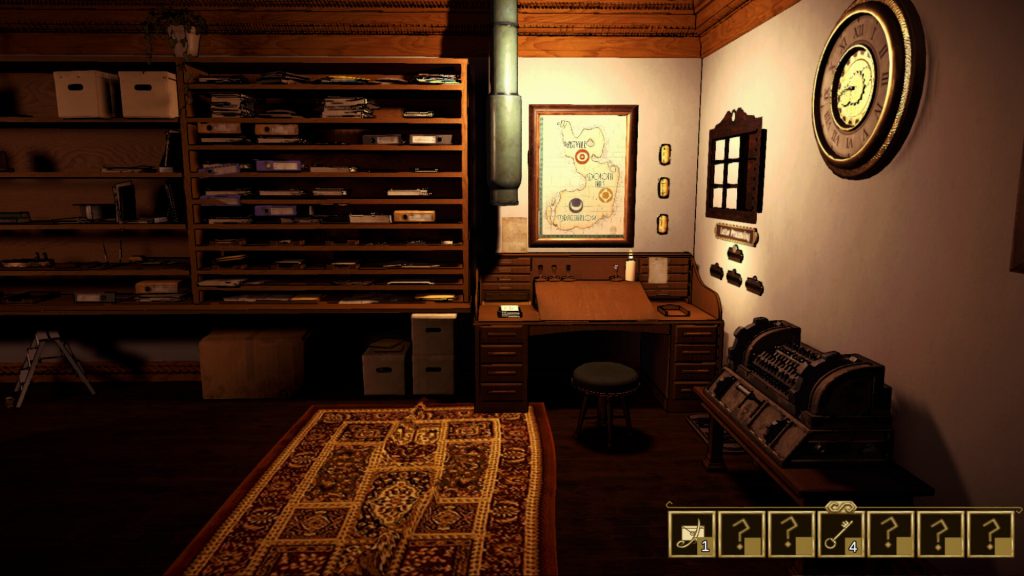
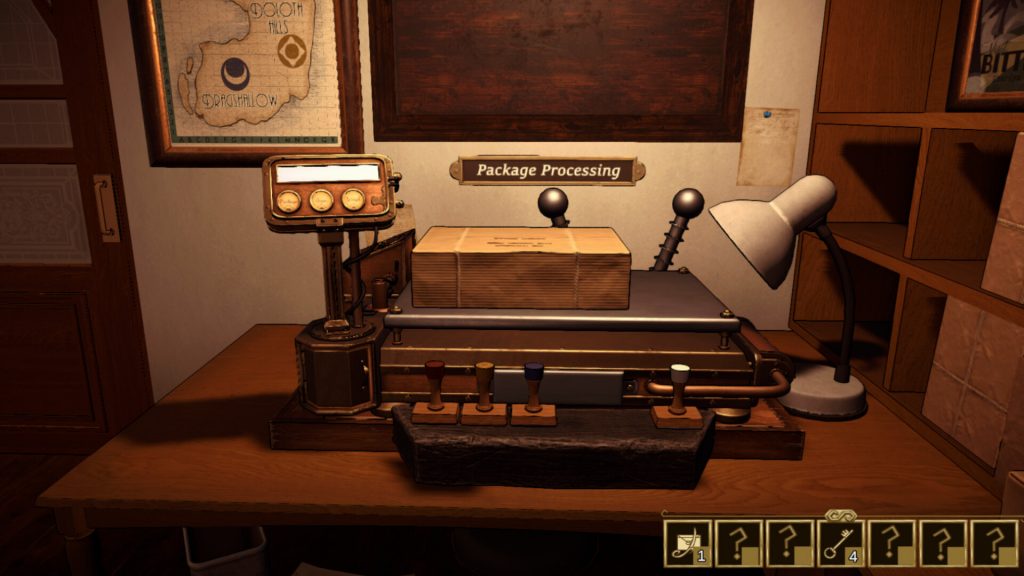
Traditional horror relies on immediate threats, jump scares, and overt danger. Letter Lost operates differently. There’s no direct threat pressuring the player. The protagonist works at a post office stamping letters, sorting mail, and making deliveries — exactly the kind of mundane job simulator content that should be relaxing. The horror emerges from the persistent feeling that something is wrong without an obvious indication of what. The player works ordinarily, but for unexplained reasons, cannot leave.
This design philosophy aligns with some of horror’s most effective traditions. The slow-building dread that characterizes Lovecraftian horror, the unsettling-while-mundane quality that Twin Peaks developed, the cozy-with-secrets register that Stardew Valley‘s darker undercurrents occasionally touched — Letter Lost operates within this lineage rather than within traditional jump-scare horror.
The genuine difficulty of executing this tonal balance can’t be overstated. Most horror games default to direct threat because slow-building dread requires sustained atmospheric work across the entire playtime. Letter Lost‘s 10-15 hour campaign (or 20+ for completionists) needs to maintain this delicate balance throughout. The 2.5-year development period reflects exactly the kind of careful iteration this design requires.
The Audio Achievement
The sound design represents one of Letter Lost‘s most substantial production accomplishments. One of the developers personally recorded thousands of voice lines for the game — an extraordinary commitment that demonstrates both production discipline and the project’s prioritization of audio atmosphere.
This kind of in-house voice work is rare for indie projects. Most indie games either use limited voice acting (text-driven with minimal voice support) or contract voice work through services that produce competent but generic delivery. Personally recording thousands of voice lines requires not just performance capability but extensive time investment that solo or small-team developers usually can’t afford.
The performing arts background of FlatNine Games’ founders becomes a significant context here. Husband-and-wife teams of performing arts professionals bringing their professional skills to game development produce results that pure programming and design teams typically can’t match. The voice work specifically benefits from this background — performing arts professionals understand vocal performance in ways that game-only developers usually don’t.
The 8-channel radio system extends the audio depth significantly. Yodeling, sleep music, rain sounds, and talk radio — different ambient registers that the player can switch between throughout gameplay. This kind of choice in atmospheric audio is unusual and serves multiple purposes simultaneously. It lets players modulate their own experience based on mood. It provides variety across extended playtime. It creates moments where the player’s audio choices become meaningful — playing relaxing music while uncovering unsettling content produces tonal dissonance that pure unsettling audio couldn’t achieve.
This combination of comfort and anxiety through audio is exactly the kind of design innovation that makes Letter Lost distinctive. Comfort sounds that are simultaneously creepy. Atmospheric variety that the player participates in choosing. Voice work performed with theatrical professionalism rather than the competent video game standard.
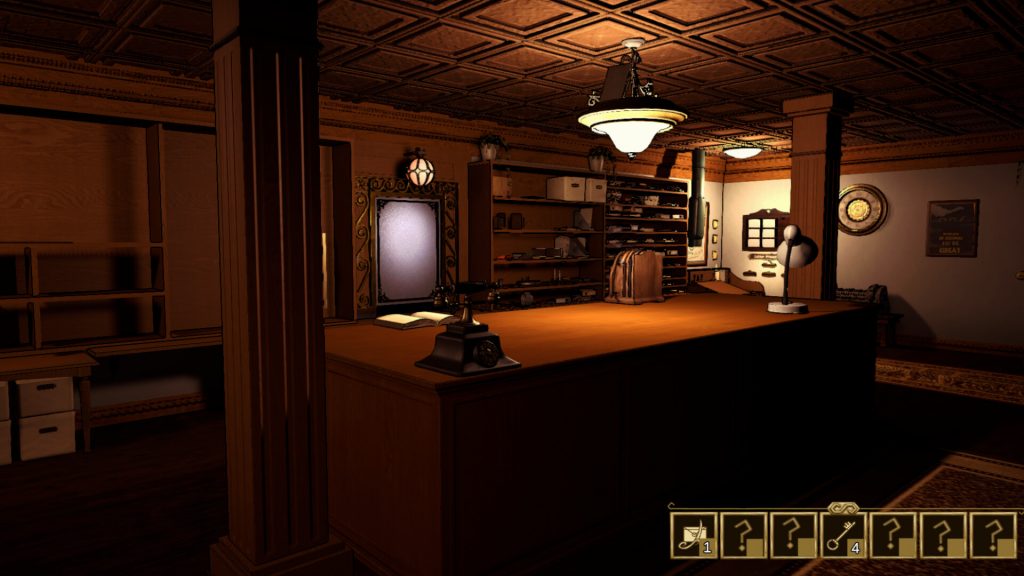
The Karnim Isle Post Office
The setting establishes the game’s hybrid identity efficiently. Players become post office workers on Karnim Isle, repeating the daily activities of stamping letters, sorting mail, and making deliveries. Surface gameplay is a straightforward job simulation — the kind of comfort-game content that’s been generating commercial success across the post-Papers, Please and post-Pizza Possum indie landscape.
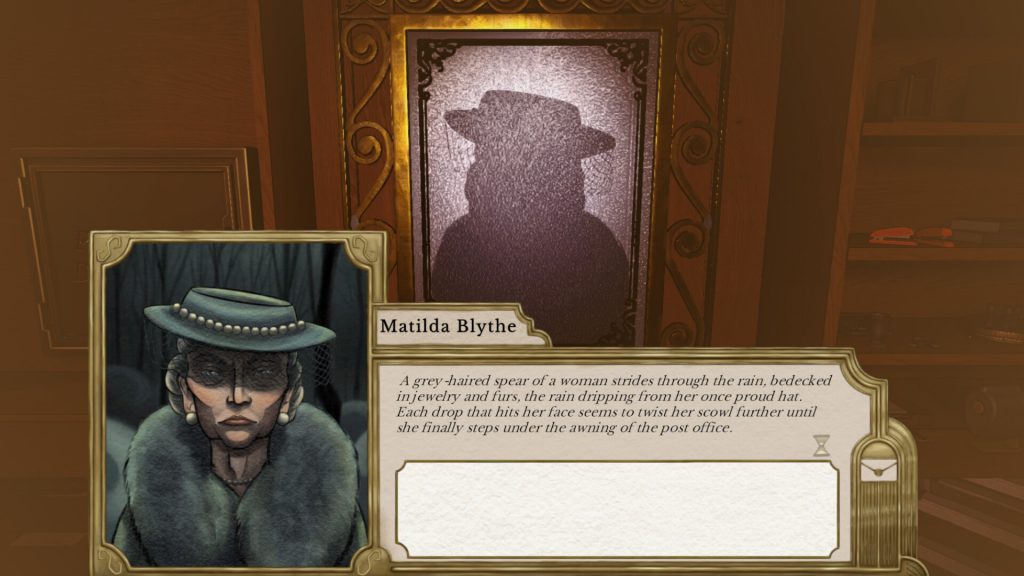
The underlying mystery emerges gradually. Players can engage residents in conversation to learn their secrets. Players can also choose to open other people’s letters — clearly not allowed, but mechanically possible. The game deliberately invites these forbidden choices rather than making them frustratingly inaccessible. This design philosophy — letting players violate explicit rules while making consequences emerge through narrative rather than punishment — creates the kind of moral engagement that pure restriction couldn’t achieve.
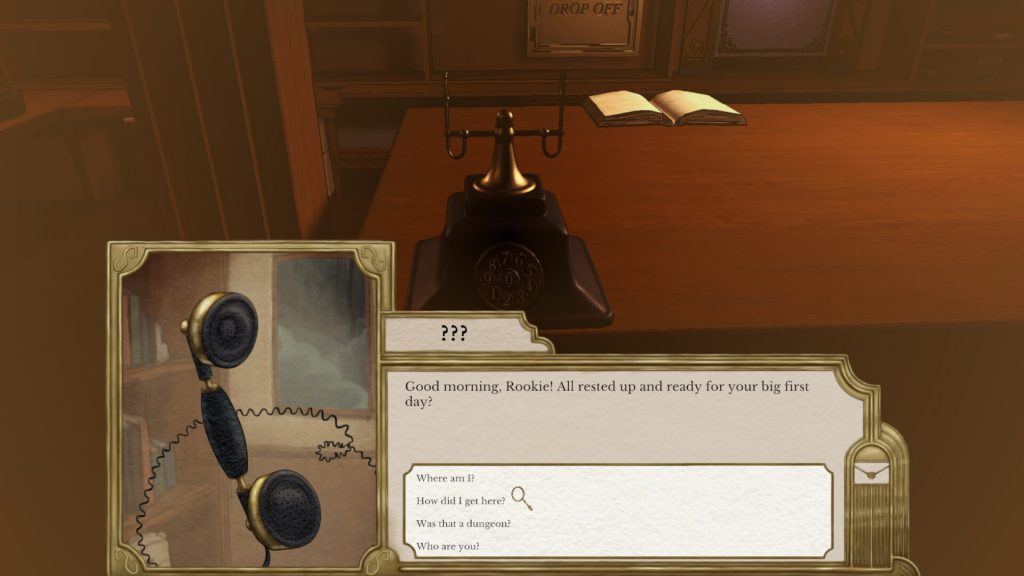
The supervisor character, Liv, provides instructions through an old-fashioned telephone, but compliance is the player’s choice. This relationship structure adds another layer of player agency. Liv exists as an authority figure, but disobeying her becomes meaningful choice with narrative consequence rather than gameplay failure.
The combination of puzzle-solving (finding escape clues), conversational engagement (learning residents’ secrets), forbidden curiosity (reading letters not meant for the player), and authority navigation (obeying or defying Liv) produces gameplay variety that pure job simulation couldn’t match. Letter Lost uses the post office framework as a foundation for substantially deeper interactive content.
The Forbidden Choice Architecture
The “forbidden choice invitation” deserves additional attention because it’s structurally important to how Letter Lost operates. Most games that include rule-violation systems either make them mechanically punishing (don’t open the letter or you’ll fail the run) or trivially safe (open all the letters, no consequences). Letter Lost‘s approach appears more sophisticated — the choices are genuinely meaningful narratively, but they don’t immediately punish or reward.
This creates the kind of decision-making territory where players must navigate their own ethical compass rather than optimizing for game systems. Should you read someone else’s letter? Maybe it contains information you need. Maybe it’s just private. Maybe the act of reading carries consequences you won’t see immediately. The game asks players to make these decisions without telling them what the optimal answer is.
This design philosophy aligns with serious narrative games. Disco Elysium, Pathologic, Mouthwashing — recent indie titles that respect player intelligence by refusing to provide clear right answers operate in similar territory. Letter Lost extends this approach to a cozy job simulation context, which is genuinely novel.
The 12+ storylines mentioned in the documentation suggest that these choices produce meaningfully different narrative paths. This level of branching for a horror project is substantial — most horror games offer limited ending variation, while Letter Lost appears to offer the kind of narrative consequence depth typically associated with narrative-focused RPGs.
The Women-Led Development Context
FlatNine Games has explicitly committed to maintaining at least half its contributors as women, with the current team approximately 70% women. This isn’t just demographic information — it’s structural commitment that shapes the studio’s identity.
For game development specifically, this kind of explicit gender composition target has practical effects on what kinds of projects get made. Horror games made by predominantly male teams sometimes default to specific horror traditions (slasher, body horror, conventional jump scares) that reflect the perspectives most represented in their creative process. Letter Lost‘s psychological horror with a cozy elements approach may reflect the broader range of horror traditions that women contributors bring to the project.
The Summer Game Fest Women-Led Games Showcase platform deserves recognition as one of the more significant industry developments of recent years. Curated showcases for women-led projects don’t just provide visibility for individual games — they help establish the recognition that gaming’s creative leadership extends well beyond the demographic groups historically dominant in development. Letter Lost‘s release date reveal at this showcase reflects both the project’s quality and the broader trajectory of women-led project recognition.
The husband-and-wife performing arts couple’s founding context adds another dimension. Creative partnerships between spouses produce specific working dynamics that traditional studio structures don’t replicate. The trust, communication, and shared creative vision that long-term partners can develop translates into project consistency that committee development typically can’t match. Letter Lost‘s 2.5-year development period under this kind of intimate creative partnership likely benefits from the deeper alignment that couples-as-collaborators can achieve.
Critical and Community Response
International gaming media coverage has noted the distinctive structure combining job simulation with psychological horror to create unconventional tension. Coverage has emphasized how the slow-building atmospheric anxiety emerges through everyday work repetition, and how the choice-based narrative structure produces meaningful variation across playthroughs.
Community response has been notably positive even before launch. Steam community discussion describes the project’s “quietly pressing atmosphere” as intense and the cozy-anxiety balance as compelling. The demo specifically has generated word-of-mouth as “atmosphere alone makes it immersive” — recognition that the game succeeds at its primary design goal of creating sustained emotional engagement through environmental and tonal craft rather than through gameplay stress.
The fact that pre-release community discussion focuses on atmospheric quality rather than mechanical complexity reflects what Letter Lost prioritizes. Many indie horror games attract initial discussion through their mechanical innovations or specific scary moments; Letter Lost‘s appeal centers on sustained atmospheric craft, which is harder to demonstrate through brief clips but more emotionally affecting through extended engagement.
Who This Is For
Strong fit for: psychological horror enthusiasts who prefer slow-building atmosphere over jump scares; Papers, Please fans interested in horror variation on the format; Stardew Valley and other cozy game players who specifically enjoy the darker undercurrents in similar games; Lovecraftian horror enthusiasts; narrative game players seeking meaningful choice consequences (12+ storylines suggest substantial branching); players who appreciate craft-intensive audio design; women-led studio supporters.
Cautious fit for: players who specifically prefer overt horror with clear threats; anyone uncomfortable with sustained ambiguity in narrative content.
Less ideal for: players who avoid horror entirely; anyone who specifically dislikes job simulation gameplay; players who prefer action-focused content over atmospheric experiences.
What to Watch For
A few questions will shape Letter Lost‘s June 10 reception.
The first is whether the cozy-horror balance sustains across the full 10-15 hour campaign. Maintaining this tonal balance is genuinely difficult — too cozy, and the horror dissolves; too horror, and the cozy elements feel hollow. How well Letter Lost maintains the balance throughout extended play will determine critical reception.
The second is the choice consequence delivery. 12+ storylines suggest substantial branching, but the question is whether these endings feel meaningfully different or represent variations on similar conclusions. Players who invest in choices want to see those choices produce genuinely different experiences.
The third is the audio production paying off in practice. Thousands of personally recorded voice lines and 8 radio channels represent an enormous production investment. Whether this investment translates into the immersive atmosphere the design intends, or whether players don’t fully appreciate the depth, will affect how Letter Lost‘s strengths land.
The fourth is the platform reception across gaming culture. Games combining cozy and horror elements occupy unusual market positions — sometimes failing to fully reach either audience. How Letter Lost‘s positioning resolves across cozy gaming and horror gaming communities will affect its commercial trajectory.
The Takeaway
Letter Lost is one of the more genuinely distinctive horror projects of 2026, combining unusual tonal design (cozy-horror hybrid), substantial production craft (thousands of personally recorded voice lines, 8 radio channels), meaningful narrative scope (12+ storylines, 10-15 hour campaign), and serious development discipline (2.5 years of development by performing arts professionals).
For horror fans who’ve grown tired of jump-scare conventions and seek psychologically substantial experiences, this is one to wishlist immediately. The slow-building dread approach that Letter Lost prioritizes is exactly what the horror genre’s best traditions emphasize, and the cozy framing distinguishes the project from countless indie horror titles operating in more conventional registers.
For job simulator and cozy game fans, Letter Lost offers expansion of the genre into territories that the format hasn’t typically reached. The post office work foundation provides familiar comfort that the unsettling layer transforms into something distinctively memorable.
For a broader gaming culture, Letter Lost contributes to the growing recognition that women-led development produces project varieties that broader industry demographics don’t always prioritize. The cozy-horror hybrid that Letter Lost attempts represents exactly the kind of creative direction that diverse perspectives bring to gaming.
A post office on Karnim Isle. Letters are piling up while the worker can’t leave. Residents with secrets that might be revealed through conversation or forbidden letter-reading. A supervisor whose instructions can be followed or defied. 8 radio channels providing companionship and atmospheric layering. Thousands of voice lines were performed by one of the developers. 12+ different stories that emerge based on player choice across approximately 10-15 hours of carefully crafted psychological horror.
As indie horror releases go, Letter Lost‘s structure represents one of the more thoughtful design propositions of 2026 — and the June 10 release date means players don’t have to wait long to discover whether the cozy-horror balance lands as effectively as the pre-release reception suggests.
The post office is open. The letters are waiting to be sorted. Something on Karnim Isle prevents departure. And one of the more distinctive psychological horror projects of the year is preparing to demonstrate that quiet dread can be more affecting than overt threat when the craft commits fully to its design vision.
Information regarding ‘Letter Lost’
| item | detail |
|---|---|
| Developer / Publisher | FlatNine Games (70% female contributors / Founded by a performing arts couple) |
| Genre | Psychological Horror Mystery / Job Simulator / Adventure / Escape Room |
| Release platform | PC (Steam) |
| Release date | June 10, 2026 |
| Playtime | Single 10–15 hours / Perfectionist 20 hours+ |
| Art style | 3D / Cozy + Psychological Horror Blend |
| radio channel | 8 channels (Yodeling, Sleep, Rain Sounds, Talk Radio, etc.) |
| Number of endings | Multiple endings (12 or more storylines) |
| Public history | Summer Game Fest Women-Led Games Showcase 2026 |
| Development period | About 2.5 years |
| Main Keywords | Post office, confinement, psychological horror, mystery, letter, island, cozy, escape, Lovecraft |
| Official Channel | Bluesky · Discord · Instagram · TikTok · YouTube · Facebook |
| Steam Page | Shortcut |