Cold War espionage is one of fiction’s most cinematically beloved settings — the John le Carré novels, the Tinker Tailor Soldier Spy tradition, the Cold War paranoia that produced countless films and TV series. But it’s also one of the harder settings to translate to interactive media. The genre’s distinctive tension comes from slow-paced intelligence work, methodical document analysis, careful network management, and information warfare conducted across years rather than minutes — qualities that don’t fit naturally into action-based gameplay. The Syndicate: Classified Operations, the in-development incremental strategy game from solo Filipino developer ANI_Software, takes a genuinely innovative approach to this translation challenge — and the just-released Steam Next Fest demo demonstrates that the approach works.
Featured on VGTimes’ home page and supporting 19 languages including substantial Southeast Asian and East Asian coverage, The Syndicate: Classified Operations is positioning itself as one of the more distinctive incremental strategy games currently in development.
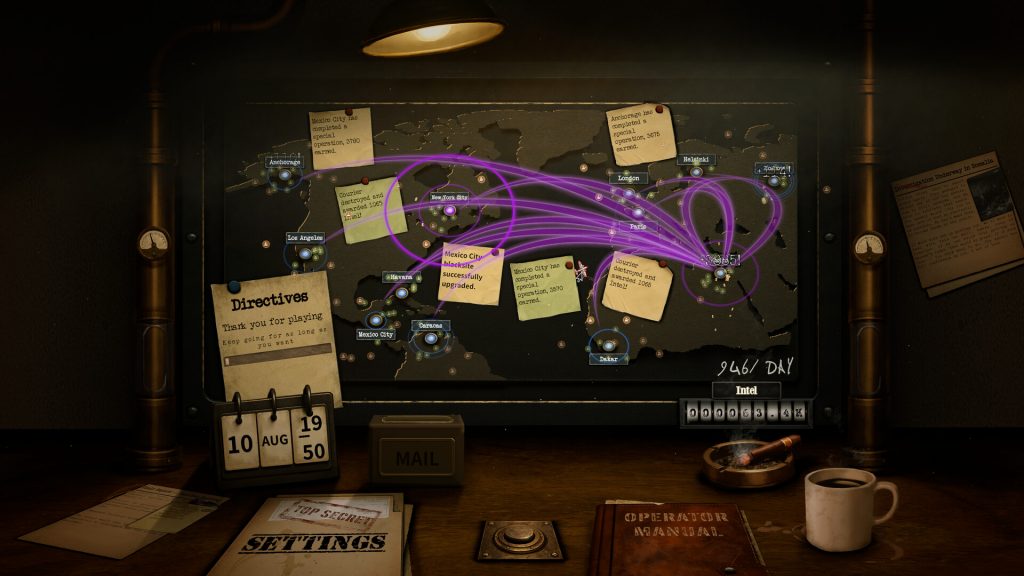
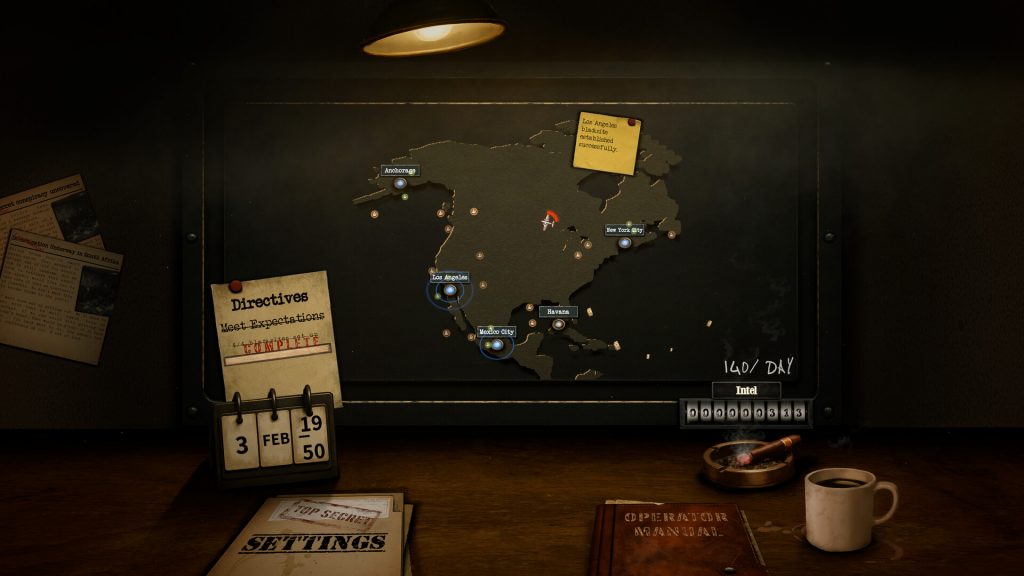
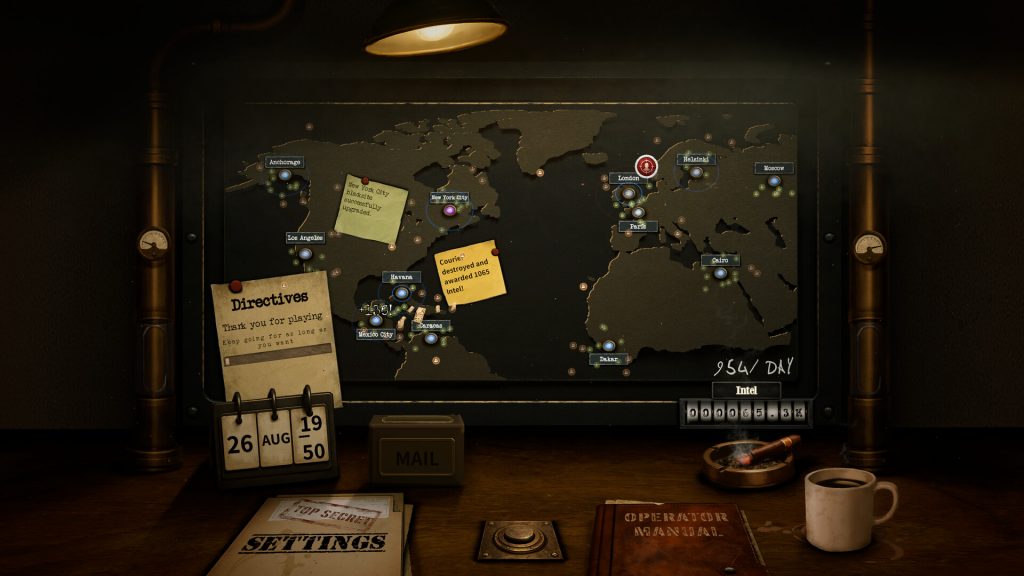
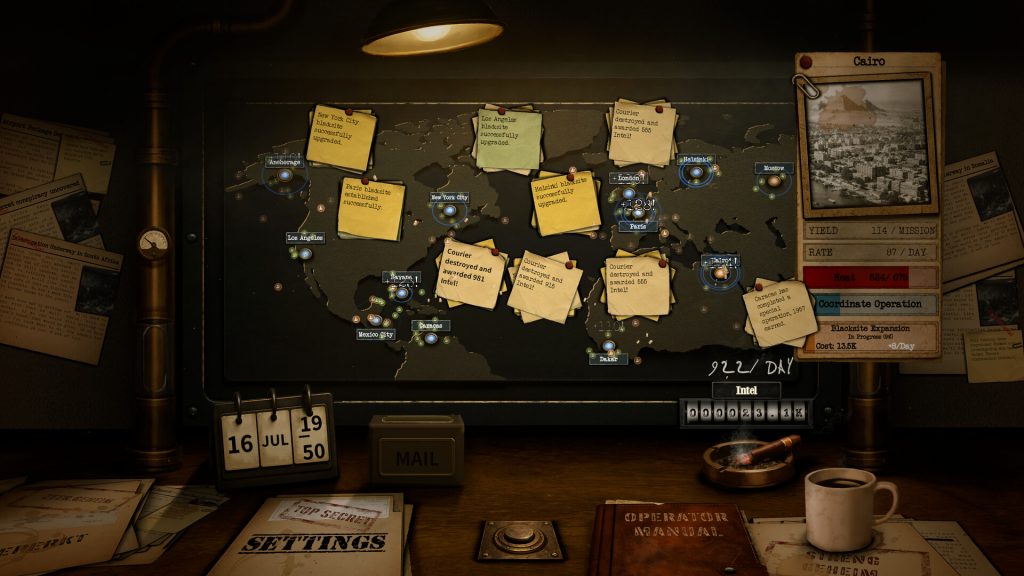
The Ops Board: When the Interface Becomes the Game
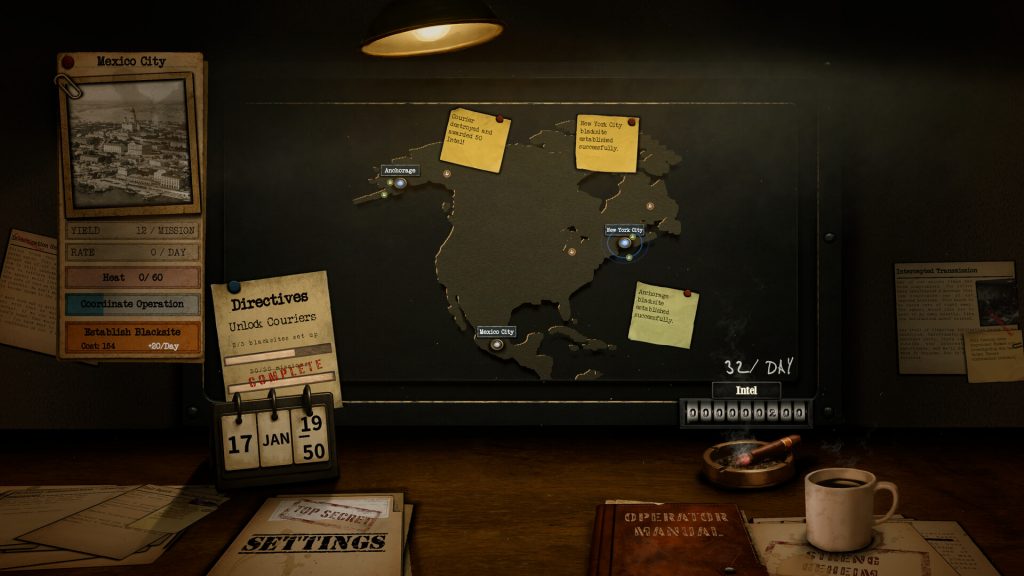
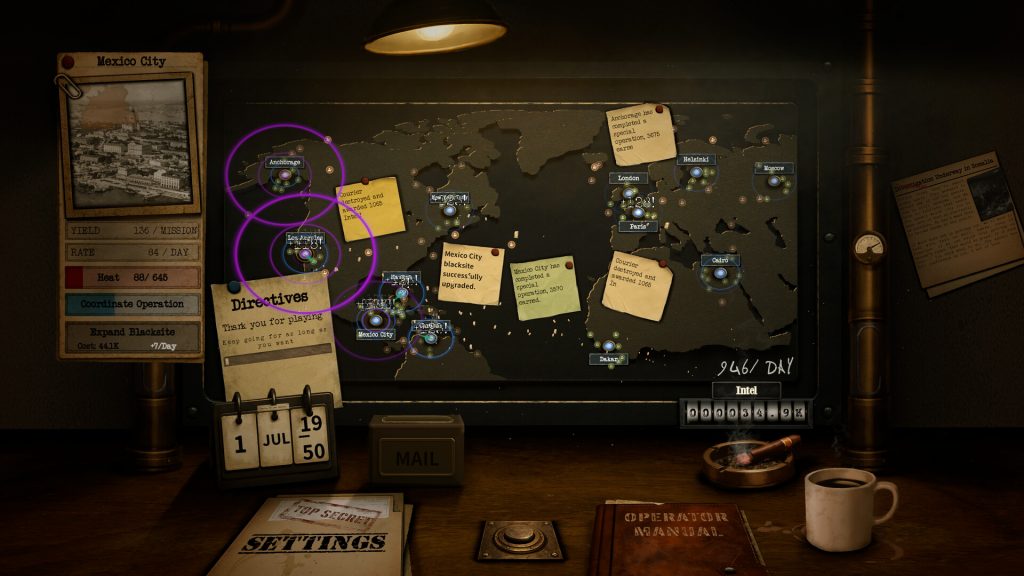
The most distinctive design choice in The Syndicate: Classified Operations is its commitment to interface-as-gameplay. Most games separate UI from world simulation — players interact with menus, dropdowns, and HUDs that exist as overlays on the actual game content. The Syndicate takes a different approach: the desktop-based “Ops Board” isn’t an interface to the game; it is the game.
Through this Ops Board, players handle all business — expanding city-based outposts, upgrading infrastructure, selecting doctrine that determines organizational operating philosophy. There are no traditional HUDs or dropdown menus. The game’s reality is literally the desk where the player works, with all gameplay activities occurring through manipulation of documents, communications, and operational records arranged on that desk.
This design philosophy is doing significant work for the espionage setting. Real intelligence work happens through documents, communications, code analysis, and information management — exactly the activities the Ops Board interface forces players to engage with directly. Players don’t read about being intelligence operators; they perform the actual activities (decrypting communications, blocking or securing information transmission paths, analyzing classified documents) that constitute intelligence work.
Wiretapped materials, cipher messages, and classified memos arrive at the player in real-time. The process of rapidly handling these materials directly determines organizational success or failure. The Cold War intelligence agency’s tense work environment is reinterpreted as gameplay through this direct engagement with the period’s actual activities.
This kind of design integration is rare and difficult to execute well. When it works, it produces games with unique tactile presence — the player’s hands actually doing the work the game depicts, rather than commanding abstract avatars. Papers, Please achieved this through immigration processing; The Syndicate applies similar principles to intelligence work.
The Incremental Growth Structure
The gameplay foundation is incremental/idle strategy genre conventions adapted to the Cold War setting. Early stages involve small operations and simple missions. As time progresses, work becomes automated and organizational scale expands, requiring increasingly complex strategic choices.
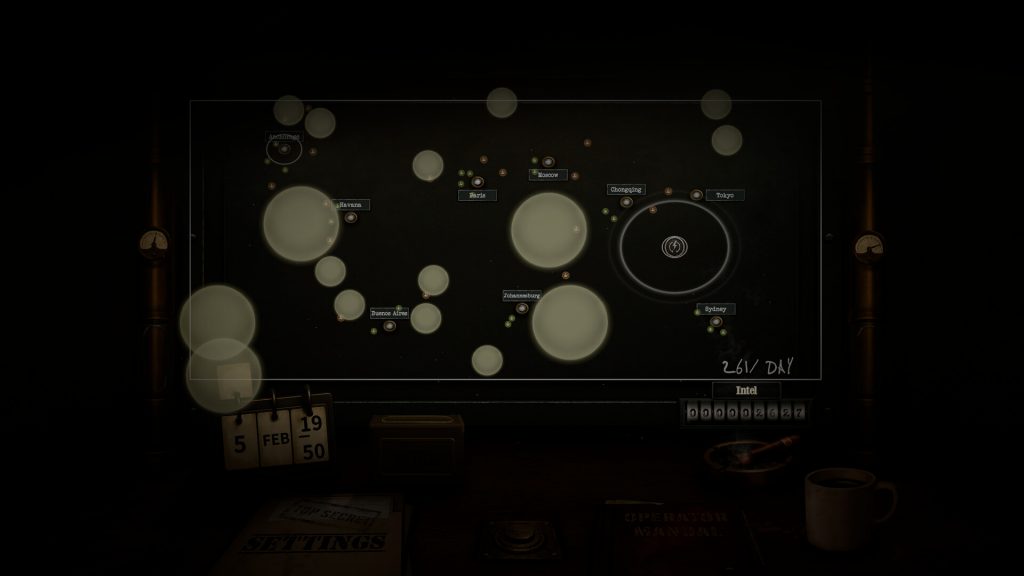
Players establish city-level blacksites, connect regional networks, then expand influence across Europe and ultimately the global stage. Ordinary information gathering missions gradually escalate into regional conflicts, international situations, large-scale covert operations, and even nuclear crisis response. The scale escalation is tonal as well as mechanical — small intelligence operations feel different from world-shaping decisions, and the game’s progression captures this transition.
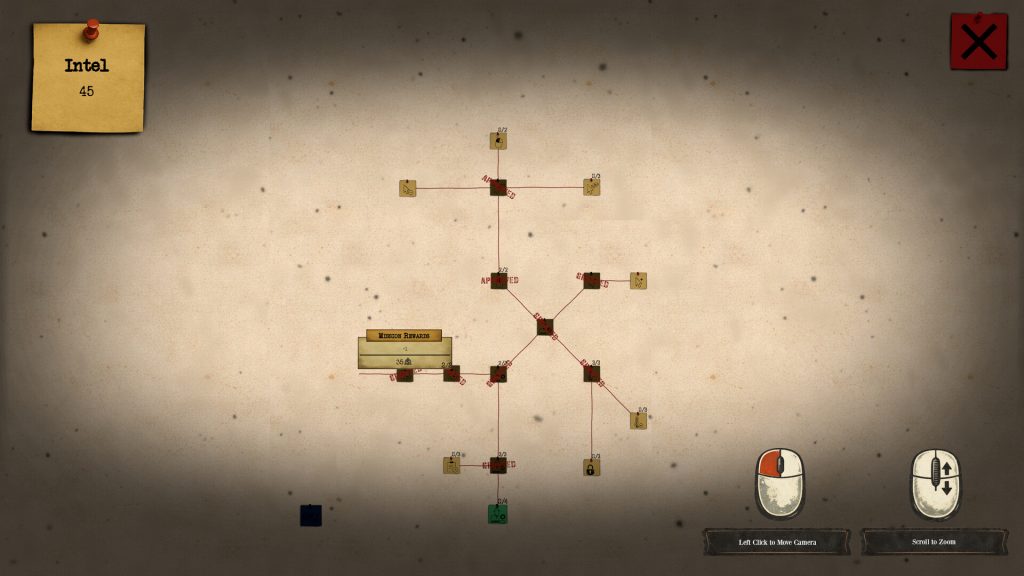
The doctrine system determines organizational developmental direction. Players select long-term strategies and specialized capabilities to build their own personalized intelligence organization. Small efficiency improvements and infrastructure enhancements accumulate over time into massive benefits — the satisfying growth dynamic that defines incremental genre appeal.
This structural approach is well-suited to the espionage setting. Intelligence agencies don’t operate on action-game time scales; they develop assets over years, build networks that take decades to fully mature, and conduct operations that benefit from patience rather than urgency. Incremental game pacing matches this temporal reality in ways that real-time strategy or turn-based approaches couldn’t.
The progression from local to regional to continental to global influence also mirrors real intelligence agency development patterns. The CIA didn’t start as a global organization — it grew from earlier intelligence structures into expanding spheres of operation. The Syndicate‘s progression structure captures this growth pattern while letting players experience it personally.
The Cold War Setting and Period Aesthetics
Cold War setting choice is significant beyond just being interesting. The period offers specific narrative and gameplay opportunities that other settings don’t.
Information Asymmetry as Core Mechanic: Cold War intelligence was fundamentally about controlling information — what your side knew, what the enemy knew, what each side knew about what the other side knew. This recursive information dynamic translates naturally to gameplay, where managing information becomes the central activity.
Cipher and Cryptography Tradition: Cold War cryptography produced some of the most fascinating intellectual challenges in 20th-century history. Including cipher decryption as gameplay engages with this tradition directly, giving players actual puzzles that mirror real Cold War analytic work.
Geopolitical Stakes: The Cold War nuclear standoff provides existential narrative weight that contemporary settings rarely match. Building toward “nuclear crisis response” as a game’s late progression isn’t speculative fiction — it’s recreating the actual stakes intelligence agencies operated under for decades.
Period Aesthetic Recognition: Cold War visual vocabulary is internationally recognized. Players from many cultures understand the period’s aesthetic register (the smoke-filled rooms, the wall maps with pins, the photograph dossiers, the encrypted typewriter outputs) and can engage with the setting immediately rather than learning unfamiliar visual languages.
The voice acting inclusion adds significant production value to this period evocation. Cold War spy fiction depends heavily on tone, atmosphere, and the specific verbal register of intelligence work — voice acting that captures this register transforms the game from pure text-based simulation to something with the dramatic immediacy of audio drama.
The 19-Language Localization Strategy
The language support roster deserves specific attention. Most indie games launch with English-only or English-plus-a-handful-of-major-European-languages. The Syndicate‘s 19-language support, including Korean, Japanese, Thai, Indonesian, and Vietnamese, represents an unusually aggressive global localization strategy.
The Southeast Asian and East Asian language emphasis specifically signals the developer’s market awareness. These regions have strong strategy and simulation game audiences that often go underserved by Western indie developers due to localization costs. ANI_Software’s commitment to substantial Asian language coverage positions the game to capture audience segments that competing indie strategy games typically can’t reach.
For a Filipino developer specifically, this multi-Asian-language localization makes additional sense. The Philippines sits geographically and culturally between Western and Asian gaming traditions, and Filipino developers have natural insight into multiple regional markets that European or American developers lack.
The Korean language support is particularly noteworthy for our purposes. Korean players have a strong strategy simulation tradition (Crusader Kings, Stellaris, and other Paradox games maintain dedicated Korean communities), and Cold War-themed strategy games have specific resonance in Korea given the country’s actual Cold War history and continuing geopolitical situation. The Syndicate‘s Korean localization positions it well for this audience segment.
The Filipino Solo Developer Context
ANI_Software operates as a one-person studio run by an independent Filipino developer. The studio has been engaging with audiences through Itch.io demo releases since early development, gathering user feedback throughout the production process. Recent Steam demo release and VGTimes home page feature have elevated visibility significantly.
The solo development context shapes how to evaluate the project. The Syndicate‘s ambition (Cold War setting, 19-language localization, voice acting, complex incremental systems, distinctive Ops Board interface design) represents a production scope that typically requires team development. That a solo developer is attempting and apparently succeeding at this level of execution is remarkable.
For Filipino indie development specifically, The Syndicate: Classified Operations represents one of the more visible international successes from a country that hasn’t yet established the indie gaming presence of neighboring Southeast Asian nations (Indonesia has produced Coffee Talk and DreadOut, Thailand has produced various indie projects). A breakout Filipino indie success contributes to the region’s growing visibility in global indie gaming.
The Itch.io-first iterative development approach reflects mature indie practice. Solo developers building over extended periods benefit significantly from iterative community feedback rather than working in isolation until launch. ANI_Software’s commitment to public demo iteration suggests serious development discipline.
How the Press Has Responded
VGTimes’ home page exclusive feature represents significant visibility. While VGTimes isn’t among the largest English-language gaming press outlets, its specialized focus on game databases and detailed information makes its feature placement valuable for the audience segments most likely to engage seriously with strategy and simulation games.
The Steam Next Fest participation provides additional discovery infrastructure. Next Fest’s curated free demo format helps players discover projects they wouldn’t encounter through general Steam browsing, and The Syndicate‘s distinctive concept makes it well-suited to thrive in that discovery context.
The Itch.io browser-playable demo lowers the barrier to discovery even further. Many potential players will try a free browser-playable game out of curiosity, who wouldn’t download a Steam demo. This multi-platform demo strategy maximizes the project’s accessibility to potential audiences.
Who This Is For
Strong fit for: incremental/idle game enthusiasts looking for thematically distinctive variations on the format; Cold War espionage fiction fans (Tinker Tailor Soldier Spy, The Americans, John le Carré readers); strategy simulation players who appreciate progression-driven systems; Papers, Please fans who enjoyed the interface-as-gameplay design philosophy; players intrigued by international indie development; anyone curious about Filipino indie gaming.
Cautious fit for: players who specifically prefer action-focused or real-time gameplay over methodical strategy; anyone uninterested in document-based or interface-driven gameplay rather than visual world exploration.
Less ideal for: players seeking traditional graphics-focused gaming experiences; anyone who finds the Cold War setting uninteresting; players who specifically dislike incremental/idle genre pacing.
What to Watch For
A few questions will shape The Syndicate: Classified Operations‘ development trajectory.
The first is whether the Ops Board interface sustains engagement across the full campaign. Interface-as-gameplay designs can be initially fascinating but become tedious if they don’t develop sufficient mechanical depth. How the Ops Board evolves as organizational scope expands will determine whether the design choice supports a complete game or settles into limited novelty.
The second is the cipher and analysis content. If decryption and document analysis are core gameplay verbs, the quality and variety of these activities significantly affect player engagement. Whether ANI_Software has developed sufficient cipher content variety to sustain interest will affect the game’s depth.
The third is the doctrine system’s strategic meaningfulness. Branching organizational specialization systems can either create genuinely different experiences or settle into surface-level alternatives that don’t meaningfully change gameplay. The doctrine system’s design quality will determine the replay value the game offers.
The fourth is solo development scale management. One-person development teams can deliver remarkable, focused work but face genuine constraints on total content scope. Whether The Syndicate delivers sufficient content for its premium ambitions or whether it remains scaled to solo development realities will affect critical reception.
The Takeaway
The Syndicate: Classified Operations is one of the more distinctive solo developer projects currently in development, combining a genuinely innovative design approach (interface-as-gameplay through the Ops Board), an underserved setting choice (Cold War espionage as incremental strategy), an unusually aggressive localization strategy (19 languages with Asian market emphasis), and serious craft commitment (voice acting, iterative public demo development) into a single coherent vision.
For incremental strategy fans, the project offers a thematically distinctive variation on familiar progression structures. For Cold War fiction enthusiasts, it provides interactive engagement with the period’s actual activities rather than an action-game abstraction of espionage themes. For solo developer project followers, it demonstrates how one-person teams can produce internationally noticeable work through clear vision and committed execution.
For broader indie scene observers, The Syndicate: Classified Operations represents an important development: the emergence of distinctive Filipino indie work in the international gaming conversation. The project’s success or struggles will inform what’s possible for solo developers from regions outside traditional indie gaming centers — and based on the current trajectory, the news appears encouraging.
The Steam Next Fest demo provides an immediate evaluation opportunity. Players curious about the concept can engage with actual gameplay rather than relying on description-based interest. The free Itch.io browser-playable version lowers the trial barrier even further. Whether the implementation lives up to the conceptual ambition is something interested players can evaluate directly.
A small intelligence organization is beginning local operations. Encrypted communications arriving on a desktop. Document analysis reveals patterns that shape geopolitical decisions. Doctrine choices that determine organizational evolution. Operations scaling from city-level surveillance to continental influence to global crisis management. An Ops Board where the player’s hands literally perform the work the game depicts.
As Cold War strategy game pitches go, The Syndicate: Classified Operations‘ is one of the more thoughtfully distinctive of recent indie development. And the fact that this distinctive vision emerged from a Filipino solo developer determined to bring the Cold War espionage tradition to genuine interactive form represents one of the more inspiring contemporary indie development stories.
The blacksite is waiting. The operations are classified. The Cold War is becoming personal. And one of the most genuinely interesting indie strategy projects of 2026 is just becoming visible to its potential audience.
Information regarding ‘The Syndicate: Classified Operations’
| item | detail |
|---|---|
| Developer / Publisher | ANI_Software (Philippines, solo development) |
| Genre | Incremental Strategy / Idle Simulation / Cold War Espionage Management |
| Release platform | PC (Steam) / Itch.io (Free demo available) |
| Scheduled for release | Undetermined (Under development) |
| demo | Steam Next Fest Demo Released / Itch.io Available for Free Browser Play |
| Language support | 19 languages (including Korean, Japanese, Thai, Indonesian, and Vietnamese) |
| Voice Acting | include |
| core system | Operation Board UI / Blacksite Network / Doctrine Selection / Cryptography / Gradual Complexity |
| background | Cold War Era / North America → Europe → Global Expansion |
| Featured | VGTimes Home Screen Exclusive |
| Main Keywords | Cold War, espionage, incremental, children, blacksite, operations board, nuclear threat, Philippines Indie |
| Official Channel | Steam Community · Itch.io |
| Steam Page | Go to Wishlist |