The “non-developer turned solo developer” origin story is a specific indie game development narrative. Someone outside the games industry — drawn to game creation through passion rather than professional training — learns the necessary skills to build what they wanted to exist, and releases the result. Double J Labs’ developer has followed this path from mobile to PC, from Broken Soul: Fragments of Hope (30,000+ downloads) to BROKEN SOUL: Boss Rush, released July 17 on Steam.
The project’s scope is deliberately focused: a 2D soulslike boss rush where the arena is a 5×2 grid, the combat is pattern recognition and timing precision, and the 25+ bosses each demand specific positional and temporal responses that can’t be approximated through button-mashing. This is the distillation of what soulslike games are actually about — understanding an opponent and responding correctly — extracted from the full soulslike package and presented as the concentrated experience.
The Grid Combat System
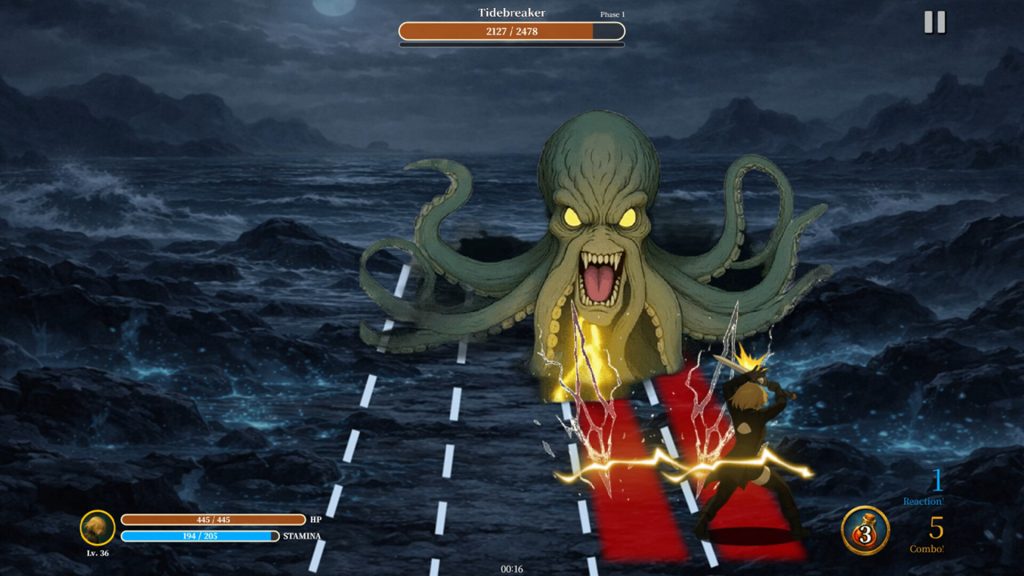
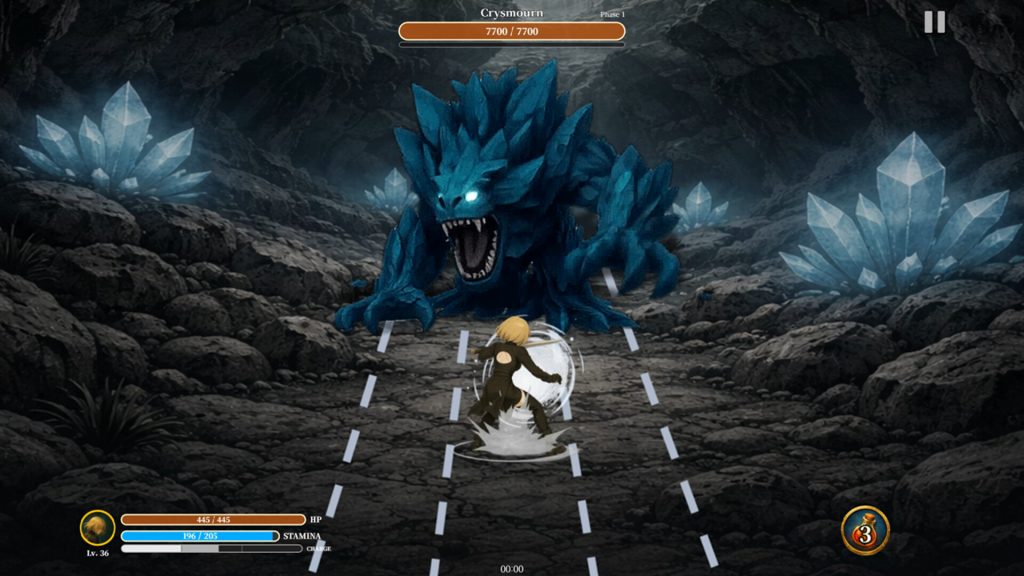
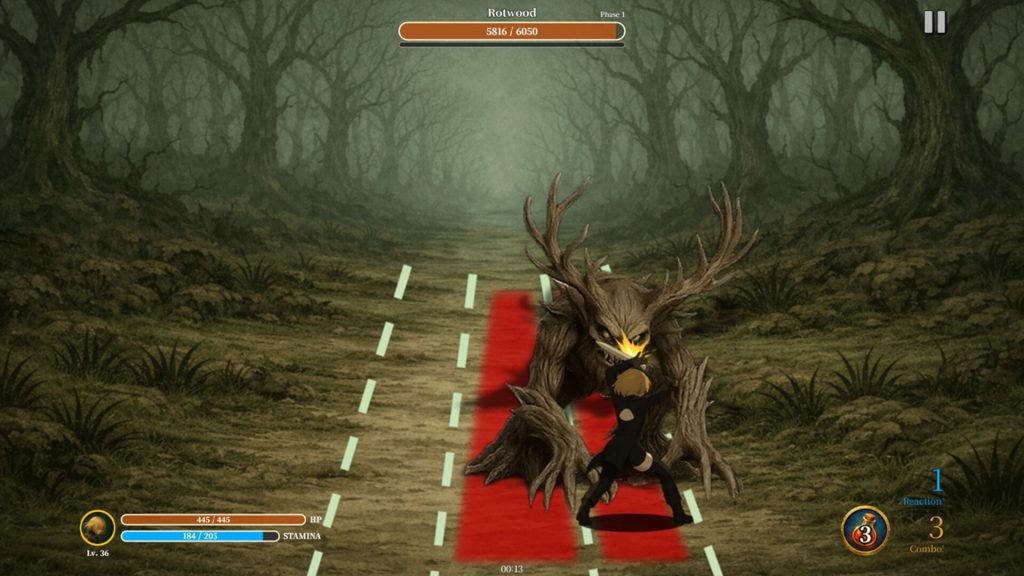
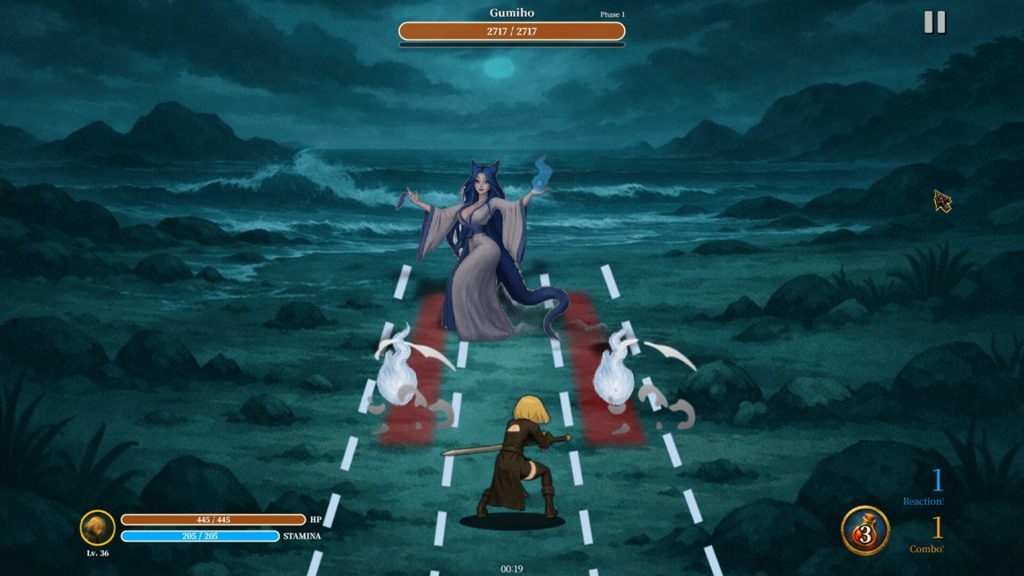
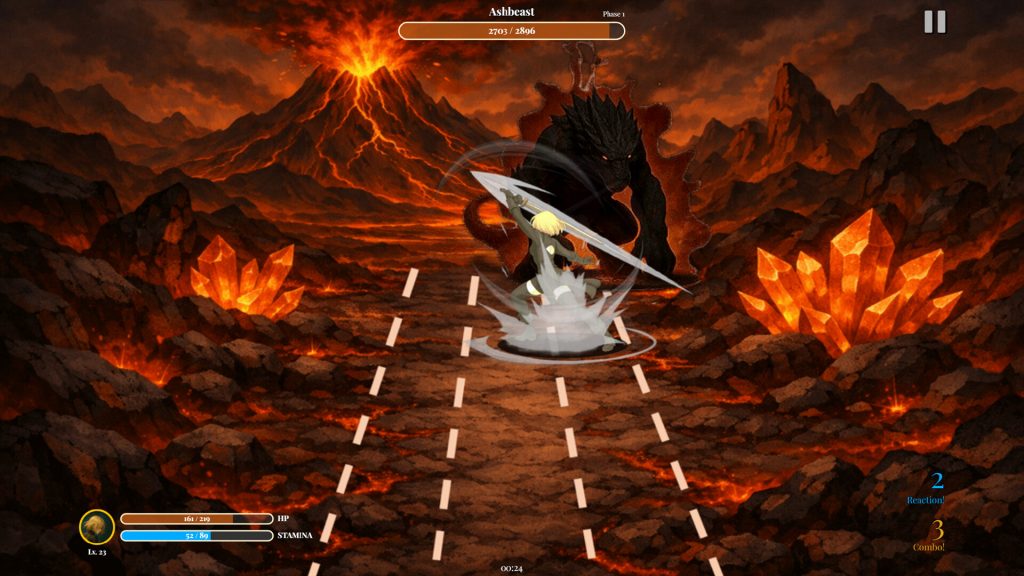
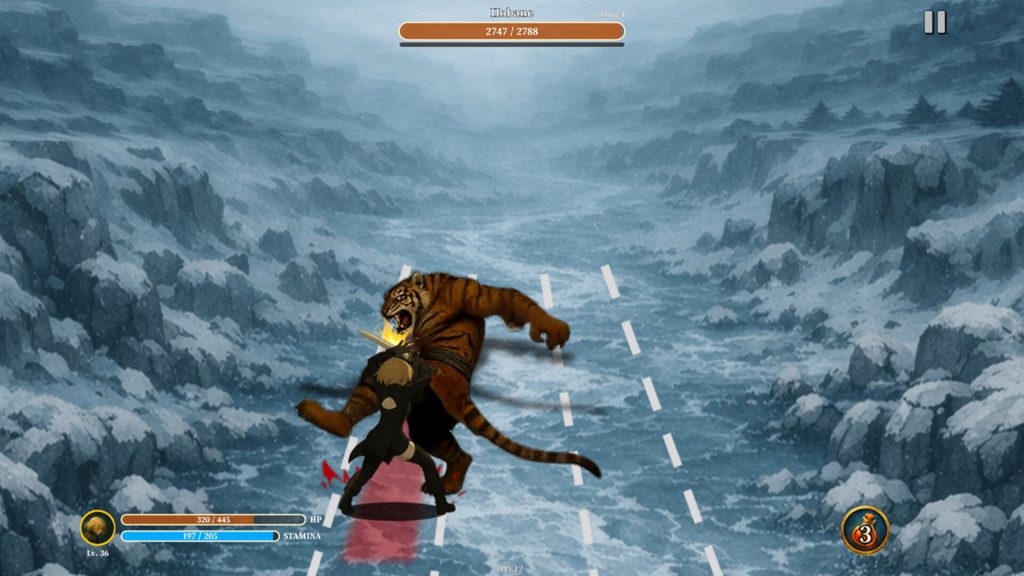
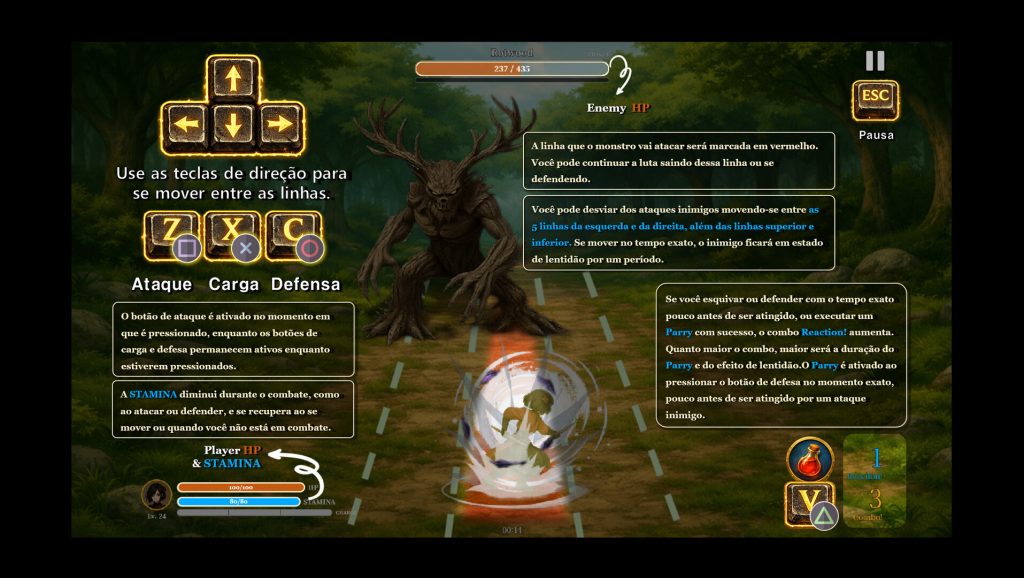
The 5×2 grid arena is the central design decision that distinguishes BROKEN SOUL: Boss Rush from both conventional soulslike games and conventional boss rush games. A 10-cell grid (5 wide, 2 tall) is an extremely constrained spatial environment — the entire battlefield is visible, every position is one or two moves from every other position, and there is no exploration, no environmental cover, no opportunity for spatial avoidance beyond the strict geometry of the grid.
This constraint is purposeful. In a grid this small, every positioning decision is deliberate rather than instinctive. Moving one cell left changes your relationship to every attack pattern the boss might deploy. Being in the correct cell when a particular attack lands is the difference between taking damage and avoiding it — and that correctness is a product of reading the attack pattern and choosing a position in response, not of reflexive twitch movement.
The contrast with the mobile predecessor is instructive. Fragments of Hope used a portrait-orientation 3×2 grid — six cells in a taller, narrower arrangement. The PC version’s 5×2 horizontal expansion to a 16:9 format doubles the lateral space available and shifts the spatial geometry from portrait to landscape. This isn’t merely a presentation change: wider horizontal space allows boss attack patterns that span different lateral ranges, creates more complex positional trade-offs, and enables encounter design that the narrower mobile grid couldn’t support.
The parry system adds the active counterplay layer. Reading an attack pattern to position correctly is passive defense — being in the right place. Parrying requires active engagement: the correct input at the correct moment. The combination of positioning-based avoidance and timing-based parrying creates the dual reading requirement that soulslike games characteristically reward. Players who only position well take less damage but miss the counterattack window; players who only parry well might be in the wrong position when an unparryable attack arrives. Integrating both is what the game is teaching.
The Two Classes
Nyra and Jiny as distinct classes with different combat tempos and strategies is a meaningful replay multiplier for a boss rush game. If every fight uses the same character, boss rush games are finite experiences — learn all 25+ bosses, complete all 25+ encounters, done. Different classes create the same 25+ bosses as different problems, because the tools available to address each boss change depending on which character you’re playing.
“Completely different combat tempo and strategy” between classes suggests more than stat differentiation — the games should feel mechanically distinct rather than just numerically adjusted. A character with a high-mobility, low-damage playstyle creates different optimal approaches to each boss than a high-damage, low-mobility character, because the boss encounter’s dynamic changes based on how long engagements last and how much freedom of movement is available.
The initial player feedback has noted the core combat’s “solid fundamentals” — which for a soulslike boss rush is the essential quality. The fundamental feel of movement, dodge timing, parry windows, and counterattack execution needs to be right before any other design element can work effectively. That this is landing positively from players who are also noting other improvement areas is the correct launch-state signal for a solo developer’s debut PC release.
The Mobile-to-PC Transition
Fragments of Hope‘s 30,000+ global downloads on mobile established the core concept’s viability before the PC development began. This is an underappreciated advantage for solo developers: the mobile release serves as a proof-of-concept and audience-building phase that provides feedback and confidence for the more ambitious platform expansion.
The technical transition from mobile to PC required genuine redesign rather than port work. The grid rearchitecture, the control scheme adaptation for keyboard/controller versus touchscreen, the visual presentation overhaul for a larger screen format — these are substantive development decisions rather than packaging changes. The PC version is better understood as a new game using the mobile version’s conceptual and audience foundation.
The narrative continuity across both games — a fallen world of gods, a protagonist who has lost everything but returns to fight overwhelming enemies — is the kind of dark fantasy framework that sustains a game series without requiring elaborate world-building. The thematic core (learning from defeat, overcoming through repeated challenge, the specific soulslike emotional journey of failure toward mastery) transfers from mobile to PC because it’s built into the genre structure rather than dependent on specific content.
The Solo Non-Developer Creator Context
The “non-developer background” aspect of Double J Labs’ story is worth specific examination. Game development skills are learnable outside formal training, but the learning curve is substantial — programming, game design, visual art, sound design, project management are each significant skill domains, and solo game development requires at minimum functional competence across all of them. A creator without prior professional development experience who builds a mobile game with 30,000+ downloads and then ports and expands it to PC has demonstrated the specific kind of persistent capability development that this origin story produces.
The AI disclosure is the most detailed and transparent we’ve encountered in this month’s coverage. The developer specifically clarifies: AI was used for some visual assets and promotional materials; the game ideas, combat design, and system design were all personally conceived and implemented; all content in the final game was manually selected, edited, and reviewed; no real-time AI generation occurs during gameplay. The additional note — “currently using all available tools to complete the game, with plans to improve art assets and other elements with greater support in the future” — provides honest context about why AI was used and what the developmental trajectory looks like.
This level of transparency transforms the disclosure from a caveat into a development narrative. The current state reflects available resources; the intended direction is toward fully original art. For a solo creator without professional art background, AI-assisted asset work in a first commercial release is a practical decision that the developer is contextualizing honestly rather than concealing.
The Early Reception
Player feedback splitting between combat system praise and readability/bug concerns is the expected reception pattern for a solo developer’s first PC release. The combat fundamentals earning praise confirms that the core design — the grid, the patterns, the parry timing — is working at the level that matters most for a soulslike boss rush. The readability concerns (visual clarity during combat) and bug reports are the polish-layer issues that patch work addresses, and the “solid fundamentals for a solo project” consensus suggests the community is evaluating the game with appropriate context.
The separate Steam demo allows potential players to evaluate the combat feel before purchase — a good decision for a game whose appeal depends entirely on whether the pattern-reading and timing mechanics feel satisfying to engage with. Players who connect with the core feel will find the full game’s 25+ bosses and two classes provide significant content; players who don’t connect with grid-based soulslike combat will know from the demo rather than from their purchase.
Who This Is For
Strong fit for: soulslike enthusiasts who want the boss pattern learning experience without the full exploration and level traversal context; players who specifically enjoy the distillation of soulslike difficulty into pure combat encounters; dark fantasy action game fans who want a compact, replayable experience; mobile gaming fans who enjoyed Fragments of Hope and want the expanded PC version; supporters of non-traditional game development paths; players who want to try both classes across all 25+ bosses as their primary replay motivation.
Cautious fit for: soulslike players who specifically want exploration and world-building alongside boss encounters; players who find grid-based movement spatial constraints limiting rather than focusing; players who want fully polished visual presentation at launch rather than a developer-stated improvement trajectory.
Less ideal for: players who dislike soulslike difficulty regardless of mechanical presentation; anyone seeking narrative depth beyond dark fantasy framework; players wanting multiplayer options.
What to Watch For
The developer’s stated improvement trajectory — better art assets with greater support — creates a post-launch evaluation dimension. If future updates deliver on this, BROKEN SOUL: Boss Rush at its later state may be a more complete product than the launch version represents. Tracking the update cadence will indicate whether the development relationship with the player community is active.
The readability issue noted by early players is the most significant gameplay concern to watch for resolution. In a game where reading attack patterns is the primary skill, visual clarity of what’s incoming is essential rather than preferable. If combat particle effects, animation overlaps, or visual presentation make attacks difficult to read in specific encounters, the pattern-learning foundation the game is built on is undermined.
The Takeaway
BROKEN SOUL: Boss Rush is a focused, deliberately scoped soulslike boss rush from a non-developer turned solo creator who built a mobile audience with the concept and has now expanded it for PC with a redesigned grid, 25+ bosses, and two distinct classes. The launch state has the solid combat fundamentals that make the genre work, alongside the visual and technical polish issues that first PC releases from solo creators frequently carry.
For soulslike enthusiasts who want the pattern-learning boss encounter experience without the full game package, and for players willing to engage with a first release that will improve through updates, the separate Steam demo provides the most honest evaluation tool available. The core combat is what determines if BROKEN SOUL: Boss Rush is the game for you, and the demo delivers exactly that.
25 bosses. Two classes. A 5×2 grid. One non-developer who learned everything required and shipped it.
The patterns are learnable. The parry windows are findable. The next attempt starts the moment the last one ends.
Information regarding ‘BROKEN SOUL : Boss Rush’
| item | detail |
|---|---|
| Developer | Double J Labs (One-person development) |
| Publisher | Double J Labs (Self-publishing) |
| Genre | 2D Soulslike Boss Rush Action |
| Release platform | PC (Steam) |
| Release date | July 17, 2026 |
| Mobile predecessor | Broken Soul: Fragments of Hope (Google Play, over 30,000 downloads) |
| Supported languages | 11 languages including Korean (interface, subtitles) |
| core system | 5×2 grid-based positioning and timing combat, evasion, parrying, and counterattacks, over 25 types of bosses, 2 classes (Nira, Genie) |
| demo | Provided separately on Steam |
| Steam Page | Shortcut |