After four years of development, multiple release delays, and a Steam wishlist count that climbed to 1.2 million, Solarpunk has finally arrived. The sky island survival crafting game from two-person German studio Cyberwave launched June 8 across PC (Steam, Epic, GOG), PS5, Xbox Series X|S, and Nintendo Switch 2 simultaneously — without an Early Access period, shipping directly as Version 1.0. It’s also available on Xbox Game Pass from day one, putting one of indie gaming’s most anticipated releases immediately into millions of subscribers’ libraries.
The reception has been mixed in ways that are themselves instructive about the project’s design philosophy. Among players who understood what they were getting, the response has been genuinely positive. Among players whose expectations differed from the design’s actual scope, the reaction has been more critical. That gap — and the story of how it formed across four years of anticipation — tells you almost everything you need to know about whether Solarpunk is for you.
[Related Article: Two-person Indie Game ‘Solarpunk’ Surpasses 1 Million on Steam Wishlist]
What Solarpunk Actually Is
Before evaluating the game’s reception, it’s worth being precise about what Solarpunk attempts. The developers themselves tried to manage expectations before launch: “This isn’t a game competing with large survival games — it’s a calm and cozy survival sandbox crafted with care by a small team.”
That framing is accurate, but “survival sandbox” has trained players to expect things Solarpunk deliberately excludes. There are no enemies. No combat systems. No hostile factions or monsters threatening the base. The “survival” element is almost entirely about resource management, energy systems, and farming logistics rather than survival under threat.
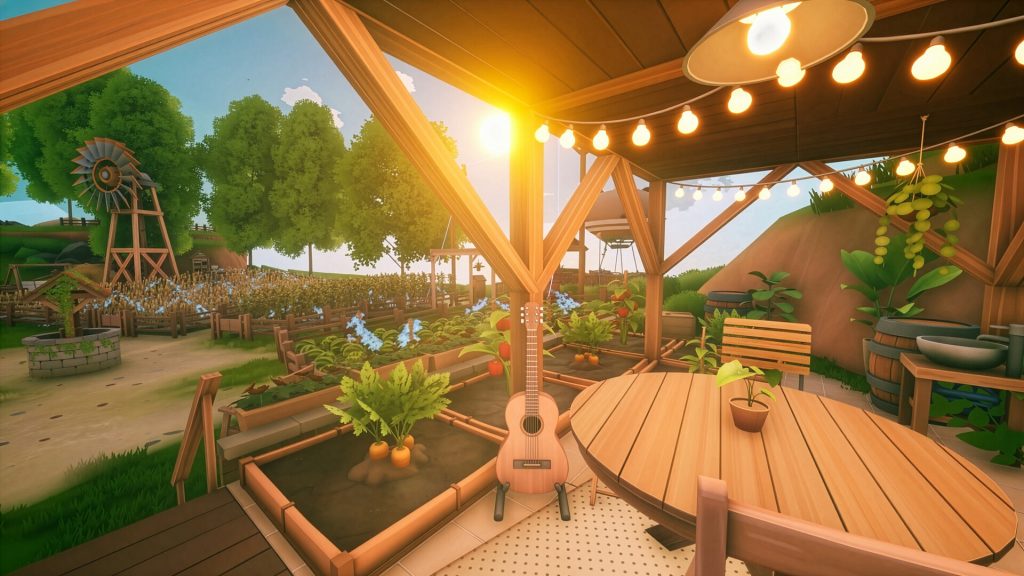
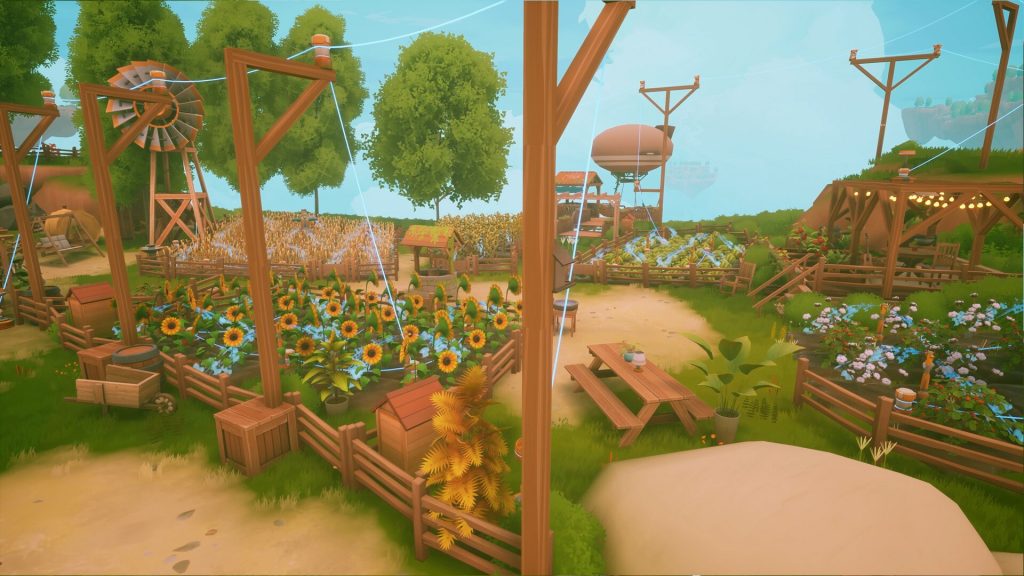
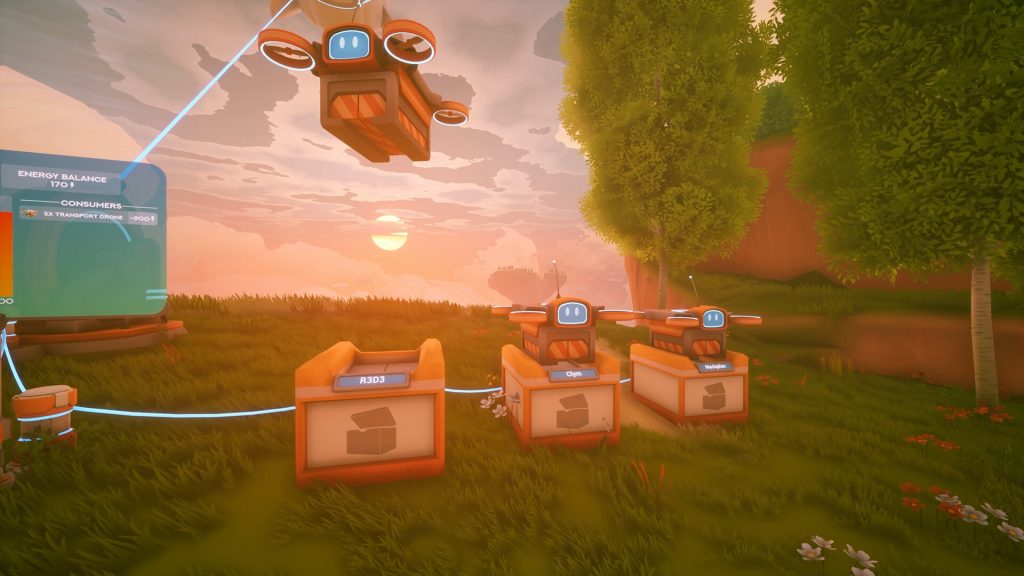
What Solarpunk actually provides: sky islands populated with harvestable resources, renewable energy infrastructure to build and maintain, farming systems, creature interactions, weather that affects your power generation, drone-enabled automation, airship construction for island exploration, and cooperative multiplayer for up to 4 players. It’s closer in spirit to Stardew Valley or Astroneer than to Valheim or Rust.
The 1.2 million wishlists accumulated over four years probably contained both audiences — people who wanted cozy sky island farming with energy management, and people who expected the “survival” descriptor to mean what it usually means. The 75% Steam review rating reflects this split more than it reflects actual quality failure.
The Energy Management Core
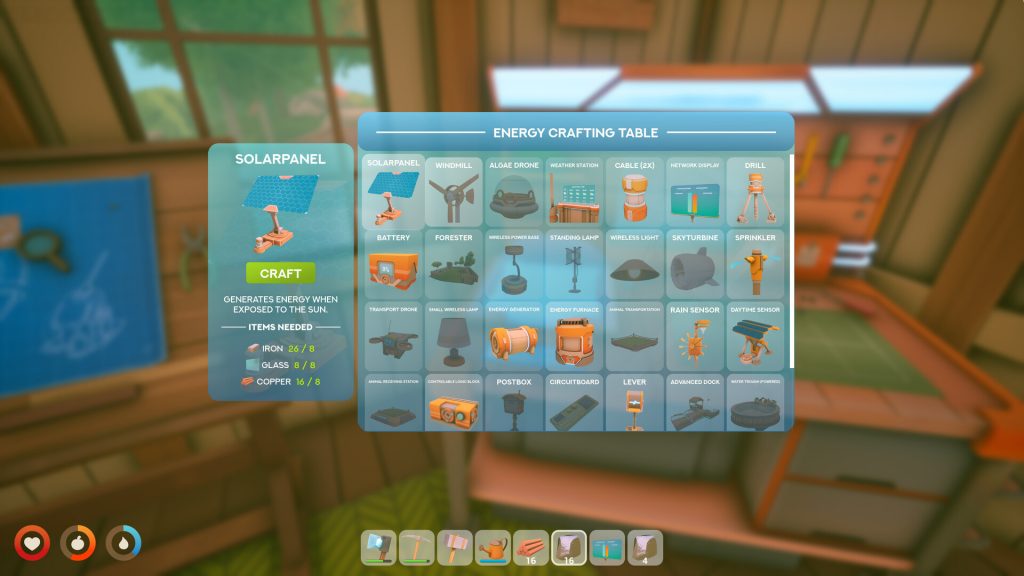
The most distinctive mechanical element in Solarpunk is the renewable energy system. Players build solar panels, wind turbines, and hydroelectric generators to produce electricity. That electricity powers automation, processing, lighting, and other basic infrastructure. Managing the balance between production and consumption is the game’s primary strategic challenge.
Weather introduces the key variability. Cloudy conditions reduce solar panel efficiency. Strong winds boost turbines but may coincide with rain that complicates outdoor operations. The weather system isn’t punishing — this is a cozy game, not a survival challenge — but it requires thoughtful infrastructure planning rather than pure optimization.
This energy-as-resource mechanic is genuinely underexplored in the survival crafting genre. Most survival games treat power as one resource among many, equal in importance to wood or stone. Solarpunk elevates energy to structural importance and makes its production the gameplay’s organizing principle. For players who find the energy management depth appealing, it’s one of the more distinctive mechanical propositions in the cozy sandbox space.
The comparison to Factorio or Satisfactory is where some players’ frustrations originate. Those games build elaborate interconnected production chains where optimization produces concrete efficiency gains and where automation complexity scales essentially infinitely. Solarpunk‘s automation systems are intentionally accessible rather than deep — drones handle routine tasks, but the mechanical depth doesn’t approach factory-game scale. This isn’t a design failure; it’s a different design target. But players who specifically wanted Factorio cozy edition will find Solarpunk doesn’t deliver that depth.
The Sky Islands Visual Identity
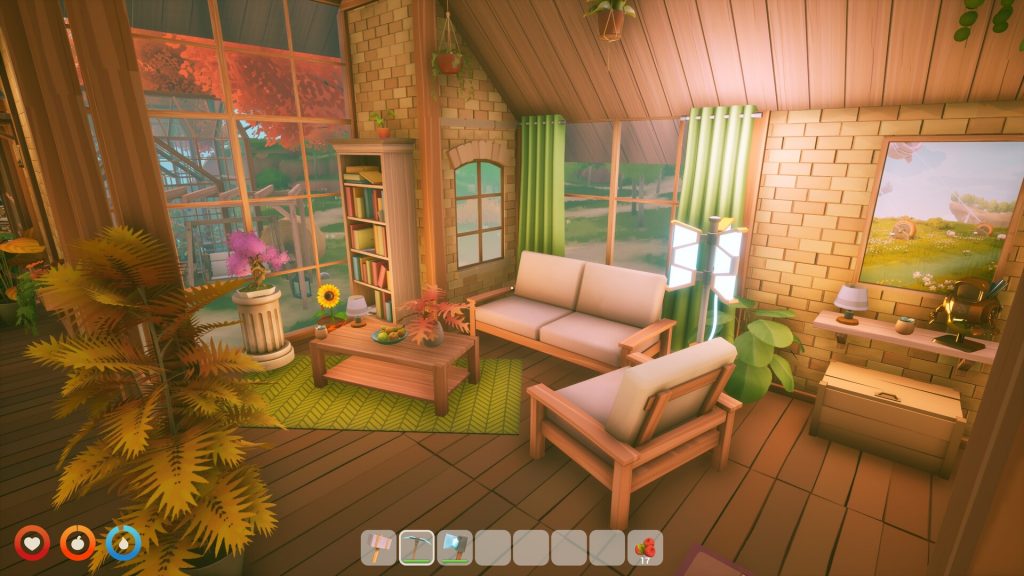
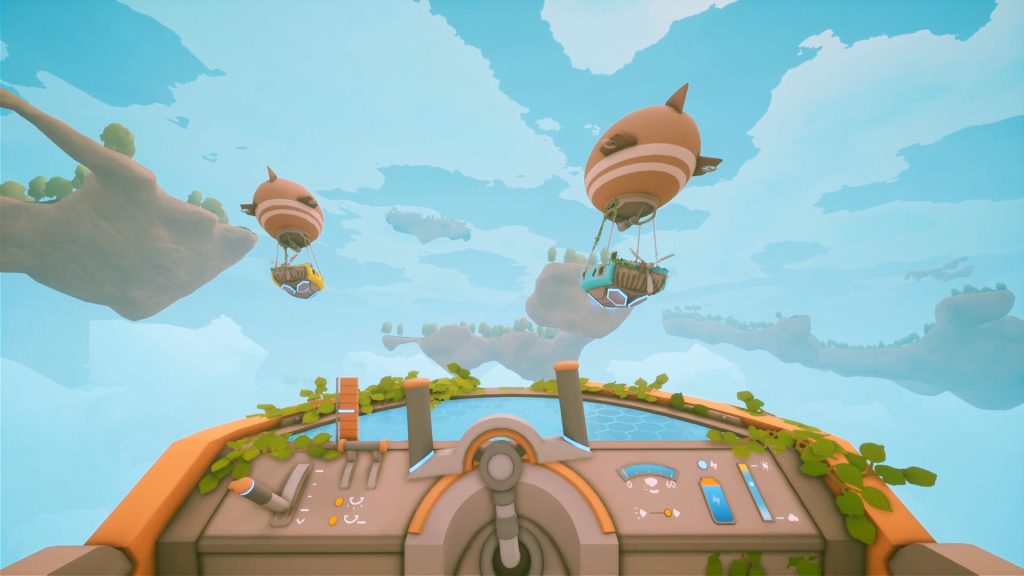
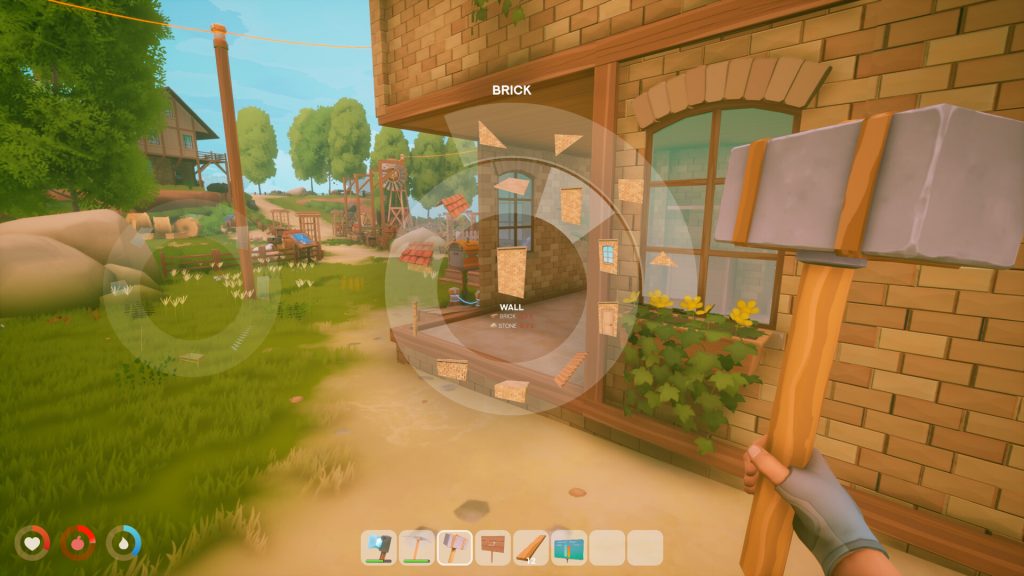
Solarpunk‘s visual execution is one of its clearest strengths. Unreal Engine 5 powers the floating island world, producing the kind of cel-shaded watercolor aesthetic that the solarpunk aesthetic tradition calls for. Green vegetation against blue sky, dynamic weather systems that shift the visual character, natural and technological elements integrated rather than opposed — the game looks like the solarpunk aesthetic come to life.
The solarpunk genre (literary and visual tradition that imagines optimistic, sustainability-focused futures) provides Solarpunk-the-game with a pre-established visual vocabulary that immediately communicates the experience’s tone. Solar panels covered with climbing plants, wind turbines integrated into living structures, the sense that technology and nature have found genuine harmony rather than competing — all of this is recognizable to players familiar with solarpunk as a cultural movement.
For players who came to the game through the solarpunk aesthetic rather than through survival game conventions, the visual presentation likely delivers exactly what drew them to the project. The game looks beautiful in the specific way that the movement it references looks beautiful.
The audio design supports this visual register. Bird sounds, wind sounds, and calm electronic music combine into soundscapes that complement the violence-free gameplay. Cozy games often succeed or fail based on whether their audio creates the ambient comfort that makes extended play sessions feel relaxing rather than tedious.
The Airship Exploration Layer
The airship system provides the exploration dimension that pure island base-building might lack. Players construct airships, use them to travel between sky islands, and discover different environments with unique resources and crafting recipes. Each island offers different visual identities and different strategic value for base development.
This exploration framework gives the game natural progression and content variety. New islands bring new resources that unlock new construction options; new construction options enable new island exploration capabilities. The loop is straightforward but should motivate the campaign’s mid-range length.
The islands-as-exploration-targets structure also provides natural multiplayer engagement opportunities. Coordinated island exploration between team members — some managing base energy while others scout new territory — creates the kind of cooperative gameplay that works well in the 2-4 player range that Solarpunk supports.
The Commercial Context
The commercial story surrounding Solarpunk deserves specific attention. 1.2 million wishlists is an extraordinary number for any indie game, let alone one from a two-person studio. For reference, most successful indie releases accumulate somewhere between 50,000 and 200,000 wishlists before launch. Reaching 1.2 million puts Solarpunk in genuinely rare commercial territory.
The 2023 Kickstarter’s success (€305,266 from 6,312 backers, approximately 10x goal) and the 500,000+ demo downloads during Steam Next Fest represent similarly extraordinary pre-release engagement. This level of audience investment creates both opportunity and responsibility — a large audience is commercially valuable, but audience members with specific expectations need those expectations met.
The decision to skip Early Access and release as Version 1.0 directly was a significant choice. Many developers in Cyberwave’s position would have used Early Access to manage expectations and gather feedback before committing to full release. Launching as 1.0 signals confidence but also invites final-product evaluation rather than Early Access grace.
The Xbox Game Pass inclusion is perhaps the most commercially interesting element. Game Pass Day One access immediately makes Solarpunk available to millions of Xbox and PC subscribers who don’t need to purchase the game. For cozy games specifically, this distribution significantly expands the potential audience beyond the wishlist count — the game will reach many players who wouldn’t have discovered it otherwise.
The Review Gap Analysis
The 75% Mostly Positive Steam rating requires honest examination. For a game with 1.2 million wishlists and four years of anticipation, 75% represents meaningful critical fragmentation that deserves understanding rather than dismissal.
Positive reviewers consistently describe the game as “delivering exactly what was advertised — a violence-free healing crafting game.” This is the audience that understood the project and found it satisfying. The cozy energy management, sky island exploration, and cooperative farming deliver the experience the marketing described.
Critical reviewers primarily express two concerns. First, automation system depth: the drone automation is accessible, but doesn’t approach the production chain complexity that factory-game enthusiasts wanted. Second, exploration motivation sustainability: as play time extends, the frequency of meaningful discoveries decreases, reducing the drive to continue exploring.
These critiques describe real limitations rather than execution failures. Solarpunk is a cozy game, not a factory game. Cozy games trade deep mechanical complexity for accessible, immediate satisfaction. The exploration motivation concern is more significant — extended play sessions needing fresh content is a genuine design challenge, and it’s the kind of thing that post-launch updates can potentially address.
The two-person development context is also a relevant evaluation context. Two people produced a multi-platform game with 1.2 million wishlists that reached Xbox Game Pass Day One. The scope and quality achieved by this team size is genuinely remarkable, even if the result doesn’t satisfy every expectation within the audience they accidentally attracted.
The 1.0 Without Early Access Choice
Cyberwave’s decision to ship 1.0 directly deserves recognition as a commercial and design statement. Survival crafting games have normalized multi-year Early Access periods — Valheim, Palworld, and many others released in Early Access and refined through player feedback over the years. Skipping this and committing to 1.0 directly puts Solarpunk in a different category.
The multiple delays that preceded launch reflected exactly the kind of quality commitment that makes 1.0 releases credible. Cyberwave’s stated reasons for delays — multiplayer stability, inventory improvements, airship controls — were specific, addressed, and apparently resolved before shipping. The result is a launch version that appears stable rather than the rough Early Access state that many survival games use as their initial offering.
For players frustrated by years of Early Access “releases” that remain unfinished for extended periods, Solarpunk‘s 1.0-direct approach represents a genuine philosophical commitment to finished products.
Who This Is For
Strong fit for: cozy game enthusiasts seeking base-building sandbox experiences without combat; players specifically drawn to the solarpunk aesthetic and sustainability themes; Astroneer fans who appreciated cooperative exploration sandbox; Stardew Valley players wanting something similar with sky island exploration; renewable energy enthusiasts who want their hobby interests reflected in gameplay; cooperative players who want shared base-building experiences for 2-4; Xbox Game Pass subscribers curious about the genre without purchase commitment.
Cautious fit for: players who saw “survival crafting” and expected combat and threat; anyone who specifically wants Factorio-level automation depth; players who find cozy pacing slow or unstimulating.
Less ideal for: survival game fans whose primary motivation is combat and enemy threat; hardcore factory-game enthusiasts seeking maximum automation complexity; players who require sustained content density to maintain long-term engagement.
What to Watch For
A few questions will shape Solarpunk‘s post-launch trajectory.
The first is content updates. The primary critical concern — exploration motivation decreasing over extended play — is exactly the kind of issue that post-launch content can address. If Cyberwave continues adding new islands, biomes, resources, and discoveries, the engagement sustainability criticism loses its foundation. How actively the studio updates the game will significantly affect long-term player retention.
The second is whether Game Pass drives meaningful discovery. The Day One Game Pass inclusion provides access to many players who wouldn’t have found the game otherwise. If these players engage positively, the Game Pass audience could significantly improve the game’s cultural standing and overall review trajectory.
The third is the console performance. Multi-platform releases face different quality bars on different platforms. How Solarpunk performs on PS5 (specifically) and Switch 2 — new platforms with audiences less familiar with the cozy crafting genre — will affect whether the game’s console releases succeed or disappoint.
The fourth is how Cyberwave responds to the launch reception. Two-person studios responding to mixed launch reviews can either become demoralized or become motivated to demonstrate the project’s full potential through updates. How the studio responds to criticism will determine the game’s post-launch development trajectory.
The Takeaway
Solarpunk is a genuinely good cozy survival sandbox that arrived carrying expectations shaped by four years of wishlist accumulation and marketing terms that attracted audiences whose preferences didn’t perfectly match the design philosophy. The game deserves evaluation on its own terms rather than against the idealized expectations that 1.2 million wishlists represent.
On those terms, Solarpunk delivers a beautiful, relaxing, functional, cozy sky island experience that successfully realizes the solarpunk aesthetic in interactive form, provides meaningful energy management gameplay without combat pressure, and supports 1-4 player cooperative sandbox building that should satisfy its target audience. The automation depth is appropriate for a cozy game, the exploration provides sufficient motivation for the intended play sessions, and the visual and audio production creates the cozy atmosphere the project promised.
For cozy game enthusiasts specifically, this is a recommendation. The renewable energy focus gives it mechanical distinctiveness within the crowded cozy sandbox space, the sky island setting provides visual identity that ground-based games can’t match, and the violence-free design philosophy delivers exactly what the solarpunk aesthetic requires.
For survival crafting players who wandered into Solarpunk expecting combat and factory-game depth, the mismatch will produce disappointment regardless of the game’s actual qualities. The question isn’t whether Solarpunk is good — it is — but whether it’s good for your specific preferences.
Sky islands. Solar panels and wind turbines. A world without enemies. Drones handle routine tasks while you build, explore, and farm. Four years of patient development. A two-person team that reached Xbox Game Pass Day One and 1.2 million wishlists through sheer design distinctiveness. Weather that genuinely affects your power generation.
As cozy sandbox releases go, Solarpunk‘s is one of the more genuinely distinctive of 2026 — and the Game Pass availability means curious players can evaluate it immediately without purchase commitment. The rating gap reflects audience expectation mismatch more than design failure, and the players who approach it as a cozy sky island experience will likely find exactly what they were looking for.
The sky is open. The islands are waiting. The solar panels are charging. And one of 2026’s most-anticipated indie releases has finally arrived — bring your own definition of what “survival” means, and whether it includes combat or not.
Information regarding ‘Solarpunk’
| item | detail |
|---|---|
| Developer | Cyberwave (Germany, 2-person team) |
| Publisher | rokaplay (Darmstadt, Germany) / Metaroot (Joint) |
| Console porting | Mi’pu’mi Games (Austria) |
| Genre | Cozy Open World Survival Crafting / Cooperative Sandbox |
| Release platform | PC (Steam·Epic·GOG) / PS5 / Xbox Series X|S / Nintendo Switch 2 |
| Release date | June 8, 2026 (1.0 Official Release) |
| price | $22.99 USD |
| Game Pass | Xbox Game Pass Day One / Xbox Play Anywhere support |
| Steam Review | Mostly Positive (75%, 475 cases) |
| Wishlist | Over 1.2 million cases |
| Demo Download | Over 500,000 (based on Steam Next Fest) |
| Kickstarter | 6,312 donors / €305,266 raised (2023) |
| Main Keywords | Cozy, Survival, Renewable Energy, Sky Island, No Combat, Automation, Farming, Airship, Co-op |
| Steam Page | Shortcut |