A treatment developed to solve global food shortages instead pushes humanity toward destruction. Civilization collapses. Cities become ruins. But Katherine cannot stop moving. Her daughter Ava needs to survive. The Road of Dust and Sorrow, the pixel art survival horror game from Ukrainian indie studio Painted Black Games (with publishing support from the UK’s Silver Lining Interactive), has revealed a new trailer at the Future Games Showcase along with confirmation of multi-platform release, including PC, PS5, Xbox Series X|S, and both Nintendo Switch and Switch 2.
For Ukrainian indie development specifically, this kind of internationally visible release represents a meaningful continuation of the country’s gaming industry presence despite the difficult circumstances Ukrainian creative work continues to navigate. Painted Black Games’ commitment to delivering this project at high quality across multiple platforms — while operating as a globally distributed team — represents exactly the kind of resilient creative work that justifies continued international attention to Ukrainian gaming output.
The Cozy Horror Hybrid
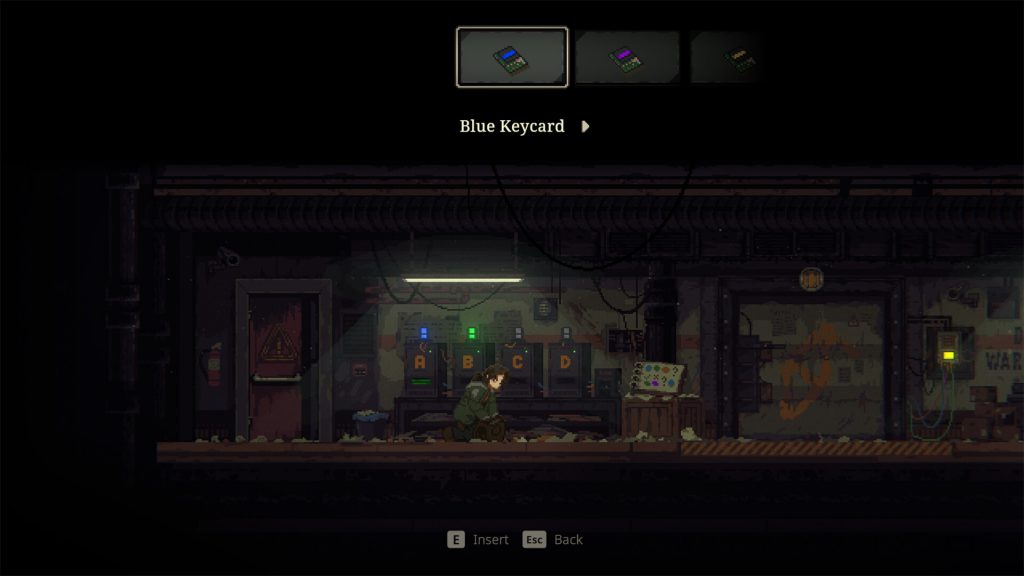
The most genuinely interesting design element of The Road of Dust and Sorrow is its self-identified “cozy horror” register. This combination — pixel art warmth combined with apocalyptic dread, intimate family narrative combined with creature horror, emotional connection combined with survival tension — represents one of the more thoughtfully constructed indie horror approaches currently in development.
The “cozy horror” framing initially seems contradictory, but actually captures something genuine about how the project operates. Pure horror games sustain anxiety through constant threat; the experience becomes exhausting rather than emotionally resonant. Pure cozy games lack the emotional stakes that make narrative content matter. The hybrid approach uses the warmth of pixel art presentation and the intimacy of mother-daughter focus to make the horror’s threat actually mean something — Katherine’s struggle has weight because we’re emotionally invested in her relationship with Ava.
This design philosophy aligns with some of the most successful narrative survival horror works. The Last of Us (cited explicitly as inspiration) succeeded not because of its creature horror but because of Joel and Ellie’s relationship within that horror. Resident Evil 4 succeeded partly because Leon’s protective dynamic with Ashley added an emotional dimension to the survival gameplay. The intimate family dynamic provides an emotional anchor that makes the larger horror landscape meaningful.
The pixel art aesthetic specifically serves this approach. Photo-realistic 3D horror tends toward visceral intensity that overwhelms more subtle emotional content. Pixel art creates the kind of representational distance that allows emotional content to land without becoming traumatic. Players can engage with the difficult themes through aesthetic abstraction that pure realism would prevent.
The Worldbuilding Foundation
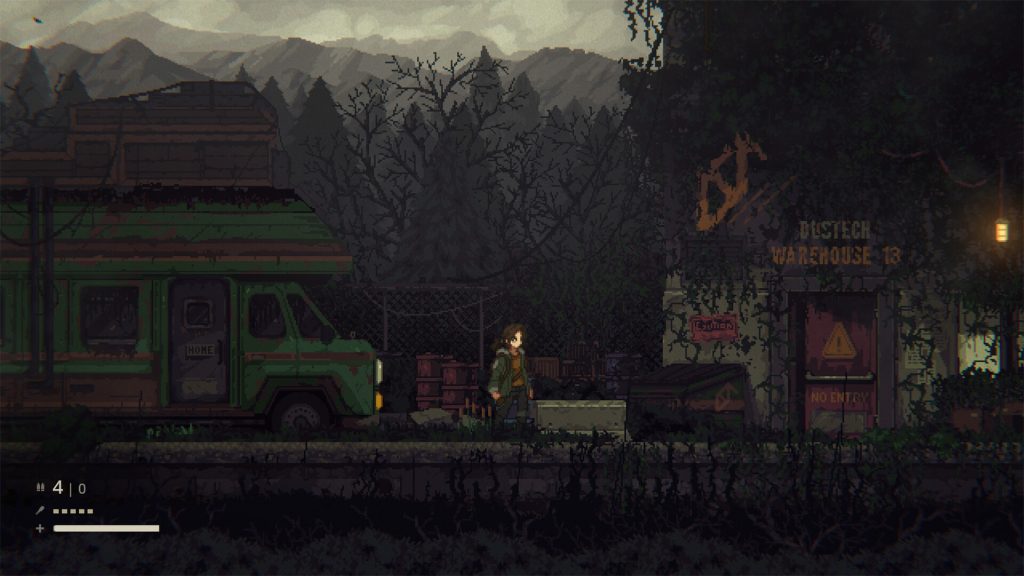
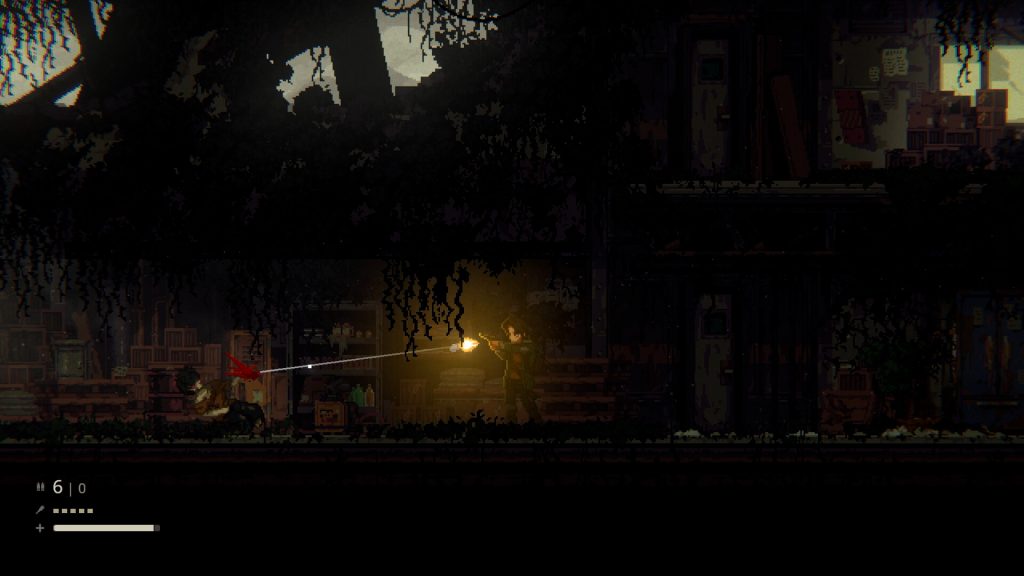
The premise establishes both narrative and thematic foundations efficiently. The world ended because a technology developed to save humanity from a food crisis instead caused an unforeseen disaster. People transformed into “Dusters” — creatures driven by endless hunger who attack other humans for sustenance.
This worldbuilding choice carries significant thematic weight. Food, hunger, and humanity’s relationship with sustenance form the conceptual core of the apocalypse. The Dusters aren’t generic zombies — they’re specifically humans whose hunger has consumed them. The disease metaphor for consumption, scarcity, and human relationships with food extends through the entire game world.
For contemporary audiences engaging with real climate change concerns, food security questions, and pharmaceutical ethics debates, the premise touches on genuine cultural anxieties without lecturing about them. The story can resonate with multiple contemporary concerns without becoming politically heavy-handed.
The introduction of additional antagonists beyond Dusters adds narrative complexity. The cult led by “the Preacher” believes humans serve as “fertile soil” — a religious framework that turns survivors into resources rather than people. This adds the kind of human antagonism that pure creature horror lacks, ensuring threats come from multiple directions and types.
The cult-as-antagonist trope is common but rarely executed well. The Walking Dead‘s Whisperers and Saviors, The Last of Us‘s Fireflies and Hunters, and various other post-apocalyptic narratives have used human antagonists effectively. The “humans as fertile soil” framing of Preacher’s cult provides a specific philosophical foundation that distinguishes them from generic post-apocalyptic raiders.
Katherine and Ava: The Emotional Engine
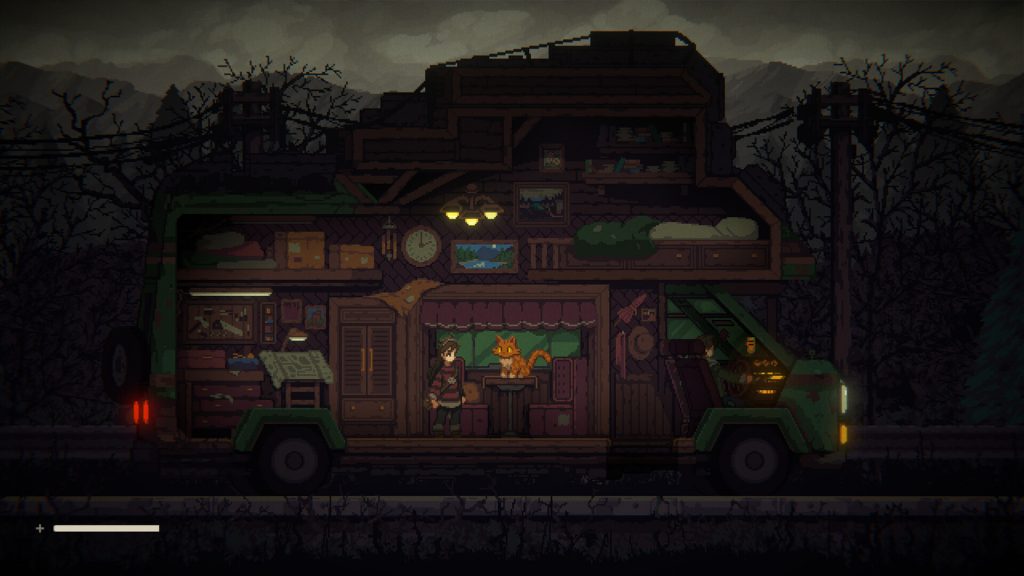
The mother-daughter focus is what gives The Road of Dust and Sorrow its distinctive emotional identity. Most post-apocalyptic survival games either focus on solo protagonists (the lone survivor archetype) or on found-family combinations (orphaned children, surrogate parent figures). The Road of Dust and Sorrow commits to the specific biological mother-daughter relationship that brings particular emotional weight.
This relationship structure works for several reasons. Mother-daughter dynamics carry recognizable emotional weight across virtually every culture. Protective parenting in dangerous circumstances activates a universal emotional response. The age gap between Katherine and Ava creates natural narrative space for character development across different developmental stages — younger Ava’s growth across the game’s events provides a narrative arc that pure adult-protagonist stories lack.
For gaming audiences specifically, the mother-protagonist choice provides representation that the genre has historically underprovided. Most post-apocalyptic gaming protagonists are men (often with daughter companions, as in The Last of Us); centering the mother as primary protagonist with daughter as character who must be protected reverses typical genre conventions.
The “couldn’t lose her daughter” motivation provides a clean narrative drive that requires no complex backstory to justify. Players immediately understand why Katherine continues moving forward despite the horror surrounding her. The simplicity of motivation paradoxically allows complex emotional content to develop around the central relationship.
The Linear Narrative Structure
The Road of Dust and Sorrow commits to linear story progression rather than open-world or branching narrative structures. This choice has specific implications worth examining.
Linear narrative survival horror has produced some of the genre’s most acclaimed works. Silent Hill 2, the Resident Evil franchise’s best entries, Until Dawn, and Alan Wake — these projects succeed through carefully designed narrative pacing that open-world alternatives can’t match. Linear structures allow developers to control emotional pacing, pace tension and release precisely, and ensure all players experience the most important narrative beats.
For an indie project specifically, a linear narrative is also more achievable than open-world alternatives. Open-world design requires substantial development resources that smaller teams typically can’t match. Linear narrative lets Painted Black Games concentrate development resources on quality execution of specifically designed experiences rather than spreading those resources across a vast space.
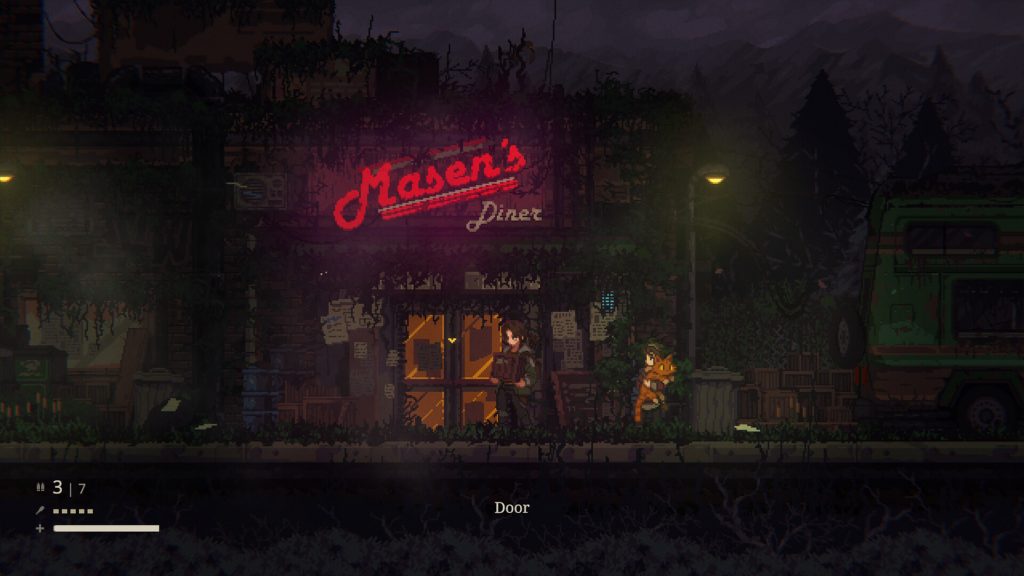
The exploration and puzzle elements integrated into the linear structure provide gameplay variety. Players investigate ruined streets and buildings, locate resources, solve environmental puzzles, and discover new paths. This activity keeps players engaged moment-to-moment while the larger narrative progresses through designed beats.
The tension that “every location could be either a haven or the beginning of a new danger” maintains psychological pressure throughout the play. This kind of uncertainty about environmental safety is exactly what survival horror requires — players who feel completely safe lose the tension that drives genre engagement; players who feel constantly threatened become exhausted. The balance between these states is what The Road of Dust and Sorrow must maintain.
The Multi-Platform Commitment
The platform support roster represents a significant production scope. PC, PS5, Xbox Series X|S, Nintendo Switch, Nintendo Switch 2 — five distinct platforms supporting the same game requires substantial technical and operational capability.
For indie projects specifically, this kind of multi-platform release strategy is increasingly important commercially. Single-platform indie releases reach smaller audiences than multi-platform ones, and the relative production cost of additional platforms has decreased as game engines and development tools have matured. Painted Black Games and Silver Lining Interactive’s commitment to comprehensive platform availability signals serious commercial ambitions for the project.
The Nintendo Switch and Switch 2 dual inclusion is particularly notable. Switch 2’s recent release creates the unusual situation where indie games can target both the existing massive Switch installed base and the emerging Switch 2 audience simultaneously. The Road of Dust and Sorrow‘s availability across both Switch generations maximizes Nintendo platform reach significantly.
The Painted Black Games Context
Understanding Painted Black Games’ development background adds important context. The studio was founded by developers who previously worked on The Long Reach, a psychological thriller game that established their capability in atmospheric narrative horror.
The Long Reach received decent critical reception when released and demonstrated the team’s commitment to psychological depth over pure jump-scare horror. Studios that complete previous projects bring accumulated capability to subsequent work — The Road of Dust and Sorrow benefits from lessons learned during The Long Reach‘s development.
The “globally distributed team” framing is particularly meaningful for a Ukrainian studio. The ongoing situation in Ukraine has required many creative industries to adapt to distributed work models, with team members operating from multiple international locations. Painted Black Games’ continued ability to deliver high-quality work despite these circumstances reflects both individual creator commitment and effective remote collaboration infrastructure.
Lead developer Roman articulated the project’s personal significance: “This project is like our heart. We wanted to tell about how much strength loved ones provide for people living through uncertain times.” For a Ukrainian developer to frame their work around “loved ones providing strength in uncertain times” carries weight beyond pure marketing language — it reflects genuine engagement with the circumstances under which this team has worked.
Producer Dan Fraser at Silver Lining Interactive captured the publisher perspective: “This game has the development team’s passion and sincerity. It’s a work that stays in memory long after you finish playing it.” Publisher endorsement at this level signals confidence that The Road of Dust and Sorrow achieves the lasting impact that survival horror’s best works deliver.
The Ukrainian Indie Scene
Ukrainian gaming development deserves specific contextual recognition. The country has produced significant gaming work across multiple eras, from major studios (GSC Game World’s S.T.A.L.K.E.R. series) to recent indie successes. The ongoing situation has created enormous challenges for Ukrainian developers, but the resilience demonstrated through continued creative output represents one of the more inspiring contemporary industry stories.
The Road of Dust and Sorrow contributes to this continued Ukrainian gaming presence. The international visibility through Future Games Showcase reveal, multi-platform release commitment, and English-language publisher partnership demonstrates that Ukrainian indie can compete at international levels despite domestic circumstances.
For players seeking ways to support Ukrainian creative industries, engaging with releases like The Road of Dust and Sorrow provides direct economic support while honoring continued Ukrainian cultural production. The combination of cultural significance and quality work makes this kind of engagement meaningful beyond pure entertainment consumption.
Critical and Community Response
Press coverage following the Future Games Showcase reveal has been positive across multiple dimensions. The Gaming Outsider evaluated the project as “showing the appeal of cozy horror that lets you find beauty even amid civilization’s collapse.” This framing captures exactly the design philosophy The Road of Dust and Sorrow attempts — beauty surviving disaster, emotional connection persisting through threat.
Ukrainian gaming press Mezha highlighted the project as a notable indie expectation from domestic developers. International coverage that recognizes the Ukrainian developmental context provides important cultural support for continued Ukrainian creative output.
Community reception of the currently available Steam and Itch.io demos has emphasized the emotional pixel art presentation, immersive atmosphere, and the parent-child relationship-centered narrative. These three elements appear to be landing exactly as designed — the pixel art creates emotional connection rather than just decorative aesthetics, the atmosphere maintains engagement without exhausting players, and the family relationship anchors the emotional content.
The positive demo reception is particularly meaningful for indie horror, specifically. Horror games often face genre prejudice that makes positive reception harder to achieve than in some other categories. The Road of Dust and Sorrow receiving sustained positive feedback signals that the cozy horror approach has found its appropriate audience.
Who This Is For
Strong fit for: survival horror enthusiasts who appreciate emotional narrative depth over pure jump scares; The Last of Us fans interested in similar parent-child dynamics in different genre framing; Resident Evil and Silent Hill fans drawn to classical survival horror with modern emotional ambition; pixel art appreciators who recognize the medium’s emotional capabilities; players interested in supporting Ukrainian indie work; fans of The Long Reach and Painted Black Games’ previous psychological thriller work; multi-platform players who want flexibility across Switch, PlayStation, Xbox, and PC.
Cautious fit for: players who specifically prefer pure jump scare horror over psychological tension; anyone uncomfortable with parent-child-in-danger narrative content.
Less ideal for: players seeking action-focused horror over narrative-focused experiences; anyone allergic to pixel art aesthetics; players who avoid post-apocalyptic settings.
What to Watch For
A few questions will shape The Road of Dust and Sorrow‘s late 2026 release.
The first is whether the cozy horror balance sustains across the full campaign. Maintaining this tonal balance across extended play is genuinely difficult — most projects either drift toward pure horror (losing the cozy connection) or pure narrative (losing the survival tension). How well Painted Black Games maintains the balance throughout will determine critical reception.
The second is the puzzle design quality. Environmental puzzles in linear narrative games can either feel like meaningful integrated elements or arbitrary progression gates. Whether the puzzles in The Road of Dust and Sorrow serve the narrative or just delay it will affect player engagement significantly.
The third is the Preacher cult’s narrative integration. Cult antagonists provide useful narrative function but require careful development to avoid becoming caricatures. How nuanced and threatening the cult feels across the campaign will affect whether the human antagonist element strengthens or undermines the experience.
The fourth is the cross-platform release execution. Multi-platform indie releases require careful technical optimization across different platform requirements. How well the game performs on each target platform will affect platform-specific reception.
The Takeaway
The Road of Dust and Sorrow is one of the more genuinely thoughtful survival horror projects on the late 2026 horizon, combining distinctive design vision (“cozy horror” hybrid), substantial production commitment (five-platform release), proven developer pedigree (The Long Reach foundation), serious thematic ambition (parent-child bond, food system collapse), and meaningful cultural context (Ukrainian indie resilience).
For survival horror enthusiasts seeking projects that take the genre seriously as an emotional medium rather than just scare delivery, this is a clear recommendation. The pixel art emotional capacity, combined with the mother-daughter narrative anchor and the survival horror tension, produces exactly the kind of work that distinguishes meaningful horror from generic genre exercises.
For the broader indie gaming culture, The Road of Dust and Sorrow represents continued Ukrainian creative output deserving international recognition. Supporting this kind of release provides direct economic engagement with the Ukrainian creative industry while honoring continued cultural production despite difficult circumstances.
For players who appreciate the kind of psychological survival horror that Resident Evil, Silent Hill, and The Last of Us have established, The Road of Dust and Sorrow offers indie execution within that tradition. The pixel art format provides accessibility advantages over photo-realistic alternatives while preserving the emotional and atmospheric depth that distinguishes great survival horror.
A treatment that was supposed to save humanity. Cities reduced to ruins. People transformed into hunger-driven Dusters. A cult that views survivors as resources. And through all of this destruction, a mother named Katherine is moving forward because her daughter Ava needs to survive. Pixel art presents both beauty and devastation. Cozy emotional moments exist alongside the apocalyptic horror. Linear narrative carefully pacing the emotional weight across the experience.
As survival horror pitches go, The Road of Dust and Sorrow‘s is one of the more genuinely affecting of 2026 — and the multi-platform commitment, plus currently available demo, means interested players can both immediately evaluate fit and look forward to playing on their preferred platforms when full release arrives later this year.
The road is long. The dangers are constant. The cozy moments exist anyway, because love persists in any conditions. And one of the most thoughtfully constructed survival horror projects of late 2026 is preparing to demonstrate that family love can carry meaningful narrative weight in any setting — including the end of the world.
The treatment failed. Humanity collapsed. But Katherine is still walking, and Ava is still with her. That’s enough reason to keep going. And it’s enough reason for players to follow them through whatever comes next.
Information regarding The Road of Dust and Sorrow
| item | detail |
|---|---|
| Developer | Painted Black Games (Ukraine, Global Distributed Team) |
| Publisher | Silver Lining Interactive (Northern England, UK) |
| Genre | Narrative Survival Horror / Exploration & Puzzle / Cozy Horror |
| Release platform | PC (Steam) · PS5 · Xbox Series |
| Release Date | 2026 (second half) |
| graphics | 2D Handcrafted Pixel Art |
| core system | Linear Story Progression / Environmental Puzzles / Survival Exploration / Duster Encounters |
| Inspiration | Resident Evil, Silent Hill, The Last of Us |
| Main Theme | Parent-child bond / Survival in an apocalyptic world / Cozy horror |
| demo | Steam · Itch.io Play Now |
| Developer’s flagship title | The Long Reach |
| Supported languages | English, Ukrainian, and 6 other languages |
| Official Channel | X·YouTube·Facebook·LinkedIn |
| Steam Page | Shortcut |