Close your eyes and open them again. The world has changed. Time To Wake Up, the first-person psychological thriller from Belgian indie studio Eye Blink Twice, takes humanity’s most involuntary physical action — the blink — and makes it the central mechanic of a surreal memory-recovery horror adventure. Developed by a studio founded in 2023 and currently participating in Steam Next Fest with a final pre-release demo update, the project has already earned 100% Positive Steam ratings from its initial demo, and this latest update adds a key new dimension: the music changes when you blink too.
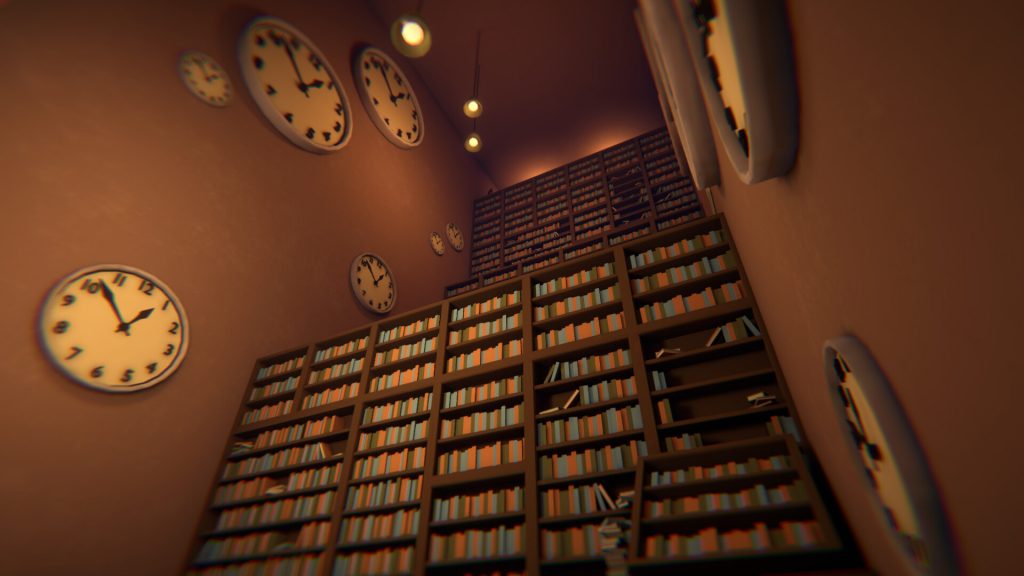
The core image is simple and immediately haunting. A corridor of endless bedrooms. A classroom filled with quotations. A maze of lockers. A vast hall swept by fierce winds. And in all of it, a blink that reshapes reality — moving structures, flooding rooms, revealing entirely different spaces where walls stood moments before. Fall 2026 is the release target. The studio says this Next Fest demo is the last before release.
The Blink Mechanic
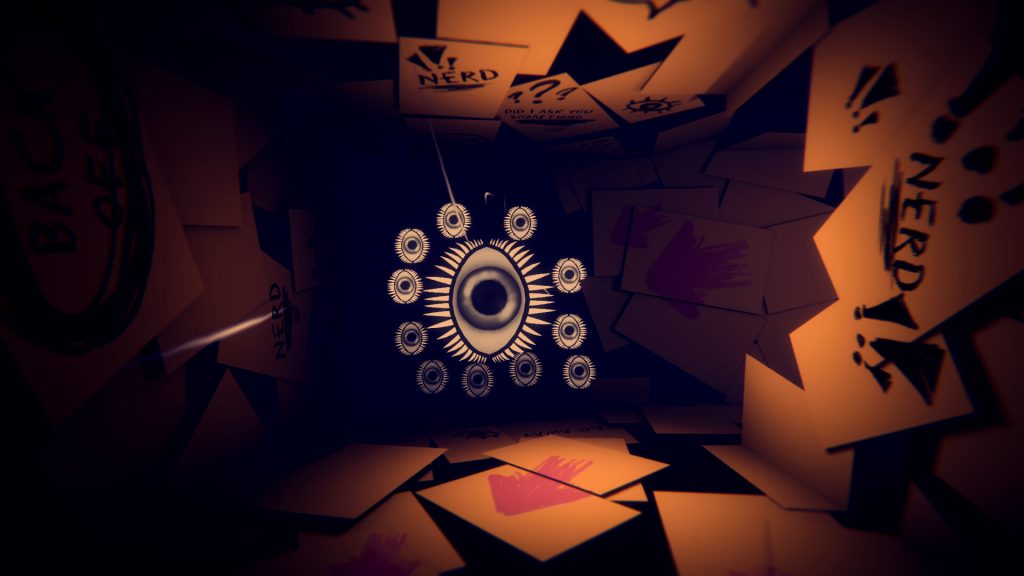
The blink in Time To Wake Up is not a screen transition. It’s a spatial manipulation tool — the primary means by which player interacts with the game’s dream environment. Blinking can cause specific structures to move or reset, fill rooms with water, or transform entire spaces into something else. In a genre where most interactions are walking, examining, and occasionally hiding, giving players an active spatial manipulation capability that costs them a moment of sight is genuinely distinctive.
The design creates interesting psychological pressure specific to the mechanic. Blinking in real life is involuntary — we do it without thinking, constantly, to keep our eyes lubricated. Time To Wake Up takes this reflexive action and makes it consequential, which creates an unusual form of attention. Players must think about when and where they blink, treating an automatic process as deliberate choice.
This connects to the game’s horror register in subtle ways. Horror games frequently make the player feel vulnerable in specific contexts — forced to hide, unable to fight, limited in movement. Time To Wake Up creates vulnerability through the blink itself: the moment of darkness when eyes are closed is the moment of change, and players must navigate what changed before they can see it again. The gap between closing and opening creates a tiny but persistent uncertainty.
The update for this final demo specifically integrates music with the blink mechanic. When the player blinks and the environment changes, the background music changes simultaneously. This audio-visual synchronization transforms the blink from a pure spatial mechanic into a full sensory shift — sight and sound both reorienting in the same instant, amplifying disorientation while deepening immersion.
The Surreal School Setting
The school is the right setting for this game, and the choice is worth examining beyond the obvious horror-game-in-familiar-place logic.
Schools are the environments most people know most comprehensively from childhood. Every adult carries detailed spatial memory of their own schools — the specific smell of cafeterias, the particular way gymnasium floors sound, the anxiety of hallways between classes. This embedded familiarity is exactly what makes surreal school environments effective in horror: the wrongness reads against a known template.
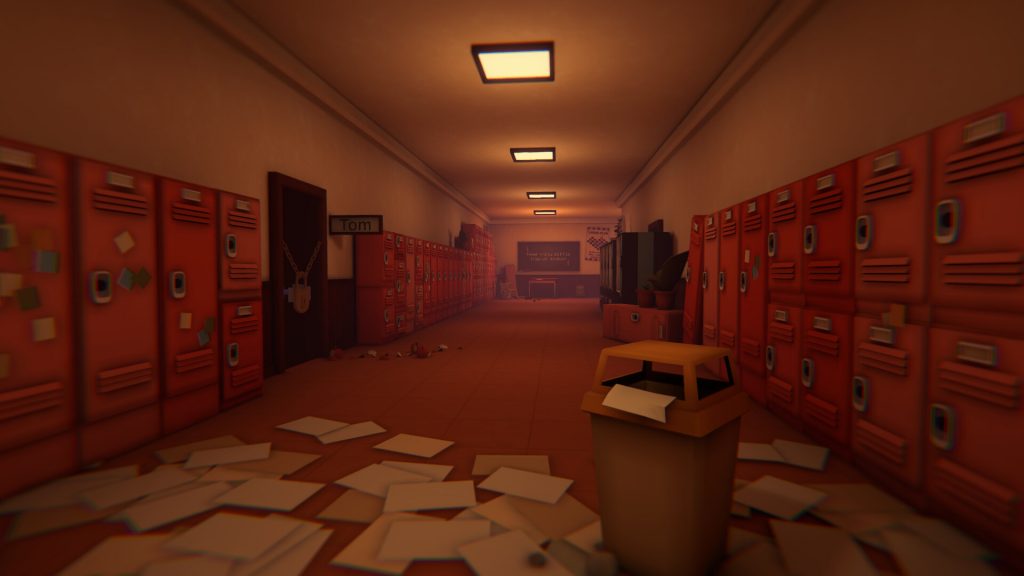
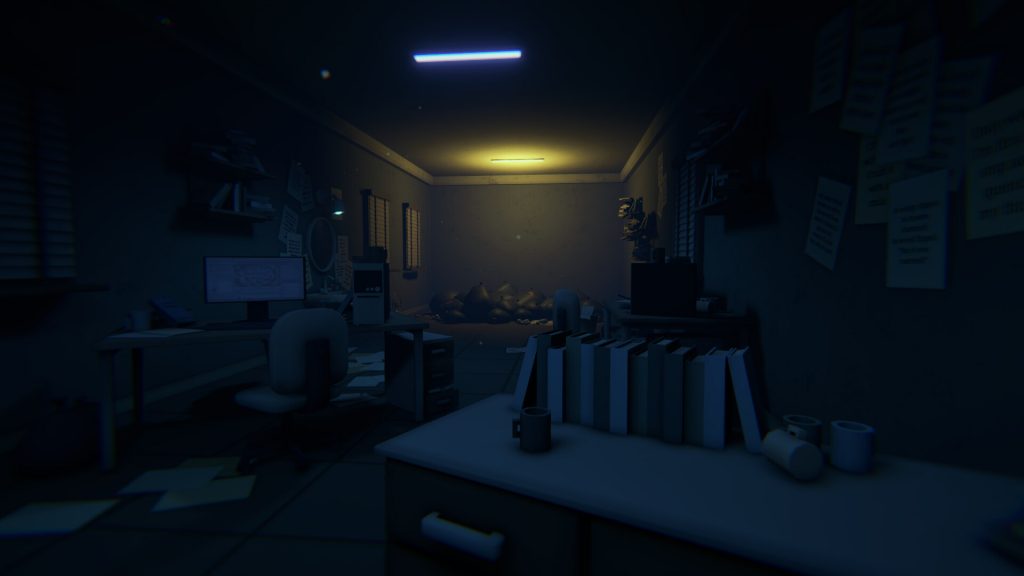
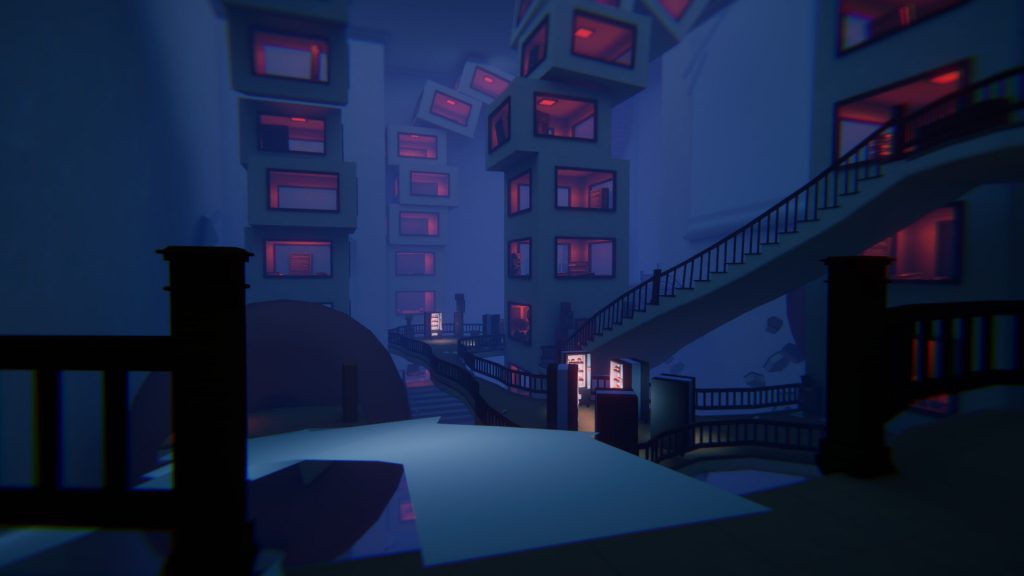
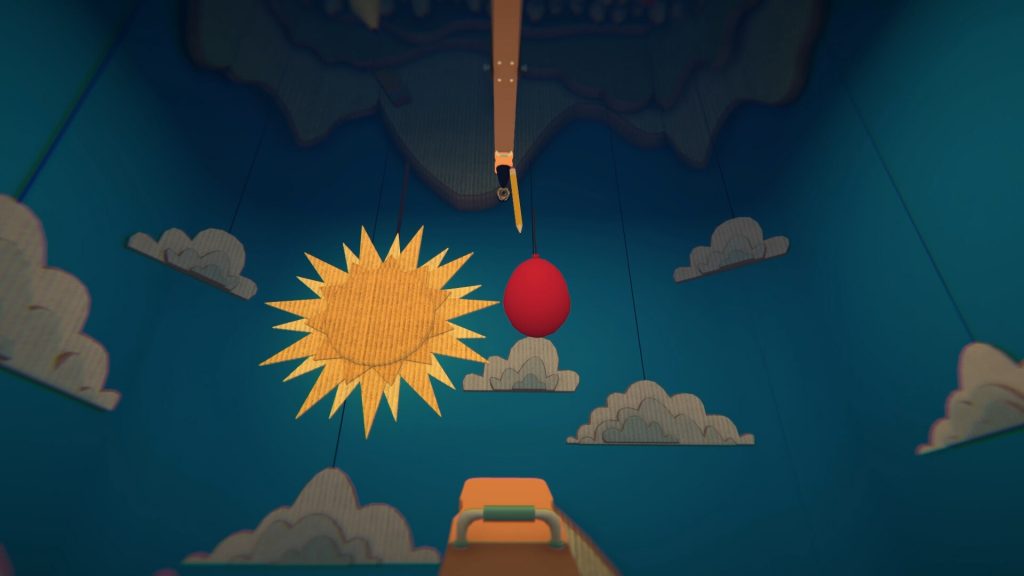
Time To Wake Up‘s school isn’t a generic institution. Endless corridors of bedrooms, classrooms filled with quotations (rather than the usual content), locker mazes, vast halls with violent winds — these aren’t school spaces that look wrong. They’re school spaces configured impossibly, spaces that share elements of school architecture assembled in combinations that schools never actually have. The familiar components, wrongly arranged, produce the specific dread of uncanny recognition.
The character roster adds social dimension to the spatial horror. A mysterious voice accompanies protagonist Alan Malone through the dream-memory space, sometimes opening paths and providing hints. But fellow students wander the corridors, watching. The surveillance of classmates — the social anxiety of school life translated into literal horror attention — is a pressure that grounds the surreal in recognizable emotional territory.
Community response has specifically noted this: “it’s the first time a familiar school space has felt this strange and unsettling” — which confirms the setting is achieving its intended effect. The school works as horror precisely because it’s familiar enough to register as wrong.
The Dream-Memory Narrative Structure
Protagonist Alan Malone is trapped in dream memories, recovering lost recollections. The memory-recovery narrative is well-established in psychological games (Hellblade: Senua’s Sacrifice, Observer, What Remains of Edith Finch), but Time To Wake Up‘s approach integrates narrative with mechanics in specific ways.
The blink as spatial manipulation and the blink as the mechanism for recovering memories occupy the same action. Each blink that transforms the environment is simultaneously a blink that moves Alan through his own memories, making the dreamscape’s shifts directly analogous to the fragmentary, non-linear quality of memory itself. You don’t remember the past in order; you glimpse it, and each glimpse is surrounded by what came before and after without obvious connection.
The mysterious voice that accompanies Alan — helping recover the past, opening paths, providing hints — is the kind of ambiguous narrative companion that psychological thrillers use to maintain uncertainty about what’s real, what’s memory, and what’s invention. Whether this voice is a benevolent guide, a manifestation of Alan’s own psyche, or something more threatening is presumably one of the questions the full game resolves.
The quotation-filled classroom is a particularly evocative specific detail. Schools use quotations in specific ways — inspirational sayings on hallway walls, famous lines above blackboards — and a classroom filled with quotations represents both the educational impulse and its pathological excess. What quotations? Whose words? The specificity suggests narrative content rather than generic surreal decoration.
The 100% Positive Demo Performance
Steam 100% Positive ratings before release are rare and carry specific implications. The rating indicates that everyone who tried the demo and left a review found it worth recommending. For a psychological horror game specifically — a genre with polarized audiences where tone and pacing can drive strong negative reactions — a unanimous positive reception across all reviewers is a strong signal.
Community responses worth noting: “The creative and terrifying way they’ve developed the simple idea of blinking is impressive” — recognition that the mechanic lands with both creativity and effective horror. “It’s the first time familiar school spaces have felt this strange and unsettling” — confirmation that the surreal school is achieving its intended psychological effect.
Eye Blink Twice has positioned this Next Fest demo as the final version before release, incorporating user feedback from the previous demo and presumably representing the most polished pre-release state of the experience. The 100% rating from the earlier version suggests the foundation was strong; the final update adds the music synchronization system that deepens the blink’s sensory impact.
The Eye Blink Twice Studio
Eye Blink Twice was founded in 2023 in Belgium, making Time To Wake Up their debut commercial project. The studio’s stated values — “eye-catching gameplay,” “relatable stories,” “worlds full of atmosphere” — align precisely with what the project demonstrates: a mechanic immediately comprehensible as distinctive, a protagonist recovering memories that presumably touch universal experiences, and a dream-space atmosphere that generates consistent emotional response.
Belgium’s indie gaming scene has been producing interesting work across recent years — Swan Song from Business Goose Studios appeared in our coverage this month, and Larian Studios’ Baldur’s Gate 3 represents the country’s most prominent gaming achievement. Eye Blink Twice, operating with the studio name that both describes their aesthetic approach (games that make you look twice) and directly references their game mechanic, is the kind of conceptual coherence that suggests a studio with a clear creative identity from the start.
The debut project question — whether first-release ambition translates to a satisfying complete experience — will be the primary evaluation question for the fall release. The demo reception suggests the core concept and atmosphere land effectively; the question is whether the full game sustains this quality across its complete runtime.
The Mechanic-Name Parity
One small but telling detail: the studio is called Eye Blink Twice. The game’s core mechanic is blinking. The studio and the game share the same conceptual foundation, which suggests that Time To Wake Up isn’t just their first project — it’s the project that defined the studio’s existence. They built a studio named after the mechanic that their game centers on, which implies both that the mechanic came first (before the studio name) and that they committed fully to it as their creative identity.
This kind of conceptual commitment is visible in the final product. Studios that form around a single idea tend to develop that idea more thoroughly than studios that generate ideas by committee. The blink mechanic in Time To Wake Up isn’t a feature among features — it’s the game’s thesis, implemented with the depth that comes from building the entire creative enterprise around it.
Who This Is For
Strong fit for: psychological horror enthusiasts who prefer atmospheric dread over jump scares; puzzle adventure fans seeking genuinely innovative mechanics; Hellblade, SOMA, and Layers of Fear fans interested in similar first-person psychological horror; players drawn to school-setting horror (the uncanny familiar); Superliminal and Viewfinder fans who appreciate mechanics that restructure spatial perception; anyone who has found a horror game’s central gimmick genuinely clever rather than gimmicky.
Cautious fit for: players who specifically want action elements in their horror; anyone who finds first-person psychological horror too stressful without combat options.
Less ideal for: players seeking fast-paced gameplay; anyone who dislikes surreal or dreamlike narrative environments; players who require narrative clarity over atmospheric mystery.
What to Watch For
A few questions will shape Time To Wake Up‘s fall 2026 release.
The first is mechanical depth across the full game. The blink as spatial manipulation is compelling as a concept and effective in demo form; whether it sustains sufficient variety and escalating complexity across a complete game without becoming repetitive will determine whether the mechanic earns its central position.
The second is the music synchronization payoff. Adding music to the blink transition is one of the most significant additions in this final demo. Whether the full game makes robust use of this audio-visual simultaneous shift — composing music that meaningfully changes in ways that deepen the experience rather than just providing audio confirmation — will affect immersion significantly.
The third is the narrative resolution. Memory-recovery psychological thrillers live on whether their narrative reveals land with emotional weight proportional to the atmospheric investment. How well Time To Wake Up‘s story delivers on the surreal dreamspace premise will determine whether players feel the experience was meaningful or merely atmospheric.
The fourth is runtime calibration. First-person psychological thrillers can run from 2 hours to 10+, and the right length is specific to what the game is trying to do. Whether Time To Wake Up finds the length that lets the mechanic breathe without overstaying its welcome will significantly affect reception.
The Takeaway
Time To Wake Up is one of the more conceptually elegant psychological horror projects on the fall 2026 horizon, combining a genuinely fresh core mechanic (blinking as spatial manipulation), atmospheric, surreal school setting, the new audio-visual synchronization that transforms blinks into total sensory shifts, and unanimous pre-release positive reception (100% Steam Positive) that suggests the execution matches the ambition.
For psychological horror enthusiasts specifically, this is one of the clearest demo recommendations of Steam Next Fest. The 100% Positive rating reflects genuine audience reception rather than wishlist enthusiasm, and the final demo update provides the most polished version of the experience before fall release.
For puzzle adventure fans, the blink mechanic offers exactly the kind of fresh spatial reasoning that distinguishes memorable entries in the genre. The involuntary-made-deliberate quality of blinking creates a distinctive cognitive relationship with navigation that most first-person games don’t approach.
For Belgian indie gaming observers, Time To Wake Up represents another example of the country’s indie scene producing psychologically ambitious work. Following Swan Song‘s emotional puzzle music box earlier this month and Time To Wake Up‘s surreal psychological thriller in the same period, Belgium continues to demonstrate that small national gaming scenes can punch well above their population weight when studios commit fully to distinctive creative visions.
A corridor of endless bedrooms. A classroom of quotations. A maze of lockers. A voice that knows your memories. Classmates who watch from the corridors. And a blink — just a blink — that could reveal the next room, flood the current one, or show you something you’ve been trying to forget.
The world changes every time you close your eyes. In Time To Wake Up, you’ll have to decide which version of the world you want to open your eyes to. And whether some things are better left unseen.
Fall 2026. One last demo before the waking. And the question that every blink either answers or deepens: what exactly happened to Alan Malone, and why does he keep forgetting?
Information regarding ‘Time To Wake Up’
| item | detail |
|---|---|
| Developer | Eye Blink Twice |
| Genre | First-person psychological thriller / Puzzle adventure |
| Release platform | PC (Steam) |
| Scheduled for official release | Autumn 2026 |
| Core mechanics | Switching and manipulating spaces with blinking |
| background | Surreal school (classrooms, library, restrooms, playground, etc.) |
| Demo evaluation | 100% positive rating on Steam |
| Next Fest | June 15, 2026 onwards participation |
| Main Keywords | Psychological thriller, dreams, memories, blinking, surreal, school, horror, puzzle |
| Official Channel | Steam Community Hub |
| Steam Page | Shortcut |