Gather bananas. Push an overloaded cart up a mountain. Try not to let it all come crashing down — and try not to laugh too hard when your friend’s small mistake sends everything tumbling back to the bottom. Monkey Bizniz, the physics-based cooperative comedy from Liverpool indie studio Starlight Games, has released its free demo on Steam, billing itself as “the world’s first banana extraction game” and promising the kind of emergent comedy that scripted humor can never quite match.
Supporting solo play through 4-player cooperative, Monkey Bizniz emphasizes a structure where physics engine unpredictability and player interaction naturally generate laughter. There’s no script — the situations themselves create the comedy. It’s a design philosophy that places Monkey Bizniz in the lineage of physics-comedy party games that have become some of gaming’s most reliable sources of friend-group entertainment.
The Emergent Comedy Philosophy
The defining design principle of Monkey Bizniz is emergent comedy — humor that arises from systems and situations rather than from scripted jokes. The developers emphasize that physics engine unpredictability and player interaction naturally generate laughter, with situations themselves creating comedy without any separate script.
This design philosophy connects Monkey Bizniz to one of gaming’s most reliable comedy traditions. The funniest party games rarely rely on written jokes — they create systems where player failure, unexpected physics interactions, and the social dynamics between players produce comedy organically. Getting Over It, Gang Beasts, Overcooked, and Human: Fall Flat all generate their humor through emergent situations rather than scripted content.
The brilliance of emergent comedy is its infinite replayability. Scripted jokes become less funny with repetition; emergent comedy generates new situations every session. The combination of physics unpredictability and player interaction means no two playthroughs produce identical comedic moments — each session creates its own unique disasters, betrayals, and triumphs.
The “world’s first banana extraction game” framing reflects the playful self-awareness that suits the project’s comedy ambitions. By riffing on the “extraction game” genre terminology (extraction games being a serious, tense genre), Monkey Bizniz signals its comedic intent while establishing its distinctive identity. The juxtaposition of “extraction game” seriousness with “banana” absurdity captures exactly the tonal register the project operates in.
The Physics-Based Cart System
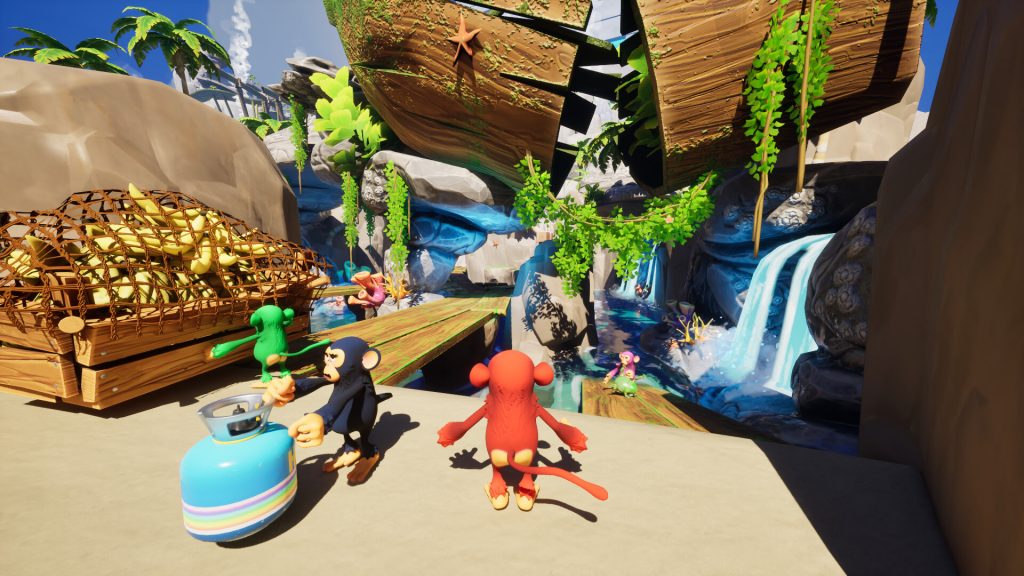
The core mechanic is physics-based cart transport. Each individual banana acts with real weight, and the cart becomes increasingly unstable as it fills. This individual-weight system is what transforms simple transport into a comedy generator.
The design genius here is that every banana matters physically. Rather than abstract inventory weight, each banana adds actual physics mass to the cart, progressively destabilizing it. A cart with a few bananas handles manageably; a cart loaded with many bananas becomes a precarious balancing challenge where small impacts can topple everything.
Because balance can easily collapse from even small impacts, players must cooperate to overcome crises. The physics system creates genuine cooperation incentives — managing an unstable, overloaded cart up a mountain requires coordinated effort, with players working together to maintain balance, navigate obstacles, and prevent the catastrophic tumbles that send bananas (and progress) rolling back downhill.
But the system also enables the opposite of cooperation. Intentional interference or competition is possible, creating unique gameplay where teamwork, betrayal, and unpredictable situations mix. This dual potential — cooperate or sabotage — is exactly what makes physics party games socially dynamic. Players can help each other or betray each other, and the physics system makes both equally hilarious.
This betrayal potential connects Monkey Bizniz to the social comedy that defines the best party games. The tension between cooperation (needed to succeed) and sabotage (always tempting) creates the kind of social dynamics that generate the memorable moments that friend groups talk about long after playing. The small betrayals and chain-reaction mistakes that the European press has highlighted as the game’s “social comedy structure” emerge directly from this design.
The Open Sandbox Stage Design
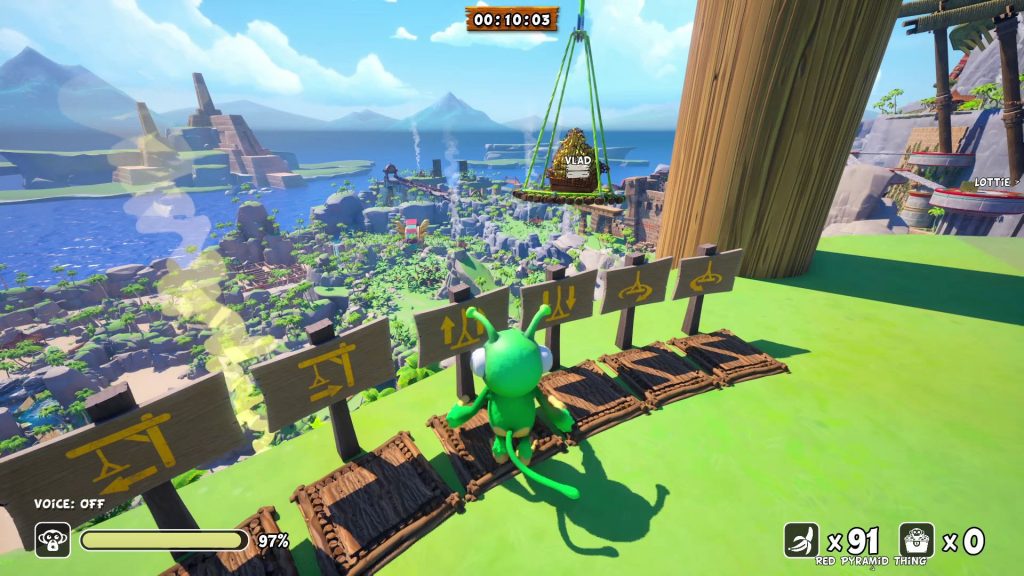
Each stage is structured as an open sandbox with various routes, collection elements, and high-risk, high-reward goal points. This open design distinguishes Monkey Bizniz from purely linear physics challenges.
The sandbox approach provides player agency in how to approach each challenge. Rather than a single correct path, players choose routes, decide which collectibles to pursue, and weigh high-risk, high-reward options against safer approaches. This choice-driven structure means the environment itself becomes a puzzle and narrative, constantly demanding decisions and tension from players.
The high-risk, high-reward goal points specifically create interesting decision-making. Players must decide whether to pursue dangerous routes for greater rewards or take safer paths for guaranteed but lesser progress. In cooperative play, these decisions become social negotiations — should the team risk the dangerous shortcut or play it safe? These collective decisions generate both strategic depth and social comedy.
The Unreal Engine 5 implementation brings the tropical mountain environments to vivid life. Swaying bridges, collapsing platforms, slippery sections, and rolling boulders create constant variables. Players must push and pull the cart while maintaining balance, and a single small mistake can instantly escalate into a major disaster, requiring constant tension. This environmental variety ensures each stage presents distinct challenges while maintaining the physics-comedy foundation.
The Audio-Driven Chaos
The sound design amplifies the chaos significantly. The monkey characters’ screams, the sound of carts tumbling down, and — crucially — the real-time reactions of players heard through proximity voice chat combine to simultaneously multiply the on-site tension and laughter.
The proximity voice chat feature deserves specific attention. Proximity chat (where players hear each other based on in-game distance) has become an increasingly significant feature in cooperative and party games because it generates authentic social comedy. Hearing your teammate’s panicked reaction as the cart tips, their groan as bananas tumble, their accusations and apologies in real-time — these unscripted vocal reactions are often funnier than anything designers could write.
The combination of character sound effects (monkey screams, tumbling carts) with real player reactions creates layered comedy. The game provides the comedic situations; the players provide the reactions; the proximity chat ensures everyone hears everyone’s responses. This audio design transforms the physics chaos into a shared social experience.
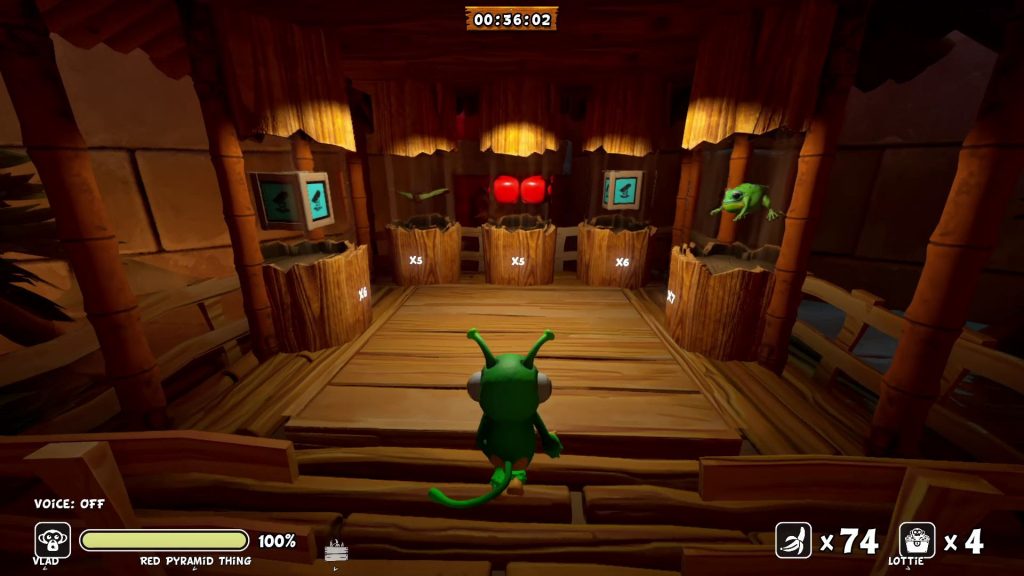
The character customization through various costumes and animations adds further comedy potential. Customized monkey characters create new comedic situations each time, and the visual variety ensures the comedy stays fresh across sessions. The combination of customizable characters with physics chaos generates endless visual comedy.
The Game Jam Origin
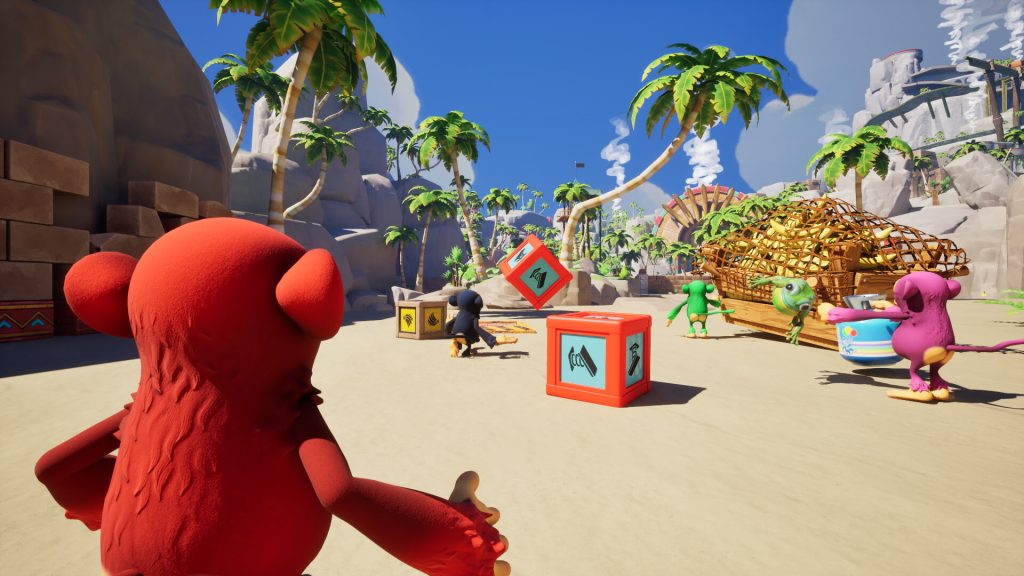
The development story reflects how the best party games often emerge. Rather than thorough planning, Monkey Bizniz started from an internal game jam. The team selected Monkey Bizniz as the final commercial development project because it generated the biggest laughs every time it was played among several prototypes.
This origin story is significant because it reflects the right way to develop comedy games. Comedy is notoriously difficult to design deliberately — what seems funny in concept often falls flat in execution, and what seems mundane in concept sometimes generates unexpected hilarity. By developing multiple prototypes and selecting the one that actually generated laughter in playtesting, Starlight Games used empirical comedy validation rather than theoretical comedy design.
The “biggest laughs every time it was played” selection criterion is exactly the right standard for party game development. Party games live or die on whether they actually generate the social fun they promise. A game that consistently produced laughter across multiple playtests has demonstrated the core quality that matters most for the genre.
This game-jam-to-commercial trajectory also reflects a healthy creative process. The playful, experimental energy of game jams often produces more genuinely fun concepts than heavily planned commercial development. Monkey Bizniz is preserving that game-jam energy into commercial development, suggesting it maintains the spontaneous fun that made it stand out among prototypes.
The Starlight Games Pedigree
Studio CEO Gary Nichols is a veteran who built his career at Psygnosis and Atomicom, proving cross-platform development capability through the previous House of Golf series. This pedigree provides important context for evaluating Monkey Bizniz.
Psygnosis specifically holds a significant place in gaming history. The Liverpool-based studio (later Sony’s Studio Liverpool) was responsible for the WipEout series and numerous other influential titles, and was a cornerstone of UK game development for decades. A developer with a Psygnosis background brings serious technical and design experience to indie development.
The House of Golf series demonstrated Starlight Games’ cross-platform development capability, including VR development (House of Golf VR). This technical competence matters for Monkey Bizniz — physics-based multiplayer games have specific technical requirements (smooth physics synchronization, reliable networking, responsive controls) that experienced developers handle better than newcomers.
The Liverpool location connects Monkey Bizniz to the city’s significant gaming heritage. Liverpool has been a notable UK game development center, with Psygnosis/Studio Liverpool as its anchor. Starlight Games’ continuing development in Liverpool contributes to the city’s ongoing gaming presence.
The European Press Momentum
The demo has been quickly gaining attention from gaming media across Europe — Italy, Brazil, Germany, and others. Some outlets have highlighted the “social comedy structure” where small betrayals and mistakes chain together to create unpredictable situations as a key strength.
This European-wide press attention reflects the universal appeal of physics-comedy party games. The genre transcends language and cultural barriers — physical comedy and social dynamics translate across cultures more easily than narrative or text-heavy games. Monkey Bizniz‘s rapid spread across multiple European gaming markets reflects this cross-cultural accessibility.
Steam Community responses have drawn comparisons to Getting Over It, Gang Beasts, and Overcooked, generating anticipation as a next-generation cooperative party game. These comparisons precisely position Monkey Bizniz within its genre — Getting Over It‘s physics frustration comedy, Gang Beasts‘ absurd physics combat, Overcooked‘s cooperative chaos. Monkey Bizniz, combining elements of all three suggests it understands the genre’s appeal.
The “next-generation cooperative party game” framing reflects genuine community enthusiasm. The party game genre continues generating commercial successes (the enormous success of games like Fall Guys and Lethal Company demonstrates ongoing appetite), and Monkey Bizniz’s positioning itself as the next entry in this lineage suggests the demo is delivering the social fun the genre depends on.
Who This Is For
Strong fit for: cooperative party game enthusiasts seeking new friend-group entertainment; Overcooked, Gang Beasts, and Getting Over It fans; physics comedy enthusiasts; players who enjoy emergent gameplay over scripted content; groups seeking 4-player cooperative experiences; players who appreciate proximity voice chat social dynamics; anyone who enjoys the cooperate-or-betray tension of social party games.
Cautious fit for: players who prefer solo experiences (though solo play is supported, the game shines in cooperative); anyone who finds physics frustration annoying rather than funny.
Less ideal for: players seeking serious or narrative-driven experiences; anyone who dislikes physics-based controls; players who prefer competitive precision over chaotic comedy.
What to Watch For
A few questions will shape Monkey Bizniz‘s development toward release.
The first is whether the comedy sustains across extended play. Emergent comedy games need sufficient situational variety to keep generating fresh laughs. Whether Monkey Bizniz provides enough stage variety, mechanical depth, and situational diversity to sustain long-term engagement will determine its longevity.
The second is the netcode quality. Physics-based multiplayer is technically demanding — smooth physics synchronization across players is essential for the cooperative experience. How well Starlight Games’ networking handles the physics chaos will significantly affect the multiplayer experience.
The third is the content scope at release. Party games need sufficient content (stages, customization, modes) to justify purchase and sustain engagement. How much content the full release provides beyond the demo will affect its value proposition.
The fourth is the solo play viability. While the game emphasizes cooperative play, solo support is included. Whether solo play provides genuine enjoyment or whether the game fundamentally requires cooperative play for full appreciation will affect its accessibility.
The Takeaway
Monkey Bizniz is one of the more promising physics-comedy party games on the horizon, combining proven design philosophy (emergent comedy through physics and social dynamics), distinctive core mechanics (individual-weight banana cart system), experienced development pedigree (Psygnosis veteran leadership), and the kind of cooperative chaos that has made physics party games reliable friend-group entertainment.
For cooperative party game enthusiasts specifically, the free Steam demo provides an immediate opportunity to test whether the banana cart chaos delivers the social comedy the genre depends on. The combination of cooperation requirements and betrayal possibilities creates exactly the social dynamics that generate memorable party game moments.
For groups seeking new cooperative entertainment, Monkey Bizniz offers the kind of emergent comedy that scripted games can’t match. The physics-based unpredictability ensures each session creates unique disasters and triumphs, providing the infinite replayability that the best party games achieve.
For physics comedy fans, the Getting Over It, Gang Beasts, and Overcooked comparisons signal exactly what Monkey Bizniz offers — the chaotic physics-driven comedy that these beloved games established, applied to the distinctive banana-cart-up-a-mountain premise.
A tropical mountain. An overloaded cart full of individually-weighted bananas. Up to four monkeys are trying to push it to the summit while swaying bridges, collapsing platforms, and rolling boulders create constant chaos. Proximity voice chat broadcasts every panicked reaction. The constant tension between cooperation (needed to succeed) and betrayal (always tempting). And the comedy that emerges naturally when physics, players, and unpredictability collide.
As physics-comedy party game pitches go, Monkey Bizniz‘s is one of the more genuinely promising of 2026 — and the free Steam demo means interested groups can immediately test whether the banana extraction chaos delivers the social comedy the premise promises. Gather the bananas. Load the cart. Push it up the mountain. And try not to laugh too hard when it all comes crashing down — because in Monkey Bizniz, the crash is the whole point.
The mountain awaits. The bananas are heavy. And one monkey’s mistake is four friends’ comedy.
Information regarding ‘Monkey Bizniz’
| item | detail |
|---|---|
| Developer | Starlight Games (Liverpool, UK) |
| Publisher | Starlight Games (Self-publishing) |
| Genre | Physics-based Co-op / Party / Adventure / Casual Simulation |
| Release platform | PC (Steam) |
| Release Date | Undetermined (Demo currently available for free trial) |
| graphics | 3D Cartoon / Colorful Stylized |
| engine | Unreal Engine 5 |
| Player count | 1~4 players (Online/Local Co-op) |
| core system | Physics-based kart movement / Open sandbox exploration / Proximity voice chat / Character customization |
| Main Keywords | Cooperation, Party, Betrayal, Physics Engine, Comedy, Monkey, Banana |
| Developer’s flagship title | House of Golf 2 · House of Golf VR |
| CEO | Gary Nichols (formerly Psygnosis, Atomicom) |
| Official Channel | X (@SLGliverpool) |
| Steam Page | Shortcut |