A half-duck, half-robot bounty hunter created by scientist Dr. Less. A criminal employer whose morality is questionable at best. A hand-drawn world where every enemy is potentially a weapon, a platform, a projectile, or a combo extender. DekaDuck, the debut commercial release from Brazilian indie studio Asteristic Game Studio (founded by solo developer Glauco Silva), has just launched its free Steam demo alongside a concurrent Kickstarter campaign — and the demo reception suggests the game is doing exactly what good action platformer demos should do.
Inspired by Mega Man, Alien Soldier, and Mischief Makers, the project targets classic 2D action platformer fans with a design philosophy that prioritizes improvisation, creativity, and combat experimentation over pattern memorization and linear skill execution. Multi-platform release through Nejcraft is confirmed for Nintendo Switch, PS5, and Xbox, alongside the PC version.
[Related Article: Half Duck, Half Robot! Hand-drawn Brazilian Action Platformer ‘DekaDuck’]
The Enemy-as-Everything Design Philosophy
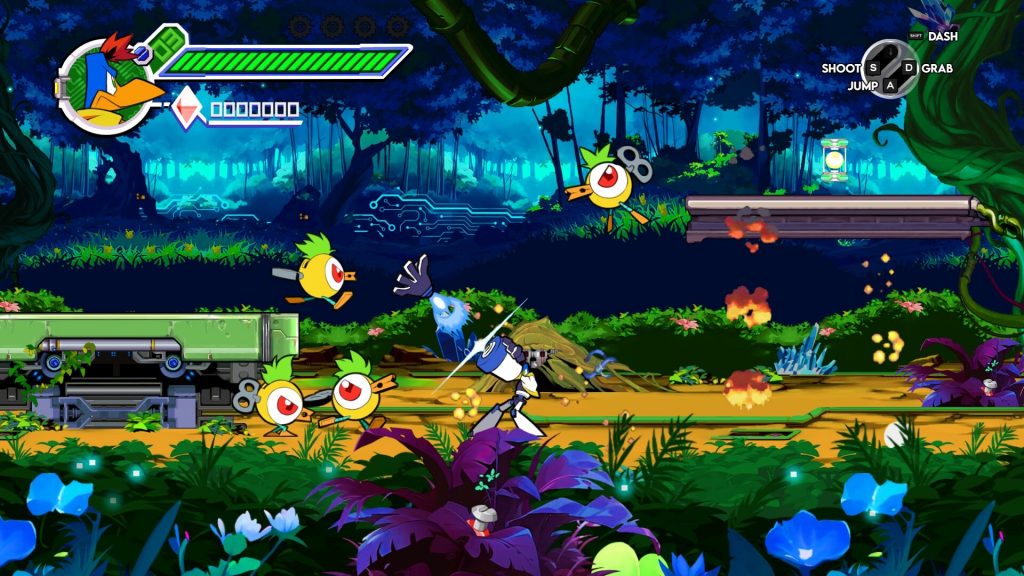
The central mechanical innovation of DekaDuck is the detachable mechanical arm system and what it enables. The arm can grab enemies and throw them — but that’s just the beginning. Enemies serve as weapons when hurled at other enemies. Enemies serve as improvisational platforms when positioned as stepping stones to reach new areas. Enemies serve as combo extenders when chained into attack sequences.
This “enemies are everything” design is working from a tradition of classic action games that understood environmental creativity as a core gameplay value. Mischief Makers — directly cited as an inspiration — built its entire identity around grabbing and throwing as primary gameplay verbs, exploring all the tactical and creative possibilities that emerge from that single mechanic. DekaDuck applies a similar philosophy to the action platformer format.
The result is a design that rewards improvisation over optimization. Most action platformers have correct approaches — the enemy goes here, the boss has this pattern, the optimal combo is this sequence. DekaDuck‘s enemy-as-resource system means there often isn’t a single correct approach; there’s a space of creative possibilities, and player expression emerges through which creative possibilities get explored.
Developer Glauco Silva has explicitly built the system to encourage “momentary judgment and improvised play” rather than requiring memorized optimal strategies. This design philosophy distinguishes the project from action platformers that test pattern retention and from combat games that test execution of specific optimal sequences. DekaDuck tests something more like creative problem-solving — recognizing the tools available in any given moment and using them inventively.
The Hand-Drawn Visual Identity
The full hand-drawn visual presentation is one of the most immediately striking elements of DekaDuck. Hand-drawn game aesthetics range from rough and charming (small-team authenticity) to polished and distinctive (when the technique is applied with genuine artistic commitment). DekaDuck appears to operate toward the latter end — the character animations, colorful backgrounds, and science fiction stage designs all reflect deliberate artistic investment rather than production of necessity.
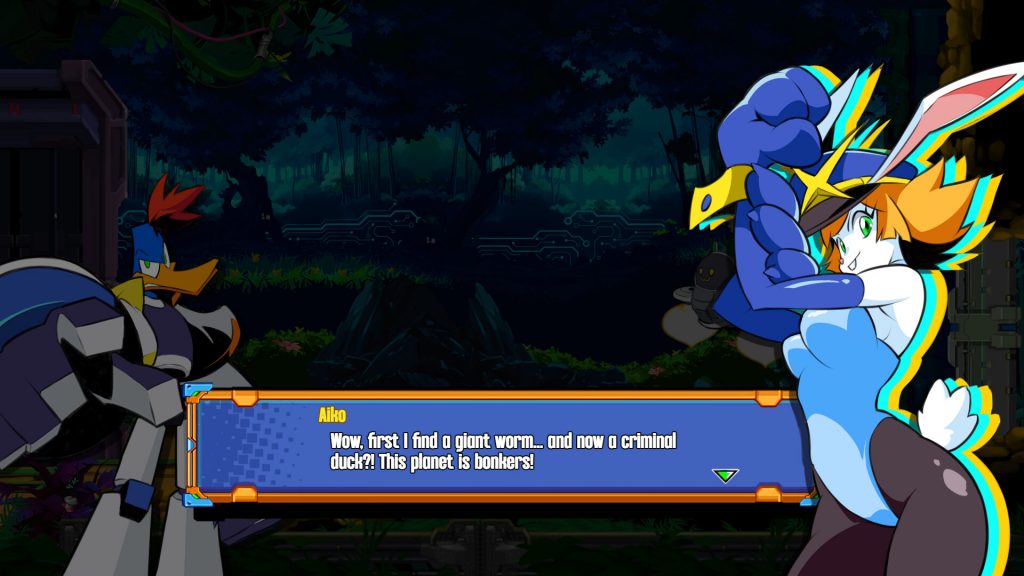
The comic book animated opening that introduces the world and characters is a particularly effective framing device. Using sequential art aesthetics to establish the narrative and protagonist before gameplay begins creates immediate tonal clarity — this is a world with Saturday-morning-cartoon energy, bright colors, exaggerated character design, and the kind of confident visual personality that classic 2D games aspired to in their sprite artwork.
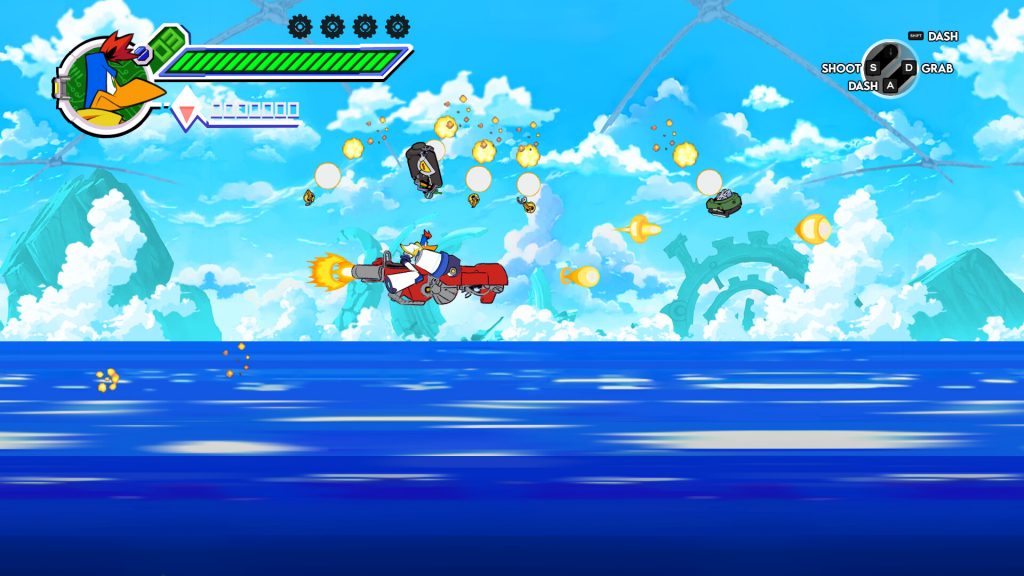
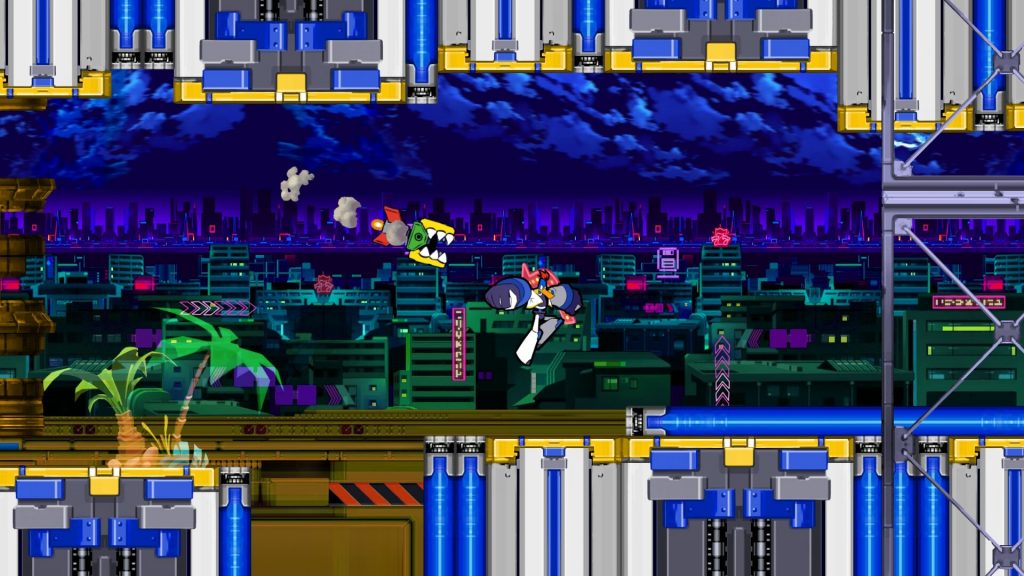
The science fiction setting provides visual variety that pure fantasy or contemporary settings typically don’t allow. Different SF environments can look radically different from each other — space stations, alien landscapes, cyberpunk cities, biological environments — which gives the art team (solo as it may be) natural stage variety without requiring the architectural consistency that historical or realistic settings demand.
The sound design completes the visual register. The sharp sound effects when enemies are grabbed and thrown, the combo-specific audio feedback during dash and jump sequences, and the boss music that escalates appropriately — these audio choices reflect the same classic arcade game sensibility the art establishes. When a game’s audio and visual registers are this well-aligned, the resulting experience feels coherent rather than assembled from parts.
The Classic Action Platformer Lineage
The Mega Man, Alien Soldier, and Mischief Makers inspiration set deserves specific examination because these games represent specific design lineages rather than generic “old action games.”
Mega Man established the design philosophy of distinct staged environments with distinct enemies, weapon acquisition that changes tactical options, and boss encounters that test mastery of the game’s core systems. The series’ design principle — challenging but learnable, with mastery producing genuine satisfaction — influenced decades of action platformer development.
Alien Soldier (Treasure’s 1995 Mega Drive title, now available through Mega Drive Mini) represents a more extreme version of this design — extremely challenging, extremely fast, built around creative use of a varied weapon set against massive bosses. The game rewards players who find creative approaches over those who brute-force expected solutions.
Mischief Makers (also Treasure, 1997) built its entire identity around the grab-and-throw mechanic, exploring every conceivable application of that single verb across its stages. This is the most direct DekaDuck inspiration — the enemy-as-resource philosophy traces directly to Mischief Makers‘ design.
The Treasure connection across both Alien Soldier and Mischief Makers is meaningful. Treasure is one of action game design’s most revered studios, known for mechanical creativity and willingness to push single mechanics to maximum depth. Games that cite Treasure influences are signaling specific aspirations about mechanical sophistication and creative design.
The Demo Reception
The demo response from international gaming press has consistently emphasized that DekaDuck is delivering what good demos should deliver — clear communication of the core proposition, sufficient depth to justify extended attention, and the impulse to replay.
LadiesGamers captured this precisely: “While it’s short, the good demo does what good demos should do — clearly shows the core mechanics and makes you want to play again.” This is the essential test for action game demos specifically. The core feel needs to land immediately, and landing immediately means players want another attempt as soon as the demo ends.
Noisy Pixel’s evaluation — “gameplay with sufficient depth doesn’t stop at simple nostalgia provocation, successfully adding its own personality to classic action platformers” — addresses the most important question about retro-inspired games. The question isn’t whether the game successfully references its inspirations; it’s whether it offers something that justifies engaging with it on its own terms rather than just replaying the original inspirations. DekaDuck appears to pass this test.
Linux Gaming News’ framing — “attractive for action game fans who require fast input and precise control” — correctly identifies the target audience. This is a precision action game for players who find mechanical mastery satisfying, not an accessible casual platformer for all ages.
The Asteristic Game Studio Debut
DekaDuck is the commercial debut for Asteristic Game Studio, founded by Brazilian developer Glauco Silva. The project represents the full arc of solo indie development — a single person’s creative vision for a hand-drawn action platformer, developed through personal commitment, crowdfunding community support, and the accumulation of technical and artistic skills required to bring the concept to release quality.
Brazilian indie gaming has been gradually building international presence, but hasn’t yet achieved the concentrated cluster visibility of Polish, Nordic, or Korean indie scenes. DekaDuck‘s multi-platform release plans, international press attention, and demo reception represent exactly the kind of project that can contribute to regional visibility — a technically ambitious, aesthetically distinctive release that competes seriously in an internationally competitive genre.
The Kickstarter campaign running concurrently with the demo represents standard indie development practice for ambitious projects that need additional resources beyond what initial development can support. The demo provides evidence of execution quality that makes Kickstarter backing feel like validation rather than speculation — potential backers can evaluate whether the game actually delivers the experience described before committing funding.
Porting partner Nejcraft’s involvement for console versions signals practical commercial sophistication. Solo developers typically lack the resources and platform relationships required for successful console porting — Nejcraft’s involvement enables multi-platform reach that would otherwise be inaccessible for a single-developer project.
The Brazilian Indie Scene Context
Brazil has produced meaningful indie work across multiple genres in recent years. Blazing Chrome (also a classic action game), Knight’s Peak, and various other Brazilian projects have demonstrated that the country’s indie development capabilities are serious. The domestic gaming market is one of South America’s largest, providing a foundation for developer communities that sustain indie development.
DekaDuck‘s clear classic gaming influences — Mega Man, Treasure-era design philosophy — reflect the deep gaming heritage of Brazilian gaming culture. The Sega Mega Drive era was particularly significant in Brazil, where licensing arrangements made the platform extremely popular. Games designed with clear Mega Drive-era inspiration from a Brazilian developer represent an authentic expression of gaming’s impact on that generation of creators.
For international audiences, DekaDuck represents Brazilian indie gaming at its most distinctively rooted — a classic 2D action platformer designed by someone who clearly grew up loving this specific tradition and has built a career around expressing that love through original creative work.
Who This Is For
Strong fit for: classic action platformer enthusiasts (Mega Man, Treasure game fans); Mischief Makers fans who’ve been waiting for games with similar grab-throw philosophy; players who appreciate hand-drawn 2D animation at game quality; retro gaming enthusiasts seeking modern games with classic design sensibilities; PC and Linux gamers (both supported explicitly); action game fans who value mechanical depth over accessibility; speedrun-potential games fans who appreciate replayable mechanical systems.
Cautious fit for: players who prefer more accessible action games; anyone who finds fast input and precise timing requirements frustrating rather than satisfying.
Less ideal for: players seeking slow-paced or cozy experiences; anyone who prefers narrative-heavy games over gameplay-focused design; players who dislike complex mechanical interaction systems.
What to Watch For
A few questions will shape DekaDuck‘s trajectory toward full release.
The first is whether the enemy-as-resource system delivers sufficient depth across a full campaign. The demo demonstrates the concept appealingly; whether the system scales across diverse stages and enemy types to maintain creative engagement throughout extended play will determine whether the design philosophy fulfills its potential.
The second is boss encounter design. Classic action platformers live on boss fights that test mastery of the game’s systems while remaining fair to players who’ve engaged with those systems meaningfully. Whether DekaDuck‘s bosses rise to this standard will significantly affect reception.
The third is stage variety. Hand-drawn aesthetic stages can either provide visually diverse environments that maintain engagement or settle into repetitive visual rhythms despite stylistic differences. Whether each stage feels distinctively designed or whether they blur together will affect long-term engagement.
The fourth is the Kickstarter performance. The funding campaign running concurrently with the demo means the demo period serves commercial purposes beyond just generating interest — it’s meant to convert curious players into Kickstarter backers. Whether the demo’s success translates into funding success will affect the game’s development trajectory.
The Takeaway
DekaDuck is one of the more genuinely promising classic action platformer projects from the South American indie scene, combining clear mechanical innovation (enemy-as-resource creative combat), strong visual identity (full hand-drawn animation with comic book energy), sophisticated design lineage (Mega Man, Treasure-inspired philosophy), and the kind of demo execution that confirms the concept works in practice.
For classic action platformer enthusiasts specifically, this is a clear demo-first recommendation. The Mischief Makers-inspired enemy weaponization system provides the kind of creative mechanical depth that the genre has been producing less of in recent years, and the hand-drawn visual identity gives the project aesthetic distinctiveness that distinguishes it from pixel-art retro alternatives.
For Brazilian and South American indie scene observers, DekaDuck represents one of the year’s more ambitious regional releases — a solo developer’s genuine attempt to compete seriously in one of indie gaming’s most competitive genre categories through mechanical creativity and artistic commitment.
A half-duck, half-robot bounty hunter with a detachable mechanical arm. A criminal employer who may or may not deserve loyalty. Enemies that become weapons, platforms, combo extenders, and creative problem-solving tools. Hand-drawn animation that makes the science fiction world feel like Saturday morning cartoons brought to life. A demo that makes you want to play again the moment it ends.
As classic action platformer pitches go, DekaDuck‘s is one of the more enthusiastically committed of 2026 — and the free Steam demo provides immediate evaluation access for players curious about whether the enemy-as-everything combat philosophy delivers as well in practice as it sounds in description. Grab the enemy. Throw them. Figure out what that creates. And probably do it again, faster.
Information regarding DekaDuck
| item | detail |
|---|---|
| Developer / Publisher | Asteristic Game Studio (Brazil / Developer: Glauco Silva) |
| Genre | Hand-drawn 2D Action Platformer / Arcade Action Adventure |
| Release platform | PC (Steam, Linux·Windows) / Nintendo Switch·PS5·Xbox (Nejcraft console porting 담당) |
| Scheduled for release | Undetermined (Kickstarter in progress) |
| demo | Free Steam demo available |
| Art style | Full Hand-Draw 2D Animation / Comic Book Intro / Colorful Cartoon |
| Core mechanics | Detachable mechanical arm / Weaponization of enemies / Environmental interaction / Experimental/Improvisational combat |
| Main Keywords | Duck, Robot, Bounty Hunter, 2D Platformer, Hand Draw, Retro, Sci-Fi, Combo |
| Official Channel | TikTok·Instagram·Facebook·Discord |
| Steam Page | Go to Wishlist |
| Kickstarter page | Shortcut |