The real-time tactical stealth genre has been quietly waiting for a major new entry. The lineage — Commandos, Desperados, Shadow Tactics: Blades of the Shogun — represents some of strategy gaming’s most distinctive design traditions, but the genre’s modern output has been sparse. PROHIBEAST, the just-released tactical stealth from Paris-based French indie studio SUPER AC, arrives as one of the more genuinely ambitious entries the genre has seen in years — and its premise alone makes it impossible to ignore.
Imagine 1930s Chicago, but populated by anthropomorphic animals. Now imagine that what’s actually prohibited isn’t alcohol but meat. Now imagine that Al Capone built his criminal empire on illegal meat smuggling, with Eliot Ness leading the legendary “Untouchables” team to bring him down. That’s PROHIBEAST‘s premise — and the execution, based on the launch reception, lives up to the audacious conceptual ambition.
The Meat Prohibition Conceit
The premise deserves examination because it’s doing more than just being clever. The actual American Prohibition era (1920-1933) is one of the most game-adaptable historical periods imaginable — the moral complexity, the visual aesthetics, the gangster culture, the speakeasy intrigue. But games typically engage with this period through fairly direct historical adaptation.
PROHIBEAST takes the period’s structure and inverts its central detail. Instead of alcohol being prohibited, meat is, which transforms the entire social and political logic of the setting. Now, carnivores and herbivores coexist in uneasy balance. Meat becomes the central black market commodity. The animal characters’ biological reality (their need for or aversion to meat) intersects with the legal framework in ways that make the prohibition system more thematically resonant than a direct alcohol parallel would be.
This kind of premise inversion is what good speculative fiction does. Changing one element of a familiar setting, it forces players to think differently about both the imagined world and the historical reality. PROHIBEAST doesn’t just substitute one prohibited substance for another — it reveals something about how prohibition itself operates by making the substance feel newly strange.
The animal characters compound this effect. 1930s gangsters in fedoras and trench coats are a recognizable visual cliché; jaguars, wolves, and bears in fedoras and trench coats are simultaneously familiar (the noir aesthetic) and disorienting (the anthropomorphic translation). The animal layer adds aesthetic distinctiveness while also reinforcing the meat-prohibition theme — these aren’t humans dealing in meat, they’re carnivorous and herbivorous animals whose dietary needs are politically regulated.
The Visual and Atmospheric Foundation
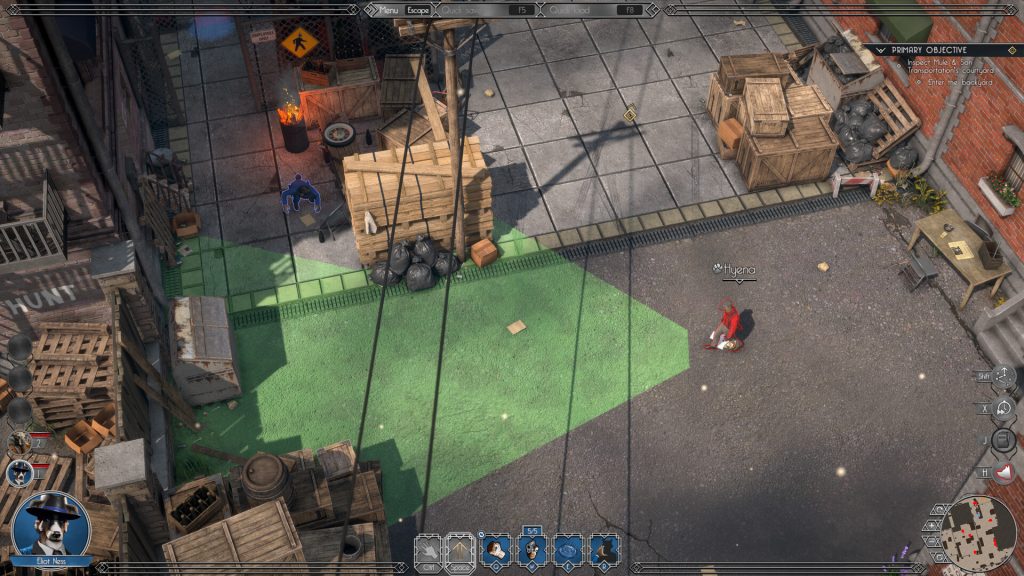
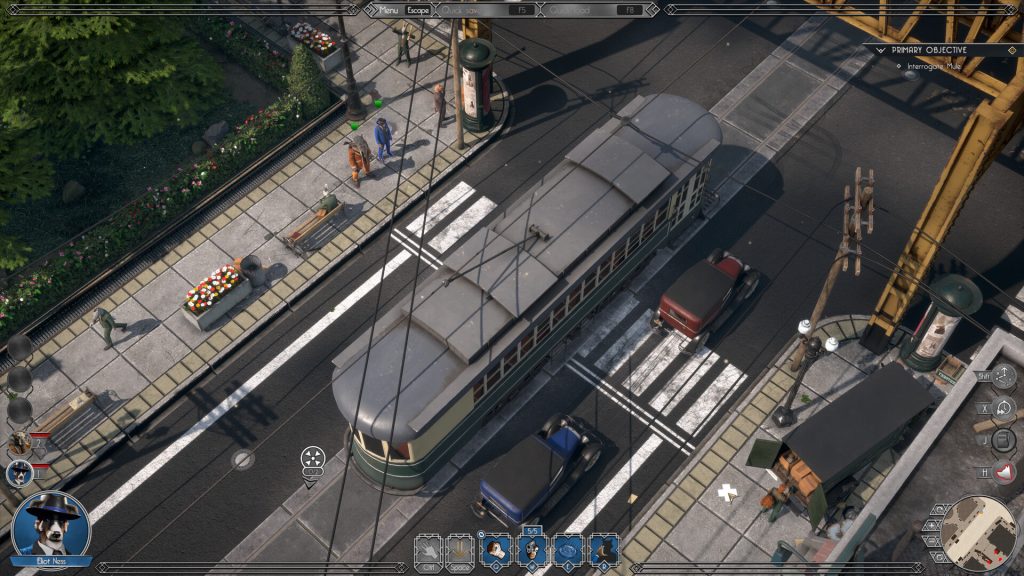
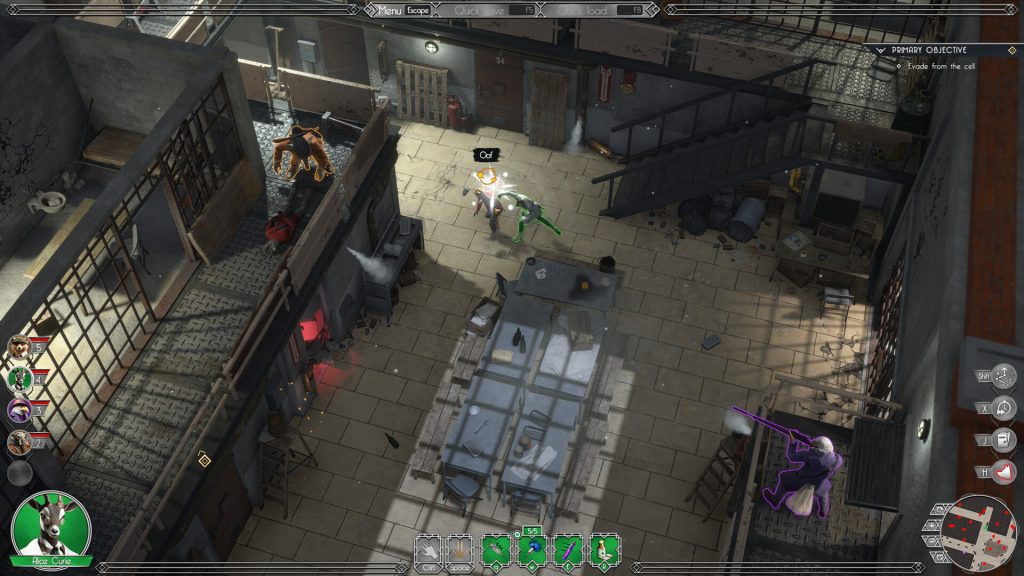
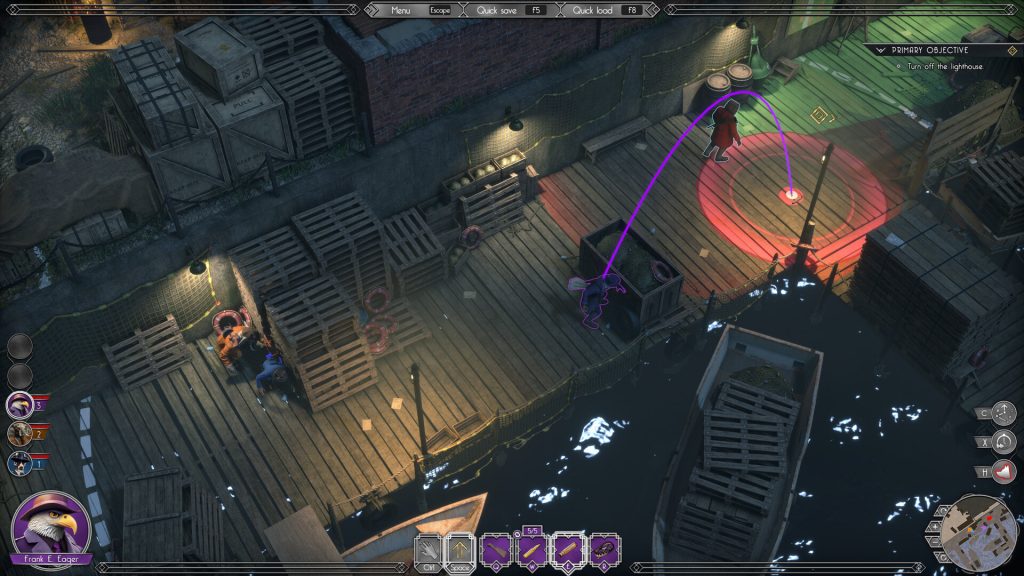
The 3D isometric perspective is the right choice for the genre. Tactical stealth games require players to understand spatial relationships, sight lines, patrol patterns, and environmental affordances — perspectives that overhead views support better than first-person or close-third-person alternatives. PROHIBEAST operates in the visual register that Commandos, Desperados, and Shadow Tactics established as the genre’s optimal viewpoint.
The settings showcase 1930s Chicago atmosphere: dimly lit warehouses, fog-shrouded Lake Michigan docks, the corrupt power center of Chicago’s Loop district. Each location reproduces the gloomy, tension-filled atmosphere distinctive to 1930s noir films, with jazz and blues-inspired music adding to the immersion.
The noir aesthetic translation to game form requires careful attention. Films establish noir atmosphere through cinematography techniques (shadows, framing, lighting) that don’t directly translate to gameplay. Games have to recreate these qualities through environmental design, ambient lighting, and audio cues. PROHIBEAST‘s commitment to noir atmospherics across its varied settings suggests SUPER AC understands what makes the genre’s visual register work.
The audio direction matters significantly. Jazz and blues weren’t just background music for the 1930s — they were the era’s central cultural expression, the sonic atmosphere that defined urban American life during the Prohibition years. A tactical stealth game using jazz and blues-inspired audio leverages cultural associations that immediately transport players into the period without requiring explicit setup.
The Sophisticated Detection AI
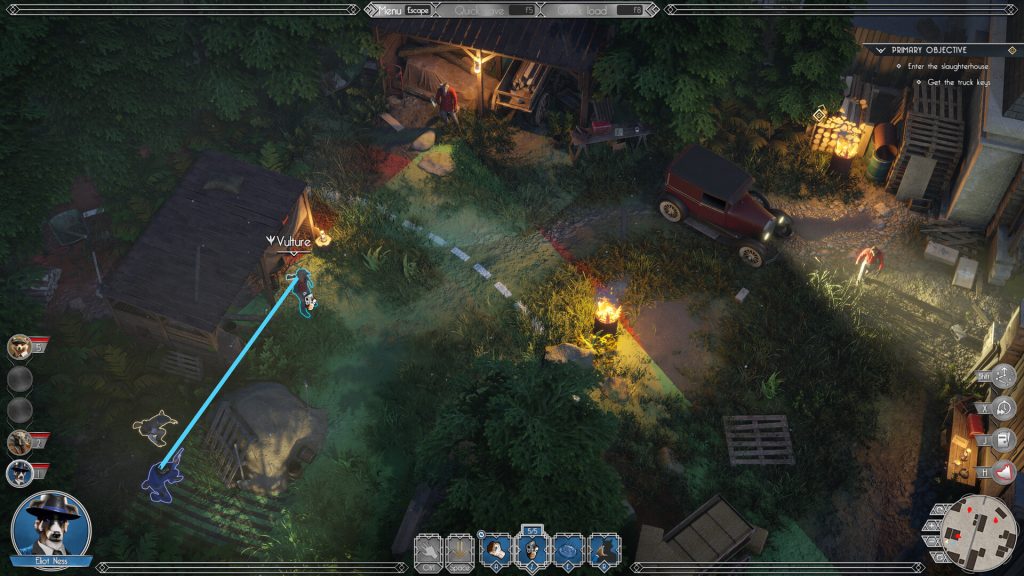
One of PROHIBEAST‘s most distinctive design choices is its multi-sensory enemy detection system. Standard stealth games operate primarily on visual detection — enemies see the player and react. PROHIBEAST expands this to include auditory and olfactory detection alongside visual perception.
The animal-based setting makes this approach thematically appropriate. Real animals have varied sensory capabilities — some see well in low light, some have exceptional hearing, some track primarily by scent. Translating these biological realities into gameplay creates encounters where players must consider not just what enemies can see but what they can hear and smell.
The strategic implications are substantial. A wolf might track players by scent across longer distances than visual detection would allow. A jaguar might detect movement through subtle audio cues that lesser predators would miss. The kind of cover-and-stealth gameplay that traditional stealth games employ doesn’t work the same way when enemies use multiple senses.
This expanded detection model also creates opportunities for new gameplay verbs. Players might need to consider scent management, sound dampening, and visual concealment as separate tactical considerations rather than treating “being undetected” as a single binary state. The system’s depth depends on how well SUPER AC implemented these multiple detection vectors, but the conceptual framework alone represents meaningful genre innovation.
The Five-Member Untouchables
The team-based structure draws directly from the Commandos tradition while adapting it to the specific character ensemble. The five Untouchables team members each have distinct specializations:
Eliot Ness is the balanced team leader, capable of responding to various situations. As the protagonist, he provides the player’s most flexible tactical option.
Malone B. Cloran is the frontal-assault veteran, suited for direct combat approaches when stealth fails or isn’t appropriate.
Frank E. Eager is the long-range sniper, eliminating enemies from concealment positions.
Alice Curie is the scientist-doctor, handling healing and support equipment.
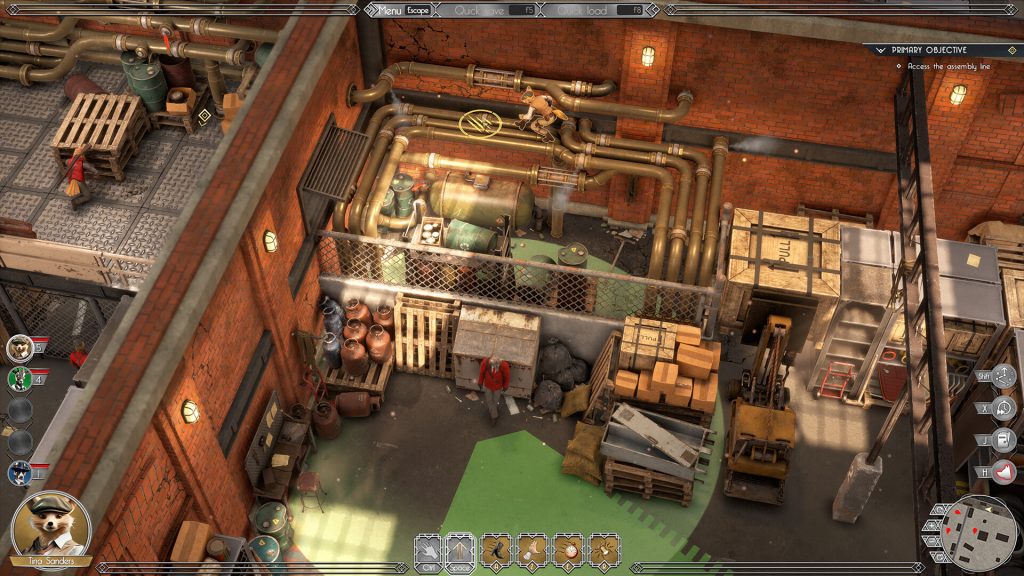
Tina Sanders specializes in lockpicking and infiltration.
This team composition reflects classic tactical stealth design principles. Each specialist handles a particular tactical niche, and successful mission completion typically requires coordinating multiple specialists rather than relying on any single character. The genre’s pleasure comes from solving tactical puzzles that require specific character combinations — sniping the watchman so the infiltrator can approach the lock, so the team can advance.
The Untouchables historical reference adds cultural depth. The actual Untouchables team that Eliot Ness led against Capone became a legendary American historical narrative, dramatized in countless films and TV adaptations. Players engaging with PROHIBEAST‘s team are participating in a recognizable historical-fictional template, even with the animal anthropomorphization adding distinctive variation.
The Tactical Approach Variety
Each mission supports multiple tactical approaches — stealth infiltration, silent neutralization, distraction tactics, and other strategic options. Players can leverage hidden passages, concealment spots, and environmental elements to attract enemy attention as part of their strategic compositions.
This kind of approach flexibility is what distinguishes excellent tactical stealth games from mediocre ones. Linear stealth that punishes players for trying creative approaches becomes frustrating; flexible stealth that rewards experimentation becomes deeply satisfying. PROHIBEAST‘s mission design appears to prioritize the latter approach, giving players genuine tactical choice in how to accomplish objectives.
The mission setting variety supports this flexibility. Chicago’s corrupt Loop district, the mayor’s residence where criminal alliances are formed, the foggy Lake Michigan docks that serve as smuggling hubs — each environment offers different tactical opportunities. Warehouse infiltration requires different strategies than civic building penetration, which requires different approaches than dockside raids.
This mission-environment variety is essential for tactical stealth game longevity. Players who solve one mission successfully need new mission types that require different tactical thinking. PROHIBEAST‘s setting roster suggests SUPER AC has built sufficient mission variety to sustain extended engagement.
The Genre Context
It’s worth establishing why PROHIBEAST matters to tactical stealth fans. The genre has produced occasional excellent entries (the Shadow Tactics games from Mimimi Games, the Desperados III remake) but has lacked the regular release cadence that established genres maintain. Players who love this style of gameplay have been waiting years between major releases.
PROHIBEAST arrives in this context as one of the more substantial recent additions to the genre. The combination of established tactical stealth design principles (the Commandos lineage), distinctive setting (1930s Chicago with anthropomorphic animals), and innovative systems (multi-sensory detection) makes it to satisfy both genre veterans and players new to the format.
The competition matters here, too. Shadow Tactics: Blades of the Shogun and Desperados III — both from now-shuttered Mimimi Games — set high-quality bars. PROHIBEAST doesn’t necessarily need to surpass those bars to succeed; it needs to operate at meaningful quality within the same tradition. The launch reception suggests it has cleared that threshold.
SUPER AC and the French Indie Context
SUPER AC is described as a “collective” — an organization of independent studios pooling their expertise and knowledge to maximize quality and visibility for indie titles. This collaborative model is interesting within the French indie scene specifically, where studios increasingly work together rather than maintaining strict separation.
The self-publishing approach also signals the studio’s confidence and capability. Self-publishing indie games requires handling all distribution, marketing, community management, and customer support functions that publishers typically provide. SUPER AC’s willingness to self-publish PROHIBEAST across both Steam and Epic Games Store suggests significant accumulated operational capability.
The Games Made in France 2025 (GMIF2025) official selection validates the project’s quality from the French gaming industry’s perspective. France has been one of Europe’s most active indie development regions, and inclusion in the country’s major showcase signals serious industry recognition.
The active community engagement across Instagram, X, TikTok, YouTube, Steam Community Hub, and Reddit reflects modern indie marketing reality. Successful indie games increasingly depend on direct community building across multiple platforms, and SUPER AC’s engagement pattern across these channels positioned the project for the wishlist growth that preceded launch.
Pre-Launch Reception and Expectations
The international press has covered PROHIBEAST positively in pre-launch coverage, highlighting the unique setting, tactical-focused stealth systems, and noir presentation. The genre’s relative drought of recent major releases has positioned PROHIBEAST as one of the more anticipated tactical stealth releases of the year.
The Steam Community response has been notably enthusiastic. Players familiar with the Commandos, Desperados, and Shadow Tactics tradition have been expressing interest in a modern reinterpretation of the format. The combination of genre familiarity with setting distinctiveness has captured exactly the audience most likely to engage seriously with the project.
The wishlist growth following the Games Made in France 2025 selection demonstrates how showcase visibility can translate into commercial interest for indie projects. Strong showcase placements often produce the audience momentum that is needed to convert critical attention into commercial success.
Who This Is For
Strong fit for: Commandos, Desperados, and Shadow Tactics fans seeking new entries in their preferred genre; tactical strategy enthusiasts who appreciate squad-based gameplay; 1930s historical fiction fans curious about creative reinterpretation; noir genre enthusiasts; players interested in anthropomorphic animal characters in serious narrative contexts; French indie scene followers.
Cautious fit for: real-time strategy fans who prefer action over methodical planning; players who specifically prefer turn-based tactical approaches.
Less ideal for: players seeking action-focused gameplay; anyone uninterested in stealth-heavy mission structures; players who find anthropomorphic animals off-putting in serious contexts.
What to Watch For
A few questions will shape PROHIBEAST‘s longer reception as players engage with the full game.
The first is mission design depth. Tactical stealth games depend heavily on whether their missions provide genuinely interesting tactical puzzles or settle into repetitive structures. How varied and engaging the full mission roster proves to be will significantly affect long-term reception.
The second is the multi-sensory detection AI execution. The conceptual framework is innovative, but its implementation determines whether it adds meaningful tactical depth or becomes frustrating to navigate. Player feedback on how the visual-auditory-olfactory detection systems actually work in practice will reveal whether the innovation delivers.
The third is the team specialization balance. Five-character squads need each member to feel essential rather than redundant. How well PROHIBEAST balances the Untouchables team across mission requirements will affect how strategically engaging the team management becomes.
The fourth is community engagement post-launch. SUPER AC’s collaborative studio model and active community engagement during development suggest continued post-launch support. How they handle bug fixes, balance adjustments, and potential additional content will determine the game’s longer-term standing.
The Takeaway
PROHIBEAST is one of the more genuinely interesting tactical stealth releases of recent years — combining established genre design principles with distinctive setting innovation, sophisticated detection AI, and committed atmospheric execution. The 1930s Chicago with anthropomorphic animals and meat prohibition setting isn’t just creative — it’s structurally meaningful, reshaping how players think about the historical period the game references.
For tactical stealth fans, this is one of the most important releases of 2026. The genre’s recent release scarcity has built up audience demand that PROHIBEAST is positioned to satisfy. For players curious about tactical stealth but unfamiliar with the genre, this represents an accessible entry point with a distinctive presentation that doesn’t require prior genre knowledge.
For French indie scene observers, SUPER AC’s debut tactical stealth project demonstrates the kind of ambitious creative output that French indie development continues producing. The Games Made in France 2025 selection and the launch trajectory both validate the country’s continued strength in distinctive indie game development.
A jaguar in a fedora running a meat smuggling operation. A wolf detective with enhanced scent detection tracks infiltrators by smell. A team of five specialists working together to bring down an animal mob boss based on Al Capone. As tactical stealth pitches go, PROHIBEAST‘s combines genre tradition with creative ambition in ways that genuinely justify the genre’s continued development.
The 1930s Chicago of PROHIBEAST is foggy, dangerous, and full of characters whose biological reality intersects with their criminal activities in unexpected ways. The Untouchables team is ready to move against Capone’s operation. The multi-sensory detection AI is ready to challenge players who think traditional stealth approaches will work. And somewhere in the warehouses, docks, and political offices of this strange noir world, one of 2026’s most distinctive tactical stealth experiences is waiting to be discovered.
Welcome to PROHIBEAST. The meat is prohibited. The animals are watching. And the operation begins now.
Information regarding ‘PROHIBEAST’
| item | detail |
|---|---|
| Developer | SUPER AC (Paris, France) |
| Publisher | SUPER AC (Self-publishing) |
| Genre | Real-time Tactical Stealth / Strategy / Action Adventure |
| Release platform | PC (Steam, Epic Games Store) |
| Release date | June 3, 2026 |
| graphics | 3D Isometric View / Anthropomorphic Art Style |
| core system | Real-time tactical infiltration / 5-person team role distribution / Sight, hearing, and smell detection AI |
| Background settings | 1930s Chicago with Anthropomorphic Animals (Meat Prohibition Worldview) |
| Inspiration | Commandos, Desperados, Shadow Tactics |
| Awards/Selections | Officially selected for Games Made in France 2025 (GMIF2025) |
| Supported languages | 11 languages including English, French, Italian, German, and Spanish |
| Main Keywords | Noir, Infiltration, Tactics, Personification, Prohibition, 1930s, Al Capone |
| Official Channel | Instagram·X·TikTok·YouTube |
| Steam Page | Shortcut |