The arcade snowboarding genre has been nearly dormant for years — the SSX era ended, Steep and Riders Republic went the realistic-extreme-sports direction, and the pure, stylized, trick-everything arcade snowboarding experience largely vanished. HYPERyuki: Snowboard Syndicate, the upcoming arcade snowboarder from Mexican indie studio Wabisabi Games, is aiming squarely at that gap — and its new gameplay trailer makes the pitch clear: this is the SSX-meets-Jet Set Radio revival that fans of late-90s/early-2000s extreme sports games have been waiting for.
Published by the revived Acclaim, the game recently showed its new trailer at the Latin America Games Showcase in May, then screened at BitSummit 2026 to meet Japanese audiences directly. A multi-platform release across PC, PS5, Xbox Series, and Nintendo Switch is planned, with the specific date still unannounced.
Reviving a Lost Genre
It’s worth establishing the context: Arcade snowboarding is a genre that effectively disappeared. SSX defined it in the early 2000s — fast, stylish, gravity-defying, trick-obsessed snowboarding with personality-driven riders and exaggerated courses. When EA wound down the franchise, nothing meaningful replaced it. The extreme sports genre drifted toward realism (Steep, Riders Republic), leaving the pure arcade-stylized experience as a nostalgic memory rather than a living genre.
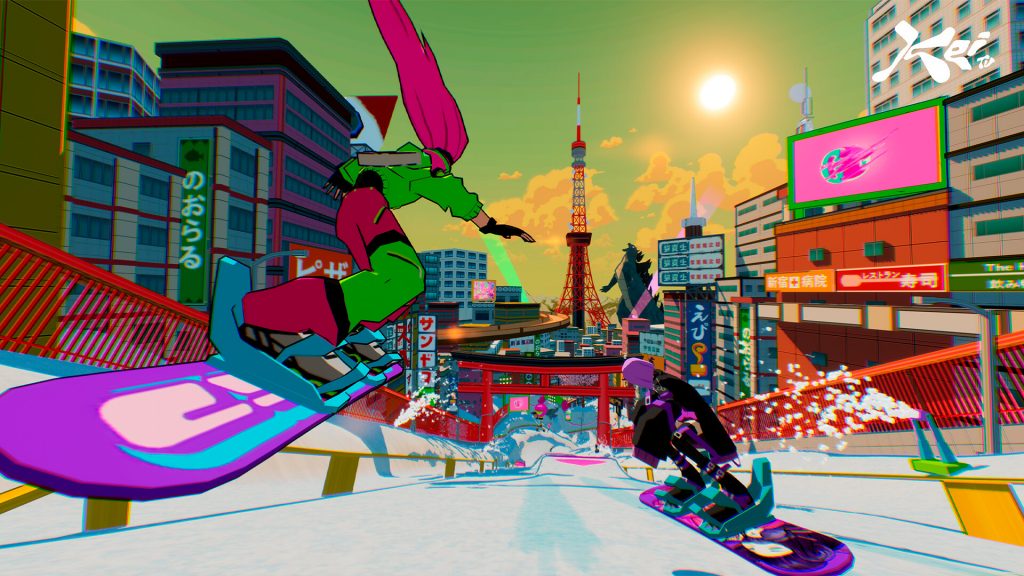
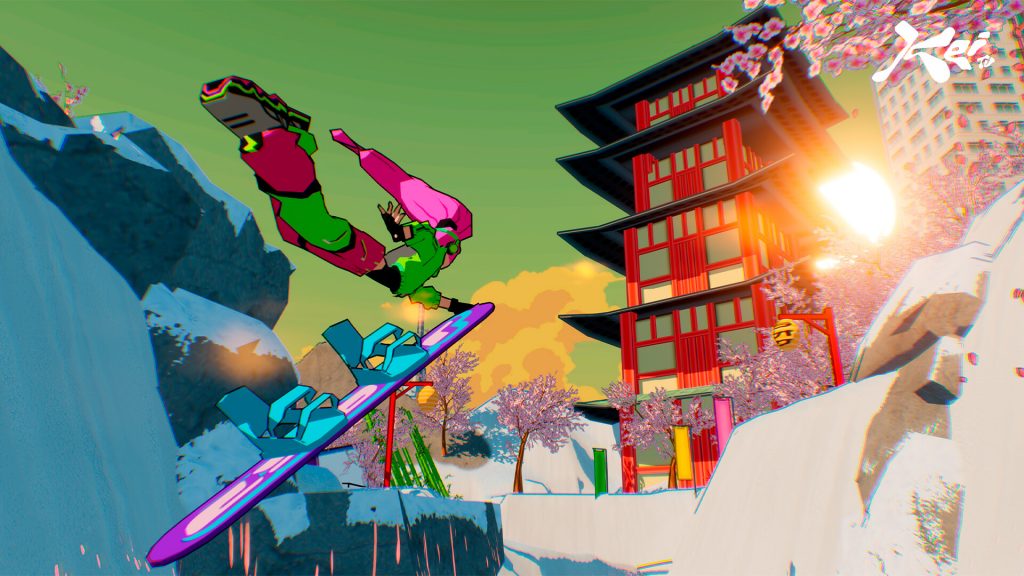
HYPERyuki is explicitly positioning itself to fill that void. The studio describes it as a modern homage to late-90s/early-2000s extreme sports games, and the references are precise: the fast speed and exaggerated style staging recall SSX, while the street culture, vivid colors, and graffiti sensibility heavily reflect the influence of Jet Grind Radio (Jet Set Radio).
That combination is the right target. SSX and Jet Set Radio both came from the same cultural moment — that turn-of-the-millennium intersection of extreme sports, street culture, anime aesthetics, and confident stylistic excess. A game that successfully channels both would be tapping into a specific nostalgia that’s been almost entirely unserved for two decades, while also offering something genuinely fresh to younger players who never experienced the originals.
International coverage has recognized this directly, framing the game as reviving the sensibility that SSX and Jet Set Radio fans have been waiting for, in modernized form.
The Style-First Design Philosophy
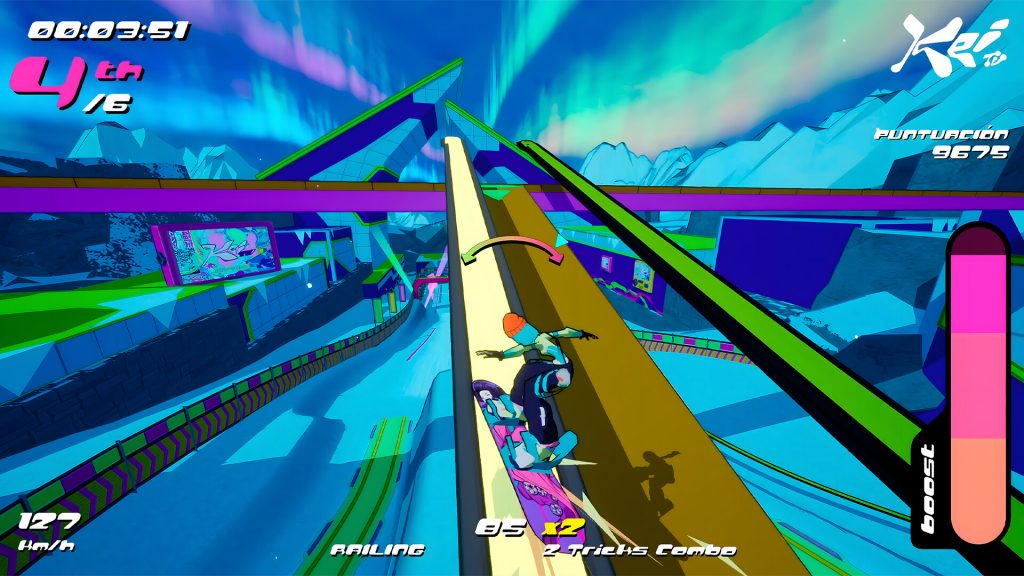
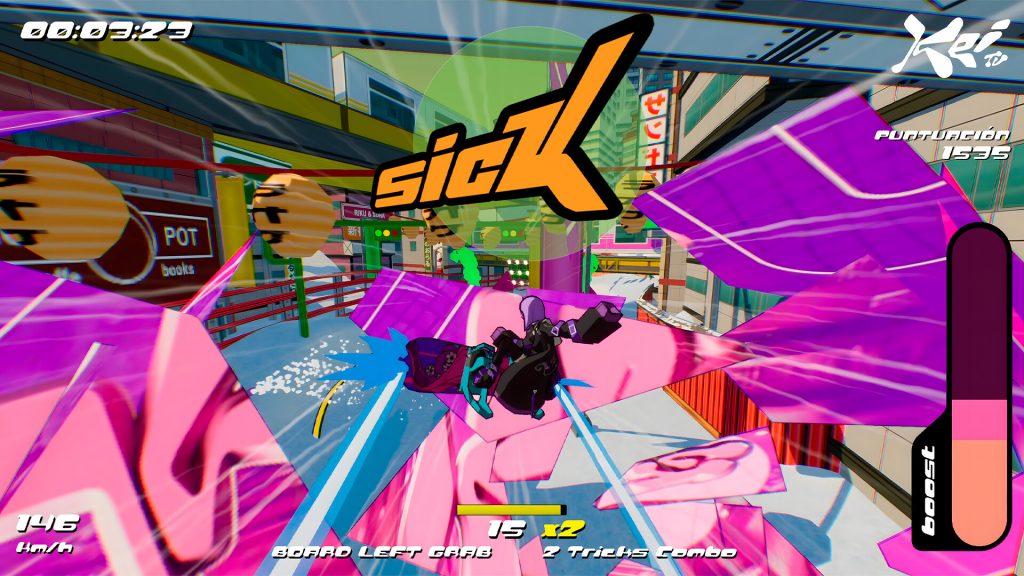
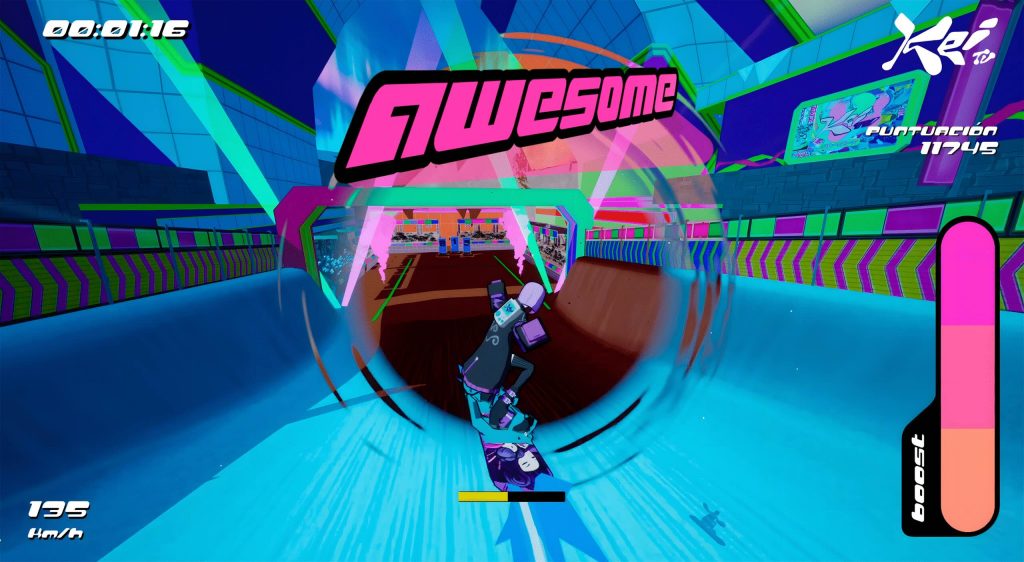
HYPERyuki casts players as members of a syndicate of distinctive snowboarders, racing across varied snowy slopes. The new trailer compresses steep tracks, bold aerial tricks, and a unique character lineup into a burst of the game’s explosive energy.
The customization elements are central to the design philosophy. Players unlock new board designs and outfits through exploration and racing, completing a rider with their own personal style. Trick performance matters, but so does fashion and personality expression — the game treats self-expression as a core feature rather than a cosmetic afterthought.
This style-first emphasis is faithful to the genre’s roots. Jet Set Radio was fundamentally about style — the graffiti, the character designs, the soundtrack, the attitude. SSX riders had distinct personalities and looks that players grew attached to. HYPERyuki, understanding that the genre is as much about expression as competition, signals that the studio gets what made these games resonate beyond their mechanics.
The humor reinforces the personality-driven approach. The trailer’s standout example — a “conscious snowboarding taco” character — captures the game’s willingness to be playful and surreal. That kind of confident absurdity (a sentient taco on a snowboard) is exactly the tonal register the genre’s classics operated in. These games were never trying to be cool through seriousness; they were cool through committed, joyful weirdness. HYPERyuki‘s taco rider suggests the studio understands that distinction.
The Anime-Inflected Aesthetic
The visual identity leans hard into its influences. A vivid color palette and anime-style character design actively borrow from 90s Japanese animation sensibility, visually emphasizing the speed and trick-action intensity. This anime aesthetic choice connects directly to the cultural lineage HYPERyuki is drawing from — Jet Set Radio‘s cel-shaded style was itself influenced by anime and manga, and the broader Y2K extreme sports aesthetic was saturated with anime energy.
The soundtrack completes the package. Music combining J-pop, punk, and electronic sound naturally pairs with high-speed downhill racing. This is the right musical direction — Jet Set Radio‘s genre-blending soundtrack is one of the most celebrated in gaming history, and HYPERyuki following that template with J-pop/punk/electronic fusion shows the studio understands that the music isn’t background in this genre; it’s part of the core identity.
The audio-visual-gameplay integration is what these games live on. When the speed, the tricks, the color, and the music all align into a single propulsive flow, that’s the genre at its best. The trailer suggests HYPERyuki is building toward that synesthetic experience.
The Four-Mode Structure
The game provides four main modes to accommodate different play styles:
Challenge Mode focuses on rail riding, item collection, and high-difficulty tricks for leaderboard competition. This is the score-attack heart of the genre — the mode for players who want to master the trick systems and climb rankings.
Race Mode has players charging boost gauges through tricks while balancing speed and style against NPCs or online players. The trick-charges-boost mechanic is the SSX signature — the design that made arcade snowboarding distinct from pure racing, where style and speed reinforce each other rather than competing.
Chill Mode caters to relaxed play, focusing on freely exploring near-infinite tracks and discovering hidden elements. This is a smart inclusion — not every player wants competition, and the exploration-focused chill mode opens the game to players who just want to enjoy the movement and atmosphere without pressure.
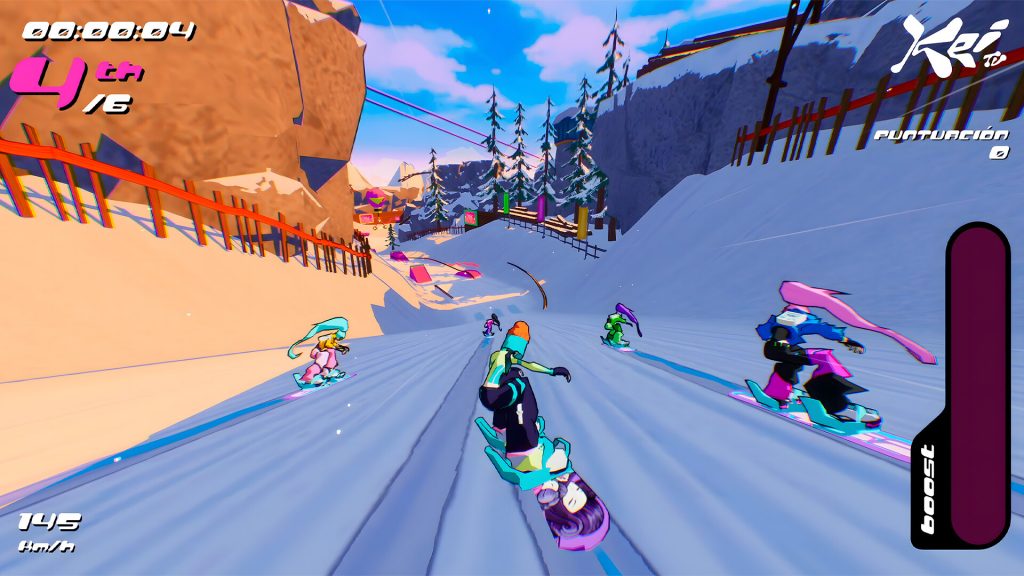
Multiplayer supports online play for up to 8 players plus local split-screen. The local split-screen inclusion is particularly notable — couch multiplayer has become rare, and arcade sports games are exactly the genre where it shines. Eight-player online plus split-screen gives the game a social range from solo to party play.
This mode variety reflects an understanding that the genre’s audience isn’t monolithic. Competitive players, exploration players, and social players all get a mode designed for them, which broadens the potential audience considerably.
A Personal Project With Cultural Meaning
The most affecting part of HYPERyuki‘s story is the personal meaning it carries for its creators. Wabisabi Games CEO and co-founder Anuar Noriega shared his reflections on participating in BitSummit, conveying a long-standing love for Japanese culture.
“As a 90s kid from Mexico, I grew up watching Japanese anime and constantly playing Japanese games,” he said. “Being able to present our game to Japanese audiences through BitSummit feels like a true ‘full circle’ moment.”
That framing gives HYPERyuki a cultural resonance beyond its genre revival. This is a game made by a Mexican developer who grew up loving Japanese anime and games, now bringing his anime-influenced game back to Japanese audiences. The cultural feedback loop — Japanese media inspiring a Mexican developer who creates work that returns to Japan — is exactly the kind of global cultural exchange that makes the indie scene meaningful.
Noriega’s additional reflection adds depth to the project’s intent. He noted that while it’s meaningful for players who remember the 90s and early 2000s games to feel nostalgia, “it’s even more rewarding to watch a new generation who didn’t experience that era directly feel the same joy.” That’s a thoughtful framing of what genre revival can accomplish — not just serving nostalgia, but introducing the genre’s joys to players who never had access to them.
The Studio and the Acclaim Revival
Wabisabi Games is a Latin America-focused development team with over 13 years of experience in game development and augmented reality. Their previous work, RKGK / Rakugaki, earned attention in the graffiti-based 3D platformer genre, which itself shows the studio’s affinity for the street-culture aesthetics that inform HYPERyuki. The move from a graffiti platformer to an arcade snowboarding game represents genre expansion while maintaining the studio’s stylistic interests.
The publisher relationship is itself a story. Acclaim, founded in 1987, was once responsible for major franchises like Mortal Kombat (publishing), Turok, and NBA Jam. The brand collapsed in the mid-2000s but has recently returned, reorganizing around the goal of supporting indie developers and global publishing. HYPERyuki is part of that revival — a legacy publisher name reborn as an indie supporter.
There’s a fitting symmetry here. Acclaim was a major force during exactly the era HYPERyuki is paying homage to — the late-90s/early-2000s period when arcade sports and extreme games were at their peak. The revived Acclaim publishing a love letter to that era carries its own kind of full-circle meaning, paralleling Noriega’s personal full-circle moment at BitSummit.
Who This Is For
Strong fit for: SSX and Jet Set Radio fans who’ve been waiting for the genre’s revival; Y2K aesthetic enthusiasts; arcade sports fans tired of realistic extreme sports games; players who appreciate style-and-personality-driven game design; local multiplayer / split-screen fans; anyone drawn to anime-influenced visual styles and genre-blending soundtracks.
Cautious fit for: players who prefer realistic sports simulations over arcade stylization; anyone who finds intentionally absurd elements (sentient snowboarding tacos) off-putting.
Less ideal for: players seeking serious competitive sports gameplay; anyone uninterested in trick-focused arcade design; players who dislike heavily stylized aesthetics.
What to Watch For
A few questions will shape HYPERyuki‘s path to release.
The first is whether the trick system has the depth and feel the genre requires. Arcade snowboarding lives or dies on how satisfying the core movement and trick mechanics feel — the moment-to-moment flow of carving, jumping, and chaining tricks. No amount of style or nostalgia compensates for combat that doesn’t feel good, and this is the thing that can only be evaluated hands-on.
The second is content variety across the full game. Arcade sports games need enough tracks, characters, customization options, and challenges to sustain engagement. Whether HYPERyuki delivers the variety to support long-term play across its four modes is a key question.
The third is the multiplayer execution. Eight-player online and local split-screen are major selling points, but online multiplayer requires solid netcode and a healthy player base, while split-screen requires performance optimization. How well these lands will significantly affect the game’s social appeal.
The fourth is whether the nostalgia translates to a complete game. Genre revival projects sometimes nail the aesthetic and references while falling short on the actual gameplay depth that made the originals great. Whether HYPERyuki delivers a full, satisfying experience or just a stylish tribute is the question the full release will answer.
The Takeaway
HYPERyuki: Snowboard Syndicate is one of the more promising genre-revival projects on the horizon, targeting a gap in the market that’s been empty for nearly two decades. The SSX-meets-Jet Set Radio pitch is precise and appealing, the style-first design philosophy is faithful to the genre’s roots, the anime-influenced aesthetic and genre-blending soundtrack capture the right cultural register, and the four-mode structure with robust multiplayer broadens the appeal considerably.
Beyond the game itself, the cultural story gives HYPERyuki additional resonance — a Mexican developer’s love letter to the Japanese media that shaped him, brought back to Japanese audiences, published by a revived legacy brand from the very era it celebrates. That’s the kind of layered meaning that makes indie projects worth following.
For SSX and Jet Set Radio fans specifically, this is one to wishlist immediately. For arcade sports fans more broadly, and for younger players curious about a genre they never got to experience, HYPERyuki is positioned to be the modern entry point to a style of game that’s been missing for too long.
A syndicate of stylish riders. Neon slopes. Gravity-defying tricks set to J-pop and punk. And yes, a conscious snowboarding taco. As genre-revival pitches go, HYPERyuki is one of the more joyful — and the fact that it’s a Mexican studio’s heartfelt tribute to the Japanese games that raised them only makes the slopes more inviting.
Information regarding ‘HYPERyuki (HYPERyuki: Snowboard Syndicate) ‘
| item | detail |
|---|---|
| Developer | Wabisabi Games (Mexico, Latin America-focused) |
| Publisher | Acclaim, Inc. |
| Genre | Arcade Snowboarding / Sports / Racing / Multiplayer |
| Release platform | PC (Steam) / PS5 / Xbox Series / Nintendo Switch |
| Scheduled for official release | Undetermined (Scheduled for 2026) |
| Main Mode | Challenge / Race / Chill / Multiplayer (Up to 8 Online · Local Split Screen) |
| Source of inspiration | SSX, Jet Grind Radio · Jet Set Radio |
| Previous representative works | RKGK / Rakugaki (Wabisabi Games) |
| Main Keywords | Arcade snowboarding, Japanese anime vibe, Y2K, tricks, multiplayer, cosmetics, style |
| Official Channel | Steam Page · Acclaim Official Site |
| Steam Page | Shortcut |