In autumn 1977, West Germany was in crisis. The Red Army Faction’s second generation had kidnapped and killed industrial leader Hanns Martin Schleyer. Lufthansa flight Landshut had been hijacked. The state was reaching for emergency powers, the press was demanding answers, and the country was asking a question democracies always struggle with: how much of itself is a free society willing to suspend to defend itself?
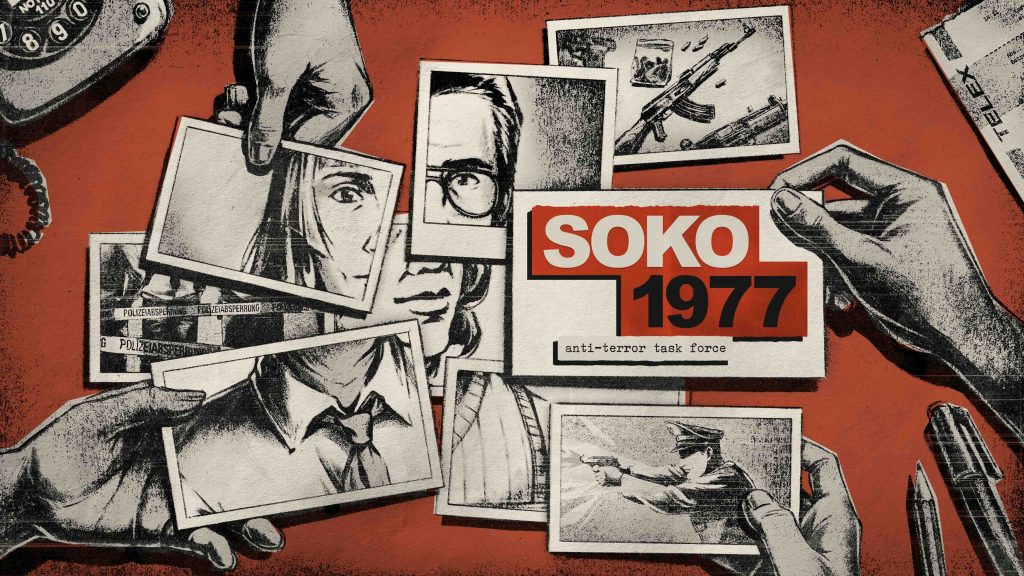
SOKO 1977: Anti-Terror Task Force, the upcoming roguelike investigation game from Berlin-based Paintbucket Games, drops the player into the middle of that question and refuses to provide easy answers. Developed in commission with Germany’s Federal Agency for Civic Education and targeting an early 2027 release, it’s one of the most institutionally serious games on the calendar — and given the studio’s track record, that seriousness is the entire point.
A Studio With a Coherent Thesis
It’s worth establishing context before discussing the game itself, because Paintbucket Games occupies an unusual position in the industry. Founded in 2018 by former AAA developers Jörg Friedrich and Sebastian St. Schulz, the studio has spent its entire existence making historical games about the democratic crisis.
Their debut, Through the Darkest of Times, put players in charge of a civilian resistance group in Nazi-era Berlin. Their follow-up, The Darkest Files, tackled the post-war legal investigation of Nazi crimes — and won both Best German Game and Best Serious Game at the German Computer Game Awards 2026. Announcing SOKO 1977 immediately after that recognition signals continuity: this isn’t a studio looking for the next hit. It’s a studio with a thesis, working through a chronological arc of German democratic history.
That arc matters for understanding SOKO 1977. The studio has progressed from the rise of fascism (1930s), to the post-war reckoning with its crimes (1960s-70s), to the moment when a democratic Germany faced its own terror crisis and had to decide what its democracy actually meant under pressure (1977). The thematic through-line — what does a free society owe itself, what does it owe its principles, what compromises become permanent — is what every Paintbucket game has been about, and SOKO 1977 is the most direct application of it to a modern political question.
The Government Commission Model
The most institutionally interesting aspect of this project is how it came together. Germany’s Federal Agency for Civic Education (Bundeszentrale für politische Bildung, or bpb) ran an open development competition, with Paintbucket Games beating roughly 40 competing studios to win the commission. The development budget is approximately €400,000.
This is a model worth highlighting because it’s nearly nonexistent in most other countries. A government agency dedicated to civic education commissioning a game about a politically sensitive historical moment, awarding it on creative merit to an independent studio, and trusting that studio’s editorial judgment — that’s an institutional structure built on a particular theory of what games can do as civic discourse. German cultural institutions have been quietly funding politically serious games for years, and SOKO 1977 is one of the more visible recent products of that ecosystem.
It’s also worth noting what the commission does not do. The bpb isn’t producing propaganda or commissioning a single political viewpoint. Paintbucket Games has emphasized that the project is rooted in expert consultation with contemporary historians and police historians, but that it’s building historically plausible fictional scenarios rather than dramatizing specific real events. The goal is to provoke discussion about state powers, extremism, and democratic limits — not to deliver verdicts on them.
The Game Itself: A Roguelike About Democratic Limits
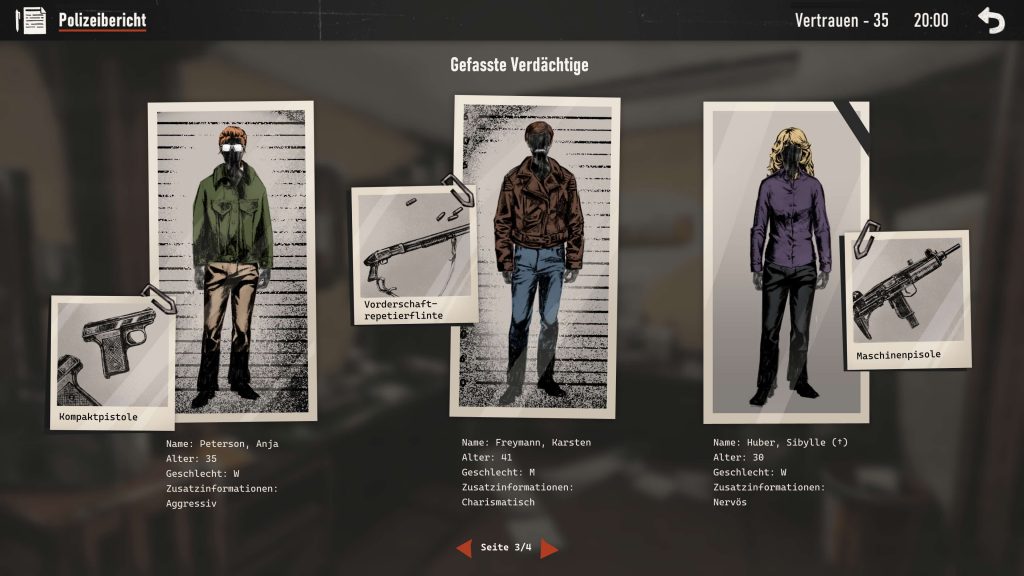
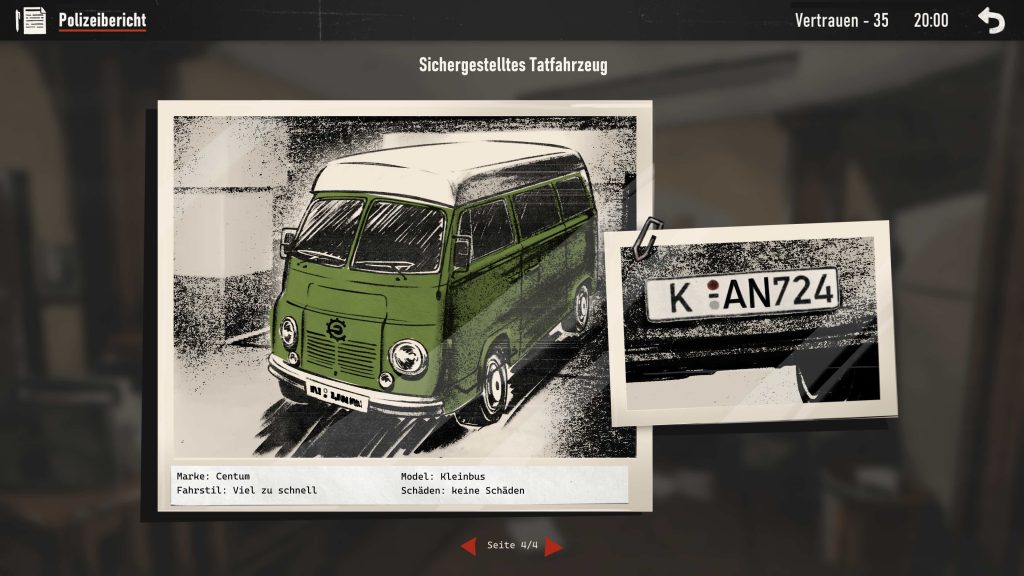
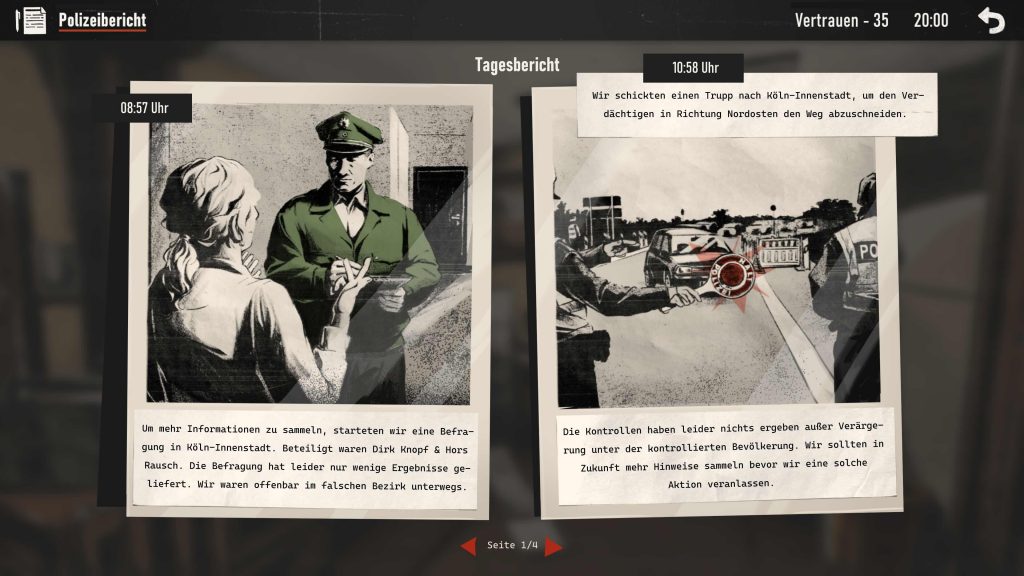
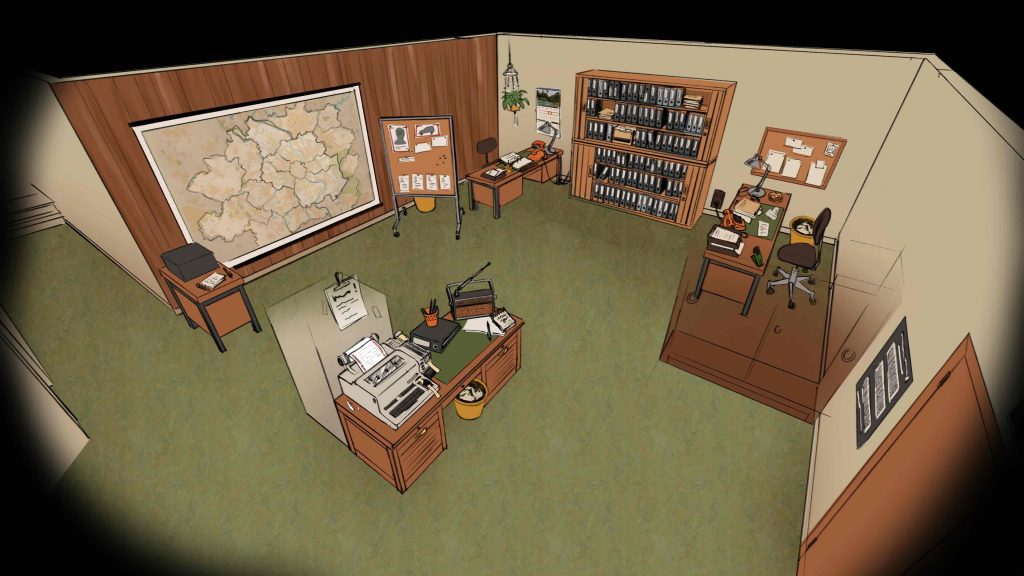
The mechanical premise is sharp. Players take command of a special police task force during a state of emergency. You track terrorist networks, identify suspects, coordinate operations under time pressure, and weigh risks against incomplete information. Procedural generation ensures that each playthrough produces a different investigation with different evidence, different leads, and different operational dilemmas.
This is the right structural choice for the subject matter. A linear, scripted investigation game would inevitably feel like rehearsing predetermined conclusions. The roguelike framing forces every run to confront the actual epistemic situation of counter-terror policing: limited information, time pressure, ambiguous evidence, and decisions that can’t be perfectly justified before they have to be made.
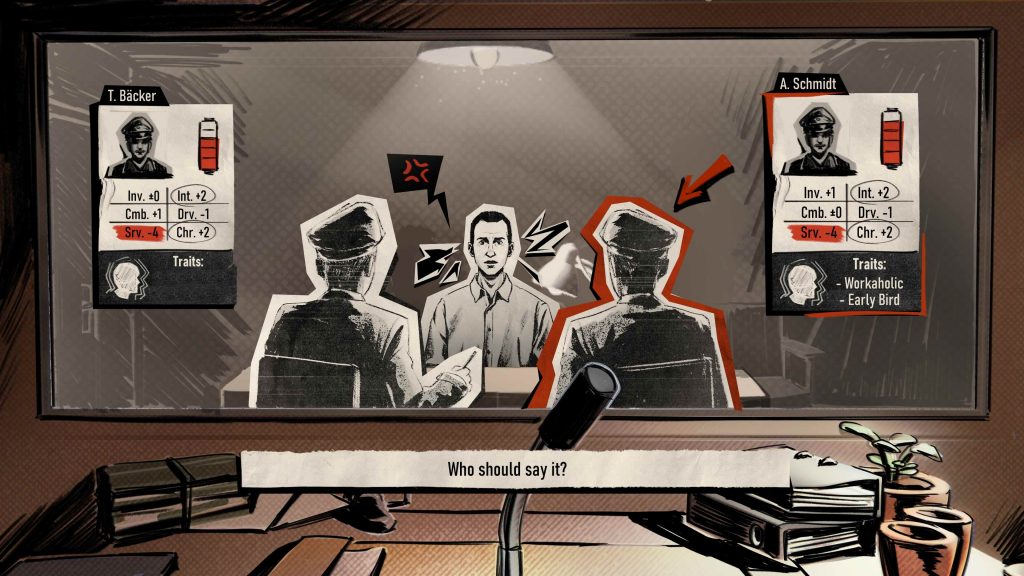
The operational layer wraps around the investigative layer. Players handle interrogations, manage their team, respond to press questions, and navigate public opinion. The questions the press asks aren’t decorative — they’re part of the game’s accountability structure. A democratically legitimate counter-terror response has to remain explicable to the public, and the press layer makes that requirement mechanical.
This is where SOKO 1977 becomes a game about democracy rather than just a game about policing. The investigation can succeed and still fail democratically — through methods that compromise the rule of law, through public communications that erode trust, through team management decisions that normalize what shouldn’t be normalized. Conversely, an investigation can fail tactically and still preserve something the country needs to keep. The game appears designed to make those tradeoffs legible and to refuse easy resolutions for them.
The Historical Weight
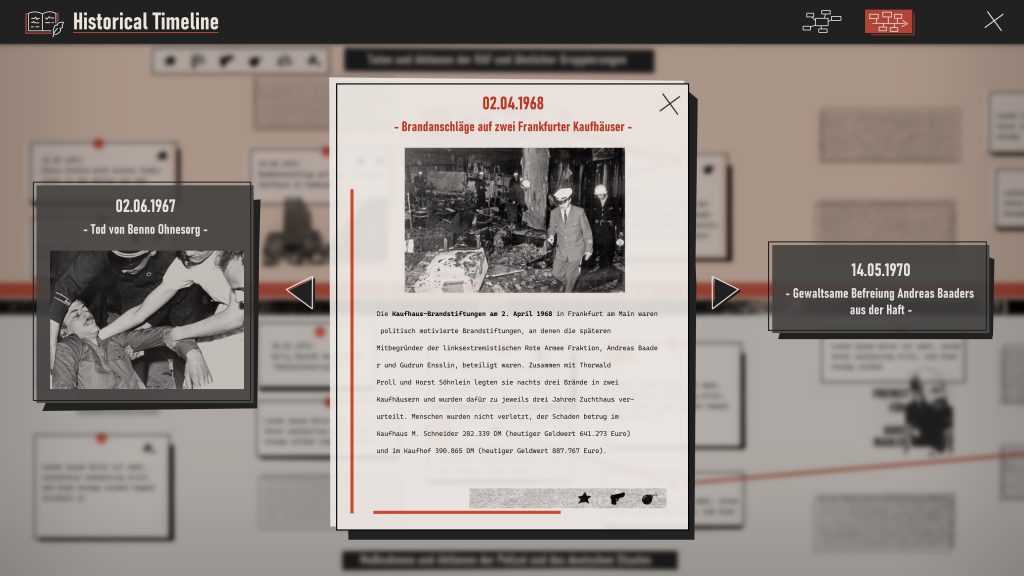
The 1977 setting is significant precisely because it isn’t safely distant. The German Autumn is one of the foundational episodes in modern European discussions of counter-terrorism, civil liberties, and emergency powers. The RAF’s actions, the state’s response, and the resulting debates about anti-terrorism legislation reshaped German political culture for a generation. The questions raised — about preventive detention, expanded police powers, surveillance, and the boundaries of legitimate state action — have echoed in every subsequent democratic terror response, including the post-9/11 era.
Choosing this setting is also choosing to engage with it honestly. The German Autumn is not a clean morality play. The RAF was committing real violence; the state’s responses included real overreach. The historical literature is contested and uncomfortable, and the people who lived through it disagree about what the lessons are. Paintbucket Games is wading into that contested space deliberately, and their previous work suggests they’re capable of doing it without flattening the difficulty.
The decision to use historically plausible fiction rather than literal reenactment is a careful one. It frees the game from the obligation to take sides on specific contested events while preserving the structural questions those events raised. That’s the right design choice for a project commissioned by a civic education agency — it teaches the shape of the dilemma rather than dictating a verdict on it.
What to Watch For
Several questions will shape how SOKO 1977 lands when it arrives.
The first is whether the roguelike structure actually delivers the variety it promises, or whether the system converges on a small number of dominant strategies. Roguelike investigation games are rare for a reason — keeping detective work meaningfully variable across runs is structurally hard.
The second is whether the democratic-accountability layer feels weighty or perfunctory. If press questions and public opinion become checkboxes rather than genuine pressures, the game’s central thesis collapses into a procedural cop sim. The previous Paintbucket games suggest the team understands this risk.
The third is how the game handles its protagonists’ moral situation. The task force commander is a player character, and the choices the game offers will define what kind of moral space the player occupies. There’s a meaningful difference between a game where every choice is between two flawed options and a game where the “correct” answer is always available with enough effort. The former is honest; the latter is reassuring. Paintbucket’s track record suggests they know what they’re making.
None of these questions are concerns. They’re the standard tests for a project this ambitious.
A Note on Genre
Calling SOKO 1977 a “roguelike investigation game” is technically accurate but probably understates what it’s trying to do. The closer comparison points are Papers, Please (procedural moral pressure under state authority) and This War of Mine (mechanically embodied ethical dilemmas in a historical crisis), with elements of investigation games like The Case of the Golden Idol or Return of the Obra Dinn. The roguelike framing is structural rather than aesthetic — it’s there to keep the investigation alive across replays, not to deliver build optimization or run pacing in the traditional sense.
For players who’ve been following the politically serious indie space, this is the kind of release the genre has been quietly developing toward for years.
The Takeaway
SOKO 1977 is one of the more institutionally and creatively serious games on the 2027 calendar. It comes from a studio with a coherent thesis and a strong track record, backed by an unusual commission model that has produced consistently thoughtful work, and aimed at a historical subject that genuinely matters for understanding how democracies handle their own crises.
The early 2027 release window is far enough out that significant questions about the final game remain open. Gamescom 2026 in Cologne will likely answer some of them, and that showing will be worth following closely.
For players who follow politically serious games, German indie, or historically grounded design — or for anyone who believes games can be a legitimate site for working through hard civic questions — this is one of the most important indie releases on the horizon. Paintbucket Games has earned the trust to be allowed difficult material, and SOKO 1977 looks like the most difficult material they’ve taken on yet.
The German Autumn was a moment when a democracy looked at itself under stress and had to decide what it was. The game asks the player to do the same thing, one investigation at a time. That’s not a small ambition. Based on Paintbucket’s history, it’s also not an empty one.
Information regarding ‘SOKO 1977: Anti-Terror Task Force’
| item | detail |
|---|---|
| Developer | Paintbucket Games (Berlin, Germany / Founded in 2018) |
| entrusted institution | German Federal Office for Political Education (bpb) |
| Genre | History & Political Mystery Game / Roguelike Investigation Simulation |
| Release platform | PC·Mac (Steam) |
| Scheduled for release | Early 2027 |
| background | 1977 West Germany / Autumn in Germany (Deutscher Herbst) |
| core system | Procedure Creation / Investigation / Clue Evaluation / Interrogation / Media Response / Team Management |
| Awards | German Computer Game Awards 2026 Best German Game · Best Serious Game (Previous work: The Darkest Files) |
| Previous work | Through the Darkest of Times (2020) · The Darkest Files (2025) |
| Original work name | 6 Weeks |
| Main Keywords | Autumn in Germany, RAF, Terrorism, Democracy, Rule of Law, Mystery, Historical Politics Game |
| Official Channel | Discord · YouTube · Instagram · LinkedIn · Bluesky · Facebook · TikTok |
| Official Website | paintbucket.de |