In 1670, the Joseon dynasty was hit by what would become known as the Great Gyeongshin Famine — one of the worst catastrophes in Korean history, a years-long convergence of failed harvests, disease, and social collapse that killed an estimated significant portion of the population. It’s the kind of historical subject most games would either dramatize beyond recognition or avoid entirely. Dawn Village, the debut from Korean indie studio Aesthmaris, does neither. It treats the famine as exactly what it was: a slow-moving disaster in which the only available decisions were the ones nobody wanted to make.
The game is now available on Steam in four languages, and it’s one of the more conceptually serious historical indies in recent memory.
A Premise That Refuses to Be Heroic
You are not a savior. You are the manager of a small village trying not to die, and the game is unambiguous about what that means. Resources are scarce. The fields are dry. The storehouse is emptier than it was yesterday. Your villagers are people with names, traits, mental states, and varying degrees of trust in your leadership — and you cannot save all of them.
This is the moral architecture of Dawn Village, and it’s where the design is sharpest. The game’s central question isn’t “how do I optimize?” It’s “who do I keep alive this week, and who do I send on the expedition I’m not sure will come back?” Rationing decisions, expedition assignments, and the small accumulating compromises of survival all carry weight because the characters carry weight. Villagers aren’t stat blocks to be spent; they’re people whose trust in you erodes each time you make a defensible decision they didn’t survive.
That’s a harder design space to land than it sounds. Plenty of games attempt morally heavy survival management and end up flattening the choices into binary optimization puzzles. Dawn Village keeps the discomfort intact. The decisions stay decisions.
The Six-Stage Day, and Why It Works
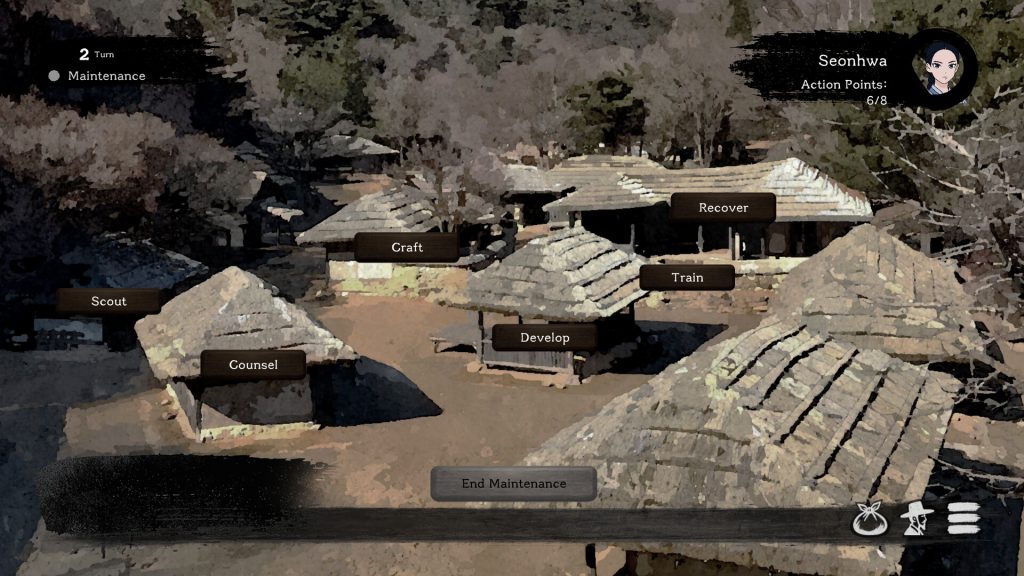
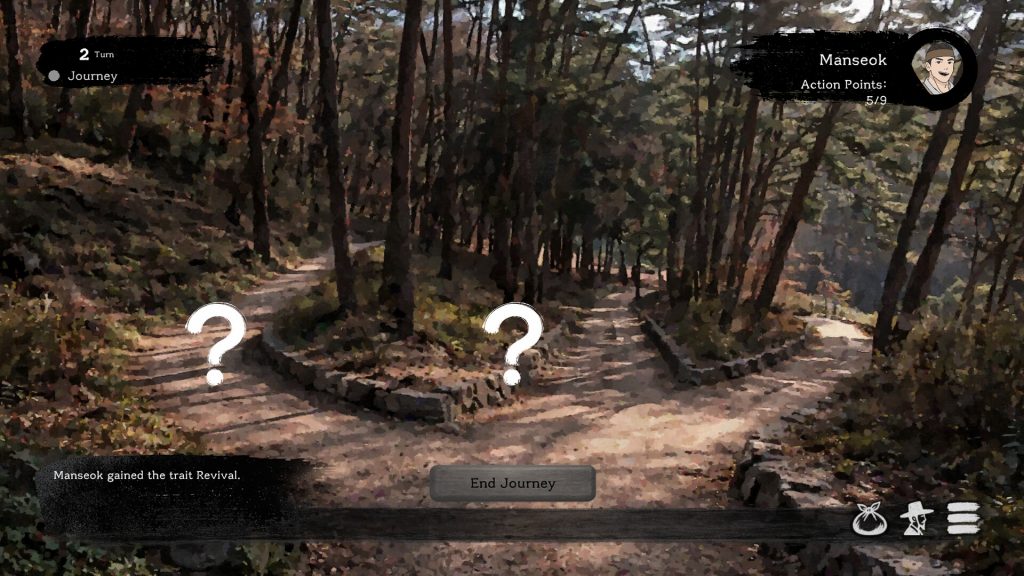
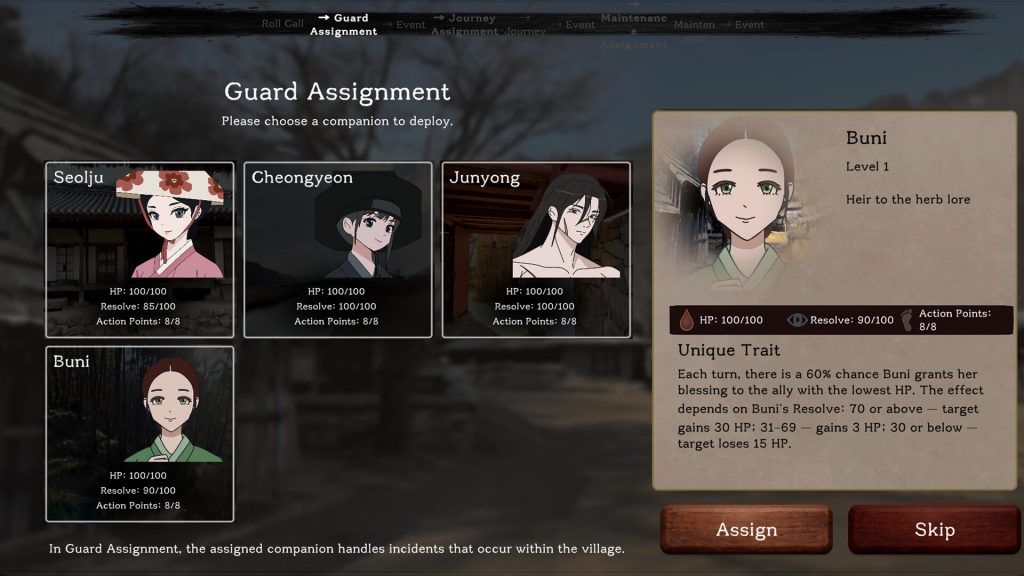
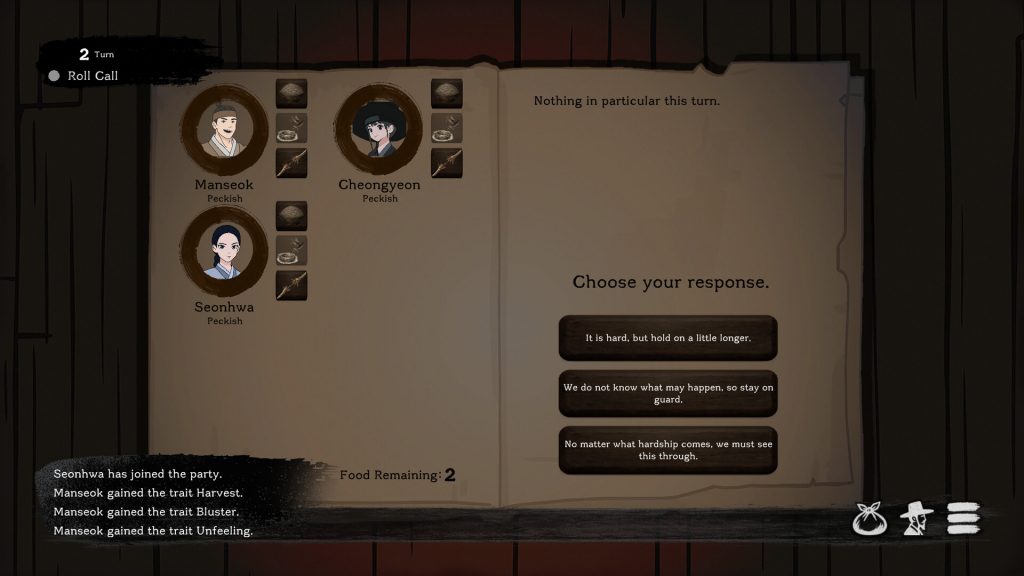
Each in-game day breaks into six phases — morning roll call, village events, external events, expedition, maintenance, and a final event. The structure is tight enough to learn quickly but layered enough that the rhythm itself becomes part of the survival pressure. You’re not just managing resources; you’re managing the tempo of attrition.
Roll call is the most quietly effective design touch. Starting each day by surveying who is still here, who is sick, who has lost faith in you, before any decisions get made — it’s a small framing choice that turns the management layer into something closer to bearing witness. You don’t just spend villagers. You see them every morning.
The phase structure also means risk and recovery have to be balanced across a clear schedule. A high-risk expedition might pay off and stock the storehouse for a week. Or it might cost you two of the four people who were holding the village together. There is no save-scumming your way out of those moments cleanly; the next morning’s roll call is coming either way.
The 3D6 System Is the Whole Thesis
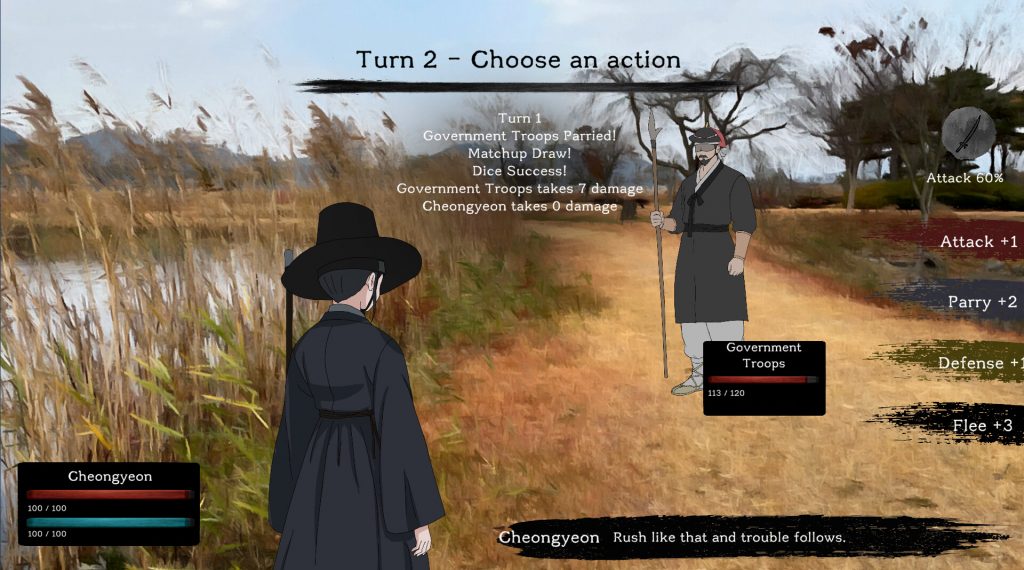
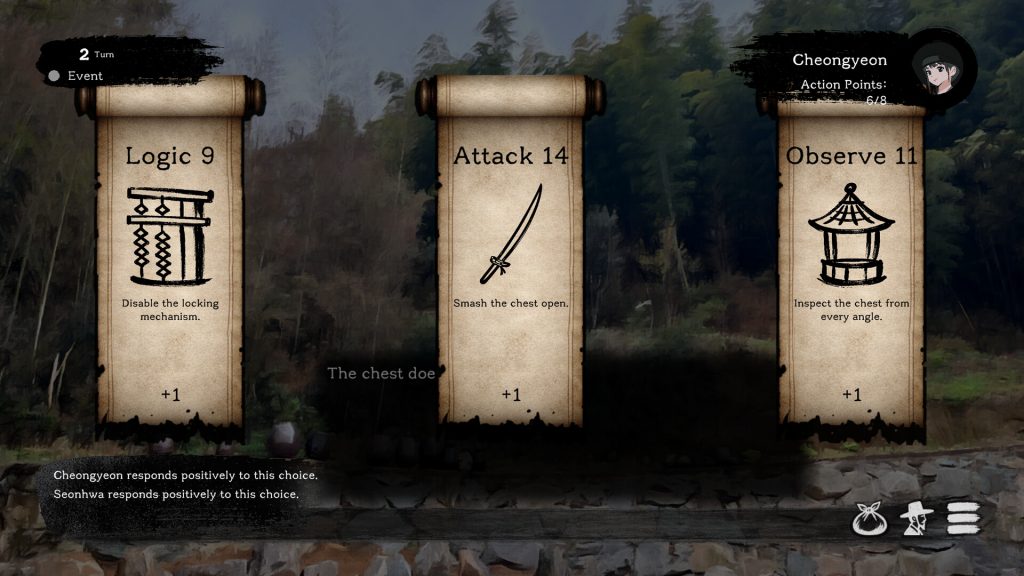
The combat — or rather, the consequence — of Dawn Village runs on a tabletop-inspired 3D6 dice resolution system. Three six-sided dice are rolled against a difficulty target modified by the assigned villager’s stats, mental state, traits, and equipment. The same expedition with two different people produces wildly different odds. The same expedition with the same person on a bad day produces a different roll than yesterday.
What makes this work as more than a mechanic is how cleanly it maps to the historical reality the game is portraying. During a famine, careful planning still loses to bad luck. A well-prepared scouting party can be destroyed by a single unanticipated variable. The 3D6 curve — clustered around the average, with rare catastrophic and triumphant tails — is mathematically the right shape for a story about preparation being necessary but never sufficient.
The emotional consequence is that Dawn Village generates the specific feeling of bracing for a roll you cannot control. You assign your best person, with the best equipment, to the most important expedition. You watch the dice. And sometimes the dice are not kind, and a person who had a name and a relationship with you is gone, and the village has to keep going. It’s a hard feeling to design for, and the game lands it.
Visual and Sonic Restraint
The art style is 2D and committed to its subject. Cold dawn palettes, exhausted faces, gradually emptying storehouses, fields turning to dust — the visual language is the visual language of famine, rendered without dramatization. There’s no melodrama here. The game trusts the player to feel the weight without being told to.
Sound design follows the same logic. The quiet of morning roll call. The footsteps of someone leaving on an expedition you suspect won’t come back. The tense audio cue when the dice roll. These small moments accumulate into the kind of psychological texture that makes the management layer feel like more than a spreadsheet.
The result is a heavy atmosphere without being theatrical — which, for a game about a real historical tragedy, is exactly the right register. The temptation in this genre is always toward grimdark performance. Dawn Village resists it.
A Studio With a Real Thesis
Aesthmaris Studio is a new name, and Dawn Village is their debut. What’s striking about it as a first project is how clearly the studio understands what it’s doing. The Great Gyeongshin Famine isn’t being used as flavor or aesthetic; it’s being used as a design problem. The game’s resource scarcity, moral weight, and dice-driven uncertainty are all answers to the question “what would it actually feel like to manage a community through this?”
That’s a confident debut. Plenty of studios would have picked a more legible historical setting — a war, a dynasty change, something with built-in narrative momentum — and most of them would have made a less interesting game. The famine is harder to dramatize because nothing in it is exciting. People simply ran out of food and made impossible choices. Dawn Village trusts that this is enough.
Korean History as a Global Game Language
One of the more interesting things about Dawn Village‘s release is the question it implicitly raises: can a hyperlocal Korean historical subject support a globally legible game? The four-language launch (Korean, English, Japanese, Simplified Chinese) and Inven Global‘s English-language coverage during the demo period both suggest the studio is betting yes.
The bet looks reasonable. The systems are universal — resource scarcity, moral triage, dice-driven uncertainty translate across any cultural context. The specific historical texture is what makes the game distinctive, but the gameplay vocabulary doesn’t require Korean historical literacy to engage with. International players who know nothing about the Joseon dynasty will still understand the weight of choosing who gets the last bowl of rice.
That’s a model worth watching. Korean indie has been getting better at this — at finding ways to be culturally specific without being culturally inaccessible — and Dawn Village is one of the cleaner recent examples.
Who Should Play It
Dawn Village is not a relaxing game, and it’s not trying to be. It’s a deliberately heavy experience about a deliberately heavy subject, and it will appeal most to players who actively want games that wrestle with their material rather than smoothing it over.
Strong recommend for: fans of This War of Mine, players who enjoy XCOM-style permadeath weight applied to non-combat decisions, anyone interested in historical survival games that treat history seriously, TRPG players who appreciate dice-driven uncertainty as a core emotional mechanic.
Less ideal for: players looking for power fantasy, anyone who finds losing characters genuinely upsetting in a way that crosses into not-fun territory, players who want clear paths to victory rather than running calculations on which losses are most survivable.
The Verdict
Dawn Village is one of those debut releases that announces a studio worth watching. It picks hard subject matter, builds genuinely original systems around it, and executes with a restraint that suggests the team understood from the start what kind of game this needed to be.
It won’t be for everyone, and it isn’t trying to be. But for players who want a survival strategy with real moral weight — and for anyone interested in seeing what happens when Korean historical material gets treated as serious design territory rather than aesthetic backdrop — Dawn Village is one of the more substantial indie releases of the season.
Information regarding ‘Dawn Village’
| item | detail |
|---|---|
| Developer / Publisher | Aesthmaris Studio (Korea) |
| Genre | Survival Strategy / Turn-based Management / Moral Choice Adventure |
| Release platform | PC (Steam) |
| background | The Great Gyeongsin Famine of Joseon in 1670 |
| core system | 3D6 Dice Roll / Linked to Companion Trust, Health, and Sanity |
| One day rescue | Morning Roll Call → Incidents Inside and Outside the Village → Expedition → Maintenance (Total 6 Stages) |
| Language support | Korean · English · Japanese · Simplified Chinese |
| Main Theme | Famine, survival, moral dilemma, community, sacrifice |
| Main Keywords | Gyeongsin Great Famine, Joseon, Survival Strategy, Turn-based, Dice Roll, TRPG, History |
| Steam Page | Shortcut |