The thrill of pulling random items from gacha capsules is familiar to millions of players worldwide. But what if you weren’t the customer — what if you ran the gacha shop itself? Gacha Capsule Shop Simulator – Akihabara, the just-released Early Access management simulation from Turkish indie studio UGC90 (published by Gamersky Games), launches June 8 on Steam with a premise that’s deceptively distinctive within the management sim space.
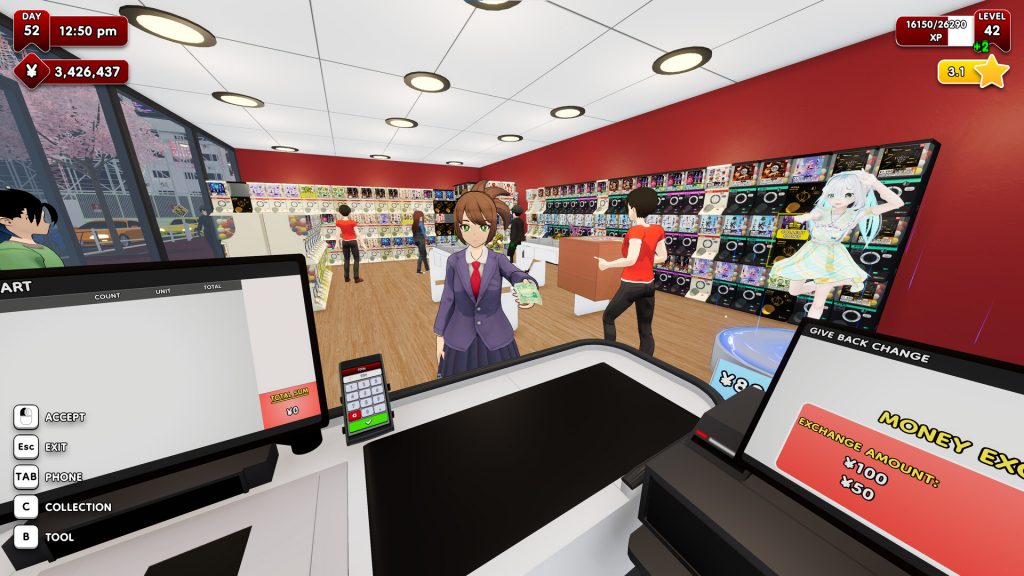
Built across approximately one year of development, incorporating community feedback, the game supports 26 languages, including Korean, and features 24 capsule pack licenses, thousands of collectible figures, interactive gacha machines, and, notably, a Robot Fight Club nighttime content layer that transforms what could have been a straightforward shopkeeper simulation into something genuinely unusual. Day-and-night content structure lets players experience both Akihabara’s cozy daytime commercial atmosphere and its more unconventional underground entertainment culture.
The Akihabara Foundation
The most fundamental design decision in Gacha Capsule Shop Simulator – Akihabara is the setting choice itself. Akihabara — the Tokyo district that has become a global synonym for Japanese subculture, anime, gaming, and electronics — provides a cultural foundation that’s both immediately recognizable internationally and genuinely specific in its visual and atmospheric character.
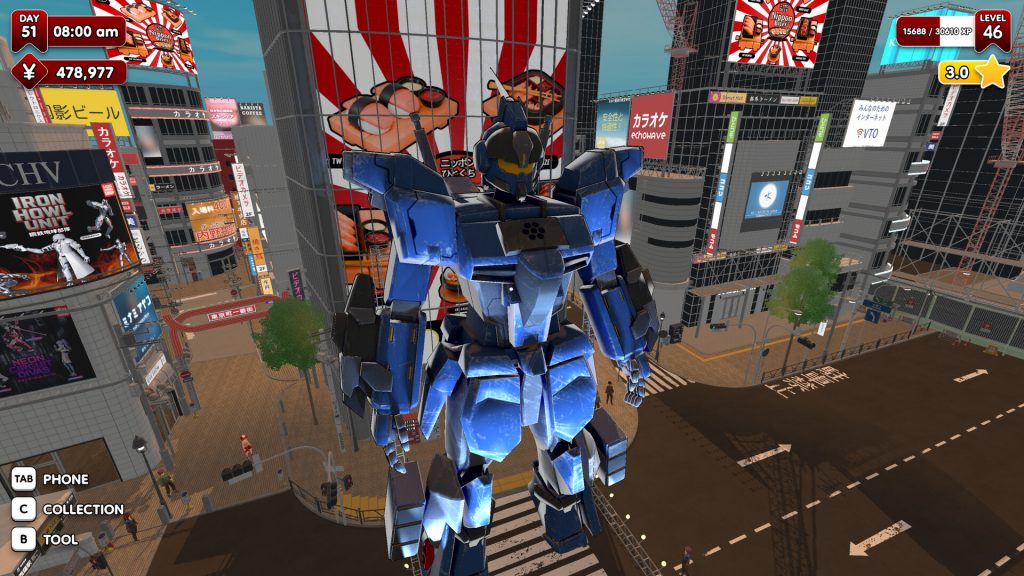
The neon-saturated streets, advertising boards, cosplayers, maid promoters, tourists, and anime fans create the kind of busy commercial environment that pure suburban or rural settings can’t match. Japanese tuning car culture (JDM vehicles) and the iconic “trucks-kun” appearance add subculture-specific touches that pure aesthetic referencing wouldn’t deliver. These details signal that UGC90 has genuinely researched Akihabara culture rather than constructing generic “Japanese anime district” aesthetics.
The first-person perspective lets players experience this environment immersively. Walking through the neon-lit streets, observing the foot traffic, watching the maid promoters work outside competing establishments, the perspective places players inside Akihabara as participants rather than viewing it as detached observers.
For international audiences, this setting choice is genuinely valuable. Most players globally have encountered Akihabara through anime, manga, YouTube tours, travel content, or Japanese media. The district has achieved international cultural recognition that extends well beyond Japan. Gacha Capsule Shop Simulator – Akihabara leverages this cultural familiarity while delivering more interactive engagement than passive media consumption provides.
For Japanese cultural enthusiasts specifically, the setting offers something that pure travel content can’t — direct participation in Akihabara commerce rather than just observation. The shopkeeper’s role provides a perspective on the district from the inside rather than from the tourist’s exterior viewpoint.
The Gacha Mechanic Inversion
The conceptual cleverness of Gacha Capsule Shop Simulator – Akihabara is its inversion of typical gacha relationships. Most gacha content positions players as customers — pulling capsules hoping for rare items, often spending real money for digital randomized rewards. This player-as-consumer relationship has become controversial as gacha systems in mobile games and live service games have been criticized for predatory practices targeting vulnerable players.
Gacha Capsule Shop Simulator – Akihabara flips this dynamic. Players become the shopkeepers running gacha operations. They order capsule products, place machines, watch customers come in to spend their virtual money on random pulls, and benefit from the gacha business model rather than being its target.
This inversion serves multiple design functions. It provides gacha enjoyment without real-money gambling concerns — community feedback has specifically praised this aspect (“you can enjoy gacha collection fun without spending real money”). It creates strategic management gameplay around gacha business decisions. It gives players insight into how gacha businesses operate without requiring them to be victims of those operations.
The “I can enjoy gacha without becoming a gacha addict” framing represents genuinely thoughtful design philosophy. Gacha culture is significant enough in global gaming that exclusionary positions (refusing to engage with gacha at all) can feel limiting; Gacha Capsule Shop Simulator – Akihabara provides middle-ground engagement that lets players participate in gacha culture without its problematic aspects.
The Collection and Management Systems
The core gameplay flow combines familiar shop management with collection-focused depth.
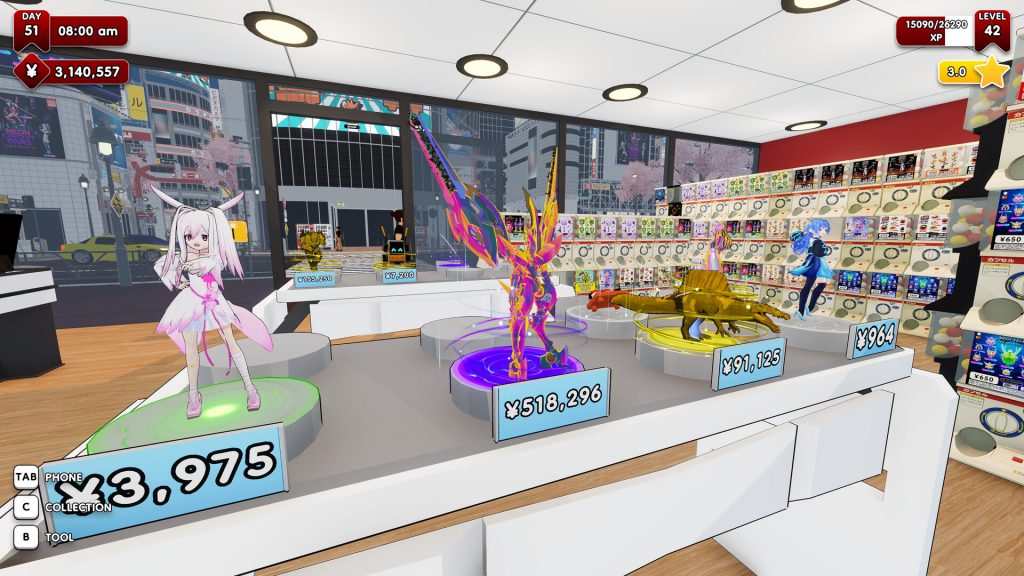
Players order new capsule products, place additional gacha machines, improve store interiors, and grow their establishment over time. Smartphone-based advertising and event hosting increase visibility. Machine maintenance, capsule refilling, and converting customer cash into business reinvestment tokens create operational rhythms.
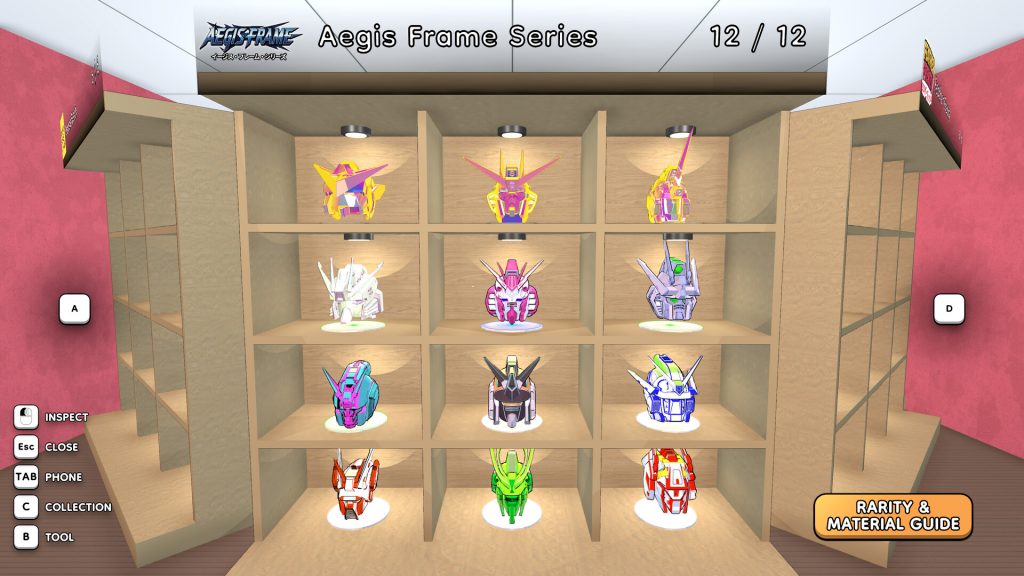
The 24 capsule pack licenses and thousands of collectible figures provide a substantial content scope. Collection-focused gameplay depends heavily on having enough variety to sustain extended engagement, and thousands of items represent meaningful content depth for completionist-oriented players.
The Maneki-neko (beckoning cat) luck system adds a culturally-specific gameplay layer. Players can feed and bond with the stray cats around their shop to earn Maneki-neko figures, which increase rare item drop rates as they level up. This system embeds Japanese cultural mythology (the Maneki-neko’s role as a luck symbol) into mechanical gameplay, providing both cultural authenticity and meaningful progression that rewards player engagement with the world’s environmental details.
The cat feeding mechanic specifically demonstrates the developers’ attention to atmospheric detail. The stray cats around Akihabara aren’t just decoration — they’re interactive elements that provide gameplay benefits while reinforcing the district’s lived-in quality. Players who pay attention to environmental details get rewarded with better collection outcomes.
The Robot Fight Club Nighttime Layer
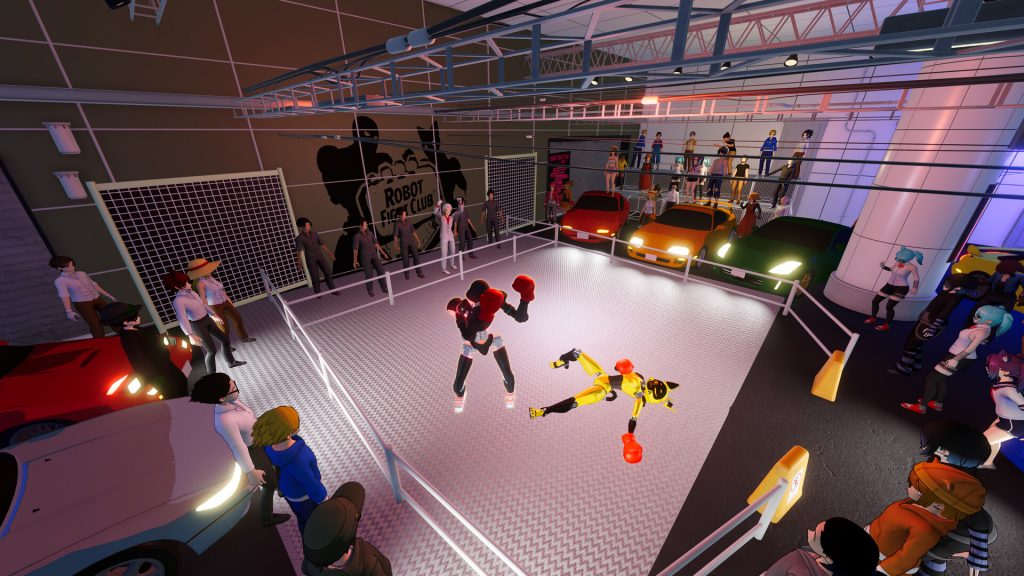
The most distinctive design choice in Gacha Capsule Shop Simulator – Akihabara is the Robot Fight Club nighttime content. After running the gacha shop during the day, players can enter secret robot combat tournaments held in hidden parking lot arenas during the night.
This isn’t a subtle thematic shift. The Robot Fight Club features Yakuza members, sumo wrestlers, and social media influencers as VIP spectators, placing bets on combat outcomes. Players can place bets on specific robots to earn additional income beyond shop revenue, which then funds expanded capsule inventory and collection acquisition.
The day-night contrast creates substantial tonal variety within a single game. Daytime gameplay is a cozy management sim with collection rewards; nighttime gameplay enters underground Japanese culture territory that mainstream gaming rarely engages with directly. The combination produces the kind of unexpected gameplay variety that distinguishes memorable indie projects from forgettable ones.
The Robot Fight Club also provides reasonable strategic justification for night gameplay. Pure cozy shop management can become repetitive across extended play; the betting income from robot fights gives players reason to engage with nighttime content while providing strategic resource management decisions. Successful betting funds shop expansion; poor betting decisions affect business growth.
The choice of who appears as VIP spectators is itself culturally specific. Yakuza members reflect the underground commercial culture that Akihabara historically intersected with. Sumo wrestlers represent traditional Japanese cultural elements. Influencers reflect contemporary Japanese social media presence. The combination captures multiple layers of Japanese cultural complexity within a single gameplay system.
The 26-Language Localization
The 26-language localization roster represents unusually aggressive accessibility for an indie release. Most indie games launch with English-only or English-plus-a-handful-of-major-European-languages. Gacha Capsule Shop Simulator – Akihabara‘s commitment to 26 languages, including Korean, signals serious global market ambitions.
For Korean players specifically, the inclusion alongside major Asian language support (Chinese, Japanese, and others) means the game arrives with full accessibility rather than requiring fan translations or community workarounds. The Korean indie and gaming community has shown strong interest in Japanese subculture content, and the Akihabara setting, combined with Korean localization, positions the project well for Korean audience engagement.
For Türkiye-based developer UGC90, this multi-language approach reflects a mature understanding of indie commercial realities. Single-language indie releases typically reach single-language audiences; multi-language releases can access global markets simultaneously. The investment in localization typically pays back through expanded sales potential, particularly for content with cross-cultural appeal like Japanese subculture themes.
The AI-Generated Music Disclosure
One element deserves direct acknowledgment: the Steam page declares that the background music is AI-generated. This is one of the project’s transparent disclosures rather than a hidden practice — players engaging with the game know what they’re getting.
AI-generated music in commercial games remains controversial in current industry discussions. Some players appreciate cost-efficiency that enables more content; others prefer human-composed work and avoid AI-generated audio. Gacha Capsule Shop Simulator – Akihabara‘s transparent disclosure lets players make informed choices about whether they want to engage with the project, given this production decision.
For perspective on this decision, the disclosure approach is actually preferable to undisclosed AI use. UGC90 is being honest about their production choices rather than attempting to hide them. Players who prefer fully human-created content can skip the project; players who don’t mind AI-generated audio can engage with full information.
This kind of disclosure reflects mature industry practice during the current transition period for AI use in game development. As industry standards continue to develop, transparent disclosure helps both consumers and creators navigate the changing landscape responsibly.
The Community Development Approach
UGC90 has explicitly committed to using the Early Access period for community-collaborative development. The Steam Community description frames the game as “designed around player creativity and feedback” with plans to “actively incorporate user opinions throughout the Early Access period to continuously improve balance, content, and quality-of-life features.”
This collaborative development approach has produced a positive pre-release reception. The demo accumulated 100% positive ratings across 12 user reviews — a small sample size but indicative of strong reception among players who engaged with the pre-release version. Community comments emphasized the Akihabara atmosphere reproduction, gacha collection addictiveness, and cozy shop management appeal.
International gaming press, including MKAU and MonsterVine, has covered the project with positive framing. The combination of distinctive setting, unusual nighttime content, and substantial collection scope has generated coverage that recognizes the project’s creative ambitions.
For Early Access games specifically, this kind of community-collaborative development pattern typically produces better final products than developers who ship Early Access versions and ignore community feedback. UGC90’s stated commitment to ongoing improvement suggests the game will likely mature substantially across the Early Access period toward full release.
Who This Is For
Strong fit for: management sim enthusiasts seeking culturally distinctive variations; collection-focused players (anything-collection genre fans); Japanese subculture and Akihabara enthusiasts; players curious about gacha mechanics without real-money gambling concerns; Coffee Talk, Cyber Manhunt, and other cozy-management-with-personality fans; cat lovers (the Maneki-neko system rewards feeding strays); anyone fascinated by Japanese commercial culture.
Cautious fit for: players who specifically prefer fully human-composed soundtracks (the AI-generated music disclosure may affect this preference); anyone uncomfortable with the underground Japanese culture themes the Robot Fight Club explores.
Less ideal for: players seeking action-focused gameplay; anyone uninterested in collection mechanics; players who avoid Early Access purchases on principle.
What to Watch For
A few questions will shape Gacha Capsule Shop Simulator – Akihabara‘s Early Access trajectory.
The first is the content scope balance. Thousands of figures is substantial content, but whether the variety feels meaningfully diverse or whether the items eventually feel repetitive will affect long-term engagement. UGC90’s continued content additions during Early Access will be important.
The second is the Robot Fight Club system’s depth across extended play. Initial novelty often gives way to repetition; whether nighttime gameplay sustains player interest across the campaign will determine whether the unusual feature represents lasting design innovation or an initial attention-grabbing element.
The third is the Akihabara cultural representation. Setting-driven games depend on continuing to feel authentic rather than tourist-friendly across extended play. Whether UGC90 maintains the cultural specificity throughout the campaign or whether the setting becomes background decoration will affect critical reception.
The fourth is the community feedback integration speed. UGC90’s stated commitment to community-collaborative development requires actual responsive iteration. How quickly the studio implements requested improvements will determine whether the Early Access promises become reality or remain marketing language.
The Takeaway
Gacha Capsule Shop Simulator – Akihabara is one of the more genuinely creative management simulations on current release, combining a culturally specific setting (Akihabara reproduction), thoughtful conceptual inversion (gacha as shopkeeper rather than consumer), substantial content scope (24 capsule packs, thousands of figures, 26 languages), and unusual nighttime variety (Robot Fight Club content with cultural specificity).
For management sim enthusiasts seeking variations beyond the standard genre offerings, this project deserves consideration during the Early Access period. The combination of cozy daytime gameplay and unconventional nighttime content provides variety that pure management sims often lack.
For Japanese culture and Akihabara enthusiasts, the project offers interactive engagement with a globally recognized cultural space. The development care visible in the setting reproduction suggests the game will likely satisfy players who specifically want Akihabara content rather than generic Japanese-themed gameplay.
For collection-focused players, the thousands of figures combined with the Maneki-neko luck system provide exactly the kind of extended completion territory that the genre’s enthusiasts appreciate. The cat-feeding integration adds emotional engagement that pure numerical progression couldn’t achieve.
The Akihabara streets are open. The gacha machines are stocked. The customers are arriving. The stray cats are waiting for food. And somewhere in the parking lot tonight, robots are preparing to fight while Yakuza members place bets and influencers stream the chaos for their followers.
As management sim pitches go, Gacha Capsule Shop Simulator – Akihabara‘s is one of the more genuinely playful of 2026 — and the Early Access availability means interested players can engage immediately to experience the day-night structure firsthand while supporting UGC90’s ongoing collaborative development with the community.
The shop is open. Akihabara is waiting. And one of the more genuinely distinctive shopkeeper simulations of the year is now available for players ready to discover what running a gacha business actually involves — both during the day and during the very different night.
Gacha Capsule Shop Simulator – Akihabara Related Information
| item | detail |
|---|---|
| Developer | UGC90 |
| Publisher | Gamersky Games |
| Genre | Management Simulation / Collectible Game / Cozy Life Sim / First-Person Shop Management |
| Release platform | PC (Steam Early Access) |
| Release date | June 8, 2026 (Early Access) |
| Language support | 26 languages (including Korean) |
| Steam Demo Review | 100% Positive (12) |
| Capsule pack license | 24 types |
| Content | Thousands of Figures / Robot Fight Club / Maneki-neko Luck System / NPC Events |
| Night activities | Robot Fight Club (Yakuza, Sumo, Influencer VIP Betting) |
| background music | AI generation support (specified on Steam page) |
| Main Keywords | Gacha, Akihabara, Figure, Capsule, Management, Collecting, Cozy, Yakuza, Robot, Japan |
| Official Channel | Discord · YouTube · TikTok · QQ |
| Steam Page | Shortcut |