Cherry blossoms drift through a quiet Japanese village. An elderly couple’s beloved house cat begins a small journey toward Sakurana Shrine — a place once cherished by the grandfather who has passed away. Padding freely across narrow alleyways and over garden walls, the cat moves through the village in a gentle but warm adventure that asks nothing more than to be experienced quietly. Rural Cat Trails, the upcoming cozy adventure from Tokyo-based husband-and-wife indie team Hibikai Games, was just officially revealed at the Cozy Games Awards Showcase, and it’s exactly the kind of small, intentional, emotionally precise project that the cozy genre has been quietly producing more of.
Published by Future Friends Games — the publisher behind the recently console-launched SUMMERHOUSE — and targeting a second half of 2026 release on Steam, Rural Cat Trails sits in a specific creative space: not the fantasy-cozy of Stardew Valley, not the relentless coziness of Animal Crossing, but something quieter and more culturally specific. A cat. A Japanese village. Spring. A shrine on a cliff. That’s the entire pitch, and based on what’s been shown, it’s enough.
The Mixed Visual Style as Identity
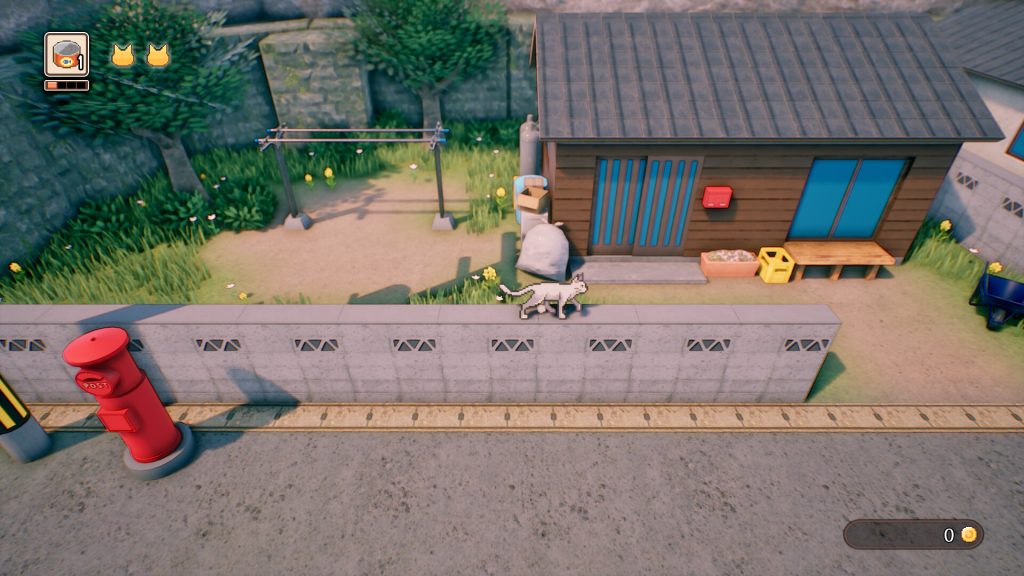
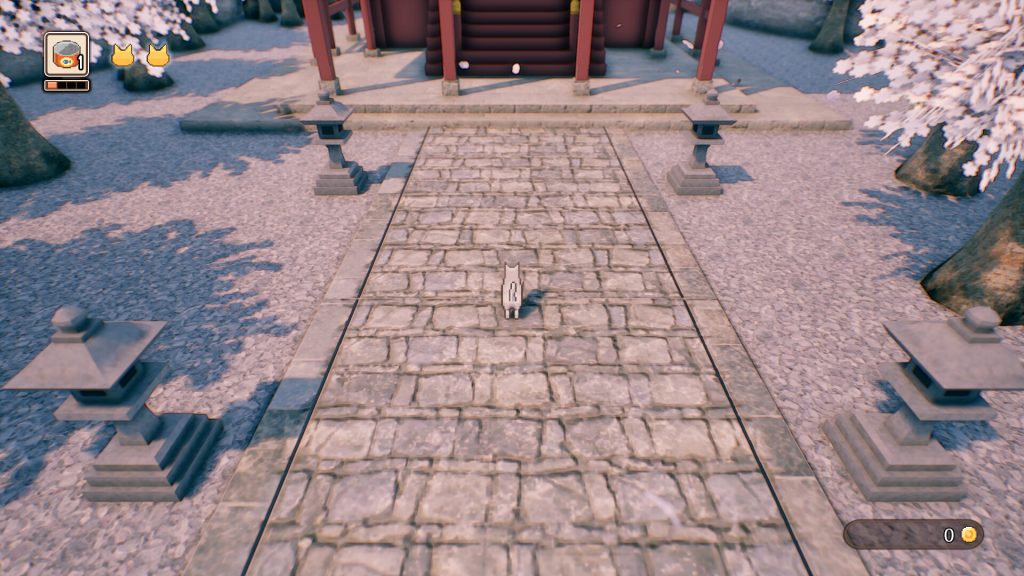
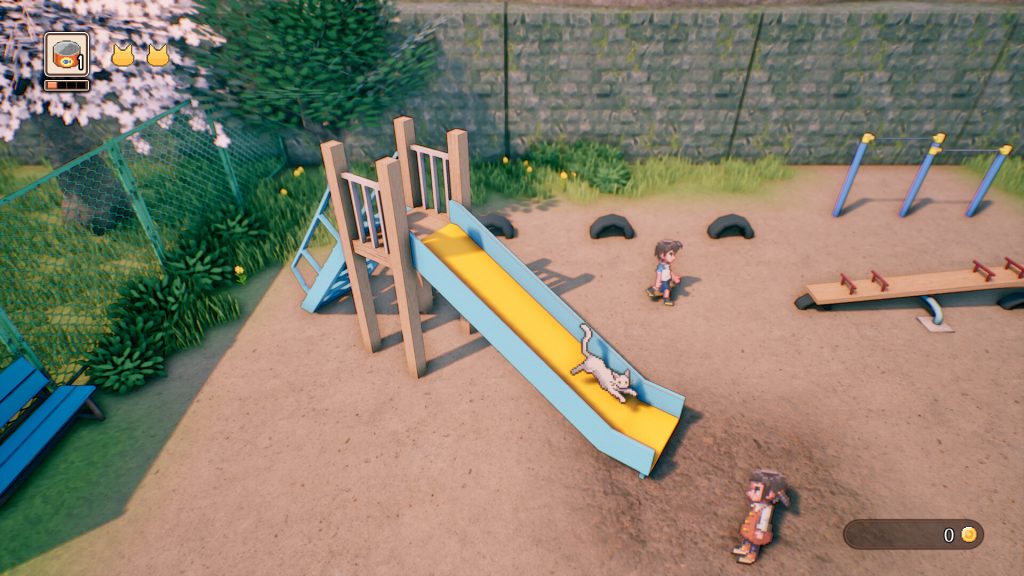
The most striking design choice in Rural Cat Trails is the deliberate visual contrast between its protagonist and environment. The cat is rendered in 2D pixel art. The Japanese rural village around it is rendered in beautifully detailed 3D. The combination is unusual, deliberate, and immediately recognizable.
This mixed-media approach isn’t just aesthetic — it’s a thematic statement. The 2D pixel cat against the 3D environment creates a visual register where the cat exists slightly apart from the world it inhabits, present but stylized differently. It captures something true about being a cat in a human environment: belonging to the space while moving through it on different terms. The pixel art also signals comfort and approachability, while the 3D environments provide the visual richness that makes the village worth exploring.
The aesthetic choice has been positively received in the TikTok cozy gaming community, where the unique combination of 3D environments and pixel art has generated organic enthusiasm. That kind of community response matters for cozy games — the genre’s audience often discovers projects through aesthetic appeal first, and Rural Cat Trails has a visual identity that travels well across screenshots and short video clips.
The technical execution of this mixed style is harder than it looks. Combining 2D and 3D elements coherently requires careful attention to lighting, scale, and visual hierarchy. The previews suggest Hibikai Games has solved these problems elegantly — the pixel cat reads naturally within the 3D space rather than feeling pasted on top of it.
Nanoha Town and the Texture of Japanese Rural Life
The setting is the project’s other defining element. Nanoha Town isn’t a generic Japanese-inspired village — it’s rendered with the specificity that suggests genuine cultural and architectural attention. Rice paddies and tile roofs amid drifting cherry blossoms in spring. Narrow alleyways. A shrine sits quietly on a cliff. The pastoral Japanese countryside is rendered with care.
This specificity matters. Japanese rural settings have become a recognizable indie game register (Bokura no Mura, certain corners of Spiritfarer, various recent cozy projects), but the quality varies widely. Rural Cat Trails appears to be operating at the more carefully observed end of the spectrum — capturing not just the surface aesthetics of Japanese country life but the spatial and temporal feel of it.
The cherry blossom season framing is itself a meaningful choice. Sakura season in Japanese culture carries specific emotional weight — beauty, transience, the bittersweet awareness that the blossoms will fall. Setting the entire game during this brief seasonal window gives Rural Cat Trails a particular temporal quality that other cozy games rarely access. This isn’t an endless cozy time. It’s a specific moment that won’t last, and the cat’s journey is taking place within that fleeting window.
The audio design supports the atmosphere. Spring breeze sounds, the silent movement of the cat through the village, the warm conversations of residents — these sonic elements complete the cozy register without overwhelming it. Cozy games can fail through audio over-saturation (constant cheerful music, too much ambient noise), and Rural Cat Trails appears to be calibrating its soundscape toward gentleness rather than density.
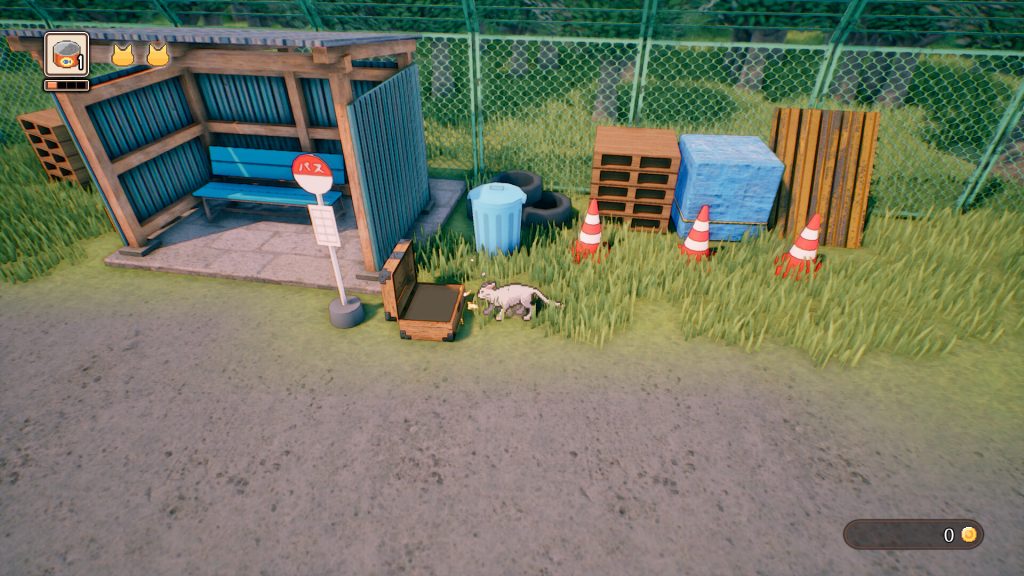
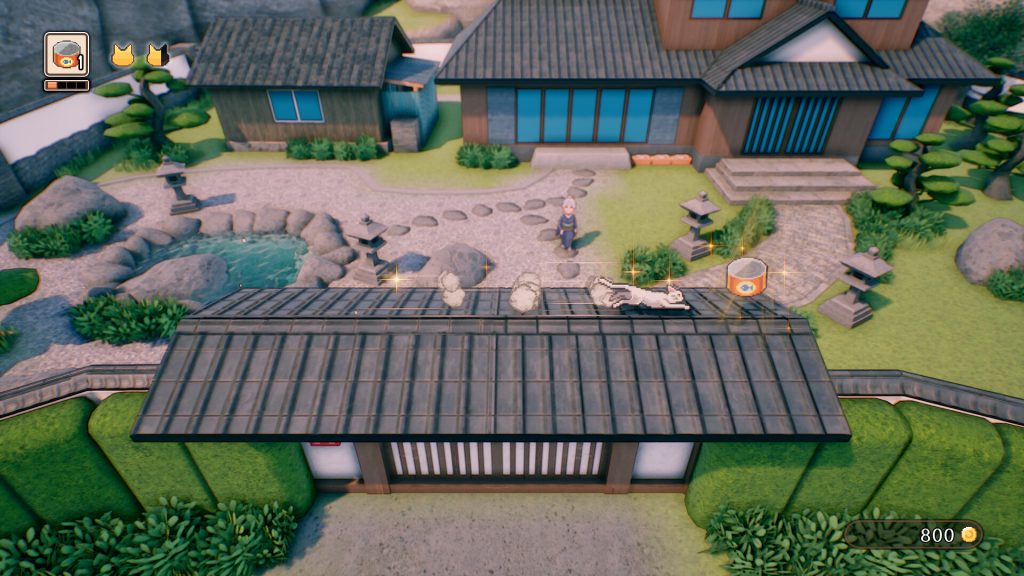
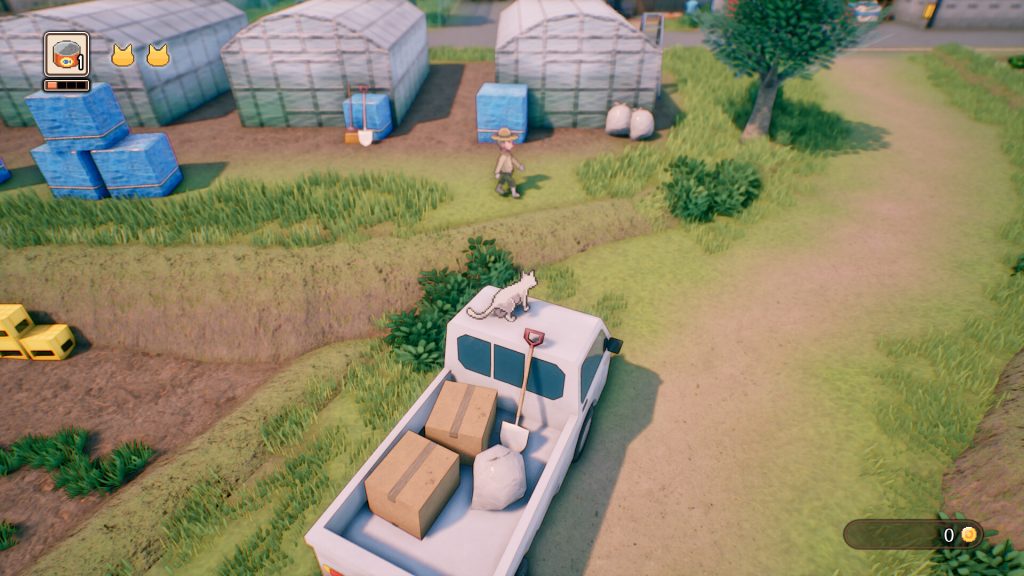
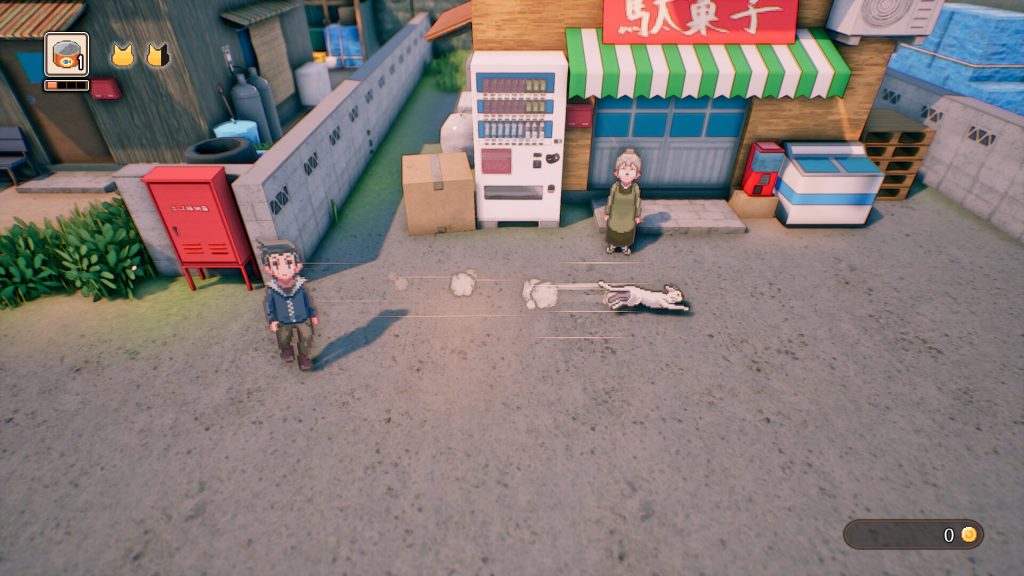
The Cat-Specific Mechanics
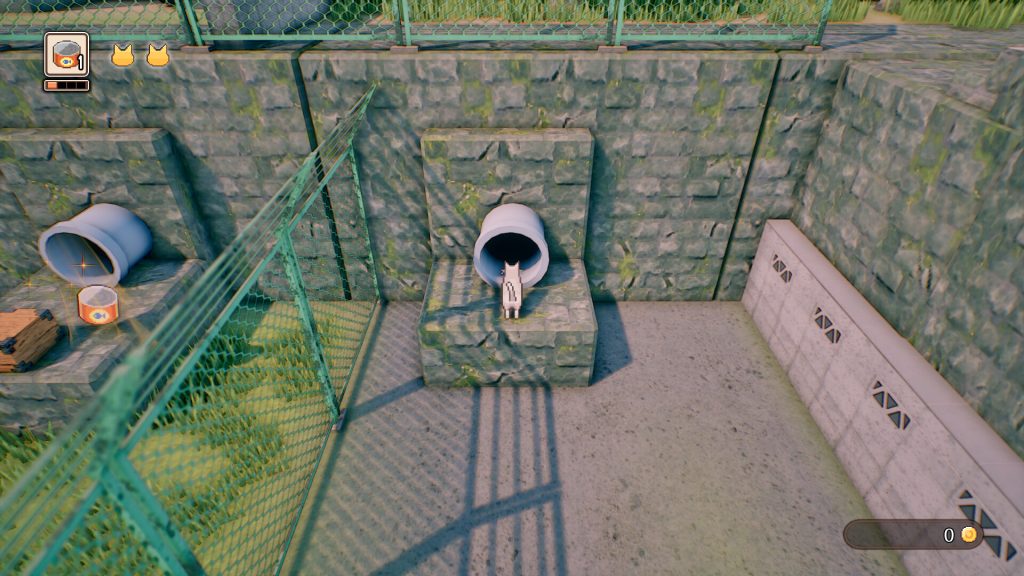
The gameplay design embodies its protagonist rather than just contextualizing them. In Rural Cat Trails, narrow gaps and high walls aren’t obstacles — they’re cat-exclusive routes that human characters couldn’t access. The game systematically thinks about what a cat can do that a human can’t, and builds movement options around those specific affordances.
The action set captures this:
Paw Swat — gently nudging curious objects with a paw. The signature feline behavior is interacting with objects through small, exploratory touches.
Dig — investigating suspicious spots and finding treasure. The cat’s behavior of paying attention to disturbed earth and hidden things.
Wall Jump — climbing high places. The basic but essential cat verb of going up when humans can’t follow.
Wiggle Butt Dash — bursting past obstacles. The pre-pounce wiggle that cat owners universally recognize.
These mechanics are doing real design work, not just providing flavor. By building movement and interaction around cat-specific verbs, Rural Cat Trails makes the cat experience mechanical rather than just thematic. Players don’t just play a character who happens to look like a cat — they engage with the world through verbs that only cats have access to. That’s the right level of cat-protagonist commitment.
The Cat Food Can collection system layers on top of this. Collected cans enhance stamina and improve consecutive wall jump and dash performance, expanding exploration range. This is the right kind of progression for a cozy game — it deepens what players can do without imposing pressure to optimize or grind. Each can be found to expand the cat’s capabilities slightly, encouraging continued exploration without demanding it.
The Errand System and Community Connection
The village residents play a meaningful role through the errand system. Players can solve small requests from villagers and receive thanks in return, building bonds with the village naturally. This is a familiar cozy game structure (Stardew Valley, Animal Crossing, countless others use variants of it), but adapted to the cat-protagonist framing.
What’s interesting is how this works through a non-human protagonist. The cat can’t have full conversations with villagers — but cats and humans build relationships through smaller exchanges, brief encounters, and the accumulation of recognition over time. Rural Cat Trails appears to be capturing exactly this quality of inter-species community: the way a village cat gradually becomes everyone’s cat, known and welcomed by the community even without language.
This framing gives the social system a different emotional quality than human-protagonist village games. Instead of the heroic-newcomer arc that most cozy village games use, Rural Cat Trails offers something closer to a quiet observer’s perspective. The cat is part of the village but moves through it differently than humans do, building relationships that are real but operate on cat terms.
A Personal Project From Industry Veterans
The development context adds resonance to the project. Hibikai Games is a Tokyo-based indie team consisting of a husband (a level designer from a major Japanese game studio) and wife (a UI artist from the same industry background). The two work together in Tokyo while living with their own cat, and Rural Cat Trails is their first joint project.
This is the kind of small, personal indie project that AAA-veteran development backgrounds often produce. Industry experience gives the team technical and design fundamentals; the indie freedom lets them apply those fundamentals to a project with a specific emotional voice rather than commercial calculation. A cat game made by two developers who actually live with a cat in Tokyo is going to carry a different authenticity than a cat game built by a larger team without that personal connection.
The husband-and-wife development model also produces a specific kind of project. Two-person teams have to make every design decision deliberately — there’s no room for scope creep or unfocused features. Rural Cat Trails‘s tight scope (a single village, a clear emotional through-line, focused cat-specific mechanics) reflects exactly the kind of disciplined design that two-person teams excel at.
Future Friends Games’ publishing involvement is itself a positive signal. The publisher’s catalog (SUMMERHOUSE, Europa, CloverPit) reflects editorial taste for distinctive, atmospheric indie work, and their willingness to handle global publishing suggests confidence in Rural Cat Trails‘s international appeal. SUMMERHOUSE’s recent multi-platform success shows the publisher can effectively support smaller indie projects through complex launches.
The Emotional Foundation
It’s worth being explicit about the project’s emotional core. The cat is the beloved companion of an elderly couple, and the grandfather has passed away. The journey toward Sakurana Shrine — the place the grandfather cherished — gives the entire adventure an undercurrent of remembrance and grief that the cozy aesthetic doesn’t try to hide.
This is more emotionally weighted than most cozy games attempt. The genre often defaults to settings without significant loss or sadness — the warmth and comfort come from environments where nothing has gone wrong. Rural Cat Trails takes a different approach: warmth and comfort within a setting that includes loss, where the cat’s journey is itself an act of quiet remembrance.
That framing aligns the project with games like Spiritfarer, which similarly use a gentle aesthetic to address grief and loss. Rural Cat Trails isn’t trying to be a heavy emotional experience — but the awareness that the journey carries meaning beyond simple exploration gives the cozy register a depth that pure comfort games can’t reach.
How the Press Has Read It
International coverage has been positive in ways that suggest the project is landing as intended. AUTOMATON WEST introduced the game as one of “Japanese indie cat games to watch in 2026,” noting that the focus is on the experience of living as a cat in the Japanese countryside rather than on platforming challenge. That’s the right framing — Rural Cat Trails isn’t trying to be a precision platformer with cat aesthetics. It’s trying to be a cat-life simulator with platforming traversal.
COGconnected highlighted how the quiet village exploration from the perspective of an elderly couple’s beloved cat naturally combines nostalgia with platforming action. The recognition that nostalgia is a key emotional register for the project is significant — Rural Cat Trails isn’t just cozy, it’s specifically nostalgic about Japanese rural life in ways that travel internationally.
The community response on TikTok cozy gaming circles has emphasized the visual style. That kind of organic enthusiasm matters for indie cozy games — the genre’s audience often discovers projects through visual appeal, and Rural Cat Trails has the kind of distinctive look that performs well in short-form social content.
Who This Is For
Strong fit for: cozy game enthusiasts seeking shorter, more focused experiences than open-ended life sims; Stray fans interested in similar cat-protagonist experiences with different cultural settings; players drawn to Japanese rural aesthetics or Bokura no Mura-adjacent settings; cat owners who appreciate accurate cat-behavior representation in games; players who appreciate emotional weight beneath cozy aesthetics; AAA-veteran-indie-work followers.
Cautious fit for: players who prefer pure cozy experiences without emotional undertones; anyone who finds slower-paced exploration less engaging than active gameplay.
Less ideal for: players seeking traditional platforming challenge; anyone uninterested in cat-protagonist framings or Japanese cultural settings; players who specifically want longer-form open-ended experiences.
What to Watch For
A few questions will shape Rural Cat Trails‘ reception when it arrives.
The first is how the cat-mechanics feel in practice. Cat-specific movement systems sound great in description, but they need to feel responsive and satisfying in play. Whether Wall Jump, Wiggle Butt Dash, Paw Swat, and Dig achieve a genuinely engaging feel rather than just thematic appropriateness is the central design question.
The second is the village’s content density. A single village setting requires enough exploration depth, hidden corners, and resident interactions to sustain engagement across the game’s runtime. Whether Nanoha Town delivers that density or feels limited will significantly affect how the game lands.
The third is the emotional pacing. The grandfather’s passing and the journey toward Sakurana Shrine provide an emotional foundation, but emotional pacing in cozy games is genuinely difficult — too heavy and the comfort dissolves, too light and the meaningful core gets lost. Whether Hibikai Games threads this needle is the central narrative question.
The fourth is the total scope. Two-person team projects can succeed at a smaller scope brilliantly or struggle when stretched too far. Whether Rural Cat Trails targets the right runtime length for its design will affect critical reception significantly.
The Takeaway
Rural Cat Trails is one of the more thoughtfully constructed cozy adventures on the 2026 horizon. The mixed 2D-3D visual identity is genuinely distinctive. The Japanese rural setting is rendered with cultural specificity rather than tourist-postcard generality. The cat-specific mechanics commit to embodying the protagonist rather than just contextualizing them. The emotional foundation gives the cozy aesthetic genuine depth. The husband-and-wife development team brings AAA experience to a personal project with a clear creative vision.
For cozy game fans, this is one to wishlist immediately. The visual style alone makes it worth watching, and the deeper design choices suggest something more substantive than pure aesthetic appeal. Future Friends Games’ publishing involvement and the genre fit with their existing catalog (especially SUMMERHOUSE) signal that the project will benefit from experienced global support through launch.
For the broader indie audience, Rural Cat Trails is the kind of small, deliberate, emotionally precise project that the genre exists to produce. Not every indie release needs to be ambitious in scope or system depth — some of the best work in the medium comes from a tight focus on specific experiences executed with care. Rural Cat Trails is aiming squarely at that mode, and based on what’s been shown, it has a good chance of succeeding.
A cat. A Japanese village. Cherry blossoms drifting through quiet alleyways. A shrine on a cliff where a beloved grandfather used to walk. As cozy game pitches go, Rural Cat Trails is one of the more genuinely affecting — and the second half of 2026 is when we’ll find out whether it delivers on what it promises.
Until then, Nanoha Town is waiting. Spring is coming. And there’s a small pixel cat ready to find a path home.
Information regarding ‘Rural Cat Trails’
| item | detail |
|---|---|
| Developer | Hibikai Games (Tokyo, Japan / Husband and Wife Duo Development Team) |
| Publisher | Future Friends Games (Publisher: SUMMERHOUSE, Europa, CloverPit) |
| Genre | Cozy Action Adventure / Exploration Platformer |
| Release platform | PC (Steam) |
| Scheduled for release | second half of 2026 |
| background | Japanese rural village ‘Nanoha Town’ during cherry blossom season |
| Art style | 2D Pixel Art Character + Beautiful 3D Environment (Mixing Techniques) |
| hero | The elderly couple’s beloved house cat |
| Key Actions | Wall Jump / Wiggle Butt Dash / Paw Swat / Dig |
| public event | Cozy Games Awards Showcase |
| Main Keywords | Cozy, cat, Japanese countryside, cherry blossoms, pixel art, exploration, shrine, perfume |
| Official Channel | X(@hibi_kaihatsu / @ALETHEA_dayo) |
| Steam Page | Go to Wishlist |