The heroes can fall. The garrison can be wiped out. The strategy you built with careful deliberation can collapse under fear and chaos. But one thing cannot fail. The gate must stand.
The Gate Must Stand, developed by Senmu Studio and published by Yogscast Games and Gamersky Games, launched June 18 on PC Steam with a design premise that inverts the tower defense genre’s fundamental relationship between player and battlefield. You don’t place towers and observe. You pick up a sword and run into the fight. The game has launched to a 78% Mostly Positive rating from 50 initial reviews — a solid foundation for a title that, at $9.99 with a 30% launch discount, is positioned as accessible mid-tier action strategy.
The Genre Inversion
Tower defense, as a genre, is defined by its spatial relationship to combat. The player positions defensive structures — towers, traps, barricades — and then watches those structures do the fighting. The player is an observer and planner, not a combatant. The skill expression is architectural: where you place things and in what order.
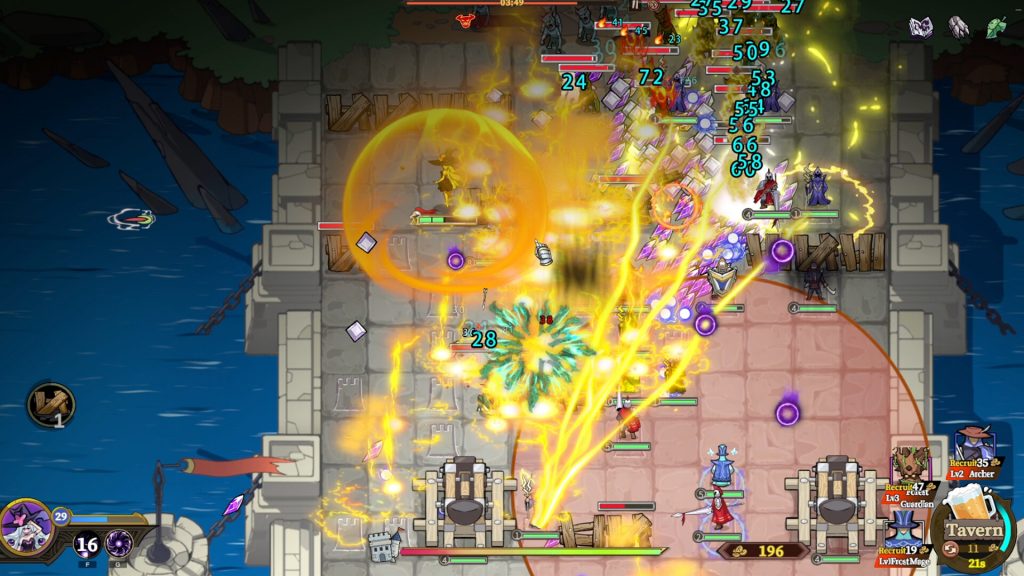
The Gate Must Stand keeps the structural stakes of tower defense (protect the gate, manage waves, position resources) while eliminating the observer role. Players directly control a warrior defending the Kingdom of Bela’s last defensive line. When the front line breaks, the response isn’t adjusting tower placement — it’s physically running across the battlefield to reinforce the breach.
This creates a specific kind of tactical pressure that tower defense and survivors-like games produce separately but rarely together. Tower defense players are accustomed to spatial anxiety — the gap in coverage, the wave that routes around defenses. Survivors-like players are accustomed to positioning anxiety — being in the wrong place when the wave arrives. The Gate Must Stand asks players to manage both simultaneously, which Yogscast Games’ Managing Director Simon Byron described accurately: “You can be calmly reorganizing the defensive line and then suddenly sprinting across the battlefield to repair a collapsing front. It’s chaotic and tense but simultaneously deeply satisfying.”
The distinction matters because it determines what kind of decisions the game rewards. Pure tower defense rewards pre-planning and structural optimization. Pure survivor-like rewards, reactive positioning, and build execution. The Gate Must Stand at its best rewards the ability to maintain strategic coherence while physically occupying crisis points — planning and execution as unified rather than sequential.
The Build System Depth
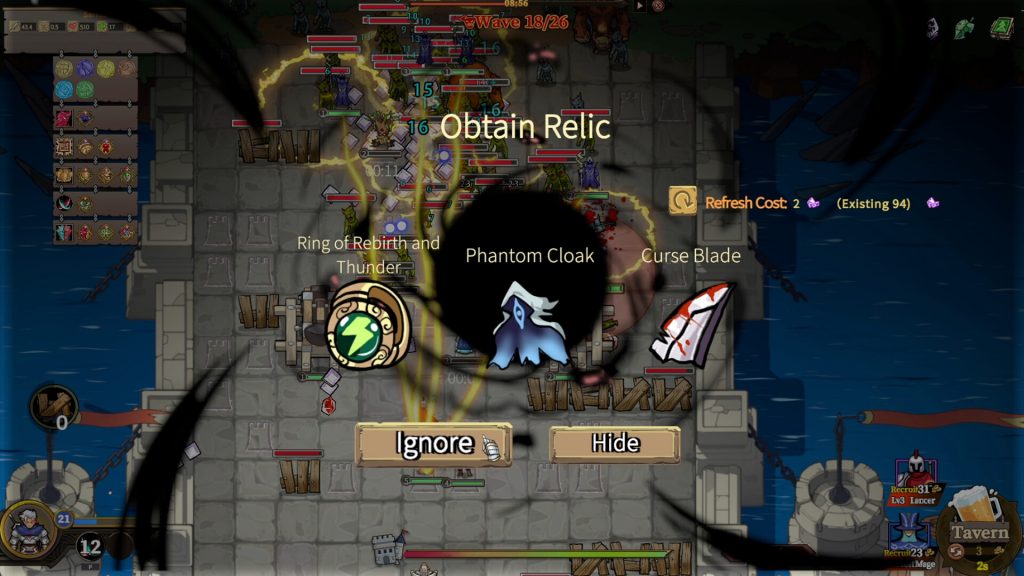
The content numbers suggest a serious build-to-variety investment. 149 hero skills across 4 heroes provide individual character depth. 19 base followers with 38 ultimate evolution forms and 150 follower skills provide the army-building dimension that differentiates this from pure hero-action roguelites. 46 advanced skill options and 53 relics create the synergy-hunting that makes repeated runs feel distinct.
This scope — hero skills, follower progression, advanced options, and relics all interacting — is structurally ambitious for a $9.99 launch title. The question isn’t whether the numbers are large enough; it’s whether they create the kind of meaningful interaction that produces genuine strategic decision-making versus the appearance of variety over shallow divergence.
The upgrade efficiency philosophy that the game emphasizes is the right design target. The Gate Must Stand reportedly places a higher value on “appropriate upgrades at the right time” over pure power accumulation — not every upgrade opportunity should be taken, because resources spent on the wrong capability at the wrong moment weaken the overall defense. This creates the kind of strategic texture that separates thoughtful action roguelites from pure escalation games.
The follower system’s ultimate evolution paths (38 forms from 19 base followers) add the long-term progression investment that makes building diversity feel consequential. Followers who evolve differently based on investment decisions create team compositions that the player actively shaped rather than passively received.
The Dark Fantasy Atmosphere
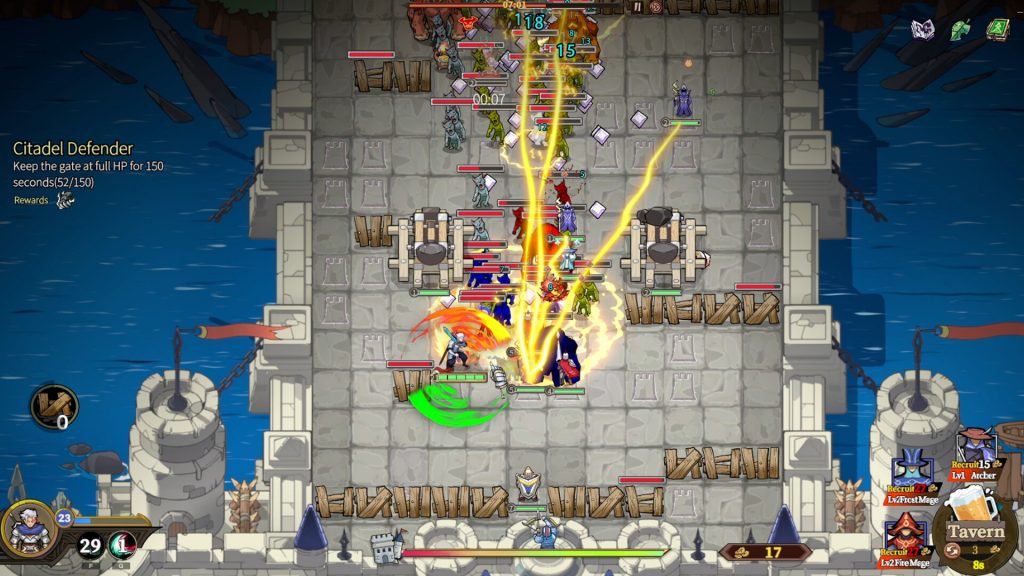
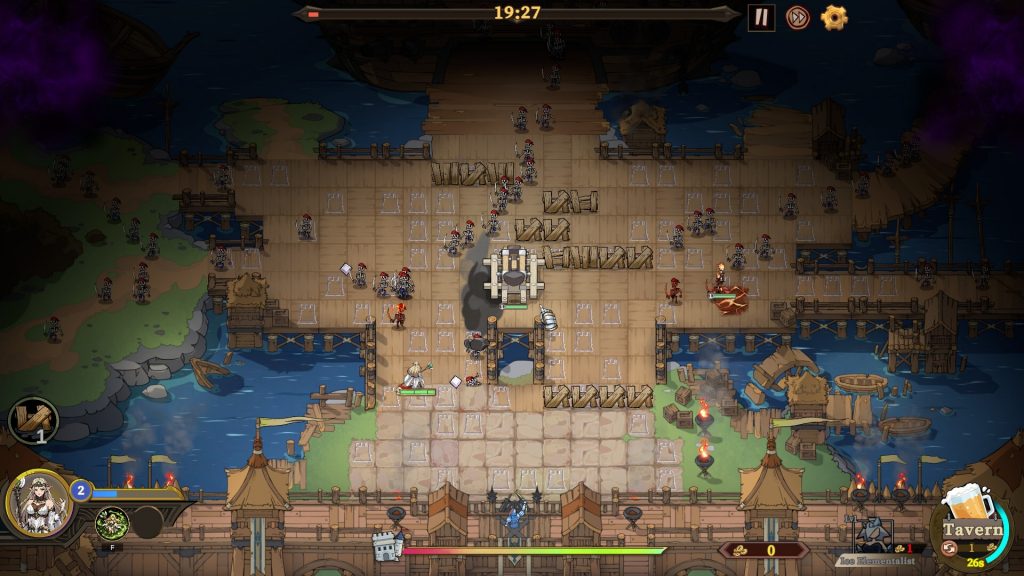
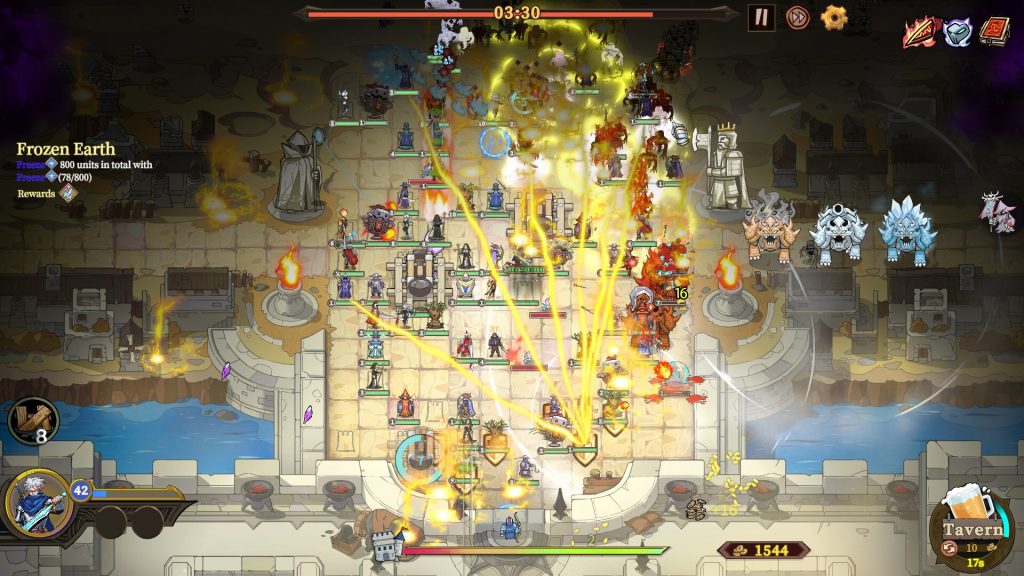
The game commits fully to dark fantasy’s signature aesthetic pressures. Screen-filling waves of monsters, a single fortified position to defend against them, increasing desperation as the fight extends — this is the visual language of heroic last stands, and The Gate Must Stand uses it without irony.
This aesthetic alignment between theme (the Kingdom of Bela’s last defense) and gameplay (wave survival until something gives) creates coherence that games with tonal mismatches lack. Playing as the last defenders of a collapsing kingdom should feel desperate and costly; the constant pressure of managing multiple crises across a large battlefield produces exactly this.
COGconnected’s review captured the genre synthesis: “opens a new battlefield for dark fantasy fans” through “combining tower defense with fast-paced survivors action, making players not just plan but actively intervene in the battlefield.” This framing identifies the game’s strongest selling point — it takes the genre’s most passive element (the player’s relationship to combat) and eliminates it.
The Yogscast Games Publishing Track Record
Yogscast Games has built an interesting publishing portfolio since 2017 by backing smaller teams with distinctive ideas. PlateUp! accumulated over 2 million sales; Dungeons & Degenerate Gamblers generated over $1 million in revenue in its first month. These aren’t the biggest numbers in indie publishing, but they represent consistent success in finding commercially viable, distinctive projects.
The Gate Must Stand is Yogscast’s third co-publishing collaboration with Gamersky Games, following Border Pioneer and Stray Path. This ongoing partnership reflects mutual commercial success and compatible editorial taste. Yogscast’s Develop: Star Awards nomination signals industry recognition of their curation quality.
For The Gate Must Stand specifically, the Yogscast relationship provides publishing infrastructure and marketing access that Senmu Studio couldn’t generate independently. The Chinese-UK co-publishing arrangement also suggests a dual-market commercial strategy — Gamersky Games presumably brings Chinese market distribution relationships, while Yogscast handles English-language market presence.

The 78% Launch Reception
78% Mostly Positive from 50 reviews is a reasonable launch foundation, but leaves significant room for improvement. For context, this position — above 70% — typically indicates the game delivers on its core promise for most players while having specific issues that affect a meaningful minority.
Initial positive reviews reflect satisfaction with the genre combination’s execution: the pace of play, the build variety, the dark fantasy presentation, and the gate-defense tension. Critical reviews in this range typically reflect either expectation mismatches (players expecting different genre proportions) or specific mechanical friction points (progression clarity, difficulty spikes, technical issues).
The launch discount of 30% from $9.99 (effective price approximately $7) reduces the risk for players curious about the concept. At this price, the genre combination is accessible enough for experimental purchase even from players who aren’t certain the hybrid formula will work for them.
The Develop: Star Awards nomination for Yogscast Games (the publisher, not the game specifically) provides credibility context without being a direct review indicator.
Who This Is For
Strong fit for: tower defense enthusiasts tired of passive observation who want direct combat engagement; survivors-like players who want strategic defense objectives beyond pure survival; dark fantasy fans seeking action-strategy rather than pure combat or pure strategy; roguelite build enthusiasts who enjoy follower and army composition alongside hero development; players who enjoyed They Are Billions or Mindustrys direct engagement approaches but wanted more hero-scale combat; $9.99-range action strategy seekers.
Cautious fit for: tower defense purists who specifically prefer the observer role and find direct combat control distracting; survivors-like players who prefer pure individual character builds without strategic defense considerations; players who need polished launch states rather than the iterative improvement that 78% launch reception suggests may be in progress.
Less ideal for: players seeking narrative-heavy experiences; anyone who dislikes wave survival as a core structure; players who prefer real-time strategy over action roguelite approaches.
What to Watch For
A few questions will shape The Gate Must Stand‘s post-launch trajectory.
The first is the post-launch improvement pace. A 78% launch rating with a free demo available provides the developer and publisher with ongoing feedback for patches and updates. How quickly Senmu Studio addresses the specific issues driving the mixed-positive reviews will determine whether the rating improves toward the 85%+ range that indicates a more broadly satisfying experience.
The second is to build variety in practice. The numerical content (149 skills, 53 relics, 150 follower skills) is extensive; whether the combinations feel meaningfully distinct or converge toward optimal strategies will emerge from player community analysis over the coming weeks.
The third is difficulty calibration. Dark fantasy wave survival games need to hit a specific pressure curve: hard enough that the gate-at-risk tension feels real, manageable enough that players believe their decisions matter. The 5 difficulty settings suggest the game is trying to accommodate different preferences, but whether each setting provides appropriate challenge without artificial padding or frustrating spikes will affect retention.
The fourth is the survivors-like / tower defense balance. How much of the game’s time is spent in direct combat versus strategic positioning and upgrade decisions will determine whether it satisfies both genre audiences or fails to fully commit to either.
The Takeaway
The Gate Must Stand is an earnest attempt at a genre combination that hasn’t been executed frequently — tower defense stakes with direct combat action — delivered at a price point that reduces the risk of the experimental purchase. The 78% launch reception suggests the core concept works for most players who try it, while pointing toward specific refinement opportunities that post-launch updates can address.
For dark fantasy action strategy players specifically, the combination of direct combat, follower army management, and gate-defense tension offers something that pure survivor-like and pure tower defense games don’t provide. The genre synthesis is more coherent than it might initially sound — the decision to run to the breach and the decision about which upgrade to take on the way are both part of the same continuous strategic engagement.
At $7 during the launch discount period, with a free demo available, the entry cost is low enough that curious players can evaluate the genre combination firsthand before committing. The gate is under siege. The heroes are outnumbered. The strategy is starting to show cracks.
But the gate must stand — and whether The Gate Must Stand successfully makes you feel the weight of that requirement is, ultimately, what the next several weeks of player review will determine.
Information regarding ‘The Gate Must Stand’
| item | detail |
|---|---|
| Developer | Senmu Studio |
| Publisher | Yogscast Games (Bristol, UK) / Gamersky Games (China) |
| Genre | Dark Fantasy Tower Defense / Survivors / Action Roguelite |
| Release platform | PC (Steam) |
| Release date | June 18, 2026 |
| price | $9.99 (Launch 30% Off) |
| Steam Review | Generally positive 78% (50 items) |
| Hero / Skill | 4 types of heroes / 149 hero skills |
| Follower content | 19 Basic Followers / 38 Ultimate Forms / 150 Follower Skills |
| Stage composition | 3 Stages / 6 Maps / 5 Difficulty Levels |
| Red content | 13 types of bosses / 10 types of elite enemies |
| Build system | 46 Advanced Skill Options / 53 Relics |
| background | The last line of defense of the Bellak Kingdom |
| Publisher collaboration history | The third co-published title following Border Pioneer and Stray Path |
| Main Keywords | Tower Defense, Survivors-style, Dark Fantasy, Roguelite, Gate Defense, Hero, Wave |
| demo | Free Steam demo available |
| Steam Page | Shortcut |