Southeast Asian horror has been quietly building global visibility for years — through film (the Thai supernatural tradition, Indonesian extreme cinema), television (Joko Anwar’s work reaching Netflix audiences), and increasingly through games. AGNI: Village of Calamity, the just-announced cinematic survival horror from Indonesian studio Separuh Interactive and UK publisher Wired Productions, is positioning itself as the next major step in that arc. The Six One Indie Showcase reveal made the project’s ambitions clear: this isn’t horror with Indonesian flavor. It’s a deliberate attempt to push Indonesian horror into what the developers are calling the “New Weird.”
A Specific Cultural Foundation
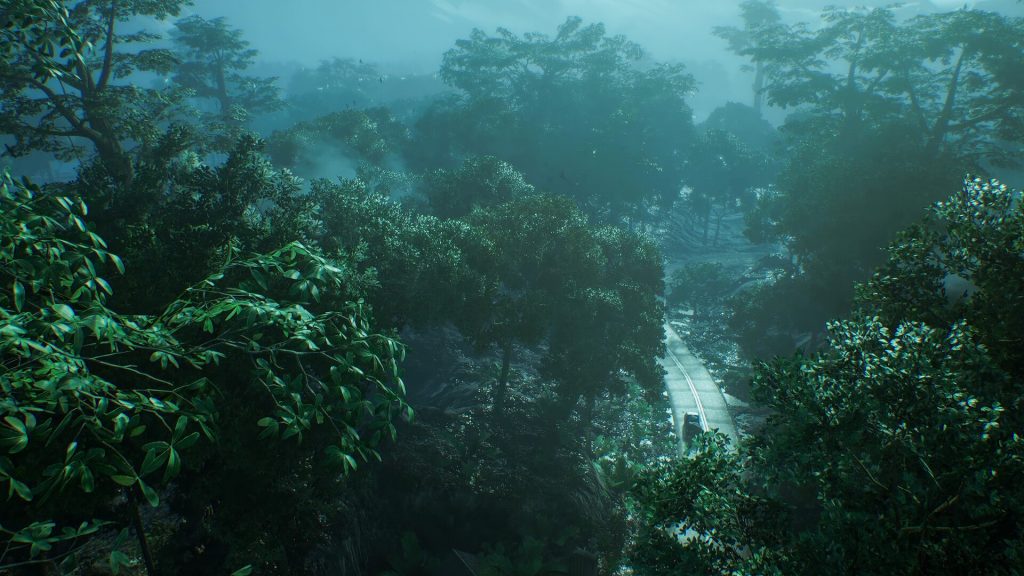
The setting is the foundation, and AGNI commits to it fully. Desa Purba — a forbidden Javanese village — is the kind of culturally specific location that immediately differentiates the game from the geographically generic horror that dominates the genre. Most survival horror takes place in vaguely European-coded mansions, abandoned American towns, or culturally ambiguous facilities. AGNI roots itself in Javanese folklore, ritual traditions, and the specific anxieties of Indonesian rural mythology.
This kind of cultural specificity isn’t decorative. It’s structural. The horror grammar of Javanese folklore — different from Western Christian horror, different from Japanese yokai traditions, different from Latin American spiritual horror — produces different scares, different atmospheres, and different emotional registers. Players who’ve encountered Indonesian horror cinema (Satan’s Slaves, Impetigore, the Pengabdi Setan tradition) will recognize the lineage; players who haven’t will experience something genuinely new.
The “forbidden village” framing is itself a specific Southeast Asian horror trope. Communities cut off from the outside world, sustained by practices the broader culture has tried to forget, harboring something that exists because of the isolation rather than despite it — this is a different kind of haunted setting than the Western “abandoned place” or the Japanese “place where something terrible happened.” It carries different rules and different stakes.
The Lynchian Layer
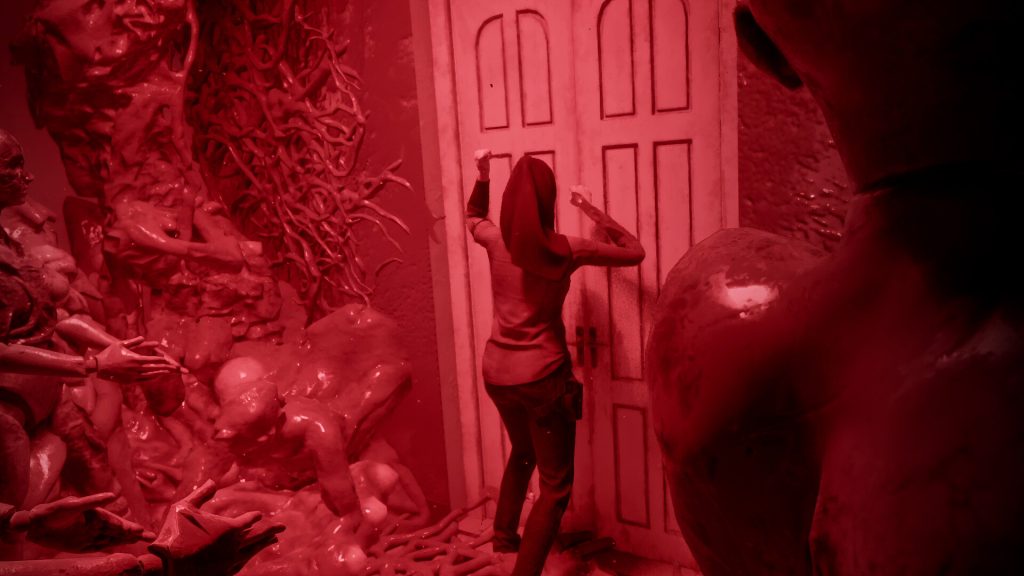
The developer’s framing of the narrative as Lynchian is significant. David Lynch’s influence on horror games has been substantial but uneven — many projects cite Lynch as inspiration; few actually deliver the specific quality of dread his work produces. Lynchian horror isn’t about scary imagery or shocking events. It’s about the systematic breakdown of the normal categories players use to interpret what’s happening, until reality, memory, and nightmare become indistinguishable from each other.
AGNI‘s reality/memory/nightmare structure is positioning itself in that tradition explicitly. The protagonist’s investigation isn’t just about uncovering external facts; it’s about confronting their own psychological deterioration. Whether the game can actually deliver Lynchian dread rather than just citing it as inspiration is one of the central questions for the full release, but the framing suggests the developers understand the difference between aesthetic surface and structural achievement.
The cultural fusion here is particularly interesting. Lynchian narrative grammar grafted onto Javanese folkloric horror isn’t an obvious combination, but it’s a potentially productive one. Both traditions deal with the breakdown of stable reality. Both use the uncanny as their primary horror tool. Both prioritize atmospheric dread over explicit threat. The synthesis could produce something genuinely unfamiliar to players who’ve only encountered either tradition separately.
The Hybrid Camera Choice
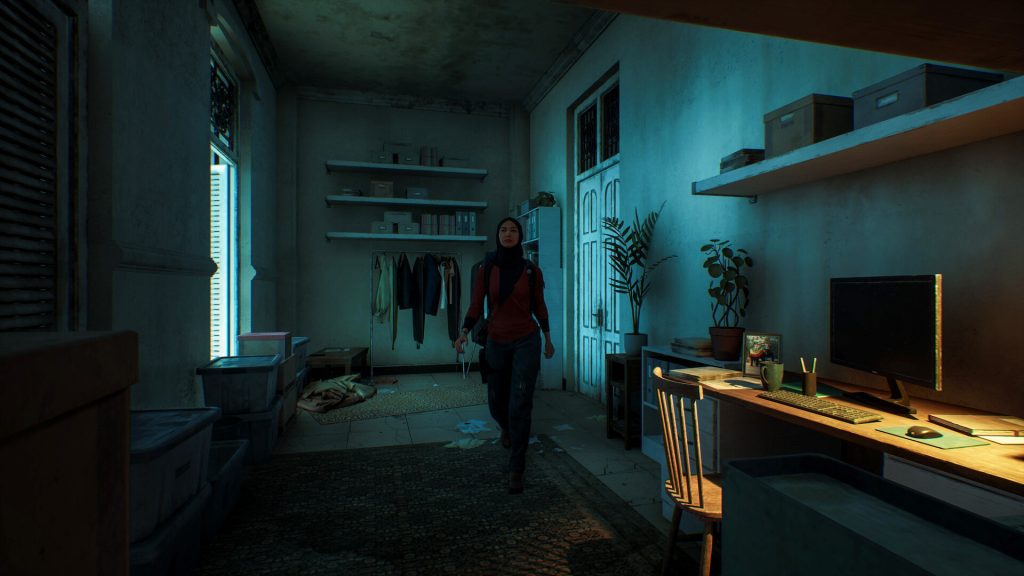
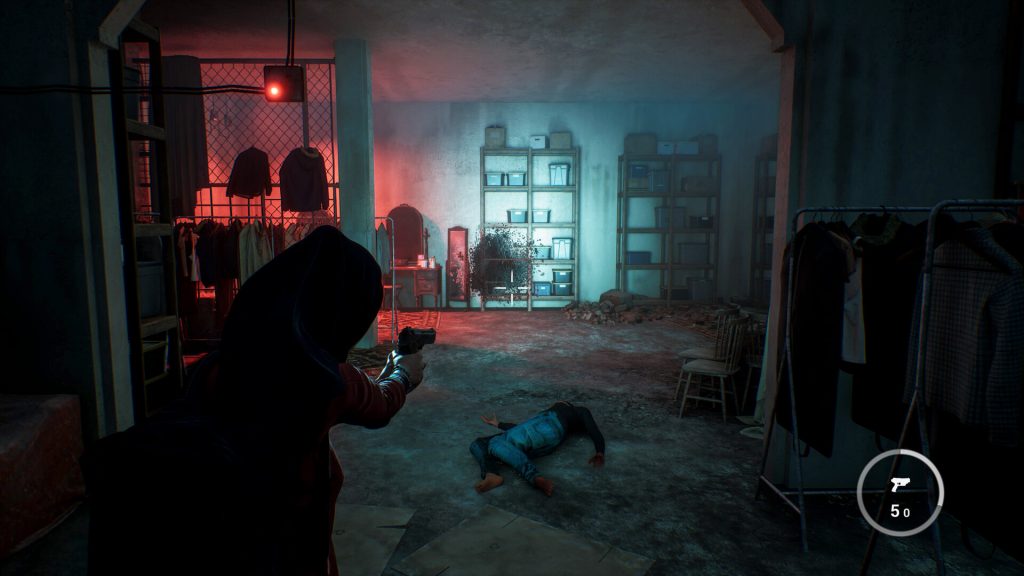
The camera approach is interesting in the context of the current fixed-camera survival horror revival. Where The Florist (also recently revealed) commits fully to classical fixed-camera grammar, AGNI hybridizes — combining fixed cameras with chase-perspective when stalker enemies are pursuing the player.
This is a reasonable evolution of the fixed-camera tradition. Pure fixed cameras serve atmospheric horror beautifully, but can feel constraining during high-tempo chase sequences, where players need spatial awareness to navigate around threats. The hybrid approach uses fixed cameras for exploration and atmosphere — the moments where restricted vision builds dread — and switches to chase perspective when the gameplay register shifts to pursuit.
Done well, this gives the game the best of both genre traditions: classical horror density when the threat is implicit, and modern action grammar when the threat is explicit. Done poorly, it can feel inconsistent or like the developers couldn’t commit to a single design philosophy. The execution will matter significantly here.
The Investigator Premise
Agni — the protagonist — is a secret agency investigator searching for her missing partner. The setup is functional, but the framing carries the project’s emotional weight: she’s defying orders to search, she’s carrying guilt about her partner’s disappearance, and her investigation gradually becomes a journey through her own psychological collapse rather than a clean procedural narrative.
This is the structural choice that aligns with the Lynchian framing. The external investigation (find the partner, understand what happened in Desa Purba) and the internal investigation (confront the guilt, navigate the psychological deterioration) run in parallel and eventually become indistinguishable. The horror isn’t just about what Agni encounters in the village; it’s about what the encounter does to her, and by extension to the player.
Horror games that pull off this dual-track structure are rare. Silent Hill 2 is the genre’s reference standard for protagonist psychology, being the actual subject of the game; many projects have attempted similar approaches, and few have landed them. AGNI‘s success will depend significantly on whether the writing can sustain the internal arc with enough specificity to feel like a real character collapse rather than a generic descent into madness.
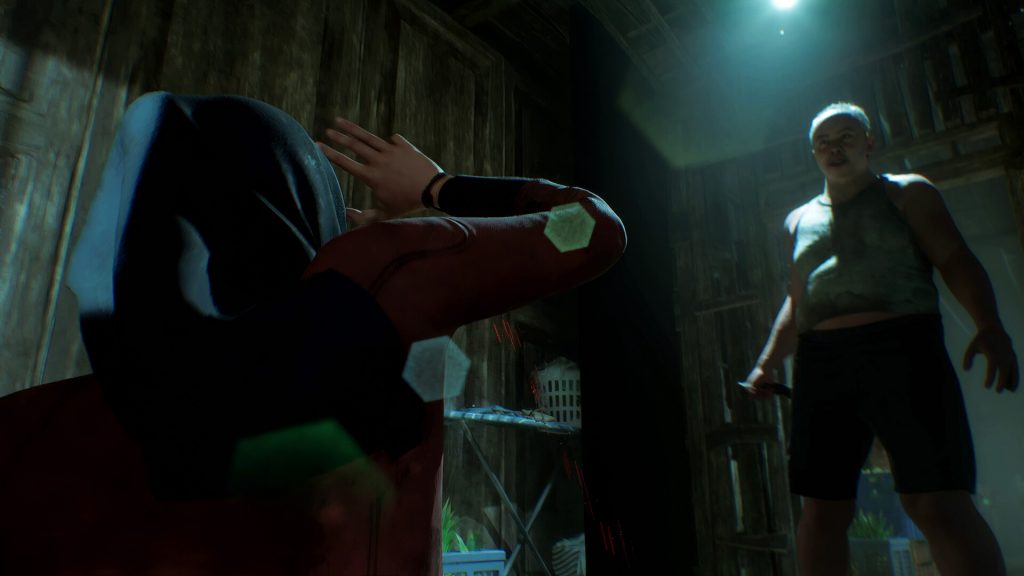
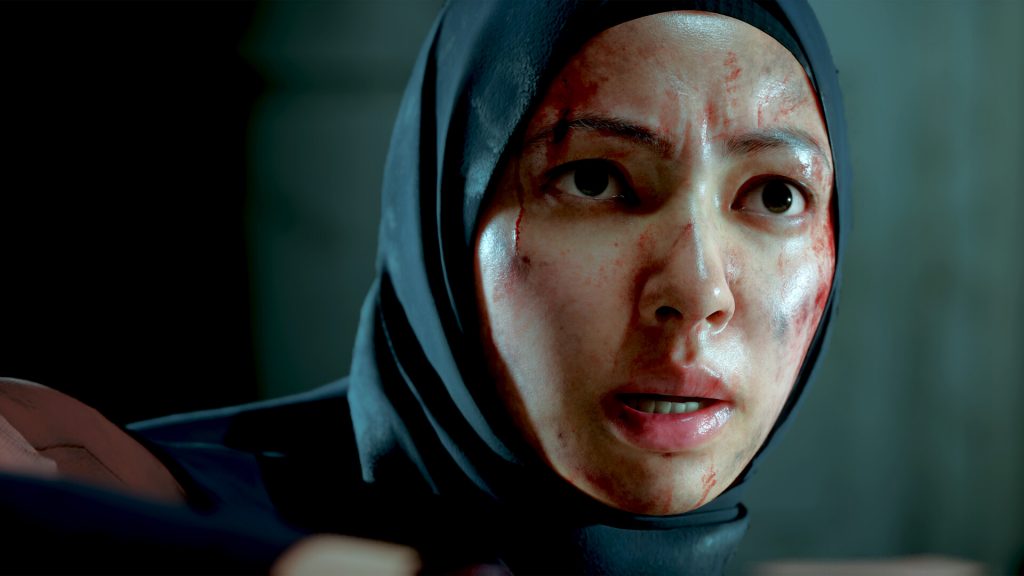
The Slasher Layer and Violence
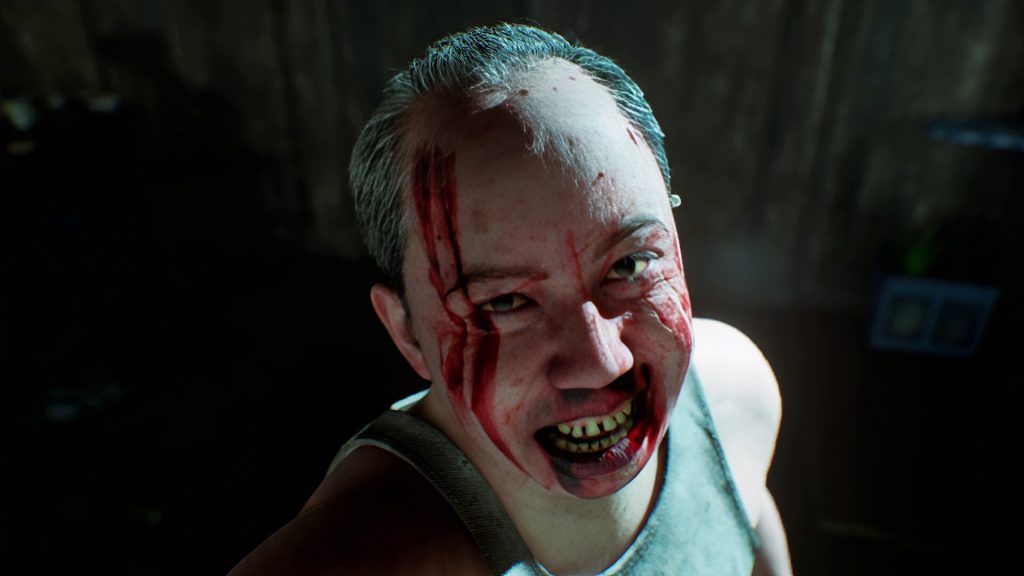
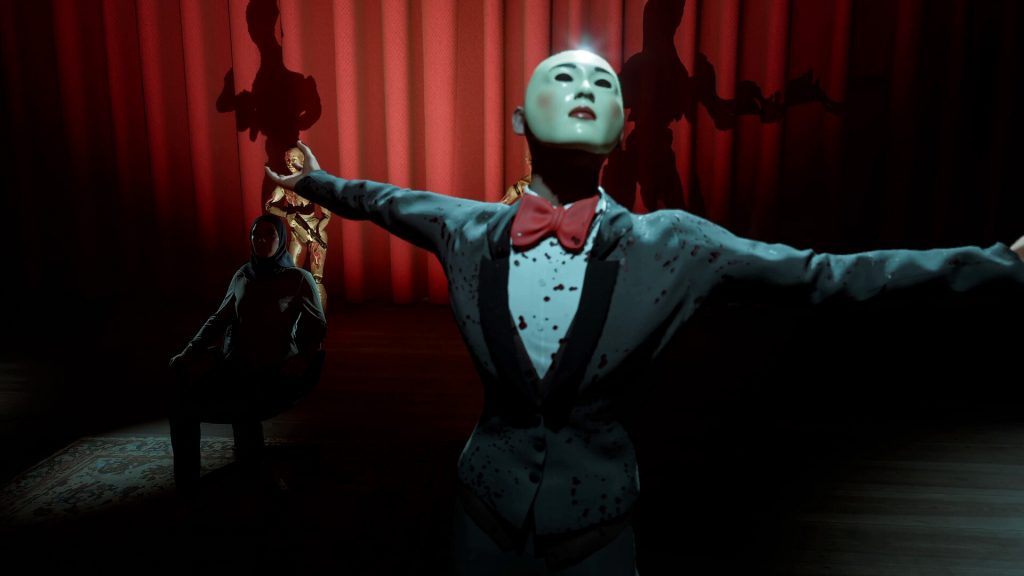
One element worth flagging is that AGNI incorporates “Indonesian slasher” stylistic elements alongside its psychological horror structure. Indonesian extreme cinema (The Raid, Killers, the films of Timo Tjahjanto) has earned an international reputation for choreographed violence that operates at a different intensity than mainstream Western horror. AGNI appears to be incorporating that tradition’s visual grammar into the game’s combat and threat encounters.
This is a notable choice for a survival horror game. Most survival horror keeps violence in service of dread — quick, ugly, designed to be threatening rather than aesthetically choreographed. Slasher-influenced violence reads differently, with more deliberate framing and more explicit physicality. How AGNI balances these registers will affect both its tonal coherence and its likely audience.
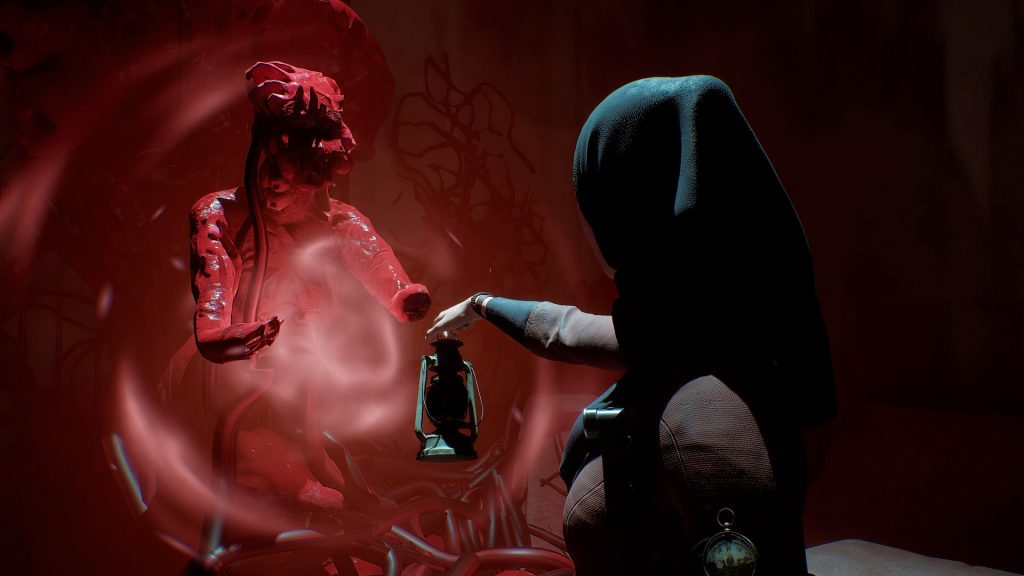
The game’s content includes strange creatures, anxiety-inducing body horror, intense violence, and scenes dealing with emotional trauma. This is unambiguously adult horror, and the developers are being clear about it. Players sensitive to body horror or graphic violence should know what they’re walking into.
The Wired Productions Fit
The publisher relationship is worth examining. Wired Productions has built a reputation publishing dark, narrative-driven, often psychologically uncomfortable games (Those Who Remain, The Crash 2, The Last Worker, Tin Hearts). They aren’t a generalist publisher — they have a specific identity around emotionally heavy material, and AGNI fits that identity precisely.
Managing director Leo Zullo’s comment — that AGNI “aligns perfectly with the publisher’s identity” — isn’t generic marketing language. It reflects an actual editorial fit. Wired Productions publishing an Indonesian survival horror about psychological collapse in a forbidden Javanese village is exactly the kind of project their catalog supports, and the studio likely benefits from being placed alongside other emotionally serious indie horror rather than being treated as exotic regional content.
The use of Wired’s in-house music label Black Razor Records for the soundtrack is another integration detail worth noting. In-house publishing infrastructure can produce more coherent audio direction than license-based scoring, and for a game whose atmosphere depends heavily on sound design, this kind of integrated production approach is a positive signal.
A Studio With a Thesis
Separuh Interactive’s stated goal — “to expand Indonesian horror into ‘New Weird’ territory” — is the project’s most important framing. The “New Weird” tradition (China Miéville, Jeff VanderMeer, films like Annihilation) is specifically about horror that doesn’t fit existing genre categories, that produces dread through structural unfamiliarity rather than recognizable monsters or threats. It’s also a tradition that has been overwhelmingly Western, with non-Western contributions only recently gaining international visibility.
An Indonesian indie studio explicitly positioning their work as New Weird — extending the tradition with Javanese cultural materials and Southeast Asian horror grammar — is an interesting cultural and aesthetic move. It claims a place in a contemporary genre conversation rather than just delivering “Indonesian horror” as a category for Western consumption. That’s a different kind of cultural project, and a more ambitious one.
Whether AGNI actually delivers on this New Weird positioning will depend on whether the game’s horror produces genuinely unfamiliar dread rather than recognizable scares with cultural flavor. The Lynchian narrative structure, the reality/memory/nightmare blending, and the specific Javanese folkloric materials all suggest the team understands what New Weird requires. The execution will reveal whether they can deliver it.
How the Press Has Read It
The Six One Indie Showcase reveal has produced coverage from GameSpew (focusing on the Wired Productions partnership and its fit with psychological narrative work), Rely on Horror (framing the project as a case of Southeast Asian horror’s global expansion), Gematsu, and Noisy Pixel. The coverage pattern — multiple specialist outlets paying attention rather than a single press release reaching a few sites — suggests the project has generated genuine interest beyond the usual indie-horror PR cycle.
The press response is also notably substantive. Outlets aren’t just reporting the reveal; they’re engaging with the project’s cultural positioning, the publisher relationship, and the genre ambitions. That’s the kind of pre-release attention that suggests AGNI has positioned itself effectively for the audience most likely to care about it.
Who This Is For
Strong fit for: classic survival horror fans (Resident Evil, Silent Hill traditions); players interested in horror that engages seriously with specific cultural materials; fans of Indonesian horror cinema or Southeast Asian horror generally; players drawn to psychological horror over jump-scare horror; anyone interested in the New Weird tradition extending into games.
Less ideal for: players sensitive to graphic violence, body horror, or trauma content; anyone looking for action-focused horror; players who specifically prefer fast-paced or combat-heavy horror experiences; people allergic to slow-burn psychological dread.
What to Watch For
A few questions will shape how AGNI lands at full release.
The first is whether the Lynchian narrative actually delivers Lynchian dread or whether it cites the influence without reaching it. This is the difference between a project that succeeds aesthetically and one that succeeds structurally, and it’s the hardest test for any game working in this tradition.
The second is the cultural specificity execution. There’s a meaningful difference between horror games that use Indonesian folklore as flavor and horror games that treat it as a serious cultural foundation. AGNI‘s positioning suggests the latter, but the execution will reveal whether the specificity is genuine or surface-level.
The third is the hybrid camera implementation. The design choice is reasonable in theory; whether it works in practice depends entirely on how cleanly the transitions feel and whether each camera register supports the gameplay it’s serving.
The fourth is the psychological arc’s coherence. A protagonist’s descent into trauma and madness is one of horror’s most powerful narrative tools when it works, and one of the most tedious clichés when it doesn’t. The writing quality across the full game will determine which side of this AGNI lands on.
The Takeaway
AGNI: Village of Calamity is one of the more ambitious horror projects on the 2026 calendar. The cultural foundation is specific and serious. The genre positioning is thoughtful. The publisher relationship is editorially appropriate. The studio has an explicit thesis about where they want to push Southeast Asian horror, and the project appears designed to deliver on that thesis rather than just decorate it.
The success of the project will matter beyond AGNI itself. A successful launch validates the model of culturally specific horror from Southeast Asian studios reaching global audiences without being flattened into exoticism. A struggling launch makes the path for the next Indonesian, Filipino, or Thai horror studio that much harder. AGNI is carrying more than its own commercial prospects; it’s carrying a small but meaningful test case for whether the genre’s global expansion can be substantive rather than superficial.
For genre fans, this is one to wishlist and keep a close eye on. The reveal trailer is the first major data point; how Separuh Interactive continues to communicate the project through to launch will reveal whether the ambitions match the execution. Based on what’s been shown so far, there’s real reason to be optimistic — and real reason to want to see exactly what they’re building.
Desa Purba. A missing partner. An investigator who shouldn’t be there. And a village that knows things no one is supposed to know. As 2026 horror pitches go, this is one of the more genuinely promising ones.
Information regarding ‘AGNI : Village of Calamity’
| item | detail |
|---|---|
| Developer | Separuh Interactive (Indonesia) |
| Publisher | Wired Productions (Wartford, UK) |
| Genre | Cinematic Survival Horror / Psychological Thriller / Slasher |
| Release platform | PC (Steam / Epic Games Store) / Xbox Series X|S / PS5 (Additional platforms to be announced later) |
| Scheduled for release | 2026 (exact date TBD) |
| background | Java Forbidden Village ‘Desa Purba’ |
| Camera method | Fixed hybrid camera |
| music | Black Razor Records (Wired Productions’ own record label) |
| inspiration | Resident Evil · Silent Hill / Lynchian Narrative / Indonesian Folklore |
| public event | Six One Indie Showcase Exclusive Announcement |
| Main Keywords | Indonesia, New Weird, Psychological Horror, Slasher, Javanese Folklore, Fixed Camera, Trauma |
| Steam Page | Go to Wishlist |