A loyal butler-type automaton, walking cane in hand, steps out into a steampunk continent rotting from the inside. Climate disasters have battered the land. The central government is up to its neck in corruption. Everyone else is looking out for themselves. The automaton is not. MODULE:BERSERK, the in-development 2D pixel action platformer from Korean indie team Studio Brakio, is staking out an unusual tonal corner in the genre — and based on early Steam Next Fest reception, the bet is working.
The game is heading to Steam and STOVE, with strong signals from the recent demo suggesting it’s already finding an international audience the developers didn’t necessarily expect.
A Steampunk Setting That Refuses to Be Pretty
Steampunk in games tends toward two registers: the ornate Victorian fantasy (gilded clockwork, polite societies, adventure-flavored optimism) or the post-apocalyptic industrial wasteland (rust, ruin, broad gestures at collapse). MODULE:BERSERK picks a third lane that’s harder to pull off — a society that hasn’t fully collapsed yet, but is rotting from the inside fast enough that you can smell it.
The world here is one where steam technology overshot its runway, climate disasters have hammered the continent into pieces, and the institutions that should hold things together have already been hollowed out by graft. It’s the steampunk equivalent of a noir city: still functioning on paper, already broken in practice.
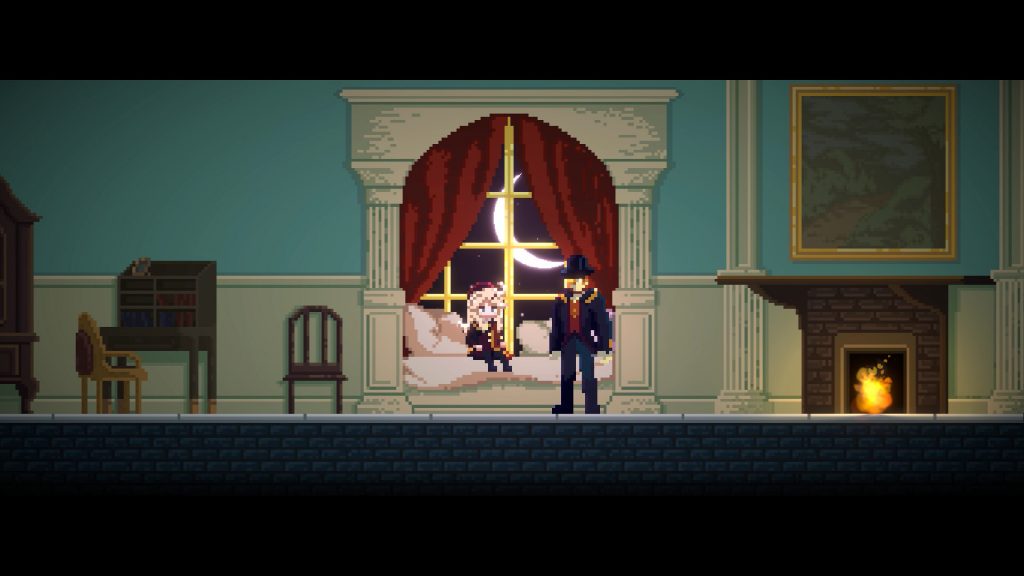
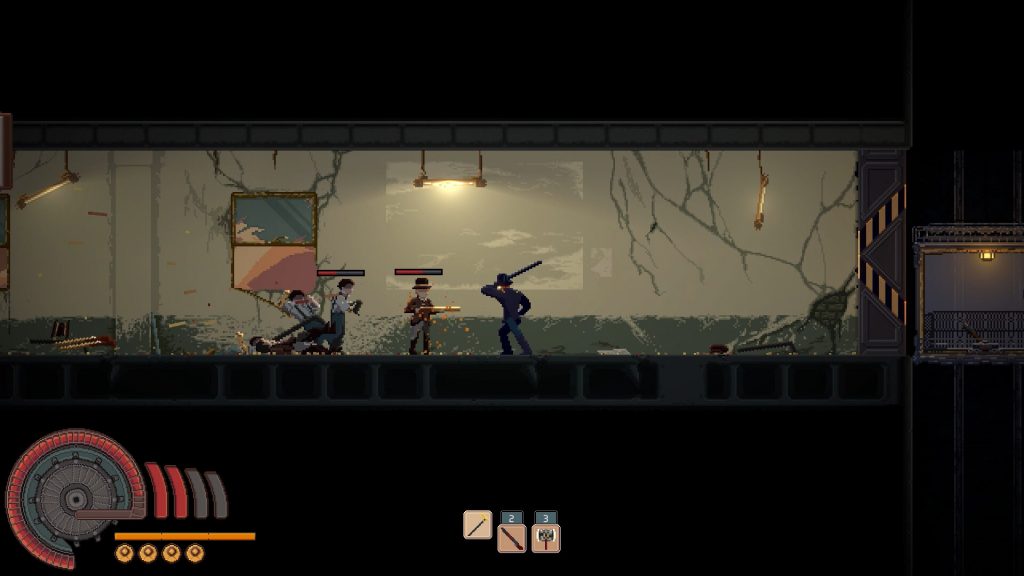
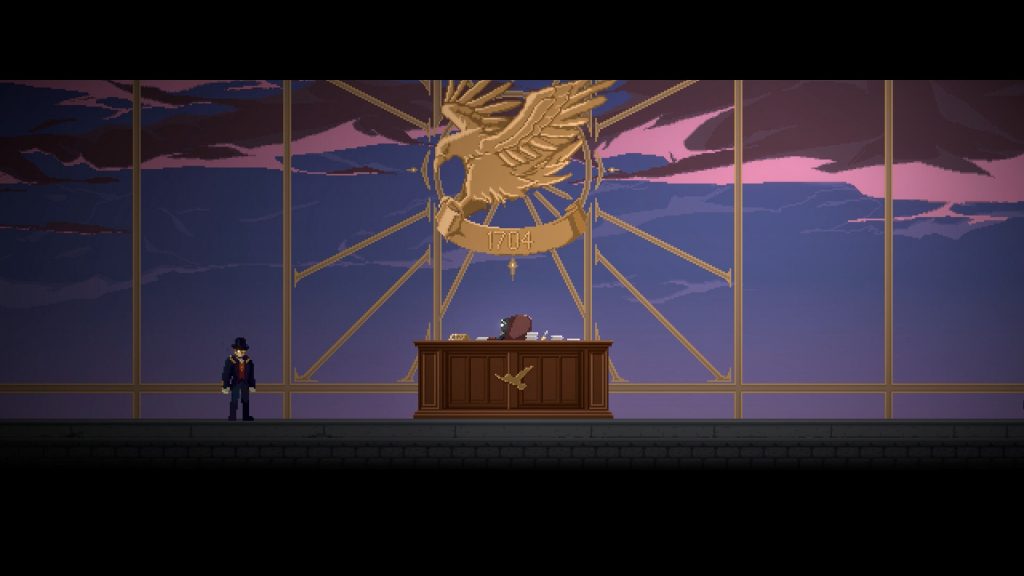
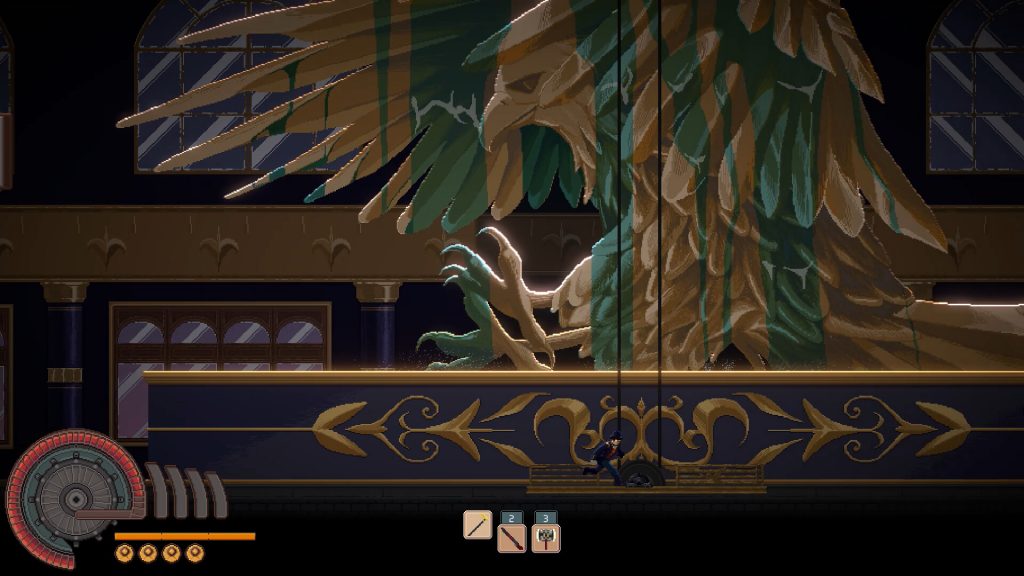
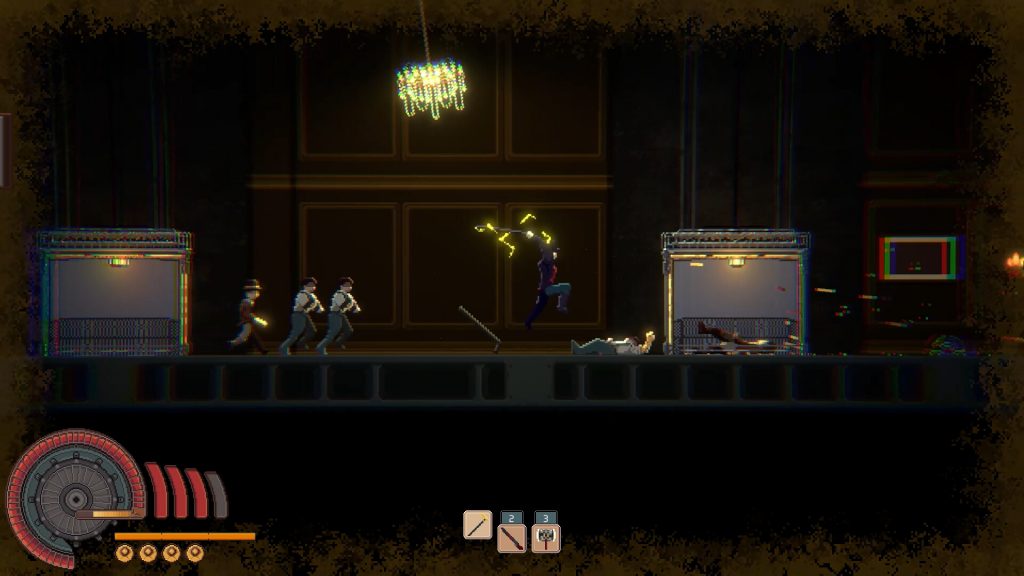
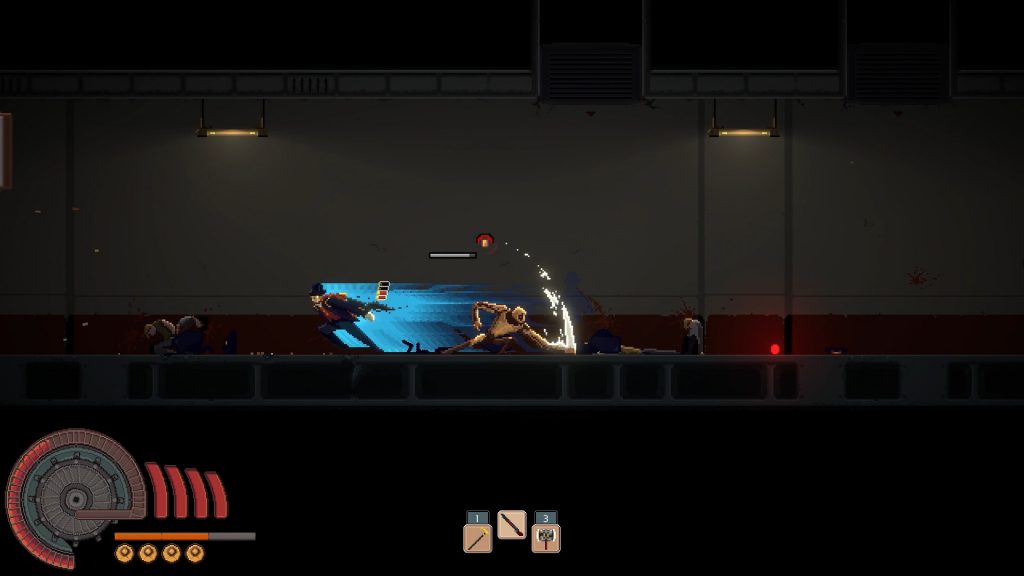
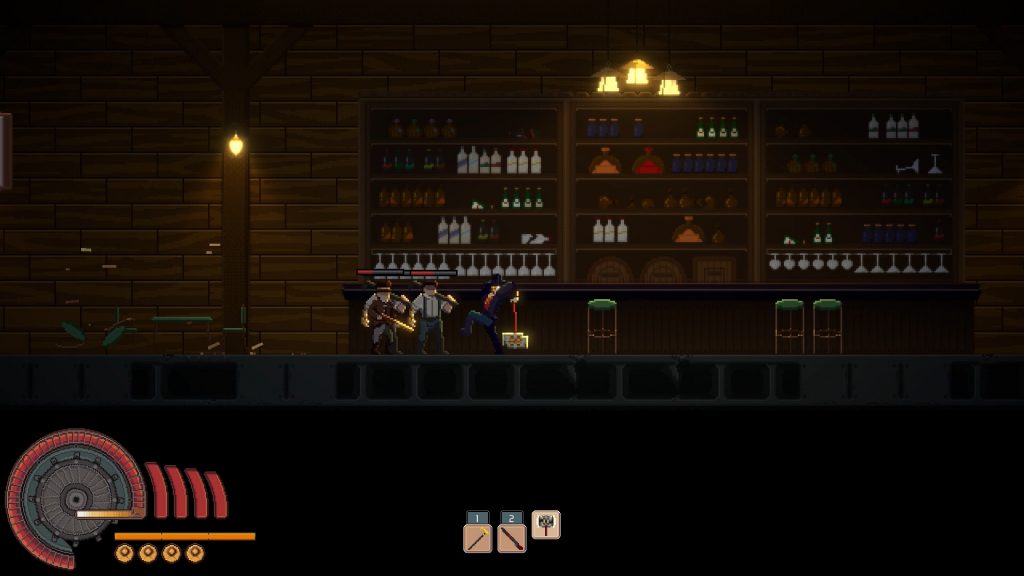
The 2D pixel art commits fully to this register. Metal city textures, tangled steam pipes, alleys cut through with the silhouette of a mechanical butler crossing between them. The art direction isn’t trying to look cute or retro-charming. It’s trying to look heavy, and from the demo footage and screenshots, it’s landing.
The Hardboiled Tone Is the Differentiator
The most interesting tonal choice in MODULE:BERSERK is the hardboiled framing. This isn’t a steampunk adventure. It’s a steampunk noir, complete with the dry tension of detective fiction, a protagonist who won’t bend to power, and an ensemble cast tangled up in betrayals and conspiracies that the player has to navigate carefully.
That choice matters because action platformers — even excellent ones — rarely commit to a coherent narrative tone beyond “cool.” A protagonist who is functionally a butler, mechanically an automaton, and emotionally a lone investigator is a sharper character concept than the genre usually attempts. The pitch is closer to Cowboy Bebop‘s tonal control than to standard pixel action fare.
The story hook is genuinely intriguing, too. The protagonist is drawn into the conflict by a strange, unidentified heartbeat — a sound whose source the player has to uncover while protecting their charge and unraveling what’s actually happening inside her family. That’s the kind of central mystery that can either anchor a game or fizzle, and it’s one of the open questions the full release will have to answer.
The Module System Is the Core Idea
The system the game is named after is also its most distinctive mechanic. At the protagonist’s hideout, you visit the “workshop” and swap modules across different body parts to build your combat configuration. Each part takes a different module, and the combinations meaningfully change how you fight.
What separates this from generic “equip best gear” systems is the build-experimentation logic. The game isn’t asking you to find the strongest module for each slot. It’s asking you to find combinations that produce a playstyle you actually like — and then letting you reconfigure when the next contract calls for something different.
Side-scrolling action games tend to be tight loops with limited room for build variety. The module system is MODULE:BERSERK‘s answer to that constraint, and it’s the right answer in theory. Whether the execution delivers — whether there are enough modules with meaningfully different effects, whether late-game encounters reward configuration variety, whether the workshop loop stays interesting beyond the first ten hours — is what the full release will have to demonstrate.
The progression layer wrapping around combat is similarly considered. You take contracts, earn currency, upgrade your hideout, recruit allies, and gradually open more of the world. Player choice carries narrative weight as well, with decisions influencing how events unfold. It’s a structure built for systemic replay rather than linear completion, and the noir framing gives those choices meaningful texture.
An Unexpected International Audience
The most interesting story around MODULE:BERSERK right now isn’t in the game itself — it’s in how the demo performed. Studio Brakio released the demo ahead of Steam Next Fest and watched it generate over 2,000 downloads in Taiwan alone after YouTube streamers picked it up as a new demo to feature.
The developer’s analysis of why is worth highlighting: Chinese language support was a major factor. Steam Next Fest pages surface games to users based on their language environment, which means multilingual support directly affects discoverability and inflow from non-English markets. For a small indie team, language coverage is functionally a marketing channel.
This is the kind of operational detail that gets undervalued in conversations about indie marketing. Most “global launch strategy” discussions focus on PR and storefront optimization. MODULE:BERSERK‘s Taiwan reception is a clean data point for something different: that localization isn’t just a courtesy for players who already know about your game — it’s how new players find you in the first place.
The Steam tags now include steampunk, hardboiled, 2D pixel graphics, side-scrolling platformer, atmospheric, and choices matter. The STOVE simultaneous launch is broadening the Korean audience touchpoint as well.
A Studio Worth Watching for Process as Well as Product
Studio Brakio has been openly sharing their development process through Korean indie developer communities — demo postmortems, Steam Next Fest results, language support strategy, inflow analytics. That kind of transparency is rare in any indie scene, and it’s earned them a profile within the Korean indie developer community that goes beyond the game’s player audience.
What’s notable is that MODULE:BERSERK is functioning as a working case study for realistic Korean indie globalization. Small team, multilingual rollout, active community communication, careful demo strategy, attention to platform mechanics rather than just creative output. It’s not glamorous, but it’s the kind of methodical approach that small studios in any country could learn from.
The fact that the game itself appears to be genuinely good — based on demo reception and tonal coherence — is what makes the case study matter. Process discipline without a strong product is just process discipline. MODULE:BERSERK looks like it has both halves.
What to Watch For
Several questions will determine where MODULE:BERSERK lands when the full release arrives:
The first is module system depth. The pitch is excellent; the test is whether the system supports genuinely distinct playstyles across a full game’s worth of encounters, or whether dominant strategies emerge and the experimentation collapses into optimization.
The second is the hardboiled tone’s durability. Noir is hard to sustain across long runtimes — the temperature is easy to set in a demo and easy to lose in act three. Whether the ensemble cast, the heartbeat mystery, and the political intrigue all land emotional weight in the back half is one of the harder questions for any narrative-driven action game.
The third is the choice-and-consequence layer. “Choices matter” is one of the most overstated tags in indie gaming. MODULE:BERSERK‘s positioning suggests genuine investment in this, but the gap between intent and execution is where most narrative ambitions die.
None of these is a reason for skepticism. They’re the standard checkpoints for a game with this much conceptual ambition.
The Takeaway
MODULE:BERSERK is a more interesting project than the genre summary suggests. A hardboiled steampunk butler-automaton noir-action-platformer with a modular build system, developed by a Korean indie team thinking carefully about global distribution from day one, isn’t a description that fits cleanly anywhere — and that’s the point. The game is staking out unusual ground, and the early international reception suggests the ground is fertile.
For players who follow pixel action games, steampunk fiction, or build-based combat systems — or anyone interested in watching a Korean indie execute a thoughtful international rollout — this is one to wishlist and follow. The demo is the fastest way in. The full release is still ahead, but the foundations are unusually solid for a project at this stage.
A loyal butler, a corrupt continent, and a heartbeat with no source. As setups for action platformers go, that’s a strong one.
MODULE:BERSERK related information
| item | detail |
|---|---|
| Developer / Publisher | Korean indie development team |
| Genre | 2D Pixel Hardboiled Action Platformer / Action Adventure / Steampunk |
| Release platform | PC (Steam) / STOVE |
| Art style | 2D Pixel Graphics / Retro / Side-scrolling |
| background | A steampunk continent devastated by the development of steam technology and successive climate disasters |
| core system | Module-equipped builds by body part / Quest-based growth / Hideout upgrades / Companion collection |
| Key Features | The Importance of Choice / Atmospheric Narrative / Hardboiled Ensemble Drama |
| Demo results | Participated in Next Fest / Over 2,000 downloads in Taiwan |
| Main Keywords | Steampunk, Butler, Automaton, Hardboiled, Pixel, Modular Build, Side-scrolling |
| Steam Page | Go to Wishlist |
| STOVE | Shortcut |