“If you become class president, I’ll throw you a birthday party.” One sentence from a mother, and ten-year-old Jimin’s life pivots. She’s the invisible middle kid — sandwiched between a model-student older sister and a doted-on little brother — and this is her one shot at being seen. Come to My Party!, the upcoming black-comedy visual novel from Korean solo developer SIMSANG YOON, builds an entire game out of that small, specific, surprisingly heavy premise.
Published by LINE Games Corporation and arriving in Q4 2026, it’s a project that turns the hyperlocal into the universal — and from the look of the demo, it might be one of the most quietly cutting Korean indies of the year.
A Setting Rendered With Uncomfortable Precision
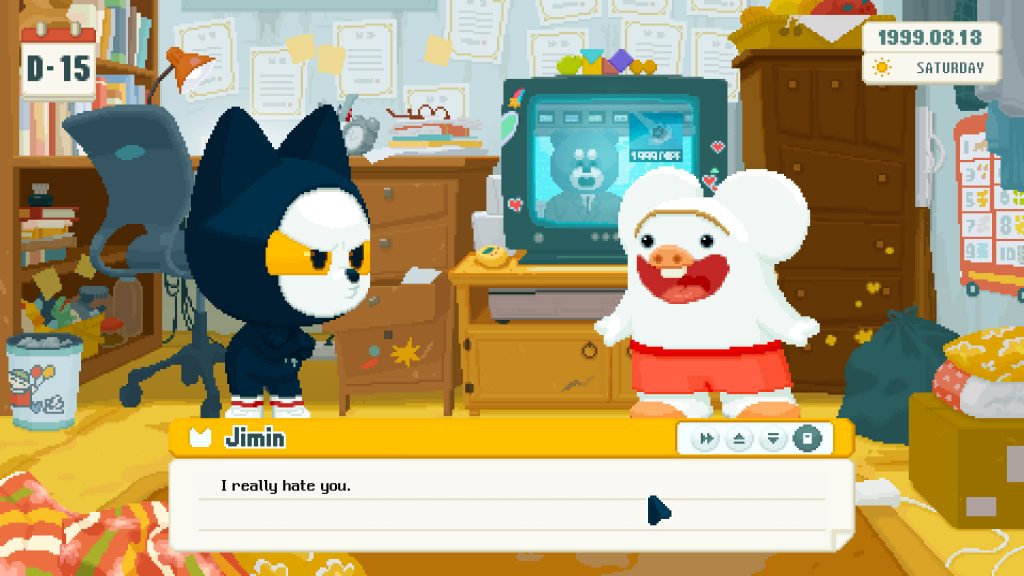
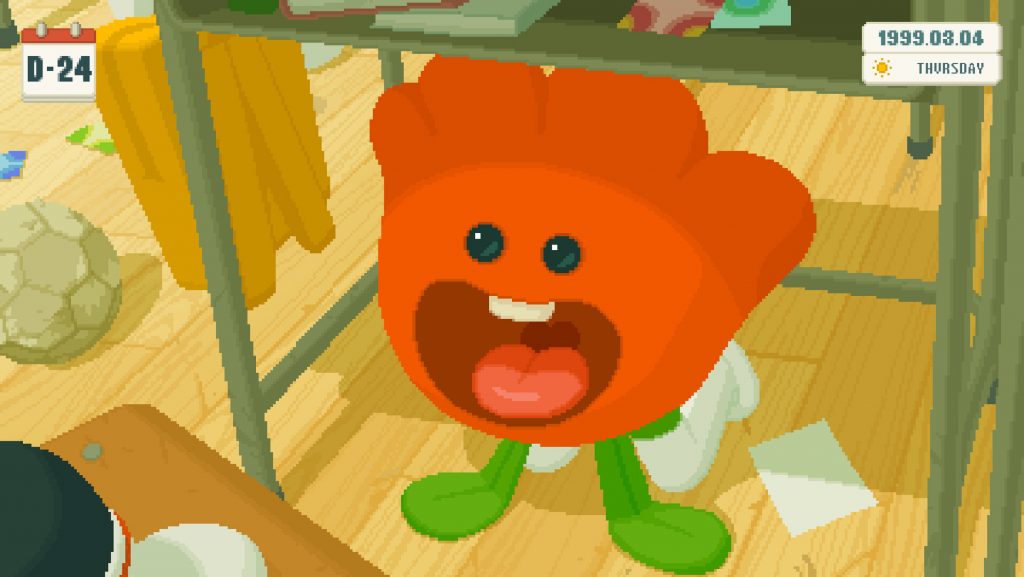
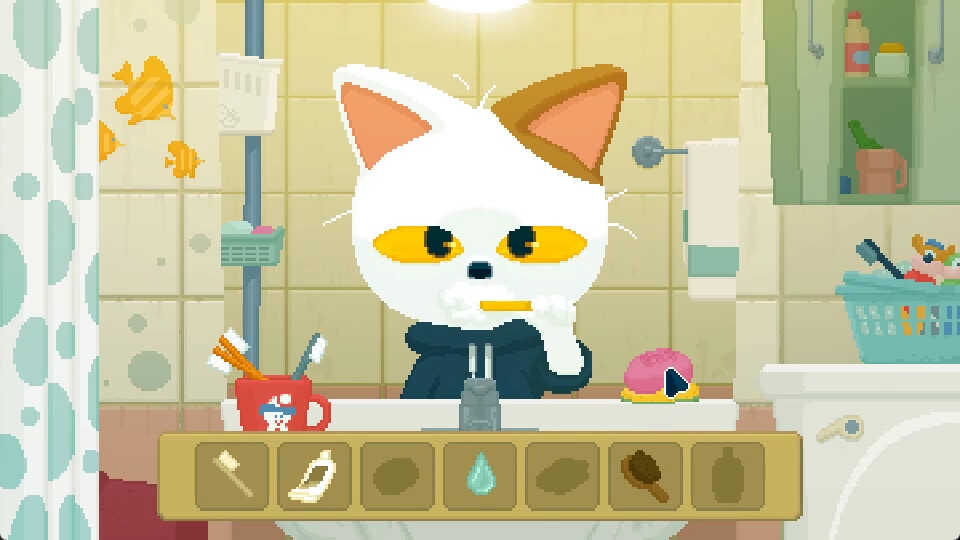
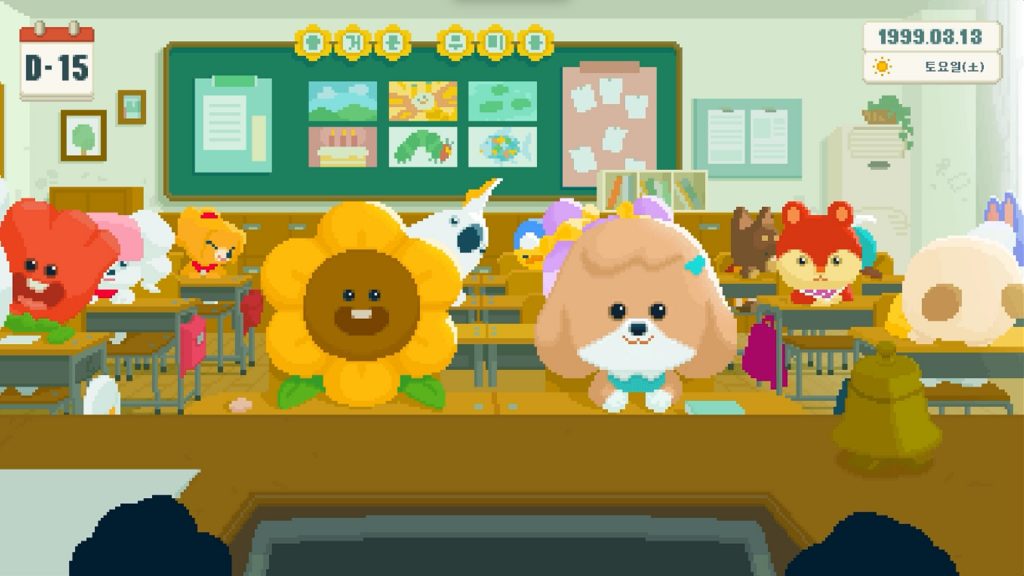
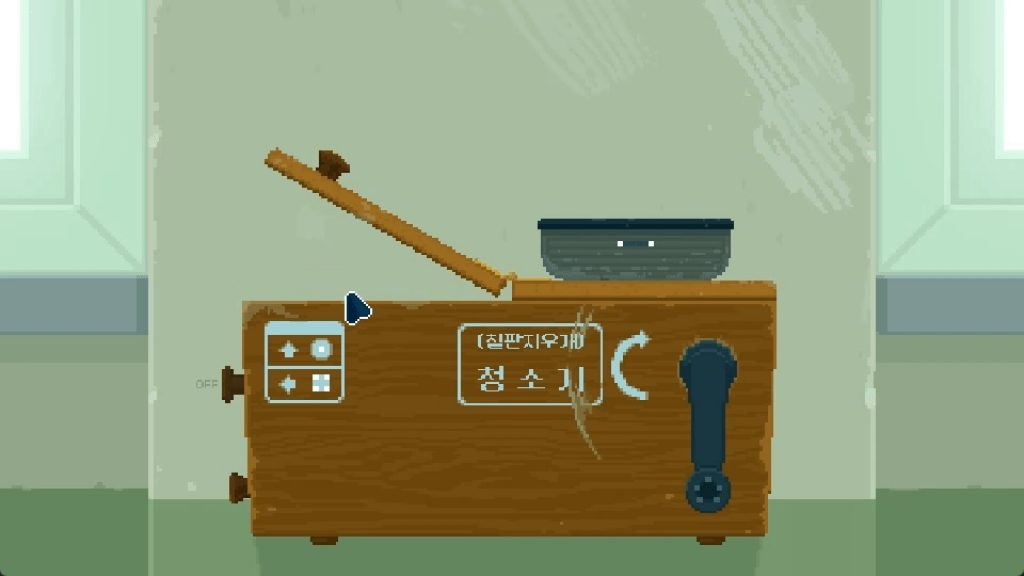
The game takes place in a Korean elementary school in 1999, and the pixel art reconstruction of that world is doing an enormous amount of the storytelling work. Late autumn sunlight through classroom windows. Worn wooden desks. Chalkboards thick with dust. The specific chaos of a lunchtime playground. For Korean players who lived through it, this is going to land somewhere between nostalgia and ambush.
For international players, it’s something different but no less effective: an unfamiliar cultural texture rendered with enough specificity that it reads as real rather than exoticized. The Steam tag pairing of “Atmospheric” and “1990s” tells you where the game is staking its claim. Period authenticity isn’t decoration here; it’s load-bearing. The story this game wants to tell only works if the world feels true.
That’s harder to pull off than it sounds. Period pieces frequently collapse into greatest-hits collages — the songs, the snacks, the fashions. Come to My Party! seems more interested in the textures that don’t make it into nostalgia montages: the specific social pressures of a Korean classroom, the politics of class president elections, the quiet hierarchies between desks.
Black Comedy With a Knife in It
The “black comedy” label here is precise. Come to My Party! isn’t dark for the sake of being dark, and it isn’t cute for the sake of being cute — it’s a game that uses the gap between those two registers to make its points.
Childhood, in this game’s framing, is funny and brutal at the same time. Jimin is ten years old, and the game commits to her perspective without softening it. Adult indifference, the loneliness of being the invisible child in a family, the strange political mechanics of an elementary school classroom — all of it filtered through a child’s clarity, which is somehow both more innocent and more devastating than an adult’s would be.
The Steam page warns you about the tone in its own way, with tags like “Dark Comedy” and “Choices Matter” sitting next to “Dialogue-Heavy” and “Text-Based.” That combination — a heavy genre vocabulary attached to a story about a ten-year-old — is the whole pitch. You laugh, and then a few minutes later, you realize what you just laughed at.
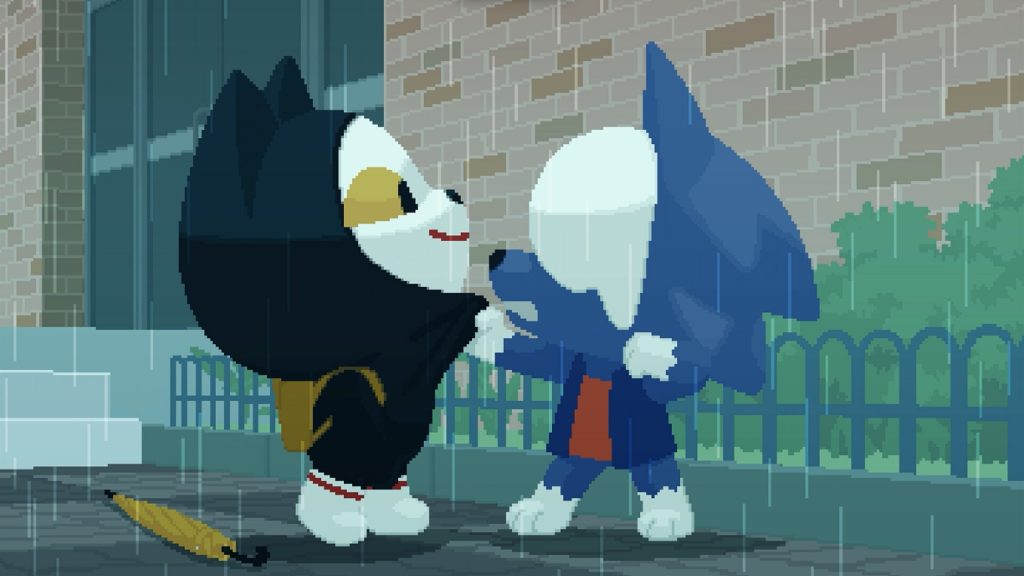
A Branching Structure That Earns Its Twelve Endings
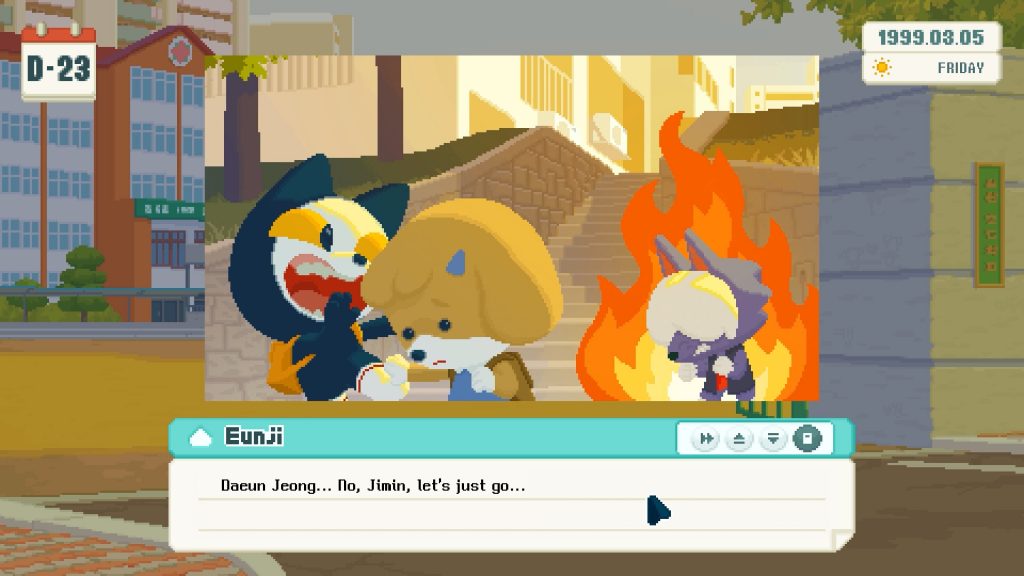
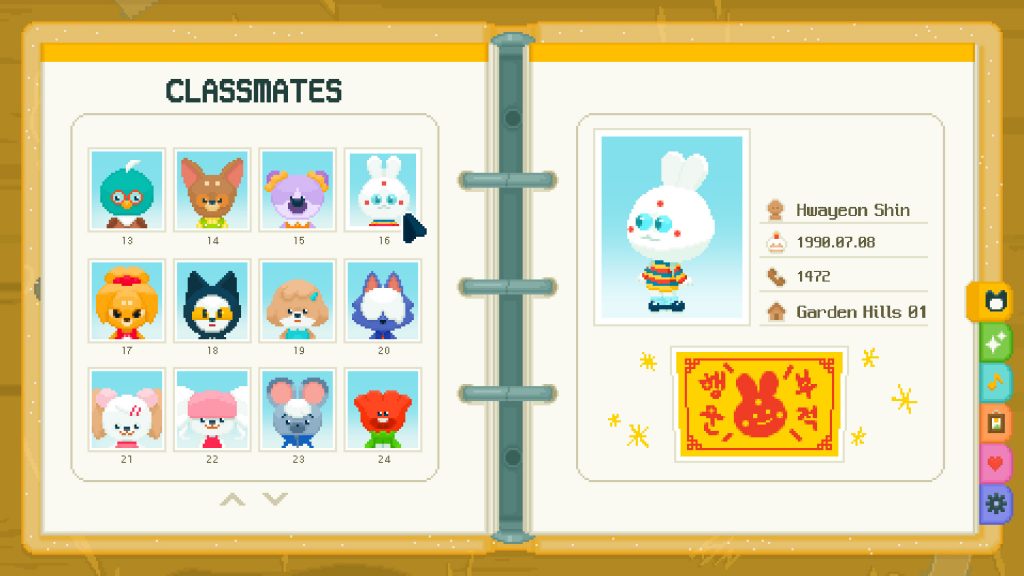
The narrative architecture is built around relationships. Jimin’s classmates aren’t archetypes; they’re characters with their own personalities, family situations, and quiet problems. Who Jimin befriends, who she trusts, and how she handles the secrets she stumbles into shape the entire arc.
Twelve endings is a serious branching commitment for a solo project, and the structure suggests genuine replay value rather than minor variations on a single conclusion. Whether Jimin makes real friends, whether she actually wins the class president election, whether the birthday party her mother promised ever happens — none of it is guaranteed. The Steam tags (“Multiple Endings,” “Choices Matter,” “Branching Narrative”) indicate that the writing density and decision weight are central rather than ornamental.
For a visual novel, that’s the right place to invest. The genre lives or dies on whether choices feel meaningful, and twelve distinct endings tied to a tight relationship system is a structure designed to make every playthrough resolve differently.
A Solo Project With Real Backing
The combination of credits here is unusual and worth flagging. SIMSANG YOON conceived and developed the game alone — the kind of authorial solo project that tends to live or die on word of mouth. But the publisher is LINE Games Corporation, one of Korea’s larger games companies, which brings real distribution muscle and the kind of multi-platform, multi-language launch that solo developers rarely manage on their own.
That pairing reflects a broader trend in the Korean indie scene: larger domestic platforms and publishers increasingly willing to back small, personal, deeply local projects rather than chasing only mainstream-friendly material. A 1999 Korean elementary school is about as hyperlocal a setting as a game can pick, and the fact that it’s getting a global rollout — Steam, STOVE, plus TikTok, Instagram, YouTube, Discord, and Bluesky presence aimed at international audiences — says something interesting about where Korean indie publishing is heading.
The four-language localization (Korean, English, Japanese, Simplified and Traditional Chinese) is also a meaningful signal. It tells you the publisher believes the cultural specificity is a feature, not a barrier. That’s the right read; the games that travel furthest internationally are almost always the ones that commit hardest to their own particularity.

What It’s Really About
Strip the period setting away and Come to My Party! It is a game about the particular cruelty of being a child who isn’t seen. About a conditional promise from a parent — if you become class president, then you get a party — and what that conditionality does to a kid who’s already invisible at home. About the political microclimate of elementary school, where popularity, family expectations, and small betrayals all carry weight that adults have mostly forgotten.
That’s the kind of subject matter games don’t usually take seriously. When they do, they tend to wrap it in genre conventions — horror, fantasy, metaphor — that give the audience an out. Come to My Party! doesn’t take the out. It plays the situation straight, with the pixel art and the comedy doing the work of making it bearable.
The result, judging from the demo, is the kind of game that produces a specific reading experience: you laugh through most of it, and then at some point you stop laughing for a second, and the game keeps going.
What to Watch For
A few things will shape how the full release lands. First, whether the twelve endings feel meaningfully distinct or cluster around a few core resolutions. Second, whether the comedy holds across the longer arc — black comedy is hard to sustain without either tipping into nihilism or softening into sentimentality. Third, how international players respond to the cultural specificity. The bet here is that hyperlocal travels, and the demo suggests it does, but the full release is where that bet really gets tested.
None of these are concerns about the project’s quality. They’re the natural open questions for an ambitious solo visual novel.
The Takeaway
Come to My Party! is the kind of indie project that justifies why the indie scene matters: a story no big publisher would commission, told by one person who clearly has something specific to say, backed just enough to actually reach people. The 1999 Korean elementary school setting could read as gimmick in less careful hands. Here, it reads as the only setting this story could take place in.
For players who follow visual novels, Korean indie, or character-driven dark comedy, this is one to wishlist. The demo is free on Steam right now, and it’s the fastest way to find out whether the game’s particular wavelength matches yours. The full release is scheduled for Q4 2026.
‘Come to my party!’ Related Information
| item | detail |
|---|---|
| developer | SIMSANG YOON (Korea, Solo Developer) |
| Publisher | LINE Games Corporation |
| Genre | Black Comedy Visual Novel / Interactive Fiction / Adventure |
| Release platform | PC (Steam) / STOVE |
| Scheduled for release | Fourth quarter of 2026 |
| background | 1999 Korean elementary school |
| Number of endings | 12 kinds |
| Language support | Korean · English · Japanese · Chinese (Simplified · Traditional) |
| Main Theme | Childhood, friendship, alienation, family, school politics, growth |
| Main Keywords | Black comedy, 1990s, Korea, elementary school, choice, multiple endings, nostalgia |
| Official Channel | TikTok · Instagram · X · Discord · YouTube · Bluesky |
| Steam Page | Go to Wishlist |