A haunted house livestream. Chat is going insane. Something is moving in the corner that wasn’t there before. And the viewers — thousands of them, real or simulated — are doing things to the situation that you didn’t ask them to do. Dark Stream, the first-person psychological horror game from Polish developer RedDeer.Games (published by Skystone Games, the company co-founded by Diablo creator David Brevik), has released its demo to 100% Positive Steam reception while participating in Steam Next Fest, and it represents one of 2026’s more genuinely novel horror premises: streaming as a survival mechanism, and the audience as part of the horror.
The concept merges streaming culture’s specific anxieties with haunted house investigation through Twitch chat integration — real-time viewer responses that influence what happens inside the haunted house during the livestream. Whether those viewers help or harm, whether the anomalies respond to them or to the streamer, whether staying live is survival or escalation — these questions define Dark Stream‘s specific flavor of dread.
The Fallen Creator Premise
The setup is specific and contemporary. The player is a content creator who once had popularity but lost it — someone whose streaming career has declined and who sees one last opportunity in the most extreme content imaginable: a genuine livestream from a house with decades of disturbing history, with no plan to cut the feed, no matter what happens.
This “fallen creator’s last gamble” premise is more psychologically resonant than generic haunted house framing. The motivation is understandable and human: desperation driving someone to cross lines they might not otherwise cross, the way content creators increasingly feel pressure to escalate toward more extreme content to maintain audience attention. The streamer protagonist isn’t brave or stupid — they’re economically and socially cornered.
This context transforms the streaming-must-continue game mechanic from pure, arbitrary constraint to a psychologically motivated decision. Why keep streaming when things get genuinely dangerous? Because the viewers are there. Because stopping means admitting failure. Because the numbers going up might be the only metric of worth the character has left. The mechanics are the story.
The house’s paranormal history — decades of disturbing rumors — provides the expected haunted-location foundation, but the overlay of streaming culture’s specific economics and anxieties gives Dark Stream thematic distinctiveness that pure supernatural horror can’t match. The most frightening thing isn’t always the entity in the house; sometimes it’s the audience relationship that puts you in the house.
The Twitch Chat Integration
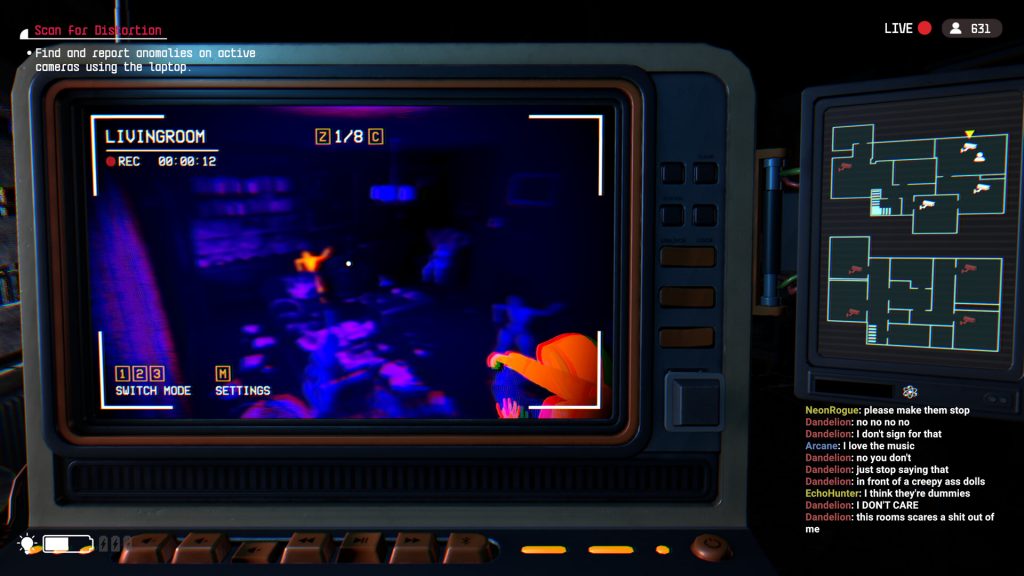
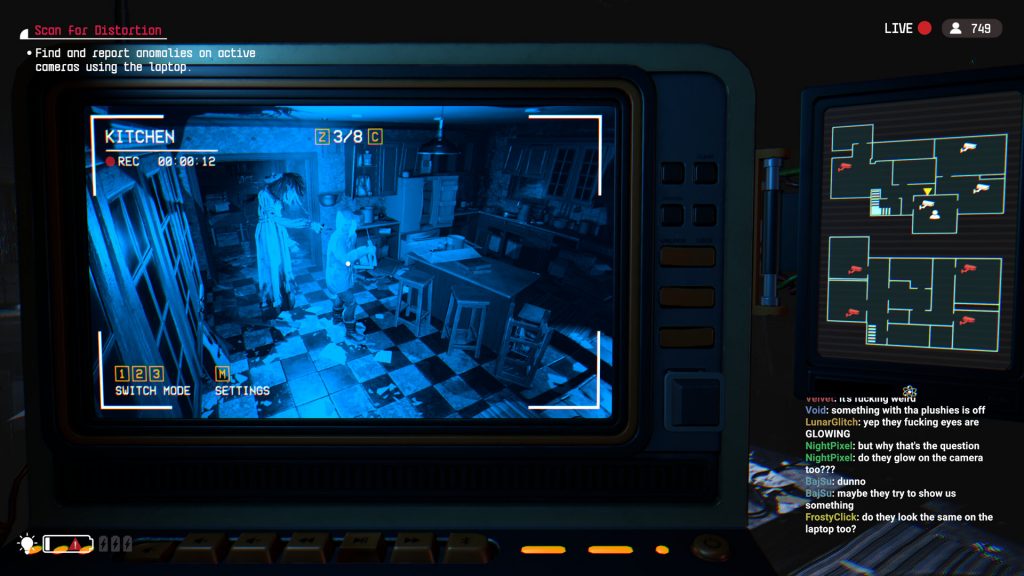
The technical integration of Twitch chat into horror gameplay is Dark Stream‘s most distinctive design element. During the livestream within the game, viewers react in real-time — encouraging the player, stirring up chaos, or making situations more dangerous. Players face horror not alone but under the gaze of an audience that participates in what happens.
This creates a social dimension to horror that pure single-player games typically lack. Horror is fundamentally about vulnerability, and being watched while vulnerable is a specific kind of exposure that resonates with contemporary streaming culture’s particular anxieties. The streamer protagonist is simultaneously performing bravery for an audience and genuinely afraid, and these two states reinforce each other’s discomfort.
For actual streamers playing Dark Stream, the Twitch integration could work in multiple layers. Their real Twitch chat could interact with the game’s simulation, creating a situation where their actual viewers become part of the horror experience. For non-streaming players, the simulated viewer responses still create the impression of audience presence — the game simulates the social context of streaming rather than requiring actual viewers.
COGconnected’s description captures the escalation: “when the stream starts, viewers and chat explode, but soon you realize this house isn’t just background. The house responds and remembers and comes back.” The house as active audience participant — something that notices the streaming, that responds to the broadcast context, that adapts to the attention it’s receiving — suggests Dark Stream is using the streaming frame as more than aesthetic. The house itself becomes a kind of viewer, aware that it’s being watched.
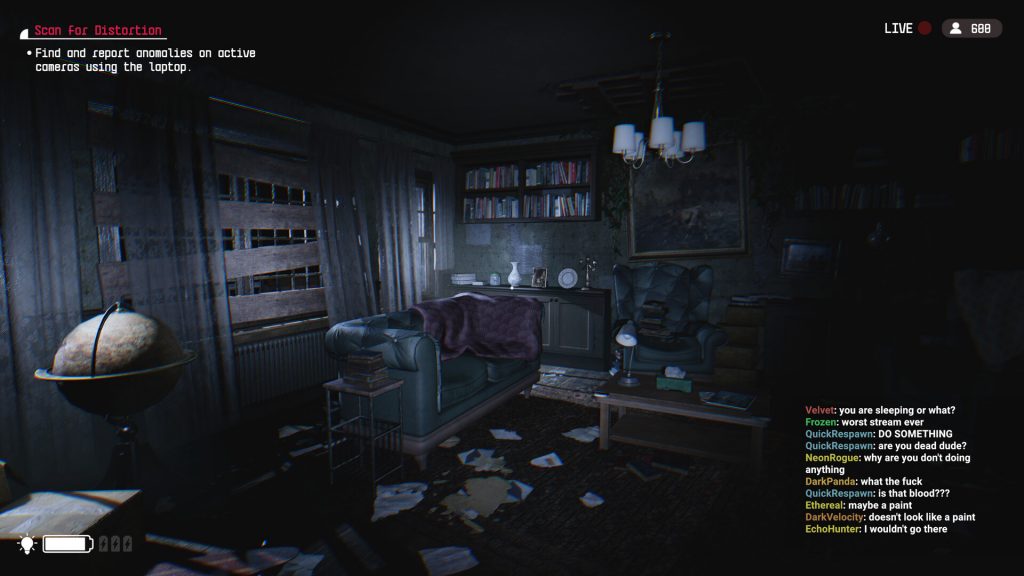
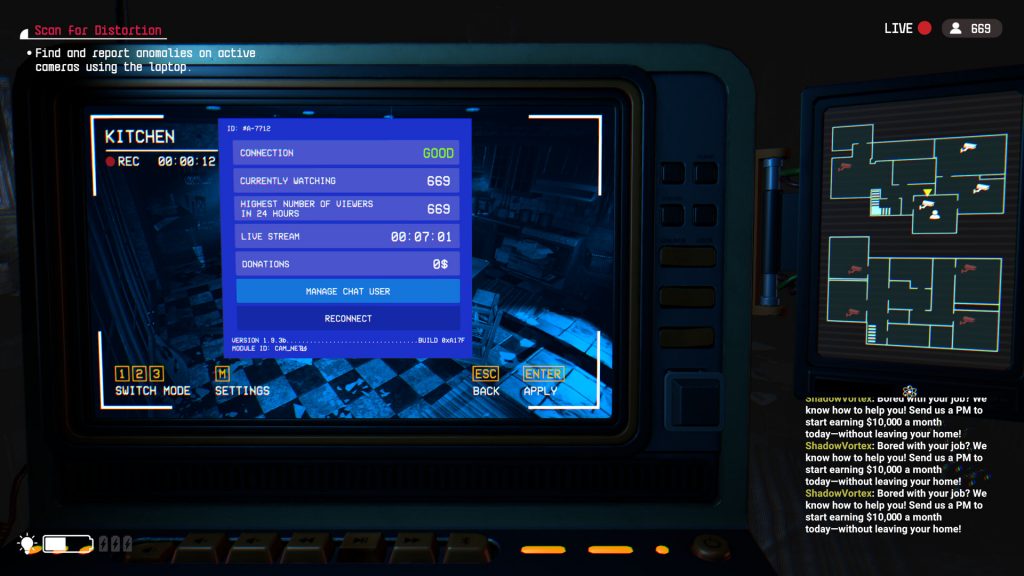
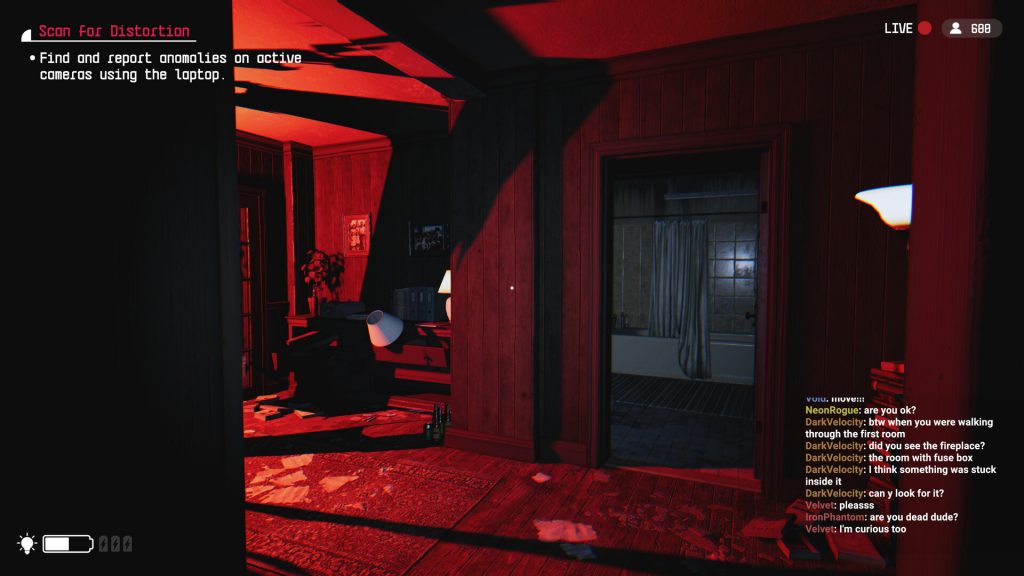
The Adaptive Anomaly System
The core investigation loop involves identifying and analyzing anomalies — the supernatural occurrences that happen throughout the house. The game uses a behavior-reactive anomaly system rather than scripted events, meaning what happens depends on player actions and choices throughout the investigation.
This adaptivity provides replay value and makes the horror feel less like a rollercoaster (fixed events at fixed points) and more like a relationship (the house learns from the player as the player learns from the house). Correct identification of what’s happening stabilizes the situation and reveals hidden truths; incorrect choices make the house more dangerous and unpredictable.
The observation-interpret-experiment investigation loop asks players to watch carefully, draw conclusions about the anomaly type and nature, and test those conclusions through actions. This is the Phasmophobia investigation loop applied to a psychological horror solo experience — the satisfaction of correct identification rather than survival as the primary success condition.
The room-by-room exploration structure provides graduated revelation. New rooms unlock as the investigation progresses, connecting clues into a larger narrative about what happened in this house and why the supernatural phenomena take the forms they do. The mystery deepens through exploration rather than through exposition.
The Psychological Horror Register
Dark Stream explicitly prioritizes atmospheric psychological tension over jump scares. Objects move by themselves, unexplained sounds emerge from wrong locations, whispers fill the space — but the design focuses on building gradual pressure rather than sudden shocks.
This design philosophy aligns with the streaming context in specific ways. Jump scares are effective in part because of their social dimension — the streamer’s involuntary reaction becomes content, the viewer shares the surprise. Dark Stream, by contrast, creates the kind of sustained dread that builds over long streaming sessions, the creeping feeling that something is fundamentally wrong that persists across the entire broadcast. This is a different kind of streaming horror content than the jump-scare clip culture produces.
The “something that’s been waiting for a long time” atmosphere the press materials describe is effective when it emerges from design rather than from description. The house that has decades of disturbing history isn’t just a setting; it’s accumulated potential energy waiting to discharge through the specific interaction of a livestreaming camera and whatever the house needs from that attention.
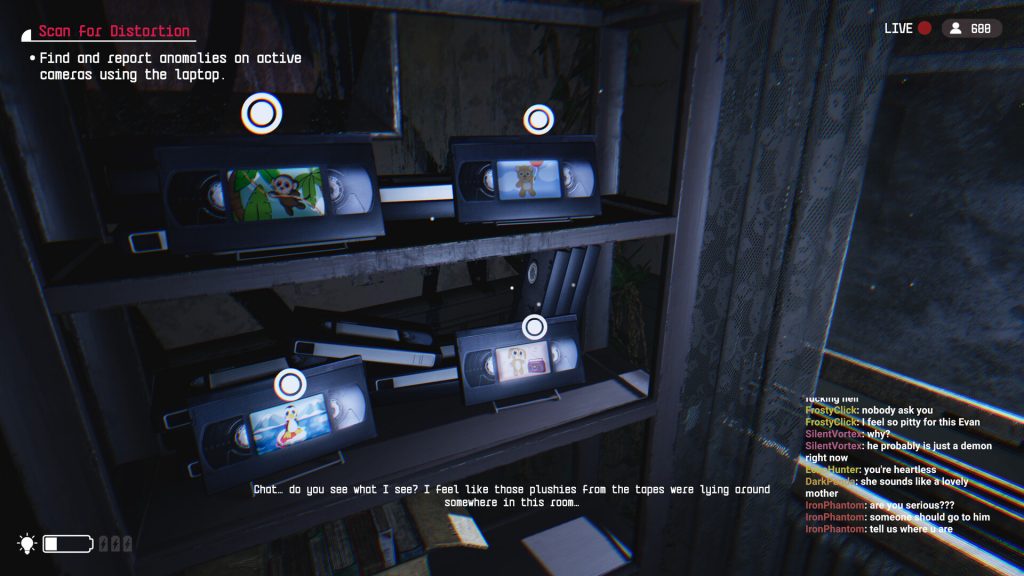
Bloody Disgusting’s framing — “a unique challenge of conducting a live broadcast in a haunted location while enduring supernatural phenomena” — correctly identifies the challenge structure. Enduring while broadcasting is the game’s specific demand, and the word “enduring” captures the sustained pressure model that Dark Stream apparently employs.
The Skystone Games Publishing Context
Skystone Games’ involvement with Dark Stream marks the second horror project in this publisher’s portfolio that we’ve covered recently, alongside Mistfall Hunter. The company co-founded by Diablo creator David Brevik is building a catalog that spans the horror and dark fantasy space, and Dark Stream‘s contemporary horror anchoring in streaming culture provides a distinctive complement to Mistfall Hunter‘s dark fantasy extraction approach.
RedDeer.Games as a developer is a Polish studio with an extensive portfolio across multiple genres. Their capacity to pursue a genuinely experimental project like Dark Stream — which requires both technical Twitch integration and the design sophistication to make chat interaction feel meaningful rather than gimmicky — reflects the kind of creative ambition that distinguishes experimental work from commercial formula.
The Polish gaming industry has been growing in visibility and capability across recent years, with studios like CD Projekt RED establishing it as a serious development nation. Dark Stream represents the Polish indie scene’s engagement with contemporary gaming culture’s most specific anxieties — streaming, parasocial audiences, the economics of content creation — through the traditional horror genre’s lens.
The Demo Performance
100% Positive from 10 demo reviews is a small sample, but an encouraging signal. Horror game demos face specific evaluation challenges: the atmosphere needs to establish itself quickly, the core mechanic needs to communicate clearly, and players need to leave wanting the full experience rather than feeling like they’ve seen enough. The unanimous positive response suggests Dark Stream is threading these challenges.
The demo’s public release timing — aligned with Steam Next Fest and coinciding with the announcement — provides maximum visibility for initial impressions to form the narrative around the project. First-impression horror demos that generate strong atmospheric word-of-mouth can build sustained wishlist momentum through the development period.
Who This Is For
Strong fit for: psychological horror enthusiasts who appreciate sustained atmospheric dread over jump scares; streamers who play horror games and want a title specifically designed for their platform; Phasmophobia fans who want a solo investigation horror experience; found-footage horror enthusiasts; players interested in meta-commentary on streaming culture and content creation; Dark Stream (the Korean horror film) and Searching fans who appreciate screen-based horror framing; investigation game enthusiasts.
Cautious fit for: players who specifically prefer combat or active defense mechanics in horror games; anyone who finds the streaming culture framing more cynical than interesting.
Less ideal for: players who require action-focused horror; anyone who dislikes investigation-based gameplay; players who want clear horror rules rather than adaptive anomaly systems.
What to Watch For
A few questions will shape Dark Stream‘s 2026 release trajectory.
The first is how the Twitch integration feels across different streaming contexts. Players who stream will have a fundamentally different experience than players who don’t, since their real chat can interact with the game’s simulation. Whether Dark Stream works equally well for both audiences — and whether the simulated viewer experience for non-streamers is convincing enough — will determine audience breadth.
The second is the adaptive anomaly system’s variety. Behavior-reactive horror depends on the anomaly system having sufficient variety that different playthroughs feel meaningfully different rather than merely reordered. Whether the investigation system generates genuine replay value or whether the underlying content is limited will affect long-term reception.
The third is the narrative depth. Investigation horror lives on, whether the mystery being revealed is worth the sustained tension required to reveal it. How compelling Dark Stream‘s specific house history and supernatural explanation are will determine whether the experience is ultimately satisfying.
The fourth is the balance between streaming performance and horror. The game requires players to keep the broadcast going, but horror’s most effective moments are often ones where the player loses composure. Whether Dark Stream finds ways to make losing composure cinematically interesting rather than just mechanically punishing will affect how the streaming-as-survival mechanic feels.
The Takeaway
Dark Stream is one of 2026’s more genuinely experimental horror premises, combining real Twitch chat integration with adaptive supernatural investigation and the specific psychological terrain of streaming culture’s fallen-creator desperation. The 100% Positive demo reception indicates the atmospheric foundation works; the full release will determine whether the adaptive anomaly system and streaming integration sustain the experience across its complete runtime.
For horror fans interested in games that engage with contemporary culture rather than purely traditional genre territory, Dark Stream offers exactly this combination. The haunted house isn’t just a house — it’s a set for a broadcast, and the question of whether performing bravery for an audience makes danger feel more or less real is exactly the kind of thematic question that contemporary horror should be exploring.
For streamers specifically, Dark Stream represents one of the year’s most directly platform-specific horror experiences. A horror game that literally integrates your Twitch chat into its mechanics isn’t just a horror game you happen to stream — it’s a horror game that acknowledges and engages with the specific social context of streaming, making your audience complicit in whatever happens.
A fallen content creator’s last gamble. A house that has waited decades. A live stream that can’t stop. Viewers who might help or might make everything worse. And something inside the house that responds to being watched — that remembers, and comes back.
The stream is live. The chat is exploding. And something in this house has been waiting specifically for an audience.
Don’t go offline.
Information regarding ‘ Dark Stream’
| item | detail |
|---|---|
| Developer | RedDeer.Games (Poland) |
| Publisher | Skystone Games (co-founded by David Brevik and Bill Wang) |
| Genre | First-person psychological horror / Interactive investigation / Adventure |
| Release platform | PC (Steam) |
| Scheduled for release | 2026 (Date TBD, Demo Available) |
| Demo Review | 100% Positive (10) |
| Demo release date | June 15, 2026 |
| core system | Real-time Twitch chat integration / Behavioral anomalies / Observation-Interpretation-Experimental investigation loop |
| Play Mode | Single Player (including virtual Twitch viewer reactions) |
| inspiration | Don’t Go Live / Found Footage Horror |
| Main Keywords | Twitch, Live broadcast, Haunted house, Psychological horror, Investigation, Surbaton, Creator |
| Official Channel | Discord · Facebook · X · YouTube · Instagram · TikTok · Twitch · Bilibili · QQ |
| Steam Page | Go to Wishlist/Demo |