Your hero’s journey requires HR approval. The quest rewards are company vouchers redeemable for branded merchandise that improves your stats. Your party is assembled through a corporate team-assignment process. And if you want to romance a companion, you’ll need to file the appropriate paperwork first.
Ledgerbound, the debut project from Los Angeles-based fully-remote indie studio OmniMegaSuperCorp, announces its August 11 release date after a brief delay from the original July 14 target. The delay announcement was issued by in-game HR representative Jazz as an internal company notice — a communication choice that generated positive community response and demonstrates that the studio’s corporate satire extends beyond the game itself into how they talk about the game.
The creative credentials attached to this debut are notable for a studio founded in 2023: a Helldivers 2 scriptwriter on story, and a voice cast that includes Matthew Mercer (Overwatch, Resident Evil, Final Fantasy), Ben Starr (Final Fantasy XVI, Hades II), Stephanie Kerbis, and Jeff Leach.
The Corporate Fantasy Premise
The world of Eldarra is doing something specific that distinguishes Ledgerbound from simple workplace parody. Rather than inserting contemporary office culture as a joke layer over a traditional fantasy setting, the game appears to have fully integrated corporate logic into the fantasy world’s operating system. The result isn’t “what if office workers were also adventurers” but “what if the entire structure of a fantasy society were organized around corporate principles.”
This distinction matters for the satire’s depth. Surface-level corporate parody (the boss is called a manager, the dungeon is called a project) produces easy recognition jokes that exhaust quickly. Structural corporate satire — where the logic of corporate culture has genuinely replaced the logic of traditional fantasy society — produces situations where the absurdity compounds because the rules are being followed consistently rather than just referenced.
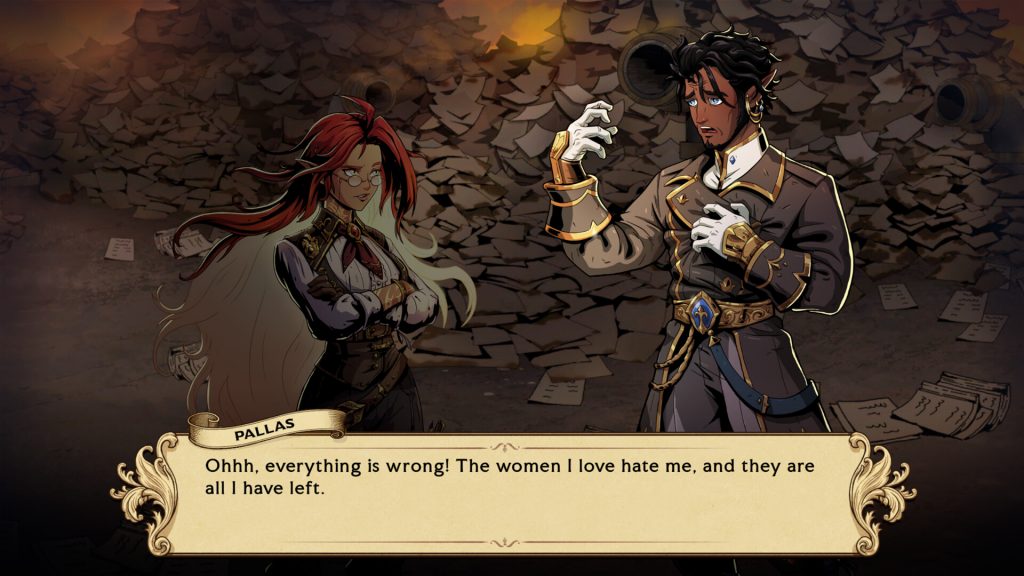
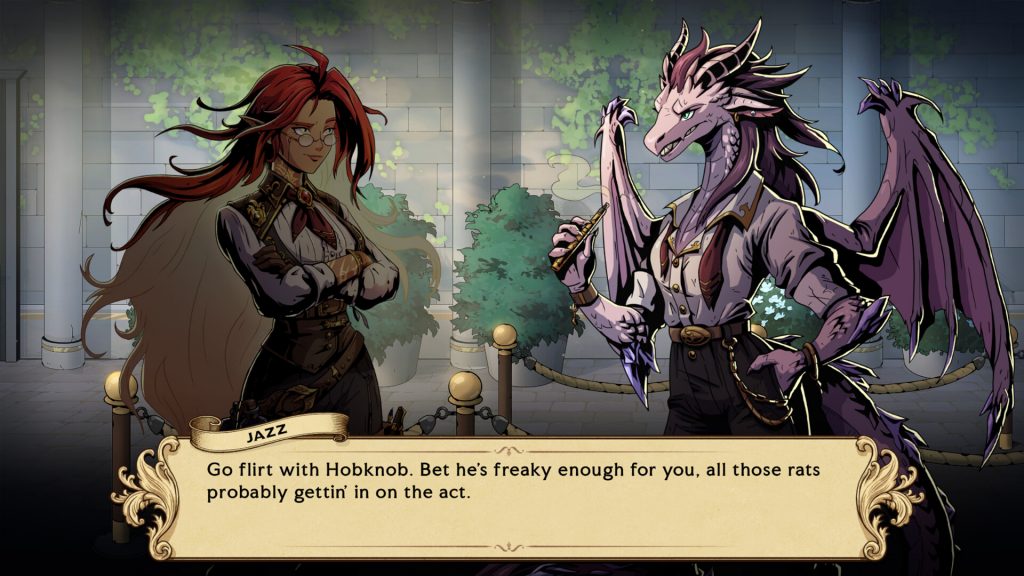
The HR-approval romance mechanic is the best example. This isn’t a joke about HR departments. It’s a structural feature of how relationships work in Eldarra — a world where the bureaucratic apparatus of corporate life has colonized private emotional experience. If the game commits to this logic consistently, filing the HR romance approval becomes genuinely meaningful gameplay rather than a throwaway gag.
The company voucher reward system follows the same logic. Gold in fantasy games represents freedom and power; company vouchers redeemable for corporate merchandise represent the opposite — compensation that keeps you within the system’s economy rather than accumulating independent resources. The corporate-branded merchandise that improves stats is a specific critique of how contemporary workplaces encourage identity investment in the company’s brand. These are satirical ideas with genuine intellectual content, not just comedic window dressing.
The Helldivers 2 Writer Connection
Helldivers 2‘s writing is the most relevant credential for understanding what Ledgerbound is aiming for tonally. Helldivers 2 achieved something that most satire games attempt and fail: it created a genuinely funny, sustained satirical voice that operated across every element of the game — the mission briefings, the political speeches, the equipment descriptions, the democratic propaganda — without the jokes wearing out across extended play.
The Helldivers 2 satirical model is specifically relevant because it’s not satirizing a real institution from the outside. It created a fictional institution (Super Earth’s democracy) and then satirized it from within, as if the game’s text genuinely believed in Super Earth’s ideology. This “straight-faced commitment to absurd premises” comedic approach is exactly what Ledgerbound‘s corporate fantasy setting requires. Eldarra’s corporate culture should feel genuinely believed in by its inhabitants, with the humor emerging from the logical consequences of those beliefs rather than from winking at the player about how absurd it all is.
The Matthew Mercer Factor
Matthew Mercer’s involvement as a voice actor carries specific industry meaning. Mercer is one of the most recognized voice actors in gaming — his Overwatch (McCree/Cole Cassidy), Resident Evil (Leon Kennedy), and numerous other roles, combined with his Dungeons & Dragons streaming prominence through Critical Role, make him a recognizable talent whose name on a project signals production quality investment.
For a debut studio’s first game, securing Mercer (alongside Ben Starr, who voiced Clive Rosfield in Final Fantasy XVI and Mephisto in Hades II) represents significant casting ambition. These aren’t secondary voice actors — they’re performers whose work in major franchises means the audience knows what they sound like and what quality they deliver.
The voice cast’s scale for an indie debut also signals something about investor confidence in the project. Voice casting at this level requires a budget that studio-funded debut projects typically don’t have, which suggests either strong external investment, publisher backing, or both.
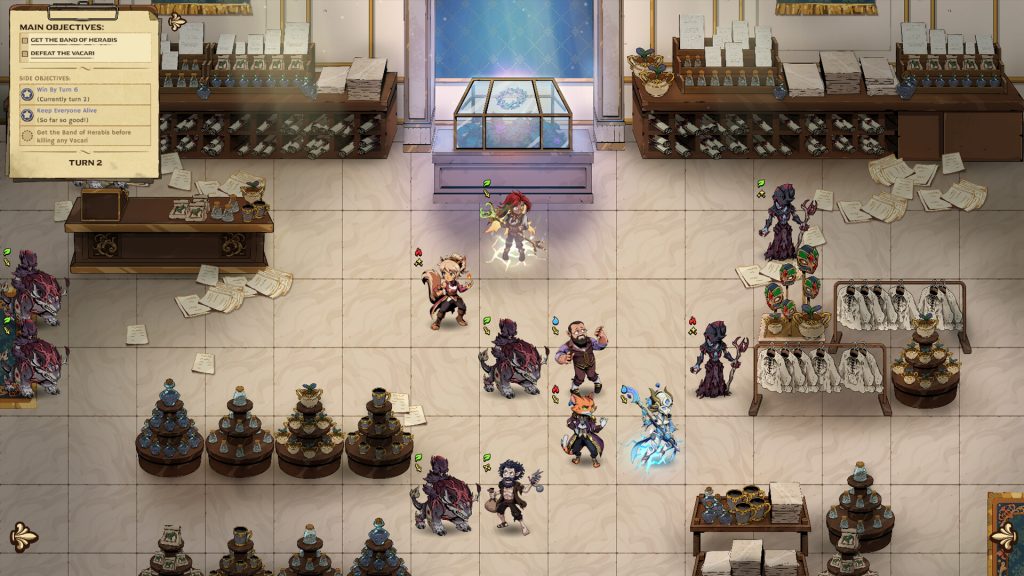
The Rock-Paper-Scissors Combat Foundation
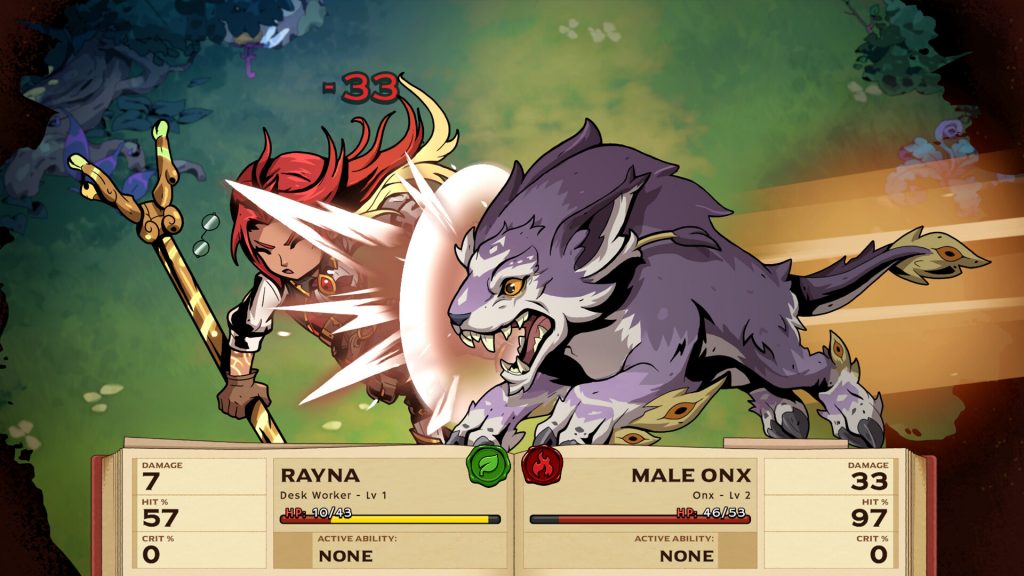
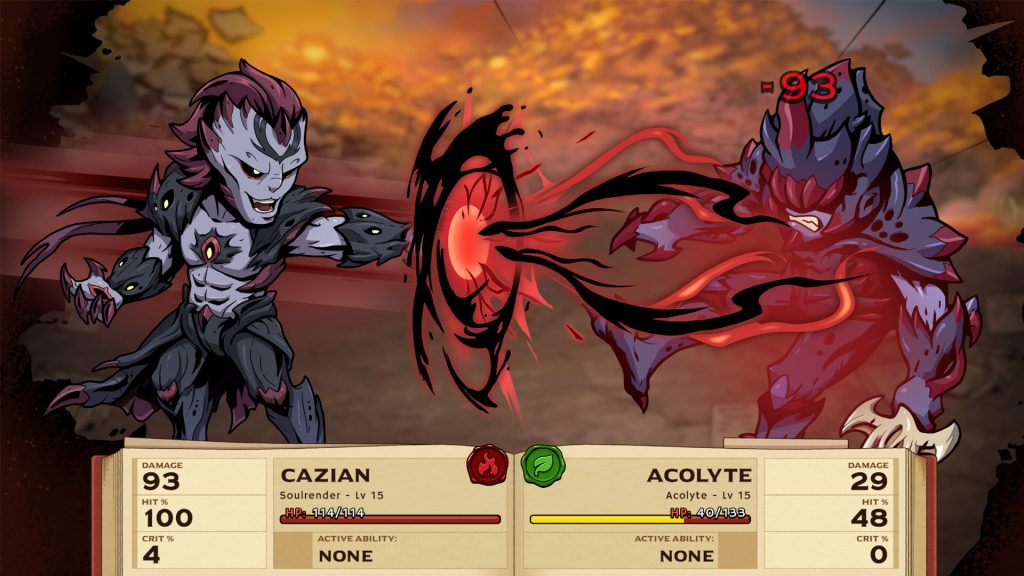
The rock-paper-scissors combat mechanic is the design choice most worth examining carefully. RPS as a combat foundation, has a specific property: it’s completely universally understood, creates immediate legibility, and generates decisions that feel meaningful even at the simplest level. Everyone knows what beats what; the question is whether you can read your opponent’s next move and counter it.
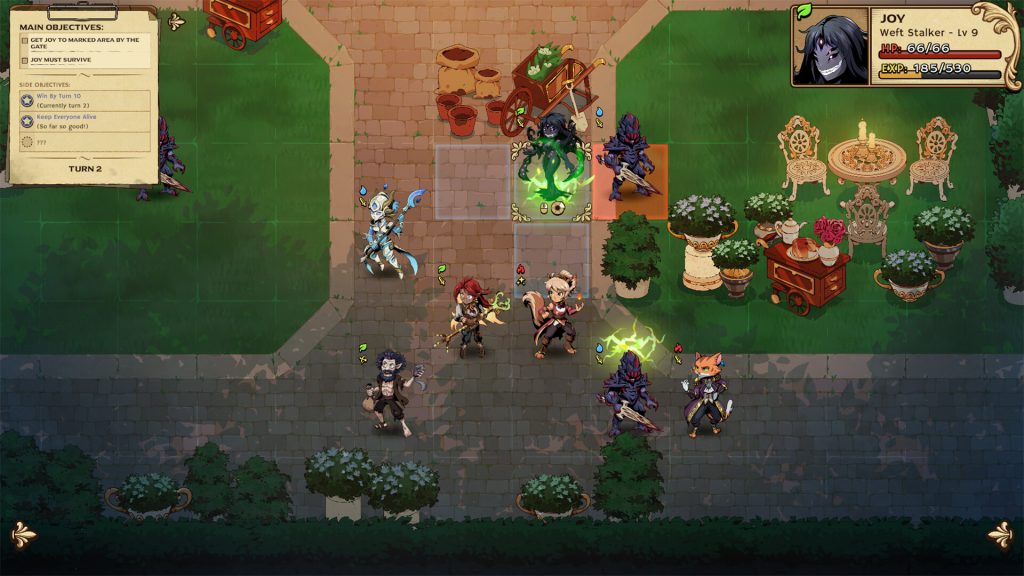
Applied to tactical RPG combat, RPS creates a triangle of combat advantages that party composition needs to address. If Swords beat Shields, Shields beat Spells, and Spells beat Swords (or whatever the specific equivalents are in Eldarra’s corporate fantasy taxonomy), then building a party and positioning them against varied enemy types produces the strategic layer that turns the simple mechanic into genuine tactical decision-making.
The risk with RPS-based combat is that it can feel random or oversimplified if the enemy type presentation isn’t clear enough to allow meaningful player prediction. If players can read what they’re fighting and plan accordingly, RPS combat produces satisfying tactical engagement. If enemy types are opaque until after the attack, RPS becomes guesswork rather than strategy.
The description — “simple rules, but how you use party composition and advantage combinations significantly changes combat flow” — suggests the development team has built the strategic depth layer rather than relying purely on the foundational mechanic. Whether the implementation delivers this combination of accessibility and depth will be the primary mechanical evaluation.
The Delayed Communication as Branded Content
The decision to announce the delay from July 14 to August 11 through an in-character HR notice from “Jazz” is a small thing that reveals significant creative identity. Studios handle delay announcements in various ways: formal apology posts, straightforward factual updates, sometimes nothing at all. Using the delay announcement as an opportunity to demonstrate the game’s voice — staying in character while communicating a real-world business decision — turned what could have been negative news into a community engagement moment.
Community response was positive. Players who found the HR notice charming are already engaged with the game’s satirical premise before playing it. This is the kind of consistent brand communication that builds pre-release goodwill without requiring separate marketing spend.
The studio name itself — OmniMegaSuperCorp — is doing the same work. It’s immediately legible as satirical corporate naming while being specific enough to have personality. The layers (Omni, Mega, Super, Corp, all stacked) suggest the specific variety of corporate hubris the game is targeting.
The Fully Remote Development Model
OmniMegaSuperCorp, operating as a fully remote studio founded in 2023, reflects the broader transformation of game development infrastructure post-pandemic. Games can now be developed by distributed teams who have never shared physical space, with collaboration tools enabling the kind of coordination that previously required co-location.
For a satirical corporate game specifically, the fully remote development model has an obvious ironic dimension: the studio making a game about the absurdity of corporate culture is itself a remote-work company navigating the realities of distributed professional life. Whether the development team finds this self-referential or merely coincidental is unclear, but it’s the kind of detail that adds texture to the studio’s identity.
Debut games from remote studios face specific challenges around team coordination, project scope management, and the difficulty of building shared creative culture without shared physical space. The delay (from July 14 to August 11) suggests the team encountered some of these challenges and chose quality over deadline, which is the correct call for a debut game where the initial reputation stakes are highest.
Who This Is For
Strong fit for: tactical RPG enthusiasts seeking tonal alternatives to earnest fantasy settings; players who appreciated Helldivers 2‘s satirical voice and want that applied to RPG structure; Matthew Mercer and Ben Starr fans who follow voice actor work across titles; office culture veterans who will find the corporate fantasy setting specifically resonant; Disco Elysium fans who appreciate games with genuine satirical intelligence rather than surface-level parody; romance simulation enthusiasts who want relationship mechanics embedded in unusual contexts.
Cautious fit for: players who specifically want earnest fantasy RPG settings rather than satirical ones; tactical RPG enthusiasts who may find RPS-based combat too simple compared to deeper strategy systems; players skeptical that corporate satire can sustain across a full RPG rather than burning out quickly.
Less ideal for: players who dislike turn-based combat; anyone who finds workplace humor unfunny rather than cathartic; players seeking action RPG mechanics.
What to Watch For
A few questions will shape Ledgerbound‘s August 11 reception.
The first is whether the corporate satire maintains depth across the full game. Satire that’s brilliant in the first hour can become exhausting by the fifth if it repeats the same observations. Whether the Helldivers 2 writer has built a satirical architecture that escalates and reveals rather than simply repeating will determine if Ledgerbound is genuinely smart or merely clever.
The second is the depth of realization in RPS combat. The system’s accessibility is a strength; whether it generates enough genuine tactical decision-making across the game’s length to satisfy RPG-focused players will be the primary mechanical judgment.
The third is the romance system’s emotional payoff. HR-approval romance is a brilliant satirical conceit; whether the actual relationships formed through the game are emotionally engaging rather than merely funny will determine if players form genuine investment in the companions.
The fourth is the consistency of the world-building. Corporate fantasy settings require the internal logic to hold under scrutiny — the moment a joke breaks the established rules to be funny, the satire’s credibility weakens. Whether Eldarra maintains its satirical coherence or sacrifices it for easy laughs will affect sophisticated players’ engagement.
The Takeaway
Ledgerbound is one of August 2026’s more intriguing debut projects — a studio founded in 2023 that brings together Helldivers 2 writer Matthew Mercer, Ben Starr, and a corporate fantasy satire premise that could be genuinely smart or merely cute, depending entirely on execution.
The credentials suggest the team is aiming at something substantive. The satirical premise has genuine intellectual content beyond easy workplace jokes. The delayed decision prioritized quality over schedule. And the in-character HR delay announcement demonstrates the team knows what game they’re making and how to communicate it consistently.
Corporate satire in games has a poor track record — most attempts are superficial observations that exhaust within an hour. The Helldivers 2 writer’s involvement is the specific credential that suggests Ledgerbound might be the exception: a game that builds its satirical world deeply enough to sustain engagement, and commits to its absurd logic thoroughly enough to make the jokes work on something deeper than recognition.
The quest has been approved by senior management. KPIs have been established for this hero’s journey. Romance applications are available from HR. Company vouchers will be distributed upon dungeon completion.
Please remember that all loot obtained during company-sponsored quests remains the property of OmniMegaSuperCorp until properly processed through the rewards redemption system.
August 11. HR has been notified.
Information regarding ‘Ledgerbound’
| item | detail |
|---|---|
| Developer / Publisher | OmniMegaSuperCorp (Remote development / Founded in 2023) |
| Genre | Turn-based Tactical RPG / Dating Simulator |
| Release platform | PC (Steam) |
| Release date | August 11, 2026 (Postponed from July 14) |
| Script | Writer of *Helldivers 2* participated |
| Main voice actors | Matthew Mercer, Ben Starr, Stephanie Kerbis, Jeff Leach, etc. |
| Combat system | Turn-based tactical combat based on rock-paper-scissors mechanics |
| Main Content | Party Building / HR Approval Dating Simulator / Corporate Goods Upgrade |
| worldview | Eldarra, a fantasy world dominated by corporate culture |
| Main Keywords | Tactical RPG, Bureaucratic Fantasy, Comedy, Workplace Romance, Indie |
| Steam Page | Shortcut |