One of the most reliably chaotic party games of the past several years is coming back — and it’s bringing online play for the first time. Devolver Digital has announced that Heave Ho 2, developed by French studio Le Cartel, will launch July 16 across PC, Nintendo Switch, and Nintendo Switch 2. The sequel to the original Heave Ho — which sold approximately one million copies and stands as one of Devolver’s best-performing Nintendo Switch titles — brings the same handholding-and-falling slapstick formula to eight new themed worlds, adds a substantial roster of new items, and finally extends the experience to players who aren’t in the same room.
The original Heave Ho had a deceptively simple premise: players grab each other’s hands, swing across gaps, and try not to fall into the void below. What made it memorable was the emergent social comedy — the moment when you’re clinging to your friend’s arm over an abyss and you both know exactly what’s about to happen. That comedy of complicity and betrayal is difficult to design deliberately, and it’s exactly what Heave Ho 2 is betting can be recreated at larger scale.
Eight Worlds of Escalating Chaos
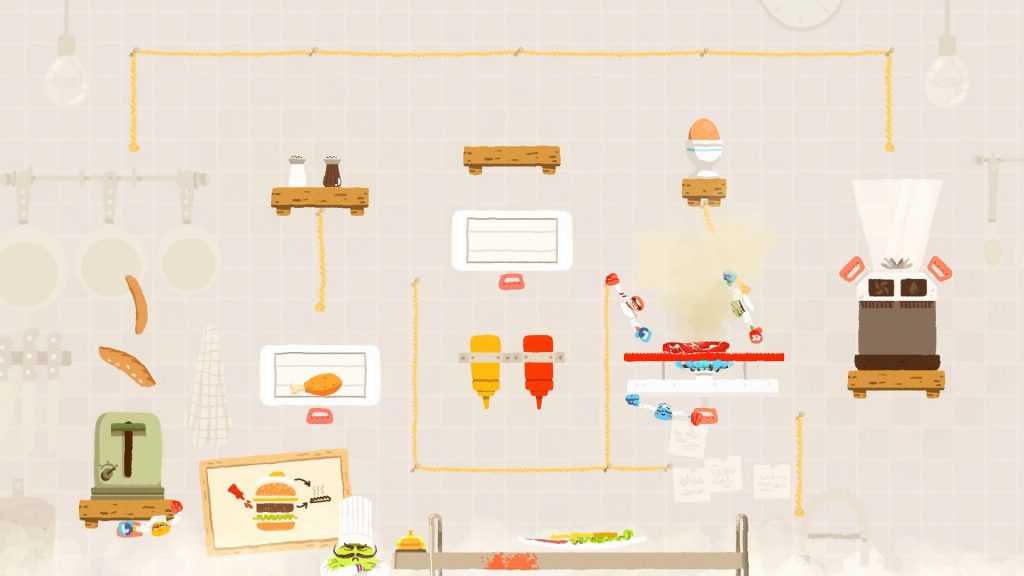
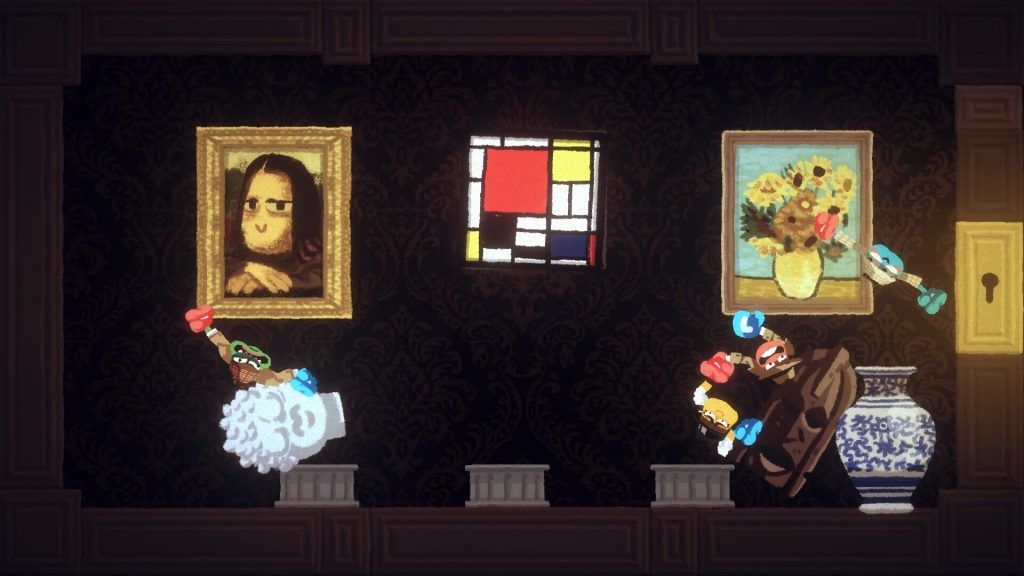
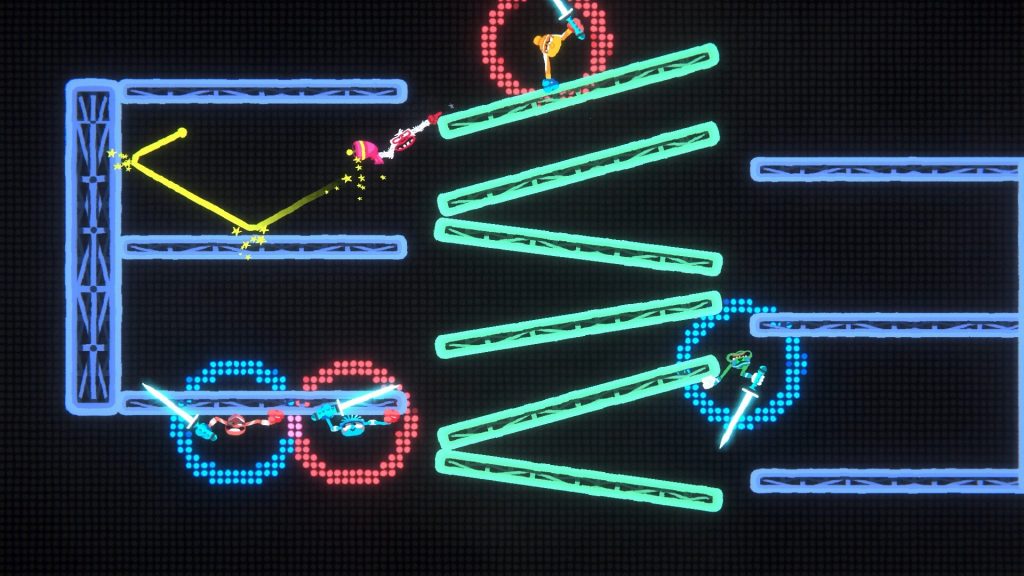
Where the original Heave Ho kept its setting relatively contained, Heave Ho 2 expands into eight distinct themed environments: zero-gravity space, a chaotic kitchen, a medieval battlefield, a ninja village, and four more. Each setting brings its own visual identity and presumably its own gameplay variables — the chaotic kitchen suggests cooking-related hazards and implements; the ninja village implies vertical environments and obstacle-course energy; the medieval battlefield opens up destructive possibilities.
This world variety addresses one of the few structural limitations of the original. Extended sessions of the same visual theme can lose novelty even when the gameplay remains fun. By cycling players through eight distinct environments, Heave Ho 2 builds in natural pacing variation and keeps the visual experience fresh across extended play.
The new items roster adds further mechanical variety. Pop guns, sauce bottles, levers, keys, and drones join the existing grabbing and swinging toolkit, each creating different tactical possibilities and, more importantly, different sources of comedy. A drone that might help carry a friend across a gap — or might be weaponized to knock them off — is exactly the kind of dual-purpose item that Heave Ho‘s design sensibility rewards.
The Online Multiplayer Addition
The most significant structural change in Heave Ho 2 is the series’s first online cooperative versus multiplayer. The original was a local multiplayer game in the purest sense — gathering in the same room, sharing a screen, experiencing the chaos together in physical proximity. That proximity was partly what made it work; the ability to look at your friend when you intentionally drop them is not something online play can replicate.
What online multiplayer does enable is something different but equally valuable: the ability to play with friends regardless of geography. The party game genre has been navigating this tension for years — Jackbox built an empire on smartphone-based remote play; Among Us proved that asymmetric social games can thrive online; Fall Guys built massive audiences through online chaos. Heave Ho 2‘s online addition positions it to reach players who loved the original but whose friend groups have dispersed since the local multiplayer era of whatever living room they played it in.
The proximity voice chat parallel is worth noting here: much like Sledding Game‘s proximity chat transforms digital space into social space, the Heave Ho 2 online mode will succeed or fail based on how well it recreates the social dynamics that made local play memorable. The game’s core comedy — the moment of betrayal, the shared catastrophe — needs to land across internet connections with whatever latency and technical distance that implies.
The Switch 2 GameShare Feature
Nintendo Switch 2’s GameShare feature support is a meaningful accessibility addition. One player who owns the game can play locally or online with up to three other users who don’t own it — a software-sharing model that reduces the barrier to entry for multiplayer sessions where not everyone wants to purchase separately.
For a party game specifically, this feature has real commercial logic. Heave Ho‘s audience was built substantially on local play sessions where one person owned the game and convinced friends to join. GameShare extends this dynamic to digital contexts — a single purchase becomes a social catalyst that introduces the game to three additional potential buyers. For Devolver and Le Cartel, the feature is both player-friendly and commercially sensible.
The Switch 2 platform itself positions Heave Ho 2 well within the Nintendo ecosystem. The original’s strong Switch performance — among Devolver’s best-performing titles on the platform — suggests that the Heave Ho audience skews heavily toward Nintendo’s portable/living room hybrid play style. The sequel landing as a Switch 2 launch-window title gives it visibility in the console’s still-building library.
The Le Cartel and Devolver Partnership
Le Cartel is a French indie studio whose partnership with Devolver on the original Heave Ho produced one of the publisher’s more unexpected commercial successes. One million sales for a local multiplayer party game is significant — the genre has a dedicated audience but rarely reaches those numbers without the kind of sustained word-of-mouth that Heave Ho achieved through streaming and content creation.
The sequel represents Devolver’s continued confidence in both the studio and the IP. Devolver’s editorial reputation has been built on publishing projects that larger publishers would pass on — and while a party game sequel might seem more conventional than some of their output, Heave Ho 2‘s structural innovations (eight worlds, online play, item variety) suggest Le Cartel has genuinely expanded the concept rather than simply repackaging what worked before.
The July 16 release timing places Heave Ho 2 in summer, historically strong for party games as people gather socially. The Steam demo currently available (supporting both online and local cooperative play) provides an immediate evaluation opportunity before the release date.
Who This Is For
Strong fit for: Heave Ho original fans who’ve been waiting for a sequel; party game enthusiasts seeking new friend-group rotation entries; Nintendo Switch and Switch 2 owners looking for social multiplayer; players whose friend groups are geographically dispersed (online play finally enables this audience); streamers and content creators who built audiences on the original’s chaos; anyone who enjoys physics comedy and the cooperative-betrayal dynamic.
Cautious fit for: players who specifically valued the local-only intimacy of the original and worry that online play dilutes the social dynamics; anyone looking for deep mechanical complexity over accessible party fun.
Less ideal for: solo players; anyone who dislikes physics-based party games; players seeking narrative or progression-driven experiences.
What to Watch For
The primary question for Heave Ho 2 is whether the online multiplayer successfully translates the social comedy that made local play memorable. Physics-based party games are technically demanding online — latency affects the feeling of physics, desyncs can break the shared chaos that produces comedy, and the social reading of “is my friend about to drop me” requires real-time responsiveness that internet play complicates.
The second question is world variety depth. Eight themed environments are a strong foundation, but whether each world feels meaningfully distinct in its gameplay implications — not just visually — will determine whether the sequel justifies the progression from the original.
The third is the item system balance. New items like pop guns and drones add mechanical variety, but party game item systems require careful balance to ensure new additions create comedy rather than frustration. Whether Le Cartel has calibrated these additions well will emerge quickly from player sessions.
The Takeaway
Heave Ho 2 arrives with a strong commercial foundation (a million-seller predecessor), genuine structural expansion (online play, eight worlds, new items), platform alignment (Switch and Switch 2 natural homes for party games), and the Devolver editorial brand that helps party games find audiences beyond hardcore gaming communities.
For party game enthusiasts, the July 16 release date and currently available Steam demo make this one of summer’s clearest recommendations — particularly for friend groups who want to bring the Heave Ho experience to players who can’t be in the same room. Whether it’s swinging through zero-gravity space or causing chaos in a medieval battlefield, the fundamental proposition remains what made the original work: grab your friend’s hand, swing toward something dangerous, and see what happens when trust and physics collide.
The void is waiting. The new items are loaded. And on July 16, one of indie gaming’s most reliably social experiences comes back with a sequel that asks a straightforward question — what if the people you wanted to play with were anywhere in the world?
Grab hold. Don’t let go. Or do. That’s always been the choice that makes Heave Ho worth playing, and the sequel is betting it’s just as funny when your friend is across the planet as when they’re sitting next to you on the couch.