You’ve fallen alone into a world populated entirely by monsters. All you have is a rundown, dilapidated inn. But when night falls, monsters with distinct personalities begin knocking on the door. Monsterest (괴물여관), the inn management RPG from solo Korean developer Sile, has just released free web demos through both Itch.io (browser-playable, no installation) and Steam, and it’s generating the kind of warm reception that connects a culturally-rooted indie project with the global cozy gaming audience that’s been waiting for exactly this.
After a Tumblbug crowdfunding campaign that raised over 62 million KRW from 1,915 backers — achieving 783% of its funding goal — Monsterest is heading toward Steam Early Access with substantial domestic validation and growing international interest. The web demo’s no-install accessibility makes it one of the more immediately approachable Korean indie demos of the year.
The Inn Management Framework
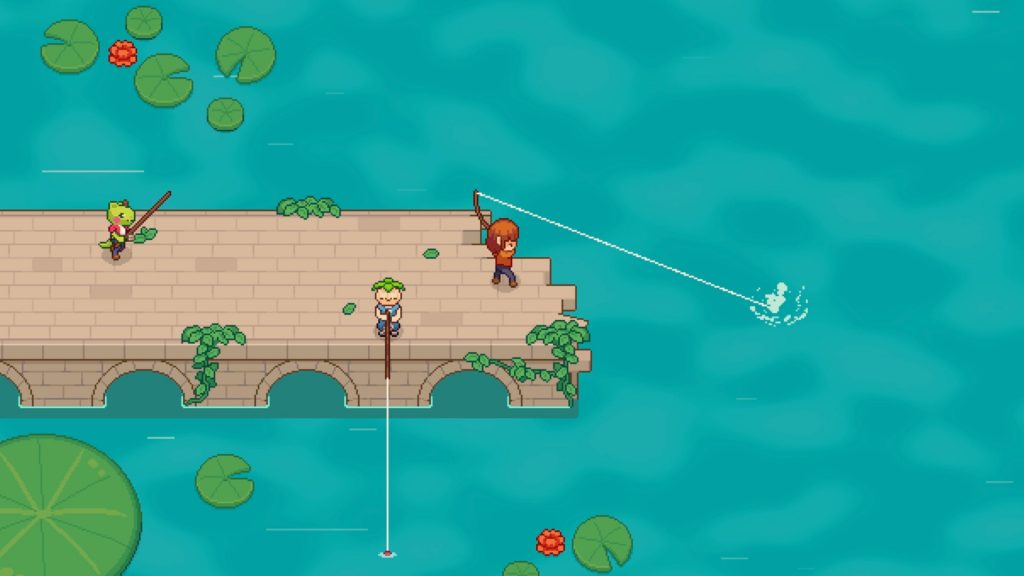
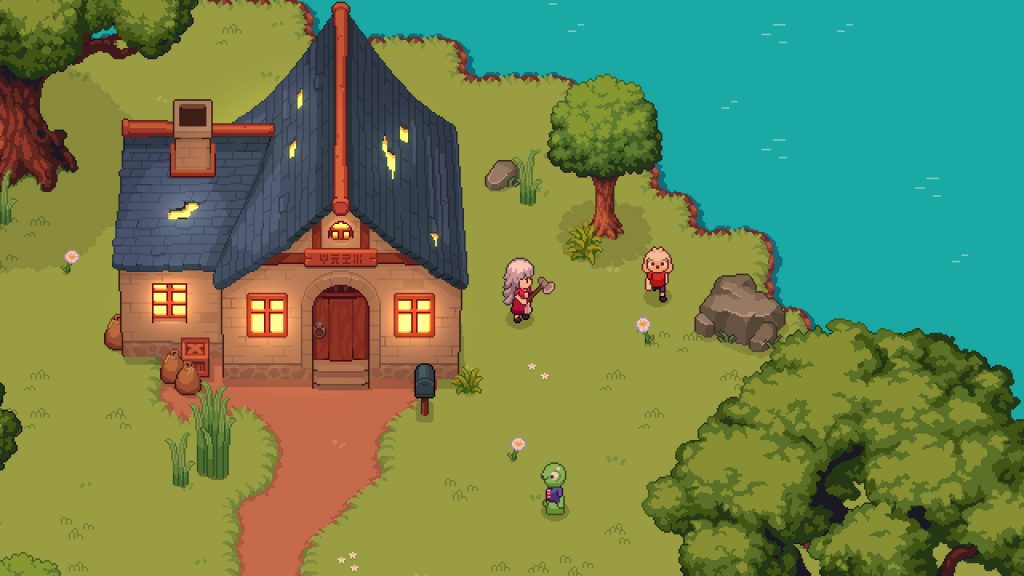
The core gameplay places players as the human innkeeper in a monster world. The objective is building and growing the inn while satisfying increasingly particular monster guests. Players cut wood to craft furniture, decorate guest rooms, fish and hunt for ingredients, prepare meals, and gradually build a reputation that brings returning guests.
Satisfied guests return, and returning guests bring referrals, and the inn builds the kind of lived-in atmosphere that the best cozy management games generate. This is the fundamental loop that Stardew Valley and Animal Crossing (both cited as direct inspirations) established — small actions accumulate into meaningful progression, and meaningful progression produces the sense of a world that grows with the player’s investment.
The monster guests add the creative twist that distinguishes Monsterest from generic inn management games. Each monster has an individual personality, preferences, and relationship potential. They’re not just NPCs who request beds and leave — they’re characters who can become companions in fishing, hunting, and outdoor activities, who participate in parties, and who assist with inn operations as friendship deepens. The companion-not-customer framing transforms what could be pure management into something with genuine social texture.
The monster world setting also opens narrative space that human-world settings can’t access. The human protagonist in a monster world is a natural fish-out-of-water positioning that provides ongoing story motivation without requiring elaborate setup. Players are outsiders navigating an unfamiliar social landscape, which gives both exploration and relationship-building inherent narrative stakes.
The Korean Cultural Aesthetic
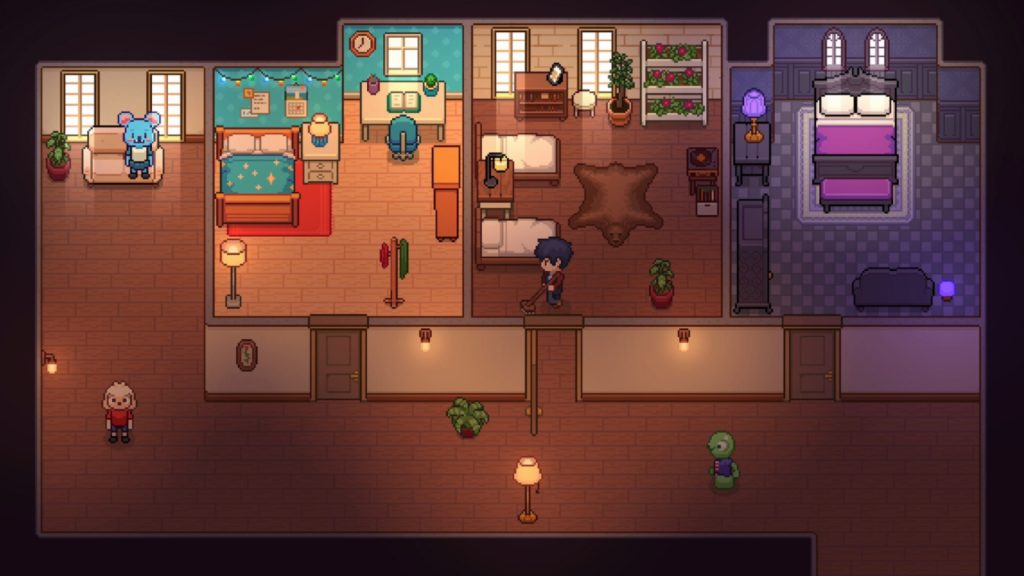
The most globally distinctive element of Monsterest is its Korean cultural visual identity. The top-down 2D pixel art presents a warm aesthetic foundation, and the Tumblbug stretch goal achievement has confirmed the addition of hanbok (Korean traditional clothing) and hanok (Korean traditional architecture) themed decoration items.
This cultural specificity represents exactly the kind of creative distinction that separates Monsterest from genre-generic cozy management games. Most inn and farming management games operate in either a generic medieval European or a generic fantasy setting. Monsterest‘s commitment to Korean traditional aesthetics gives it a visual identity that’s simultaneously novel to international audiences and authentically rooted for Korean players.
For international cozy gaming audiences, this kind of cultural specificity carries increasing appeal. Korean media’s global reach through K-pop, K-drama, and K-food has created expanding international curiosity about Korean aesthetics and daily culture. A cozy inn management game that grounds its aesthetic in hanbok and hanok tradition provides exactly the kind of cultural window that international audiences have been finding increasingly appealing.
For Korean players, the domestic cultural representation provides the recognizable warmth that Stardew Valley‘s Western pastoral setting couldn’t deliver. Inn management in a space that looks and feels Korean — the specific architecture, the traditional clothing, the particular material culture of Korean traditional living — creates cultural recognition that translates into emotional connection.
The “Fast-Paced Healing Game” Positioning
One of Monsterest‘s more interesting design choices is explicitly differentiating itself from the slow-paced cozy game default. The developer has positioned the game as a “fast-paced healing game” — maintaining the cozy atmosphere and relationship-building focus while incorporating action elements like dashing and spin attacks, and removing the energy limits that typically pace cozy game days.
This positioning is meaningful within the cozy genre’s current development. Most cozy games enforce pacing through energy systems — players have limited daily actions, which creates structure but also creates pressure. Removing the daily action limit changes the psychological experience significantly. Players who find energy systems stressful rather than comforting can engage with Monsterest without that particular anxiety.
The action elements (dashing, spin attacks) provide a different kind of engagement spike from the reflective contemplation that pure cozy games offer. Players who find extended purely-reflective gameplay sessions difficult to sustain can access more active engagement without leaving the warm, cozy register entirely.
This design philosophy reflects a sophisticated understanding of cozy gaming’s current audience. The genre has grown substantially, and its audience is no longer a monolithic group with identical preferences. Some players want maximum slow pace; others want a cozy atmosphere with more engagement variety. Monsterest‘s “fast-paced healing” positioning targets the second group more specifically.
The Tumblbug Success Story
The crowdfunding performance deserves specific attention. Tumblbug is Korea’s largest crowdfunding platform for creative projects, with a particular strength in games and animation. Achieving 783% of the goal with 1,915 backers is an exceptional performance in any crowdfunding context.
The scale of overperformance signals genuine community enthusiasm rather than just baseline supporter satisfaction. When a project reaches 100-150% of its goal, it indicates basic viability. When a project reaches 783%, it indicates that the concept resonated far more broadly than the developer initially estimated their addressable audience to be.
The 1,915 backers specifically — at meaningful per-person funding amounts — represent a community size that can sustain Early Access engagement. The backer community provides guaranteed initial Steam reviews, word-of-mouth from genuinely invested supporters, and community management energy that solo developers couldn’t generate organically. This community foundation is one of the more valuable things crowdfunding provides beyond financial support.
The stretch goal achievement that confirmed hanbok and hanok content also demonstrates that backers specifically valued the Korean cultural dimension of the project. If backers had been primarily motivated by pure inn management mechanics, they might not have pushed stretch goals that specifically added Korean traditional content. The cultural identity resonated with the funding community, which validates the design direction for international release.
The Itch.io Web Demo Accessibility
The browser-playable Itch.io demo is a particularly important accessibility decision for a Korean indie project seeking international attention. Installing and running a standalone demo requires more user commitment than clicking “play in browser” — the barrier to discovery is genuinely lower for browser-playable experiences.
For international audiences discovering Monsterest through gaming news or social media, the no-installation web demo means they can immediately evaluate the game without the friction of download, install, and system compatibility concerns. This accessibility likely extends the effective reach of the demo significantly beyond what a download-only approach would achieve.
The Steam demo availability in parallel provides a more invested experience for players who want to evaluate Monsterest seriously for wishlist or purchase decisions. The dual-demo approach accommodates different levels of engagement commitment simultaneously.
This accessibility investment signals that Sile understands the global demo landscape. Many Korean indie projects release demos only through domestic platforms, limiting international discovery. Monsterest‘s simultaneous presence on Itch.io (with browser accessibility) and Steam maximizes international visibility.
Solo Development Context
Solo development of an inn management RPG with multiple systems (crafting, fishing, hunting, cooking, relationship management, exploration, and combat elements) is genuinely ambitious. The Tumblbug crowdfunding success validates that the project’s scope and vision resonated with an audience, but solo development still imposes real constraints on timeline and feature depth.
The planned Steam Early Access approach is well-suited to this context. Early Access allows solo developers to release substantive content to paying players, gather feedback, and continue development with financial sustainability and community input. For a project with an established backer community (1,915 Tumblbug backers), the transition to Steam Early Access maintains that community engagement while expanding to a global audience.
Solo development also produces specific project qualities that team projects don’t always deliver. A single developer’s complete creative ownership produces visual consistency, tonal coherence, and design philosophy unity that team projects sometimes struggle with. Monsterest‘s warm, specific visual identity and the consistency of its cozy-with-action positioning suggest the kind of coherent creative vision that Sile’s solo development enables.
The Global K-Indie Moment
Monsterest arrives during a broader moment of growing international visibility for Korean indie gaming. Projects like Dungeon Settlers, STARDUST: Wish of Witch, Kimbap Heaven Simulator, and Come to my party! — all covered in recent months — demonstrate Korean indie’s expanding international reach across multiple genres.
The specific cultural dimension that Monsterest brings — hanbok, hanok, Korean traditional aesthetic embedded in cozy management gameplay — represents a particularly interesting vector for Korean indie’s global expansion. K-pop and K-drama have already established Korean aesthetic appreciation internationally; Korean indie games that specifically foreground Korean visual culture can build on this established familiarity.
For international cozy gaming audiences specifically, Korean indie projects are providing cultural distinctiveness that Western-developed cozy games can’t offer. Players who’ve been fully satiated by Scandinavian pastoral aesthetics, generic fantasy settings, and American small-town vibes may find Korean traditional aesthetics offer exactly the fresh engagement they’re seeking.
Who This Is For
Strong fit for: Stardew Valley and Animal Crossing fans seeking culturally distinctive variations; cozy management game enthusiasts who want more action engagement than pure slow-pace games provide; Korean culture enthusiasts and K-content fans curious about Korean traditional aesthetics in gaming form; solo developer project supporters; players who appreciate monster-companion relationship systems; anyone who wants to experience cozy management gameplay without daily energy limits.
Cautious fit for: players who specifically prefer the constrained pace of energy-system cozy games; anyone who finds the monster-world setting less appealing than human-world agricultural settings.
Less ideal for: players seeking serious combat-focused gameplay; anyone uninterested in management and relationship building as core gameplay; players who specifically prefer photo-realistic aesthetics over pixel art.
What to Watch For
A few questions will shape Monsterest‘s Early Access trajectory.
The first is monster character depth. The inn management framework works only if the monster guests feel like genuinely distinct individuals worth building relationships with. How well Sile develops each monster’s personality, preferences, and narrative role will determine whether the companion system delivers its emotional potential.
The second is Korean cultural content integration. The hanbok and hanok elements confirmed through stretch goals need to feel organically integrated rather than decorative additions. Whether these cultural elements become part of the world’s fabric or feel like cosmetic DLC will affect international reception significantly.
The third is the fast-paced action element balance. Dashing and combat in a cozy game creates tonal complexity — the action elements need to feel complementary rather than jarring. Whether the combat integrates smoothly with the management and relationship gameplay or whether it feels like a separate system imposed on the cozy foundation will be a key balance challenge.
The fourth is the solo development scope management. Monsterest‘s ambition (fishing, hunting, mining, cooking, furniture crafting, relationship systems, exploration, and combat) is substantial for a single developer. Whether Sile can deliver adequate depth across all these systems or whether some areas feel underdeveloped will affect Early Access reception.
The Takeaway
Monsterest is one of the more culturally distinctive Korean indie projects on the near-term horizon, combining proven commercial validation (783% Tumblbug success, substantial backer community), accessible pre-release demonstration (free browser-playable demo), Korean traditional cultural aesthetic embedded in cozy management gameplay, and the kind of specific design innovation (fast-paced healing game positioning, energy-limit-free exploration) that distinguishes thoughtful genre entries from genre exercises.
For cozy game enthusiasts, the browser-playable demo provides immediate evaluation with zero friction. The Stardew Valley and Animal Crossing inspirations provide familiar reference points, while the Korean cultural aesthetic and monster-companion framework provide genuine freshness within that familiar structure.
For Korean indie scene followers, Monsterest represents another example of Korean creative work engaging with domestic cultural heritage rather than defaulting to Western aesthetic conventions. The hanbok and hanok content, delivered through stretch goal achievement that proves the audience specifically valued this dimension, signals that Korean indie’s cultural identity is becoming a feature rather than a background assumption.
An inn at the edge of a monster world. Monsters who become companions, not just customers. Fishing and hunting in a wilderness that’s strange and familiar simultaneously. Guest rooms decorated with traditional Korean craftsmanship. A human who fell into an unfamiliar world and found — surrounded by creatures who keep knocking at the door — that this is the home that needed building.
As cozy management game pitches go, Monsterest‘s is one of the more warmly specific of 2026 — and the no-installation web demo means anyone reading this can experience it right now, without waiting for Early Access or full release. Solo development, maximum accessibility, 783% crowdfunding achievement, Korean cultural aesthetic, monster companions who go fishing with you.
The inn is open. The monsters are gathering. And one of Korean indie gaming’s more charming near-term releases is waiting for you in a browser tab.
Information regarding ‘Monsterest’
| item | detail |
|---|---|
| Developer / Publisher | Sile Studio / Sile (Korea, Solo Developer) |
| Genre | Inn Management RPG / Cozy Life Sim / Crafting Adventure |
| Release platform | PC (Steam) Early Access scheduled |
| demo | Steam Free Demo / Itch.io Free Web Demo (Browser Playable) |
| Tumblbug achievements | 1,915 Donors / Over 62 million KRW Raised / Achieved 783% of Goal |
| Game inspiration | Stardew Valley / Animal Crossing |
| Special Content | Hanbok & Hanok Theme Items / Backer In-game Appearance |
| Major activities | Fishing, Hunting, Mining, Cooking, Partying, Walking (Monster Companion Cooperation) |
| Main Keywords | Inn management, Monsters, Cozy, Crafting, Healing, Fishing, Korean Indie |
| Official Channel | X(@41sile) · Discord |
| Steam Page | Go to Wishlist |