The fixed-camera survival horror revival is real, and it’s been one of the more interesting micro-genres of the last few years. Tormented Souls, Crow Country, Signalis, and others have proven there’s a substantial audience for classic Resident Evil grammar executed with modern craft. The Florist, the upcoming survival horror from Wellington-based Unclear Games, is the latest entry in that conversation — and the just-revealed “Gardens of Death” trailer suggests the studio has both the right reference points and at least one structural choice that genre fans will need to talk about.
A Beautiful Town That’s the Whole Problem
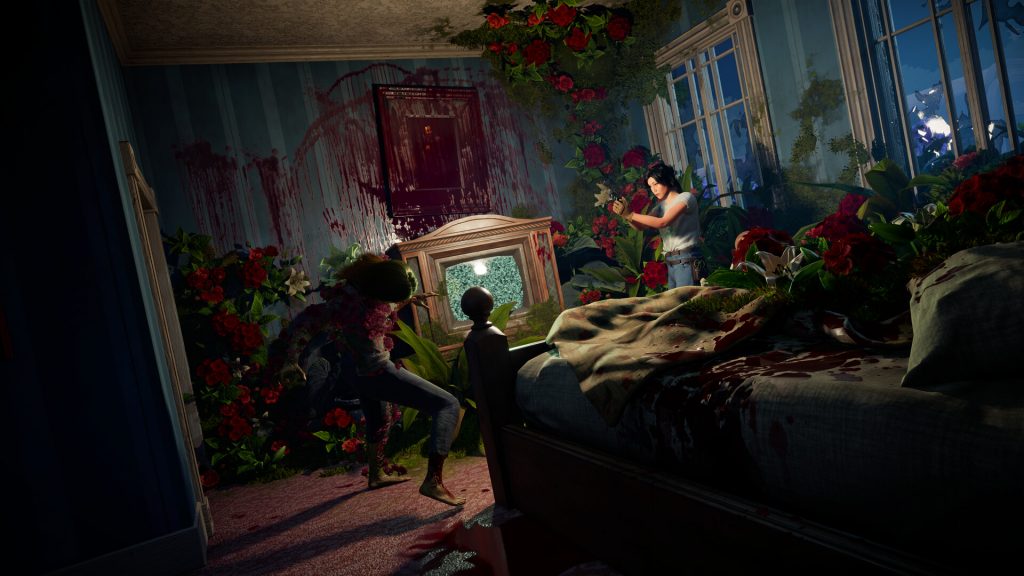
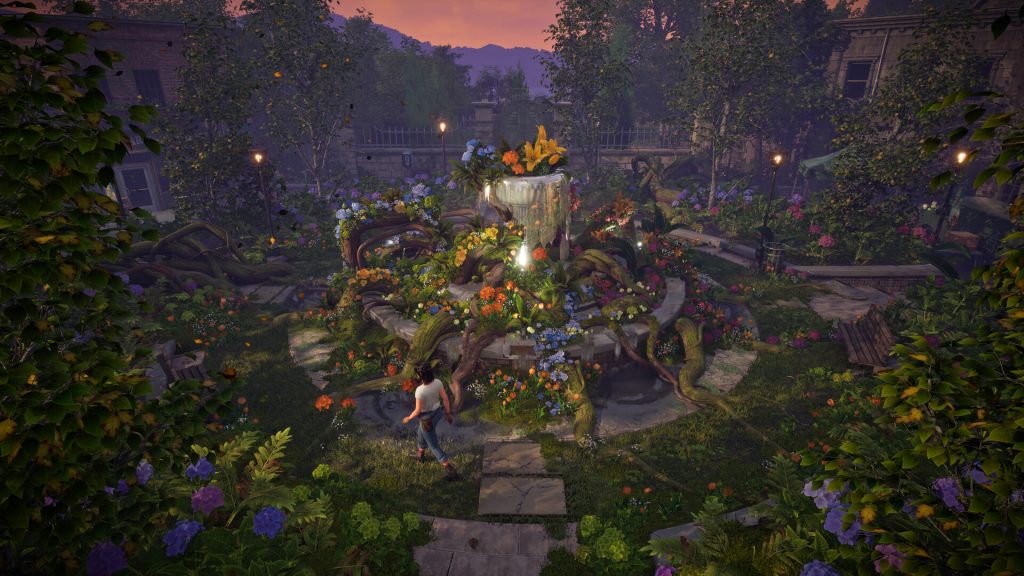
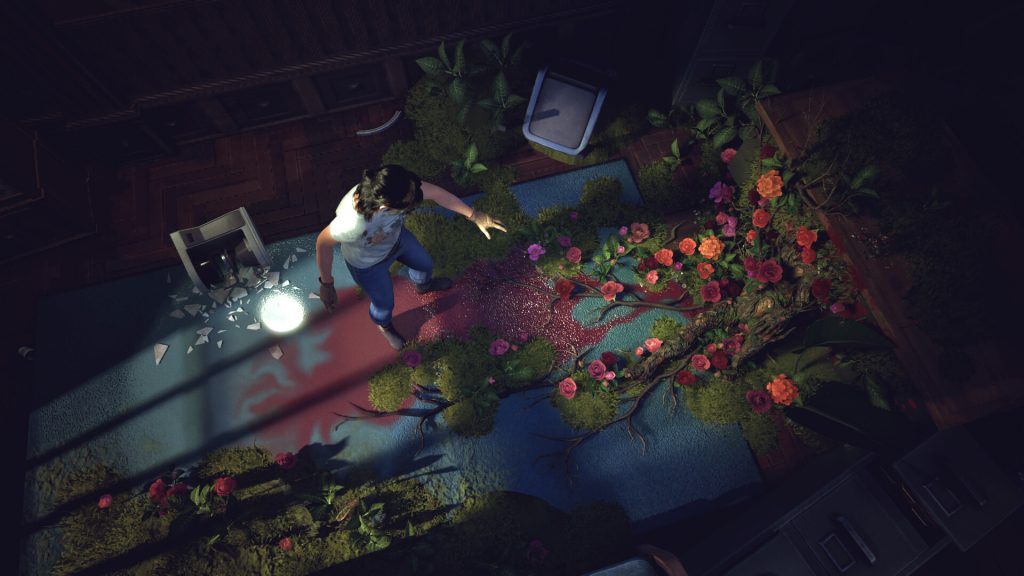
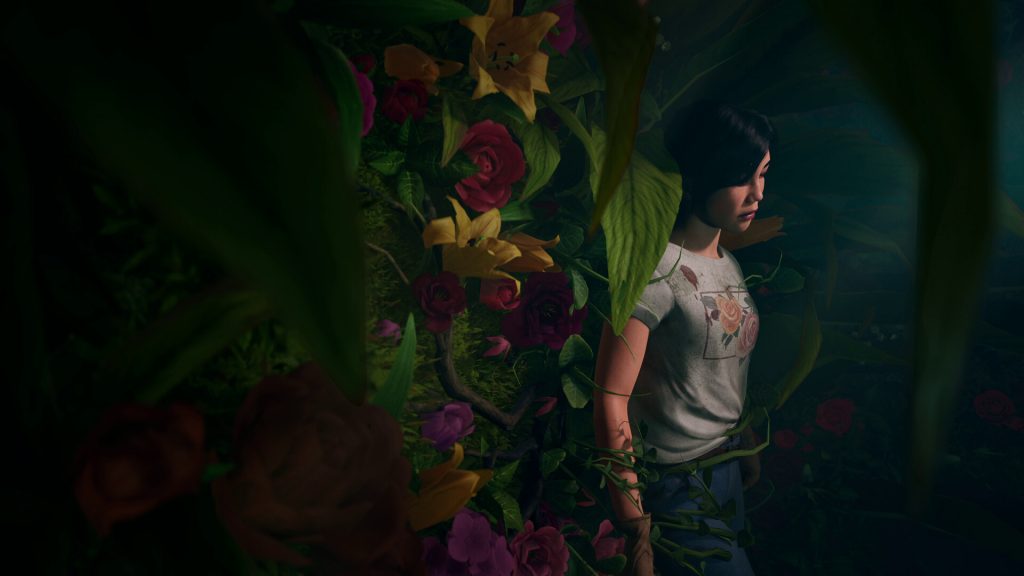
The setting is The Florist‘s most striking design decision. Most survival horror games default to industrial decay, gothic ruins, or post-apocalyptic gray. Joycliffe — the lakeside town where The Florist takes place — is colorful, vibrant, and visually warm. The brightness isn’t a tonal mismatch; it’s the source of the unease.
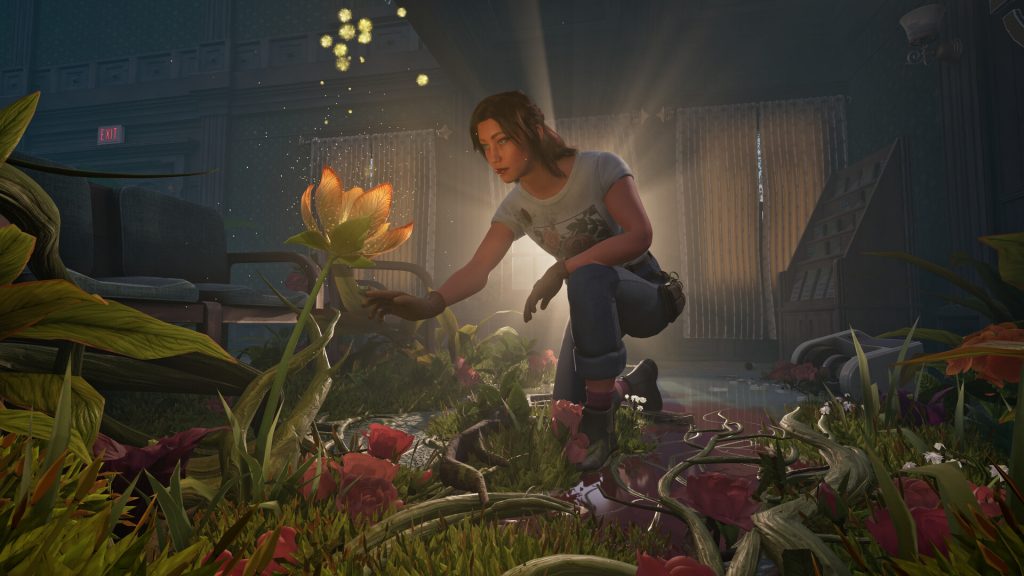
This is the same trick that Resident Evil: Village used effectively in its Beneviento section, and that horror cinema has been using since The Wicker Man: when a setting refuses to look like horror, the horror reaches you sideways. You’re walking through what should be a postcard, and the things growing through it are wrong. The plant infection consuming Joycliffe isn’t decay — it’s overgrowth. The town isn’t dying. It’s being replaced.
The aesthetic register also serves the game’s specific horror identity. Plant-based body horror is its own subcategory — The Thing‘s practical effects, Annihilation‘s shimmer, the cordyceps of The Last of Us — and Joycliffe’s bright color palette gives the plant infection room to be visually distinctive rather than blending into generic gloom. The contrast is the point.
The Fixed Camera Returns
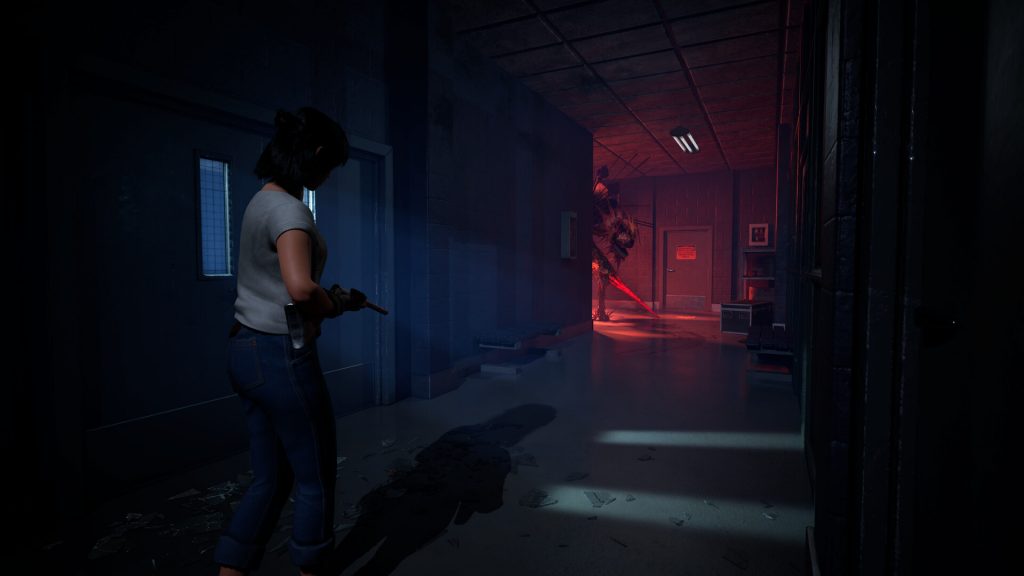
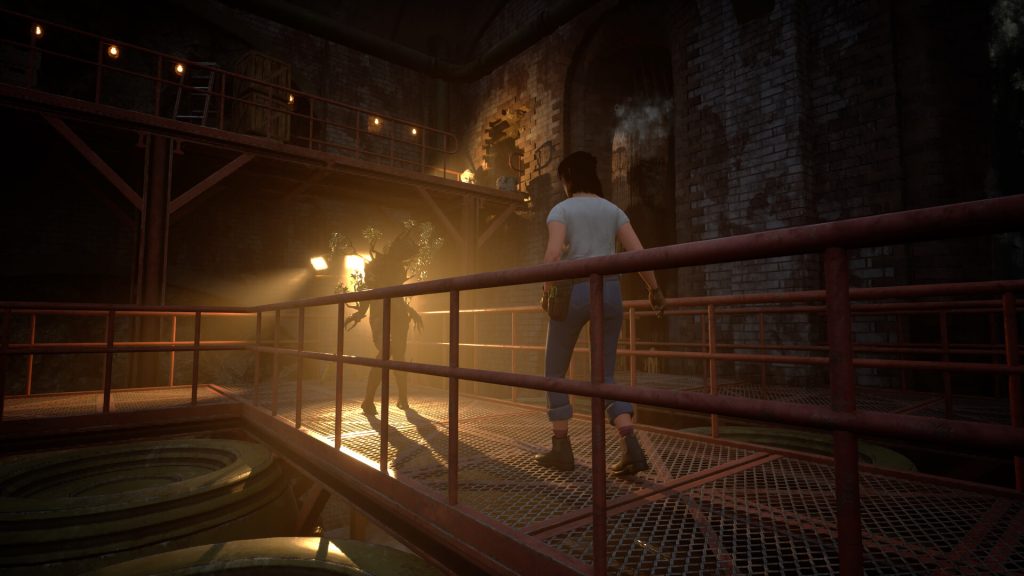
The fixed-camera perspective is The Florist‘s most explicit genre signal, and it’s there for a reason. Off-screen threat, claustrophobic framing, deliberately constrained sight lines — these aren’t limitations of older technology. They’re horror tools, and abandoning them was one of the things modern survival horror lost when it pivoted to over-the-shoulder action.
The cinematic angles in fixed-camera horror force the player into a constant negotiation with what they can’t see. Every corner is a question. Every audio cue is incomplete information. The genre’s recent revival has demonstrated that this design philosophy still works in 2026 — it’s not nostalgia, it’s structural horror grammar that modern games rediscovered they need.
The Florist‘s audio design appears to lean into this hard. Footsteps and the sound of plant growth crossing the soundscape — the kind of layered audio that fixed-camera horror specifically rewards, because the player has to use sound to compensate for restricted vision. Done well, this is how the genre achieves a density of dread that other horror approaches can’t match.
The day-night cycle is the modern addition to the classical formula. Enemies evolve and adapt across the cycle, which means the same locations don’t read the same way at different times. This is the kind of layered design that gives a fixed-camera game replayability and exploration depth — the town becomes multiple towns depending on when you walk through it.
The Seeds and the Harvester
The “Gardens of Death” trailer reveals the enemy architecture. The “Seeds” are the basic threat — entities mutated by the plant infection that have lost their life functions but continue moving through organic growth, attacking and feeding on living creatures. They’re the core enemy population, the things you’ll be managing with limited ammunition across the game’s runtime.
The “Harvester” is the structural threat. A giant entity roaming Joycliffe with a blood-soaked sack, pursuing an unknown objective with relentless persistence. The Harvester represents the genre’s stalker-enemy tradition — Resident Evil‘s Nemesis, Alien: Isolation‘s xenomorph, Resident Evil 2 Remake‘s Mr. X. These enemies aren’t beaten in encounters; they’re managed across the entire experience, generating sustained pressure rather than discrete combat moments.
What’s tonally interesting is the developer’s statement that “even the Harvester isn’t the most dangerous thing.” That’s a confident promise, and one that horror games make at their peril — escalation has to actually land for the foreshadowing to pay off. But the framing tells you something about how Unclear Games is structuring the game’s threat hierarchy. The Harvester is positioned as a major threat that the player will be aware of throughout, with even greater dangers gated behind progression.
The weapons revealed — the “Catclaw Revolver” and “Rosetta Shotgun” — fit the genre’s tradition of memorably named, distinctly designed armaments. Specialty weapons for quickly dispatching strong enemies are also hinted at, suggesting the combat layer has more variety than the trailer reveals.
The Unlimited Inventory Choice
Here’s where The Florist makes a design choice that’s going to split genre purists down the middle: unlimited inventory.
This is a meaningful departure from classic survival horror grammar. Resident Evil‘s tight inventory grids, the constant decisions about what to carry and what to drop, the resource scarcity that turned every container into a strategic choice — these were central to the genre’s tension structure, not decorative limitations.
Nintendo Life’s framing of the move is precise: “The fixed camera and atmosphere recall classic Resident Evil, but a structure where you can collect all items is a genre-unconventional choice.” The question isn’t whether unlimited inventory works in a game generally — plenty of horror games use it successfully. The question is whether it works in a fixed-camera survival horror, specifically, where the entire design philosophy is built around constraint.
The argument for the choice is that limited inventory in 2026 reads to many players as horror design and more as friction. Modern players have higher expectations for quality of life, and time spent shuffling items between storage boxes can feel like wasted attention that should be going to exploration and atmosphere. Unclear Games is betting that removing this friction will let players engage with the actual horror more directly.
The argument against is that the friction was the horror, in important ways. The desperate triage of “do I carry the herbs or the ammo into this corridor” produced a specific kind of dread that doesn’t exist without the constraint. Without inventory pressure, every encounter becomes resourced rather than improvised, and one of the genre’s signature emotional textures softens.
The honest answer is that we won’t know until the full release. The system might prove brilliant or it might prove the central misstep that prevents The Florist from landing in the classic-survival-horror canon. Either way, it’s the design decision genre veterans will be watching most closely.
Modern Quality-of-Life
The unlimited inventory isn’t the only modern accommodation. The Florist will include multiple difficulty options, accessibility settings, autosave checkpoints, and hidden content for replay. DayOne framed the project as “another notable title appearing in the strange year of 2026,” which captures the moment well — modern survival horror is increasingly comfortable bringing genre purism into conversation with player accessibility.
The autosave checkpoint specifically is worth noting. Classic survival horror’s typewriter/ink ribbon save systems are some of the most distinctive (and divisive) genre features in gaming history. Many modern survival horror revivals have kept some form of constrained saving to preserve the genre’s risk-and-stakes structure. The Florist‘s choice to include autosave checkpoints suggests the team is prioritizing flow over friction throughout the design — consistent with the unlimited inventory choice, and probably indicating a coherent design philosophy rather than scattered concessions.
The Investigation Layer
The exploration structure pulls The Florist somewhat toward investigative horror rather than pure survival horror. Players collect clues, analyze environments, manage weapons, and keep an in-game journal that records their progress through the mystery. This is the Silent Hill / Outer Wilds / Obra Dinn lineage — horror as detective work, with the player gradually assembling a coherent picture of what happened to Joycliffe from environmental evidence.
This structural emphasis fits the unlimited-inventory choice. If the game’s core engagement loop is exploration and clue-gathering rather than resource anxiety, then removing inventory friction makes more sense. The Florist might not be trying to be a strict classic survival horror; it might be trying to be a fixed-camera horror investigation game with classic survival horror’s atmospheric grammar.
That’s a meaningful distinction, and probably the right way to understand what Unclear Games is building. The fixed camera and the plant horror provide the genre’s emotional surface. The exploration-and-investigation structure provides the engagement loop. The unlimited inventory removes friction that would compete with both.
A Studio Worth Watching
Unclear Games is based in Wellington, New Zealand — a games scene best known for the work coming out of Weta Workshop and a handful of mid-tier studios, but with a quietly active indie community. The Florist is the kind of project that signals a studio with confidence in its specific creative direction: a single-genre commitment, a coherent aesthetic and mechanical vision, and a willingness to make divisive design choices in service of a thesis.
The studio’s stated goal is “the best classical survival horror by 2026 standards, introducing modern systems based on inspiration from legendary classics.” That’s an ambitious framing, and the success of the project will depend largely on whether the modern systems serve the classical genre commitments or undermine them.
The Switch 2 release is also notable. Nintendo’s new platform has been quietly accumulating an interesting horror catalog — indie titles, classic remasters, and a few exclusives are positioning the Switch 2 as a meaningful platform for the genre. The Florist‘s simultaneous Switch 2 launch alongside PC and PS5 indicates Unclear Games sees that audience as central rather than secondary.
How the Press Has Read It
International coverage has consistently emphasized the classical Resident Evil DNA while noting the unlimited inventory’s unconventional position. Nintendo Life called it “a return of classic Resident Evil,” which is the kind of comparison the genre’s fans will respond to. Noisy Pixel, Gematsu, and DayOne covered the trailer reveal as a notable horror release on the 2026 calendar.
The coverage cluster suggests the project has the right kind of pre-release positioning: visible to the audience most likely to care about it, with the central design choices clearly communicated rather than hidden until launch.
Who This Is For
Strong fit for: classic survival horror fans (Resident Evil PS1 trilogy, original Silent Hill, Tormented Souls, Signalis); horror investigation game fans (Returnal, Outer Wilds, Obra Dinn); players who appreciate plant/body horror specifically; Switch 2 owners looking for a substantive horror title on the platform; players who want modernized survival horror without strict resource scarcity.
Less ideal for: classic survival horror purists who specifically want inventory-management anxiety as a core mechanic; players who find fixed-camera angles frustrating rather than tension-building; anyone allergic to slow-paced exploration-heavy horror in favor of action-focused designs.
What to Watch For
A few questions will shape the full release.
The first is whether the unlimited inventory choice actually works in the fixed-camera survival horror context. If it does, The Florist might point a new direction for the subgenre. If it doesn’t, it’ll be the central thing reviewers complain about, regardless of how strong the rest of the game is.
The second is the Harvester’s actual implementation. Stalker enemies are notoriously difficult to design well — they need to feel persistently threatening without becoming oppressive, predictable without becoming trivial. Whether the Harvester achieves the Alien: Isolation / Mr. X level of menace or whether it falls into less successful stalker territory will significantly affect the game’s reception.
The third is the unrevealed greater threats. Promising that “even the Harvester isn’t the most dangerous thing” sets a high bar. The escalation has to deliver, and the late-game threats have to feel like meaningful escalation rather than just more enemies with higher stats.
The fourth is the environmental storytelling quality. With a journal-based investigation structure, the writing and environmental design need to support genuine mystery rather than scripted reveals. Players who engage with this aspect of the genre will be looking for clues that reward attention.
The Takeaway
The Florist is one of the more interesting horror projects on the 2026 calendar, with a clear creative thesis, the right reference points, and at least one design choice that will generate real conversation when the game arrives. The fixed-camera classical survival horror revival has been one of the genre’s most welcome recent movements, and The Florist is positioned to be a meaningful entry in that conversation.
Whether the unlimited inventory and other modern accommodations strengthen or weaken the classical formula will be the central question of the full release. But Unclear Games appears to be making coherent choices in service of a specific vision, rather than scattershot modernizations, and the trailer suggests the atmospheric and aesthetic execution is solid.
For genre fans, this is one to wishlist immediately. For everyone else, The Florist is worth watching as a case study in how the classical horror revival continues to evolve — and whether the genre’s modern phase will define itself by what it preserves or what it’s willing to leave behind.
A bright lakeside town. Plant infection. Fixed cameras. A giant in the streets with a blood-soaked sack. And, the developers promise, worse. As 2026 horror pitches go, that’s a strong one.
Information regarding ‘The Florist’
| item | detail |
|---|---|
| Developer / Publisher | Unclear Games (Wellington, New Zealand) |
| Genre | Fixed Camera Survival Horror / Action Adventure |
| Release platform | PC (Steam) / PlayStation 5 / Nintendo Switch 2 |
| Scheduled for release | 2026 (Exact date to be announced later) |
| background | Lakeside Village Joycliff / Plant Infection Apocalypse |
| Camera method | Fixed camera view (classic Biohazard style) |
| Main weapons | Catclaw Revolver / Rosetta Shotgun / Unreleased Special Weapon |
| Major enemy | Seeds / The Harvester / Many undisclosed |
| characteristic | Unlimited Inventory / Day/Night Cycle / Autosave / Accessibility Options |
| inspiration | Classic Resident Evil series (PS1 trilogy, etc.) |
| Main Keywords | Fixed camera, survival horror, plant infection, puzzle, Joycliff, retro horror |
| Official Email | hello@uncleargames.com |
| Steam Page | Go to Wishlist |