While most of the games industry was paying attention elsewhere, a small London studio quietly built an MMORPG that runs inside Discord, attracted over a million players, won a Discord-sanctioned innovation prize, and assembled a 29,000-member community — all without a traditional storefront launch. Soulbound, the pixel-art MMORPG from Spiderware, announced its Steam release on May 20, opening the next phase of one of the more unusual indie distribution stories in recent memory.
The Steam release date is still TBA. Wishlisting is open. And the question worth asking is: how does a game become a hit on platforms most of the industry doesn’t take seriously as game distribution channels?
The Pitch, Sharpened
Soulbound is a pixel-art MMORPG with bullet-heaven combat, roguelite elements, cooperative dungeon crawling, and a digital-universe narrative framing. You wake up in a hostile virtual world, encounter an overwhelmingly powerful mysterious entity called The Anima, get rescued from near-death by a robotic companion, and set out on a journey to take The Anima down.
Mechanically, the game centers on an apartment that functions as your personal hub — gather materials while exploring, craft and upgrade equipment, prep for combat, then dive into dungeons either solo or with up to two companions. Build flexibility runs through tank-style configurations that absorb damage, healer-leaning support builds, or DPS-maxed glass-cannon setups, with 12+ abilities and upgradeable skill trees to customize against.
The combat is fast. The dungeons are co-op-friendly. The guild system supports group runs and shared loot. None of these are revolutionary individual systems, but the combination — packaged inside a frictionless browser/Discord delivery — is where the game distinguishes itself.
The Real Story: Distribution
The most interesting thing about Soulbound isn’t the game’s design. It’s the distribution strategy.
The game runs inside Discord using the platform’s Embedded App SDK, which lets users play it without leaving the chat client. It also runs in any browser without installation, with shared accounts and progress moving cleanly between laptop, desktop, and Discord environments. That’s a meaningful architectural achievement — full MMORPG functionality, real-time party play, dungeon coordination, all delivered inside a chat platform that wasn’t designed with game distribution as its primary use case.
The Discord App Pitches 2024 win in the “Adventure Together” category isn’t just a marketing line. It reflects what’s actually rare here: not just a game on Discord, but a cooperative MMO whose social structure aligns with the social structure of the platform it lives on. Players coordinate in voice channels, message friends, and launch into a shared world without context-switching. The friction reduction is real, and that’s what produced the million-player figure.
For an industry that’s spent the last decade hand-wringing about player acquisition costs and storefront discovery, this is a meaningful data point. Spiderware didn’t pay for visibility on a saturated storefront. They built where their audience already was, and the audience showed up.
What Steam Changes
The Steam launch is interesting precisely because it inverts the typical indie journey. Most games launch on Steam first and try to build community after. Soulbound built the community first and is now bringing it to Steam — with a year-plus of live operation, a battle-tested player base, and a clear sense of what its core audience actually wants.
What the Steam version specifically offers is PC-optimized performance. The browser-based version is impressive, but browser games carry inherent constraints around input handling, rendering performance, and feature scope. A native Steam client can be smoother, support better controller/keyboard configurations, and integrate with Steam’s social and achievement infrastructure in ways that broaden the audience beyond the Discord-native crowd.
It also addresses a perception barrier. “Browser MMO” still carries connotations from an earlier era of the genre — Flash-game aesthetics, predatory monetization, thin gameplay loops. The Discord embedding partially solves that perception problem; a proper Steam release solves it more completely. A meaningful subset of PC players who’d never click a browser-game link will give a Steam page a fair hearing.
The risk for Spiderware is one of fragmentation. Three platforms (browser, Discord, Steam) sharing progression is technically elegant but operationally complex, and the studio will need to keep all three updated in sync. The reward, assuming they manage it, is a presence in essentially every PC-adjacent gaming context simultaneously.
What the Pixel Art and Bullet Heaven Add
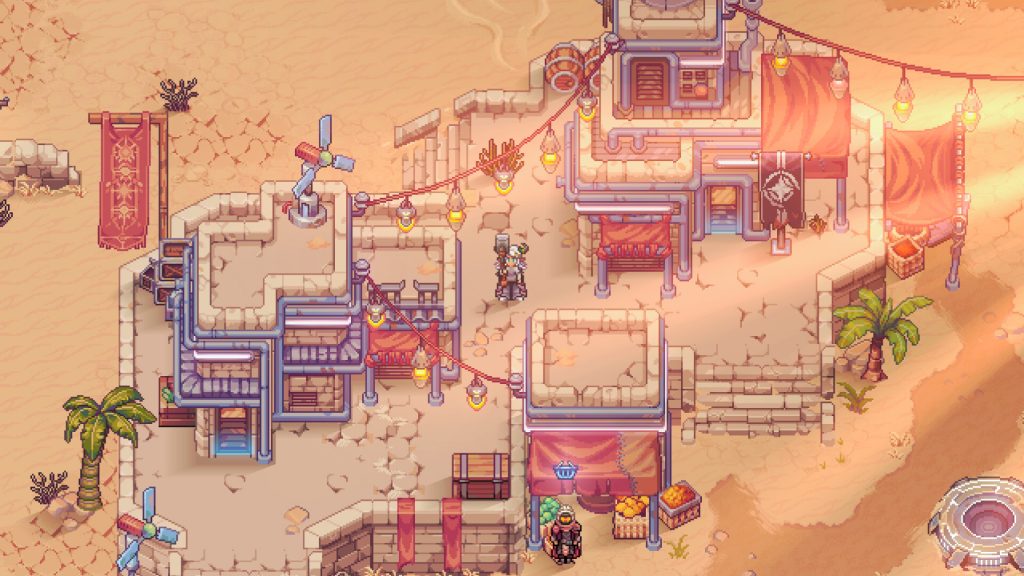
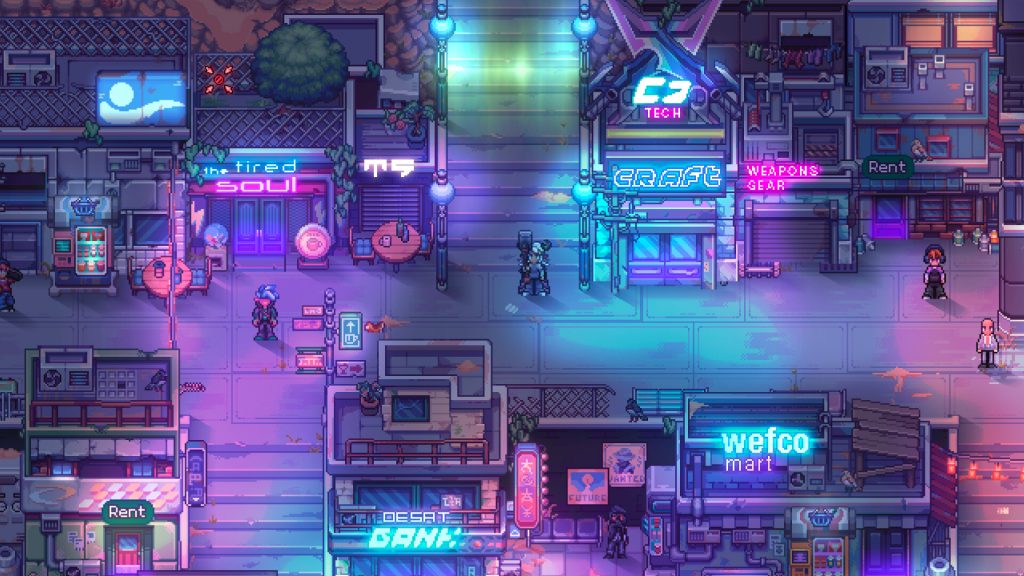
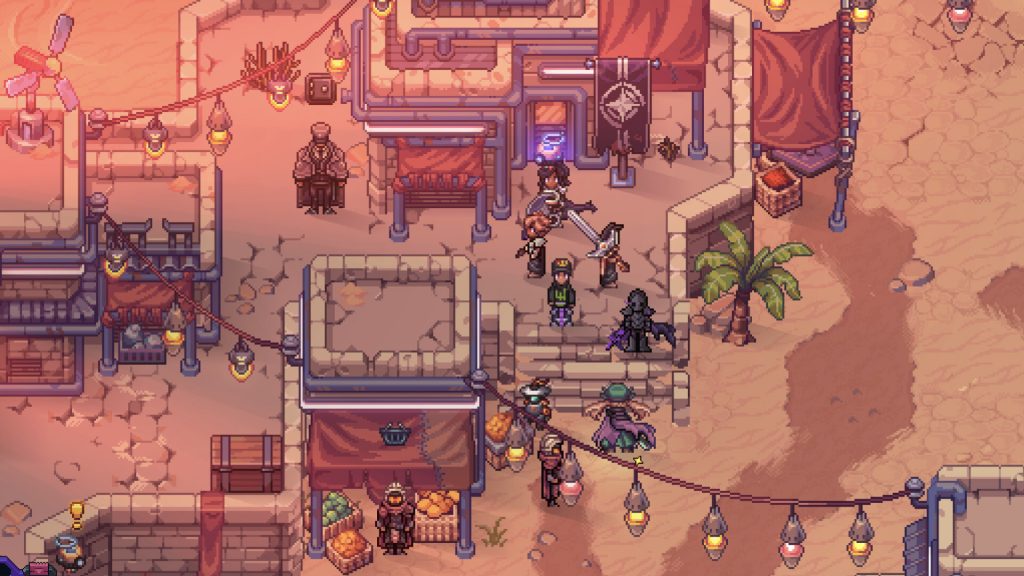
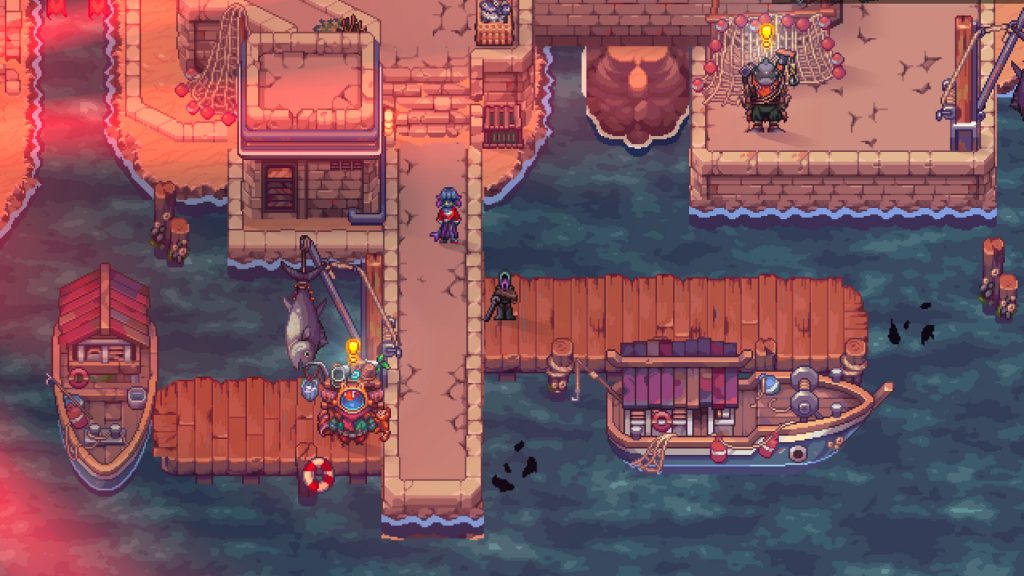
The aesthetic and combat choices are doing real work to differentiate the game from heavier traditional MMOs. The pixel art evokes 90s classic RPGs — clean, readable, instantly nostalgic for the audience that grew up on the era. That’s the right aesthetic register for a game that needs to be visually performant in browser contexts, but it’s also a deliberate stylistic statement.
The bullet-heaven combat layer is the more interesting mechanical choice. Most MMORPGs derive their combat from tab-target traditions or the action-MMO evolution of the last decade. Bullet heaven is a different lineage — Vampire Survivors and its descendants — and grafting it onto an MMO structure produces a tempo that traditional MMOs don’t usually reach. Fast, intense, screen-filling encounters that work in short sessions, which suits the browser-and-chat context perfectly.
The roguelite layer wrapping around boss encounters adds the replay engine that Bullet Heaven Games depend on. Procedurally enhanced boss fights mean the dungeons can be re-run with meaningful variance, which is exactly what a free-to-play co-op MMO needs to sustain engagement.
The Studio Behind It
Spiderware is a London-based UK indie team led by founder and CEO Thomas Webb. On winning the Discord App Pitches 2024 grand prize, Webb framed the studio’s mission around Discord’s connective role: “Discord is a platform that connects people, and we want Soulbound to do the same.” That framing isn’t accidental marketing language — it explicitly positions Soulbound as a social-architecture product rather than just a game that happens to run in chat.
The technical execution of building a full MMO inside Discord’s Embedded App SDK is, on its own, one of the more impressive recent demonstrations of what that SDK can support. Spiderware’s work has effectively functioned as a proof-of-concept for what other studios might do on the platform, and the success of Soulbound will likely influence how other developers think about Discord as a game-distribution layer.
How the Press Has Covered It
International coverage has been quick to recognize what the Steam announcement represents. Zona MMORPG, the largest Spanish-language MMORPG outlet, reported the Steam reveal as a “Steam debut of a pixel-art MMO that has secured one million players.” That framing — leading with the audience number rather than the genre or aesthetic — captures how the project has been understood in the broader MMO community. The game has proven its commercial viability before the typical platform release; the Steam version is the expansion, not the launch.
Who This Is For
Strong fit for: MMORPG players who’ve burned out on subscription-heavy or grind-heavy traditional MMOs and want something lighter; pixel-art and retro-aesthetic fans; co-op players looking for short-session group content; players already deep in Discord-based communities who want their games to live where their friends already are; bullet-heaven fans curious about how the subgenre scales to MMO structure.
Less ideal for: players looking for deep traditional MMO systems (large-scale raids, complex economy, hardcore progression); players who specifically want solo-driven RPG experiences (the co-op design is foundational); anyone allergic to free-to-play structures (the monetization details for the Steam version aren’t fully disclosed yet, but the existing free-play model is likely to carry over in some form).
What to Watch For
A few open questions will shape the Steam release.
The first is performance and feature parity. The Steam version will need to clearly improve on the browser experience to justify the platform shift, particularly for players who’ve been engaged in the browser/Discord versions for over a year.
The second is monetization clarity. The existing service is free-to-play, but a Steam release typically involves either tighter monetization structures or some form of paid base game. How Spiderware handles this transition — and how transparently — will significantly affect Steam community reception.
The third is how the existing million-player community responds. Cross-platform games can produce friction when long-term players on one platform feel their experience is being de-prioritized for new audiences on another. Spiderware’s track record of community engagement (29,000+ active Discord members helping shape the game’s direction) suggests they understand this risk.
The Takeaway
Soulbound is one of the more interesting case studies in indie distribution to emerge in the last few years. A small UK team built a real MMORPG, distributed it through Discord and browsers when the rest of the industry was fighting for visibility on saturated storefronts, and assembled a million-player community on the strength of game design plus distribution strategy.
The Steam release is the next phase of that strategy, not a course correction. For players who follow MMORPGs, indie business models, or the slow evolution of what counts as a game distribution platform, this is a release worth tracking. The wishlist is open, the browser version is playable right now, and the studio’s history suggests the Steam launch will be more polished than most cross-platform efforts at this scale.
A million players got there ahead of you. The Steam version is your invitation to find out why.
Information regarding ‘Soulbound’
| item | detail |
|---|---|
| Developer / Publisher | Spiderware (London, UK) |
| Genre | Pixel Art MMORPG / Bullet Heaven Roguelite / Co-op Dungeon Crawler |
| Release platform | Browser (In service) / Discord (In service) / PC (Steam, coming soon) |
| Scheduled for Steam release | Undetermined (Can be added to wishlist) |
| Cumulative Players | Over 1 million (based on browser and Discord) |
| Awards | Discord App Pitches 2024 ‘Adventure Together’ Category Winner |
| Key Features | Single Shared Server / 1-3 Player Co-op / Free to Play / No Installation Required in Browser |
| Community | Official Discord server 29,000+ members |
| Main Keywords | Pixel Art, MMO, Co-op, Roguelite, Bullet Heaven, Digital World, Free to Play |
| Official Channel | Discord · Official Site · X (Twitter) |
| Steam Page | Add to Wishlist |
| Browser Play | Shortcut |