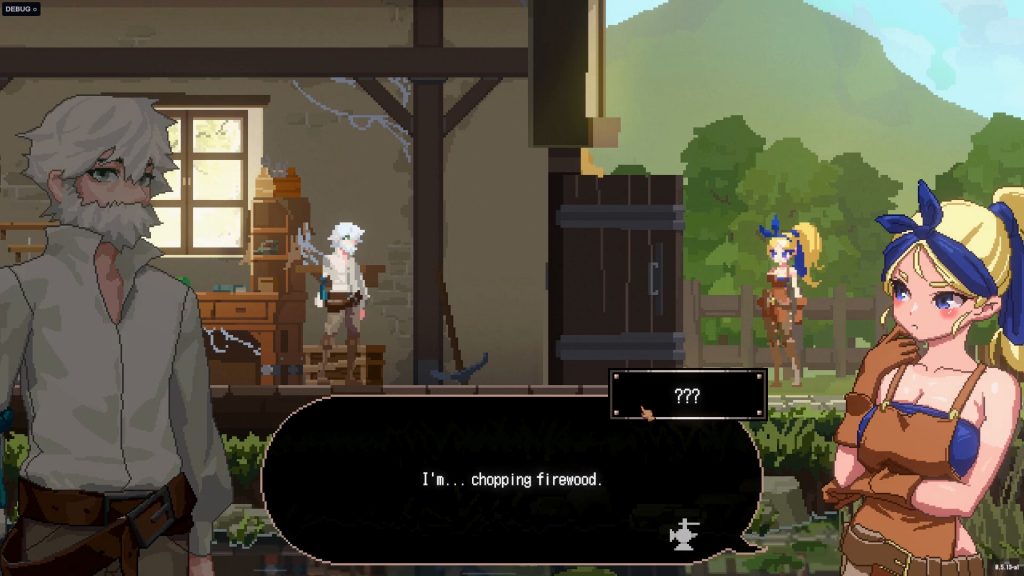
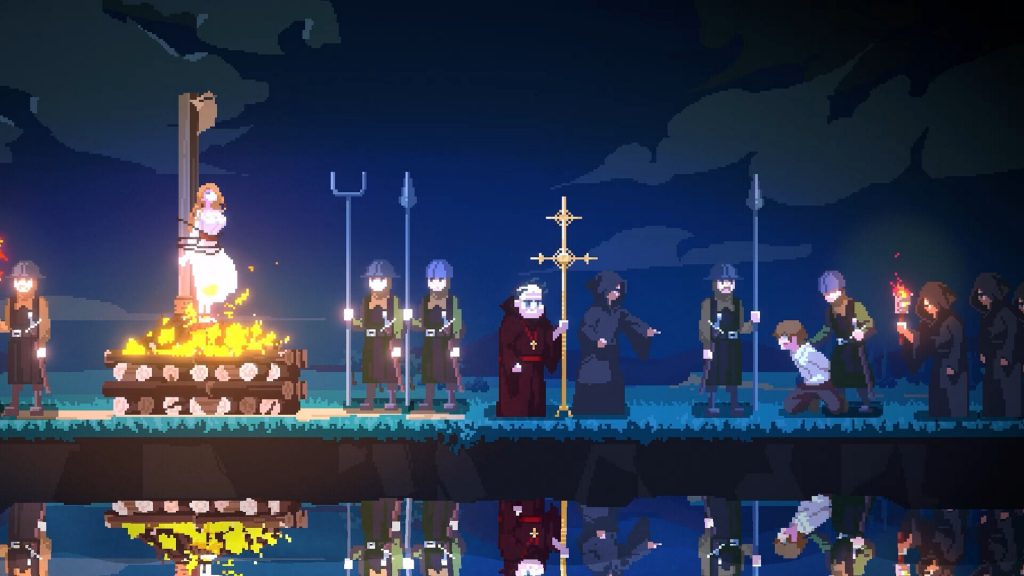
A blacksmith who lost his wife, daughter, and one arm to witch-hunt violence. A master craftswoman driven out of the trade because “iron struck by a woman is cursed.” Two people carrying real losses, picking up what remains of their lives, and trying to relight a forge together. That’s the setup for Tokatonton: One-Armed Blacksmith, the upcoming medieval blacksmith management sim from Korean indie team Semo Games — and it’s a setup that immediately signals this isn’t going to be another cozy crafting game with the difficulty turned down.
The demo has been on Steam since April 15, sits at 95% Positive, and based on what it shows, Tokatonton is shaping up to be one of the more emotionally serious crafting sims in recent memory.
A Crafting Sim That Refuses to Be Cozy
The cozy crafting genre has a default emotional register: warm, low-stakes, pleasantly meditative. Forge games in particular tend toward power fantasy — you become the master smith, your skill grows, customers are satisfied, the world rewards your competence. Tokatonton doesn’t reject those mechanics. It rejects the emotional frame around them.
Guy and Sophie aren’t building a forge because they want to optimize a business. They’re building it because the world has taken almost everything else from them, and the forge is what’s left. That framing changes how every system in the game reads. The smelting isn’t satisfying — it’s necessary. The customer interactions aren’t transactional pleasantries — they’re negotiations with people who may or may not see Guy and Sophie as fully human. The work is the work, but the weight underneath it is different.
This is rare in the genre and harder than it looks to execute. Plenty of crafting games attempt emotional depth and end up either too heavy (the management layer becomes joyless) or too light (the emotional layer becomes ornamental). The demo’s 95% rating suggests Semo Games has found a workable balance, though the full game will be the real test.
The Blueprint Puzzle System
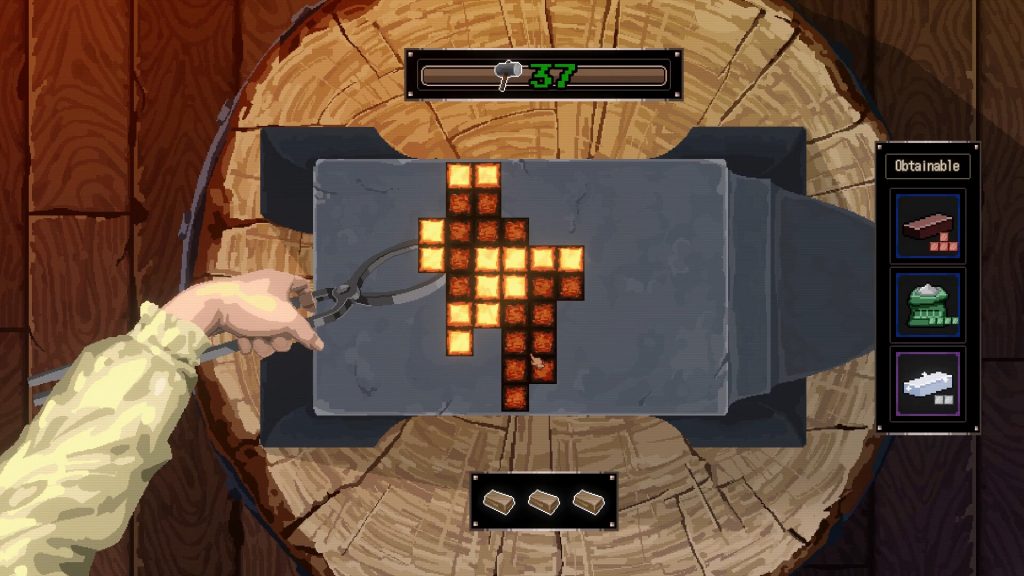
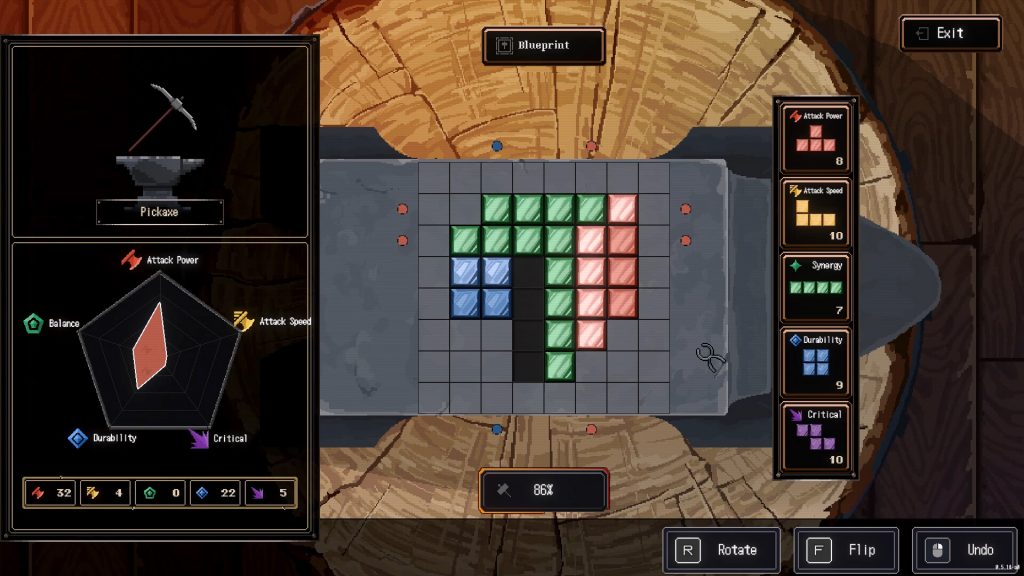
Mechanically, the most distinctive part of Tokatonton is the blueprint puzzle system at the heart of weapon crafting. You don’t just select a recipe and click “forge.” You place block pieces onto a blueprint, with each block carrying special properties that interact based on how you arrange them. The same weapon, made with different blocks in different configurations, produces meaningfully different results.
This is the right design choice for a game whose thesis is that craft matters. Recipe-list crafting systems treat every smith as functionally identical; the blueprint puzzle makes Guy and Sophie’s actual choices visible in the output. Which materials you smelt, which blocks you assemble, where you place them on the layout — these decisions accumulate into weapons that reflect the people who made them.
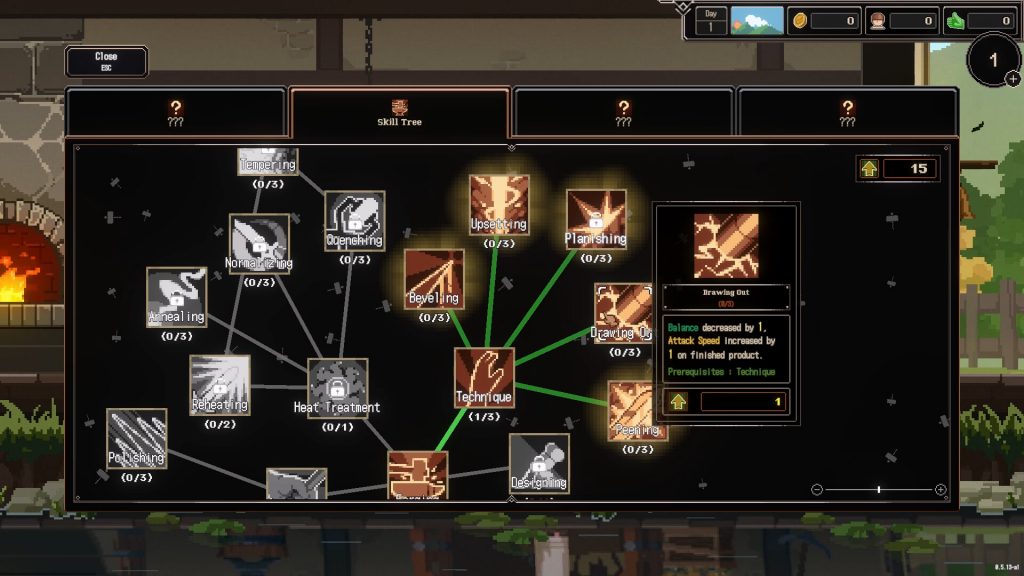
The refining process before crafting carries its own weight. You’re processing raw ore, removing impurities, and occasionally discovering rare materials like gold or silver. It’s a quiet pre-combat layer that adds anticipation to the assembly stage, and it gives the early game its own rhythm separate from the more puzzle-heavy weapon construction.
The Shop Layer
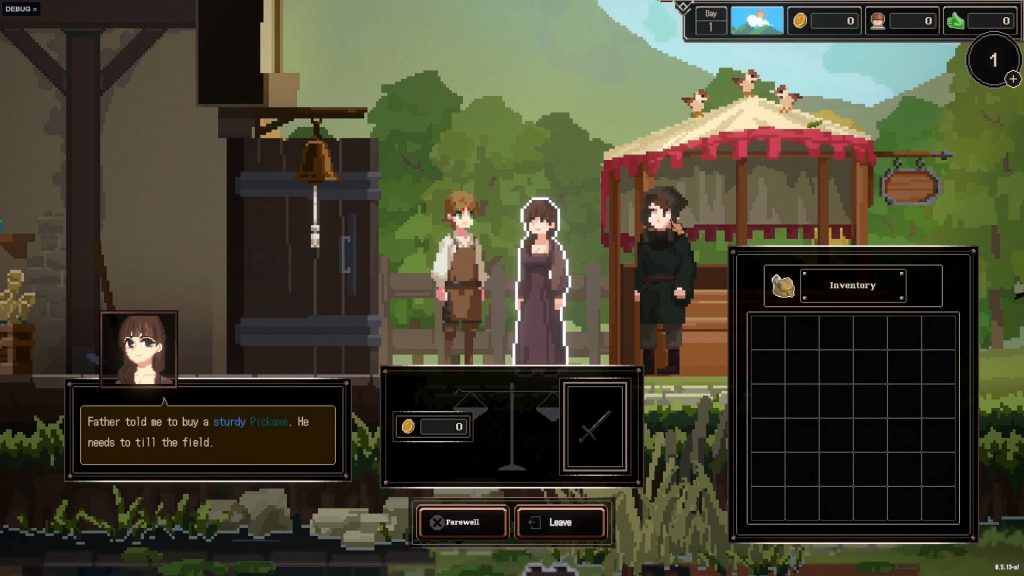
Running the shop is where the moral architecture of Tokatonton gets sharpest. You decide what to display, how to price it, how to manage stock — standard management sim territory. Where the game complicates things is in the customer mix.
Not everyone who walks through the door has good intentions. Some customers want weapons for purposes Guy and Sophie might not endorse. Some offer dangerous deals that promise high returns at real cost. The game leaves the decision to you: do you take the lucrative job from a customer whose use of the weapon you’d rather not think about? Do you sell to someone you suspect will misuse the work? Do you turn down profit to protect your conscience?
This is where the central narrative question — will the iron you forge protect or destroy — becomes a moment-to-moment gameplay question. The shop isn’t just a revenue system. It’s a sequence of small ethical decisions whose accumulation defines who Guy and Sophie become.
Visual and Sonic Restraint
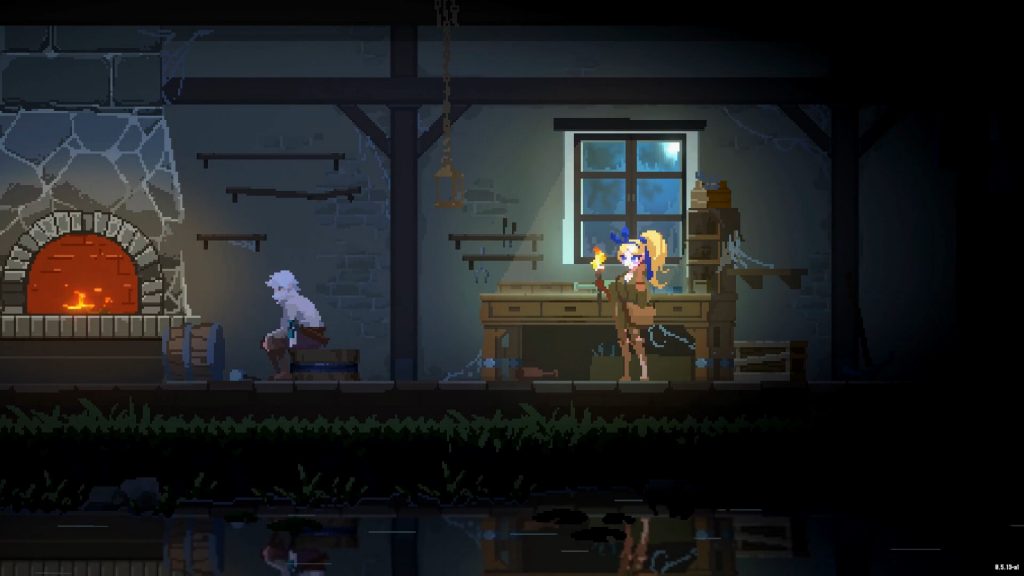
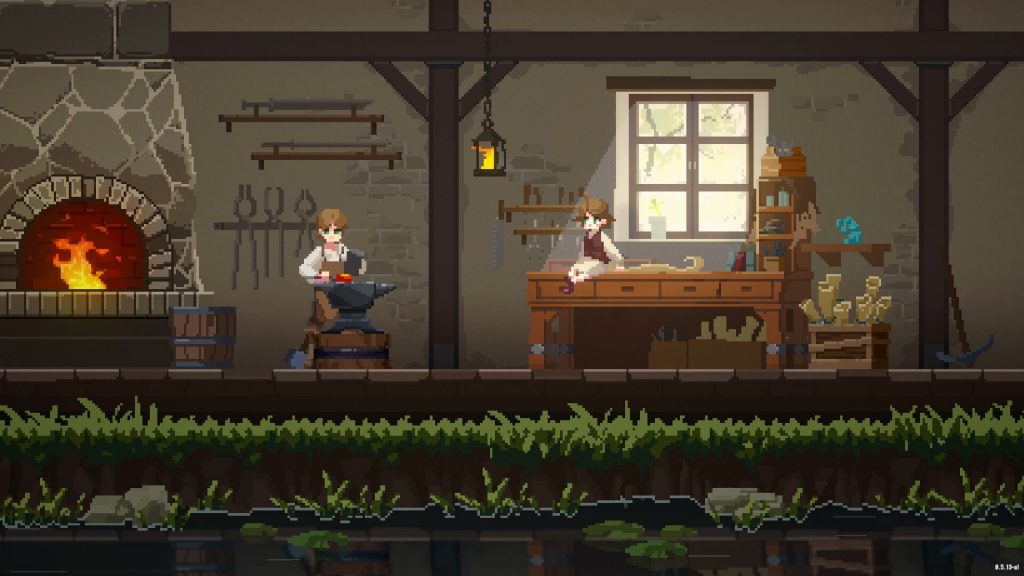
The 2D pixel art is committed to the medieval setting without performing it. Warm forge fire. Hammer-on-anvil percussion. The quiet music that plays as the day winds down. The aesthetic register is closer to the meditative pixel work of Stardew Valley than to the elaborate art of contemporary cozy releases, and that restraint is the right call. The game’s emotional weight needs visual space to breathe; an over-designed look would compete with the writing for the player’s attention.
The pixel-art constraint also forces the storytelling to lean on character interaction rather than expression detail. Guy and Sophie’s relationship — the gradual movement between raw grief, quiet support, shared purpose, and the question of what they’re building for — comes through dialogue and small moments rather than facial animation. That works, and it works better than animated alternatives might, because the restraint matches the characters’ own emotional caution.
How the Press Has Read It
International coverage has been notably positive. G.ROUND described the game as “a promising indie simulation where story, crafting, and management mechanics combine organically.” Japanese gaming outlet GameSpark* highlighted the two wounded protagonists, the puzzle-style smelting system, and the weight of player choice as distinguishing features. 4Gamers singled out the unusual move of connecting forge management to a story of loss, survival, and rebuilding, calling it more personally affecting than typical crafting simulations.
That last framing is probably the cleanest summary of what Tokatonton is doing differently. The genre has a default tone; this game is operating in a different one, and the press response suggests the choice is registering.
A Studio Iterating in Public
Semo Games has been developing Tokatonton in unusual openness for a non-native-English-speaking indie team. Prototypes went up on Itch.io. Community feedback shaped the development. The team has been transparent about its process, including the journey of settling on the title — Tokatonton being an onomatopoeic representation of the hammering sound, anthropomorphized into the game’s name.
That iteration pattern continues. After the demo’s release, community discussions surfaced specific quality-of-life requests: a walking mode, Enter-key dialogue progression, save system improvements. The development team has been patching these in steadily, and the blueprint difficulty and early-game learning curve have also been adjusted based on player feedback.
This is the kind of operational pattern that doesn’t make headlines but matters significantly for indie quality. Studios that ship demos and disappear into pre-release silence tend to produce 1.0 releases with the demo’s rough edges still in place. Studios that treat the demo as a feedback loop tend to produce significantly more polished final releases. Semo Games is doing the latter, and it’s a positive signal for what the 2026 release will look like.
The Taiwan’s showing at G-EIGHT 2025 in December also suggests the publisher (SANDY FLOOR) is investing in international visibility ahead of launch, which fits the broader Korean indie pattern of building global awareness before relying on storefront discovery.
What to Watch For
A few questions will shape how the full release lands.
The first is whether the puzzle-based crafting system maintains depth across the full game. Block-placement puzzles can develop genuine complexity or settle into a small set of dominant configurations, and the way Tokatonton lands here will significantly affect long-term engagement.
The second is the narrative arc. The demo establishes Guy and Sophie’s relationship and the central moral question, but a full crafting sim is a long-form experience, and sustaining the emotional weight across the campaign without becoming repetitive or sentimentalized is the harder writing challenge.
The third is the multiple endings. The Steam tags suggest the game branches based on player choice, which is the right structural choice for the moral architecture — but multiple-endings systems can either feel substantively different across runs or boil down to surface variations on a single story. Which kind of multi-ending system this becomes will define replay value.
None of these are concerns. They’re the standard checkpoints for a project with this much narrative ambition.
Who This Is For
Strong fit for: crafting sim players who want emotional substance with their management loops; Potion Craft and Moonlighter players curious about heavier narrative framings; pixel-art fans who appreciate restrained art direction over maximalist visual design; players who enjoy moral-choice systems that affect business operations rather than combat outcomes; fans of Korean indie’s recent run of emotionally serious projects.
Less ideal for: players looking for purely relaxing crafting experiences without narrative weight; anyone who finds puzzle-based crafting systems more frustrating than engaging; players who specifically want power-fantasy progression rather than survival-and-rebuilding framings.
The Takeaway
Tokatonton: One-Armed Blacksmith is doing something the crafting sim genre rarely attempts: taking the work seriously as work, the characters seriously as people, and the moral consequences of the player’s decisions seriously as consequences. The blueprint puzzle system gives the craft genuine mechanical specificity. The shop layer turns business management into ethical decision-making. The protagonists carry real loss without becoming defined by it.
For a Korean indie team developing in public, iterating on community feedback, and preparing a multilingual launch with publisher support, Tokatonton represents the kind of methodical, ambitious development that’s been increasingly common in Korea’s indie scene. The demo’s 95% Positive reception isn’t surprising once you’ve played it. The full release in 2026 is one of the more genuinely promising crafting sims on the calendar.
Two people, one forge, and the question of what the iron they make will become. As setups for management games go, that’s an unusually honest one. The demo is the fastest way to find out whether the wavelength matches yours, and based on early reception, for many players it will.
Information regarding ‘Tokatonton: One-Armed Blacksmith’
| item | detail |
|---|---|
| Developer | Semo Games (South Korea) |
| Publisher | SANDY FLOOR |
| Genre | Medieval Blacksmith Management Simulation / Blueprint Puzzle / RPG / Drama |
| Release platform | PC (Steam) |
| Scheduled for official release | 2026 (undetermined) |
| Demo release date | April 15, 2026 |
| Demo evaluation | Very Positive (95%, 24 cases) |
| Supported languages | Korean, English, Japanese, Simplified and Traditional Chinese, and many others |
| Main Keywords | Pixel art, blacksmithing, management simulation, blueprint puzzle, drama, cozy, multiple endings |
| Offline participation history | G-EIGHT 2025 (Taiwan, December 2025) |
| Official Channel | Steam Community · Itch.io |
| Steam Demo Page | Shortcut |
| Steam Main Game Wishlist | Shortcut |