The world is frozen. But when you fit a wooden piece into its correct place, the stopped time begins flowing again — characters move, scenes unfold, and a small story tells itself through the movement you’ve restored. Woodo, the healing diorama puzzle game from Ukrainian two-person team Tiny Monks Tales (developed by Yullia Prohorova and Timur Bogotov, published by Daedalic Entertainment), has released its expanded demo for Steam Next Fest June 15-22 across PC, Xbox Series X|S, and PlayStation 5. Nintendo Switch and Switch 2 demo versions are coming later this month.
The reception is not ambiguous. 443 demo reviews, 99% positive. tBreak named it one of Steam Next Fest’s top 15 recommended demos, calling it “a game I ended up loving more than expected.” Bleeding Cool compared it to “drinking tea with your beloved grandmother by a warm fireplace.” One Steam reviewer living with bipolar disorder, PTSD, depression, and anxiety wrote that Woodo gave them “true beauty and comfort — like visiting another world that is warm and lovely.” These are the kinds of responses that games earn when they do something genuinely right.
The Diorama as Time-Restoration Mechanic
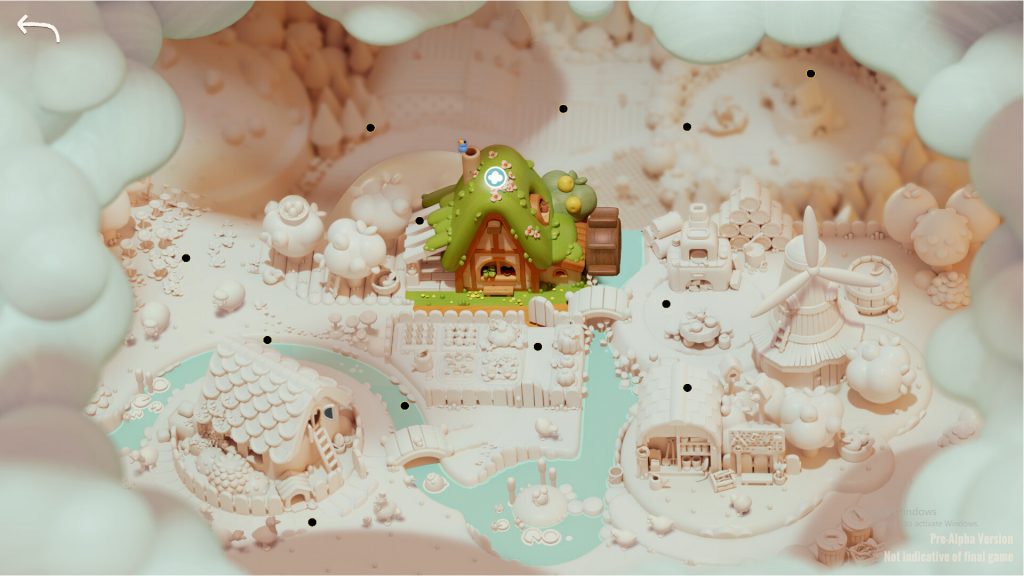
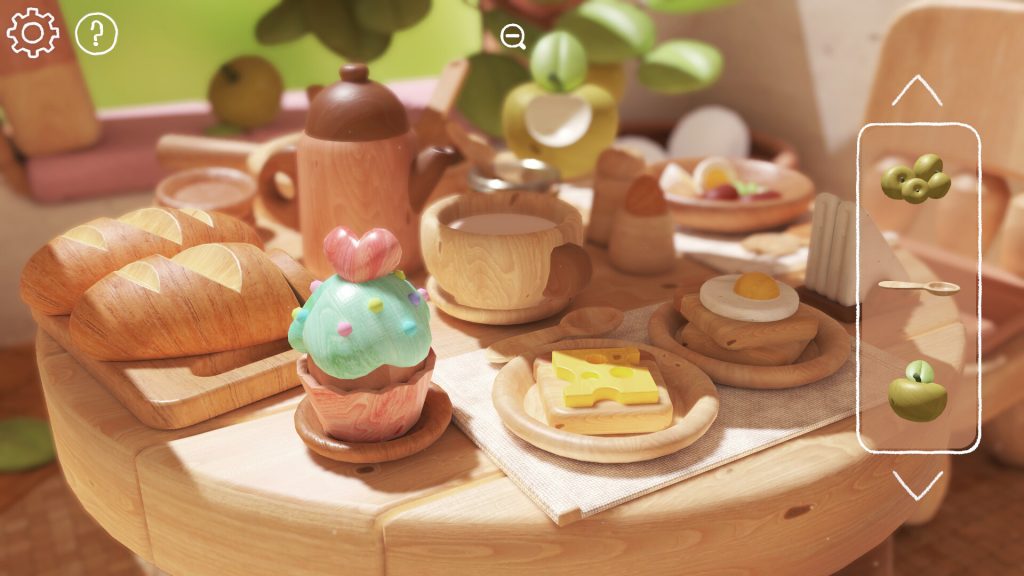
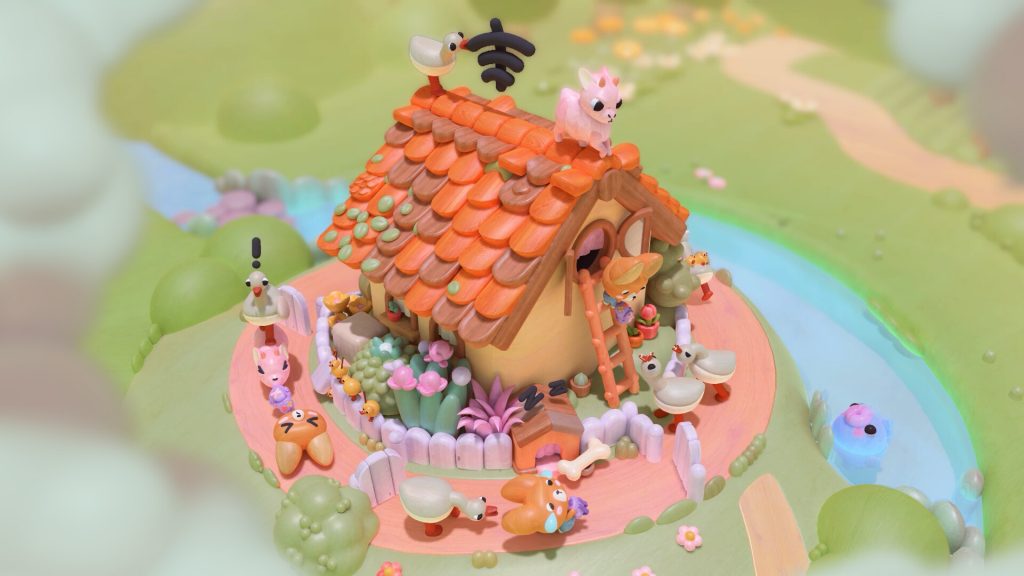
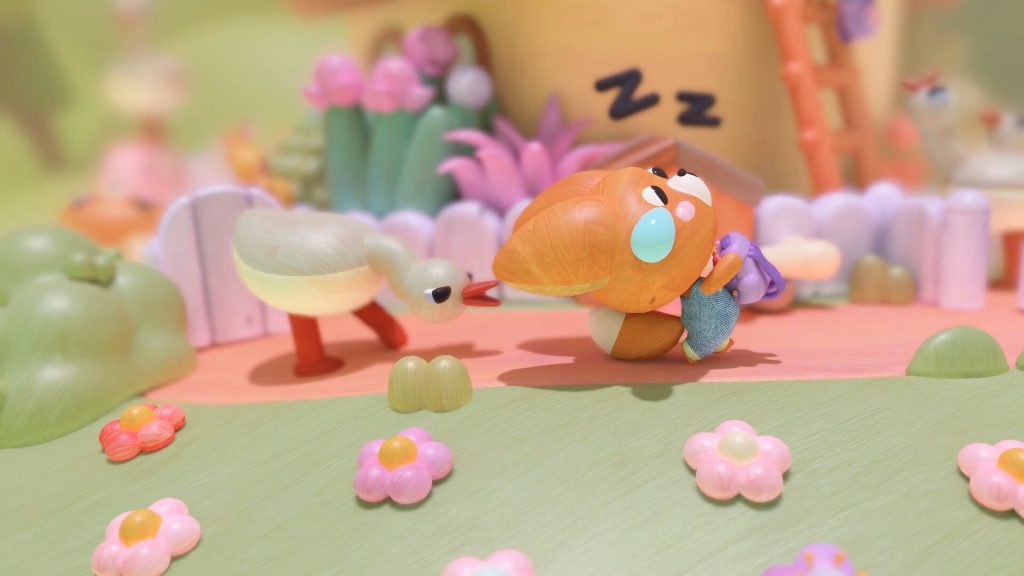
The core design insight of Woodo is deceptively elegant. Every diorama begins frozen — time has stopped, characters are suspended mid-motion, and the scene waits. As the player finds wooden puzzle pieces and places them correctly, the frozen elements animate. Color fills in where there was grey. Movement returns to stillness. Story emerges through restored motion rather than through text or exposition.
This mechanic is doing several things simultaneously that deserve appreciation. It makes the act of puzzle completion directly narratively meaningful — you’re not solving a puzzle and then receiving a story reward. The puzzle-solving is the storytelling. Placing the right piece in the right location is the act of restoring a moment to life.
It also inverts the typical relationship between player and game world. In most puzzle games, the world exists, and the player interacts with it. In Woodo, the world doesn’t fully exist until the player completes it. The scenes are waiting for the player’s restoration to become real, which creates a gentle sense of responsibility — these frozen moments are counting on you to bring them back.
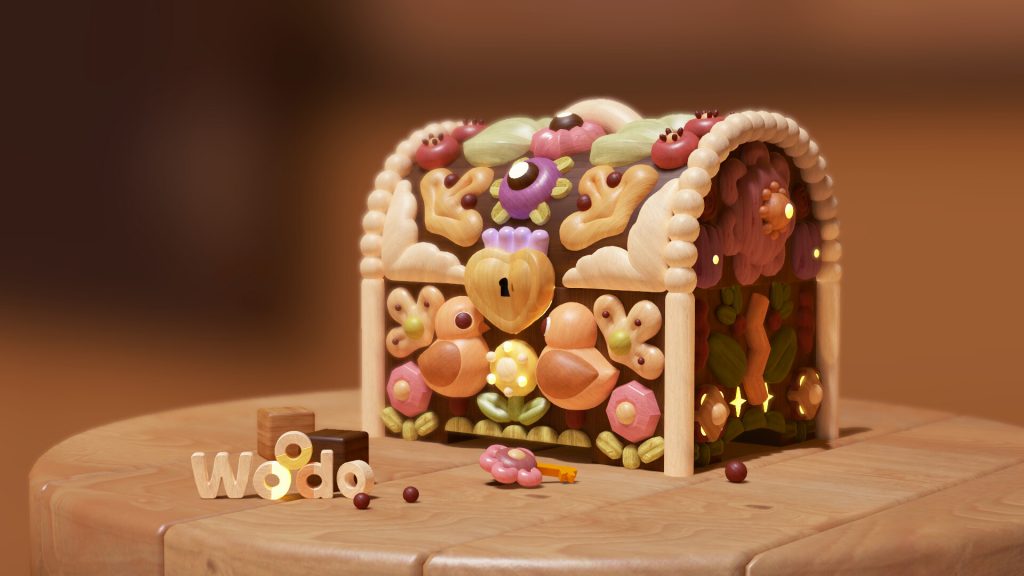
The tactile dimension of the wooden aesthetic reinforces this. Real wooden toys, real wooden puzzles, and real wooden dioramas are objects you hold and assemble. Woodo translates this physical relationship into digital form while preserving the sense that the pieces have weight and purpose. Developer Yullia Prohorova described wanting to create “a warm, safe, and emotionally resonant space” — and the wooden aesthetic choice serves this goal precisely because wood carries associations of warmth, handcraft, and durability that synthetic materials don’t.
The Summer of Foxy and Ben
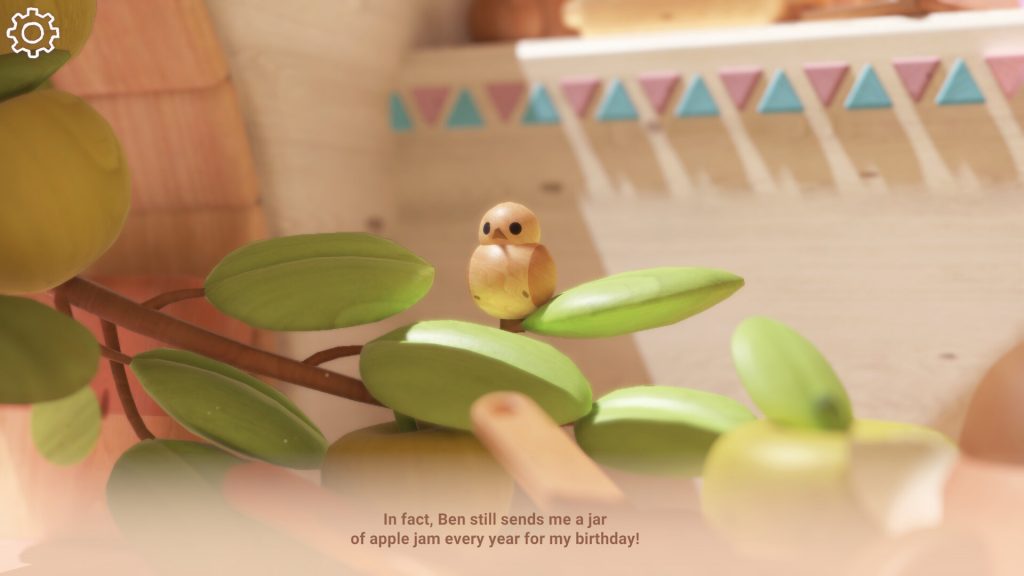
The narrative follows Foxy, a city girl sent to the countryside for the summer, and her friendship with local frog Ben. Together, they share summer adventures that the dioramas capture as frozen moments waiting for restoration.
This narrative premise is small in exactly the right way. There’s no world-ending threat, no complex moral dilemma, no stakes beyond the summer experiences of two children becoming friends. The plot summary could fit in a sentence. But the emotional territory it covers — first friendship, unfamiliar environments, the specific quality of childhood summers, the way small moments become memories — is genuinely profound because it’s genuinely universal.
The story progresses through Foxy’s narration as each diorama is completed. Players learn about each moment from Foxy’s perspective, experiencing the scenes twice: first as frozen puzzle elements, then as animated scenes, then as remembered stories told through Foxy’s voice. This layered encounter with each moment — restoration, animation, narration — creates depth that the individual elements couldn’t achieve separately.
The friendship between a city girl and a country frog is also a little unusual in a way that matters. Foxy and Ben are an odd pair — different origins, different natures — and their friendship is presumably the story of finding common ground across that difference. This is the kind of simple thematic content that the best children’s media handles with genuine grace, and that the best cozy games can carry without becoming heavy.
The Ghibli Comparison, Examined
Developer Prohorova herself cited Unpacking, A Little to the Left, Florence, and Ghibli animation as reference points — while specifically noting that Woodo “is not a copy or similar work but has built its own identity.” The comparison is worth examining because Ghibli comparisons are both meaningful and frequently overused in cozy game marketing.
What specifically makes something “Ghibli-esque” in ways that are design-relevant rather than just aesthetic? Ghibli films characteristically find profound meaning in small moments and domestic activities. The protagonist of My Neighbor Totoro is a child waiting for her mother; the protagonist of Kiki’s Delivery Service is a teenage witch learning her profession. These are not epic stories, yet they carry enormous emotional weight because of how carefully the films attend to the specific texture of mundane experience.
Woodo appears to operate in this register. Foxy’s summer friendship with Ben isn’t epic, but the diorama structure ensures that each moment is attended to with the care that only focused attention can provide. You look at each frozen scene carefully enough to find the missing pieces; in doing so, you see details that rushed progress would miss. The puzzle mechanic enforces the attentive slowness that Ghibli films achieve through animation craft.
The cozy game comparisons are similarly apt. Unpacking made the act of placing objects into appropriate locations deeply meaningful by revealing character through careful attention to possessions. A Little to the Left found satisfaction in the act of organizing objects according to their own inherent logic. Florence compressed the emotional arc of a relationship into brief interactive moments. Woodo fits within this lineage while finding its own specific combination: restoration through wooden diorama assembly, childhood narrative, and the specific warmth of hand-crafted aesthetics.
The Ukrainian Development Context
Tiny Monks Tales is a Ukrainian development team working under conditions that deserve acknowledgment. Ukraine’s creative industries have continued functioning despite ongoing difficult circumstances, and games emerging from Ukrainian developers carry a specific context that shapes how we can appreciate them.
Prohorova’s statement that Woodo came from wanting to create “a warm, safe, and emotionally deeply resonant space” carries particular weight when you consider the context in which it was created. The desire for a space that is warm and safe is not an abstract aesthetic preference when warmth and safety have been genuinely threatened. Woodo‘s healing qualities are not incidental to its development context — they’re likely inseparable from it.
This is the second Ukrainian indie project we’ve featured in recent coverage (alongside The Road of Dust and Sorrow from Painted Black Games), and both demonstrate Ukrainian creative work’s continued vitality and international ambition. The two games couldn’t be more tonally different — The Road of Dust and Sorrow is survival horror, Woodo is healing cozy — but both represent serious craft from developers who have continued creating despite everything.
Daedalic Entertainment’s publishing support (the studio now operating under Nacon) provides significant infrastructure for Woodo‘s international reach. Daedalic has published across multiple genres and platforms, and its involvement signals confidence in Woodo‘s commercial potential alongside its evident artistic quality.
The Production Details That Matter
Several specific production choices deserve attention because they contribute to Woodo‘s texture in non-obvious ways.
The music was composed by a friend with seven children. This is an unusual detail to include in game documentation, and presumably intentional — someone who has lived with seven children’s perspectives on the world composes music with a specific kind of warmth. Childhood seen from the parents’ angle, through years of accumulated perspective, produces a different emotional understanding than pure nostalgia.
Sound designer Mathilde (an ODDA contributor) handles the environmental audio. The specific texture of wooden sounds — pieces fitting together, the slight creak of assembled dioramas — likely represents careful attention to the tactile audio that makes the physical-feeling digital materials convincing.
The hidden tiny monks (referencing the studio name Tiny Monks Tales) scattered throughout dioramas add a search-and-discovery layer beyond puzzle completion. This kind of optional hidden content rewards attentive players and gives completionists a specific goal beyond puzzle solution.
The planned 24 achievements for the full release provide the completion structure that dedicated players appreciate. Achievement hunting in cozy games operates differently than in action games — it tends to be gentler, more about thorough engagement than difficult execution, and Woodo‘s achievement count feels proportionate to its scale.
What 99% Positive Means in This Context
A 99% positive rating from 443 reviews is genuinely extraordinary, particularly because the demo review population is large enough to be meaningful rather than statistically negligible. For comparison, many beloved games with passionate audiences land in the 85-95% range — unanimous enthusiasm at this scale is rare.
The specific content of the reviews matters as much as the number. The review from someone living with multiple mental health conditions, finding genuine healing is not the typical response to puzzle games. The “tea with grandmother” and “warm fireplace” comparisons from press coverage aren’t standard gaming press language — they’re reaching for domestic comfort metaphors that gaming criticism rarely uses because gaming rarely earns them.
These responses suggest Woodo is reaching something specific about emotional safety and healing that most games don’t access. This is a difficult quality to achieve and an even more difficult quality to sustain — it’s easy to aim for cozy and land on saccharine, or to aim for healing and land on bland. The consistency of these responses across both player reviews and professional press suggests the execution is genuinely successful.
Who This Is For
Strong fit for: cozy game enthusiasts seeking something genuinely distinctive rather than genre-standard; Unpacking, A Little to the Left, and Florence fans; Ghibli animation appreciators; players seeking games with genuine healing qualities; hidden object game fans who want more narrative context; puzzle game players who prefer atmosphere over challenge; parents looking for games accessible to children and adults simultaneously; anyone going through difficult periods who wants something genuinely warm and safe.
Cautious fit for: players who specifically want mechanical challenge in their puzzles; anyone who finds gentle pacing frustrating rather than meditative.
Less ideal for: players seeking action, strategy, or competition; anyone who specifically dislikes puzzle games; players who need continuous narrative momentum over contemplative moments.
What to Watch For
A few questions will shape Woodo‘s full release.
The first is content depth. The demo contains two complete dioramas; the full game needs enough dioramas to provide a complete emotional arc without either feeling too brief or overstaying its welcome. How many dioramas the full game contains and how the narrative builds across them will determine whether Woodo feels like a complete experience.
The second is narrative coherence. The Foxy and Ben friendship needs to develop with enough specificity that the dioramas feel like moments from a particular friendship rather than generic childhood scenes. Whether the writing achieves this specificity across the full game will affect emotional resonance.
The third is puzzle design variety. Diorama puzzles need to remain engaging across the full game without becoming repetitive. Whether the piece types, complexity, and visual variety sustain engagement without overwhelming the cozy atmosphere will determine the full game’s success.
The fourth is the console versions. PC, Xbox, and PlayStation demos are available now; Nintendo Switch versions are coming. The cozy game audience skews heavily toward Switch players (the platform’s portable format is ideal for this kind of session). How well the full game performs on Switch will significantly affect commercial reach.
The Takeaway
Woodo is one of 2026’s most genuinely affecting indie projects — a two-person Ukrainian team’s wooden diorama puzzle game that has achieved the difficult quality of being actually healing rather than just aesthetically cozy. The 99% positive demo rating from 443 reviews, the specific emotional testimony from players, and the consistent warmth of professional press coverage all point toward a game that succeeds at something genuinely rare: creating digital space that feels genuinely safe.
For cozy game enthusiasts, this is the demo to play during Steam Next Fest. The combination of distinctive wooden diorama aesthetic, time-restoration mechanic, gentle childhood narrative, and exceptional production warmth provides exactly what the genre at its best can offer.
For the broader gaming world, Woodo demonstrates that healing is a legitimate and achievable design goal. Games don’t have to aspire toward spectacle or challenge or immensity — sometimes the most significant achievement is creating a small wooden world where frozen moments wait to be restored, and where the act of restoring them feels like enough.
A city girl. A frog friend. A summer full of moments worth remembering. Wooden pieces waiting to be placed. A frozen scene waiting to breathe again.
Fit the piece. Watch the world move. Listen to Foxy remember.
That’s Woodo — and for a game about small things done with complete care, that description is everything.
Information related to ‘Woodo’
| item | detail |
|---|---|
| Developer | Tiny Monks Tales (Yullia Prohorova·Timur Bogotov duo) |
| Publisher | Daedalic Entertainment (under Nacon) |
| Genre | Cozy Diorama Puzzle / Narrative Adventure / Hidden Picture |
| Release platform | PC (Steam) / Xbox Series X|S / PlayStation 5 / Nintendo Switch · Switch 2 (Demo added in late June) |
| Scheduled for release | Undetermined (Target release: Summer 2026) |
| Demo Review | Very positive 99% (443 items) |
| Demo content | Intro Chapter + 2 Complete Dioramas |
| Language support | English voice + subtitles in 19 languages (multilingual voice planned for the full version) |
| composition | A friend with 7 children participated |
| Sound Design | ODDA Participating Designer Mathilde |
| Challenge | 24 full edition items (including finding the little tree monk) |
| Main Keywords | Cozy, Diorama, Tree, Puzzle, Fairy Tale, Childhood, Summer, Friendship, Healing |
| Official Channel | Discord · X · Instagram · TikTok · Bluesky |
| Steam Page | Go to Wishlist/Demo |