What if you took PowerWash Simulator — the 3D cleaning simulation that’s accumulated over 17 million players — and translated it into a 60FPS pixel art world inspired by the Sega CD and TurboDuo era? That’s the conceptual pitch behind Pixel Washer, the upcoming pressure-washing adventure from solo developer Matt Hackett (Valadria), officially announced with publisher Acclaim Inc.
The combination is unexpected in a way that immediately makes sense once you think about it. PowerWash Simulator‘s appeal comes from the simple, deeply satisfying visual pleasure of progressive cleaning — watching dirt disappear from surfaces, accumulating visible progress through methodical work. Pixel art is uniquely well-suited to this kind of visual transformation. Every dirty pixel is a discrete unit that can clearly be made clean. The “before and after” visual register that drives the cleaning genre’s satisfaction translates beautifully to pixel art’s clarity.
A Cleaning Game That Knows What It Is
The most refreshing thing about Pixel Washer‘s presentation is its design discipline. Hackett’s own description captures it precisely: “This game knows what it is, and what it isn’t. Players choose the levels they want and clean at their own pace. You never need to hurry.”
That clarity of design intent matters. The cozy game space has been growing rapidly, and not every project in it understands what cozy actually means. Some games slap cozy aesthetics onto traditional progression-pressure mechanics and create false relaxation experiences — comfortable-looking games that still demand optimization or grinding. Pixel Washer‘s explicit “you never need to hurry” framing signals that the design is actually committed to the cozy register, not just borrowing its aesthetic.
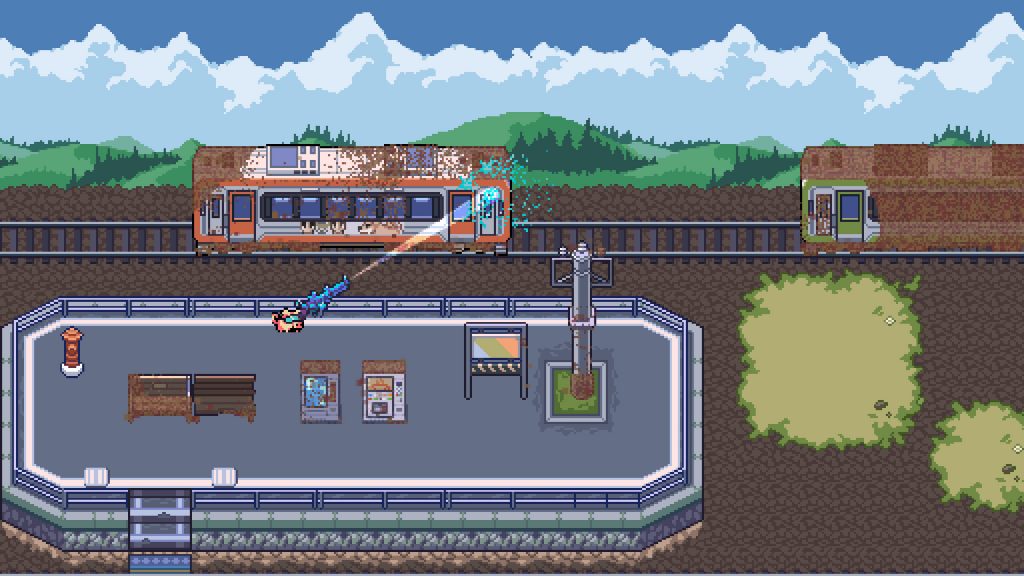
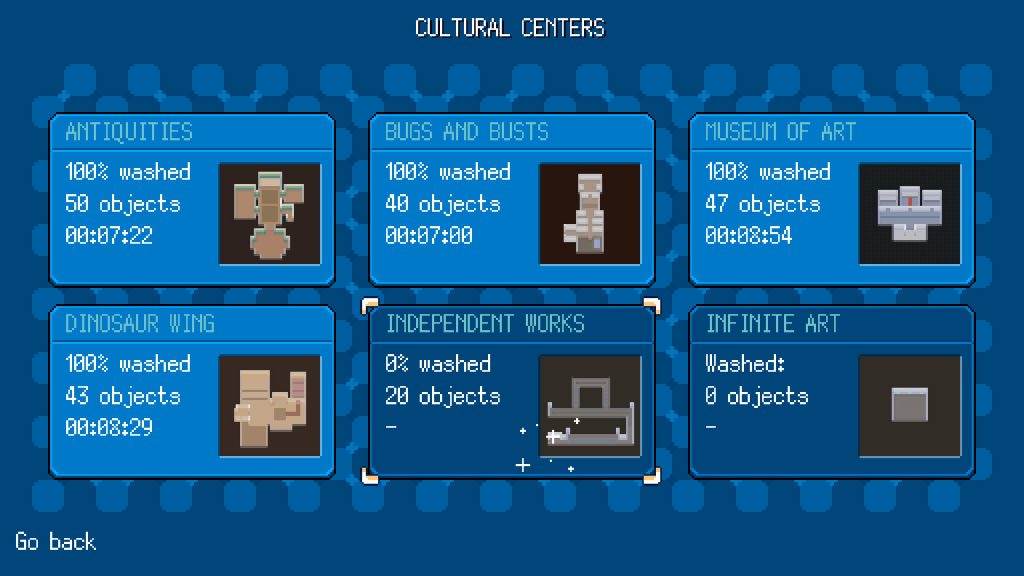
The 40+ handcrafted stages provide the content variety the format needs — parks, piers, arcades, museums, multiplex cinemas, each rendered as distinctive pixel art environments. The setting variety is doing real design work here. A pure power-washing game with repetitive environments would wear out its welcome quickly; varied locations give players reason to keep engaging across the full campaign.
The standout examples in the marketing — power-washing a mud-and-pollution-covered dinosaur fossil museum back to pristine condition, or restoring a wrecked pig pen into a sparkling pixel space — capture what Pixel Washer is going for. These aren’t realistic cleaning scenarios; they’re cartoonish setups where the joy comes from the transformation. The genre at its best produces a specific kind of visual catharsis, and Pixel Washer‘s scenarios are designed to maximize that satisfaction.
The Sega CD Aesthetic
The 16-bit pixel art commitment, specifically referencing the Sega CD and TurboDuo era, is a notable aesthetic choice. Those platforms occupied a brief, distinctive moment in gaming history — the bridge between cartridge-based 16-bit hardware and the CD-ROM revolution, with games that pushed pixel art technique to its peak just before 3D took over.
Pixel artist Alessandro Marani’s involvement gives the project legitimate craft credentials. Sega CD / TurboDuo-era aesthetics require specific technical fluency — color palette discipline, animation timing, sprite design conventions that distinguish the era from earlier 16-bit work or later neo-retro projects. Getting this right matters for players who’ll recognize the specific reference points and appreciate when they’re hit accurately.
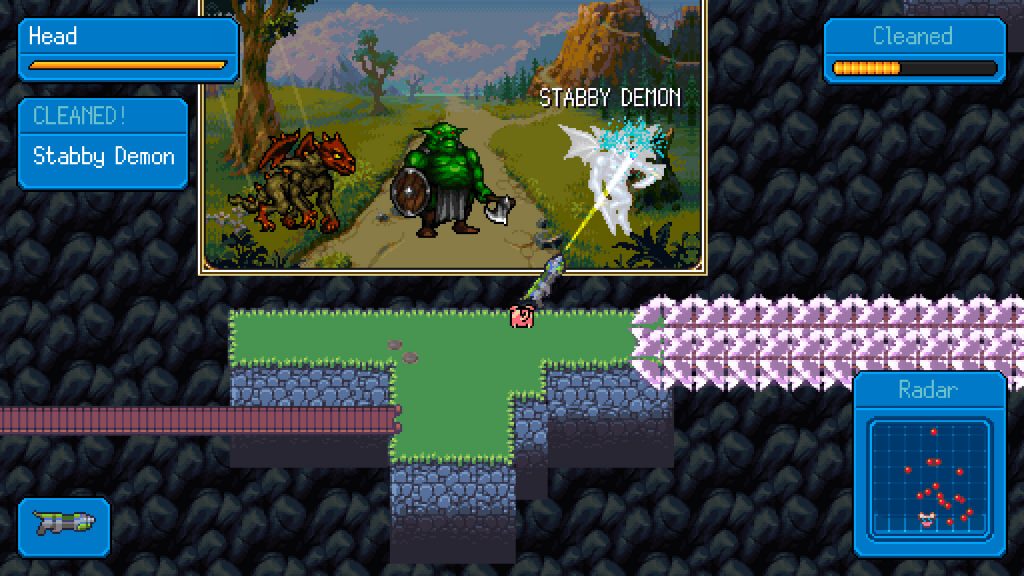
The retro choice also serves the gameplay. Pixel art’s visual clarity makes “dirty pixel vs clean pixel” instantly readable — the player always knows exactly what’s been cleaned and what hasn’t. That readability is essential for power-washing satisfaction. 3D cleaning games sometimes obscure progress through complex surface geometry; pixel art’s discrete-pixel approach eliminates that ambiguity.
The audio design supports the visual register. Cheerful sound effects of water streams washing pixel debris, paired with 16-bit style retro background music, complete the era-specific feel while reinforcing the cozy gameplay loop. The genre’s auditory satisfaction is part of its appeal, and Pixel Washer is paying appropriate attention to this dimension.


The Light Progression Layer
The gameplay structure adds gentle progression to the core cleaning loop. Players clean dirty sprites while collecting hidden money and trinkets, using these to upgrade cleaning equipment. More powerful washers unlock access to more challenging contracts and more polluted locations.
This is the right kind of progression for a cozy cleaning game. It gives players reasons to advance through the campaign without imposing pressure to optimize. Upgrade paths reward time spent rather than mastery; collection elements add discovery satisfaction; equipment improvements feel like genuine capability expansion rather than artificial difficulty walls.
The radar function that helps locate remaining dirty pixels is a thoughtful accessibility feature. Pure search-the-screen cleaning can become frustrating when the last few dirty pixels are hidden in awkward locations — the radar respects player time without removing the satisfaction of thorough cleaning.
Hidden interaction elements and secret content add exploration value beyond pure cleaning. The light business simulation aspect — building up your cleaning operation through completed contracts and equipment upgrades — provides campaign structure without becoming a heavyweight management system.
Itch.io Demo and Community Engagement
The “Dirty Demo” currently available on Itch.io has generated active community feedback. Player reactions have included positive responses to the core concept alongside specific suggestions about remaining-pixel discovery difficulty and camera control improvements.
This kind of pre-release feedback loop is one of the strongest signals about indie game quality. Players engaging with a demo and offering specific, constructive feedback suggests the project is connecting with its target audience meaningfully. Hackett’s direct community engagement — responding to comments and incorporating revisions — adds to the picture. Solo developers who actively respond to player feedback during demo phases typically deliver more polished final releases than developers who ship demos and move on.
The visibility on platforms like se7en.ws and the GameSpot database also indicates the project has reached the awareness threshold where games journalism infrastructure is paying attention. For solo developer projects, this kind of organic press visibility is essential for reaching the audience that would appreciate the game.
The Solo Developer Behind Valadria
Matt Hackett’s background adds context to Pixel Washer. He’s the author of the game development book “How to Make a Video Game All By Yourself” — a credential that signals serious thought about the craft of solo development. He previously released Witchmore under the Valadria studio name.
The book author’s details are more meaningful than they might seem. Developers who write about game development typically have deeply considered design philosophies — they’ve thought through what makes games work and articulated those thoughts for others. Pixel Washer‘s design discipline (its clarity about what it is and isn’t, its commitment to player-paced experience, its appropriate scope for solo development) reflects exactly the kind of design thinking the book genre encourages.
The project has been developed in public since 2023, with development diaries shared throughout the production process. This open development approach has built the community that’s now engaging with the Dirty Demo, providing the feedback loop that’s refining the project toward release.
The Acclaim Inc. publishing relationship continues that publisher’s recent active engagement with indie projects. Following Ground Zero Hero and the recently announced Furyball: Rogue Revenge, Acclaim is positioning itself as a publisher specifically focused on supporting smaller indie projects with creative ambition. Pixel Washer‘s addition to their slate reinforces that pattern.
The Cozy Cleaning Genre’s Surprising Depth
It’s worth situating Pixel Washer within the broader cleaning game space. PowerWash Simulator‘s massive success (17M+ players) revealed a substantial audience for cleaning-focused games that didn’t previously exist as a recognized genre category. Unpacking showed that cleanup-adjacent games could carry emotional weight. House Flipper extended the cleaning verb into broader renovation gameplay.
What these games share is an understanding that cleaning is psychologically satisfying in a way that traditional gameplay verbs aren’t. There’s no failure state. Progress is unambiguous and visible. The transformation from disorder to order taps into something genuinely calming. The genre’s success isn’t a fluke — it reflects how many players want games that provide pure progress satisfaction without imposed challenge.
Pixel Washer enters this space with a specific creative angle: applying the genre’s appeal to pixel art aesthetics, making the visual transformation even more readable, and committing fully to the cozy register without the realistic-simulation complexity that PowerWash Simulator layers on. For players who want the cleaning game satisfaction in a simpler, more immediately satisfying format, Pixel Washer is positioned to deliver exactly that.
Who This Is For
Strong fit for: PowerWash Simulator fans interested in a pixel art variation of the format; cozy game enthusiasts seeking truly relaxing experiences without hidden pressure mechanics; 16-bit retro aesthetic appreciators; players who enjoy clear visual progress satisfaction; Steam Deck users (full support is planned, making this an ideal handheld game); solo developer project followers.
Cautious fit for: players who specifically prefer 3D realistic cleaning over stylized pixel art; anyone allergic to retro aesthetics.
Less ideal for: players who need traditional gameplay challenge to stay engaged; anyone uninterested in cleaning as a core game verb; players who prefer competitive or skill-based experiences.
What to Watch For
A few questions will shape Pixel Washer‘s reception when it arrives.
The first is content variety across 40+ stages. The handcrafted stage count is substantial, but whether the environments feel meaningfully different from each other or settle into variations on similar templates will determine engagement durability.
The second is the satisfaction calibration of the core cleaning loop. PowerWash Simulator‘s magic comes from a specific feel — water pressure, surface reaction, progress feedback all calibrated precisely. Pixel Washer needs to nail this same feel-quality in its pixel art context, and whether it succeeds is something only hands-on play can confirm.
The third is the upgrade pacing. Light progression systems live or die on how the upgrade curve feels — too generous and the system has no weight, too stingy and the cozy register breaks. Balancing this for a relaxed cleaning game requires careful tuning.
The fourth is the camera and discovery refinements based on community feedback. Hackett’s responsiveness to demo feedback suggests these will improve, but the specific solutions will affect the final play experience meaningfully.
The Takeaway
Pixel Washer is one of the more genuinely focused indie projects on the horizon — a solo developer with a clear design philosophy, working in collaboration with a skilled pixel artist, producing a project that knows exactly what it wants to be. The cozy cleaning genre has demonstrated substantial commercial potential, and applying it to pixel art aesthetics with proper attention to craft is the kind of small but smart creative move that can produce a successful release.
The combination of Matt Hackett’s solo developer credentials (book author, previous releases), Alessandro Marani’s pixel art expertise, Acclaim’s publishing support, the active demo community feedback loop, and the design discipline visible throughout the project’s presentation all point toward a polished final release rather than a rough indie experiment.
For cleaning game fans, pixel art enthusiasts, and players seeking truly cozy experiences in a handheld-friendly format, Pixel Washer is one to wishlist and watch. The release window is “Coming Soon,” and the Itch.io demo is the fastest way to discover whether the wavelength matches your preferences.
A pixel town covered in mud and pollution. 40+ handcrafted stages. A power washer that starts modest and grows powerful. The promise of progressive transformation rendered in 16-bit Sega CD aesthetics. As cozy game pitches go, Pixel Washer is one of the more confidently specific of recent memory — and based on the demo and the team’s clear design discipline, it’s one of the more likely actually to deliver on its promise.
The dirt is waiting. The washer is ready. And there’s no hurry.
Information regarding ‘Pixel Washer’
| item | detail |
|---|---|
| developer | Matt Hackett / Valadria (Solo Developer) |
| Publisher | Acclaim Inc. |
| Genre | Cozy High-Pressure Washing Simulation / Casual Adventure / Life Simulation |
| Release platform | PC (Steam) / Steam Deck (Full support coming soon) |
| Scheduled for release | Undecided (Coming Soon) |
| Art style | 16-bit Pixel Art / Sega CD Turbo Duo Nostalgia |
| Pixel artist | Alessandro Marani |
| Number of stages | Over 40 handcrafted items |
| core system | Sprite Washing / Hidden Collectibles / Washer Upgrades / Light Business Simulator |
| demo | Itch.io Dirty Demo Released |
| Main Keywords | Cozy, Pixel Art, High Pressure Wash, Pig, Retro, Upgrade, Exploration |
| Official Channel | YouTube · Discord · X · Bluesky |
| Steam Page | Go to Wishlist |