Counter-Strike turned 27 this year. The Half-Life mod that Minh ‘Gooseman’ Le co-created with Jess Cliffe in 1999 didn’t just become one of the most successful games ever made — it established the competitive tactical FPS as a genre template that shaped online gaming for decades. And now Gooseman is back, not with another competitive PvP shooter, but with something that reflects a specific diagnosis of where the market has gone: Alpha Response, a cooperative PvE FPS for up to four players that draws inspiration from arcade classics like Time Crisis and Virtua Cop rather than from competitive esports.
Alpha Response has been in Early Access since October 2024, has accumulated approximately 150,000 wishlists, and is targeting Q3 2026 for full release. The Steam Summer Sale’s 25% discount provides a current evaluation opportunity.
The Gooseman Journey
Understanding what Alpha Response represents requires understanding Minh Le’s post-Counter-Strike path, which is more interesting than a simple “creator makes another shooter” narrative.
Le left Valve specifically because Counter-Strike’s established player base was resistant to change. He’s stated directly: “Counter-Strike players wanted the game to stay the same. So I left Valve to create a game with new features and new ideas.” This wasn’t a creative defeat — it was a recognition that the game he’d created had its own momentum that extended beyond his personal vision, and that pursuing new ideas required departure.
The post-Valve trajectory is genuinely varied. From 2007 to 2012, Le worked in Korea with a small development team on Tactical Intervention — an FPS that explored directions CS couldn’t take with its established player base. He subsequently contributed to Rust, the survival game that became one of Steam’s most enduring successes. These experiences across different genres, team sizes, and commercial models produced the kind of diverse development perspective that explains why Alpha Response looks nothing like what you’d expect from the person who made Counter-Strike.
His current diagnosis of the market is worth taking seriously, given his perspective. Le’s view that the competitive PvP market is overcrowded and that it’s difficult to bring in new players reflects an observation about what the category has become in the 27 years since CS launched: a handful of dominant titles (Valorant, CS2, Apex Legends) with deeply entrenched player bases. Building the next competitive FPS is, as Le implies, an extremely difficult commercial proposition.
PvE cooperative shooters occupy different market territory. Left 4 Dead‘s legacy, Payday‘s commercial longevity, and the steady stream of successful co-op games suggest a genuine audience appetite for cooperative rather than competitive challenge. Le is building where the opportunity exists rather than where his legacy resides.
The Arcade DNA Premise
The design inspiration for Alpha Response is as significant as its genre positioning. Le and Ultimo Ratio Games cite Time Crisis and Virtua Cop as foundational references — arcade light-gun games that defined a specific kind of action experience in the 1990s. These games shared specific qualities: immediate comprehensibility, high intensity from the first moment, clear objectives, and the satisfying rhythm of dispatching enemies in quick succession.
Translating this arcade sensibility into a 2024-era PC FPS requires specific design decisions. The most important is prioritizing feel over complexity. Time Crisis didn’t have a skill tree. Virtua Cop didn’t have a crafting system. The games worked because shooting enemies felt good and the situations were immediately legible — you knew what to do and doing it was viscerally satisfying.
Alpha Response‘s design reflects these values. PCGamesN described it as “fast, fun, and sensationally spectacular” while noting its “originality.” NeonLightsMedia praised “focusing on pure arcade action fun instead of excessive decoration characteristic of modern shooters.” These evaluations identify exactly what the Time Crisis-Virtua Cop influence is achieving: a game that doesn’t try to be a simulation, a progression system, or a live-service platform. It’s trying to be an intense, comprehensible, satisfying action experience.
The community comparisons are telling. Steam players invoking “the feeling of Counter-Strike beta era” and “SWAT 4 mixed with Counter-Strike” are identifying the specific register the game occupies — before competitive FPS became about ranked systems, meta gaming, and content seasons, when it was about the feel of a well-designed firefight.
The Mission Structure and Urban Setting
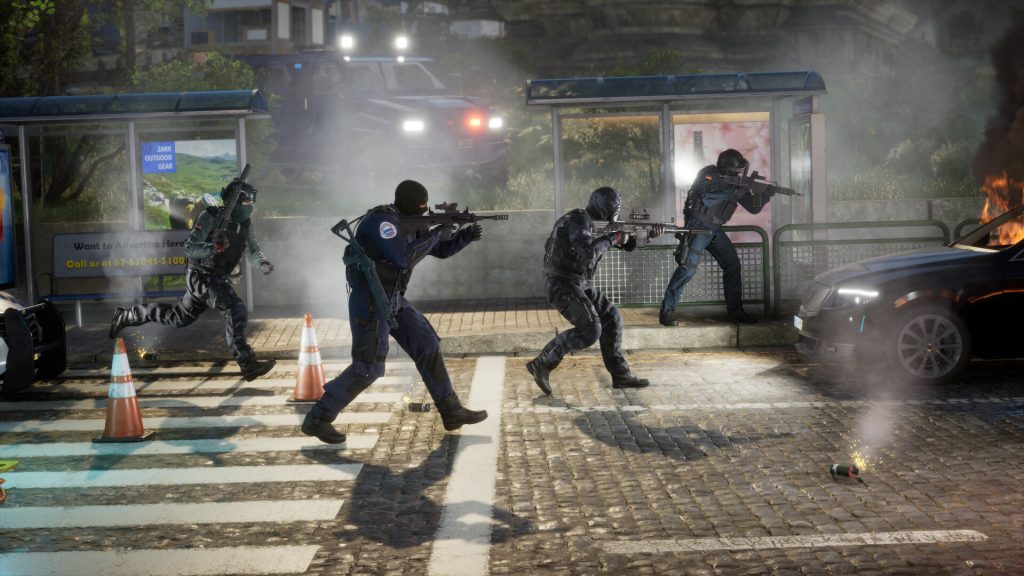
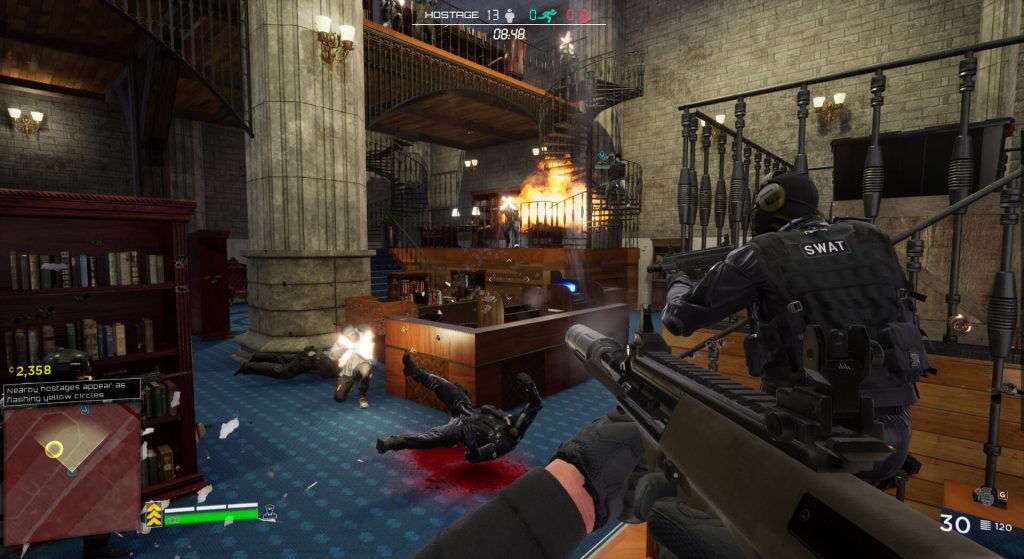
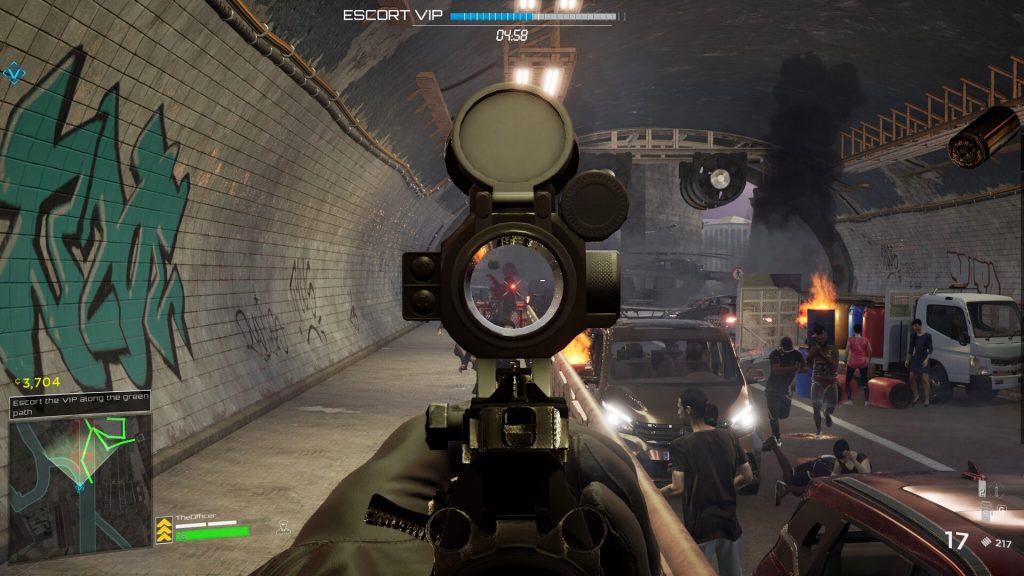
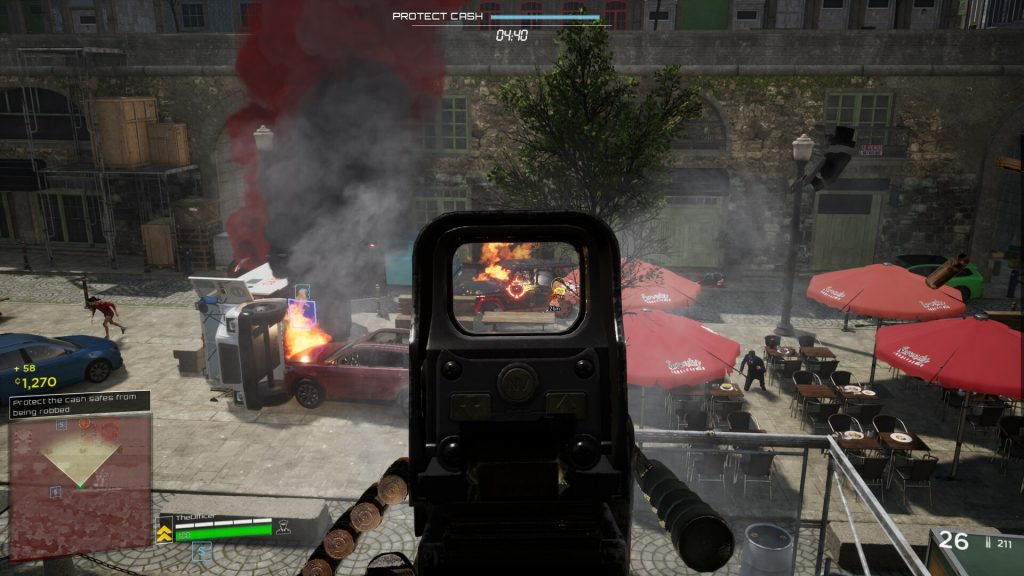
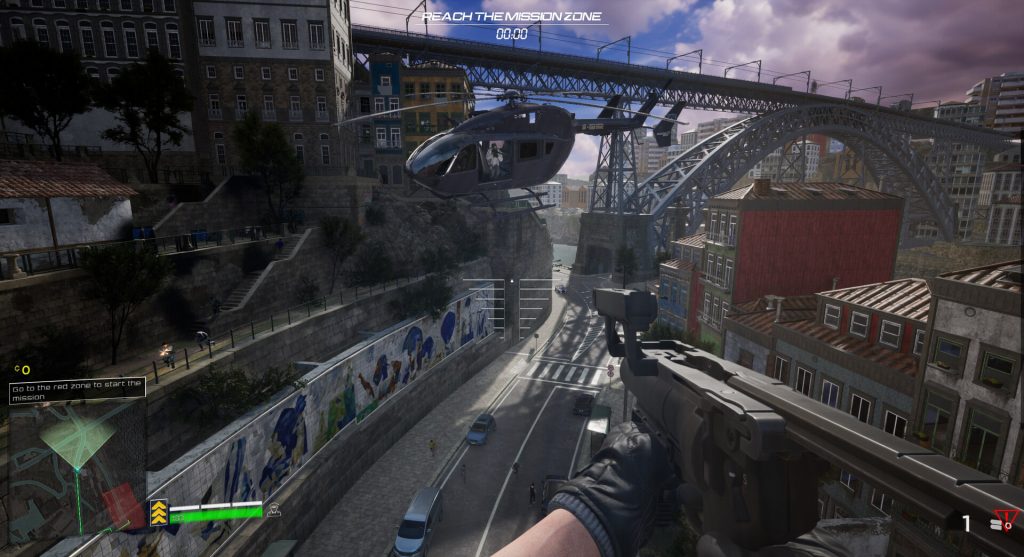
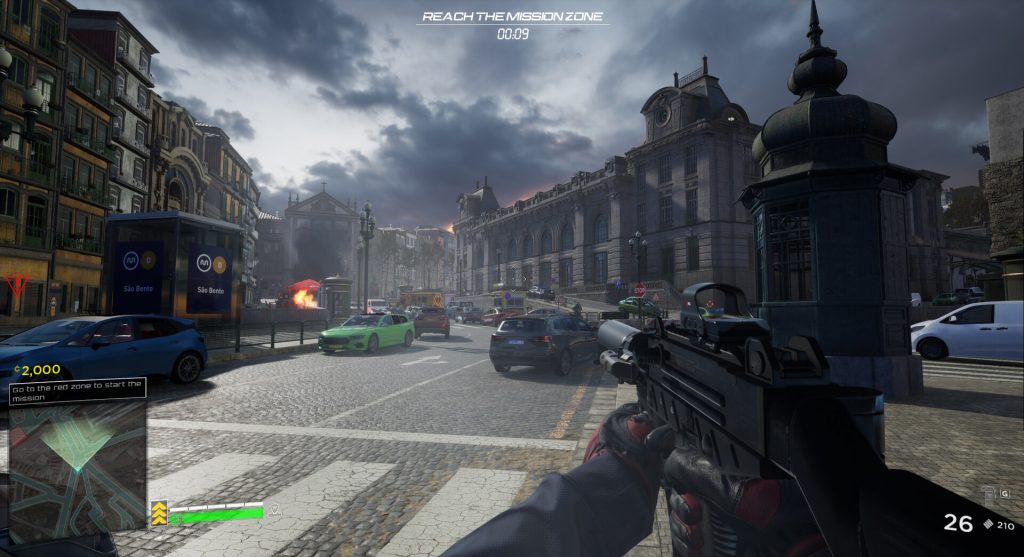
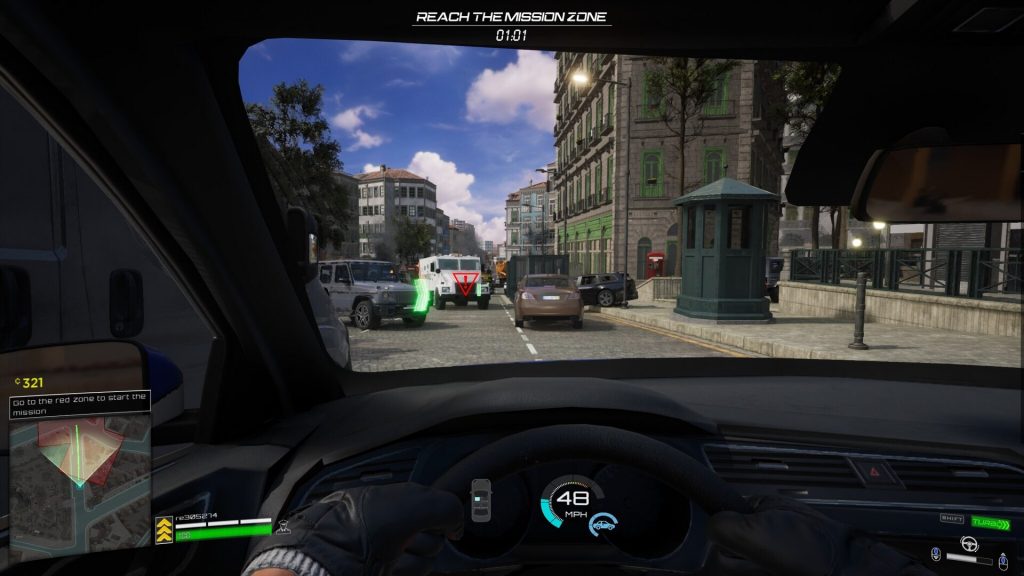
A virtual European city provides the geographical canvas: streets, squares, large subway stations, a cathedral, and industrial facilities. The environment is populated — civilians walking the streets, vehicles in motion — adding stakes to the tactical operations. This isn’t a sterile shooting gallery but a living urban space where collateral damage has implications.
Four mission types anchor the content: hostage rescue, bomb defusal (an obvious nod to CS heritage), VIP escort, and cash robbery prevention. These archetypes have clear objectives and clear success/failure conditions — exactly the clarity that arcade game design requires. Each mission type demands slightly different tactical priorities: escort missions require movement coordination, bomb defusal creates time pressure, and hostage rescue requires positional awareness.
The two large maps with approximately 20 unique missions each provide reasonable Early Access content. With enemy positioning and combat situations varying across playthroughs, the 40+ missions don’t simply repeat themselves — the procedural variation extends the content scope beyond what the raw number suggests.
Le’s self-description of the game as “combining elements of Payday, Counter-Strike, and Left 4 Dead” places it within a specific genre heritage. Payday provides the cooperative heist/mission framework, CS provides the weapon feel and tactical sensibility, and Left 4 Dead provides the cooperative survival dynamics. These aren’t incompatible influences — they represent different aspects of what makes four-player cooperative shooter sessions satisfying.
The Weapon Design Philosophy
The weapon roster covers the expected tactical shooter range: pistols, shotguns, assault rifles, sniper rifles, plus equipment like shields and grenades. Customization through suppressors and scopes is supported. None of this is unusual by genre standards.
What the press coverage emphasizes is the feel. “Weighty yet intense” weapon impact, strong hit confirmation, and bullet mark expression — these are the qualities that separate shooters where firing a gun feels good from those where it feels like clicking a button. CS’s most enduring achievement was making the act of firing weapons feel precise and consequential; that specific design sensibility is apparently translating into Alpha Response‘s weapon execution.
The complexity floor is deliberately low. Le designed Alpha Response so anyone can adapt to combat quickly without extensive learning investment. This accessibility orientation reflects both the arcade influences and the co-op design priority — games intended to be played with friends need to be joinable by players at different skill levels.
The 79% Review Situation
79% Mostly Positive from 803 reviews after roughly 20 months of Early Access represents a reasonable but unspectacular reception. For context, this position suggests the game is delivering on its core promise for most players, while specific issues are generating meaningful critical response.
The technical concerns that appear in reviews — footstep audio directionality and frame optimization — are standard Early Access issues rather than fundamental design failures. These are fixable with dedicated development time before the Q3 2026 full release. The positive framing around the actual gameplay experience (mission absorption, CS-beta nostalgia, arcade feel) indicates the core design is working.
The 150,000 wishlist count significantly exceeds the review count, suggesting many players are interested in the full release state rather than engaging during Early Access. This is common for games where the target audience is waiting for complete content rather than participating in development — particularly relevant for a game with a famous co-creator whose work attracts attention beyond typical indie audiences.
The Korean Connection
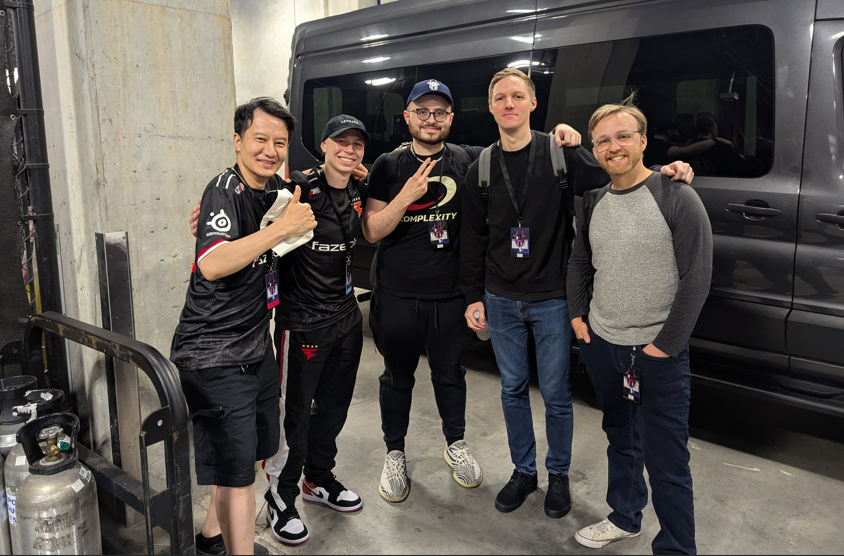
For Korean gaming audiences specifically, Le’s history has additional resonance. His 2007-2012 development work in Korea on Tactical Intervention made him a notable figure in Korean gaming culture before most Western audiences were aware of his post-Valve activities. His recent attendance at the BLAST.tv Austin Major playoffs demonstrate continued engagement with the competitive CS community that his earlier work created — a kind of ongoing relationship with his own legacy, even while building something new.
The Korean gaming media coverage of Alpha Response reflects this familiarity. Le isn’t just “the Counter-Strike creator” to Korean gaming audiences — he’s someone who specifically chose to work in Korea for five years, giving him a different kind of presence in that market.
Who This Is For
Strong fit for: cooperative FPS enthusiasts seeking PvE alternatives to competitive multiplayer; Payday 2/3 fans wanting tighter action with less progression complexity; Left 4 Dead players seeking mission-based cooperative content; Counter-Strike community members curious about Le’s post-CS work; arcade FPS enthusiasts who miss the clarity and intensity of older shooter design; players who want pickup-and-play action without extensive skill development requirements; groups of 2-4 friends wanting cooperative sessions.
Cautious fit for: players who specifically want competitive PvP (the game is entirely PvE by design); anyone who needs polished technical performance (the Early Access frame rate and audio issues are real, though the Q3 2026 target suggests improvement is planned); players waiting for the full release state.
Less ideal for: solo-only players who find multiplayer games less satisfying without friends; players seeking deep progression systems and meta-game content; anyone who needs a large player base for quick matchmaking.
What to Watch For
A few questions will shape Alpha Response‘s Q3 2026 full release.
The first is technical polish. The footstep audio directionality and frame rate optimization concerns appear consistently in community feedback. Whether these are addressed before full release will significantly affect review scores from players who come to the game without Early Access tolerance.
The second is content expansion. Two maps with 40 missions is a reasonable Early Access scope; full release needs to feel like a complete game. Whether additional maps, mission types, or gameplay variety arrive before Q3 2026 will determine whether the full release feels complete or thin.
The third is whether the Gooseman factor converts to sustained commercial attention. The creator’s legacy generates initial interest; whether the game itself sustains attention beyond the “CS creator made this” hook depends entirely on whether the moment-to-moment experience delivers the arcade satisfactions Le is targeting.
The fourth is co-op player base sustainability. PvE cooperative games live on finding other players for sessions. Whether Alpha Response can establish enough active playerbase to make matchmaking reliable will affect long-term engagement.
The Takeaway
Alpha Response is a genuinely interesting development in the careers of both Minh Le and the tactical FPS genre he helped create. Rather than chasing CS2’s competitive model or building on nostalgia for what CS used to be, Le is applying his foundational understanding of what makes shooters feel good to a different genre context — cooperative, PvE, arcade-influenced, accessible.
The 79% Early Access reception with 150,000 wishlists suggests a game that’s delivering its core experience while still requiring the polish that full release needs to provide. PCGamesN calling it “one of the most fun shooters of the year” establishes that the arcade feel Le is pursuing is landing for engaged players; the technical feedback establishes where development attention needs to go before Q3 2026.
For players who want to reconnect with why FPS games felt so immediate and satisfying in the CS beta era — without the competitive anxiety of modern ranked systems — Alpha Response is offering exactly that experience in cooperative form. Gooseman’s twenty-seven-year journey from Half-Life mod to Korean development to Rust to indie cooperative FPS has led somewhere genuinely worth visiting.
The bomb needs defusing. The VIP needs escorting. The hostages need rescuing. And somewhere in a virtual European city, four players have thirty seconds to figure out the optimal approach — or just run in and see what happens, because this is the kind of shooter that makes the run-in feel good too.
That’s the arcade DNA talking. And it still works.
Information regarding ‘Alpha Response’
| item | detail |
|---|---|
| Developer | Ultimo Ratio Games |
| Director | Minh ‘Gooseman’ Le (Co-founder of Counter-Strike) |
| Genre | First-person PvE Tactical Co-op FPS / Action Shooter |
| Release platform | PC (Steam Early Access) |
| Early access begins | October 8, 2024 |
| Official release target | Q3 2026 |
| Steam Review | Mostly positive 79% (803 items) |
| Wishlist | Approximately 150,000 cases |
| Play Mode | Solo / Co-op up to 4 players |
| Mission Type | Hostage Rescue / Bomb Defusal / VIP Escort / Cash Robbery Prevention |
| Current content | 2 large maps / Approximately 20 unique missions per map |
| inspiration | Counter-Strike · Payday · Left 4 Dead · Time Crisis |
| Major media | PCGamesN·IGN France·Vice·GamesBeat·Dust2.us |
| Steam Summer Sale | 25% discount in progress |
| Main Keywords | Police, Special Forces, Co-op FPS, PvE, Gooseman, Arcade, Tactical Shooter |
| Official Channel | Discord · YouTube · Reddit · Twitch · X · Facebook · Bluesky |
| Steam Page | Shortcut |