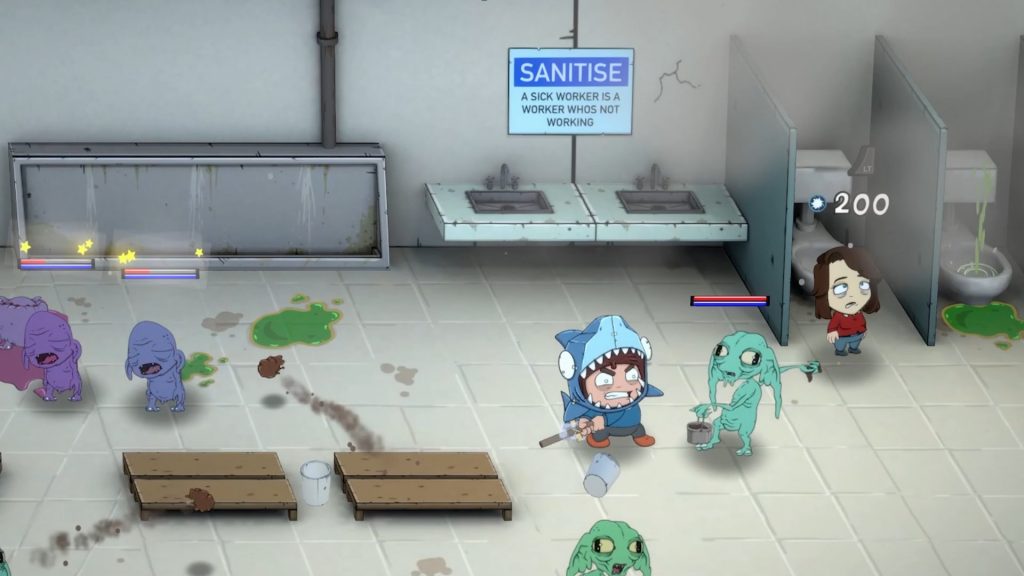
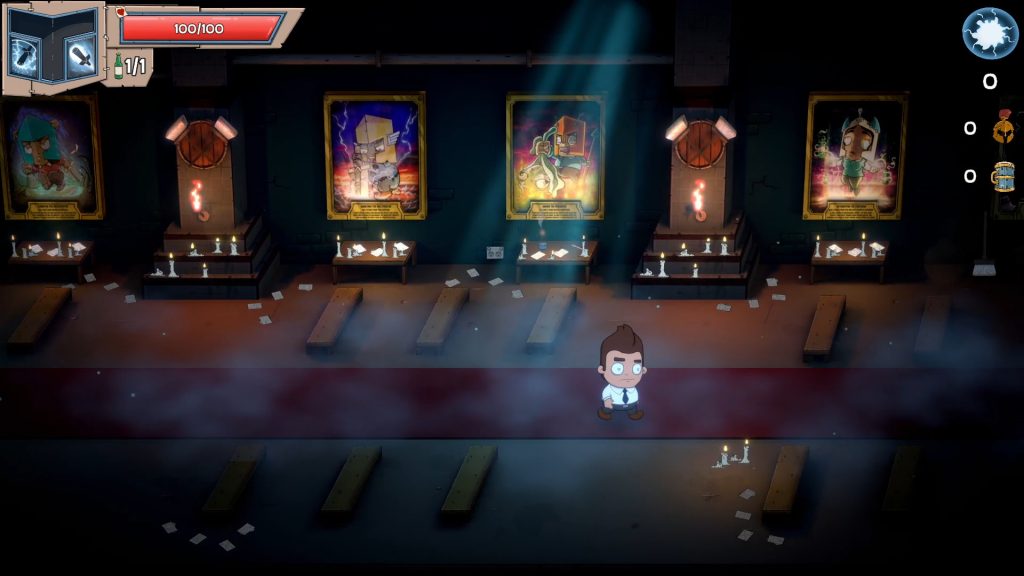
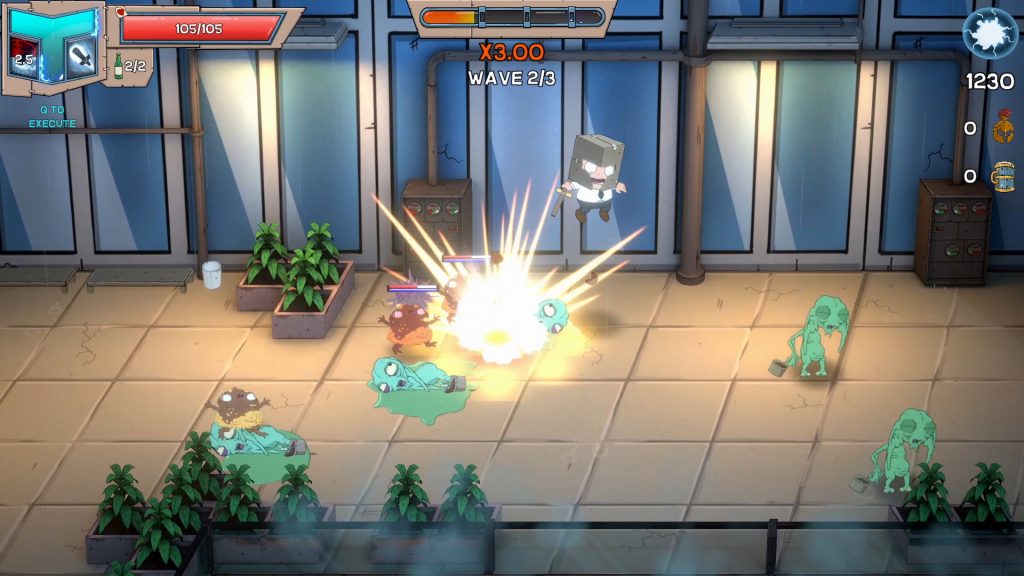
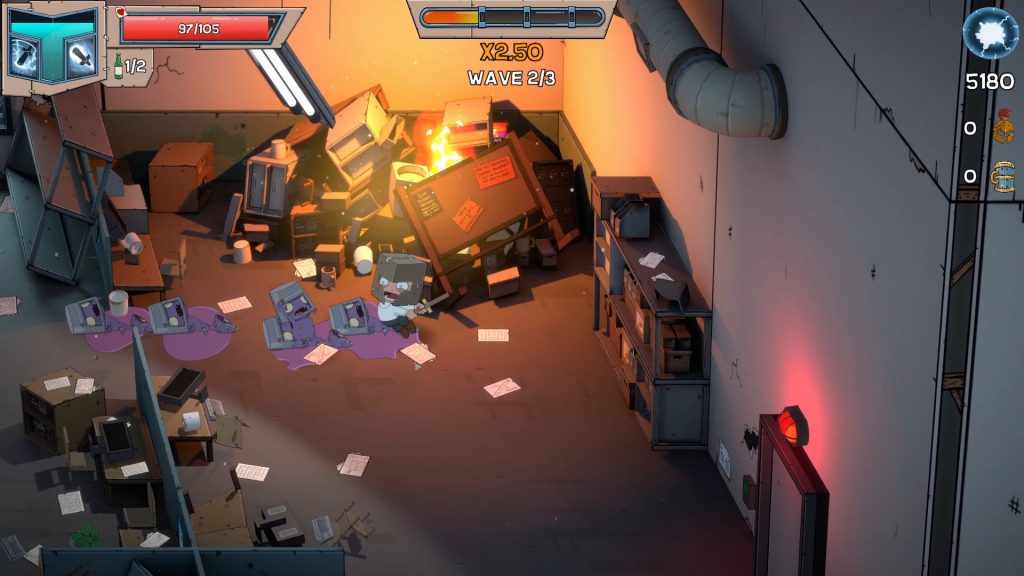
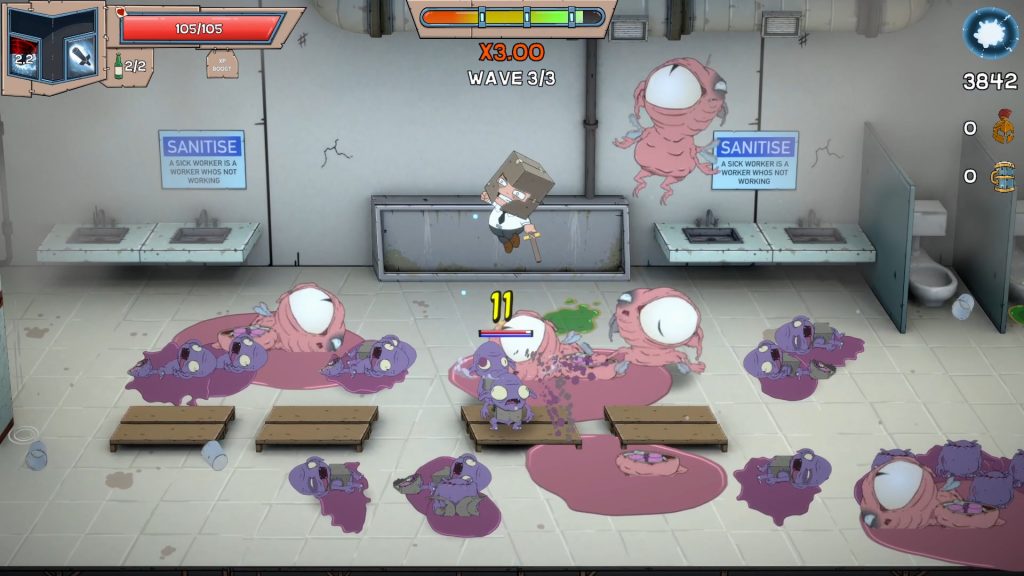
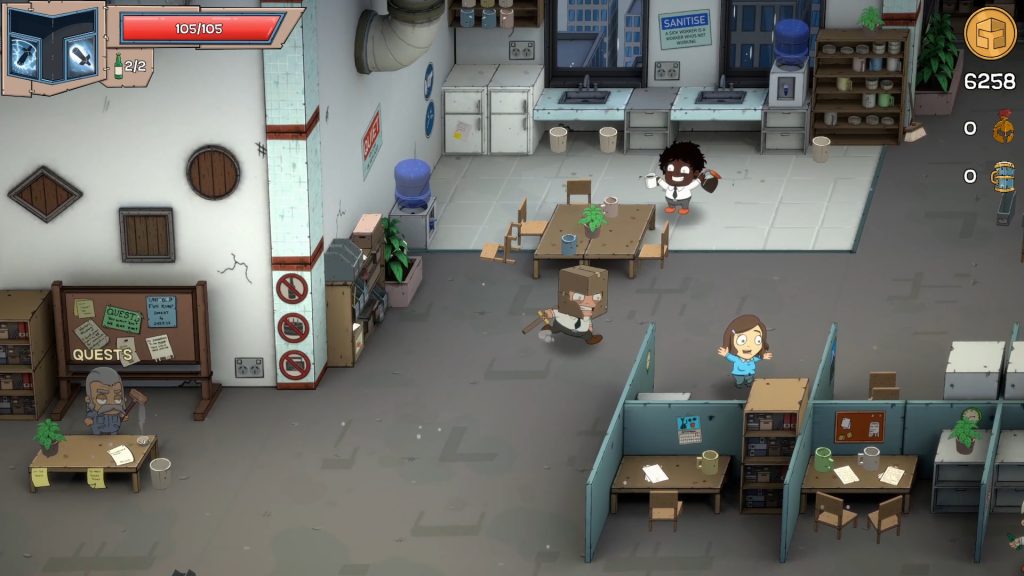
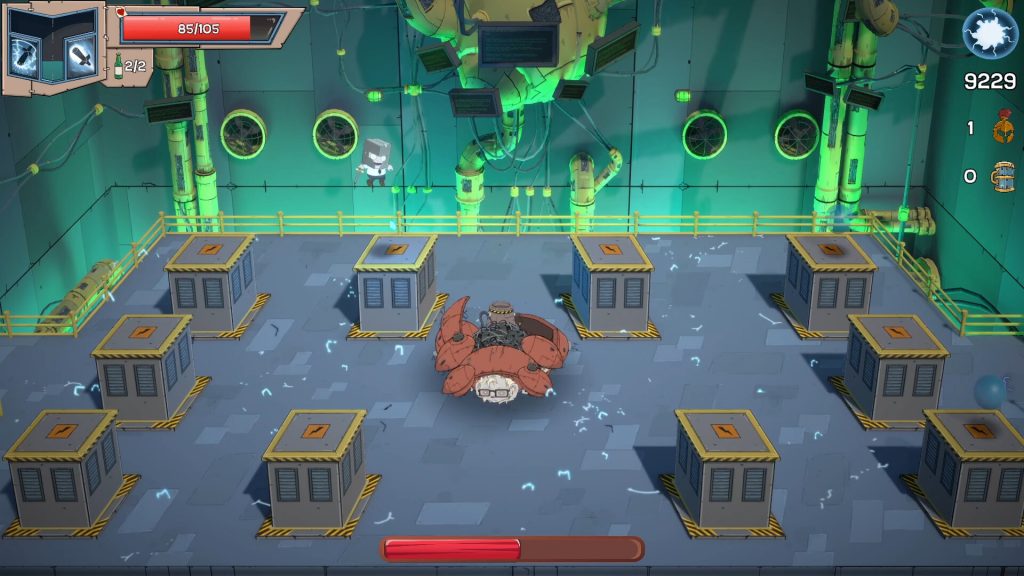
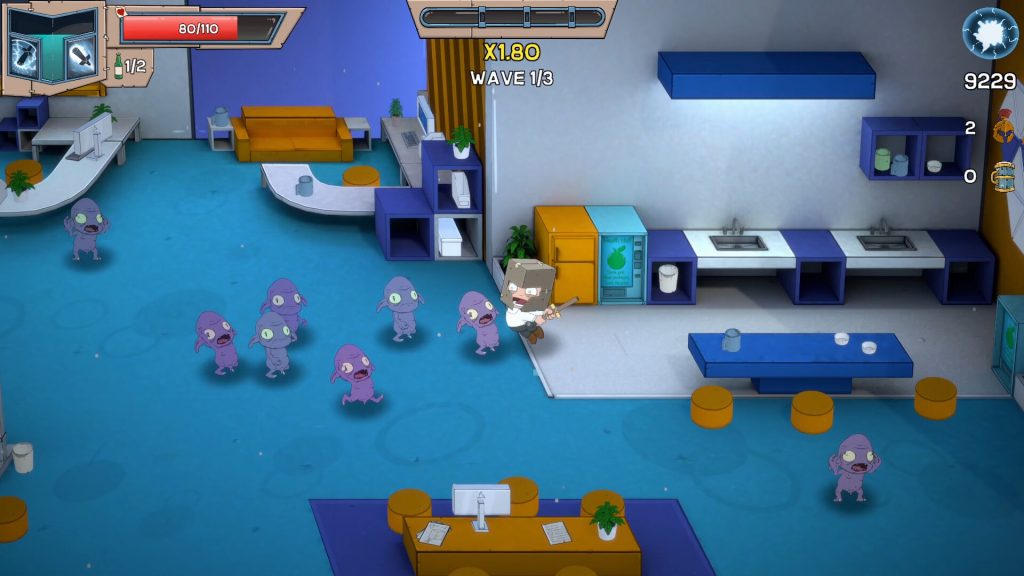
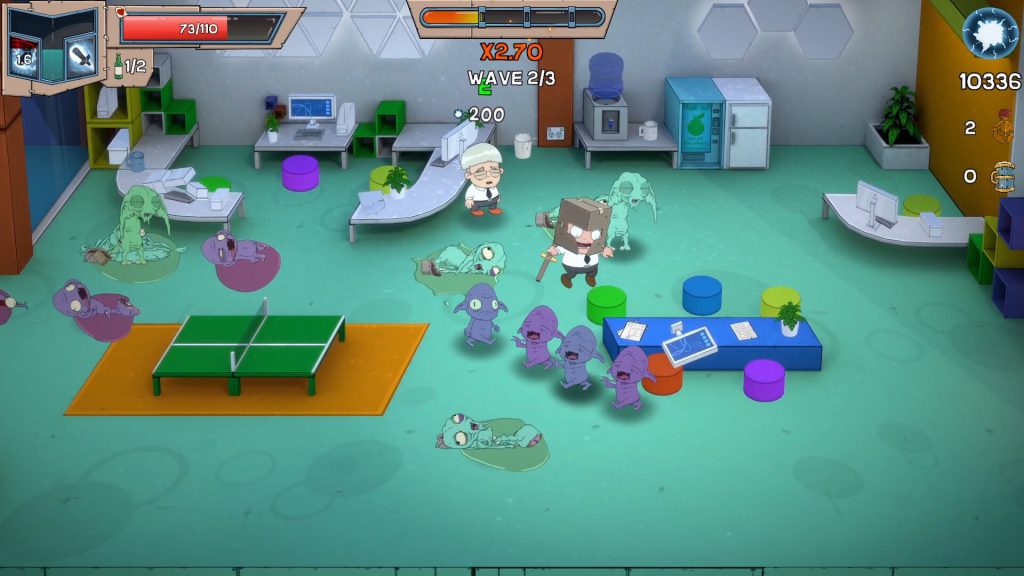
It’s 5:00 PM on Friday. The office building is full of monsters that used to be your colleagues. The corporate culture was toxic before it became literally supernatural, and now someone has to clear each department floor-by-floor until they reach the CEO and confront the terminal point of whatever institutional corruption made all of this possible. That someone is you. Your weapons are made of cardboard boxes. The game is called Box Knight, and this is apparently a coherent premise.
Box Knight from Australian studio We Made A Thing Studios (game development division Wemat Games) announces its August 25 Steam release via Convergence Showcase, completing a development journey that began with a 2024 closed beta, moved through Steam Next Fest February 2026, updated the demo in June, and arrives at the full release with 2-player local sofa co-op added to what was a solo experience during testing.
This is the studio’s first game. They previously made film and television content. The jump from video production to roguelite action RPG is unusual but not inexplicable — both involve storytelling, pacing, and tonal control, and office satire as a creative subject matter is the kind of concept that a team with a storytelling background might execute more effectively than one with only mechanical game development experience.
The Office Satire as Game Design
Workplace satire in games tends toward simulation — Papers, Please used bureaucratic procedure as its satirical mechanism, Holonoptic (covered earlier this month) used management simulation to make AI workplace authority the subject. Box Knight takes a different structural approach: the office is a dungeon. The toxic corporate culture that warps human beings becomes literal monster transformation. The CEO is the final boss.
This mapping of workplace power structures onto action RPG combat structure is the kind of premise that either coheres throughout or fails at the level of concept. The distinction is whether the office elements are cosmetic (enemies look like office workers, the setting looks like an office, the humor references corporate life) or structural (the game’s mechanics are informed by the specific logic of workplace hierarchy and corporate culture).
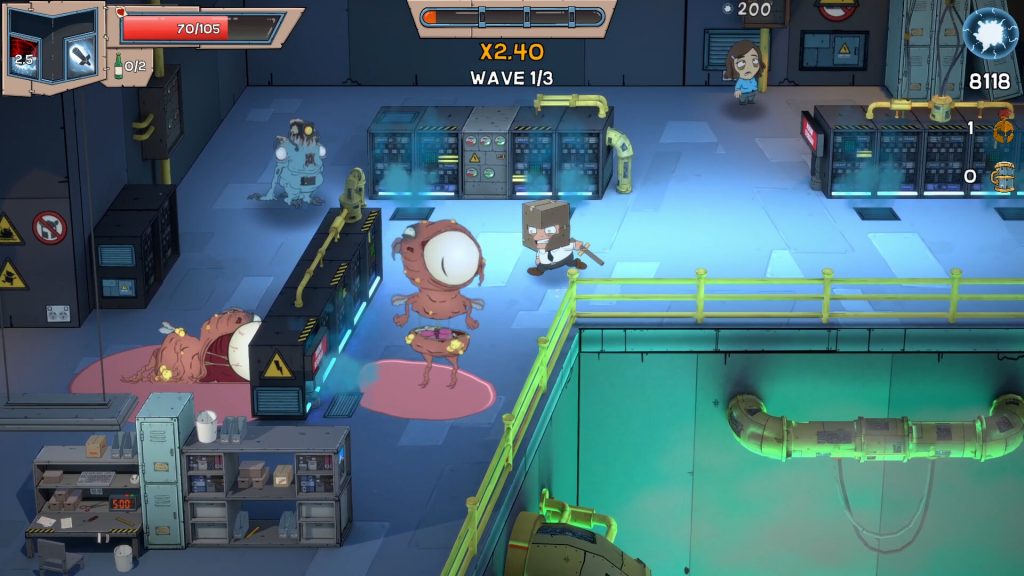
The early preview coverage’s specific note that “the unique office fantasy setting doesn’t remain as simple comedy but connects naturally with the overall game systems” suggests the former rather than the latter. The equipment-in-an-office makes actual cardboard boxes into weapons; the progression through building floors mirrors corporate hierarchy in its literal vertical structure; the final confrontation with the CEO is the logical conclusion of ascending through middle management.
Hades, which the studio cites as a combat inspiration, made its mythological setting structurally integral — Zagreus escaping through Tartarus, Asphodel, Elysium, and the Temple of Styx while confronting specific figures from his family history wasn’t just flavor applied to an action game; it was the mythological logic made mechanical. Box Knight‘s aspiration is presumably the same: the office satire expressing itself through systems rather than just aesthetics.
The Belt Scroll Combat
The belt scroll genre (sometimes called beat ’em up or brawler) is a specific action game tradition whose mechanics were defined in the late 1980s and early 1990s — Double Dragon, Streets of Rage, Final Fight — and whose design logic creates particular combat characteristics. Characters move on a three-dimensional space mapped to a two-dimensional plane (left-right and toward/away from the screen), engage enemies in melee, and advance through linear environments defeating opponents to progress.
The genre’s appeal is specific: direct physical engagement with enemies, clear spatial relationships between player and targets, the specific rhythm of combat in a constrained environment. The genre had declined commercially before being revived in recent years by games that have added mechanical depth to the classic structure.
Box Knight‘s belt scroll foundation with roguelite layering is the combination that the current indie gaming market has found successful: take a genre whose fundamental feel is established and appealing, add run-based progression and variability, and create something that feels both familiar and fresh. The Hades influence specifically suggests combat that is faster and more fluid than classic belt scrollers — that game’s smooth movement and responsive controls are the reference point, not the sometimes-stiff arcade originals.
The adaptive enemy patterns are the mechanical depth addition that prevents the combat from being a single-approach problem. Enemies that can only be hit from below, enemies that require penetrating attacks, enemies that explode on contact — these pattern variations require different positioning and timing responses from the player rather than a single optimal attack approach. The game is asking for situational awareness and tactical adaptation rather than pure button execution, which is where belt scroll games find depth that pure arcade brawlers don’t always provide.
The two-stage progression system addresses the roguelite structure’s classic tension: how do you make runs feel meaningfully different while also giving players the sense of accumulating progress? The in-run upgrades (new cardboard weapons, special abilities, immediate power increases) provide the single run’s build construction; the post-run permanent progression (unlocked abilities, new weapons, base stat increases) provides the cross-run accumulation that makes failed runs feel productive rather than punitive. The combination is standard roguelite practice, but standard for good reason — it solves the tension effectively.
The Film and TV Background
We Made A Thing Studios’ origin in video production is relevant for Box Knight in specific ways. The game’s tonal challenge — office satire that is both funny and functional as game design, dark enough to generate genuine stakes, light enough to remain comedic — is fundamentally a tone management challenge. Film and TV production experience develops exactly the kind of tonal control this balance requires.
The trailer and showcase presentation also benefit from video production background. Convergence Showcase as the reveal venue, a trailer with clearly edited beats and comedic timing, the planned Gamescom presence — these are marketing activities that require understanding how to present work compellingly to audiences, which is the core skill of video production.
The risk of a video production company’s first game is the inverse: understanding how to make something look and sound compelling doesn’t guarantee understanding how to make the underlying systems feel good to play. The closed beta in 2024, the Next Fest demo in February, the updated demo in June — this testing trajectory over two-plus years suggests the team is aware of this risk and has been iterating on feel rather than only on presentation. The press response noting that the combat tempo, roguelite growth structure, and humor “work in harmony” suggests the iteration is producing results.
The Local Co-op Addition
Two-player local sofa co-op in a belt scroll roguelite is a historically appropriate combination — the belt scroll genre’s origins are in arcade cabinets designed for multiple simultaneous players, and the “sofa co-op” format (friends sitting next to each other rather than playing online) suits the genre’s casual approachability. The Gamescom demo specifically encourages visitors to bring friends or partners to try the co-op, suggesting the studio views the co-op experience as particularly demonstrative of what the game is.
Local co-op in roguelites adds specific design requirements: the run structure needs to scale appropriately for two players (enemies that are balanced for one character become trivial for two without adjustment), and the boss encounters specifically need multiplayer consideration. Whether Box Knight‘s co-op implementation addresses these scaling requirements or ports the solo experience with a second character added will be one of the launch evaluations.
The Gamescom Presence
Gamescom 2026 physical presence in Cologne via the Ukiyo Studios booth is a meaningful marketing decision. Physical convention presence exposes the game to a European audience that Convergence Showcase and Steam discovery might not fully reach, and the belt scroll / local co-op combination is specifically suited for convention floor demonstration — the format is immediately comprehensible from watching others play, and the co-op creates the social dynamic that draws convention attendees to observe and participate.
The specific booth location detail (Hall 10.1, Aisle F, #63) provided in the announcement reflects the kind of marketing precision that video production backgrounds may contribute — making actionable information available in the announcement rather than requiring separate research.
Who This Is For
Strong fit for: belt scroll action game enthusiasts who want roguelite depth added to the genre’s core feel; Hades players who want the responsive combat applied to a comedy workplace setting; players who have experienced toxic workplace culture and find satire of it cathartic rather than upsetting; local co-op players looking for a new shared experience; Australian indie game supporters who want to follow Wemat Games’ debut; players attending Gamescom 2026 who want to try the co-op in person.
Cautious fit for: players who find workplace humor a limited satirical vein rather than a rich one; roguelite players who specifically want the genre applied to more dramatically serious subject matter; solo players who want the game optimized for solo play rather than co-op-ready design.
Less ideal for: players who dislike belt scroll combat regardless of roguelite additions; anyone who wants online multiplayer alongside or instead of local co-op; players seeking narrative-heavy experiences over mechanical engagement.
What to Watch For
The August 25 launch question is whether the extended development process — closed beta in 2024, two public demos in 2026 — has produced a game that delivers on the “office satire that functions as game design rather than game aesthetics” premise that early previews suggest. Belt scroll roguelites have a competitive field in 2026, and Box Knight‘s differentiation depends on the corporate setting feeling genuinely integrated rather than cosmetically applied.
The local co-op scaling specifically will be an early evaluation point. Two-player roguelites that feel like one-player games with a second participant added are missing the cooperative design that makes local multiplayer specifically rewarding. Whether the co-op creates situations that require genuine coordination — enemies that demand different simultaneous responses from two players — will determine if the social experience matches the couch co-op promise.
The Takeaway
Box Knight is a belt scroll roguelite action RPG from an Australian video production studio making their first game, about a cardboard-armed office worker clearing departments of monster-transformed colleagues to confront a corrupt CEO, with local co-op for two players and a roguelite progression system that rewards repeated attempts. The premise is absurd in the specific way that functional satire requires — the office setting isn’t random; it’s pointing at something real about how institutional power operates, transformed into monster combat because the metaphor was already there.
The two-year development arc from closed beta to launch, the press response noting that the humor and systems work together rather than separately, and the Gamescom co-op showcase all suggest a team that has been learning what makes the game work and iterating toward it. August 25 is when the full version of what they’ve learned arrives.
Friday at 5 PM. The building is still full of monsters that used to be your coworkers. The cardboard armor is ready. The CEO is somewhere at the top.
Let’s get to work.
“Box Night,” which portrays the joys and sorrows of office life through lighthearted action, is garnering attention as a hidden dark horse in this year’s indie game market, armed with a unique concept and popular gameplay.
Attention is focused on whether this title, which demonstrated solid fundamentals through the previously released demo, can establish itself as a new leader in indie action games following its official launch through high-quality content and cooperative gameplay.
Information regarding ‘Box Knight’
| item | detail |
|---|---|
| Developer | We Made A Thing Studios / Wemat Games (Australia) |
| Publisher | We Made A Thing Studios (Self-publishing) |
| Genre | Comedy Roguelike Action RPG / Belt-scroll |
| Release platform | PC (Steam) |
| Release date | August 25, 2026 |
| First reveal of the demo | February 2026 (Steam Next Fest), June Update |
| Co-op Play | Local Sofa Co-op (Supported from the official version) |
| Offline demonstration | Gamescom 2026, Ukiyo Studio Booth (Hall 10.1, Aisle F, No. 63) |
| core system | Belt-scrolling action combat, adaptive enemy patterns, run-through roguelike progression, cosmetic customization |
| Steam Page | Shortcut |