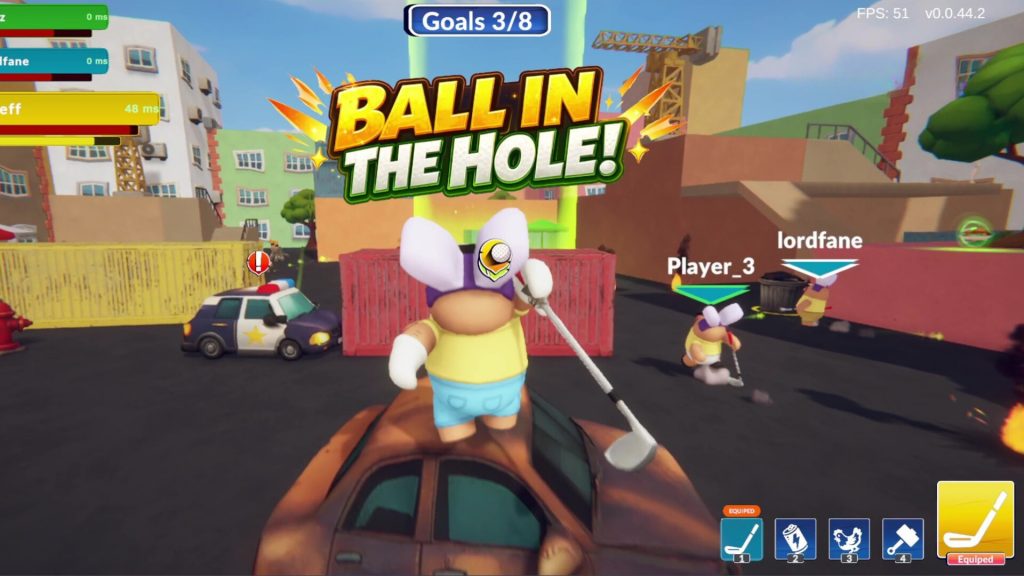
The pitch writes itself: arcade golf, but the good shot wakes up the zombies, and your friends can be hit by your ball on purpose. Left Fore Dead: Zombie Battle Golf from indie studio MapleTaco launched June 25 on Steam, born from a question developer Chris asked during a different golf project — “what if you could hit zombies?” — and refined through the natural follow-up — “what if you could hit friends too?” The result is a 1-4 player party game where the risk-reward structure is built directly into the golf mechanic, and where chaos is the intended output rather than a side effect.
The community response arriving early in international markets captures the appeal efficiently: “like the arcade golf game you’d play on school computers as a kid, but with a zombie apocalypse added.” That’s the exact tonal register MapleTaco is targeting — accessible, nostalgic, absurd, and funnier with friends.
The Core Design Insight
The conceptual fusion of arcade golf and zombie survival sounds like an elevator pitch joke until you think about why it actually works mechanically. Golf is a game of precision under pressure — every shot requires careful calculation of angle, power, and trajectory. Zombie survival is a game of managing attention — sound and movement draw threats, and risk assessment is constant. The fusion puts these two pressure systems in direct conflict: the shot that best solves the golf problem might be the worst shot for zombie management.
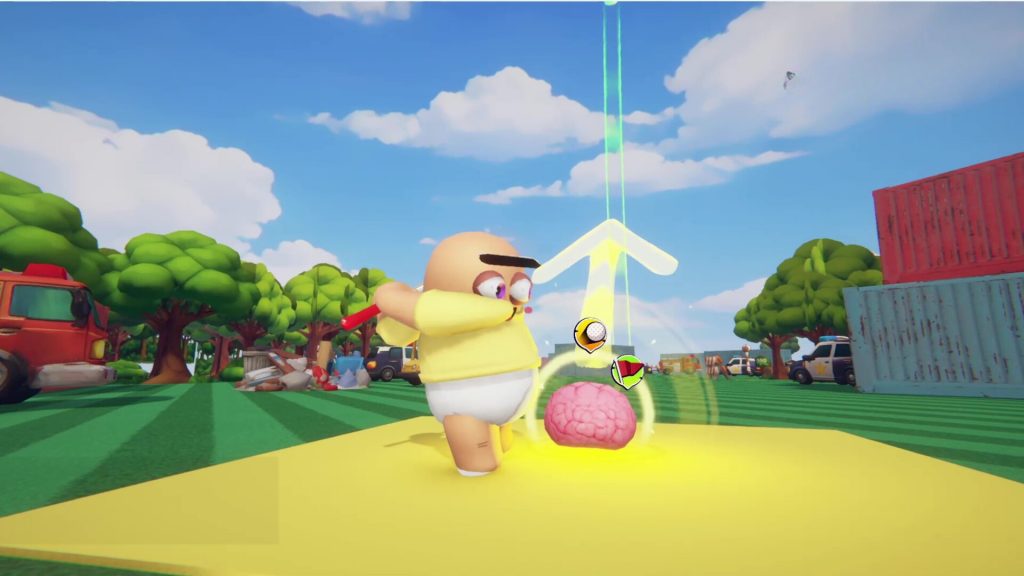
This is a genuinely elegant design. Most party game mashups put two genres side by side (play some golf, then fight some zombies). Left Fore Dead makes the golf shot itself the zombie threat generator. A perfect, clean swing that clears the distance is also a sound event that draws the nearby undead. The player’s most satisfying action is simultaneously their most dangerous one.
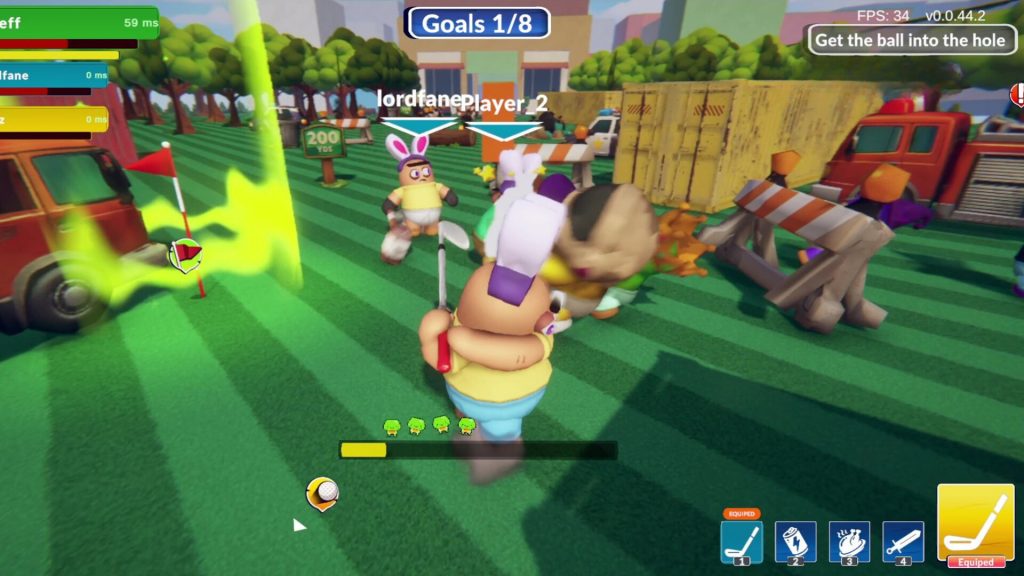
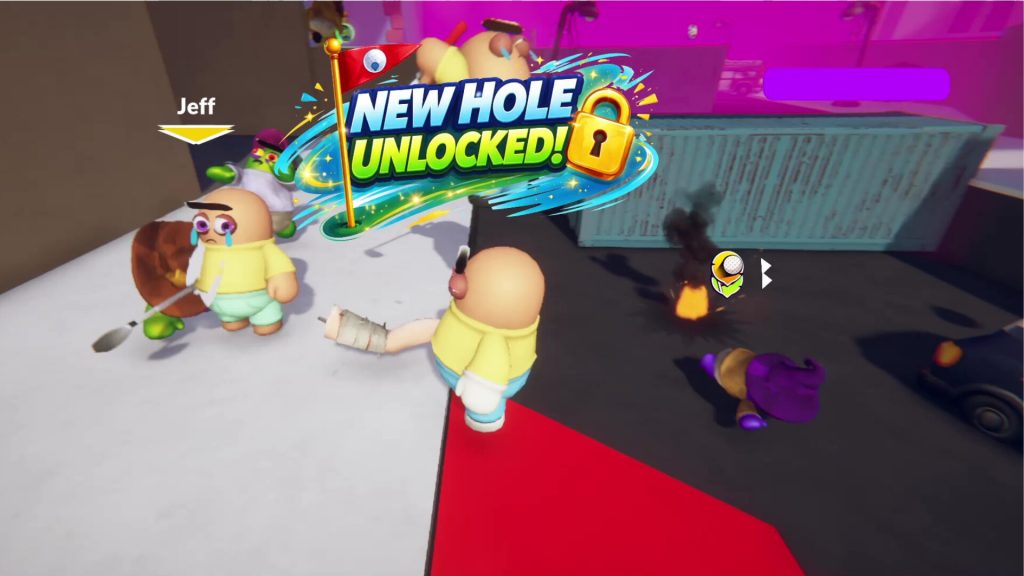
The always-on friendly fire extends this into the social layer. In most cooperative games, friendly fire is a setting that can be disabled or an accidental complication. In Left Fore Dead, it’s a permanent structural feature — which means the question of “should I help my teammate” is always complicated by the fact that your swing can hit them, and the question of “am I going to help my teammate” is never entirely trustworthy either. Developer Chris’s description of wanting “chaos where players can understand what happened and still laugh” specifically identifies this social dynamic: the betrayal has to be legible to be funny.
The Risk-Reward Architecture
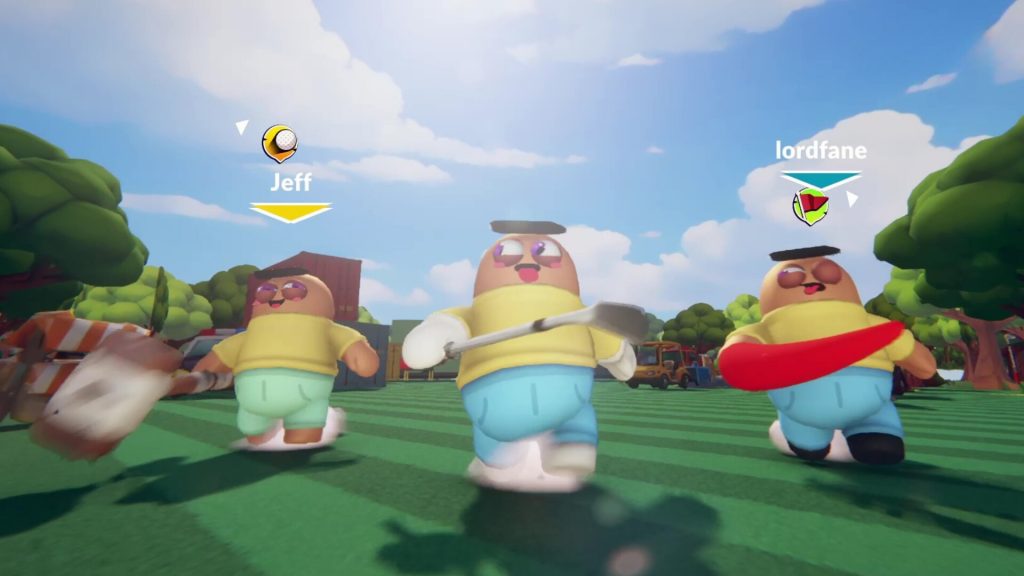
The swing-as-risk-reward system operates on multiple levels simultaneously. The immediate level: does this swing reach the hole, or does it stop short and require another shot (another noise, another zombie reaction)? The environmental level: what’s between the ball and the hole, and can the swing route avoid or exploit it? The social level: Does this swing path put teammates at risk from the ball, and is that accidental or suspiciously convenient?
The 5-15 minute round time is carefully calibrated for this structure. Long enough to build genuine escalating situations — early shots wake a few zombies, mid-round the course gets chaotic, late-round becomes increasingly desperate — but short enough that a catastrophically bad round ends quickly enough to restart rather than grind. The restart speed matters enormously in party games: the funniest moments of one round become the motivation for trying again immediately.
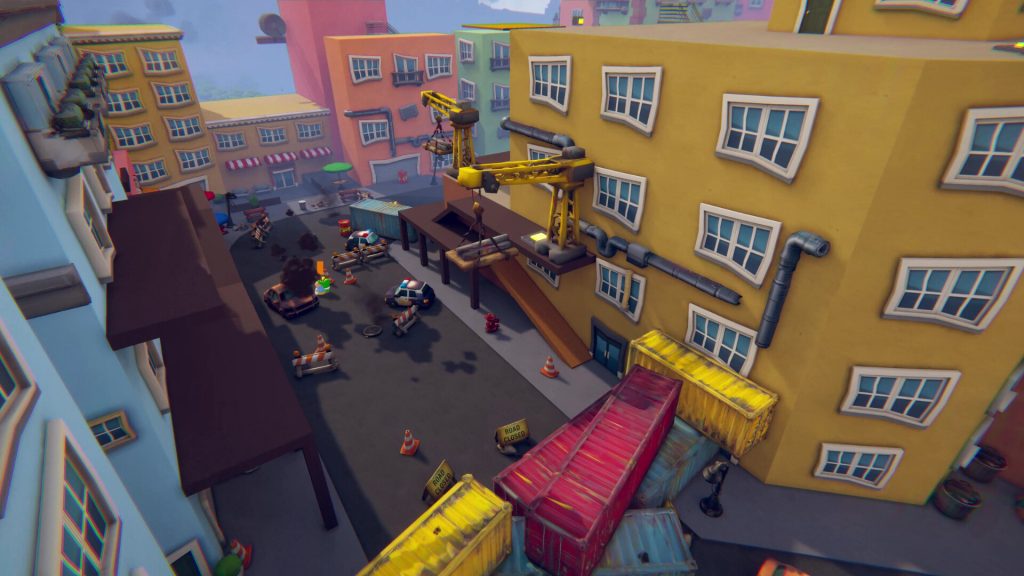
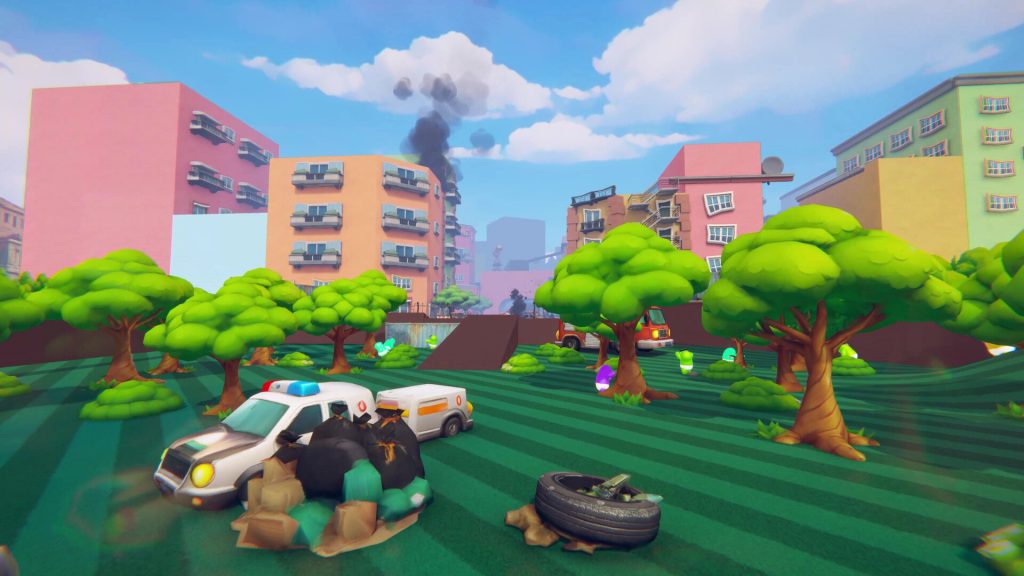
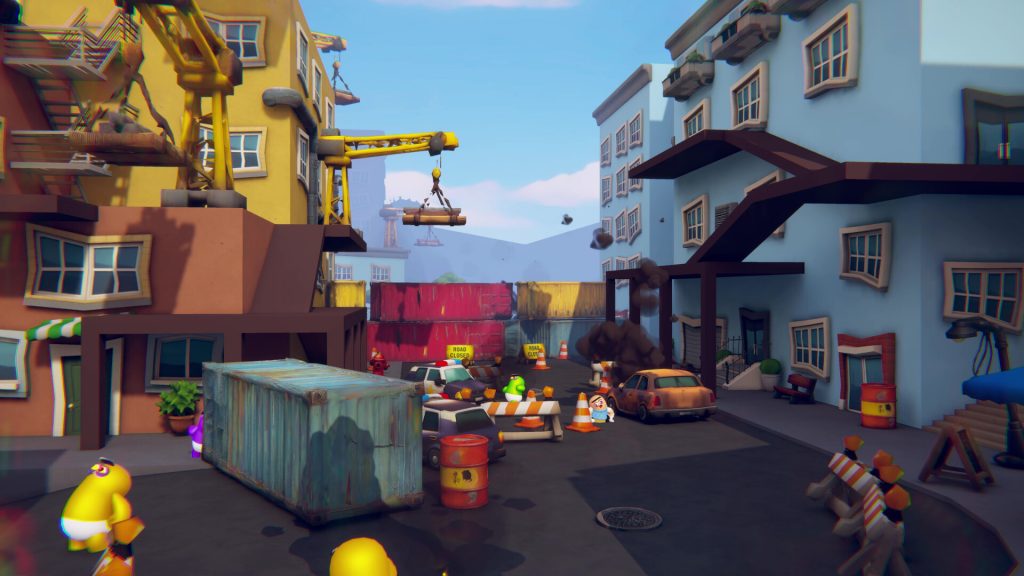
Course selection extends the risk-reward variety across environments. The crumbling golf course provides the baseline — ruined fairways, unpredictable terrain, zombies in the rough. The ruined city adds urban obstacle complexity and the specific chaos of enclosed spaces with multiple escape routes. The cramped subway introduces an extreme constraint environment — tight corridors where every swing has maximum proximity consequences, and zombie crowd management becomes genuinely panic-inducing.
The Emergent Comedy Structure
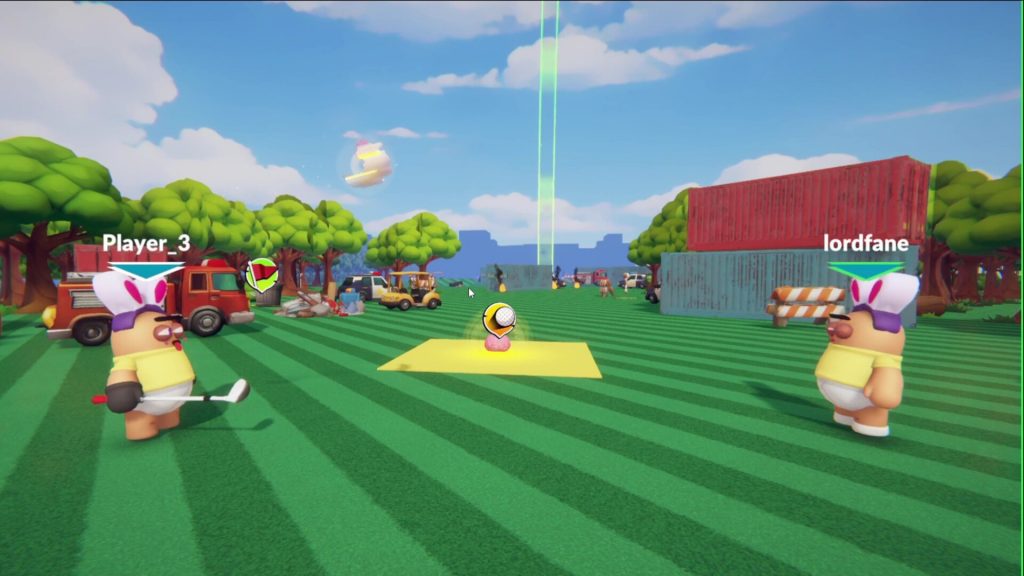
Chris’s design philosophy statement is worth examining carefully: “We wanted chaos where players understand what happened and still laugh. We wanted players to try even more ridiculous things with friends. ‘What if you could also hit other players?’ — that idea made it not just a zombie survival game but a playground for creating unforgettable accidents with friends.”
This identifies the specific difference between emergent comedy and designed comedy. Scripted jokes land once; emergent situations create stories that last. When a player’s shot ricochets off a wall, wakes three zombies, and then accidentally hits a teammate who was trying to help — that’s a sequence of events the game didn’t plan. The systems created the situation; the players created the story. And because the victim understands exactly what happened and why, the frustration and the laughter arrive simultaneously.
GameHype’s assessment captures the typical trajectory: “From the second round onward, friends start blaming each other and betraying each other in the classic party game chaos.” This is the point where the game stops being about golf and starts being about the social dynamics of four people trying to survive a zombie apocalypse while someone keeps accidentally (or deliberately) hitting everyone with golf balls.
GameSpace’s Steam Next Fest recommendation framing — “the creative combination of swing-activated zombie reactions and friends’ interference play” — identifies these as the two distinct but interacting chaos generators that make the system work.
The School Computer Arcade Golf Comparison
The community comparison to classic school computer arcade golf games is doing important tonal work. The specific nostalgia being invoked is the simple pleasure of a clear, responsive golf swing in a top-down or side-view arcade format — the satisfying parabola of a well-struck shot, the immediate visual feedback of where it lands, the quick retry loop when it doesn’t go right.
That foundational golf satisfaction isn’t undermined by the zombie addition — it’s preserved and then complicated. The clean shot still feels clean. The physics still reward skill and punish miscalculation. The zombie layer adds stakes to a mechanic that, in pure arcade golf, has only the stakes of score — now a bad shot means immediate zombie response, and a good shot might mean the same.
This is why the game needs to feel like golf rather than feeling like a zombie game that has golf visuals. If the golf is bad, the whole premise fails. The community response suggests the golf foundation is solid enough to make the zombie complication feel like genuine added stakes rather than a distraction.
The Three-Course Content Question
Three courses are a thin content foundation for a party game that will be judged on replayability. The honest assessment is that Left Fore Dead‘s value is primarily in the emergent situations the systems generate, rather than in the variety of designed content. Three courses with different environmental characteristics (crumbling outdoor, ruined urban, confined underground) provide enough structural variety to produce different emergent situations — the subway’s cramped corridors generate different accidents than the open fairways.
The round-length design (5-15 minutes) provides the fast-restart loop that makes a limited course count more acceptable. A party game that generates different situations in each run from the same course has better replay value than a game with many courses but scripted, fixed events. Whether the zombie spawning, swing physics, and friendly fire create enough run-to-run variety across three courses will determine whether the content feels rich or thin after extended play.
The MapleTaco Origin Story
The development origin — a golf game that asked “what if zombies?” — is the kind of creative inception that produces games with clear design identity. Games that emerge from a single “what if?” question tend to be more mechanically coherent than games designed by committee to hit genre checkboxes, because every subsequent design decision can be evaluated against the original question.
The progression of the idea is specifically illuminating: “What if you could hit zombies with golf balls?” was the first question. “What if you could also hit your friends?” was the second. The first question created the premise; the second created the game. Without friendly fire and the social chaos it generates, Left Fore Dead would be golf with zombie obstacles — interesting but not a party game. With friendly fire, it becomes a social situation generator.
Chris’s clarity about the design goal — “chaos that players understand while still laughing” — demonstrates that MapleTaco knows what they’re making. This is party game design philosophy stated precisely: the situations need legibility (players need to understand why the funny thing happened) as well as absurdity (the situation still needs to be surprising). Legible chaos is funny; incomprehensible chaos is just frustrating.
Who This Is For
Strong fit for: party game enthusiasts who want something genuinely different from the standard quiz/trivia/social deduction party game format; groups of 2-4 who have exhausted their current party game rotation; Golf It! and Golf With Your Friends players who want chaos added to their golf sessions; zombie game players who want something lighter and more comedic; players who specifically enjoy friendly fire as a feature rather than a bug; anyone who played classic Flash or browser arcade golf games and wants to see that premise taken in absurd directions.
Cautious fit for: golf simulation enthusiasts who want realistic physics and serious scoring (this is arcade golf, not sim golf); players who specifically dislike friendly fire mechanics; groups where interpersonal dynamics make “accidentally hitting teammates” unfunny rather than funny.
Less ideal for: solo players (the game technically supports solo, but the entire premise is social); anyone seeking competitive game modes; players who need deep progression systems to sustain engagement.
What to Watch For
A few questions will shape Left Fore Dead‘s post-launch trajectory.
The first is run-to-run variety within the three-course framework. Party games need enough emergent situation variety that repeated play feels fresh rather than repetitive. Whether the zombie spawn variation, physics unpredictability, and player interaction generate enough unique situations per course to sustain friend group engagement will determine long-term value.
The second is whether additional courses or content arrive post-launch. Three courses is manageable for an initial release; whether MapleTaco supports the game with additional environments will affect how the party game community evaluates it against alternatives that offer more content breadth.
The third is the online multiplayer experience quality. Local co-op party games are inherently accommodated by the format; online multiplayer adds the complication of latency affecting physics-dependent gameplay. Whether the swing physics feel responsive and fair in online sessions will determine whether the game reaches friend groups who can’t play locally.
The fourth is discoverability within Steam’s crowded party game category. The concept communicates clearly in the title and premise, but reaching the party game audience that would most appreciate it requires the kind of organic word-of-mouth and streaming visibility that launches are unpredictable about generating.
The Takeaway
Left Fore Dead: Zombie Battle Golf is exactly the kind of game that party game sessions need — a premise so immediately comprehensible and specifically absurd that explaining it to a friend group is already half the pitch. “It’s golf, but your shots wake up zombies, and you can hit your friends” requires no further elaboration. Either the people hearing that description want to play it immediately, or they don’t, and both responses are equally legible.
For the audience that immediately said yes — the party game enthusiasts, the people whose friend group has been playing the same games too long, the players who want to spend fifteen minutes generating a shared story about how someone’s perfect approach shot caused a catastrophic zombie chain reaction that eliminated the whole team — Left Fore Dead is offering exactly what’s promised.
The golf shot is clean. The zombies were sleeping. The teammate was in the way. And nobody can quite agree on whether it was an accident.
That’s the whole game. It’s enough.
Information regarding ‘ Left Fore Dead: Zombie Battle Golf ‘
| item | detail |
|---|---|
| Developer / Publisher | MapleTaco |
| Genre | Online/Local Co-op Party Game / Arcade Golf / Zombie Survival |
| Release platform | PC (Steam) |
| Release date | June 25, 2026 |
| Player count | 1~4 people (Online/Local Collaboration) |
| Round time | 5~15 minutes |
| Number of courses | 3 (Collapsing golf course / Ruined city / Cramped subway) |
| core system | Swing → Zombie Reaction Risk & Reward / Constant Friendly Fire / Emergent Comedy Structure |
| characteristic | Script-free Emergent Chaos / Quick Restart / Environmental Weapons |
| Main Keywords | Zombie Golf, Party Game, Arcade, Co-op, Friendly Fire, Chaos, Post-Apocalypse |
| Official Channel | YouTube · TikTok · X · Facebook · Instagram · Discord |
| Steam Page | Shortcut |