A saxophone-playing rat. A cute dog warrior. A dungeon full of enemies who are about to have a very bad day once your build comes together. Doinksoft’s Dark Scrolls, published by Devolver Digital, launched June 22 on PC and Nintendo Switch — the third collaboration between the two companies and the latest demonstration that Doinksoft’s particular brand of pixel-art irreverence translates reliably into compelling action game design.
The game combines fast-paced shooting action with roguelite progression in a dungeon scroller format. Handcrafted rooms combine procedurally to ensure each run feels structurally fresh, while 9 playable characters with distinct skills and playstyles provide the replay variety that sustains roguelite engagement. Devolver is running a launch promotion, making Gunbrella and Gato Roboto free in select regions — both a celebration of the Doinksoft-Devolver partnership and an invitation for new players to experience the studio’s catalog.
[Related Article: Information Revealed on Retro-Style Roguelike Shooter ‘Dark Scrolls’]
The Doinksoft Identity
Understanding Dark Scrolls requires understanding Doinksoft’s established creative identity. Gato Roboto was a Metroid homage featuring a cat in a mech suit — pixel art minimalism applied to exploration platforming with genuine mechanical polish. Gunbrella extended the studio’s range into action-platformer territory with an umbrella-gun as the central mechanic, earning strong critical reception for its combination of stylish design and satisfying moment-to-moment gameplay.
Both games shared specific qualities: immediate visual distinctiveness, humor that doesn’t undermine gameplay seriousness, and the kind of precise control feel that action game enthusiasts specifically appreciate. Dark Scrolls extends this pattern into roguelite dungeon action — a genre where both the visual clarity and the control precision that Doinksoft has demonstrated become particularly important.
The launch trailer — described as parodying vintage console game customer support hotline advertising — signals that Doinksoft’s irreverent approach extends to their marketing as well as their games. Studios whose humor is consistent across their work (design decisions, visual aesthetics, promotional materials) tend to produce more coherent creative experiences than studios where the marketing persona diverges from the actual game.
The Old-School Feeling, Modern Controls Design
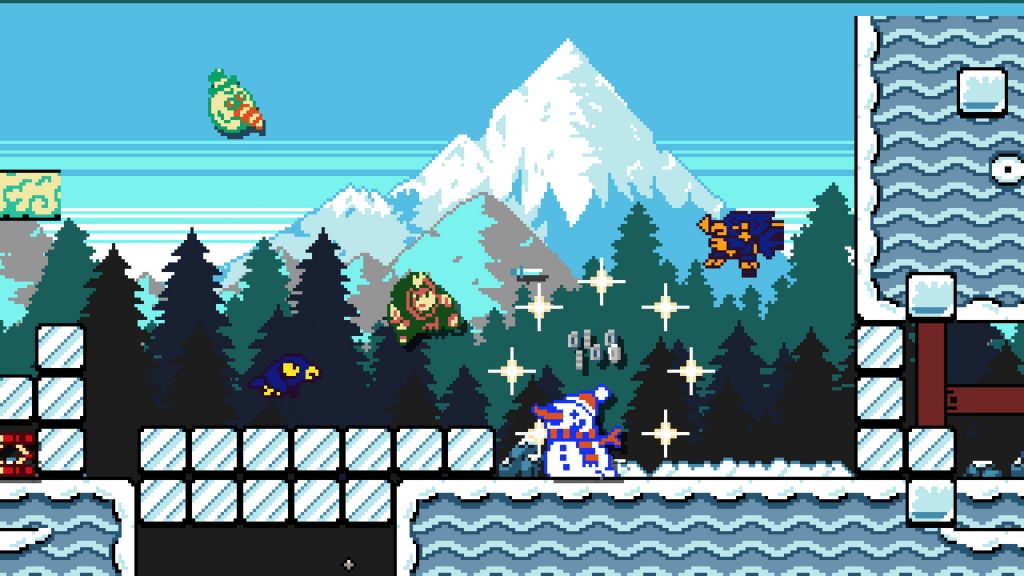
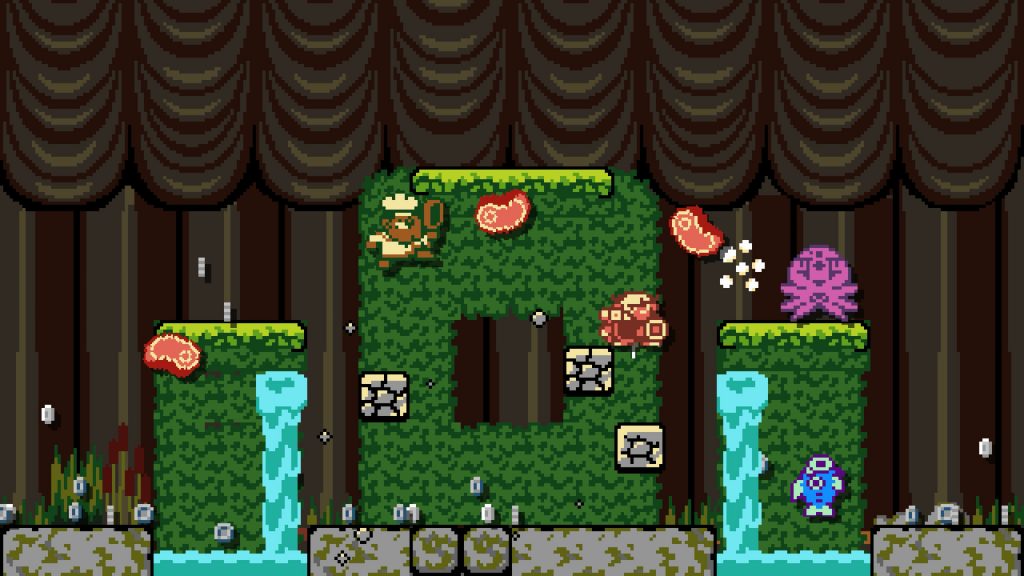
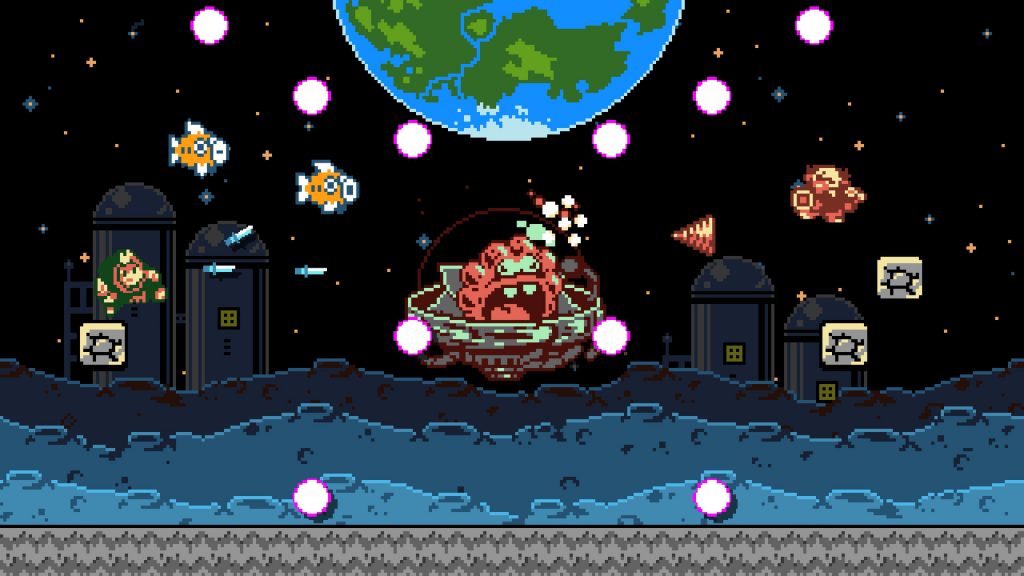
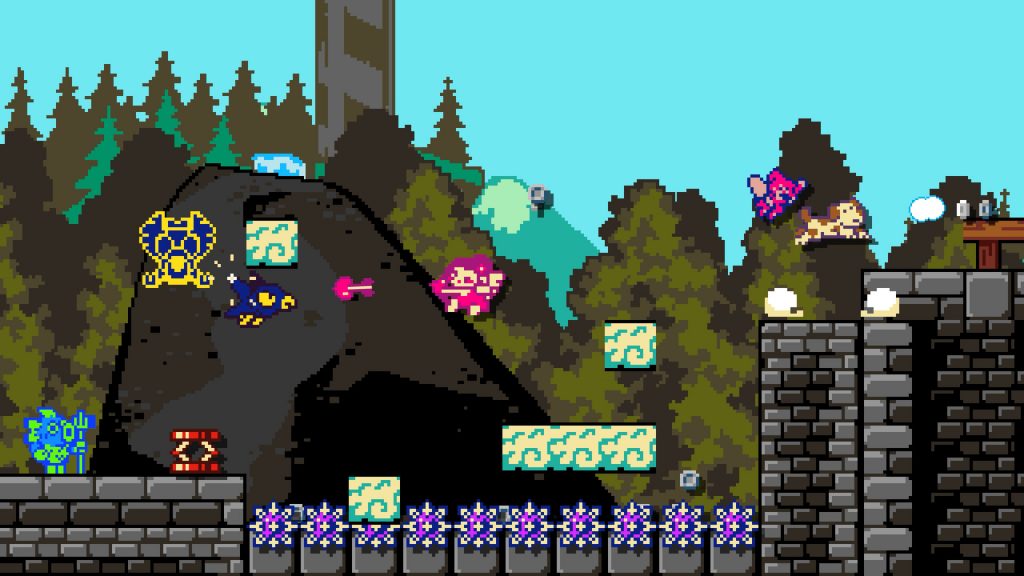
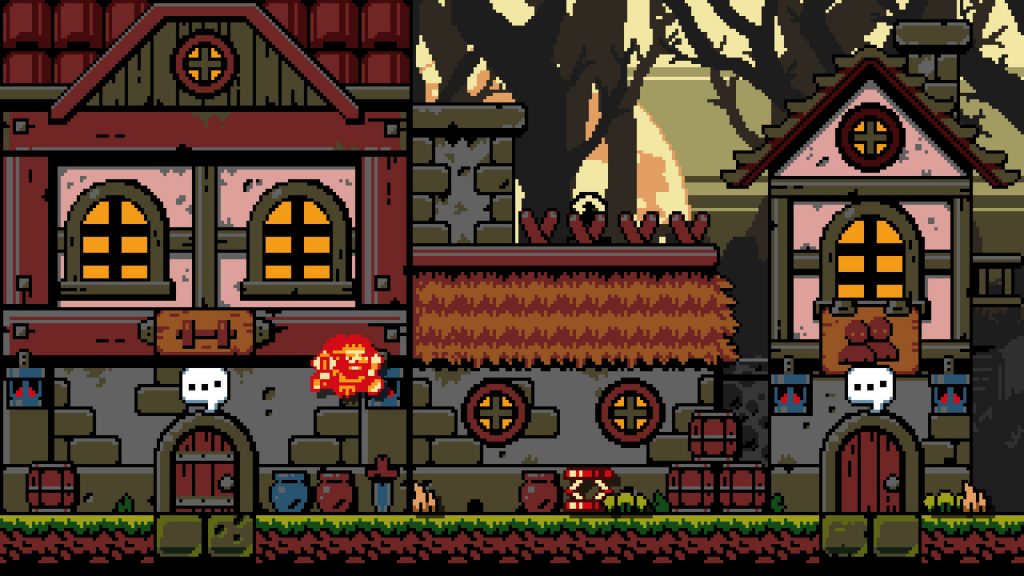
The most deliberate tension in Dark Scrolls is between its aesthetic commitments and its control philosophy. Visually, the game is retro: dot graphics, vintage sound effects, retrowave background music, and the specific atmosphere of classic dungeon action games. The entire aesthetic package is built around nostalgia for a specific era of gaming.
But the controls are explicitly contemporary. Fast movement, immediate dodge response, instantaneous attack feedback — the design goal is to eliminate the “frustration” characteristic of actual old games while preserving their aesthetic. This is a common and often successful approach: give players the memory of classic games while sparing them the experience of those games’ limitations.
This design philosophy recognizes something honest about nostalgia: what people remember fondly about old games is usually the feeling those games aspired to create, not the actual friction of limited control response or animation delays. Dark Scrolls is trying to deliver the aesthetic experience of classic dungeon action with the mechanical experience of well-designed contemporary action, which is different from either pure retro revival or pure contemporary design.
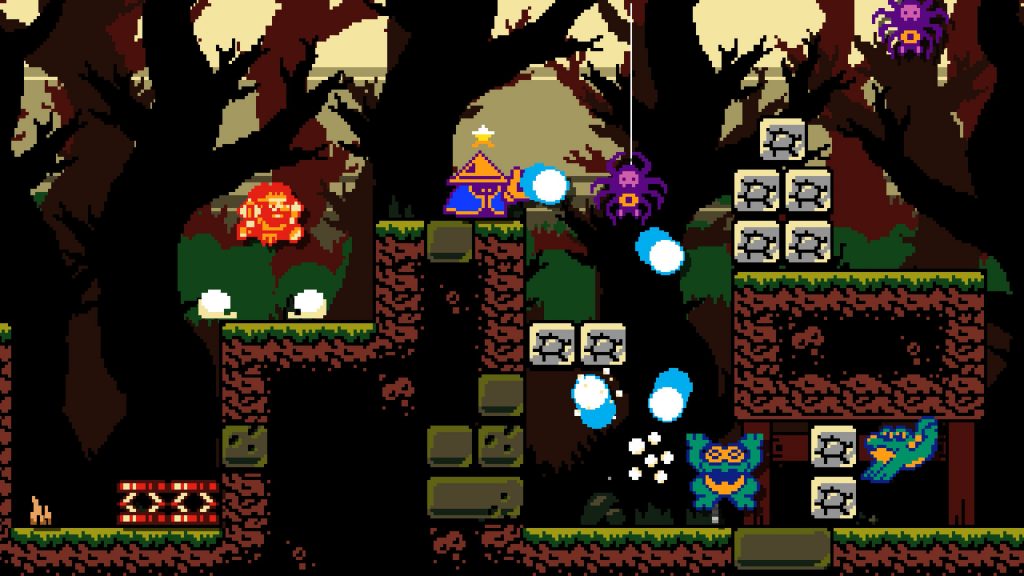
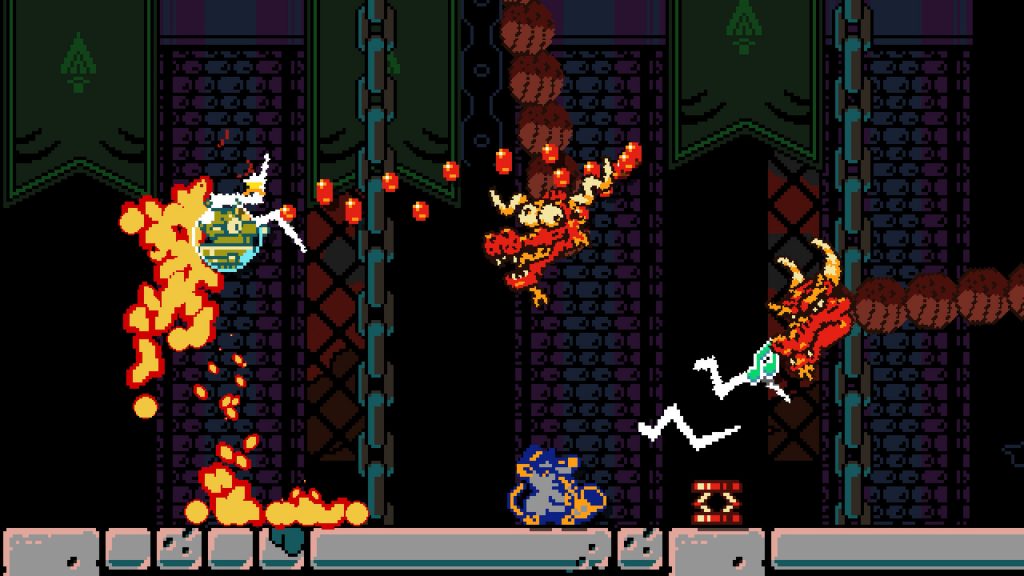
The visual design’s “wall of projectiles and spectacular destruction effects” that the developers mention as the peak build experience is specifically contemporary in its ambition. Classic arcade games typically couldn’t produce this visual density. Dark Scrolls uses retro aesthetics to frame a modern bullet-heaven scale of on-screen action, which is a genuinely interesting combination.
The Dungeon Generation Approach
The handcrafted-rooms-with-procedural-combination approach occupies a specific design space between fully handcrafted dungeons and fully procedurally generated ones. Fully handcrafted dungeons provide intentional design but limited replay variety; fully procedural dungeons provide variety but can produce unsatisfying or incoherent layouts. The hybrid approach aims to preserve the quality of individual room design while producing enough combination variety to sustain repeated play.
This approach has precedent in well-regarded roguelites. The challenge is ensuring that the procedural combination logic produces coherent dungeon structures rather than jarring transitions between rooms designed without knowledge of their neighbors. Whether Dark Scrolls achieves this — producing dungeons that feel designed rather than assembled — will be central to its replay value.
The branching paths and varying boss combinations that change with each run add a strategic decision layer that prevents dungeon progression from feeling linear. Choosing between different available routes provides the light strategic engagement that accompanies pure action, and the route-to-boss pairing variation ensures that learning the game doesn’t reduce to memorizing fixed encounters.
The 9-Character Roster
Nine playable characters with distinct skills, dedicated objectives, and accessory customization options provide substantial variety by roguelite standards. The character descriptions that have emerged — a dog warrior, an alien, a saxophone-playing rat alongside more conventional fantasy archetypes — signal that Doinksoft’s character design philosophy prioritizes memorable personality over genre convention.
This kind of character roster design is doing multiple things simultaneously. Mechanically, different skills produce different playstyle demands and different build directions — the character selection shapes the run’s fundamental approach. Narratively, distinctive character personalities give the game a personality that undifferentiated hero characters can’t achieve. Commercially, memorable character designs create the kind of social media shareability that helps indie games get discovered.
Each character’s dedicated objectives add goal variety beyond pure survival completion. Run objectives that change based on character selection mean that players who cycle through different characters are playing meaningfully different games, not just reskinning the same experience.
The Bruce & Goose Shop System
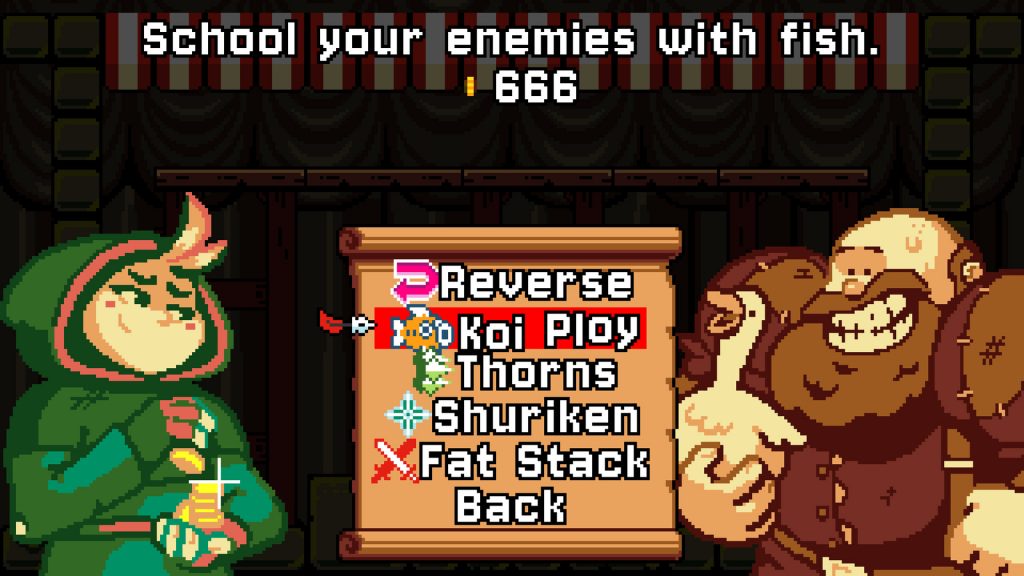
The mid-dungeon shop, operated by characters named Bruce & Goose, provides the build development engine that roguelites depend on. Acquiring new perks, powerful attack abilities, and summoned companions from the shop transforms run-start characters into the “arcade legend-level destruction” late-game power states the developers describe.
The naming of the shop proprietors (“Bruce & Goose”) is the kind of small detail that reveals a lot about design philosophy. Doinksoft could have named the shop anything; they chose something with inherent absurdist comedy. The willingness to inject personality into functional game systems rather than treating them as purely mechanical infrastructure reflects the studio’s commitment to the game having a specific voice throughout.
The perk-companion-ability combination system provides the layered build depth that sustains roguelite engagement. Early run decisions compound into late-run states that feel fundamentally different from starting conditions. The peak experience — dense projectiles and spectacular destruction across the screen — is specifically the product of accumulated build decisions paying off, which creates the “just one more run” motivation that makes roguelites compelling.
The Devolver Partnership
Dark Scrolls is the third Doinksoft-Devolver collaboration, following Gato Roboto and Gunbrella. Three-project partnerships between developers and publishers are meaningful signals. They indicate that commercial expectations have been met across previous releases (publishers don’t continue partnerships with developers whose games consistently underperform), that the creative working relationship is productive (three games require sustained collaboration), and that both parties see value in the ongoing association.
The free promotion of Gato Roboto and Gunbrella in select regions during the Dark Scrolls launch is an interesting commercial decision. For Devolver and Doinksoft, making the previous games accessible reduces the discovery barrier for new players while celebrating the partnership’s history. For players unfamiliar with Doinksoft, receiving free games functions as an introduction to the studio’s design sensibility, which is the most effective possible marketing for Dark Scrolls.
Devolver Digital’s editorial reputation for publishing games with distinctive creative identities aligns with Doinksoft’s studio identity. Their partnership represents the kind of publisher-developer alignment that produces consistent catalog quality.
Who This Is For
Strong fit for: roguelite action enthusiasts seeking pixel-art aesthetic alternatives; Enter the Gungeon, Dead Cells, and dungeon scroller fans; retro gaming aesthetic appreciators who want contemporary control standards; build-variety enthusiasts who enjoy character-based run diversity; Doinksoft fans following the studio across releases; Nintendo Switch players seeking roguelite options; players who appreciate humor integrated with serious action design.
Cautious fit for: players who specifically prefer fully handcrafted dungeon design over procedural generation; roguelite purists who value maximum system complexity over arcade-style accessibility.
Less ideal for: players who specifically dislike roguelite structure; anyone who prefers narrative-heavy experiences; players seeking pure Metroidvania exploration over roguelite replayability.
What to Watch For
A few questions will shape Dark Scrolls‘ reception.
The first is whether the handcrafted-room procedural combination produces consistently satisfying dungeon layouts. The system’s quality depends on whether individual room designs work well in varied contexts — rooms designed for the beginning of a dungeon shouldn’t feel jarring if procedural placement puts them at the end, and vice versa.
The second is the build balance across 9 characters. Different character skills create different build opportunities, and ensuring that all 9 characters produce viable and engaging build directions requires careful balance. Whether the character diversity translates to meaningful mechanical variety will significantly affect replayability.
The third is the difficulty calibration. Roguelite action games need to hit a specific challenge curve: hard enough that build development feels meaningful, accessible enough that new players can learn the game rather than bouncing off it. Whether Dark Scrolls achieves this balance will affect its audience breadth.
The fourth is the content scope against the price point. At ₩10,500 (~$8), Dark Scrolls is in the range where players expect substantial content. Whether the 9 characters, dungeon variety, and build combinations provide enough content depth to justify the price will emerge from player engagement over the coming weeks.
The Takeaway
Dark Scrolls is a confident expansion of Doinksoft’s roguelite action credentials — the third Devolver collaboration from a studio that has consistently delivered distinctive pixel-art action games with genuine mechanical polish. The combination of classic arcade aesthetics with contemporary control standards, the deliberately absurd character roster, and the build-to-destruction roguelite payoff represents exactly the kind of creative consistency that makes following specific developers worthwhile.
For roguelite action enthusiasts, the studio pedigree alone makes Dark Scrolls worth evaluating. Gato Roboto and Gunbrella established Doinksoft as a studio whose games reliably feel good to play — and “feels good to play” is the foundation on which all other roguelite qualities build.
A saxophone-playing rat has perks to unlock. A dog warrior has objectives to complete. The Bruce & Goose shop has abilities you haven’t tried yet. And somewhere in the procedurally-combined handcrafted dungeons ahead, there’s a build configuration that will fill the screen with projectiles and spectacle and prove that the classic dungeon action feeling the aesthetic promises was worth chasing.
Gato Roboto showed Doinksoft could do Metroid-homage with heart. Gunbrella showed they could anchor an action game on a single mechanical concept. Dark Scrolls shows they can build a roguelite with the same commitment to feel and identity that distinguishes all their work. Three games in, the partnership between Doinksoft and Devolver continues to produce exactly the kind of games that remind you why you started following specific studios in the first place.
Information regarding ‘Dark Scrolls’
| item | detail |
|---|---|
| Developer | Doinksoft |
| Publisher | Devolver Digital |
| Genre | Pixel Action Platformer / Dungeon Scroller / Roguelite |
| Release platform | PC (Steam) / Nintendo Switch |
| Release date | June 22, 2025 (local time) |
| Launch price | 10,500 won (10% discount for the first 2 weeks of launch) |
| Playable character | 9 people (Warrior, Mage, Rogue, Puppy, Alien, Saxophone-playing Mouse, etc.) |
| Dungeon generation method | Handcraft Room + Procedural Combination |
| Build system | Perks · Powerful Attackers · Summoned Companions · Customizable Trinkets |
| Launch Event | Free ‘Gunbrella’ and ‘Gato Roboto’ in select regions |
| Developer’s flagship title | Gato Roboto, Gunbrella |
| Steam Page | Shortcut |