The card doesn’t go back in the deck. When you burn a card in Burn With Me, it’s gone — not exhausted for the round, not recycled at the end of the turn, not retrievable. Gone. The demon you summoned with it stays. The card does not.
This is the design inversion that Munich-based married couple Ivan Bushmin and Eva Manuilovich built into a Ludum Dare 55 game jam entry that placed in the top 1% of submissions, attracted 20,000 players on itch.io, and earned a personal note of praise from Daniel Mullins — the developer of Inscryption. That note is what converted a well-regarded prototype into a commercial game arriving October 12.
The Deck-Burner Mechanic
Nozomu Games has coined a specific genre label for Burn With Me — “deck-burner” — which is the correct terminological choice for a mechanic that isn’t a variant of existing deckbuilding but a structural inversion of its core assumption.
Standard deckbuilding games are accumulation games. You start with a weak deck and add powerful cards. The deck grows (or is refined) toward greater capability. The cards you acquire are resources to protect and optimize. “Exhausted” cards return at the start of the next turn or the next round. The strategic object is to have the cards you need available when you need them.
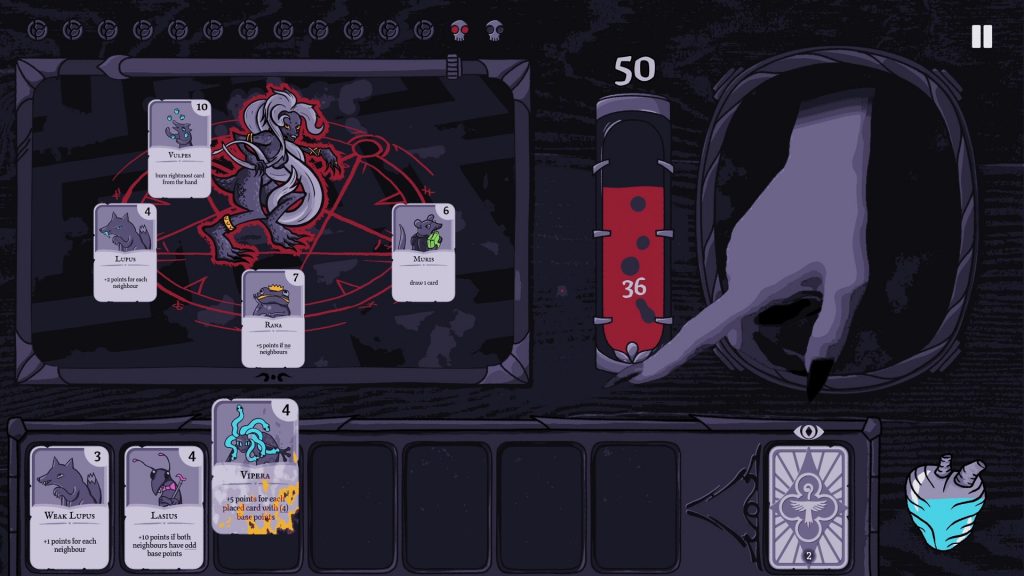
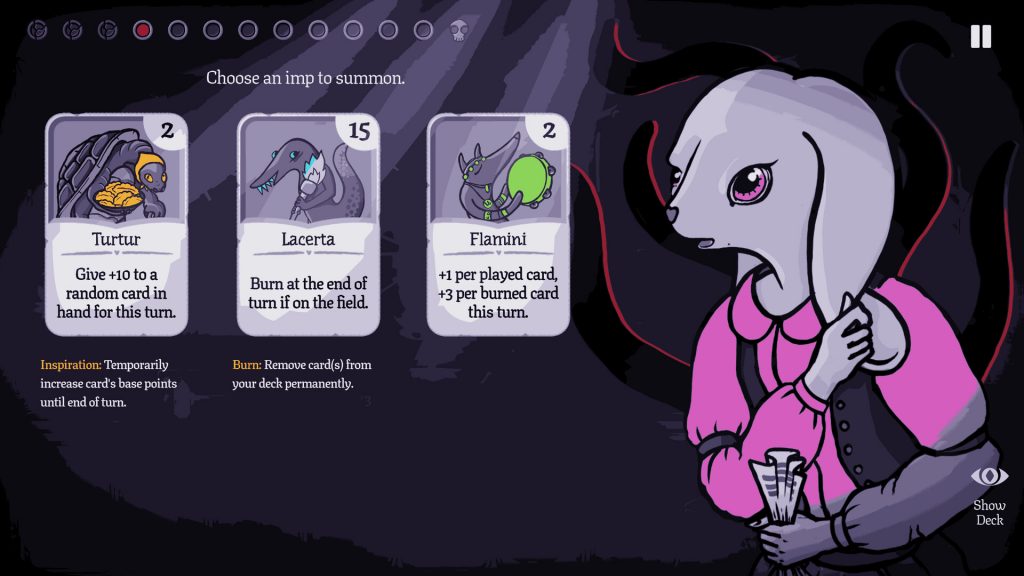
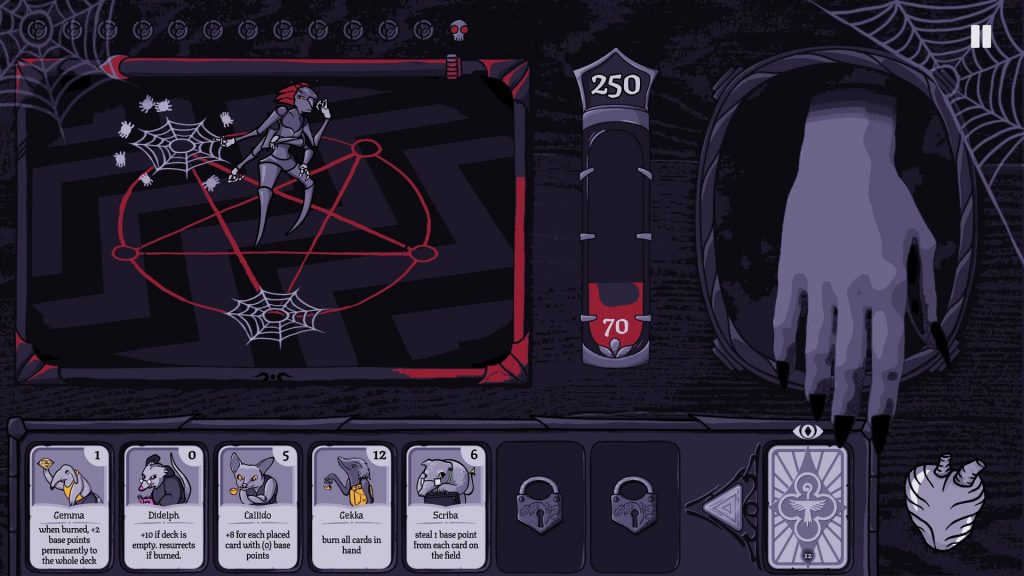
Burn With Me makes the deck a countdown. You start with a fixed set of cards. To summon powerful creatures onto the pentagram board, you burn cards from your hand — permanently, for the duration of the run. The more power you reach for, the less you have left to reach with. The deck that was your full capability at the start is a depleted remnant by the time the boss arrives.
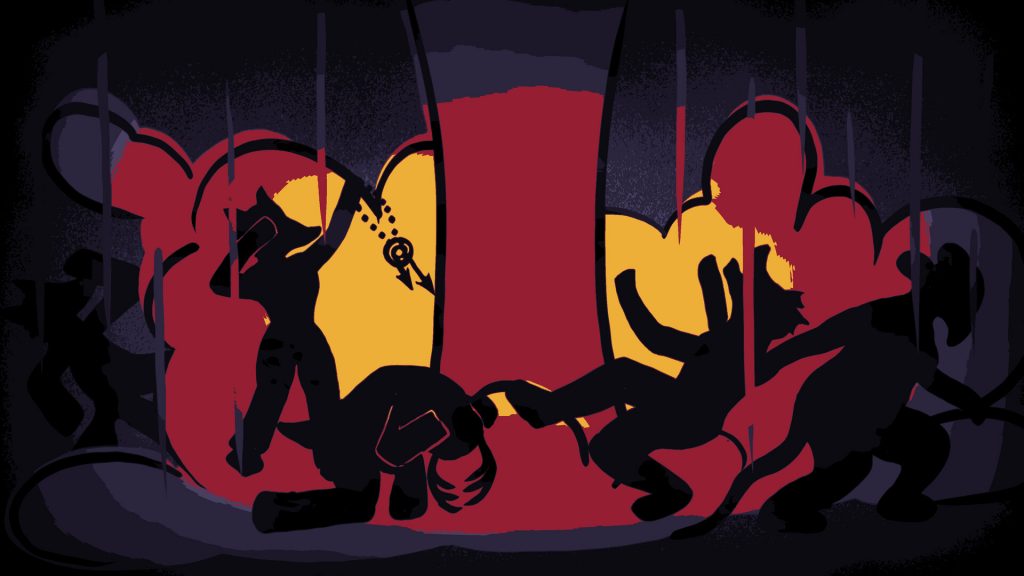
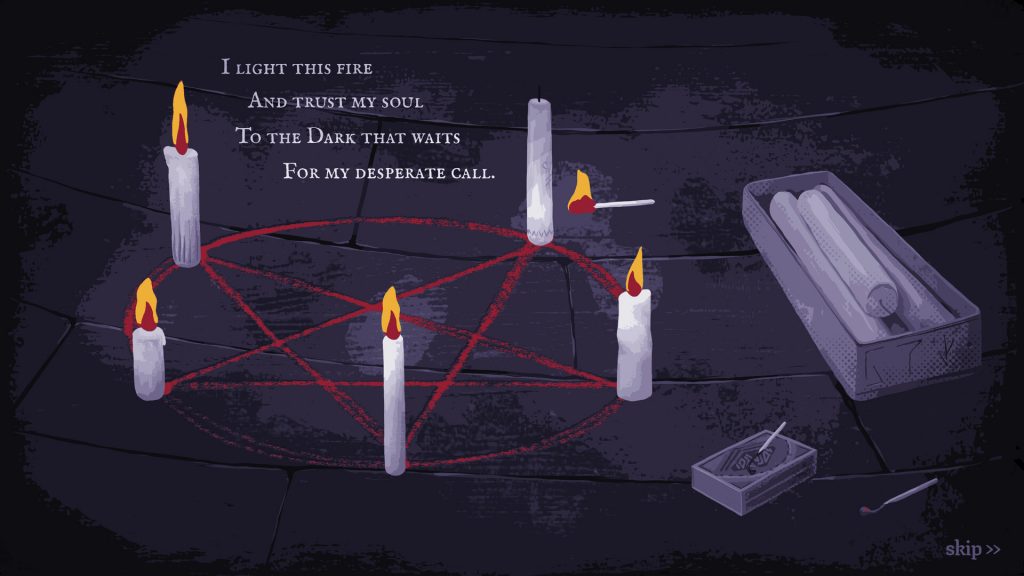
This creates the specific strategic pressure that the game’s narrative is built around: the mechanics of burning are also the mechanics of obsession. The theological horror premise — occult rituals at a university, students in the grip of desires they can’t control, a mysterious professor guiding them into ancient practices, a “Hand” that appears in live-action footage — is served by the mechanical experience of spending what you have for power you desperately need right now. The gameplay is the thematic content.
The pentagram board’s adjacency and facing system adds spatial tactical depth to the burning decision. Five card slots in a pentagram arrangement create specific geometric relationships — which cards are adjacent, which face each other — that trigger synergies based on placement rather than only on card combinations. The burning decision is therefore: which card to sacrifice for the summon, and how to reposition what remains to maintain the spatial synergies that the board geometry enables.
The Six Chapters
Each chapter’s unique character, mechanic, card set, boss, and emotional theme is the structural commitment that prevents the deck-burner format from becoming a single-trick experience. The burning mechanic is consistent across chapters; what the player is burning toward and what the burning costs in each chapter’s specific context change.
Six characters with six distinct emotional situations — desires, fears, ambitions that the occult university setting amplifies — give the deck-burning its narrative weight in each chapter. One character’s obsession is expressed differently in gameplay than another’s. The specific cards available in each chapter presumably reflect the character’s specific situation and the thematic content of their particular desire.
The live-action “Hand” character that appears throughout is the uncanny visual element that Eva Manuilovich’s hand-drawn art direction makes coherent rather than jarring. Occult horror has a specific aesthetic tradition that includes found footage, documentary aesthetics, and the deliberate mixing of visual registers to create wrongness. Burn With Me‘s combination of hand-drawn illustration with live-action footage is working in this tradition — the two visual registers are different enough to create productive unease rather than simple contrast.
The Inscryption Connection
Daniel Mullins’ personal praise for the Ludum Dare prototype is the most significant endorsement the game carries — not because Mullins is an authority whose judgment certifies quality, but because Inscryption is the most prominent recent deckbuilder that made its mechanical design carry specific thematic weight. Mullins built a deckbuilder where the rules of the game were also narrative revelations; recognizing that Burn With Me is doing something comparably integrated between mechanical and narrative design is a specific genre-aware evaluation rather than general praise.
The comparison that the international press has reached for — distinctness from “Slay the Spire-style” deckbuilders — is also accurate. Slay the Spire and its descendants optimize the accumulation structure that Burn With Me inverts. Players who have found the accumulation structure satisfying will find Burn With Me doing something uncomfortable with that satisfaction; players who have wanted deckbuilders to do something other than accumulate will find exactly that.
The Nozomu Games Studio
Ivan Bushmin (programming, design) and Eva Manuilovich (narrative design, art) are the creative partnership that built Burn With Me from a three-day game jam prototype into a six-chapter commercial game. Their previous release, Robot Detour — a cable-mechanic puzzle game — established Nozomu Games as a commercial studio; Burn With Me represents the direction toward more tightly integrated narrative and game mechanic design that the couple has described as their studio’s evolving focus.
The 30-artist mega-collaboration bestiary — collectible illustrations from 30 creators, assembled as in-game lore content — extends the creative collaboration beyond the two-person core team into the broader indie art community in a way that both enriches the content and builds community investment in the game’s success.
Inner Pocket as publisher brings Critical Reflex and Gaijin Entertainment veterans’ distribution experience to a two-person Munich studio’s debut deckbuilder — the correct scale of institutional support for a game whose appeal is specific and whose audience will be found through genre community recommendation rather than mass marketing.
Who This Is For
Strong fit for: Inscryption players who specifically want deckbuilders where the mechanics carry thematic meaning; deckbuilding enthusiasts who have wanted the genre to work differently than the Slay the Spire accumulation model and are curious what the structural inversion feels like; occult horror fans who want the aesthetic in an interactive deckbuilding context; narrative game players who want a complete character-driven story across six chapters; the indie art community audience that the 30-artist bestiary collaboration speaks to.
Cautious fit for: deckbuilder players who find the standard accumulation structure satisfying and specifically don’t want to lose cards permanently; anyone who needs confirmed full-game reception before purchasing; players who want longer-form roguelite runs rather than chapter-structured narrative progression.
Less ideal for: players who dislike card games; anyone seeking action or real-time mechanics; players who want multiplayer options.
The Takeaway
Burn With Me is the deck-burner genre’s self-definition: a deckbuilder where the cards you have are a countdown toward the power you reach for, where burning is both the mechanical action and the thematic statement, and where a narrative about obsession and desire and cost is expressed through the specific experience of spending irreplaceable resources for immediate necessity.
A three-day game jam prototype, top 1% finish, 20,000 players, a note from Daniel Mullins, a free demo at 97% positive. October 12 for the full six-chapter story.
The card is in your hand. The demon requires the burning. The question is whether you can afford what comes next.
Burn with me ( Information related to ‘ Burn With Me ‘
| item | detail |
|---|---|
| Developer | Nozomu Games (Munich, Germany) |
| Publisher | Inner Pocket |
| Genre | Deckbuilding, Cards, Epic Adventure (Deckburner) |
| platform | PC (Steam) |
| Release date | October 12, 2026 (Free demo currently available) |
| language | Supports 8 languages, including English (fully voice-dubbed). |
| Reactions/Evaluations | 97% positive Steam reviews (108) based on the demo, praised by Inscription creator Daniel Mullins |
| Steam Page | Shortcut |