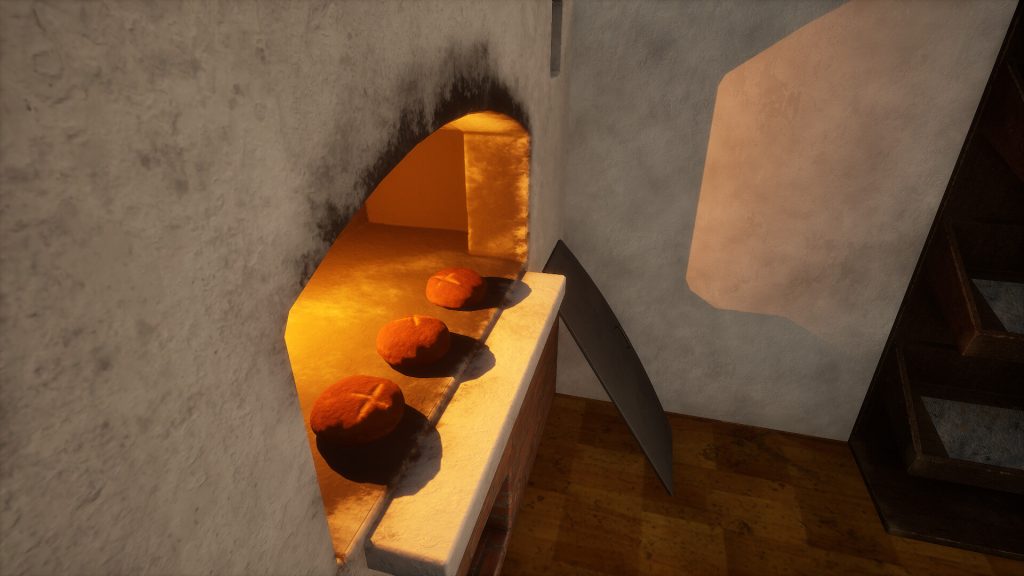
The question the game asks is on the tin: there isn’t enough bread. Who gets it?
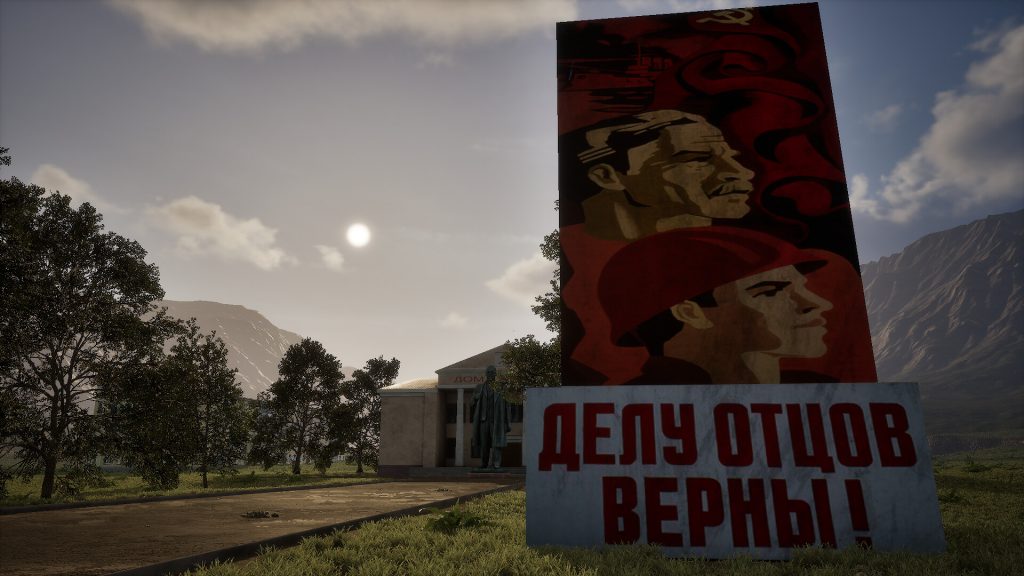
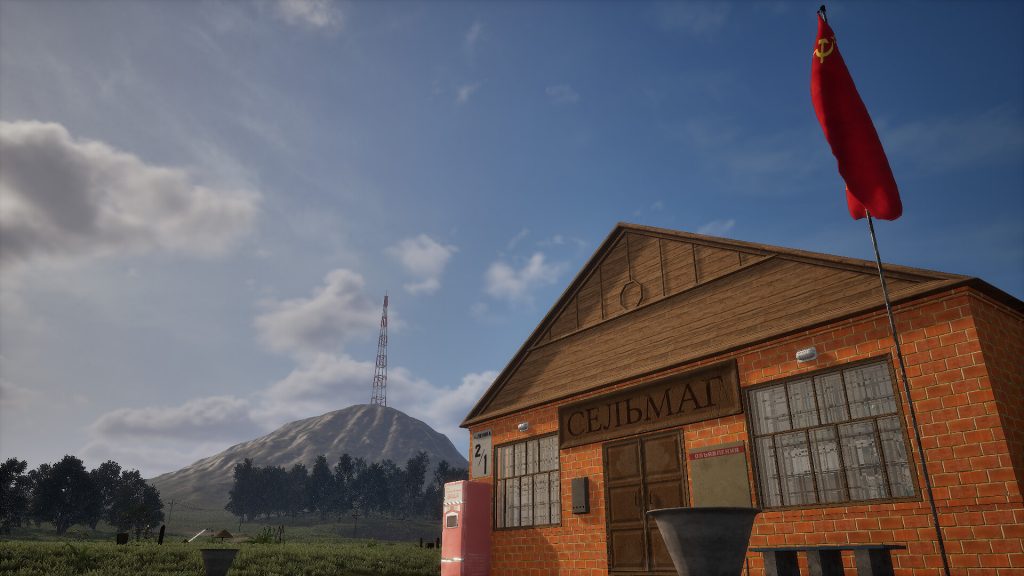
Selsoviet from Overedge Games places the player behind the counter of a small store in Herota — a fictional mining settlement in the Soviet Far East, founded in 1947, devastated by a mine collapse in 1971 that the authorities attributed to worker negligence, removed from the next Five-Year Plan, and left to quietly decline. In 1976, approximately 2,000 people remained. The nearest hospital is in Komsomolsk-on-Amur, which might as well be on the moon. Elizaveta Gulyaeva, the store manager and mother of two children who are sick with typhoid fever, is you.
This is not a game about winning. It’s a game about what survival asks of a person and whether you’re willing to give it.
The Design Lineage
Selsoviet is working in the tradition of Papers, Please and its descendants — the inspection game where institutional authority meets human particularity, and where the player’s procedural compliance with one produces the moral cost of the other. This month’s coverage has returned to this tradition repeatedly: The Newspapers of the Day (colonial press censorship), The Money Man (dystopian currency authentication), Wave of Signatures: Blue Sign (maritime insurance underwriting), Bureau of Hero Affairs (superhero bureaucracy).
Selsoviet‘s specific variation on this tradition is the shop counter rather than the border checkpoint or the inspector’s desk. The inspection object isn’t a visa or a currency note, but a ration coupon — and the moral weight of the decision isn’t “is this document fraudulent?” but “should I enforce the rule when enforcing it means this person and their family go without?”
The ration coupon verification mechanic — checking identification, validating coupons, detecting forgeries — is structurally the same as Papers, Please‘s border control. The crucial difference is what the document represents. A border checkpoint decides whether people can enter a country. A ration distribution counter decides whether people can eat. The stakes are more immediate, and the moral geography is different: the border guard’s compliance serves a state apparatus; the shopkeeper’s compliance serves the same apparatus but affects people she knows by name in a village she lives in.
The Herota Setting
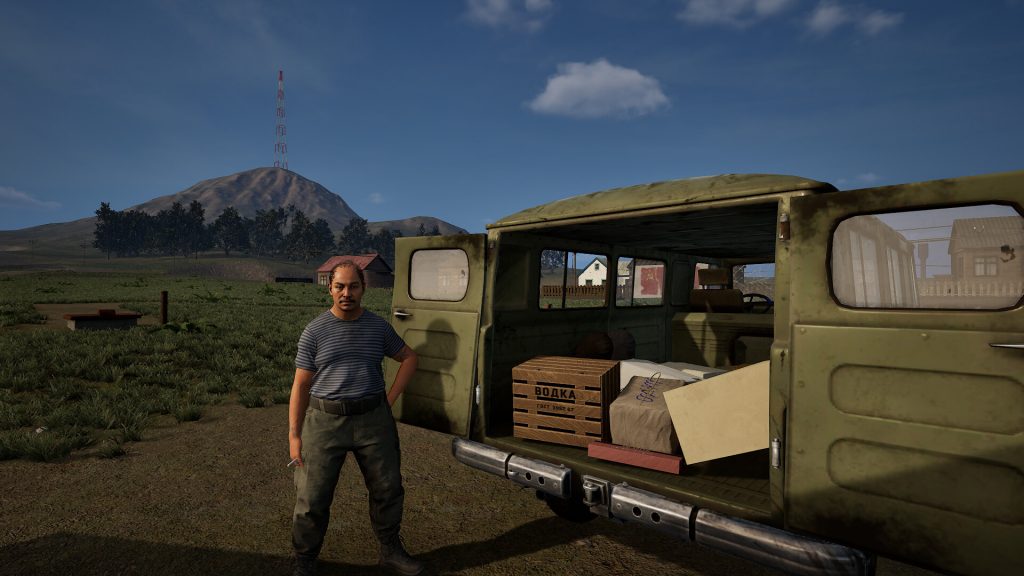
The detail that Overedge Games has committed to the setting — a fabricated village chronicle from 1947 through 1976, published as an archive alongside the game announcement — is the kind of world-building investment that signals genuine creative ambition rather than an aesthetic backdrop. The players who will care most about Selsoviet are players who want the Soviet Far East to feel specific rather than generic, and the village history delivers specificity.
The 1971 mine collapse — with its official attribution to worker negligence rather than structural failure or management decisions — is the specific Soviet bureaucratic maneuver that planted the seed of Herota’s abandonment. Not destroyed, not explicitly punished, but removed from planning consideration and allowed to decline without the formality of a decision. That specific institutional cruelty, quiet and administrative rather than dramatic and violent, is the world Selsoviet is set in.
The 1976 timeframe is the Soviet “era of stagnation” — the Brezhnev years when the initial energy of the post-Stalin thaw had dissipated, and the system was running on institutional inertia rather than genuine belief. A declining mining settlement in the Far East in 1976 is a place where the gap between official language and lived reality was particularly stark, and where ordinary people had developed highly sophisticated informal systems for navigating between them. Samsogon — home-distilled alcohol, translated in the Korean article as “밀주” — was one such system. That the game includes it as a craftable product is the specific historical detail that communicates that the developer understands this world beyond its visual surface.
The Shop as Moral Geography
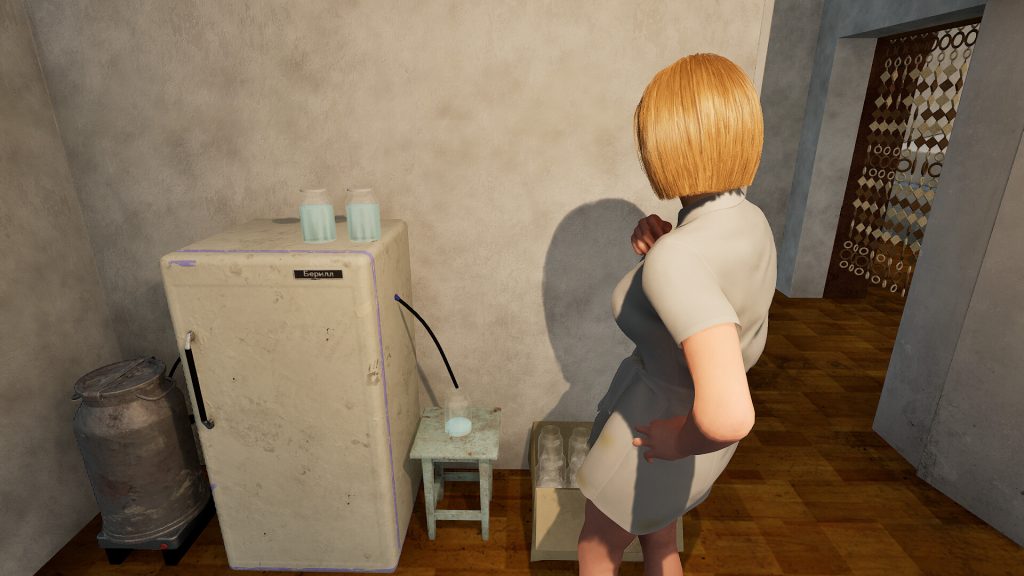
The shop counter as the game’s primary setting creates a specific kind of moral intimacy that border checkpoints and bureaucratic offices don’t. The shopkeeper in a small village knows the people who come to her counter. She knows who is sick. She knows whose husband drinks. She knows which family is trying to save money to leave. She knows which elderly widow has no one to advocate for her.
The fictional rule — serve according to ration coupons, reject invalid ones, detect forgeries — is applied to these specific people she knows, in this specific village where she lives, where her own children are sick. The game’s moral friction isn’t abstract. It’s the specific friction of institutional obligation applied to people whose faces you know.
The 12 endings across a play time of 4 to 50 hours indicate a branching structure where early decisions accumulate consequences that narrow and direct the paths available later. This is the correct architecture for a game about moral compromise under resource scarcity: early compromises that seem small create conditions that make later compromises easier or harder, until the pattern of choices has defined what kind of person Elizaveta has become in the village’s eyes and in her own.
The Specific Soviet Details
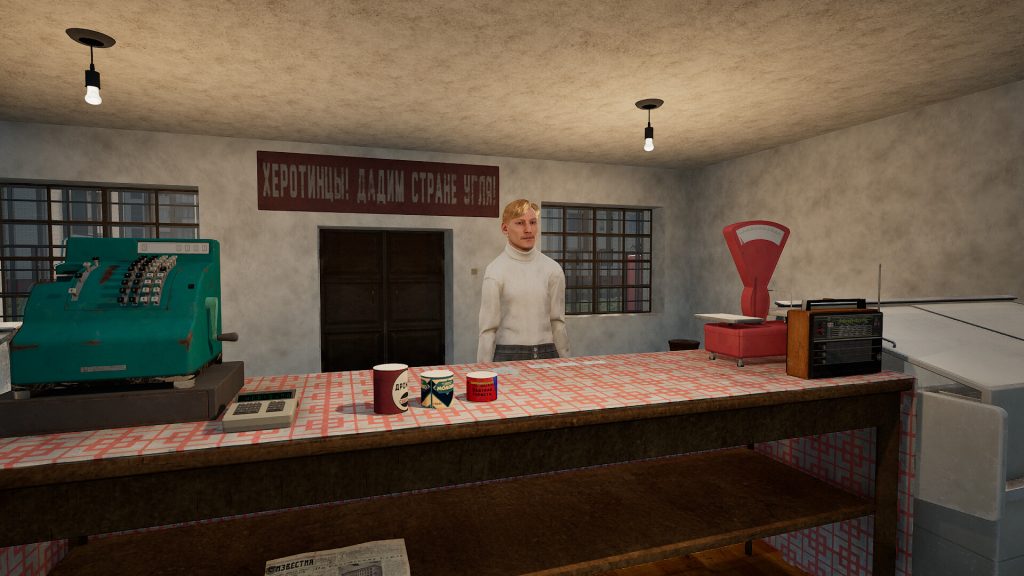
The 1970s Soviet radio broadcasts reconstructed for the game’s audio, the period-accurate cash registers and calculators, the specific objects of daily Soviet commercial life — these are the immersion details that the genre requires to function. Immersive simulation games whose period details are wrong or generic lose the specific quality that makes the setting matter rather than just providing a backdrop.
The production of samogon within the shop — a common practice in Soviet villages, technically illegal, generally tolerated or ignored — is the specific gray-zone activity that situates Elizaveta’s ethical landscape: she’s already operating in informal systems that violate official rules, and the game’s choices presumably exist on a spectrum of compliance and transgression that the samogon production anchors on the transgression side.
The Coverage Context
This is the third Eastern European historical narrative simulation to appear in this month’s coverage. Hollow Home (Twigames) documented the Mariupol siege from a Ukrainian child’s perspective. The Newspapers of the Day (divingstudio) documented Japanese colonial press censorship in Korea. Selsoviet is approaching the Soviet period in the Far East. All three use the inspection/document-management game mechanics that the Papers, Please tradition established, and all three are using those mechanics for historical documentation rather than abstract game design.
That three games working in this lineage are releasing within the same coverage period suggests a moment of particular fertility for the genre as a vehicle for historical engagement — developers across multiple national and cultural contexts independently reaching toward the same design tradition to address specific historical experiences.
Who This Is For
Strong fit for: Papers, Please enthusiasts who want the inspection game tradition applied to Soviet village life; players interested in the history of the USSR’s peripheral regions and forgotten communities; narrative game fans who want complex moral decision-making embedded in a specific historical reality; players who follow the immersive simulation genre broadly; This War of Mine players who want a different kind of civilian survival narrative set in a different historical moment.
Cautious fit for: players who need the demo available before following a game; anyone who wants the full scope and quality of the experience confirmed before investing attention; players who specifically want action or real-time mechanics alongside the simulation.
Less ideal for: players who dislike text-heavy narrative simulation; anyone wanting multiplayer; players who need Korean-language support (not currently announced).
What to Watch For
The demo — when it arrives — will be the first test of whether the ration coupon verification mechanic creates the specific moral pressure that the design implies. The difference between a well-designed inspection game and a poorly designed one is whether the choices feel genuinely difficult because both options have real costs, or whether one option is clearly “good” and the other clearly “bad.” Selsoviet‘s premise implies the former: giving the invalid coupon to a sick person costs Elizaveta in one way; refusing costs her in another. The quality of that moral specificity will determine whether the game earns the tradition it’s working in.
The Takeaway
Selsoviet is a game about what scarcity does to the people it falls on, set in a specific place and time where scarcity was both systematic and local — the result of an administrative decision made in Moscow affecting two thousand people who never learned they’d been removed from the plan. Elizaveta Gulyaeva, two sick children, one small store counter, and the question of who gets the bread today.
The demo is coming. The release date is TBA. The Steam page is live, the village archive is published, and the moral problem is already visible in the announcement: not “who is the villain?” but “what does survival ask of a person?” and “is what it asks acceptable?”
There’s bread on the shelf. Not enough for everyone who needs it. The next person is at the counter.
Celsobe (Selsoviet) ‘ Related Information
| item | detail |
|---|---|
| Developer | Overedge Games |
| Publisher | Overedge Games |
| Genre | Narrative Immersive Simulation |
| mode | Single player |
| platform | PC (Steam) |
| background | Soviet Far East, 1976 |
| Ending | 12 |
| Playtime | 4~50 hours (varies depending on selection) |
| Trial version | To be revealed later |
| Release date | Undecided |
| language | English, Japanese, Russian, French, German, Spanish, Chinese, Polish, Portuguese |
| Reactions/Evaluations | Early stage of announcement, no official review yet |
| Steam Page | Shortcut |