Many adventurers have climbed the Phantom Tower seeking power and glory. None have reached the top. The tower doesn’t permit incomplete builds or half-formed strategies. You grow stronger with each attempt, or you fall.
Phantom Tower, the debut project from Italian two-person studio Horien Studio, enters Steam Early Access on July 13 after four years of development. The content scope — 8 classes, 200+ equipment pieces, 16 elemental reactions, 47 Tower Blessings, 60+ enemy types — represents a production ambition that the team count would normally make impossible. That it exists at this scale is the first thing about Phantom Tower worth taking seriously.
The Elemental Reaction Architecture
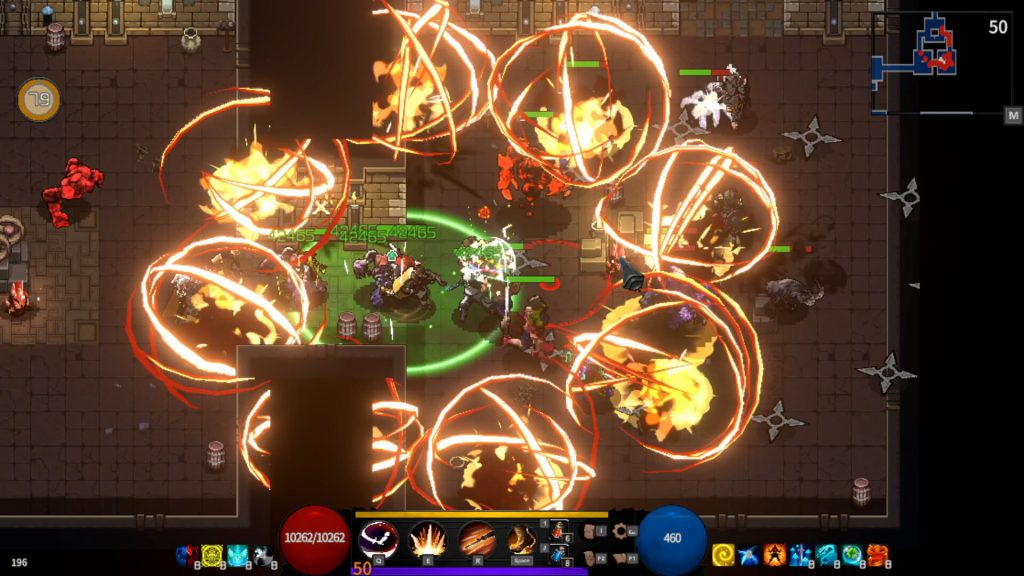
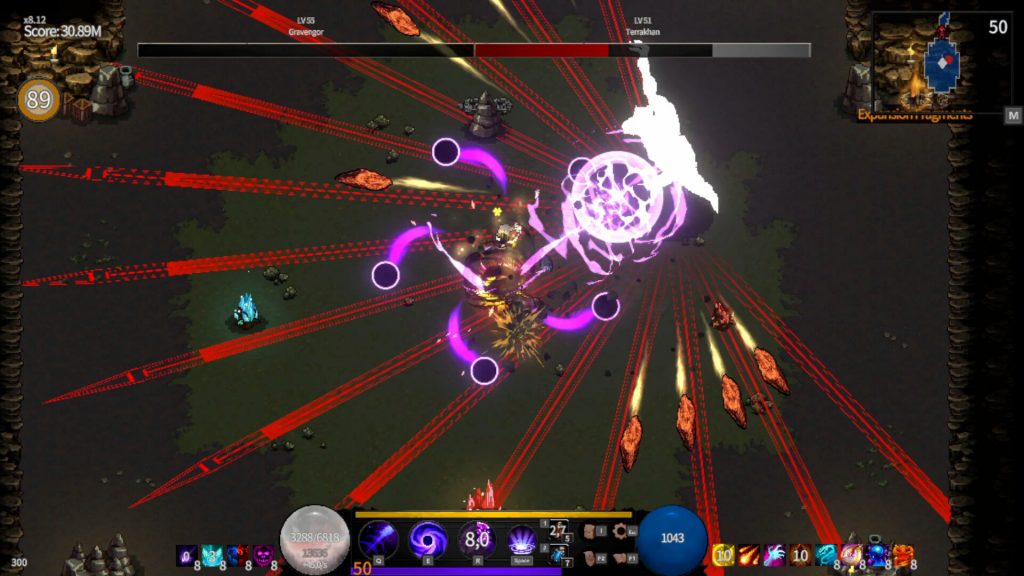
The 4-element / 16-reaction system is Phantom Tower‘s most distinctive design element, and it’s doing specific work that standard hack-and-slash build systems don’t. Most equipment-based build systems in the genre create power through accumulated stats — more damage, more attack speed, more critical strike chance. Elemental reactions create power through chemistry — the interaction between what you do and what condition the enemy is already in.
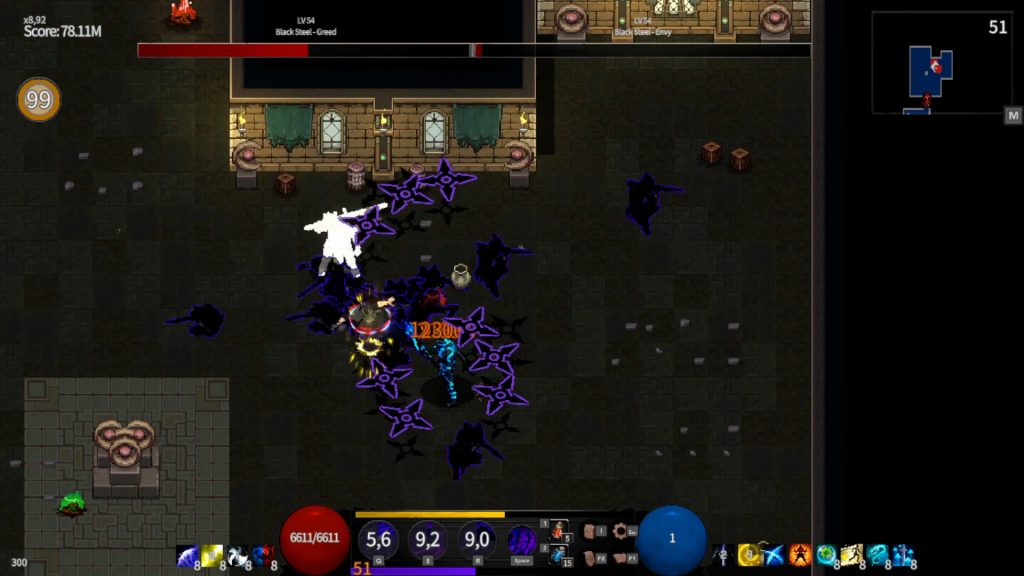
Four elements (fire IGNIS, water AQUA, earth TERRA, wind VENTI) combinatorially produce 16 reaction types. Freeze immobilizes. Erode (corruption from fallen enemies) spreads to chain across groups. Shockwaves traverse entire rooms. These aren’t just damage numbers with different visual effects — they’re different mechanical conditions that create different tactical situations.
The free element switching during combat means the reaction system is active rather than predetermined. A player doesn’t select an element archetype at build creation and commit to it; they swap between elements in real-time to create the reactions that the current combat situation requires. This demands moment-to-moment assessment of which enemies are in which conditions and which elemental application produces the desired reaction — a cognitive engagement layer that pure stat-scaling builds don’t provide.
The community response captures this accurately: “the elemental reaction system combines the visual spectacle of action RPG combat with the build enjoyment of roguelikes.” Spectacle and strategy simultaneously, through the same mechanic.
The Soulbinder System
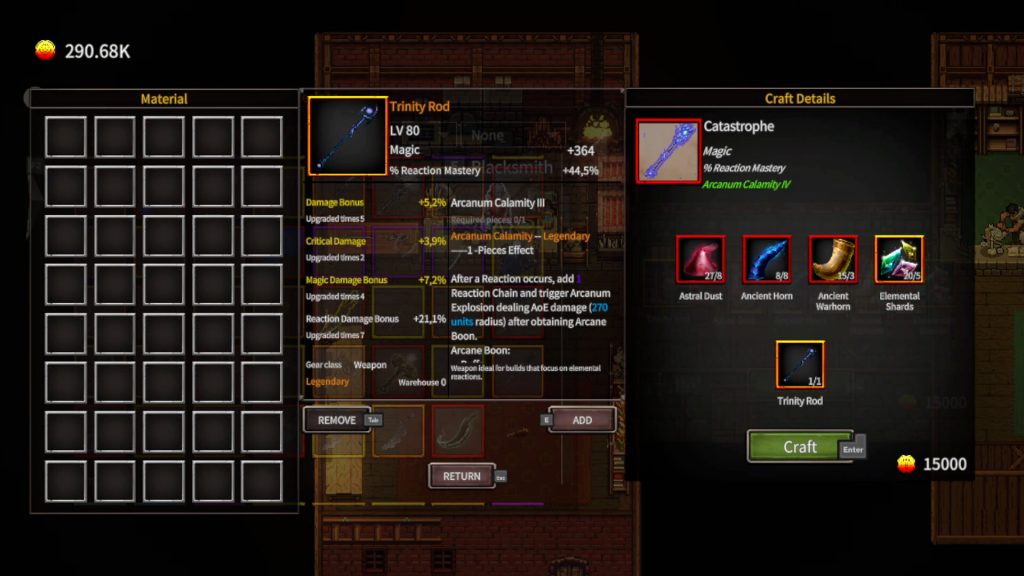
The Soulbinder mechanic — permanently locking desired stats onto equipment, with specific stats developable to level 99 — is the long-term character investment system that extends Phantom Tower‘s engagement well beyond individual run outcomes.
Standard roguelite progression provides persistent unlocks: new starting options, difficulty modifiers, cosmetic rewards. The Soulbinder provides permanent stat investment on specific equipment pieces, allowing players to specialize in particular builds over many runs. A player who decides to build around a specific elemental reaction can commit equipment stat investments that make that build increasingly powerful rather than starting from scratch each run.
This creates a meta-progression layer with genuine stakes — the choices made in the Soulbinder affect long-term build power, and the specialization that focuses on level-99 stat growth in one direction is genuinely different from a balanced approach. Players who engage deeply with the system will produce substantially different characters from those of players who engage casually.
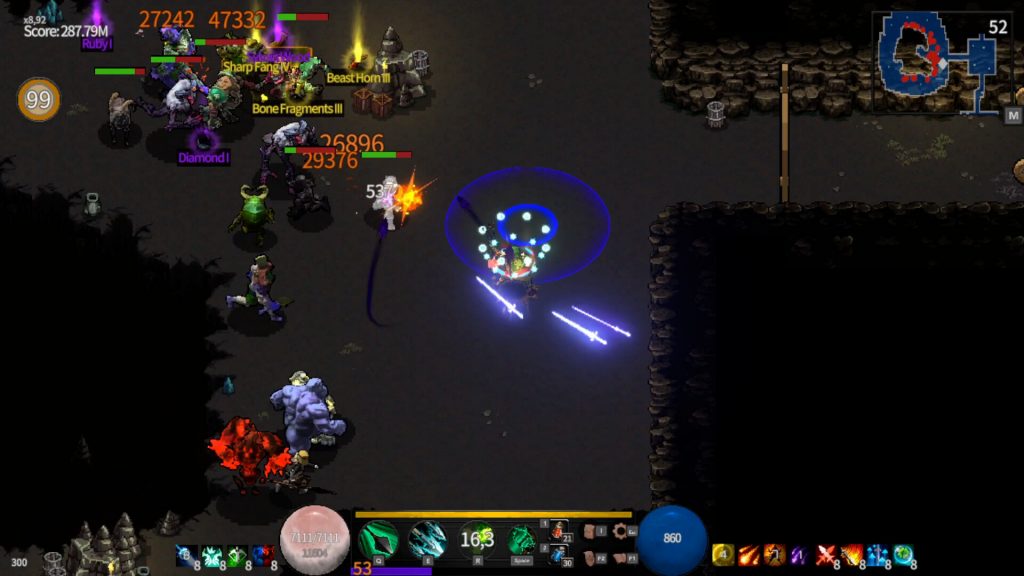
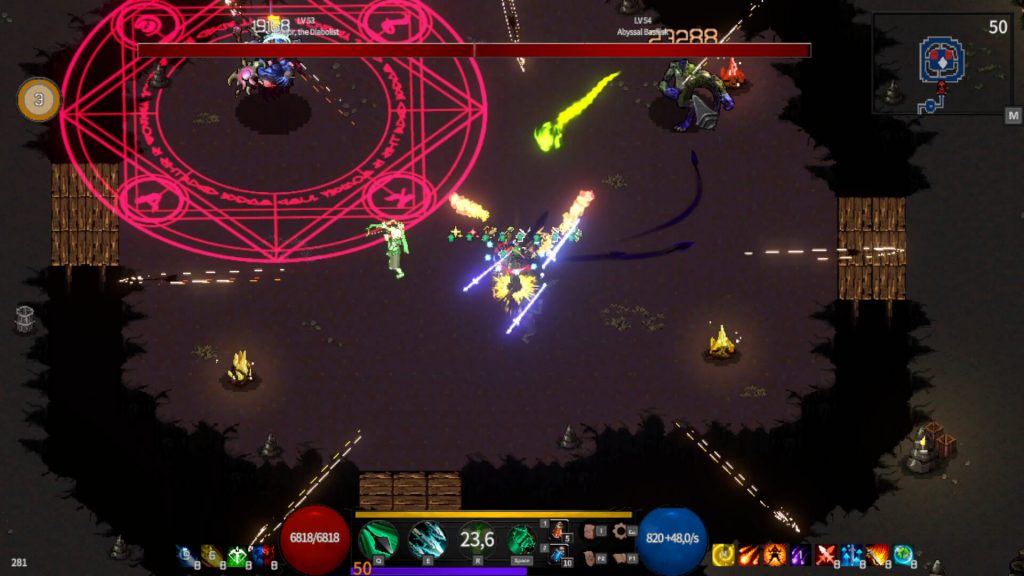
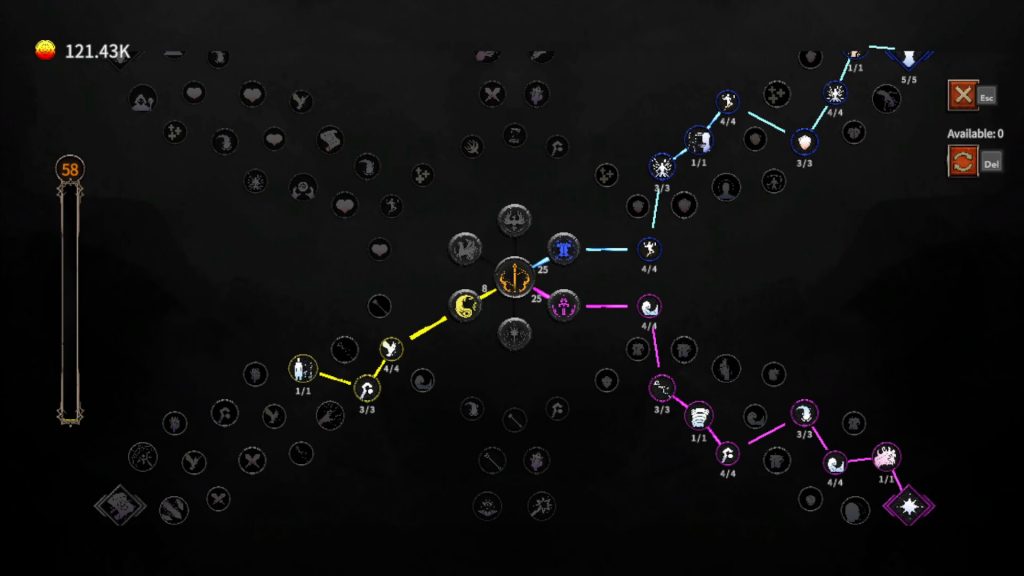
The 47 Tower Blessings add the run-specific power layer that interacts with both elemental reactions and Soulbinder investments. Artemis Dive (evasion summons tracking arrows), Chain Quake (shockwaves chain between enemies) — these are specific ability modifications that can transform a consistent build into run-specific expressions of that build. The same underlying character can play differently across runs depending on which blessings appear and how they interact with the current equipment configuration.
The Two-Developer Scale Achievement
Eight classes, 200+ equipment pieces, 16 elemental reactions, 47 Tower Blessings, 60+ enemy types, two game modes — this is the content list of a game that typically has development teams of 10-20 people working for several years. Horien Studio has two.
The four-year development timeline explains how this is possible in calendar terms: four years of two people working produce eight person-years of development effort, which is meaningful even if smaller than typical productions of this scope. But person-years alone don’t explain scope achievement — many development teams with similar total person-hours produce less content because scope management, design iteration, and technical debt absorption consume disproportionate resources.
Community response suggests the scope is genuine rather than nominal: “learning that it was developed by two people makes the content scale and polish surprising.” This is the specific reaction that indicates content was delivered at the quality level the numbers imply, rather than at a reduced quality that makes the quantity feel excessive.
GameDaily’s description — “combining fast-paced hack-and-slash combat with deep dungeon crawling” — and Mobile Game Report’s Hades comparison with the specific note that this isn’t derivative but “faithfully implements the core structure of roguelikes” both indicate that the mechanical execution is solid rather than merely ambitious.
The Early Access Model
Entering Early Access rather than launching as a complete game is the appropriate choice for a two-person team’s debut roguelite at this scope. The Early Access period provides:
Player feedback on systems at scale — two developers can design and test a system, but the diversity of player approaches that Early Access exposes reveals interactions and balance issues that small-team testing misses.
Content expansion resources — Early Access revenue funds additional development, enabling the team to add content beyond what they could fund entirely from savings or crowdfunding.
Community formation — roguelite games specifically benefit from community knowledge-building, where players share build discoveries, reaction interactions, and strategies that enrich everyone’s experience. Early Access starts this process before full launch rather than after.
The risk for Early Access roguelites is content depth at launch — a roguelite that doesn’t have sufficient build variety and run-to-run differentiation from day one loses its audience before the content that would sustain it arrives. Whether Phantom Tower‘s Early Access launch content provides sufficient variety is the primary evaluation question for July 13.
The Climb Mode and Survival Mode Structure
Two distinct modes serve different player motivations without requiring duplicate content:
Climb Mode’s progressive difficulty escalation gives players a campaign arc — a sense of progress toward the tower’s summit rather than indefinite procedural generation. This provides the narrative closure that pure roguelite survival modes lack, and the escalating difficulty creates the specific tension of knowing each new floor is meaningfully harder than the last.
Survival Mode’s endless structure serves the optimization-minded players who want to find the ceiling of their current build against indefinitely scaling enemies. Once Climb Mode reveals the tower’s summit, Survival Mode becomes the endgame — the format in which theorycrafting and build optimization remain meaningful indefinitely.
This dual-mode structure is one of the more thoughtful aspects of the game’s design, serving both casual-completion players and dedicated optimizers without requiring either to engage with a mode optimized for the other.
Who This Is For
Strong fit for: hack-and-slash action RPG enthusiasts who want roguelite depth; Hades fans who want faster pacing and a different approach to elemental combat; Genshin Impact players who specifically enjoy the elemental reaction system and want it in a roguelite structure; build optimization enthusiasts who appreciate permanent progression systems alongside run-to-run variety; players who specifically enjoy the trajectory from “looks like a standard hack-and-slash” to “build completion transforms the feeling of play”; Early Access participants who want to engage with development iteration.
Cautious fit for: players who specifically prefer finished games to Early Access; roguelite purists who prefer minimal meta-progression over permanent stat investment systems like Soulbinder; players who find elemental reaction tracking cognitively demanding rather than engaging.
Less ideal for: players who dislike hack-and-slash pacing; anyone seeking narrative-heavy experiences; players who want competitive or cooperative multiplayer rather than solo roguelite.
What to Watch For
The Early Access period’s key questions: whether the 16 elemental reactions are balanced to keep all 4 elements viable rather than converging toward optimal configurations; whether the 8 classes create meaningfully different playstyles or primarily provide aesthetic variety over similar mechanical approaches; and whether the Soulbinder permanent progression creates satisfying long-term investment or generates balance issues where deeply invested players trivialize content that newer players find challenging.
The community observation that “the build feeling transforms dramatically as the build is completed” implies a slow start that accelerates — a legitimate roguelite design choice that requires sufficient early-game engagement to retain players until the payoff arrives.
The Takeaway
Phantom Tower is one of 2026’s more impressive small-team scope achievements — a two-person Italian studio’s four-year debut delivering a hack-and-slash roguelite with content depth that larger teams typically produce. The elemental reaction system provides the mechanical differentiation from genre convention that Early Access roguelites need to retain their initial audience, and the Soulbinder permanent progression creates long-term investment stakes beyond individual run outcomes.
The comparison to Hades that the press has reached for is useful as a quality target — not because Phantom Tower plays identically, but because it suggests a similar ambition to combine action-game feel with roguelite structure at a quality level that made Hades the genre’s reference point. Whether Horien Studio has achieved that level with two people and four years of work is what July 13 will reveal.
The tower stands. No one has reached the top. The elemental reactions are ready, the Soulbinder investments are made, and the Tower Blessings are waiting to be discovered.
Early Access opens July 13. The climb begins.
Information regarding ‘Phantom Tower’
| item | detail |
|---|---|
| Developer | Horien Studio (2-person team) |
| Genre | Hack-and-slash roguelike action RPG |
| Release platform | PC (Steam) |
| Release date | July 13, 2026 (Early Access) |
| demo | Free Steam demo available |
| Play Mode | Climb Mode (Main Campaign) / Survival Mode (Infinite) |
| Number of classes | 8 types |
| elemental system | 4 Elements (IGNIS, AQUA, TERRA, VENTI) / 16 Reactions |
| Number of equipment | Over 200 (including 128 weapons, 6 types) |
| Tower Blessing | 47 |
| core system | Elemental Reaction / Soulbinder (Stats Permanently Fixed, Level 99) / Tower Blessing |
| Development period | 4 years |
| Main Keywords | Hack and slash, roguelike, elemental reactions, build, dungeon crawling, indie |
| Steam Page | Shortcut |