There’s an honest answer to why CyberSushi took longer to develop than expected, and founder Erin Connors gave it directly: “It was originally supposed to be finished a year ago, but it turned out to be too fun, so we just kept playtesting.” This is either the most relatable development confession of 2026 or the best pitch for the game — and it might be both. The arcade roguelite from Sydney-based Ezza Games, featuring cybernetic sushi heroes racing through collapsing dimensions, targets PC (Steam, Epic) and mobile (iOS, Android) release later this year with the kind of escalating-chaos design philosophy that makes “just one more run” feel mandatory rather than optional.
The core inspirations tell you everything you need to know: Hades for progression depth, Vampire Survivors for amplifying chaos. These are not subtle references. Ezza Games is explicitly building something that gets better the longer you play it and more overwhelming the further into each run you go — which, if the execution matches the ambition, is precisely the combination that makes arcade roguelites impossible to put down.
The Cyberpunk Sushi Premise
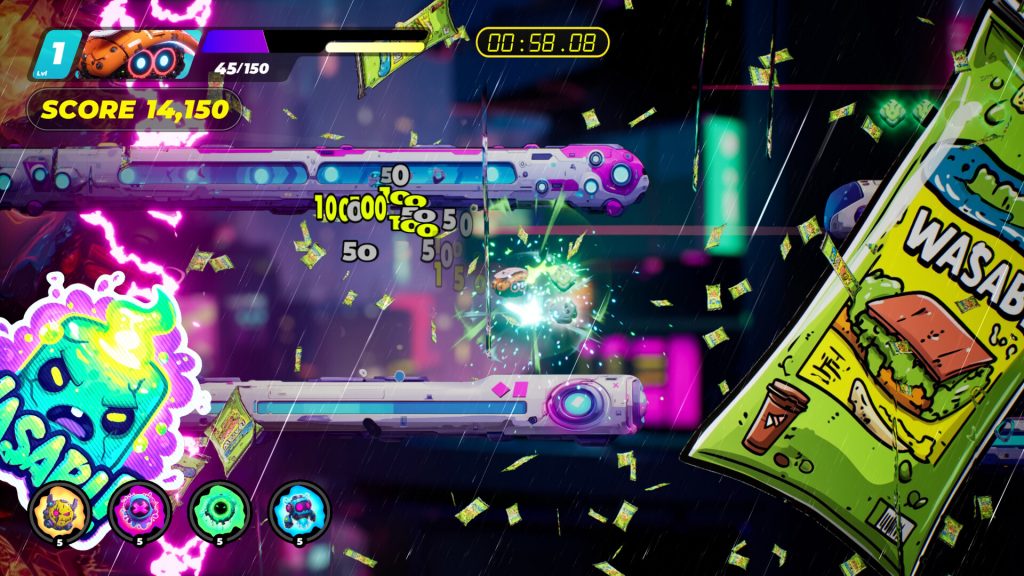
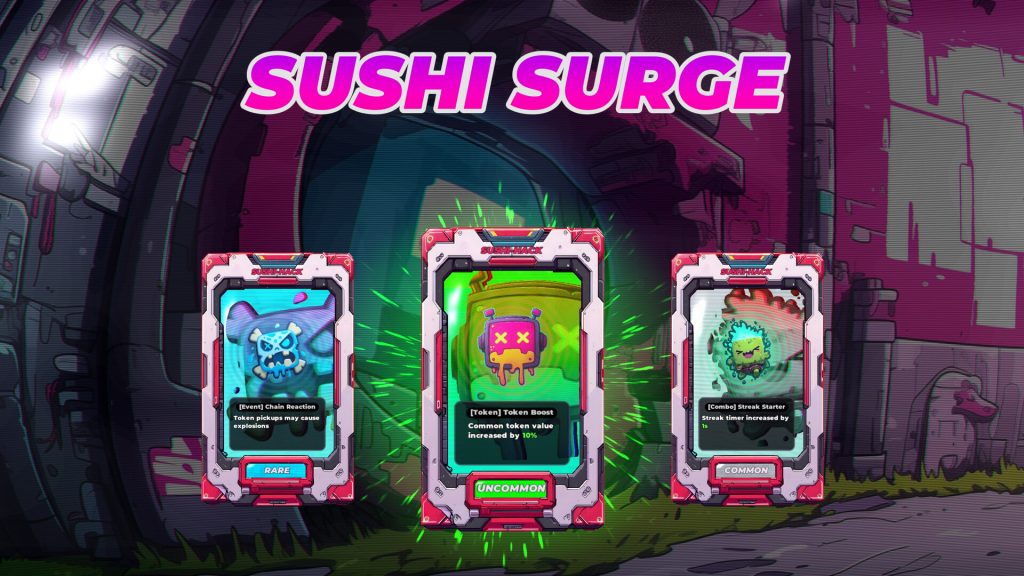
The premise is pure commitment-to-bit. Cybernetic sushi heroes. Collapsing dimensions. WASABI Overdrive as the power-up state. Sushi Surge and Sushi Hack as the escalating ability activations. The studio describes CyberSushi as “compressing the studio’s identity into one impossible run” — and the identity they’re presenting is a studio that takes absurdist concepts absolutely seriously as design foundations.
This approach has proven precedent. Goat Simulator committed entirely to goat-based physics chaos. Vampire Survivors committed entirely to auto-attack roguelite chaos without apologizing for its simplicity. Games that embrace their absurd premises without hedging tend to execute them more purely than games that try to rationalize or soften their concepts into something more conventional.
The sushi-cyberpunk combination is doing specific tonal work. Cyberpunk as a genre is earnest about its themes — corporate dystopia, technological augmentation, identity under capitalism. Sushi as subject is inherently light, precise, culturally rich without being heavy. The combination produces something that can be visually and mechanically serious (high-speed dimensional arcade action) while refusing to take itself too seriously (the villain’s weakness is wasabi). This tonal balance is exactly what makes arcade games feel fun rather than oppressive — high stakes framing with low consequence feeling.
The Escalating Combo Architecture
The three-stage combo system is CyberSushi‘s most mechanically distinctive design element, and it reflects the Vampire Survivors influence precisely.
Streak is the foundation — consecutive successful actions building accumulated energy. This is standard combo-game design, but the accumulation becoming meaningful rather than decorative is what the next stages require.
WASABI Overdrive activates when Streak builds sufficiently, enabling more powerful abilities. The naming is perfect: wasabi delivers sudden, overwhelming heat that briefly overwhelms the senses before subsiding. The WASABI Overdrive state presumably delivers the same escalation within gameplay — suddenly more powerful, but requiring management before returning to baseline.
Sushi Surge further escalates combat and score efficiency when activated. This mid-stage escalation turns the gameplay from managing momentum to riding it, and the transition should feel like the run shifting into higher gear.
Sushi Hack is the terminal state — game-flow-altering powerful effects that redefine what the run becomes. The word “Hack” in a cyberpunk context carries specific connotations: unauthorized access, system disruption, exploiting vulnerabilities in the dimension’s own rules. Mechanically, this should be the moment where the accumulated chaos becomes truly overwhelming and the player’s build peaks.
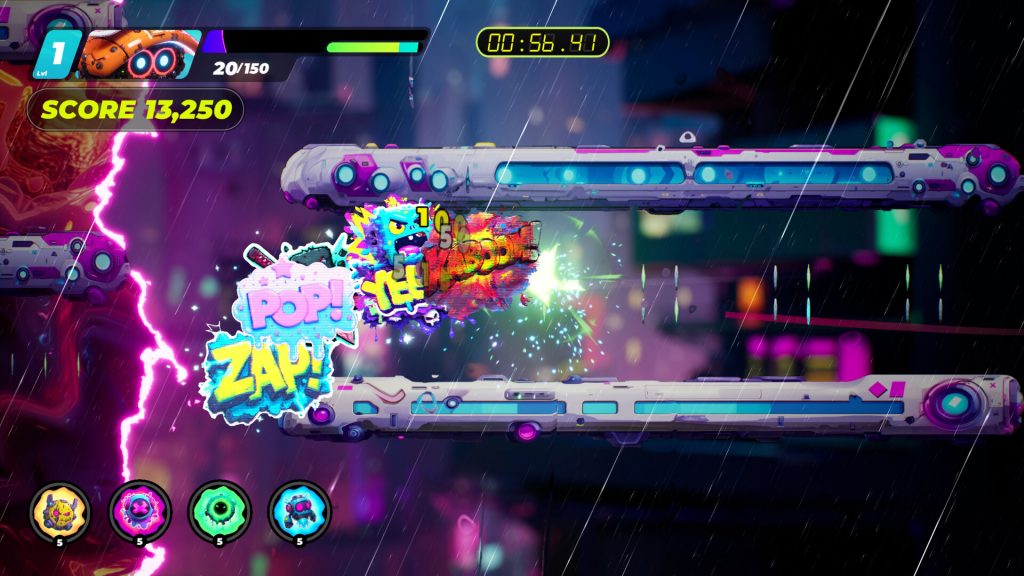
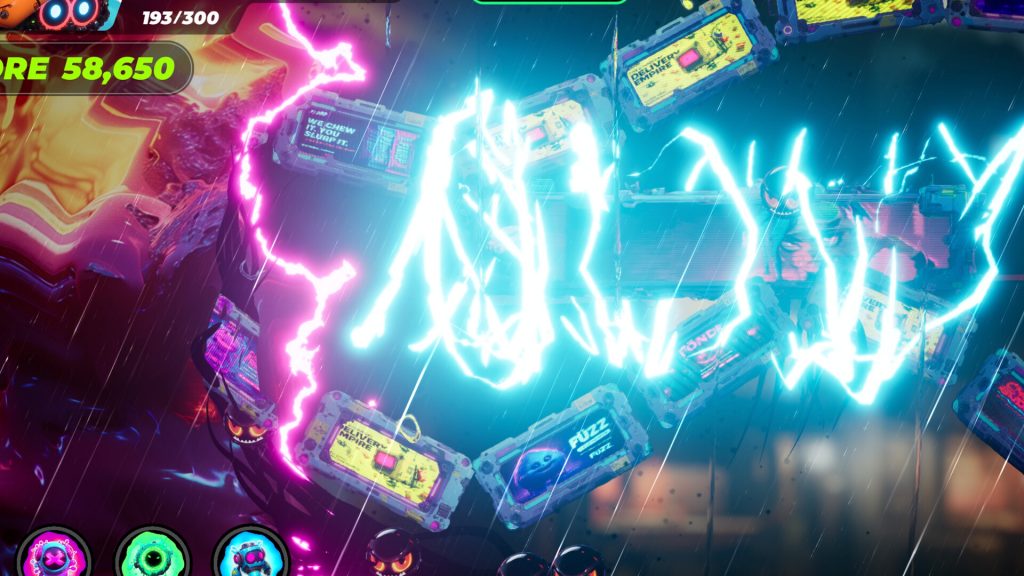
The three-stage escalation into increasing chaos reflects exactly what makes Vampire Survivors satisfying in its late runs — the moment when enough abilities have accumulated that the screen fills with projectiles and the player becomes a force of nature rather than a vulnerable entity. CyberSushi‘s structured escalation (Streak → WASABI → Surge → Hack) provides a more deliberate version of this arc, with each stage transition being a meaningful moment rather than gradual accumulation.
The Cyberpunk Dimension Variety
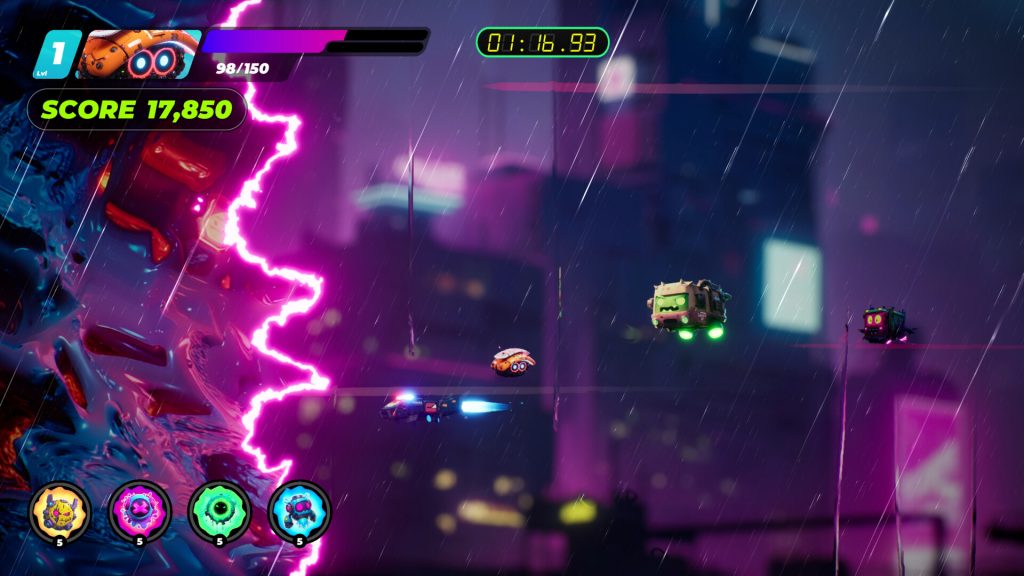
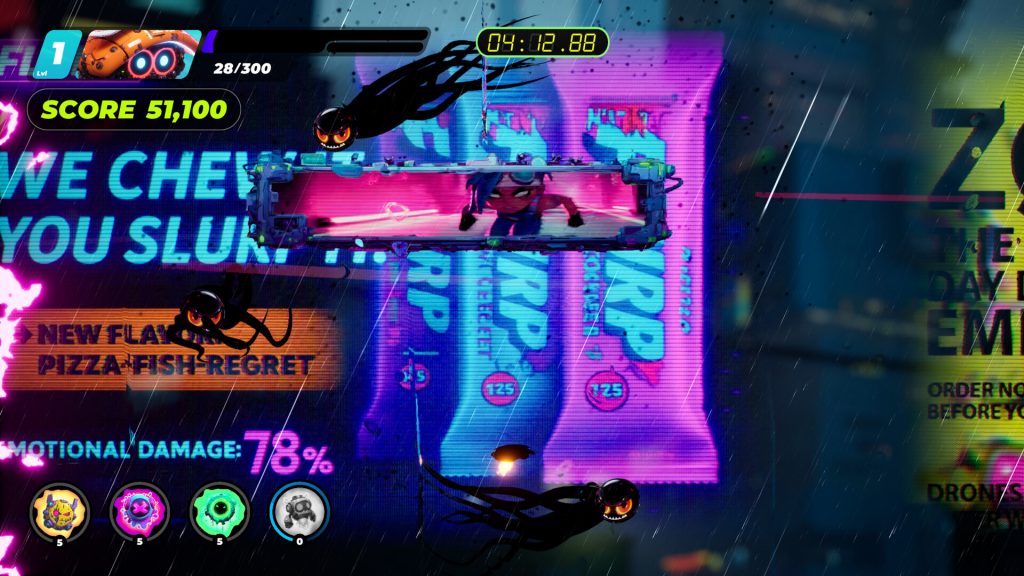
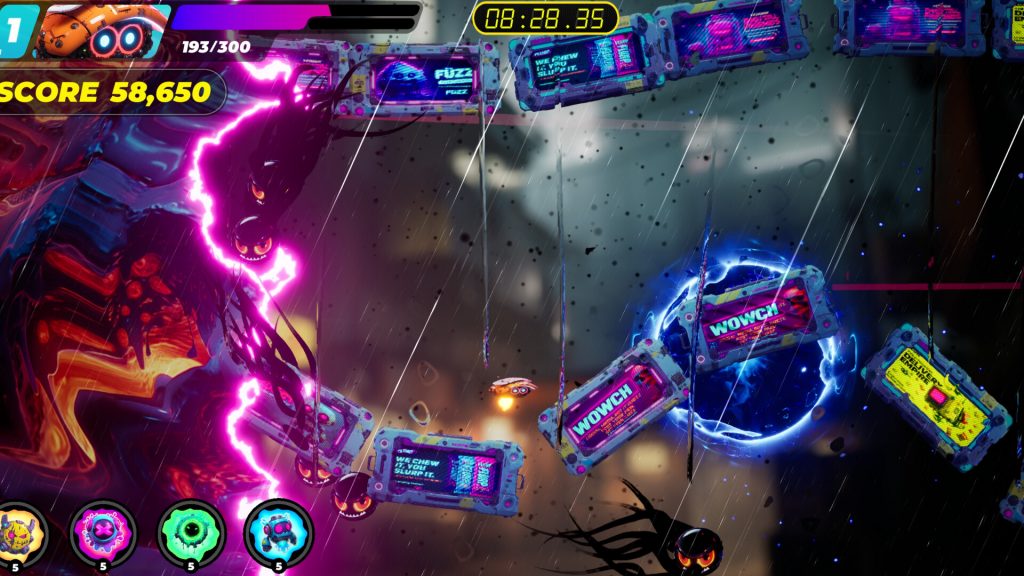
Three worlds are currently available (Lost Horizon, Neon City, Subway Hackers), with Mech Graveyard confirmed upcoming. The naming provides immediate environmental imagination: Lost Horizon suggests an abandoned future cityscape at the edge of dimension collapse; Neon City is the classic cyberpunk cityscape with the associated visual saturation; Subway Hackers suggests underground infrastructure turned into hacker territory; Mech Graveyard conjures a battlefield of fallen enormous robots.
Each world presumably offers a distinct visual palette and obstacle types — fast-moving lanes to cross, tokens to collect, enemies to avoid or engage — while the running action’s core mechanics remain consistent. Environmental variety in arcade roguelites serves both visual freshness and gameplay variety, ensuring players don’t feel like they’re replaying the same corridor repeatedly.
The “high readability amid spectacular presentation” design goal is an interesting disclosure. Fast-paced arcade games can become visually overwhelming to the point where players can’t process what’s happening — attractive in trailers, frustrating in extended play. The explicit commitment to readability suggests Ezza Games understands this tension and has prioritized moment-to-moment clarity over pure visual spectacle.
The Hades Influence on Progression
The Hades inspiration for progression depth is the most substantial design claim the game makes. Hades succeeds not just as a roguelite but as a game with a narrative that unfolds across many runs, mechanical depth that encourages experimentation, and a sense that the full experience emerges gradually over dozens of hours rather than being visible from the first run.
Applying this depth to an arcade runner is ambitious. Runners are structurally different from combat roguelites — the immediate feedback loops, the forward-momentum requirement, the fast-fail-restart cycle — and building Hades-level progression depth into this structure requires different design solutions than Hades itself employed.
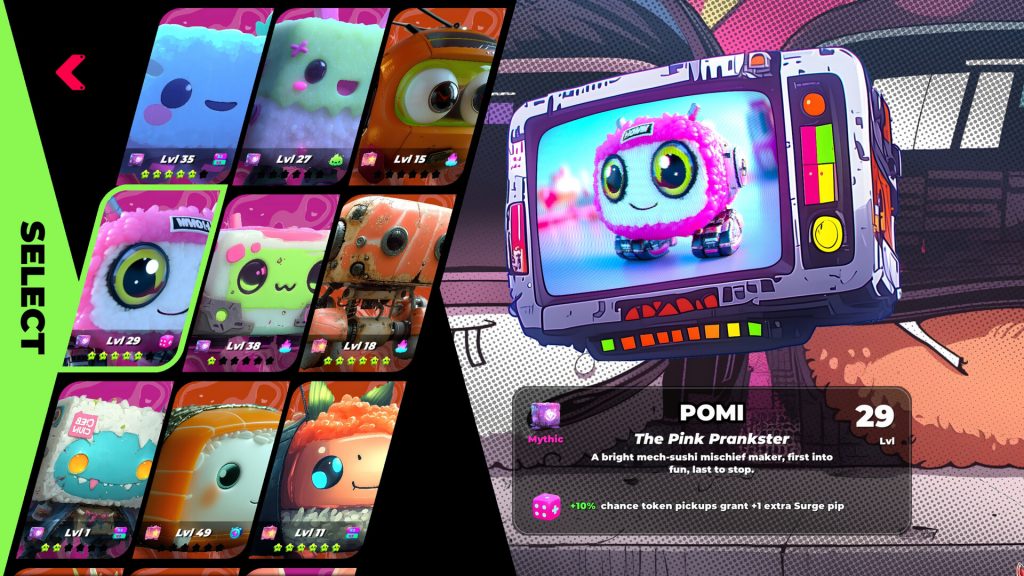
The multiple cybernetic sushi heroes with different abilities and playstyles provide the character-diversity dimension that Hades‘s weapon selection offered. The roguelite build construction components add the run-to-run variety that progression games depend on. Whether these elements achieve the Hades standard of making each run feel like meaningful engagement with a larger system, or whether they remain decorative additions to arcade action, will be the primary critical question for CyberSushi‘s reception.
The AI Disclosure
CyberSushi‘s disclosure that generative AI tools were used for some in-game asset creation is worth addressing directly. This is the second project in our recent coverage to make this disclosure (following Gacha Capsule Shop Simulator – Akihabara), and the approach taken in both cases — transparent disclosure — is preferable to undisclosed use.
For players who prefer fully human-created content, this disclosure allows informed purchasing decisions. For players who don’t object to AI-assisted asset creation, the disclosure provides transparency without affecting their engagement. The disclosure practice itself reflects developing industry norms during a period when AI use in creative production is actively contested.
The specific scope — “some in-game assets” rather than core art direction, character design, or narrative — suggests selective use for production efficiency rather than wholesale replacement of human creative work. How significant this distinction is depends on which assets specifically, which the disclosure doesn’t specify.
The Ezza Games Debut
CyberSushi is Ezza Games’ first release, which makes Connors’ “too fun to stop playtesting” development story both charming and revealing. First-time developers often struggle with scope — building too much, polishing too long, failing to ship. A team that kept extending development specifically because they couldn’t stop playing suggests the core loop is genuinely compelling rather than something they’re talking themselves into.
The cross-platform PC and mobile simultaneous release is an ambitious debut decision. PC roguelites and mobile roguelites occupy different design traditions — PC players typically have more patience for complexity and longer sessions; mobile players want accessible, immediate engagement. Building something that works for both is harder than building for either alone, and the dual launch strategy suggests Ezza Games has thought carefully about accessibility without compromising the depth the Hades influence implies.
Sydney’s indie game development scene doesn’t have the concentrated cluster visibility of Melbourne or some other Australian cities, but Australian indie development has been building global presence. CyberSushi, contributing to that presence with a distinctive premise and cross-platform ambitions, reflects the kind of specific creative vision that Australian indie development has been producing across various genres.
Who This Is For
Strong fit for: arcade roguelite enthusiasts seeking fresh mechanical premises; Vampire Survivors and Hades fans who appreciate games in that lineage; mobile roguelite players who want depth alongside accessibility; score-attack enthusiasts who enjoy leaderboard competition; cyberpunk aesthetic fans who appreciate the genre deployed in non-traditional contexts; players who enjoy commitment-to-bit absurdist premises executed seriously.
Cautious fit for: players who find AI-assisted asset disclosure meaningful to their purchasing decisions; anyone who specifically prefers slower-paced or turn-based roguelites over arcade action; players who want narrative depth equal to or exceeding mechanical depth (cyberpunk sushi heroes may not deliver the emotional weight of Hades‘s storytelling).
Less ideal for: players who avoid roguelite structure entirely; anyone who specifically dislikes arcade-runner pace; players seeking complex strategic gameplay over immediate-response action.
What to Watch For
A few questions will shape CyberSushi‘s 2026 release.
The first is whether the WASABI-Surge-Hack escalation delivers the promised chaos amplification. The three-stage combo structure sounds satisfying in description; whether the mechanical execution makes each stage transition feel meaningfully different will determine if the system delivers the Vampire Survivors-style escalating chaos the inspiration claims.
The second is the Hades influence’s actual depth. Saying you’re inspired by Hades is easy; building the kind of progression depth that makes dozens of hours feel worthwhile is genuinely difficult. Whether CyberSushi‘s build variety and character diversity achieve this will separate the experience from arcade games with cosmetic roguelite elements.
The third is cross-platform calibration. Mobile and PC sessions play differently — mobile in short bursts, PC in sustained sessions. Whether CyberSushi accommodates both meaningfully, or whether it serves one platform better than the other will affect reception across the two target audiences.
The fourth is the competitive differentiation in a crowded genre. The arcade roguelite category has many entries, and standing out requires either exceptional execution of familiar ideas or ideas distinctive enough to create their own category. Cyberpunk sushi is distinctive as a premise; whether the gameplay is distinctive enough to match the concept’s memorability will determine whether CyberSushi becomes a genre entry or a genre standout.
The Takeaway
CyberSushi is one of 2026’s more endearingly confident debut projects — a Sydney studio’s first release built around a premise (cybernetic sushi heroes in collapsing cyberpunk dimensions) that refuses to hedge its absurdism, paired with serious design inspirations (Hades, Vampire Survivors) that signal genuine mechanical ambition behind the joke concept.
For arcade roguelite enthusiasts, the escalating combo architecture and Vampire Survivors chaos-amplification philosophy make this worth watching as the release approaches. The proof will be in whether the WASABI Overdrive hits as hard as the name promises.
For Australian indie gaming observers, CyberSushi represents another example of Australian indie development producing internationally-minded projects with distinctive creative identities. The Sydney studio committed fully to its impossible concept and apparently couldn’t stop playing it — which, historically, is one of the better indicators that players outside the studio won’t be able to stop either.
Neon-lit streets. Collapsing dimensions. Cybernetic sushi racing through lane-based obstacles. WASABI Overdrive. Sushi Hack is rewriting the rules of the run. A development story that went a year over schedule because the team couldn’t stop playtesting.
The concept is ridiculous. The inspirations are serious. The commitment is total. And when a studio says they kept playing their own game too long to ship it on time, that’s usually the best possible signal that the “just one more run” feeling was real.
One impossible run. All the sushi. All the chaos. And somewhere between the Streak and the Sushi Hack, you’ll understand exactly why they couldn’t stop.
Information regarding ‘CyberSushi’
| item | detail |
|---|---|
| Developer / Publisher | Ezza Games (Sydney, Australia) |
| Genre | Arcade Roguelite / Runner / Action Roguelike |
| Release platform | PC (Steam / Epic Games Store) / iOS / Android |
| Scheduled for release | 2026 |
| engine | Unreal Engine 5.4 |
| core system | Streak → WASABI Overdrive → Sushi Surge → Sushi Hack (3-stage combo incremental structure) |
| World | Lost Horizon / Neon City / Subway Hackers / Mech Graveyard (Upcoming) |
| inspiration | Hades (Depth of Progression) / Vampire Survivors (Increasing Chaos) |
| AI utilization | Specify the use of generative AI tools for some in-game assets |
| Main Keywords | Sushi, Cyberpunk, Roguelite, Arcade, Wasabi, Dimension, Combo, Score Attack |
| Official Website | cybersushigame.com |
| Steam Page | Go to Wishlist |