An electrical engineering student and an architecture student walk into a game jam — and produce a cozy Edo-period pixel art gathering adventure where you forage herbs, run a tea house, and pet raccoon dogs. UnintentionalLogic’s debut project, Gendo the Gatherer, ran a free week-long Steam playtest from June 23-30, targeting Q4 2026 for full release. The team’s self-description — “we try to create unique interactive experiences using our respective majors, and mostly fail” — is the kind of honest self-aware humor that immediately establishes a studio worth paying attention to.
The one-sentence pitch the developers use is also the most efficient possible description: Dave the Diver, but cozy. If you know Dave the Diver — the split-structure game that alternates between diving for fish and running a sushi restaurant — you immediately understand what Gendo the Gatherer is offering. Gathering in the forest replaces the diving; a tea house replaces the sushi restaurant; Edo-period Japan replaces the contemporary coastal setting. The fundamental split-activity design remains, with the anxiety and tension replaced by deliberate calm.
The Dave the Diver Structural Parallel
The comparison to Dave the Diver is earned and illuminating. What made Dave the Diver work wasn’t either its diving or its restaurant management in isolation — it was the specific rhythm of alternating between two distinct activities that complemented each other. The diving created the ingredients and materials; the restaurant gave those ingredients meaning and commercial purpose. The loop wasn’t just mechanical but narrative: you dove for specific things because you knew they’d be needed for tonight’s menu.
Gendo the Gatherer replicates this structural logic while changing the emotional register. The morning forest gathering creates ingredients and materials; the evening tea house gives them purpose. The difference is that Dave the Diver‘s diving carried genuine tension (stamina management, underwater threats, time pressure), while Gendo‘s forest gathering is explicitly designed for calm exploration. The stress that Dave the Diver used as contrast to make the restaurant portions feel rewarding is replaced by a different kind of anticipation — quiet curiosity about what today’s forest will offer.
This is a legitimate design alternative rather than a lesser version. The Woodo coverage this month made a similar point about games that find their emotional register through gentleness rather than tension. Gendo the Gatherer is explicitly targeting players who want the structural satisfaction of the activity-split loop without the anxious energy that made Dave the Diver so relentlessly propulsive.
The Procedural Forest Design
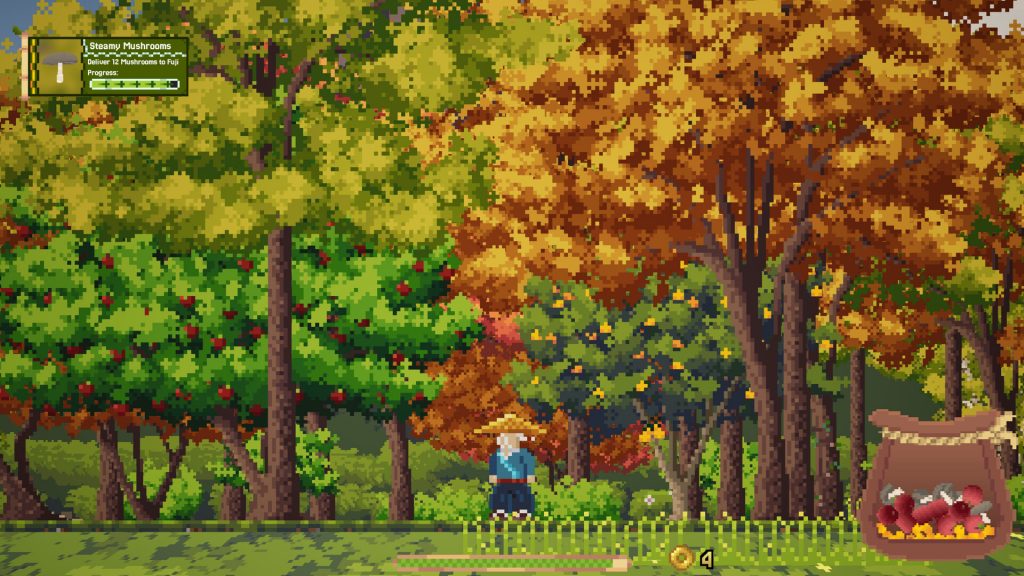
The procedurally varied forest is the key mechanical choice that makes daily gathering feel like genuine exploration rather than routine. Each visit to the same forest locations produces different ingredients, different visual details, different small surprises. This procedural variation prevents the gathering loop from calcifying into rote repetition — you’re not following a memorized route to predetermined spawn points but actually paying attention to what today’s version of the forest contains.
For cooking games and life sims, the discovery quality of gathering is fundamental to the experience’s appeal. Games like Story of Seasons and Stardew Valley understand that part of what makes daily farming routines satisfying is the small unpredictability — what grew, what appeared, what arrived that you didn’t expect. Gendo the Gatherer‘s procedural approach applies this principle to a linear gathering structure.
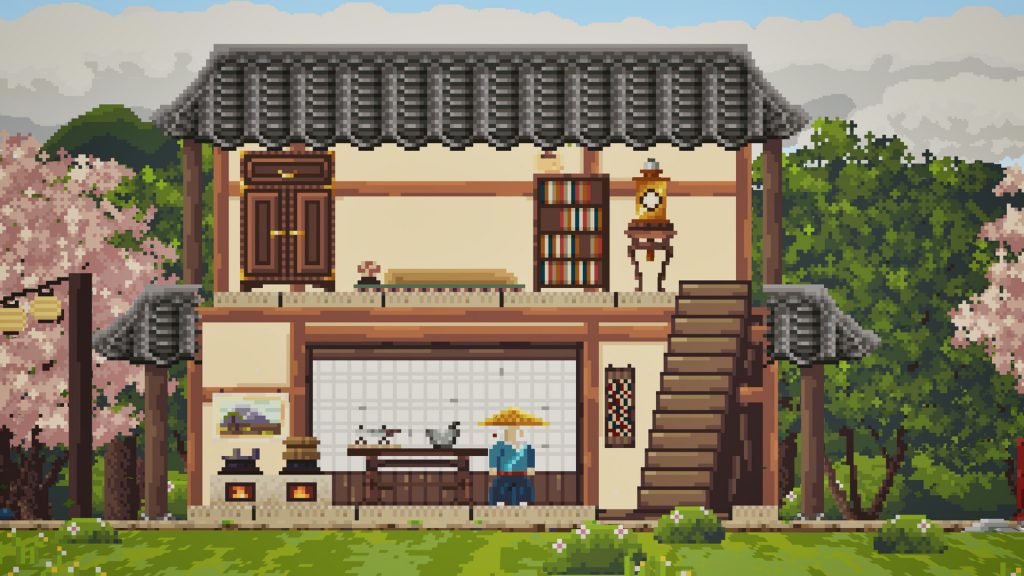
The Edo-period setting gives the procedural forest a specific visual texture. Seasonal variation in Japanese forests — the specific appearance of rice paddies, bamboo groves, mountain paths, and village outskirts across seasons — provides a rich palette for daily variation. The warm pixel art color treatment described suggests the developers have thought carefully about how color itself conveys seasonal atmosphere.

The Audio Design Commitment
The specific sound design inventory — wind through the forest, crackling firewood, knife sounds on a cutting board — is worth noting because cozy games live or die on their audio texture. The visual style creates the initial impression; the audio is what makes extended play sessions feel genuinely restful rather than just visually pleasant.
Wind through forest, fire sounds, and food preparation sounds are specifically the auditory textures that associate with domestic warmth and rural calm. These are the sounds of being somewhere quiet rather than the ambient game music that fills the silence in many games. If the implementation is good — appropriately dynamic, responsive to player actions rather than purely looping — the audio design could be Gendo the Gatherer‘s most distinctive quality.
The knife sounds specifically: cooking game audio design often underinvests in the sounds of food preparation, which are actually some of the most satisfying sounds associated with cooking. The ASMR popularity of food preparation sounds reflects a genuine human response to these specific audio textures. A cozy cooking game with well-designed preparation sounds has a specific quality that transcends typical game audio.

The Tea House as Structure
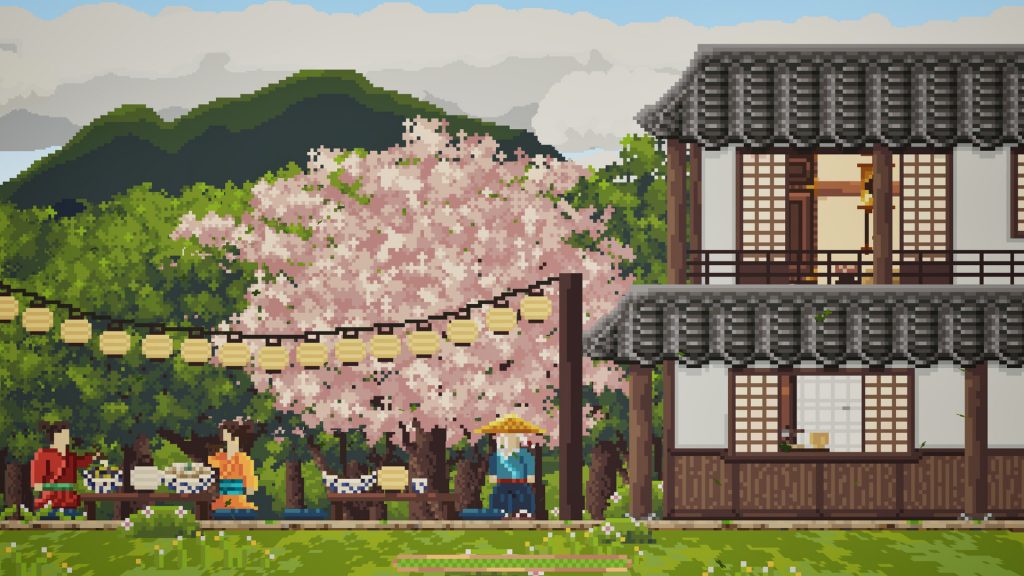
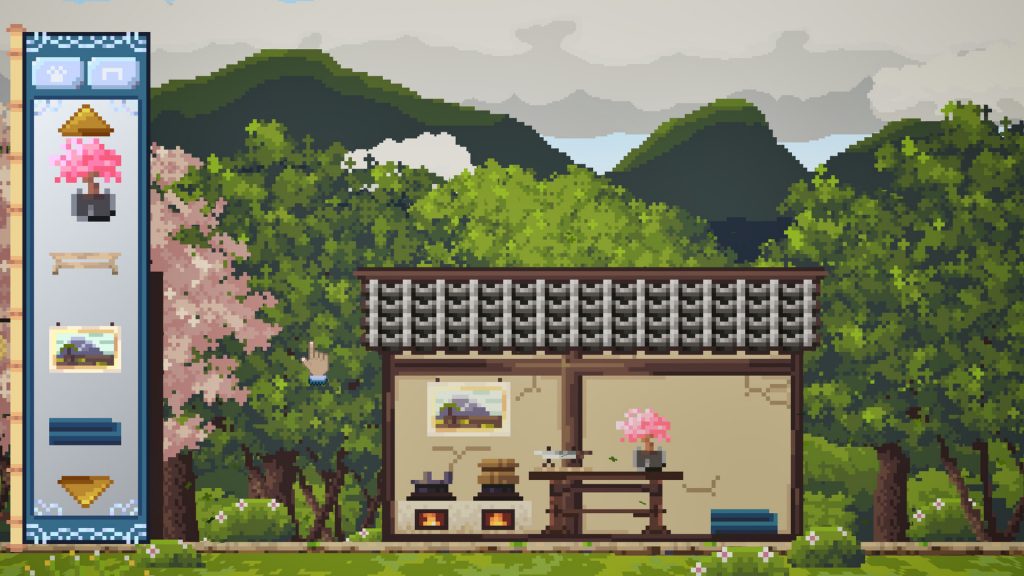
The tea house evening loop provides the commercial and social meaning that the morning gathering creates. Preparing and serving tea and food to villagers completes the satisfaction cycle — the things you gathered and cooked now have recipients, social context, and purpose beyond mere collection.
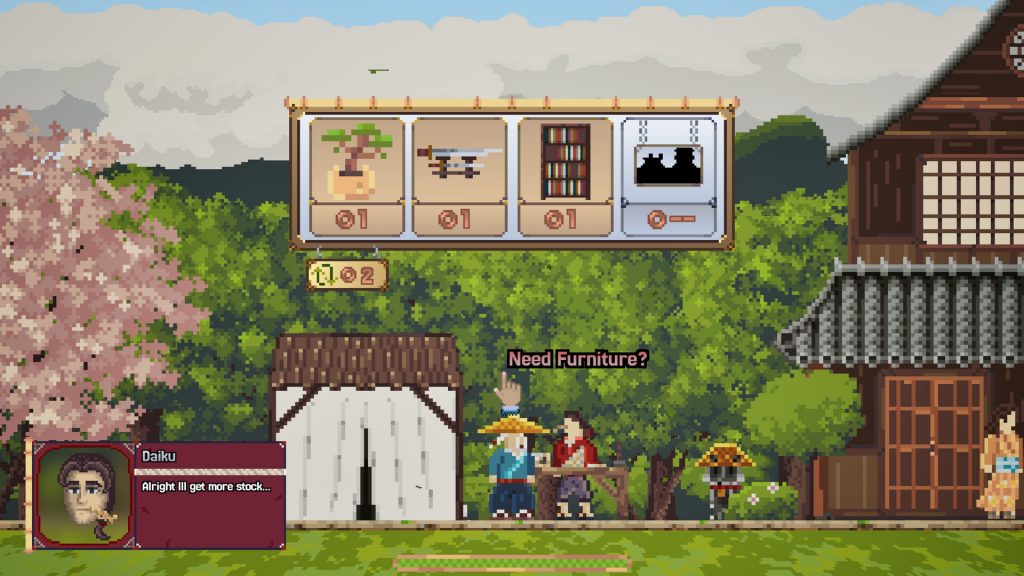
The villager quest structure adds the relationship dimension that pure resource loops lack. Getting to know specific villagers through their requests and interactions transforms the tea house from an abstract commercial operation into a community institution. Players become invested in the villagers as characters rather than as customers, which is the qualitative difference between good life sims and merely mechanical ones.
The home customization element is the life sim genre’s standard third pillar (alongside the primary activity loop and the social/relationship dimension). Interior design in your own space provides the creative expression that the externally-directed tea house doesn’t — the tea house is organized around what others need; your home is organized around what you want.
The Raccoon Dog Detail
The tanuki (raccoon dog) petting interaction is a small detail that reveals significant things about the development philosophy. Raccoon dogs are mythologically important in Japanese folklore — tanuki are shapeshifters, tricksters, good-luck symbols, associated with the Edo period in popular culture. Including them as interactive elements rather than mere background scenery, and specifically making them pettable, signals that the world is designed for relationships rather than efficiency.
Games that include pettable animals almost always understand something important about what makes cozy games work: the experience value of small, low-stakes, emotionally warm interactions that have no functional purpose. You don’t pet the raccoon dog to gain a stat bonus or to unlock content. You pet it because it’s there and it’s nice. This kind of purposeless warmth is exactly what Gendo the Gatherer appears to be optimizing for.
The UnintentionalLogic Origin Story
The development team’s background is worth taking seriously despite its apparent humor. An electrical engineering student brings systems thinking — understanding how components interact, how feedback loops work, and how to design reliable processes. An architecture student brings spatial reasoning — understanding how environments feel, how people move through spaces, how visual design communicates atmosphere and purpose.
These aren’t obvious game development backgrounds, but they’re more applicable than they might seem. A life sim that alternates between outdoor gathering and indoor cooking and serving has significant systems design requirements (inventory, resource transformation, demand balancing). The visual design of a cozy game — how the spaces feel, how much room the player has to breathe, what draws the eye — is fundamentally architectural thinking applied to virtual environments.
The “mostly fail” self-description, read alongside the media coverage and positive playtest attention, suggests a team with appropriate epistemic humility rather than actual failure. Capsule Computers, Blue’s News, Gematsu, and WorthPlaying covering the playtest means the concept has been communicated to the press, which is meaningfully harder than it sounds for a debut project from a two-person student team.
Who This Is For
Strong fit for: Dave the Diver fans who wanted that game’s split-activity structure without its tension and urgency; Stardew Valley and Story of Seasons players who appreciate daily routine loops with gathering and relationship-building; Japanese culture and Edo-period aesthetics enthusiasts; cozy game devotees seeking cultural specificity beyond the typical Western fantasy farm setting; players who found Woodo or Unpacking appealing; anyone whose ideal game session involves thirty minutes of calm activity rather than extended intensive engagement; ASMR-adjacent sound design appreciators.
Cautious fit for: players who specifically need mechanical challenge or goal pressure to stay engaged; anyone who found Dave the Diver satisfying specifically because of its tension rather than its structure.
Less ideal for: players seeking action, conflict, or competition; anyone who dislikes resource-gathering loops regardless of their calm presentation; players expecting narrative depth over atmospheric experience.
What to Watch For
A few questions will shape Gendo the Gatherer‘s Q4 2026 full release.
The first is content depth across an extended playthrough. The core loop — gather, cook, serve, decorate — is appealing in concept; whether there are enough ingredient varieties, cooking combinations, villager relationships, and forest variations to sustain engagement across the full game without becoming repetitive will determine the experience’s staying power.
The second is whether the villagers’ relationships develop meaningfully. Life sims often promise relationship-building but deliver shallow character differentiation. Whether the specific villagers of Gendo‘s Edo village become genuinely distinctive characters through their quests and dialogue will affect how emotionally invested players become.
The third is the cooking system’s satisfaction level. Cooking games vary enormously in how much attention they pay to the preparation process versus simply converting ingredients to dishes. Whether Gendo‘s cooking involves meaningful engagement or is primarily a transformation system with nice audio will affect the loop’s core satisfaction.
The fourth is the balance between procedural forest variation and sense of place. Procedural generation that produces too much variation can undermine the sense that you’re exploring a specific, remembered forest. Too little variation and the gathering becomes routine. Whether the system finds the right balance — familiar enough to feel like a place you know, varied enough to feel worth visiting daily — will be key to the experience’s daily-return quality.
The Takeaway
Gendo the Gatherer is the cozy game proposition that Dave the Diver‘s structural DNA was always capable of producing if you removed the tension and replaced it with deliberate calm. An electrical engineering and architecture student team’s debut project has no business being as conceptually confident as the “Dave the Diver, but cozy” framing suggests — and yet the media attention from the playtest, the elegance of the Edo-period setting choice, and the specific design details (pettable raccoon dogs, procedural forest, knife-on-board audio texture) suggest a team that understands exactly what kind of experience they’re making.
For cozy game enthusiasts specifically, the Edo-period setting provides cultural specificity that distinguishes Gendo from the European pastoral fantasy default. Tea houses, forested mountain paths, Edo-era village architecture, and mythologically significant raccoon dogs make this a specific place rather than a generic cozy backdrop.
The raccoon dog is there. The tea house needs to be opened. The forest has today’s version of itself ready for exploration. And the fire that needs lighting to prepare for tonight’s service is the same fire that will warm the whole tea house when the evening customers arrive.
That’s the loop. For the players it’s designed for, that’s enough.
Q4 2026. One day at a time in Edo.
Information regarding ‘Gendo the Gatherer’
| item | detail |
|---|---|
| Developer / Publisher | UnintentionalLogic (2-person team of students from the Department of Electronic Engineering and the Department of Architecture) |
| Genre | Cozy Gathering Adventure / Life Sim / Showkeeper / Cooking Simulation |
| Release platform | PC (Steam) |
| Scheduled for release | Q4 2026 |
| Playtest | June 23–30, 2026 (Free for one week only) |
| background | Japanese Edo period rural village |
| Core Loop | Gathering (Forest) → Cooking (Slicing, Steaming, Cooking) → Serving (Tea House) → Interior |
| Key Features | Ever-changing forest / Petting raccoons / Villager quests / House customization |
| Comparison game | Dave the Diver (Cozy Version) |
| Art style | Edo period-inspired 2D pixel art |
| Main Keywords | Cozy, Edo period, gathering, tea house, cooking, raccoon, pixel art, life sim |
| Steam Page | Go to Wishlist/Playtest |