A Shrinking Market and a Shaken G-STAR
Mobile gaming, which took off with the spread of smartphones in the early 2010s, rapidly reshaped the market and became the No. 1 device platform. It was a revolution — a shift in the dominant platform itself. As every established formula for development and success was overturned, Korea’s game market, struggling to find its bearings, recorded its first-ever contraction in 2013. It was the period in which the separate PC online ecosystem and the carrier-driven feature phone ecosystem merged into a single massive axis: the smartphone.
Korea’s major publishers then adapted to mobile and led domestic hits, while smaller studios found overseas success through “one-build global launches” without foreign publishers.
After growing sharply on the pandemic boom, Korea’s game industry has in recent years faced both internal pressures — intensifying domestic competition — and external ones, such as the rise of video and short-form platforms, OTT services, and social media as alternative entertainment. Growth has stalled, and the industry can feel that slowdown accelerating.
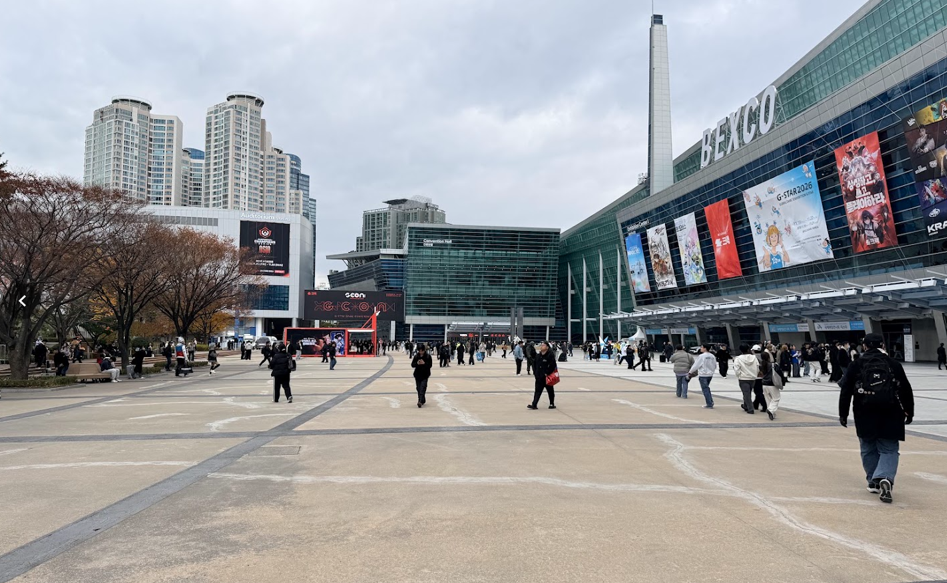
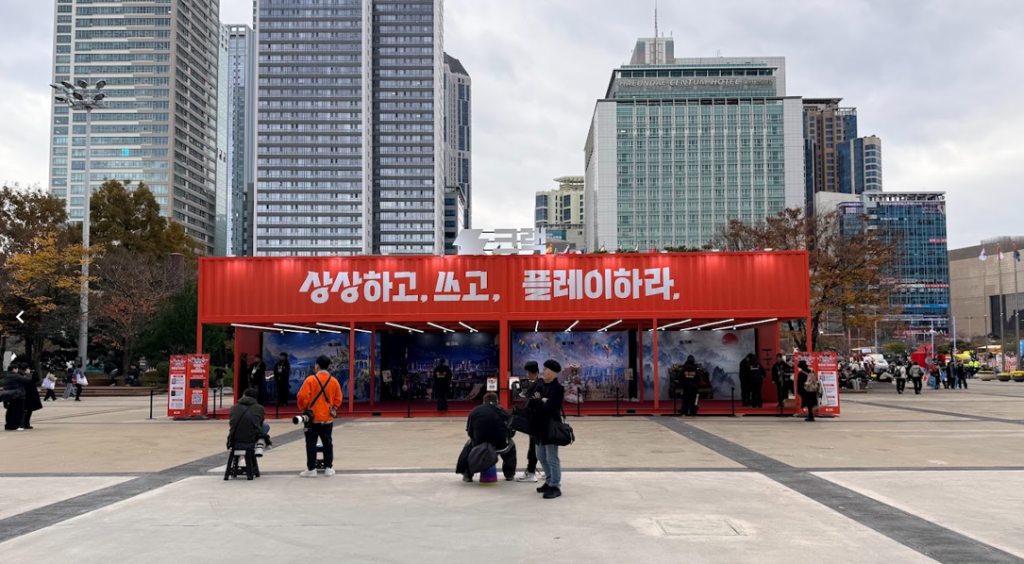
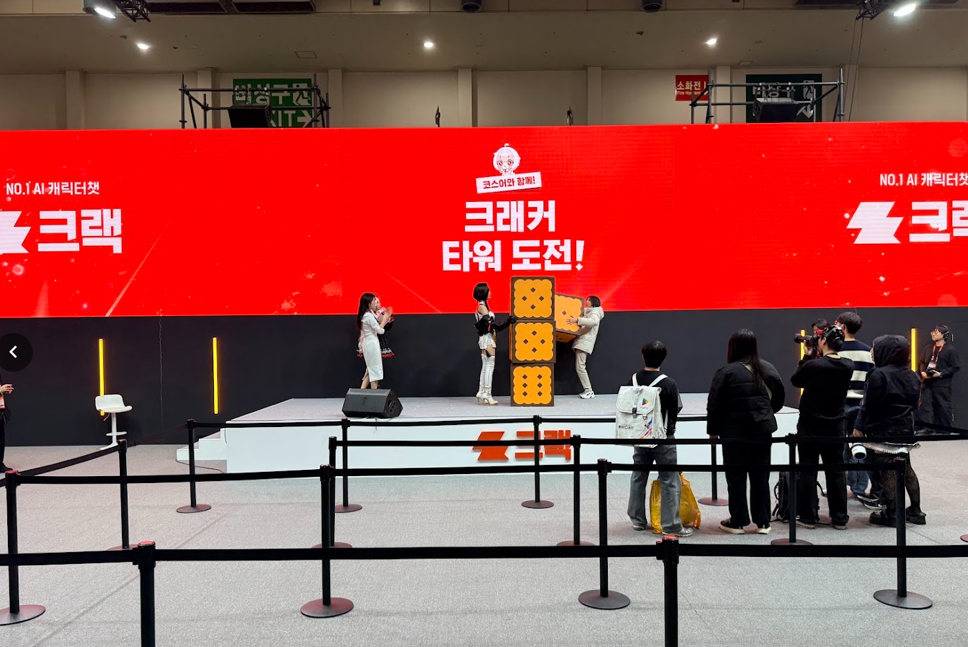
When the market changes, trade shows must evolve too. If the environment shifts but the participants don’t, decline is inevitable; following old patterns leads only toward sunset. This year, major publishers including Nexon, Netmarble, and NCSOFT chose AGF 2026 (Anime X Game Festival 2026), where loyal core fandoms gather, over G-STAR’s broad public stage. Their place was filled by Hyundai Motor Company and AI company Wrtn. On the Thursday G-STAR opened, the BEXCO plaza — which in past years was packed with outdoor booths and crowds — held just one booth, Wrtn’s “Crack,” making the show’s diminished stature palpable.
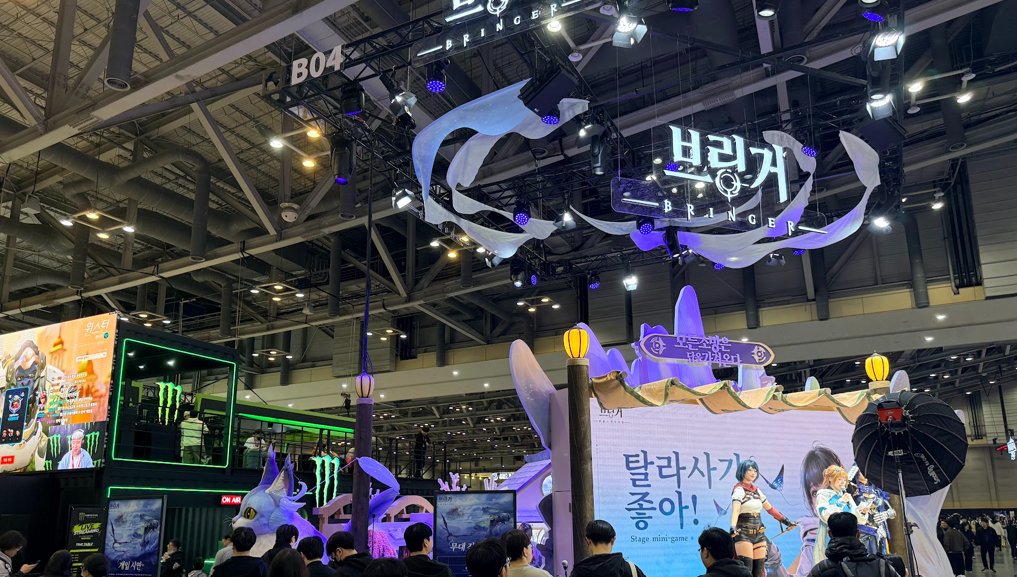
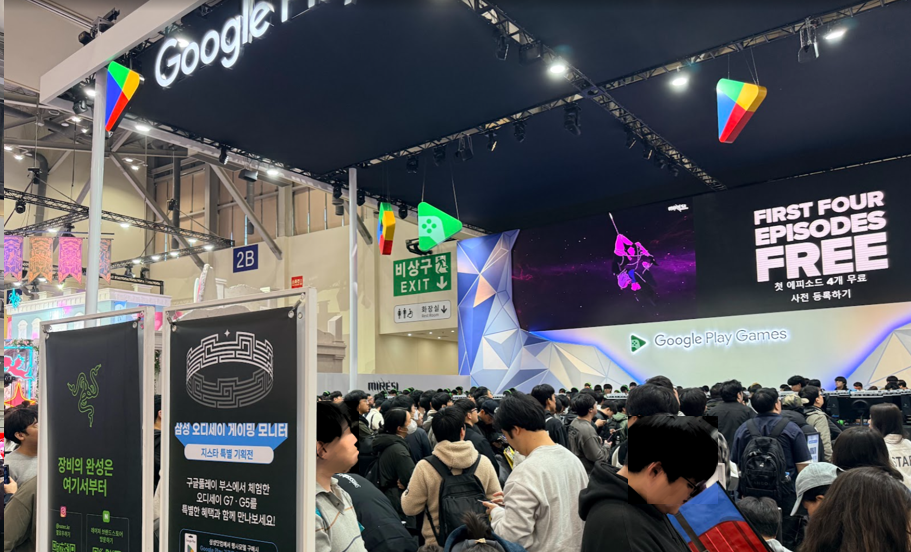
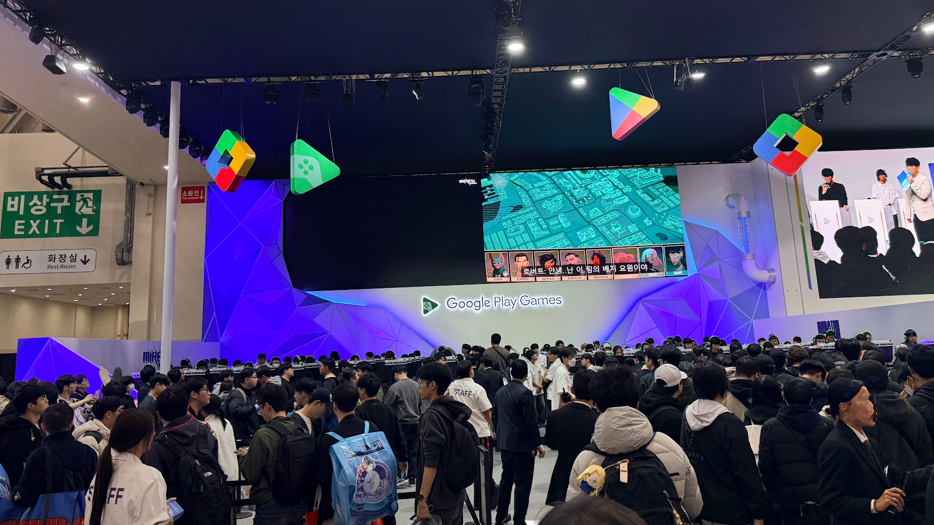
Of course, the large booths inside the halls — Korean and international publishers showing major titles, plus Google Play — were still busy. But it wasn’t enough to ease the disappointment of industry veterans who remember G-STAR in its prime.
Main Sponsor “Crack” Raises the Question of What Counts as a Game
This year’s main sponsor, Wrtn, emphasizes that its AI character chat service Crack is a game. The very need to explain and insist on that, paradoxically, reveals a gap with the public’s intuitive perception. That’s not to draw a line declaring Crack isn’t a game. It’s simply a market reality that this year, venture capital shifted heavily from games toward AI chatbots and related content.
The arrival of new technology and new kinds of content for players to enjoy is something to welcome and support. Even if its foot traffic fell short of its generous exhibition space, I hope Crack grows revenue, drives global exports, creates jobs, and builds a virtuous cycle with the existing game industry — and that it keeps participating in G-STAR as a key player in broadening the event’s reach.
Indie Games Take Center Stage in Hall 2 — Recalling GDC
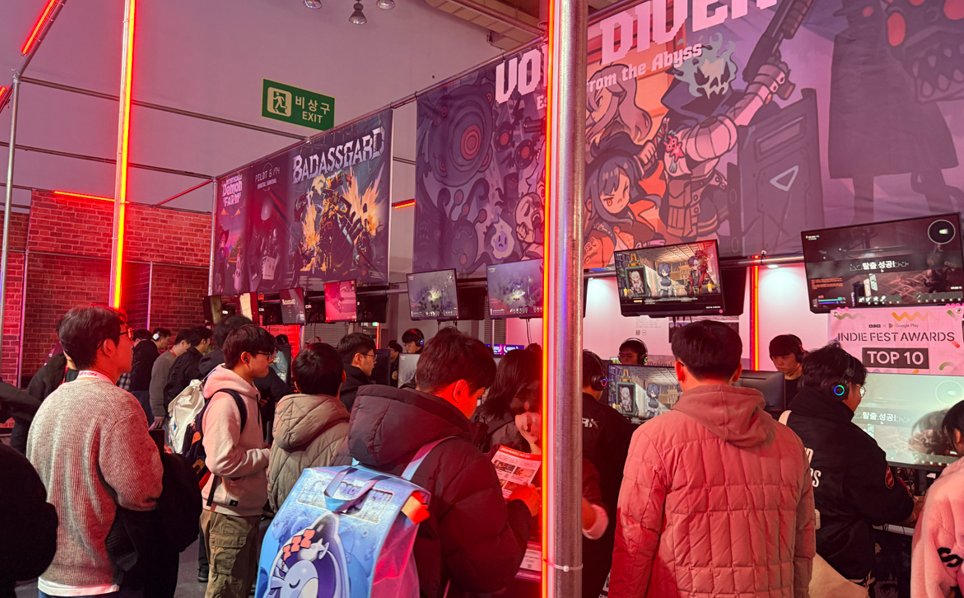
The real hope filling Hall 1’s empty spaces was on the first floor of Hall 2, at Indie Showcase 2.0: Galaxy. Combining individual indie developer zones (Selected Indie) with global partners like Unity, Devolver Digital, and Steam Deck, the space was separate from Hall 1 and comfortable to navigate — taking up what felt like nearly half of Hall 2’s first floor and firmly establishing itself as one of the show’s main attractions.
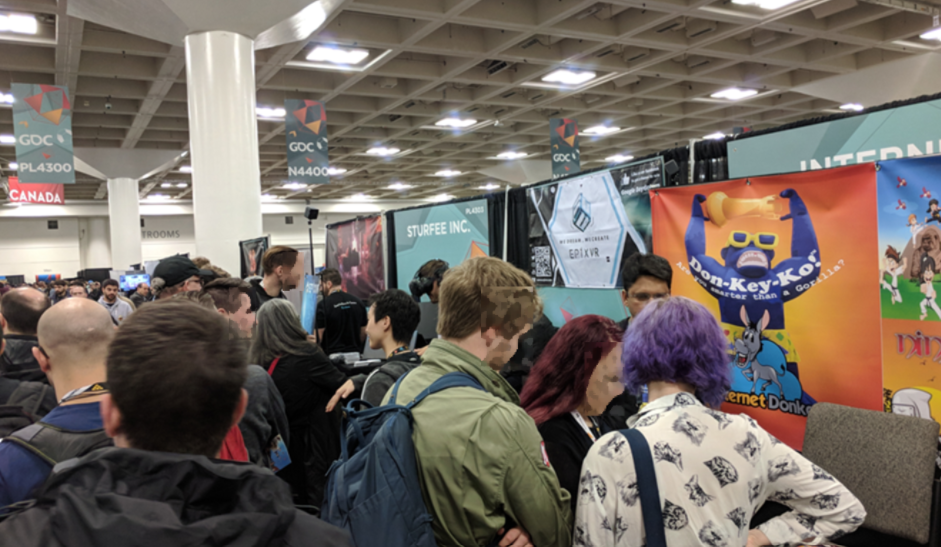
It reminded me of exhibiting alongside Korean indie developers at GDC 2018 in San Francisco. What I envied most then wasn’t the glamorous conferences, roundtables, or the massive booths of global publishers and giants like NVIDIA. It was the culture and scale of an ecosystem where indie developers from around the world gathered in a dedicated exhibition space to connect freely. The overall scale and number of participants still fall far short, but at this year’s G-STAR indie hall, I finally saw the opening act of that healthy ecosystem.
How Are 2026’s Indie Games Different From Before?
During the smartphone-driven paradigm shift of the early 2010s, small studios also proliferated — born, willingly or not, from big-company restructuring and the ups and downs of mid-sized firms. Small mobile studios aiming for investment and publishing deals coexisted with developers who, empowered by advances in game engines, pursued independent, creative indie work while worrying about survival. Even then, plenty of voices inside and outside the industry said indies deserved attention. But today’s indie ecosystem faces three decisive changes that make it incomparable to that era:
- AI is transforming development. In the 2010s, developers were profoundly shaped by the spread of mobile marketplaces that let them launch globally without a publisher, and by Unity’s push for “the democratization of development.” Today, beyond those shifts, AI is breaking down the physical limits of solo developers and small teams themselves.
- K-culture’s global standing has risen. Korea is now a cultural powerhouse people around the world want to visit. K-culture’s heightened recognition and goodwill are drawing overseas game professionals to Korea and serving as a powerful bridgehead for Korean indie developers to engage directly with the global market.
- Device platforms have diversified. Developers no longer rely solely on PC online and mobile. Korean indies are expanding into Steam (PC) and consoles, and as that experience accumulates, developers are increasingly sharing development, publishing, and marketing know-how for new platforms.
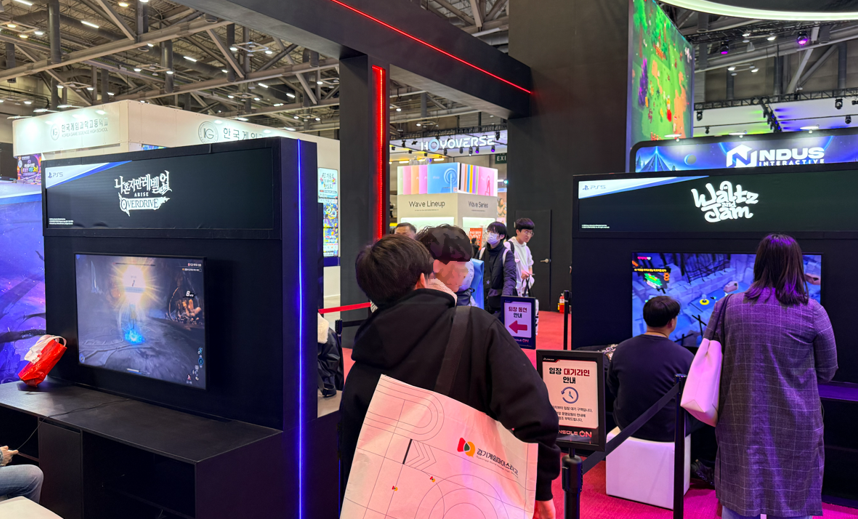
At this G-STAR, the joint booth that KOCCA ran with Sony (SIE), gathering only Korean console titles, was the most impressive space in Hall 1 — a chance to preview a range of new Korean console games and see the fruits of years of console development policy.
The path of indie developer Floatric, which I met at the console pavilion, symbolizes this change. Over the past decade or so, Cheongju-based Floatric took on everything from original, creative games to IP-based mobile games built for commercial success — expanding its team with support from the Chungbuk Global Game Center (Cheongju Cultural Industry Promotion Foundation) and KOCCA — but never quite broke through. Then, by actively adopting AI-powered development, it opened a path for CEO and designer Choi Kyung-bin to lead development on his own. This year, the studio released Blind Samguk on Steam and achieved meaningful commercial results. Building on that experience, it developed Rustown, a story-driven stealth adventure that achieves a high level of polish with a minimal team, and proudly showcased it at the console pavilion.
The Decisive Moment When the Underdog Flips the Game
Success doesn’t come from hard work alone. The moment the barriers keeping underdogs from leading a market come down always arrives when the industry’s paradigm shifts. That’s what happened when Korea moved past a packaged-game era crippled by piracy to become the birthplace of online gaming, giving rise to today’s major publishers. Conversely, when the iPhone’s arrival in Korea was delayed by years, and the country felt the shock of the mobile transition late — alongside the success of Kakao games — global newcomers who embraced the smartphone ecosystem early, like Finland’s Supercell (Clash of Clans) and the UK’s King (Candy Crush Saga), were already dominating the world, earning trillions of won from a single game.
Adaptation and innovation happen first not among giants reluctant to abandon massive revenues and organizations, but among the nimble. Riding the favorable tide of K-culture, Korean indie developers will use AI to break through their limits, adapt quickly to the new wave of platform diversification, and deliver global results.
That is why we must pay attention to indie games now — and support them more generously than ever.
— Justin, Columnist