The USB drive appeared in a quiet alley, left by someone unknown. Inside it: an old wireless network built in the 1990s and forgotten since. The moment you connect, you find that the network isn’t empty. Residual users are still there — some friendly, some destructive, some already dead. And somewhere in the abandoned channels, the story of a group of cyber activists who rose up against a megacorporation is waiting for someone to piece it together.
Radiotext from solo developer Alp Arslan (whose tabletop RPG work earned a Silver ENNIE Award) arrives September 30 on Steam, with a free demo available now. The game has been in active development since February, when the first demo released, with continuous updates adding new characters, async multiplayer, mod support, and Steam Next Fest participation.
The Forgotten Network as Setting
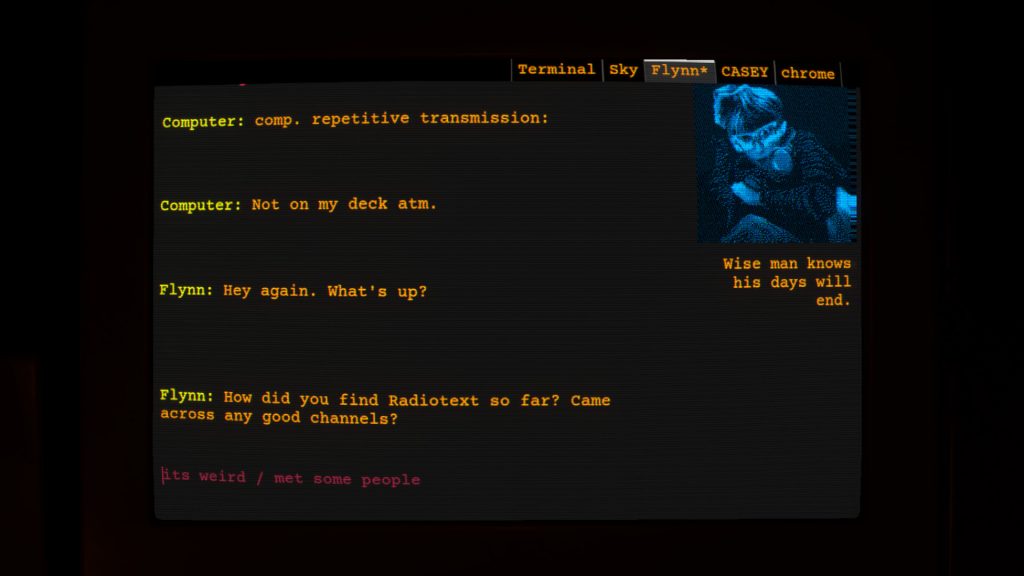
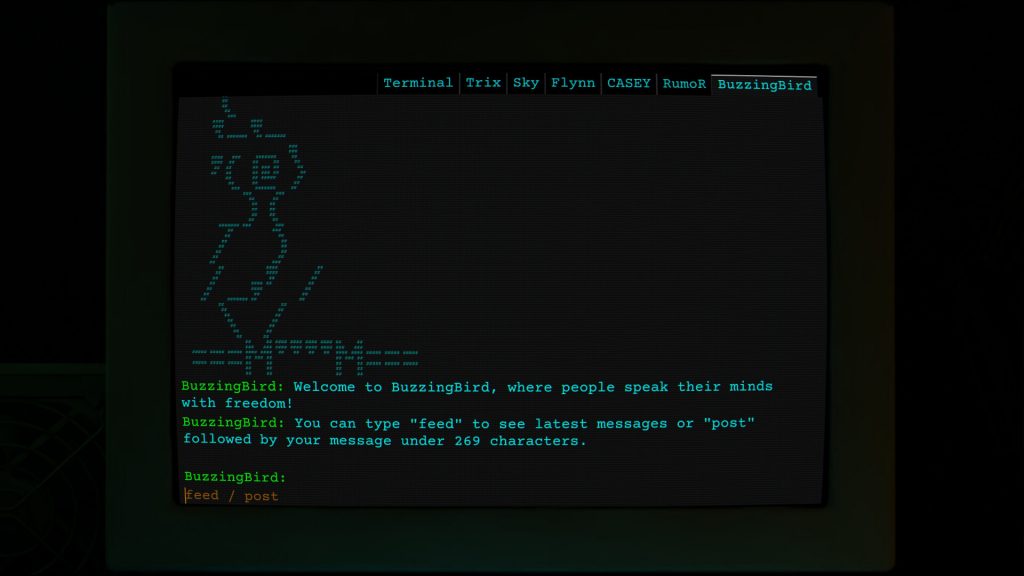
The 1990s wireless communication network setting carries specific cultural resonance that contemporary internet settings don’t. The early-90s internet and adjacent networks were spaces of particular character: text-based, slow by necessity, populated by people who specifically chose to be there rather than arriving by default, governed by informal social norms and dense with subcultures that the modern internet has absorbed or replaced.
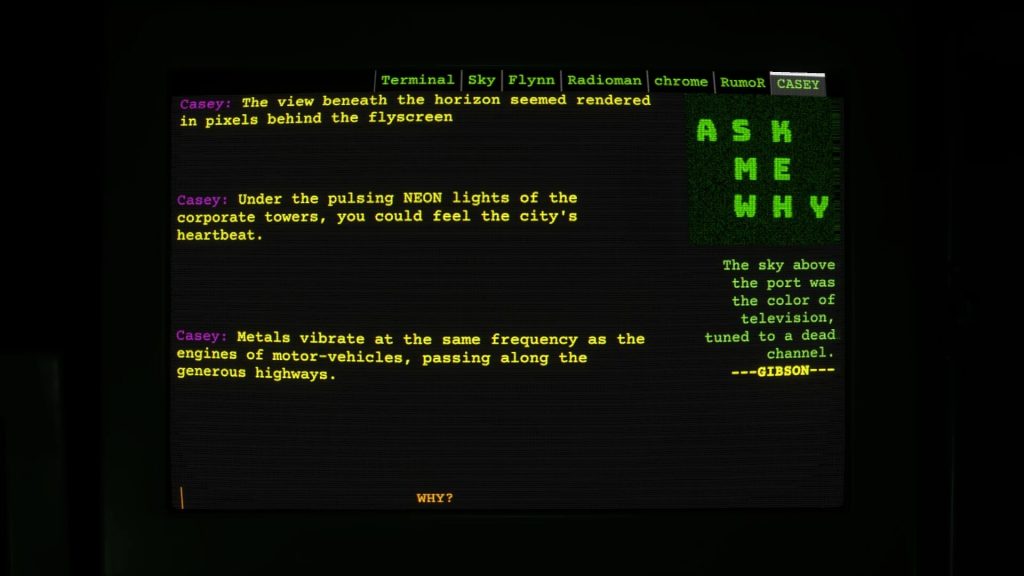
A forgotten network — one built for radio communication that was abandoned rather than developed — maintains the specific qualities of that era without being the internet itself. The users who remain are “residual”: people who found the network before it was abandoned, or whoever those people brought in before it fell off everyone else’s radar. The small, specific community that forms around any niche communication channel is the social landscape Radiotext is built within.
The cyberpunk corporate resistance narrative — activists who organized on the network against a megacorporation, whose story is now distributed across abandoned channels for a newcomer to reconstruct — gives the text-based exploration directional purpose. The player is an investigative archaeologist of an old digital space, piecing together what happened from the traces left by the people who were there.
The Trust Mechanics
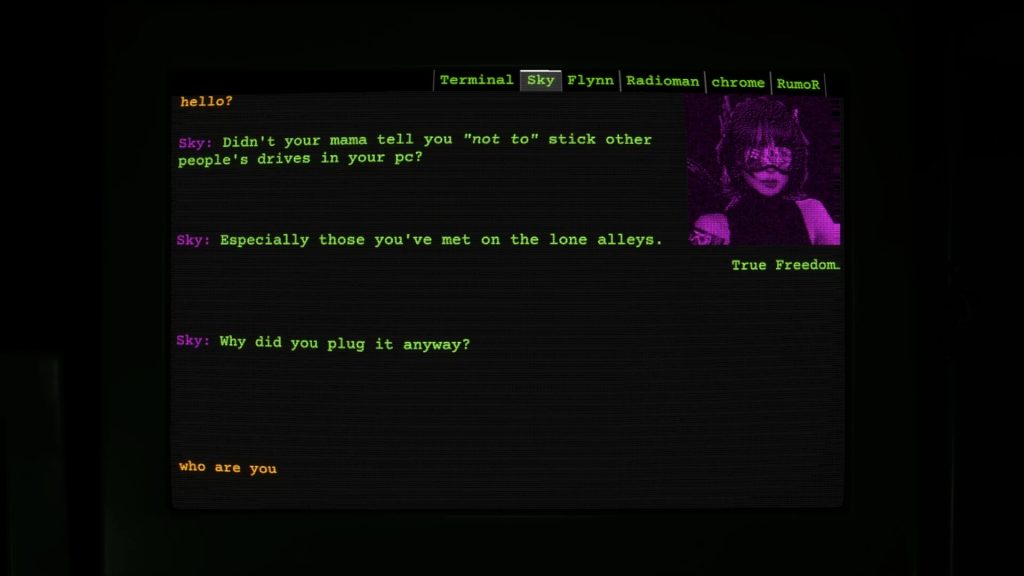
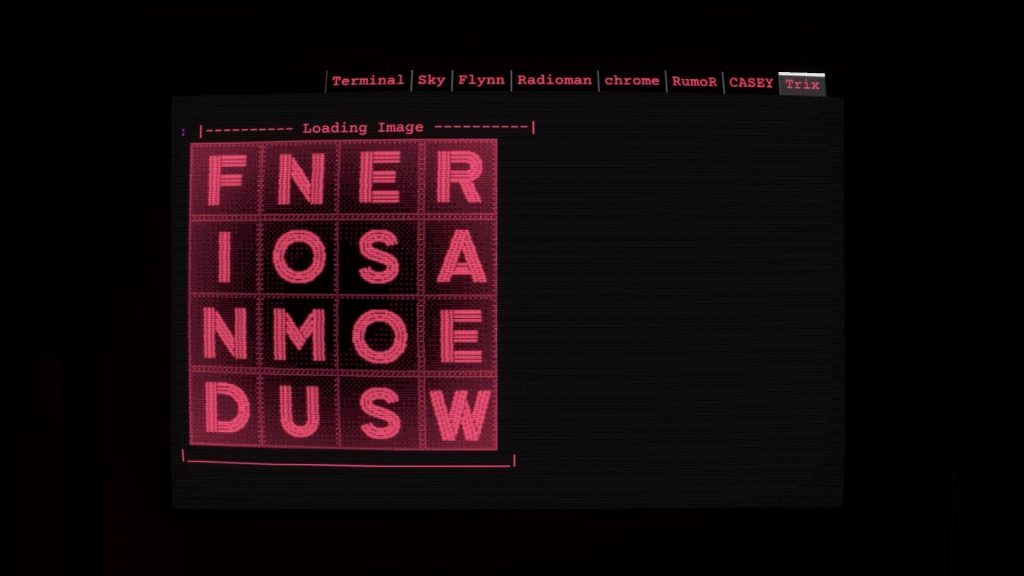
The social design of Radiotext is built around information asymmetry and unreliable narrators — conditions that the forgotten network setting makes structurally appropriate. Some users lie. Some overshare. One is almost certainly an informant. The player can’t verify what they’re told; they can only accumulate perspectives and look for contradictions.
This creates the specific intellectual engagement of detective games applied to social dynamics rather than physical clues. The “evidence” the player gathers is testimony — statements from people with different knowledge, different agendas, and different relationships to the truth. Triangulating across these to understand what actually happened requires the same kind of critical skepticism that the game’s setting models: the paranoid, careful information culture of people who believe they’re being watched.
The choice-driven branching means the conversations the player initiates, and the responses they give, shape which parts of the network open and which remain closed. Not everything is findable on a single playthrough — the post-story open network maintains ongoing exploration access, but the story-shaped investigation is finite and choice-dependent.
The Technical Approach
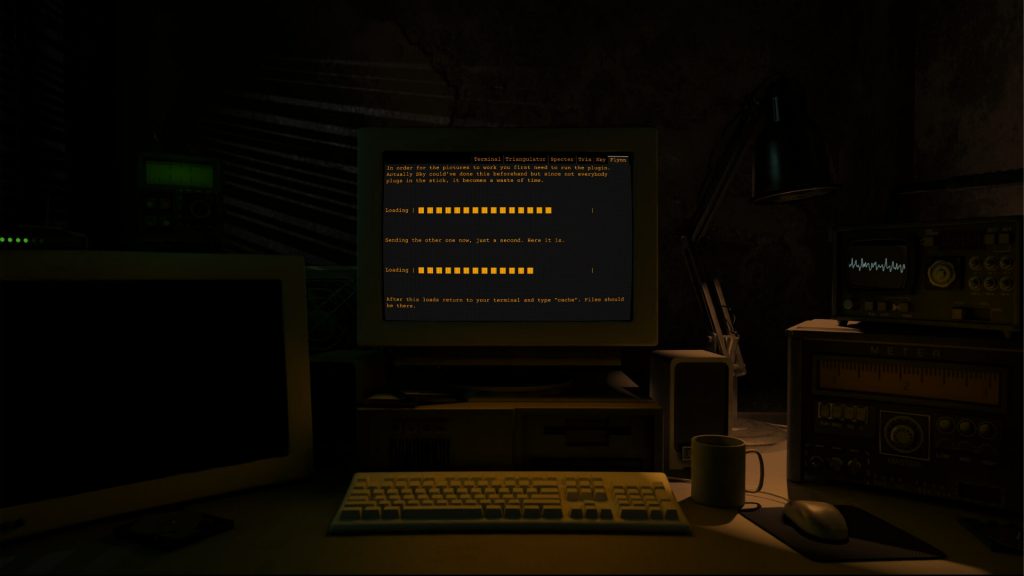
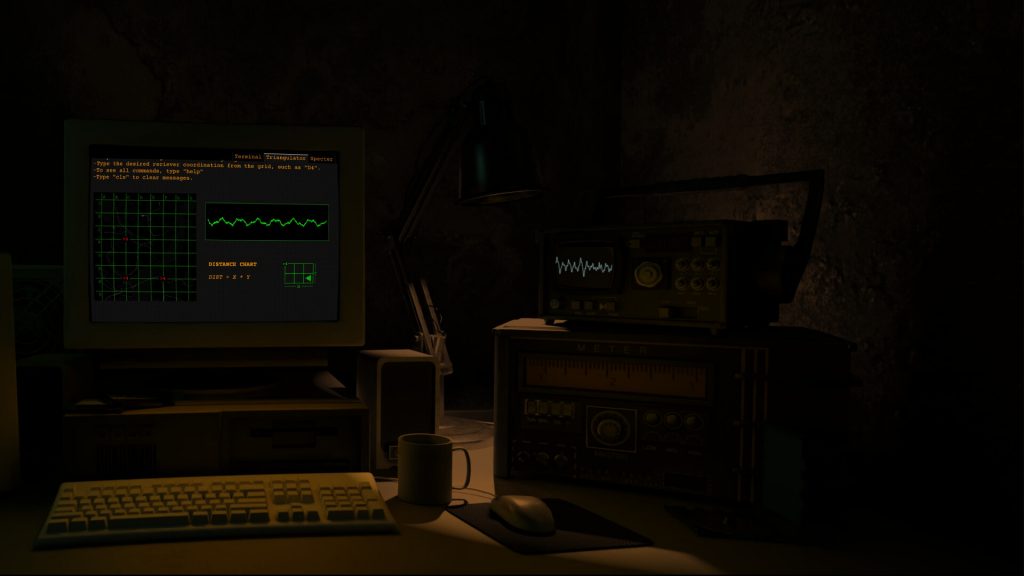
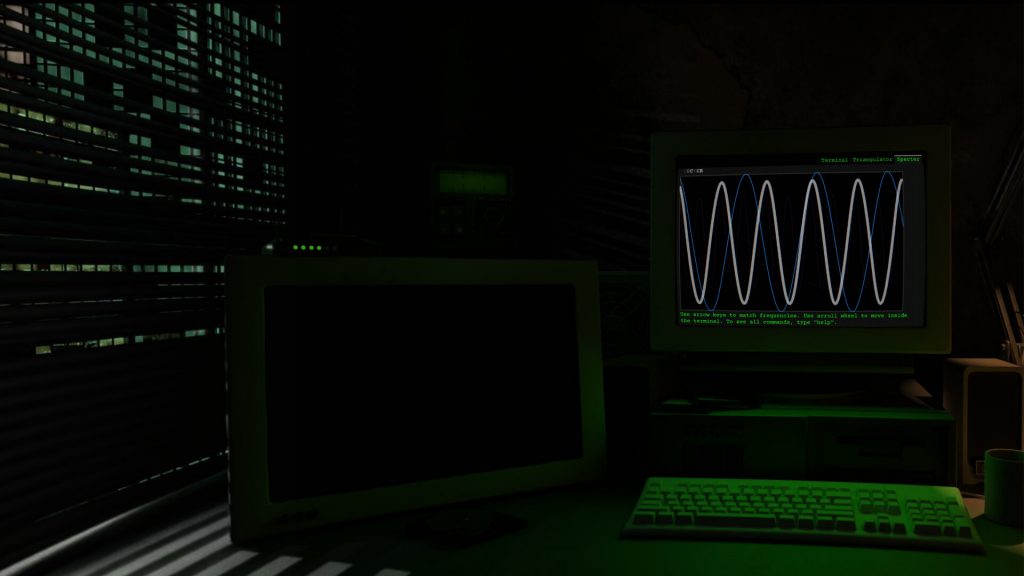
The 2D-presenting-as-3D architecture achieving ~200MB, including 4K environments, is the technical achievement that deserves specific acknowledgment. Game file size has grown dramatically as resolution standards have increased; a game that looks like it’s running 3D environments but achieves it through 2D techniques with a 200MB footprint is both technically interesting and practically significant for players with bandwidth or storage constraints.
The modding guide inclusion from day one — before the game has even fully launched — signals a developer thinking about the community that can be built around the game’s content creation tools rather than only the content the game itself delivers. A text-based network exploration game is a particularly appropriate modding target: players who want to create their own channels, characters, and mystery narratives have a relatively approachable canvas to work with.
The async multiplayer integration — other players’ messages appearing as NPC messages within the network — is the specific addition that makes Radiotext‘s network feel alive without requiring real-time concurrent players. The 1990s network aesthetic actually makes this more resonant: reading a message left by someone who has since moved on is precisely what the setting’s residual-user concept implies. You don’t know if a message is from an NPC or a past player. The uncertainty is the point.
The Tabletop RPG Background
Alp Arslan’s Silver ENNIE Award for Historica Arcanum: Serenade for the Damned is a tabletop RPG industry recognition that transfers specific skills to video game development: world-building with limited visual resources, narrative design that operates through text and implication rather than cutscenes, and the ability to create interesting characters from compact descriptions. These are directly applicable skills for a text-based network exploration game.
Radiotext being Arslan’s first video game project means the tabletop skills are being translated into a new medium rather than applied within an established game development practice. This is a different creative challenge: the text and narrative skills transfer, but the software development, interface design, and player guidance dimensions require different expertise. The six months of demo iteration since February indicate the development process has been doing that translation work rather than simply porting a tabletop sensibility into a digital package.
Who This Is For
Strong fit for: interactive fiction and text adventure enthusiasts who want cyberpunk themes applied to 1990s network nostalgia; players who enjoy social deduction and unreliable narrator mystery; tabletop RPG players who appreciate Arslan’s previous work and want to see his world-building in a new medium; players who specifically want short, dense, complete narrative experiences (3-4 hours rather than 30+); moddable game enthusiasts who want to create their own network content.
Cautious fit for: players who want action or visual spectacle alongside the text-based investigation; anyone who finds short play times insufficient value regardless of density; players who want multiplayer to be synchronous rather than asynchronous.
Less ideal for: players who dislike reading-heavy games; anyone wanting combat alongside the social investigation; players seeking games with large production values over focused indie craft.
The Takeaway
Radiotext is an ENNIE-winning tabletop designer’s first video game — a 3-4 hour cyberpunk text-based hacking RPG set in a forgotten 1990s wireless network, with async multiplayer that makes other players’ messages indistinguishable from NPCs’ messages, modding support from day one, and a social deduction mystery organized around an untrusted network of residual users who may or may not be telling the truth about what happened to the activists who once organized here.
September 30. Free demo available now. The network is old, and most people have left. But someone dropped a USB drive in a quiet alley, and now you’re in.
Information related to ‘Radiotext’
| item | detail |
|---|---|
| Developer | Alp Arslan (Solo Developer) |
| Publisher | Alp Arslan |
| Genre | Interactive fiction, hacking simulation, cyberpunk, text-based RPG |
| platform | PC (Steam) |
| personnel | Single player (including asynchronous multiplayer elements) |
| Release date | September 30, 2026 (Free demo currently available) |
| Playtime | Approximately 3~4 hours (Complete story, free exploration available afterwards) |
| Reactions/Evaluations | No official reviews available (pre-release), positive reactions from demo and international media |
| Steam Page | Shortcut |