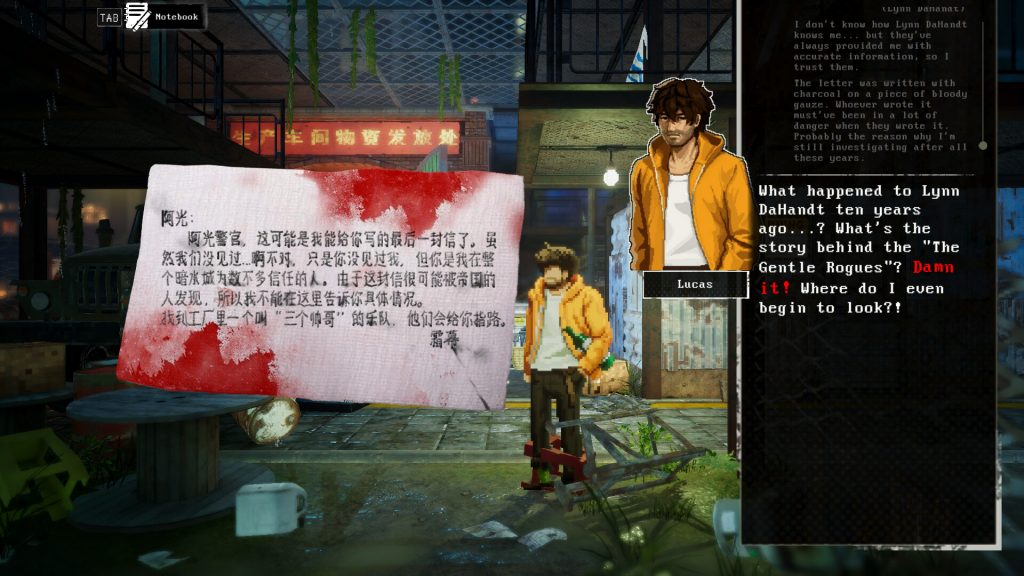
A police captain’s loyal dog dies under suspicious circumstances. Former detective Lucas, already haunted by an unidentified entity that has attached itself to his back, begins investigating. What looks like an animal death becomes the thread that unravels a decade-old conspiracy buried in the history of Darktide City — a city divided by war, carrying secrets in its abandoned industrial zones, flooded docklands, crowded temple streets, and walled urban districts.
Kill the Shadow from Shanghai-based Shadowlight launches August 5 on Steam, following a demo that earned a Very Positive 93% from 126 reviews and a TheGamer selection as one of Next Fest’s impressive demos. Phoenix Games handles publishing globally and in China. The free demo remains available for players who want to evaluate the investigation system before the full launch.
The Shadow Companion as Investigation Mechanic
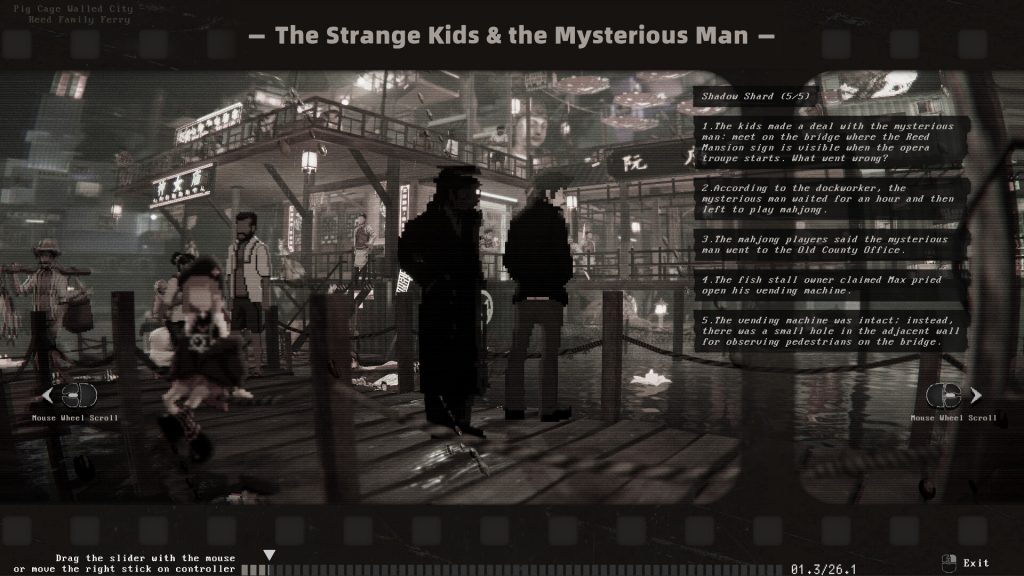
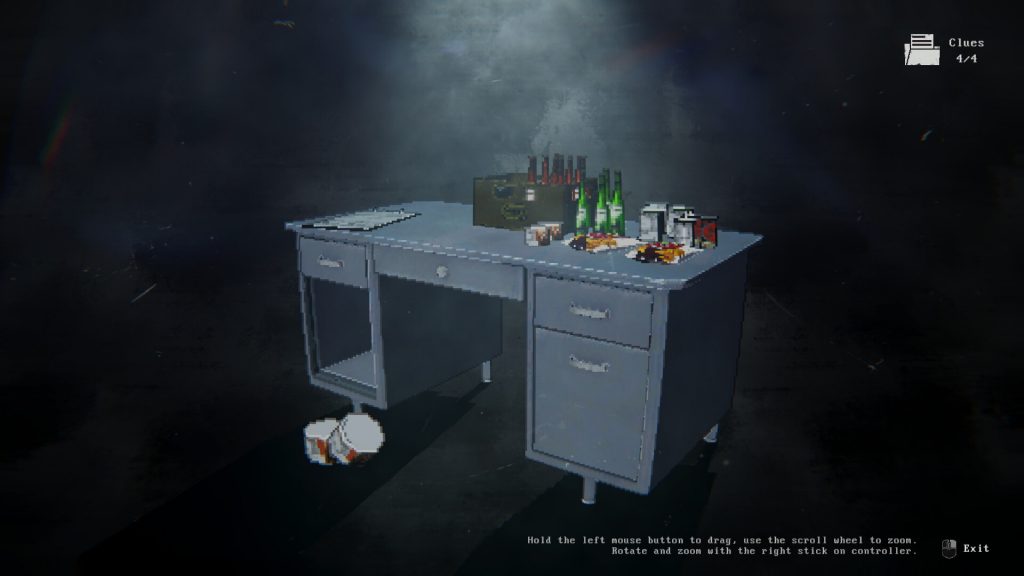
The “Shadow” — the supernatural entity attached to Lucas’s back — is the mechanic that distinguishes Kill the Shadow from standard detective games. Where most detective games give players evidence to examine directly, the Shadow can reconstruct the final moments of the dead: recreating what happened at a crime scene from the perspective of someone who was there.
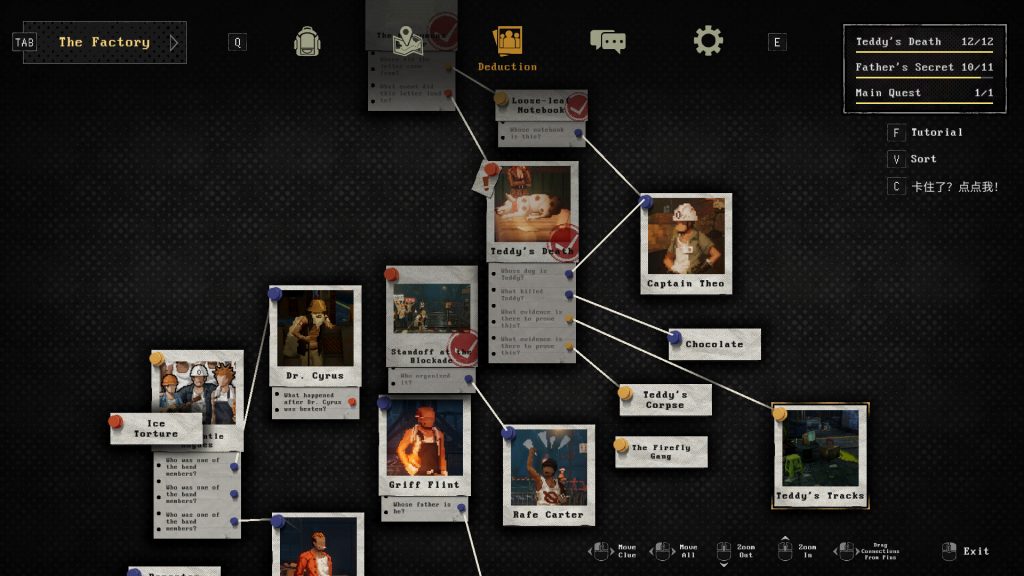
This creates a specific investigative tool with specific limitations. The Shadow’s reconstructions show what happened, but interpretation remains the player’s responsibility. A dead man’s last moments might show who he was with — but whether that person is a murderer or a witness depends on the player’s analysis of the scene. The Rewind system (which the developer substantially revised following community feedback on the demo) apparently allows scrubbing through reconstructed moments to identify when specific events occurred, creating a temporal investigation layer alongside the spatial evidence examination.
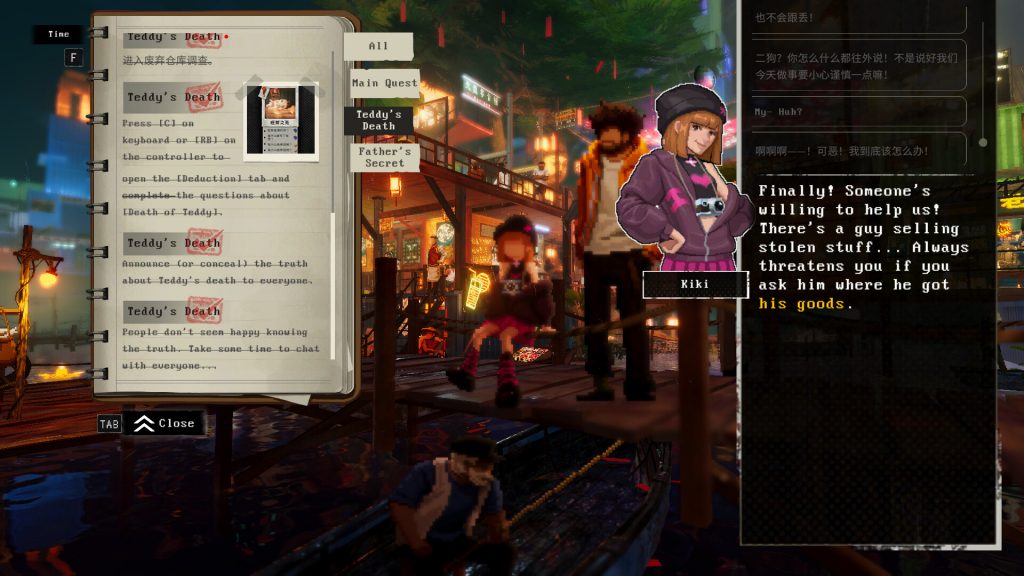
The combination of Lucas’s conventional detective work (interviewing witnesses, examining physical evidence, navigating social situations) and the Shadow’s supernatural capability (accessing the dead’s final experiences) creates an investigation structure with genuinely different information sources. Witness testimony can be false; physical evidence can be staged; the Shadow’s reconstruction is presumably more reliable but possibly harder to interpret. When these information sources conflict — when witnesses say one thing and the Shadow’s reconstruction shows another — the contradiction becomes the investigation’s central problem.
The Chinese Cyber Noir Setting
“Chinese-aesthetic cyberpunk noir” is the specific visual and cultural designation that Shadowlight is working within — not the Western cyberpunk tradition with its Japanese influence (Blade Runner, Ghost in the Shell, Neuromancer‘s Chiba City), but something grounded in Chinese urban and cultural imagery. The temple streets, the walled city districts, the harbor mythology — these are Chinese spatial and cultural references applied to a near-future divided city setting.
This specificity matters because cyberpunk as a genre has been developing regional variants that express different cultural anxieties through the shared framework of technological acceleration and inequality. Korean cyberpunk, Japanese cyberpunk, and now Chinese cyberpunk each bring different cultural preoccupations to the same structural genre. Kill the Shadow‘s Darktide City feels, from the descriptions and visual style, like it’s engaging with specific Chinese urban experience rather than applying Chinese aesthetics to a generic cyberpunk template.
The divided city narrative — a city split by war, with different districts bearing different histories and different relationships to what happened — is particularly resonant in the Chinese cultural context where urban division and historical trauma have specific meanings that non-Chinese players encounter as cultural specificity and Chinese players encounter as cultural familiarity. The ambassador’s disappearance at the temple festival, the decades-old grievance at the shipwreck dock — these are narrative beats that function differently depending on the cultural frame through which they’re read.
The 3D Environment and 2D Pixel Art Hybrid
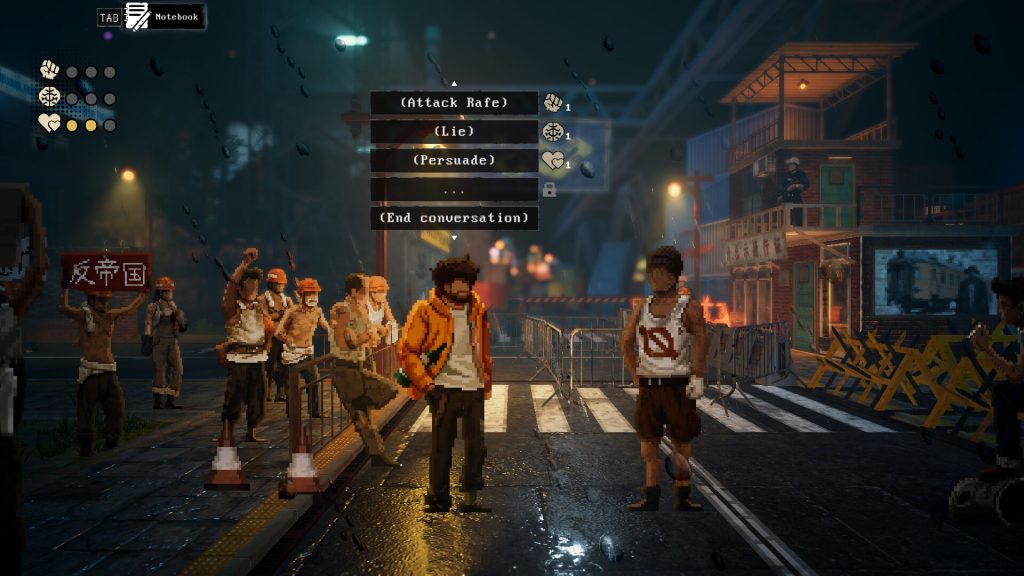
The visual combination of 3D environments with 2D pixel art characters is an aesthetic choice with specific precedents — Octopath Traveler‘s “HD-2D” being the most commercially visible — but Kill the Shadow‘s application creates a different tonal effect. Where Octopath uses the combination for a nostalgic JRPG register, Kill the Shadow is using it to create the specific visual tension of pixel art characters inhabiting a volumetric world: the flat stylization of the character designs against the dimensional depth of the environments.
This visual contrast reinforces the game’s thematic content. Characters who are somewhat stylized, somewhat simplified relative to the detailed world they inhabit — there’s something appropriate about this for a detective story where the people you’re investigating are presenting constructed versions of themselves while the physical environment retains evidence of what actually happened. The world shows more truth than the people in it.
The different district types — abandoned industrial zones, flooded harbor ruins, lively temple streets, walled city districts — provide the visual variety across which the investigation travels, each with distinct aesthetic registers that serve both exploration appeal and narrative geography.
The RPG Character Development
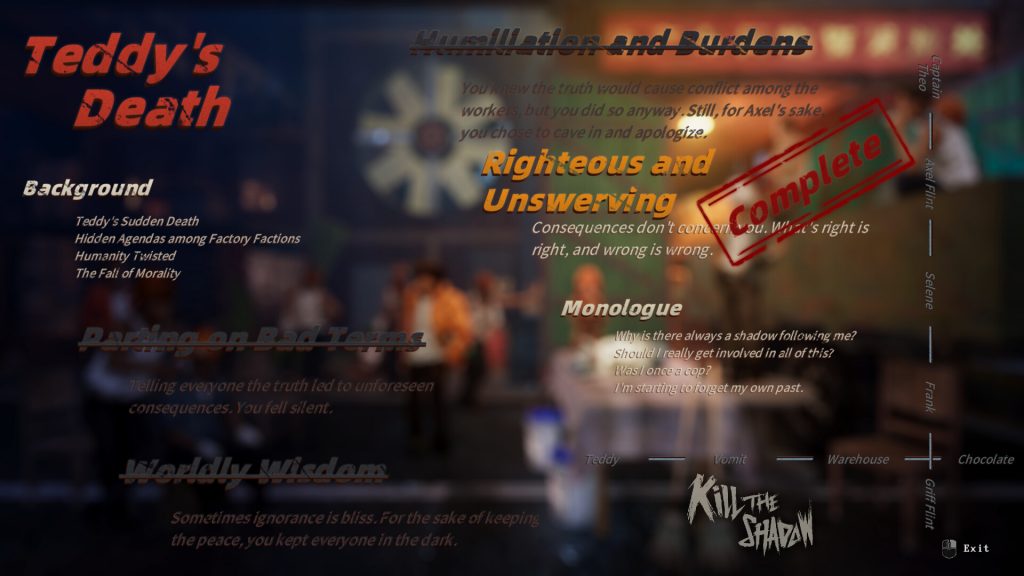
Three development paths (Charisma for dialogue-based solutions, Reasoning/Intelligence for evidence analysis, direct Strength for confrontation) create the character build dimension that makes Kill the Shadow an RPG alongside being a detective game. The player who builds toward Charisma navigates social situations differently than the player who builds toward Reasoning; both navigate them differently than the player who builds toward confrontation.
In detective games specifically, character build diversity creates different approaches to the same case rather than different difficulty levels. A high-Charisma Lucas might resolve the interrogation of a suspicious witness through conversation, extracting information voluntarily; a high-Reasoning Lucas might find the physical evidence that makes the witness’s denial untenable; a high-Strength Lucas might create the kind of pressure that forces a confession. All three paths lead to the same information but through genuinely different gameplay experiences.
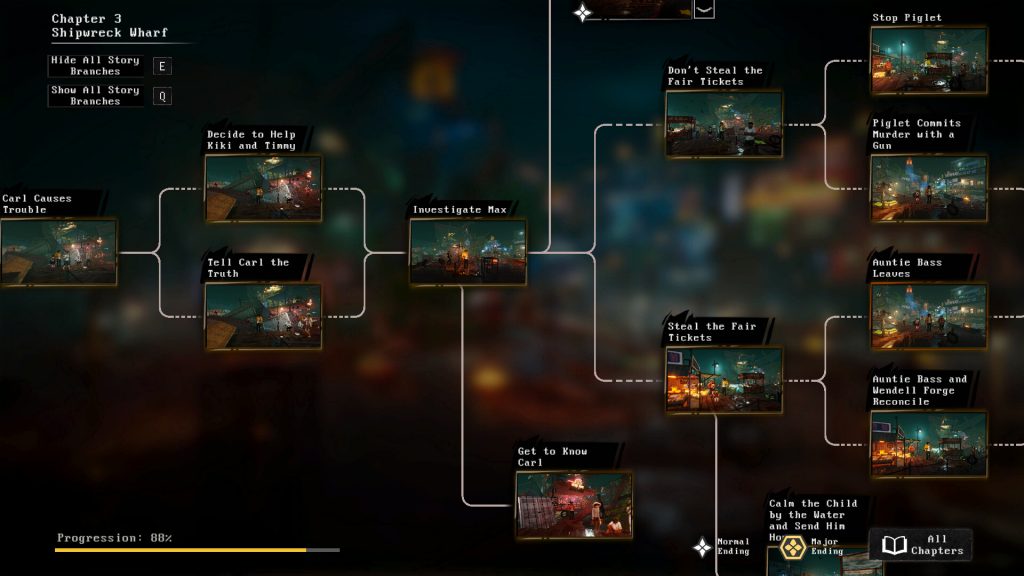
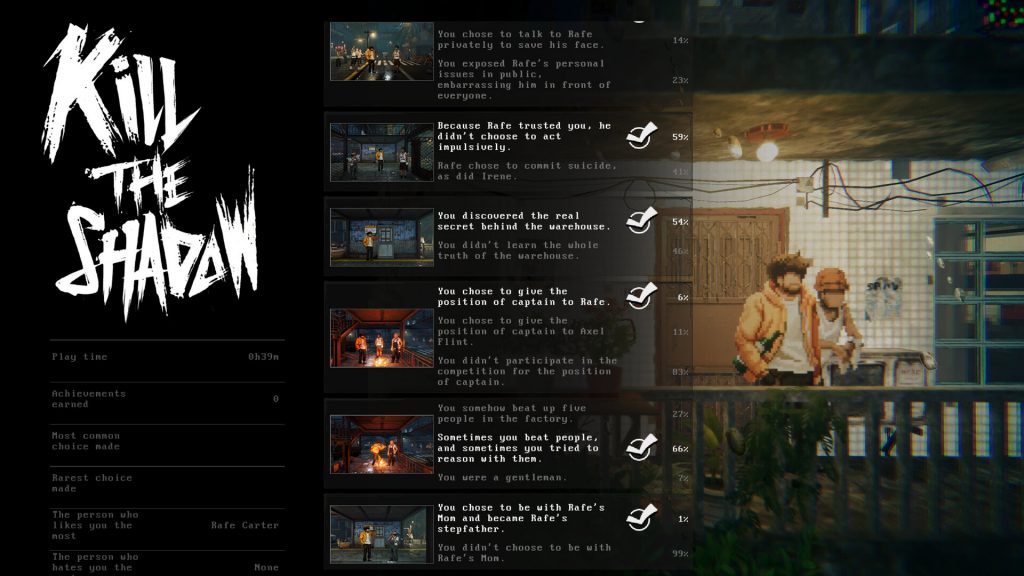
The choice-branching structure — whether to pursue justice, show mercy, or personally punish those responsible — adds moral weight to the resolution of each case beyond the investigative puzzle. How the player handles each case apparently influences what options are available for subsequent cases, creating the cumulative narrative that makes detective RPG stories feel like a career rather than a series of discrete puzzles.
The Next Fest Demo Revision
The developer’s post-Next Fest release of a substantially revised demo — with the Rewind system redesigned in response to community feedback — demonstrates the specific value of public demo testing. The Rewind system is the game’s most mechanically innovative element and presumably the one that generates the most varied player responses: some finding the time-scrubbing investigation engaging, others finding the interface or mechanic unclear.
That Shadowlight revised the core system rather than minor presentation elements suggests the feedback indicated a substantive UX problem rather than aesthetic preference. The 93% positive rating on 126 demo reviews follows the revision — the rating we see reflects the improved version rather than the original implementation, which matters for evaluating how the full game’s investigation system will land.
Who This Is For
Strong fit for: cyber noir detective game enthusiasts who want RPG character development alongside investigation mechanics; players interested in Chinese-aesthetic cyberpunk settings as cultural expression rather than aesthetic novelty; Disco Elysium fans who want the character build influence on investigation without that game’s extreme prose density; Next Fest demo players who tried the game and want the full story; players who find supernatural investigation mechanics (the Shadow’s crime scene reconstruction) genuinely interesting rather than gimmicky; narrative RPG fans who want meaningful moral choice alongside mystery solving.
Cautious fit for: detective game purists who want pure deduction without RPG progression systems; players who find cyberpunk settings aesthetically exhausted regardless of cultural variant; anyone who specifically wants action-focused gameplay rather than investigation and dialogue.
Less ideal for: players who dislike narrative-heavy experiences; anyone wanting multiplayer options; players who specifically prefer puzzle-focused mystery games over story-driven mystery games.
What to Watch For
The Rewind system’s final implementation is the primary evaluation question at launch. Crime scene reconstruction as a detective mechanic is genuinely novel in the specific form Kill the Shadow is implementing it; whether the revised version produces the comprehension and engagement that the original apparently didn’t will determine how the investigation’s core innovation is received by the full launch audience.
The narrative’s structural coherence across its multiple investigations — from the dog’s death through the ambassador’s disappearance to the shipwreck grievance and whatever connects them — will be the story evaluation. Detective RPGs that reveal their connections satisfyingly make all the separate investigations feel meaningful in retrospect; those that don’t make the earlier cases feel like filler before the actual plot reveals itself.
The Takeaway
Kill the Shadow is a detective RPG with a specific cultural identity (Chinese-aesthetic cyber noir), a specific mechanical innovation (the Shadow’s crime scene reconstruction via Rewind), and a specific narrative frame (a dead dog as the thread into a decade-old conspiracy). The 93% demo rating following a substantial Rewind system revision indicates the improved implementation is resonating with players who tried it. Phoenix Games’ dual role in Chinese and global publishing positions the game to reach both the Chinese market where the cultural specificity lands with familiar resonance and the international market where it lands as genuine cultural discovery.
Lucas has the Shadow. The Shadow has memories of the dead. And in Darktide City, whatever happened ten years ago is still happening to the people who survived it.
August 5. The demo is already available. The full investigation begins.
Information regarding ‘Kill the Shadow’
| item | detail |
|---|---|
| Developer | Shadowlight |
| Publisher | Phoenix Game(s) |
| Genre | Cyber Noir Detective RPG / Adventure |
| Release platform | PC (Steam) |
| Official release date | August 5, 2026 |
| Major systems | Crime scene reconstruction via shadows, Rewind (time reversal), RPG stat growth |
| end | Multiple endings based on choices |
| Steam Review (Demo) | Very positive (93%, 126 cases) |
| Official Channel | Discord, QQ, Bilibili, YouTube |
| Steam Page | Shortcut |
| Demo Page | Shortcut |