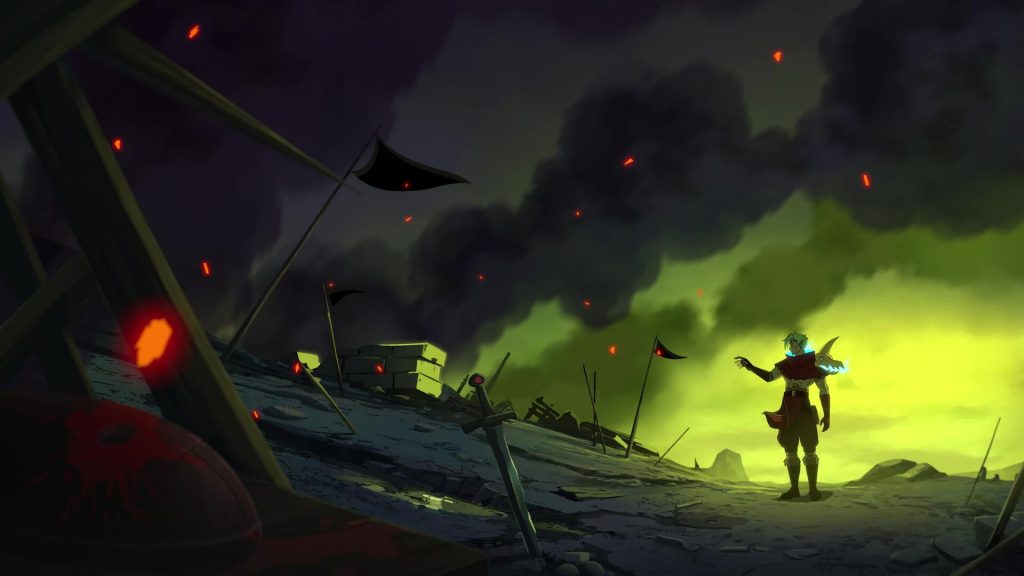
A clock appears atop the ruins of a village destroyed by an army called Destiny, dragging the player back to the moment of slaughter and trapping them in an endless time loop. To break the cycle and confront fate, you must save your family — and the only way forward is to master time itself, not as a constraint but as a resource. Clockfall, the action RPG roguelite co-developed by French indie studio Rever Games GmbH and publisher Radical Theory, has launched into Steam Early Access with a genuinely distinctive central conceit: time as the core resource of both progression and survival.
The game combines dungeon crawling with village defense into a hybrid roguelite where players secure survival time through combat and choices within repeating time loops, then use that time as the key resource for growth and strategy. It’s an ambitious structural experiment that, if executed well across its Early Access development, could bring something genuinely fresh to the increasingly crowded roguelite space.
The Time-as-Resource Concept
The defining innovation of Clockfall is its treatment of time as a resource rather than just a constraint. Most games with time mechanics use time as a limitation — a countdown that pressures players, a deadline that creates urgency. Clockfall inverts this relationship, making time something players acquire, accumulate, spend, and ultimately master.
Players explore dungeons and must complete combat within time limits, but the time they secure can be converted into permanent bonuses or powerful abilities. This transforms time from pure pressure into earned currency. The better players perform — completing combat efficiently, making good choices — the more time they secure, and that secured time becomes the foundation for character growth and strategic options.
This conceptual framework gives Clockfall thematic coherence that pure mechanical systems lack. The narrative premise (trapped in a time loop, fighting to break free) and the gameplay system (time as a resource to accumulate and master) reinforce each other. The player’s literal struggle to gain control over time — both narratively (escaping the loop) and mechanically (accumulating time as a resource) — creates the kind of thematic-mechanical alignment that distinguishes thoughtful game design.
The “win, spend, dominate time” progression captures the system’s appeal. Players win time through skilled play, spend it on permanent upgrades and abilities, and gradually gain dominance over the time that initially trapped them. This progression mirrors the narrative arc of breaking free from the loop, making mechanical advancement feel narratively meaningful.
The Dual-Loop Structure
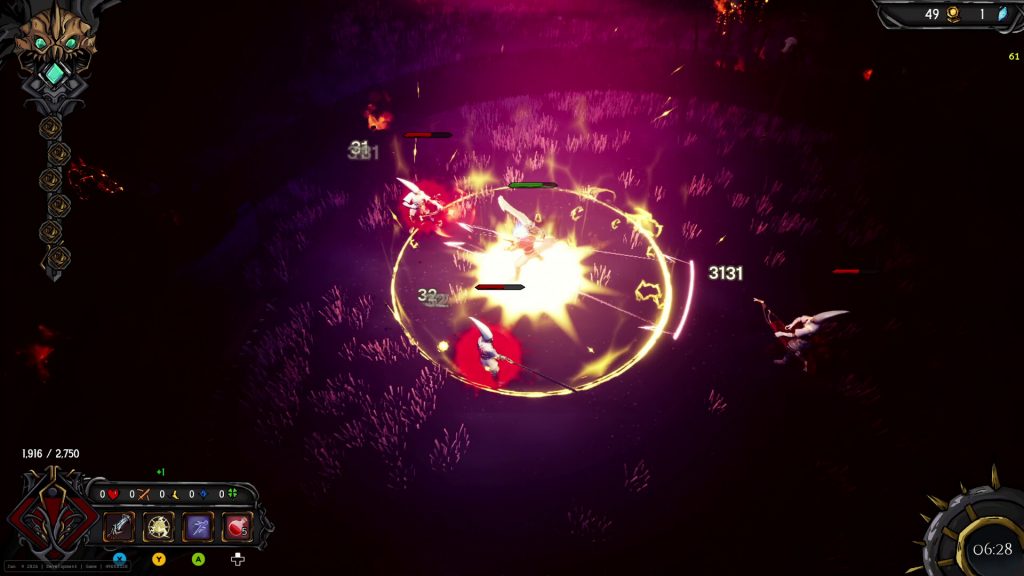
Clockfall‘s gameplay divides into two distinct phases that create its hybrid identity. The “dungeon crawling” phase involves exploring dungeons to collect resources and equipment. The “village defense” phase uses those resources to defend against enemies invading the village.
This dual structure distinguishes Clockfall from pure dungeon crawlers and pure defense games. The synergy between phases — how effectively players use dungeon-acquired resources in village defense — becomes the key to escaping the loop. Players can’t just excel at one phase; they must understand how the phases interconnect and optimize across both.
This structural design creates interesting strategic depth. Dungeon crawling decisions (which resources to prioritize, which equipment to acquire, and how to manage time) directly affect village defense capability. Village defense challenges inform dungeon crawling priorities. The phases form a connected system where decisions in one phase ripple into the other.
The roguelite structure adds variety to this dual loop. Because each run presents different conditions, players must build strategies and builds suited to the situation. The combination of the dual-phase structure with roguelite variability means players face different optimization challenges each run — different resource availability, different defense scenarios, different strategic priorities.
This hybrid approach reflects ambitious design thinking. Combining dungeon crawling and village defense into a coherent roguelite loop is structurally complex, requiring both phases to be individually satisfying while their synergy provides the strategic depth that makes the combination meaningful. Whether Clockfall fully achieves this integration is exactly what Early Access development will determine.
The Dark Fantasy Lovecraftian World
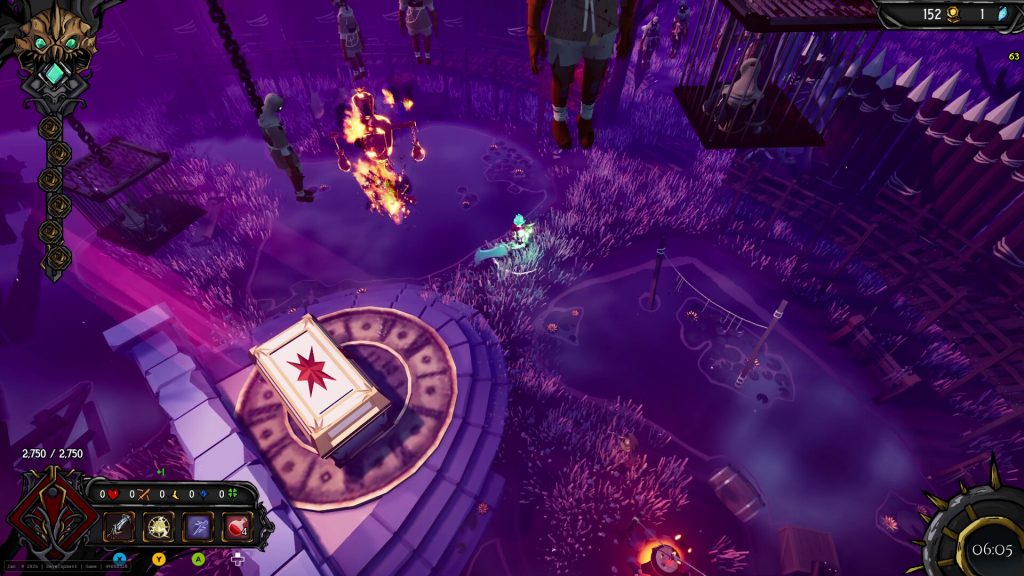
Clockfall‘s atmosphere combines dark fantasy with Lovecraftian horror in a gloomy world. The premise — a village destroyed by the army of “Destiny,” a mysterious clock that returns the player to the moment of slaughter, an endless temporal loop — establishes both narrative stakes and atmospheric tone.
The Lovecraftian influence is significant for the game’s identity. Lovecraftian horror emphasizes cosmic dread, forces beyond human comprehension, and the smallness of individuals against vast incomprehensible powers. The time loop premise — being trapped by an incomprehensible clock, forced to relive slaughter, fighting against “Destiny” itself — captures this Lovecraftian sensibility. The player struggles against forces (fate, time, the clock) that operate beyond normal human understanding.
The isometric 3D perspective implements dungeons and ruins with atmospheric tension. Tension-building background music, impactful sound effects, and sophisticated visual effects (VFX) combine to provide immersion that feels like entering a repeating nightmare. This audiovisual approach reinforces the horror atmosphere while supporting the action gameplay.
The “repeating nightmare” framing connects atmosphere to mechanics. The time loop isn’t just a narrative premise — it’s the structural reality the player inhabits. Each run through the loop is another iteration of the nightmare, and the atmospheric design ensures players feel the oppressive weight of the repeating cycle they’re fighting to escape.
The developers have acknowledged that sound, visual effects, and overall presentation will be continuously improved during Early Access. This transparency about the current state reflects appropriate Early Access communication — the atmospheric foundation exists, but refinement continues.
The Village Defense Stakes
The village defense phase deserves specific attention because it provides emotional stakes beyond pure mechanical progression. The player’s goal — breaking the loop and saving their family — gives the village defense genuine narrative weight. This isn’t abstract base defense; it’s protecting the family and community that the time loop repeatedly threatens.
This emotional framing distinguishes Clockfall‘s defense gameplay from pure tower-defense or survival mechanics. Players defend not just to progress but to protect what matters. The repeated slaughter that the time loop forces players to relive creates motivation that pure mechanical defense lacks — each successful defense represents a step toward breaking the cycle and saving the family.
The integration of family-saving stakes with the time-resource system creates meaningful tension. Players must balance time acquisition (for growth) against the immediate demands of protection. This balance — between long-term resource accumulation and immediate protective needs — provides the kind of strategic tension that makes the dual-loop structure engaging.
The Community-Driven Early Access
Rever Games GmbH has positioned community feedback as central to Clockfall‘s development. Recognizing balance adjustment as crucial, given the complex genre’s structural characteristics, the studio plans to actively gather user opinions through Early Access.
This focus on balance is appropriate for Clockfall‘s ambitious structure. Hybrid genre games face particular balance challenges — the dungeon crawling and village defense phases must each be satisfying, their synergy must work, and the time-resource system must feel rewarding rather than punishing. Achieving this balance across a complex system requires extensive testing and iteration that Early Access enables.
The team plans to share improvements through the official Discord and Steam Community Hub, progressing gameplay adjustments and content expansion in stages. The estimated Early Access period of approximately 6 to 12 months will see sequential additions of new dungeons, weapons, spells, and enemy types. Multi-language support will also expand before full release.
Notably, the price will remain the same during Early Access and after full release. This pricing commitment reflects respect for early supporters — players who purchase during Early Access pay the same price as those who wait for full release, with the added benefit of participating in the development process. This approach contrasts with the common practice of raising prices at full release, which can feel like penalizing players who waited.
The Roguelite Context
Clockfall enters an extremely competitive roguelite landscape. The genre has produced numerous successes (Hades, Dead Cells, Risk of Rain, and many others) and continues generating new entries regularly. Standing out in this crowded space requires genuine distinctiveness.
Clockfall‘s distinctiveness comes from its structural innovations rather than just aesthetic variation. The time-as-resource system and the dungeon-crawling-meets-village-defense dual loop provide mechanical distinctiveness that pure aesthetic differentiation couldn’t achieve. These structural experiments represent the kind of genuine innovation that the roguelite genre needs to continue evolving.
Whether these innovations succeed depends on execution. Ambitious structural experiments can either produce genuinely fresh experiences or collapse under their own complexity. The dual-loop structure and time-resource system sound like a compelling concept; whether they deliver engaging gameplay in practice is what Early Access will reveal.
The single-player focus distinguishes Clockfall from the multiplayer trend in many recent games. For players who prefer focused solo experiences, this single-player commitment provides the kind of personal engagement that multiplayer-focused games sometimes dilute.
Who This Is For
Strong fit for: roguelite enthusiasts seeking structural innovation; players who enjoy time-manipulation mechanics; dungeon crawler fans interested in hybrid structures; Hades and Dead Cells fans curious about new genre experiments; dark fantasy and Lovecraftian horror enthusiasts; players who appreciate single-player focused experiences; strategy-minded players who enjoy resource optimization; anyone drawn to the time-as-resource concept.
Cautious fit for: players who prefer polished complete experiences over Early Access works-in-progress; anyone who finds hybrid genre complexity overwhelming; players awaiting balance refinement that Early Access will address.
Less ideal for: players seeking multiplayer experiences; anyone who dislikes roguelite structure; players who prefer cozy or relaxing gameplay over dark fantasy intensity.
What to Watch For
A few questions will shape Clockfall‘s Early Access development.
The first is whether the dual-loop structure achieves genuine synergy. The dungeon-crawling and village-defense phases need to interconnect meaningfully rather than feeling like separate mini-games. How well the phases integrate will determine whether the hybrid structure succeeds or fragments.
The second is the time-resource system balance. The time-as-resource concept is distinctive; whether it’s balanced to feel rewarding rather than punishing, and whether the time pressure enhances rather than frustrates, will determine the core system’s success.
The third is the content expansion delivery. The planned additions (new dungeons, weapons, spells, enemy types) need to expand the experience meaningfully. How effectively Rever Games delivers this content across the 6-12 month Early Access will affect the game’s development trajectory.
The fourth is the balance refinement. The developers acknowledge balance as crucial; how effectively they use community feedback to refine the complex systems will determine whether the ambitious structure achieves its potential.
The Takeaway
Clockfall is one of the more structurally ambitious roguelites entering Early Access, combining genuine conceptual innovation (time as resource rather than constraint), distinctive hybrid structure (dungeon crawling meets village defense), atmospheric world-building (dark fantasy Lovecraftian horror), and meaningful emotional stakes (breaking the loop to save family). The community-driven Early Access approach and the player-respecting pricing commitment reflect a thoughtful development philosophy.
For roguelite enthusiasts specifically, Clockfall offers exactly the kind of structural experimentation that keeps the genre vital. The time-as-resource system and dual-loop structure provide mechanical distinctiveness that differentiates it from the countless roguelites relying on aesthetic variation alone. For players seeking genuine innovation rather than familiar formulas, Clockfall warrants attention.
For players considering an Early Access purchase, the honest assessment is that Clockfall is an ambitious work-in-progress. The structural foundation is distinctive and promising; the execution requires the refinement that Early Access provides. Players comfortable with participating in development and providing feedback will find an interesting project to engage with; players seeking polished, complete experiences may prefer to wait for full release.
For broader roguelite culture, Clockfall represents the kind of structural experimentation that advances the genre. Rather than producing another aesthetic variation on established formulas, Rever Games is attempting genuine innovation in how roguelites structure their core loops and resources. Whether the experiment fully succeeds will be revealed through Early Access, but the ambition itself is valuable.
A village destroyed by the army of Destiny. A mysterious clock is dragging the player back to the moment of slaughter. An endless time loop demanding to be broken. Dungeon crawling to gather resources and equipment. Village defense to protect the family from invasion. And throughout it all, time itself — not as a constraint counting down toward failure, but as a resource to be won, spent, and ultimately mastered.
As roguelite pitches go, Clockfall‘s is one of the more conceptually distinctive of 2026 — and the Early Access availability means interested players can engage with the structural experiment now while Rever Games refines the balance and expands the content. The clock is ticking, but in Clockfall, the ticking clock is exactly what you’re learning to control. Break the loop. Save your family. Master time itself. And discover whether a roguelite built around time-as-resource can turn the genre’s most common constraint into its most distinctive feature.
Information regarding ‘Clockfall’
| item | detail |
|---|---|
| Developer | Rever Games GmbH |
| Publisher | Rever Games GmbH, Radical Theory |
| Genre | Action RPG / Dungeon Crawler / Roguelite / Town Defense |
| Release platform | PC (Steam) |
| Release format | Early Access |
| Early Access Period | About 6 to 12 months |
| Play Mode | Single player |
| worldview | Dark Fantasy / Lovecraftian Horror |
| Point of view | Isometric 3D |
| core system | Time Resource Management / Dungeon Crawling / Village Defense Loop |
| Main Keywords | Time Manipulation, Roguelite, Dungeon Crawler, Town Defense, Hack and Slash, Dark Fantasy |
| Official Channel | X · Instagram · TikTok · Discord (@rever__games) |
| Steam Page | Shortcut |