A frog named Frogo wants to go home. He doesn’t have a sword. He doesn’t have a quest log. He has a world made of fluorescent yellow sticky notes, a handful of animal companions with their own quiet stories, and the player’s willingness to rearrange the world one piece at a time until spring arrives. Walk The Frog, the cozy narrative puzzle game from two-person German studio Walk The Frog UG, launched May 21 on Steam — and it’s one of those small, complete, confident releases that the indie scene exists to produce.
After five years of development and an extensive showcase circuit, the project has landed exactly where it deserves to land: as a small, polished, deeply intentional piece of work that knows precisely what it wants to be.
A World Made of Paper
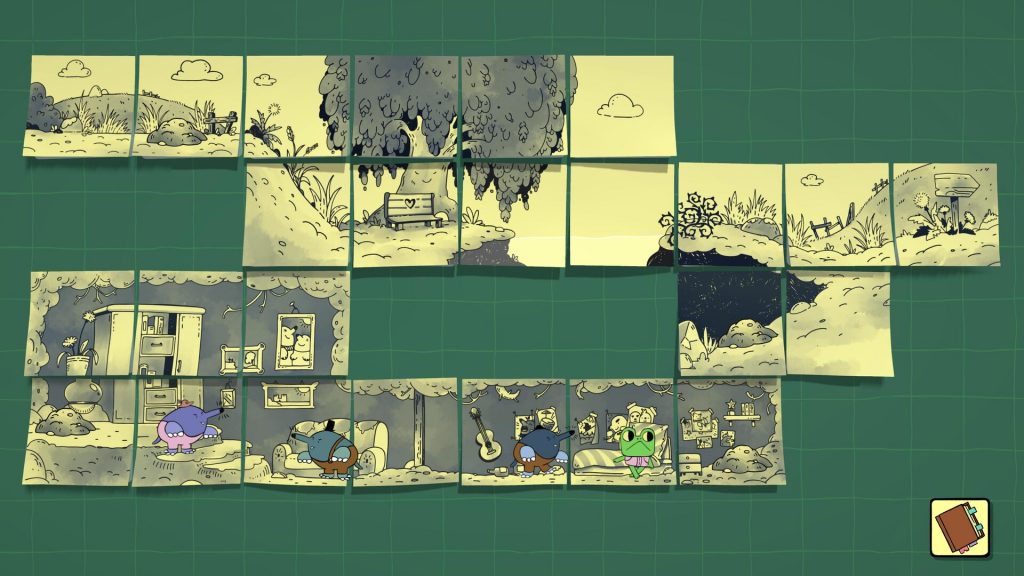
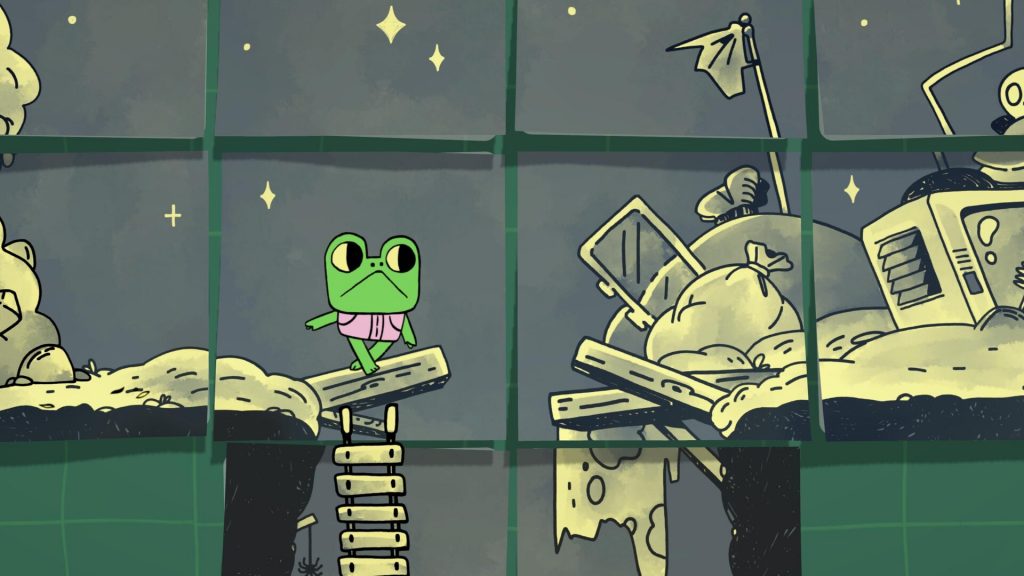
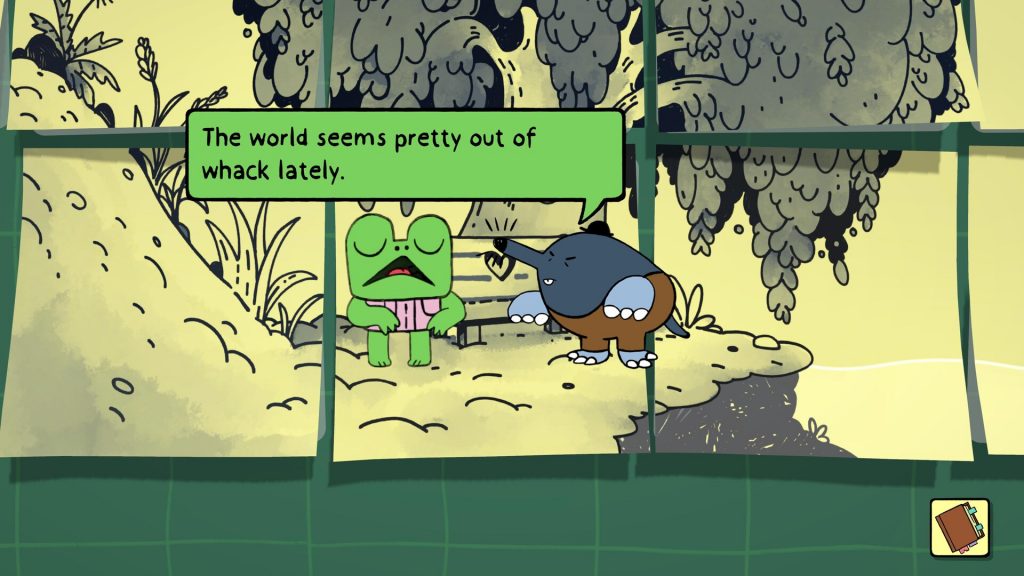
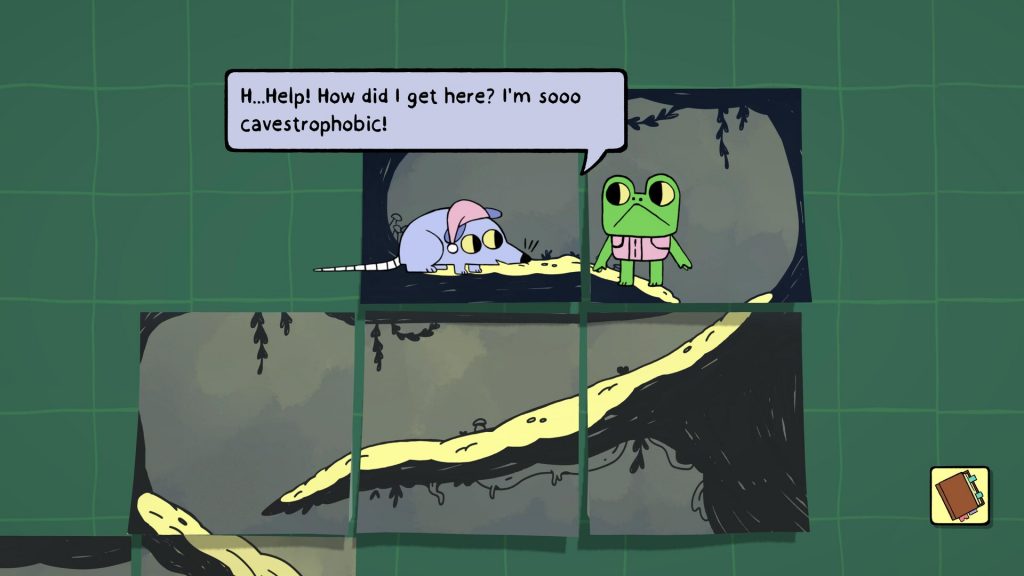
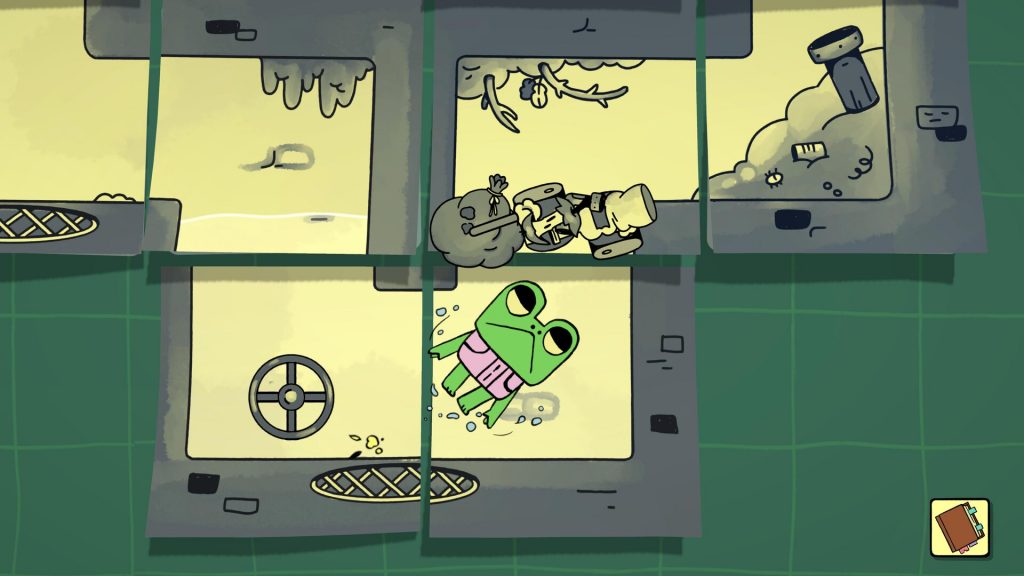
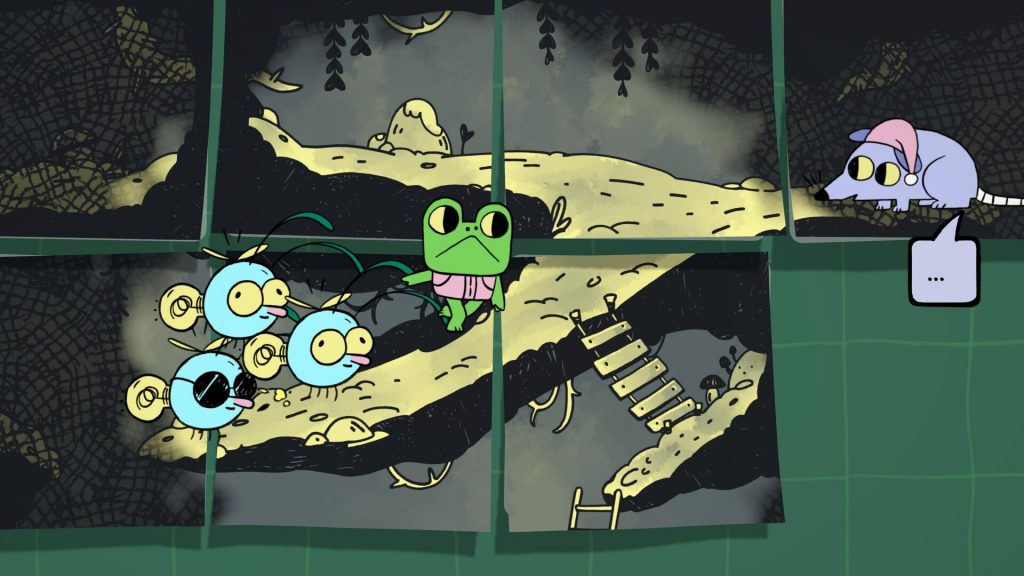
The aesthetic identity is the first thing you notice, and it doesn’t fade. Walk The Frog is rendered in what looks like hand-drawn art on fluorescent yellow sticky notes — Post-its rearranged into a landscape, scattered into a puzzle, reassembled into story. It’s a visual language unlike anything else currently on Steam, and the commitment to it is total. There’s no moment where the game abandons its sticky-note frame for something flashier. The world is paper. The story is paper. The mechanics, as we’ll see, are also paper.
That kind of aesthetic discipline is harder than it looks. Most distinctive indie art styles are introduced in the first level and gradually diluted as the game expands its visual vocabulary. Walk The Frog doesn’t dilute. It deepens. Each new chapter finds new ways to arrange and rearrange its sticky-note materials, and the aesthetic stays coherent across all 18 levels because the developers never reach for anything outside the frame they set.
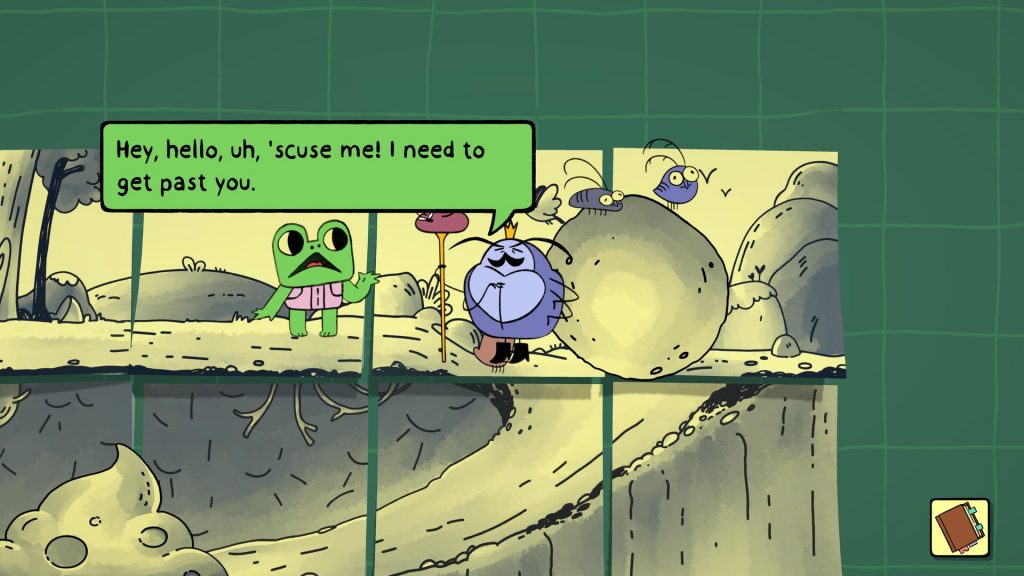
The hand-drawn warmth carries through to the character work. Frogo, the mole, the duck, the snail, and the rest of the animal cast all feel like they were drawn by someone who cared specifically about them. There’s no asset-flip energy here. Every drawing is doing emotional work, and it shows.
The Sticky Note as a Mechanical Idea
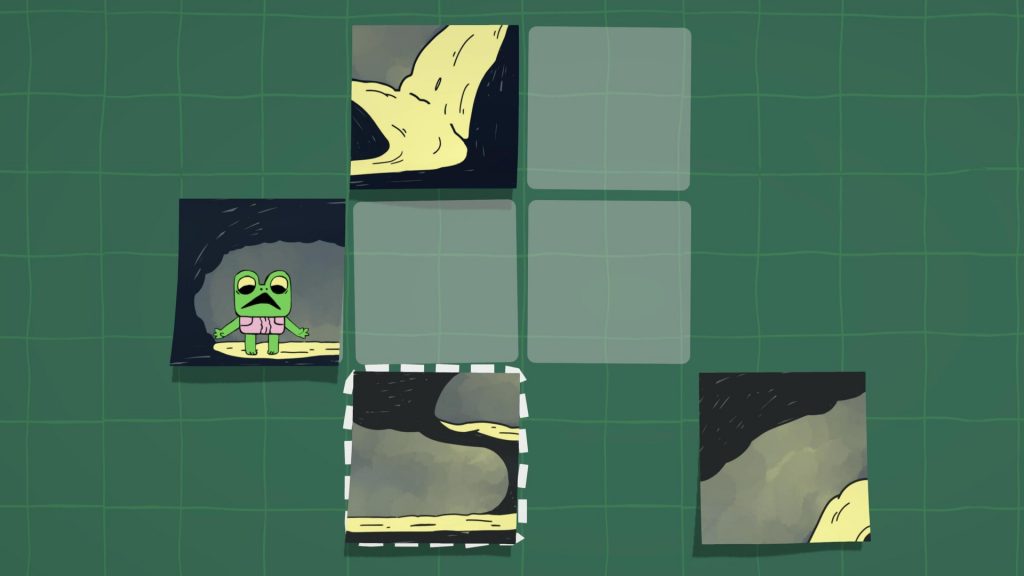
The puzzle system is where Walk The Frog moves from charming to genuinely smart. The sticky note isn’t just a visual conceit — it’s the actual mechanic. Drag and drop fragments into their correct positions, and you restore the world, reveal the story, and progress Frogo’s journey home. Each level introduces new structural variations on this core idea.
This is a clever piece of design for several reasons. First, drag-and-drop is one of the most intuitive interaction patterns in computing, which means Walk The Frog is genuinely accessible — laptop touchpads work fine, no controller required, no learning curve to clear before the actual game begins. Second, the puzzle metaphor matches the emotional metaphor: putting scattered pieces back together is exactly what the game is about narratively, and the mechanic embodies that theme rather than illustrating it.
The puzzle design also avoids the cozy genre’s most common mechanical failure: confusing relaxation with simplicity. Walk The Frog is relaxing without being thin. Each level asks for thought. Some ask for genuinely creative thought. But none of it asks for anxiety or speed, and there are no time pressures, fail states, or punishing feedback loops anywhere in the game. You think calmly. You drag carefully. You complete the picture. You move on.
That balance — meaningful puzzles in a genuinely stress-free frame — is rare and worth recognizing. The Steam Next Fest Winter 2026 showing of the five-level expanded demo built community attention around this specific quality, and the demo’s 98% Positive reception suggests players felt it immediately.
The Cast of Quiet Companions
Frogo’s journey home is populated with animal companions, each carrying their own small story. The mole, duck, snail, and others aren’t just decorative — they’re characters with personalities, with dialogue that international press has consistently described as “witty and fun to read,” and with arcs of their own that gradually unfold as Frogo’s journey progresses.
This is the second piece of design intelligence in Walk The Frog. Cozy games often populate their worlds with NPCs who exist mainly to dispense quests or flavor text. Walk The Frog‘s companions are characters first. Each one is doing something specific in their corner of the world. Each one has reasons for being there. The result is that the journey home doesn’t feel like a single character’s solo trip through scenic levels — it feels like a small community of animals helping each other through difficult moments.
That sense of community is the game’s quiet emotional engine. Spring is arriving. The world is being put back together. Friends are being met. None of it is dramatized. All of it accumulates into something that lands surprisingly hard for an 18-level puzzle game.
Sound Design That Earns Its Place
The soundtrack has been described in early reception as “calm enough to fall asleep to” — and that’s offered as a compliment, which tells you what kind of game Walk The Frog is and who it’s for. The audio doesn’t perform. It accompanies. The music’s job is to extend the mood the visuals establish, and it does that job without drawing attention to itself.
For a cozy game, this is the right register. The audio choices that fail in this space are the ones that try too hard — bright, attention-seeking music that pulls players out of the meditative state the puzzles are designed to support. Walk The Frog avoids that failure mode entirely. The sound is part of the rest, not separate from it.
A Five-Year Development Story
Oliver and Fabian started developing Walk The Frog in 2020. Five years to release for a two-person team with a fully-realized aesthetic and mechanical identity is the right kind of timeline — long enough that the game has been thought through, short enough that it didn’t get lost in eternal development.
The showcase journey across the last year is also worth highlighting: Deutsche Indie Summer Showcase, Gamescom Indie Arena Booth, Steam Animal Fest, Steam Next Fest, IGN GameTrailers featured placement, and an appearance in Gronkh’s showcase. That’s an unusually thorough pre-launch presence for a two-person team, and it reflects a publisher (Bright Gambit) that clearly invested in surfacing the project to the right audiences.
Bright Gambit’s framing of why they signed the game is telling: they describe meeting the project just as the small team was preparing for its final push, and being impressed by the polished visuals and elegant puzzle design enough to believe it would be “an indie game that stays in memory for a long time.” That’s a publisher who understood what they were signing onto.
The MFG Baden-Württemberg Media and Film Foundation funding is worth noting as well. German cultural funding for games has been quietly producing some of the more thoughtful indie work of recent years (Paintbucket Games’ SOKO 1977, also recently announced, is another example), and the institutional support for projects that prioritize craft over scale is part of what’s enabling this specific kind of work to exist.
How the Press Has Read It
International coverage has been notably positive. Specialist outlets Games Ground Berlin and GameSpectrum gave the project perfect scores. Broader coverage has emphasized the project’s combination of distinctive worldbuilding, creative puzzle design, and consistently cozy atmosphere. One representative review summed it up: “A charming experience that has all three — a unique world, creative puzzles, and a cozy atmosphere.” Another framed it as “the perfect game for relaxing and meeting new friends.”
The IGN GameTrailers release placement is meaningful for a project of this scale. Small indie projects don’t typically reach that level of mainstream visibility unless something about the work is clearly registering with the people who curate that surface.
Who This Is For
Strong fit for: cozy game players who want substance with their comfort; puzzle game fans interested in fresh mechanical ideas rather than refined versions of existing formulas; players who appreciate hand-drawn art and aesthetic specificity; anyone who enjoyed A Short Hike, Carto, or Unpacking and wants more in that emotional register; players looking for shorter, completable experiences (18 levels is a finite scope, and that finiteness is a feature).
Less ideal for: players who specifically want long-form open-ended cozy experiences; anyone who finds drag-and-drop puzzles boring rather than meditative; players who need explicit goals and progression systems to stay engaged.
What Walk The Frog Quietly Argues
There’s an argument embedded in the design philosophy of Walk The Frog worth making explicit. Plenty of cozy games operate on the premise that comfort comes from removing challenge entirely. Walk The Frog operates on a different premise — that comfort comes from removing the wrong kinds of challenge (time pressure, failure states, optimization anxiety) while preserving the right kinds (genuine puzzle thinking, narrative engagement, aesthetic attention). The result is a game that respects its players’ capacity to think while protecting them from the stresses that would make the thinking feel like work.
That distinction matters for the cozy genre’s continued evolution. The most interesting cozy games right now — Walk The Frog, Thrifty Business, Held — are the ones that have figured out how to preserve substance while creating safety. They’re not just turning down the difficulty on existing genres. They’re building new shapes that genuinely have something to offer.
The Verdict
Walk The Frog is the kind of small, complete, confident indie release that justifies the genre’s existence. Two developers spent five years making something with a clear vision, executed it with discipline, and shipped it with the polish that vision deserved. The result is one of the more quietly affecting cozy games of the year.
It won’t last you forever. 18 levels are 18 levels, and the game is honest about its scope. But the time you do spend with it is unusually high-quality time — meditative, creative, gently emotional, and genuinely original in its visual and mechanical language. The $12.99 price (with 25% launch discount) is fair, and the project is the kind of small purchase that tends to keep returning to mind months after you’ve finished it.
Information regarding ‘Walk The Frog’
| item | detail |
|---|---|
| Developer | Walk The Frog UG (Ludwigsburg, Germany / Oliver & Fabian 2-person team) |
| Publisher | Bright Gambit |
| Genre | Cozy narrative puzzle / Point-and-click adventure |
| Release platform | PC·Mac·Linux (Steam) |
| Release date | May 21, 2026 |
| price | $12.99 / €12.99 (25% discount for launch only) |
| Demo Review | Very positive 98% (52 items) |
| Level number | Level 18 (Consists of 3 chapters) |
| Operation method | Drag and Drop / Point and Click (Mouseless Playable) |
| Financial support | MFG Baden-Württemberg Media and Film Fund |
| Start of development | 2020 |
| Main Keywords | Cozy, Sticker Note, Frog, Friendship, Spring, Puzzle, Healing, Hand Draw |
| Official Channel | Discord · X · Instagram · TikTok · YouTube |
| Steam Page | Shortcut |