From a three-room thatched cottage to a royal palace hall, Hanok: From Thatch to Palace asks players to build traditional Korean architecture one actual structural component at a time — cornerstones, pillars, beams, rafters, roof tiles — rather than dropping in prefabricated wall and roof modules the way most building games do. Solo Korean developer WATSI (led by Kim Geon-woo) launches the game on Steam September 29 at 10:00 AM KST.
Three Ways to Build
The game splits into three distinct modes.
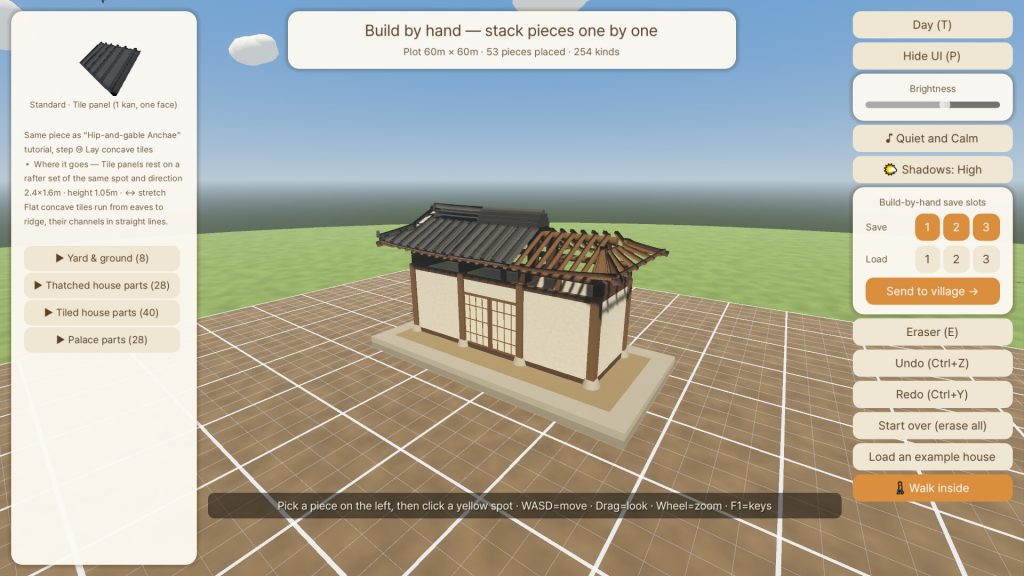
Guided Building walks players through completing traditional structures in proper construction sequence — starting with a basic three-room thatched cottage and progressing through an L-shaped thatched house, a magpie-hole house, gable-roof and hip-roof tile houses, a seowon lecture hall, and up through palace halls, gate towers, and a two-story pavilion built over a pond — eleven buildings total. Each component displays its actual historical name and a brief note on why it’s used in that specific position, turning the build sequence itself into a walkthrough of traditional hanok structure and terminology.
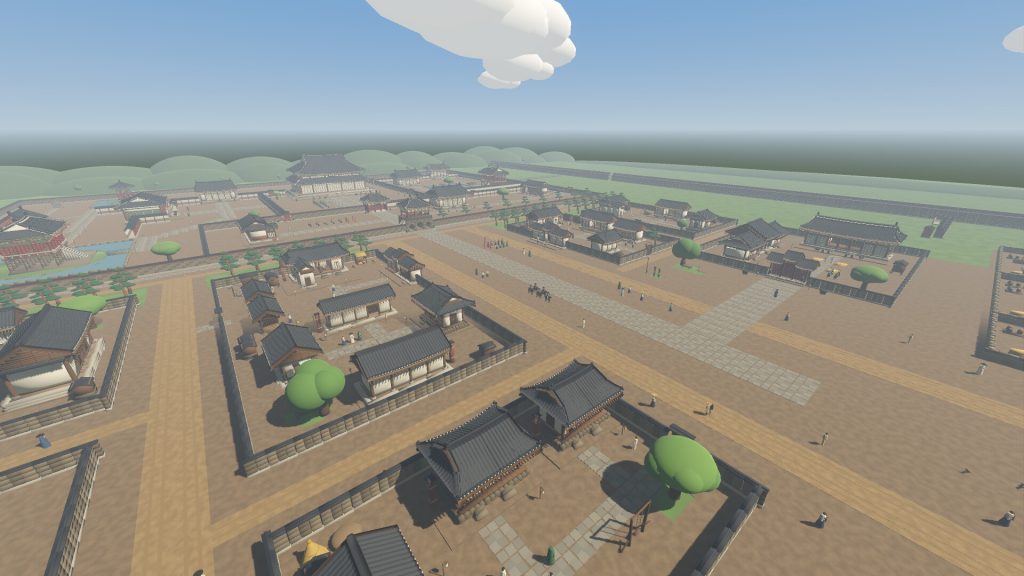
Village Building opens up freer spatial composition using all 210 available component types — thatched and tile houses, palace halls, government offices, corridors, walls and gates, streams and bridges, town walls, rice paddies, market stalls, lanterns — populated with 40 person models and 8 animal models. Six mission-style objectives (a farming village, a market street, a noble district, a palace throne hall, among others) give the mode directional goals alongside free-form village composition.
Freehand Building drops the guided construction sequence entirely, letting players combine components however they want — with the traditional build-order rules optional rather than mandatory. Completed structures built in this mode can be transferred directly into Village Building for placement.
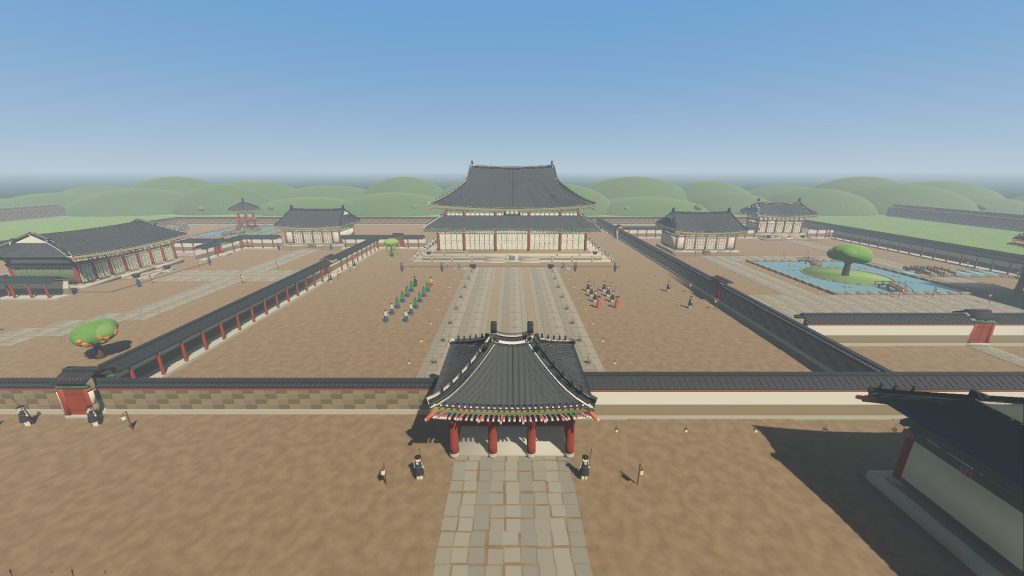
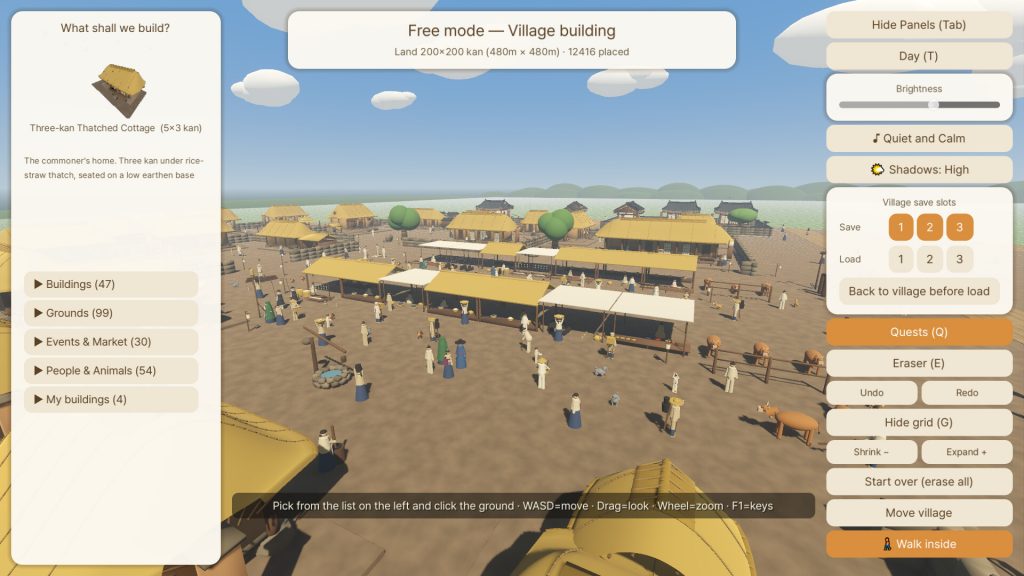
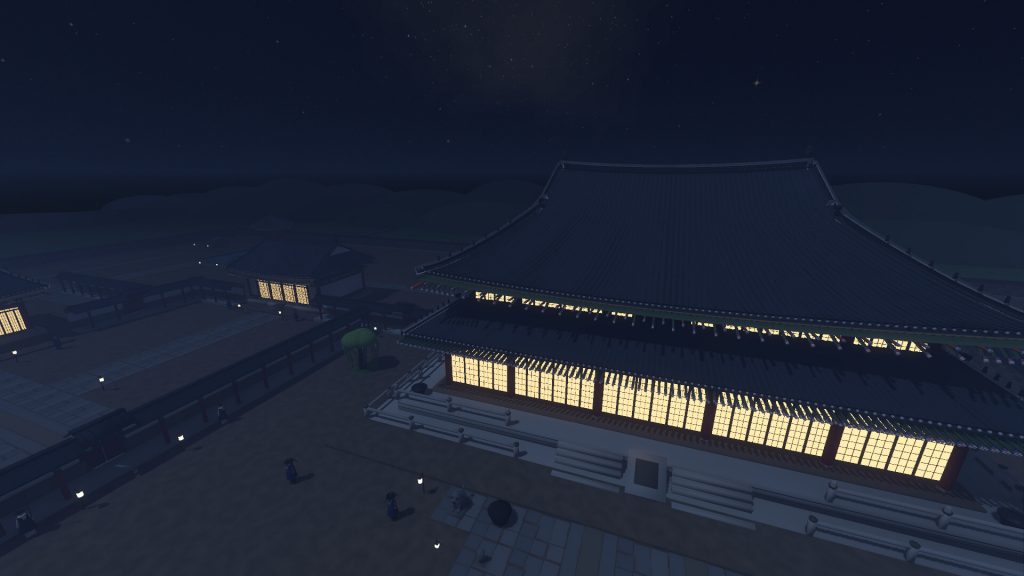
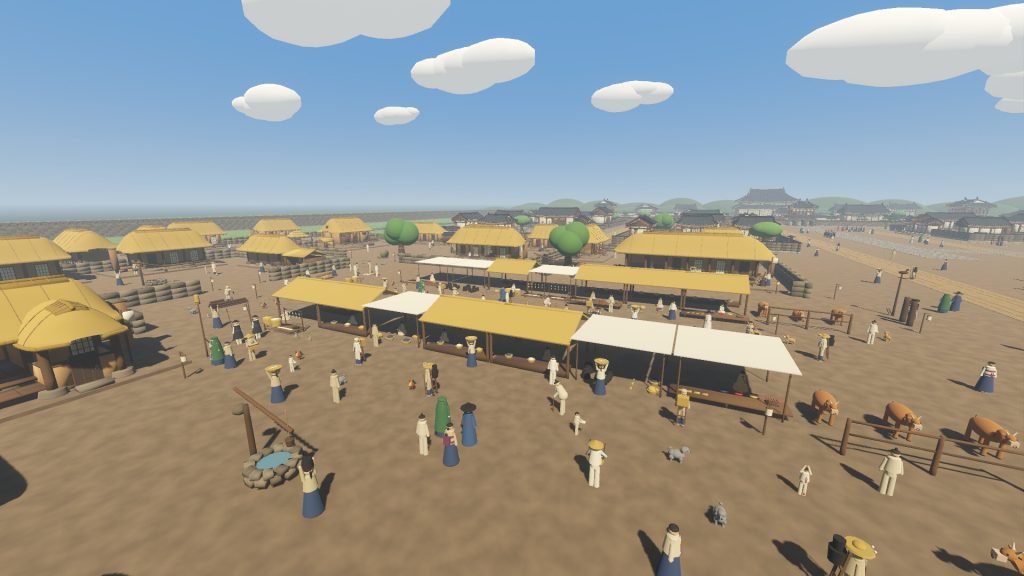
Dawn Fog to Moonlit Night, Walking as the King
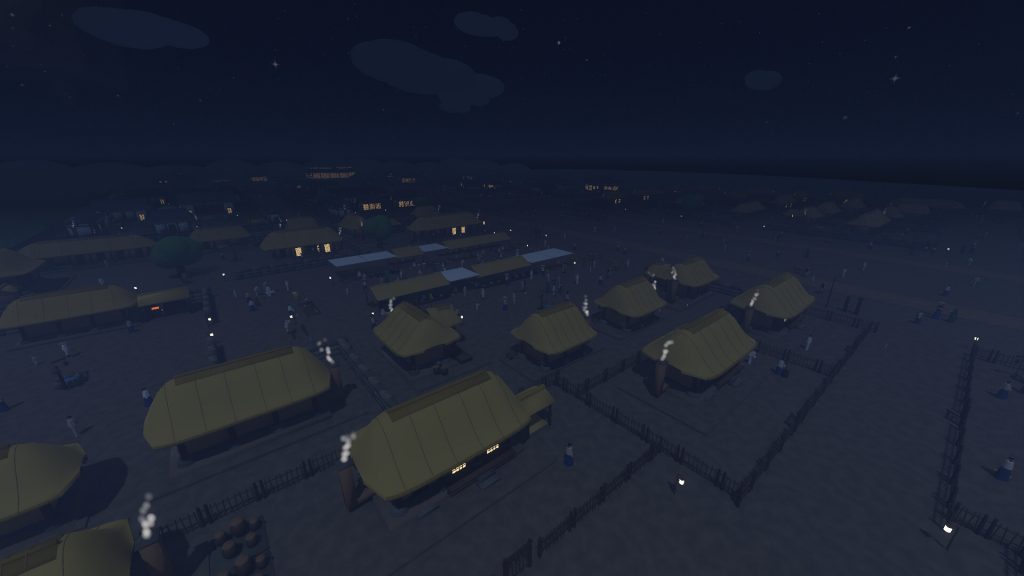
Completed villages can be viewed across four time-of-day settings: dawn fog, midday, sunset, and moonlit night. At night, interior light glows through paper-screen windows, and lanterns illuminate the alleyways. Players can walk through their finished village as a king character, stepping up onto verandas and entering rooms directly rather than only viewing structures from outside. Eleven traditional Korean court music (gugak) tracks play during the building process.
Built on Cited Historical Sources
WATSI has stated that the architectural components and construction sequences depicted in the game were built using reference material from the National Folk Museum of Korea, the Korea Heritage Service, and the Encyclopedia of Korean Culture, among other sources. Where content was condensed or couldn’t be fully verified during development, the developer discloses this separately through an in-game “basis for what was made” screen — a specific and unusually transparent form of sourcing disclosure for a commercial indie release built on historical/cultural reference material.
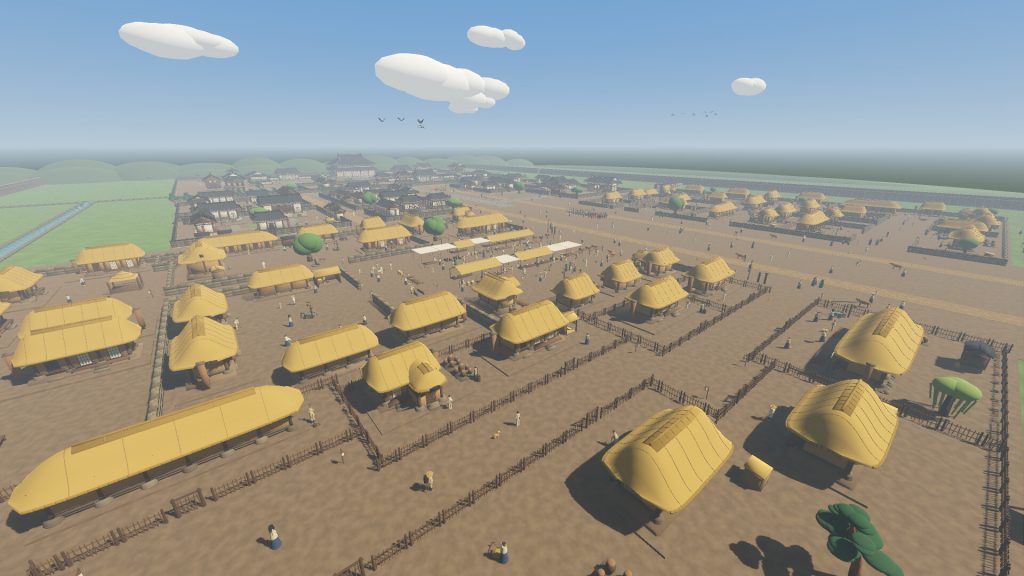
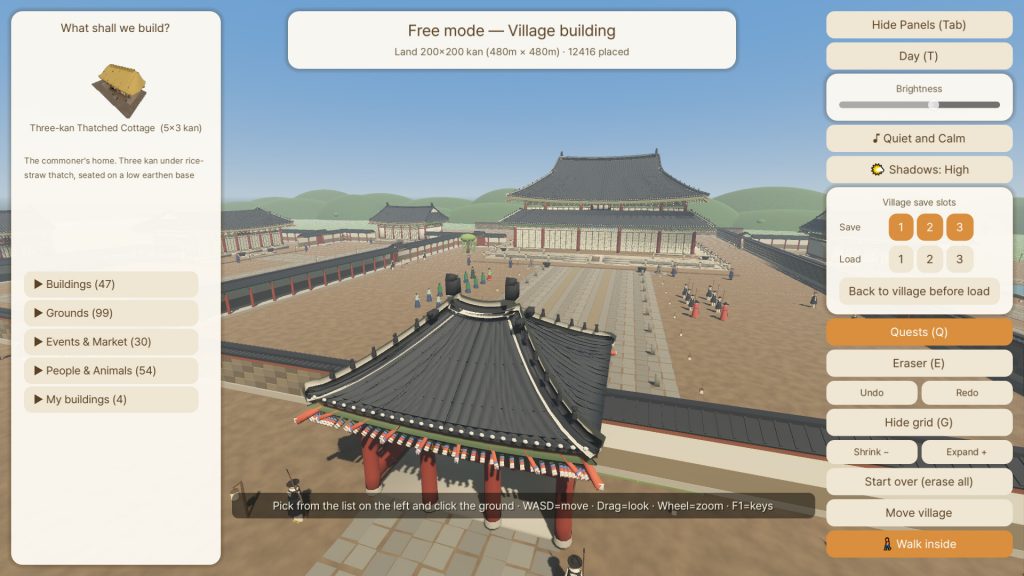
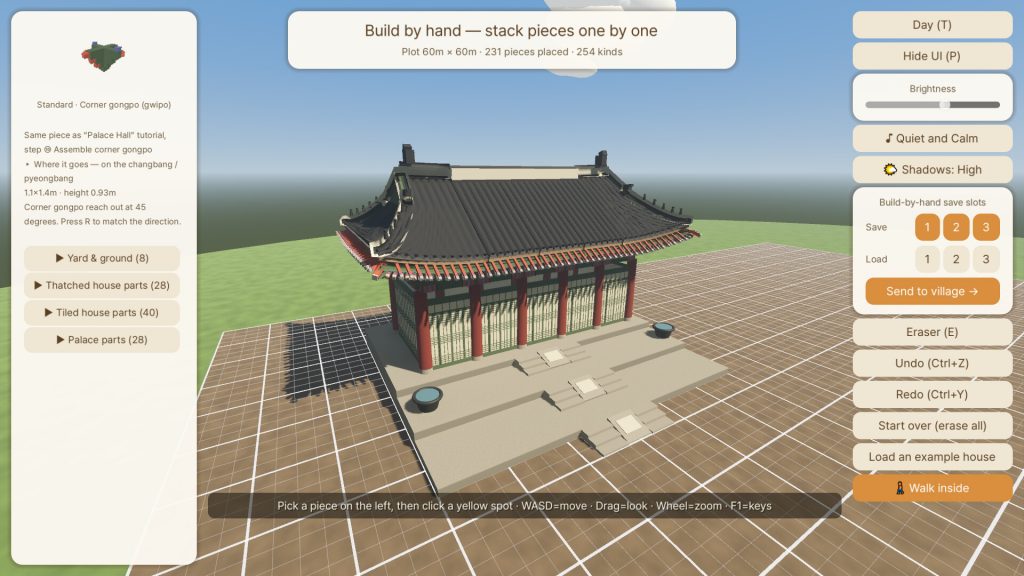
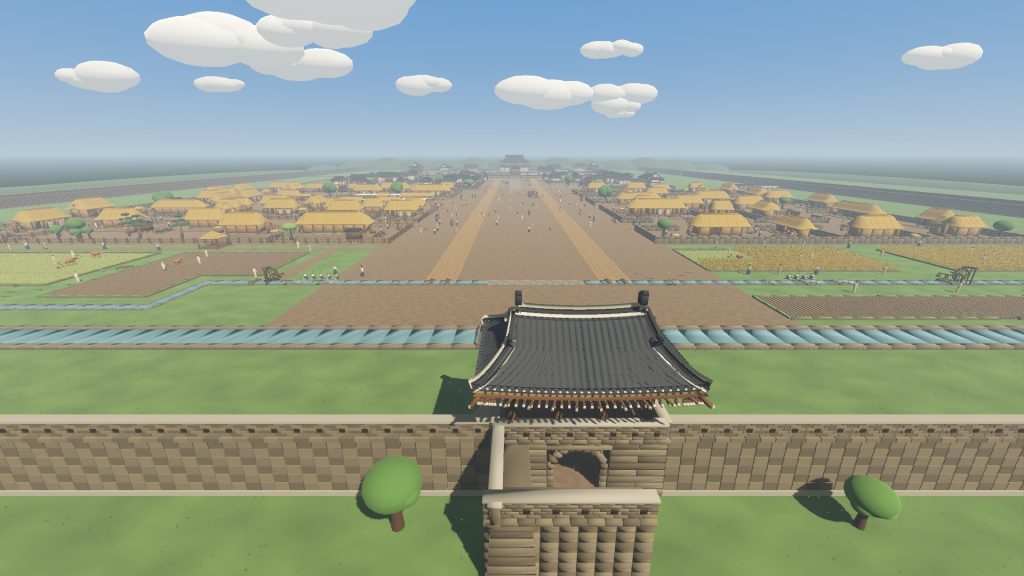
The Solo Developer Behind It
WATSI, led by Kim Geon-woo, handled both development and publishing. The Steam store page lists “Tiger Without Claws” (발톱빠진호랑이) alongside WATSI as a credited developer, though the specific relationship between the two names hasn’t been separately clarified. System requirements are modest — 4GB RAM and 500MB storage on 64-bit Windows 10 or higher — keeping the game accessible on ordinary hardware rather than demanding a high-end build.
Post-Launch Plans
WATSI has committed to free post-launch content updates, including additional palace buildings — a queen’s sleeping quarters and a crown prince’s residence among them — along with expanded village life content beyond what launches at 1.0.
Who This Is For
Strong fit for: building/architecture sim fans who want genuine structural granularity (individual beams and rafters) rather than prefab wall-and-roof modules; players interested in Korean traditional architecture and terminology, delivered through hands-on construction rather than passive viewing; cozy sandbox village-builders who want historical texture; players who appreciate transparent sourcing disclosure in culturally-referential games; anyone running on modest hardware who wants a game with low system requirements.
Cautious fit for: players who want a large existing review base before purchasing (pre-launch, no reviews yet); anyone who prefers combat, narrative, or resource-management systems layered onto their building games rather than pure construction and viewing.
Less ideal for: players who dislike building/simulation genres regardless of cultural framing; anyone seeking multiplayer options; players wanting a game with challenge or failure states rather than a purely constructive, no-pressure experience.
The Takeaway
Hanok: From Thatch to Palace is a solo Korean developer’s argument that traditional architecture is worth experiencing through the actual sequence of building it — component by named component, sourced against museum and heritage-agency references, with the gaps in that sourcing disclosed rather than hidden. Three build modes, 210 components, eleven guided structures from cottage to palace, and four times of day to walk through the results as a king character make up the September 29 launch, with palace and village-life content already promised as free updates to come.
The cornerstone goes down first. The pillars rise from it. The beams and rafters follow, and somewhere between the thatched cottage and the palace hall, a solo developer’s research into what these buildings actually were is embedded in every named piece you place.
September 29, 2026, 10:00 AM KST. ₩14,000 (₩11,900 launch week). Available on Steam.
Information regarding ‘Hanok: From Thatch to Palace’
| item | detail |
|---|---|
| Developer | WATSI, on the Steam page, the clawless tiger weapon |
| Publisher | WATSI |
| Genre | Building Games (Copy-building · Village building · Hand-building), Casual, Indie |
| platform | PC (Steam), Windows 10 or higher (64-bit) |
| Release date | September 29, 2026 (Tue) 10:00 AM (KST) |
| price | 14,000 won (15% discount for one week to celebrate launch, 11,900 won) |
| language | Korean, English (interface standard) |
| Usage rating | Suitable for all ages |
| Reactions/Evaluations | No reviews registered in the pre-release stage |
| Steam Page | Shortcut |